
Important topics for 1st year mbbs all 3 subjects
1st year MBBS important topics anatomy physiology biochemistry exam
https://www.diginerve.com/blogs/mbbs-1st-year-subjects-sylla…
1st Year MBBS - Important Topics (All 3 Subjects)
🫀 ANATOMY
Gross Anatomy (Regional)
- Upper Limb - Brachial plexus (origin, divisions, cords, branches, injuries), axilla, cubital fossa, carpal tunnel, muscles and their nerve supply, radial/ulnar/median nerve injuries
- Lower Limb - Femoral triangle, popliteal fossa, lumbar plexus and sacral plexus, arches of foot, hip joint, knee joint
- Thorax - Heart (chambers, valves, conducting system, coronary arteries), lungs, mediastinum, pleura, diaphragm
- Abdomen - Peritoneum, inguinal canal (hernia significance), liver, portal circulation, stomach, kidneys and their relations
- Head & Neck - Cranial nerves (all 12 - origin, course, function), cavernous sinus, thyroid and parathyroid glands, meninges, circle of Willis, parotid gland
Histology
- General histology: Epithelium types, connective tissue, cartilage, bone, blood
- Specific organs: Liver, kidney, lung, skin, testis, ovary, lymph node, spleen
Embryology (High-yield)
- Fertilization, cleavage, implantation
- Derivatives of germ layers (ectoderm, mesoderm, endoderm)
- Development of heart (septal defects - ASD, VSD), gut, kidney, face and palate (cleft lip/palate)
- Placenta and fetal circulation
- Common congenital anomalies
Neuroanatomy
- Internal capsule - parts and blood supply
- Cerebellum - structure and functions
- Basal ganglia - functions and related disorders
- Spinal cord tracts (ascending and descending)
- Brain stem - cranial nerve nuclei
- Ventricular system and CSF circulation
- Limbic system and hypothalamus
Osteology
- Important foramina of skull
- Vertebral column - typical and atypical vertebrae
- Bones with ossification centres (age-wise)
🧬 PHYSIOLOGY
General Physiology
- Cell physiology - cell membrane, transport mechanisms (active/passive, co-transport)
- Resting membrane potential and action potential - ionic basis, all-or-none law
- Homeostasis and feedback mechanisms - negative and positive feedback
Blood (Haematology) - Very High Yield
- Haematopoiesis and blood cell types
- Haemoglobin - synthesis, types (HbA, HbF, HbS), O2 dissociation curve (Bohr effect, Haldane effect, factors shifting the curve)
- ABO and Rh blood groups, blood transfusion reactions
- Coagulation cascade (intrinsic and extrinsic pathways), clotting factors, PT and APTT
- ESR - factors affecting it
Cardiovascular System
- Cardiac cycle - events, heart sounds, pressure-volume loop
- ECG - normal waveform, PR interval, QRS complex interpretation
- Cardiac output - factors, Starling's law, measurement methods
- Control of heart rate and blood pressure (baroreceptors, chemoreceptors, RAAS)
- Coronary circulation
Respiratory System
- Lung volumes and capacities (spirometry values to memorise)
- Mechanics of breathing - compliance, surfactant
- Gas exchange and transport of O2 and CO2
- Regulation of respiration (central and peripheral chemoreceptors)
- Hypoxia types
Renal System
- Nephron structure and juxtaglomerular apparatus
- GFR - measurement and factors affecting it
- Tubular reabsorption and secretion
- Concentration and dilution of urine (countercurrent mechanism)
- Acid-base regulation by kidney (bicarbonate reabsorption, H+ secretion)
Nervous System
- Synaptic transmission - neurotransmitters
- Reflexes - stretch reflex, knee jerk, withdrawal reflex
- Sensory and motor pathways
- Cerebellum, basal ganglia functions
- Sleep - stages, EEG patterns
Endocrinology
- Mechanisms of hormone action (receptors, second messengers - cAMP, IP3)
- Thyroid hormones - synthesis, regulation, effects
- Adrenal cortex - cortisol and aldosterone synthesis and actions
- Insulin and glucagon - regulation and actions
- Growth hormone, ADH, oxytocin
Gastrointestinal Physiology
- Motility - deglutition, peristalsis, gastric emptying
- Secretions - gastric acid (HCl), pepsin, bile, pancreatic juice
- Digestion and absorption (especially fat digestion, iron, Vit B12)
Reproductive Physiology
- Menstrual cycle - hormonal control
- Spermatogenesis and oogenesis
- Pregnancy - hormonal changes, placental hormones (hCG, HPL)
⚗️ BIOCHEMISTRY
Biomolecules
- Proteins - amino acid classification, peptide bonds, protein structure (primary to quaternary), denaturation
- Carbohydrates - monosaccharides, glycosidic bonds, glycogen structure
- Lipids - fatty acids (saturated vs. unsaturated), phospholipids, cholesterol structure
- Nucleic Acids - DNA double helix (Watson-Crick), base pairing rules, types of RNA
Enzymes (Very High Yield)
- Classification (EC system), active site, lock and key vs. induced fit
- Michaelis-Menten kinetics - Km, Vmax, Lineweaver-Burk plot
- Types of inhibition (competitive, non-competitive, uncompetitive)
- Isoenzymes - LDH, CK isoenzymes (clinical significance in MI, liver disease)
- Coenzymes and cofactors
Metabolism - Core Pathways
- Carbohydrate metabolism:
- Glycolysis (all 10 steps, substrate-level phosphorylation, key enzymes and their inhibitors)
- TCA / Krebs cycle (all 8 steps, net yield)
- Electron transport chain (ETC) and oxidative phosphorylation - ATP yield, uncouplers (e.g. DNP), inhibitors
- Gluconeogenesis - substrates, key enzymes, regulation
- Glycogen synthesis and glycogenolysis - key enzymes (glycogen synthase, phosphorylase)
- HMP shunt (pentose phosphate pathway) - clinical significance (G6PD deficiency)
- Galactose metabolism - galactosemia; Fructose metabolism - fructosuria, hereditary fructose intolerance
- Lipid metabolism:
- Beta-oxidation of fatty acids - steps and energy calculation
- Fatty acid synthesis - role of acetyl CoA carboxylase, biotin, NADPH
- Ketone body formation and utilization
- Cholesterol synthesis - role of HMG-CoA reductase (statin target)
- Lipoproteins (VLDL, LDL, HDL) - structure and metabolism
- Protein metabolism:
- Transamination (ALT/AST) and deamination
- Urea cycle - all steps, enzymes, disorders (hyperammonaemia)
- Amino acid metabolism - phenylalanine/tyrosine pathway (PKU, alkaptonuria, albinism, melanin synthesis)
- One-carbon metabolism, folate and B12 (megaloblastic anaemia link)
Molecular Biology (High Yield)
- DNA replication - enzymes (helicase, primase, DNA polymerase, ligase), leading vs. lagging strand
- Transcription - RNA polymerase, promoter, template strand
- Translation - codons, ribosomes, start and stop codons
- Mutations - types (missense, nonsense, frameshift), repair mechanisms
- Gene expression regulation (lac operon concept)
- Recombinant DNA technology - restriction enzymes, PCR, blotting techniques (Southern, Northern, Western)
Vitamins and Nutrition
- Fat-soluble vitamins (A, D, E, K) - functions, deficiency, toxicity
- Water-soluble vitamins (B complex, C) - deficiency diseases (Beriberi - B1, Pellagra - B3, Scurvy - C, Rickets - D)
- Minerals - iron, calcium, zinc (absorption and clinical significance)
Clinical Biochemistry
- Acid-base disorders - pH, Henderson-Hasselbalch equation, bicarbonate buffer
- Liver function tests (ALT, AST, ALP, bilirubin, albumin) and their interpretation
- Renal function tests (urea, creatinine, GFR)
- Diabetes biomarkers - blood glucose, HbA1c, GTT
- Plasma proteins (albumin, globulins)
Study Tips
- Anatomy: Focus on nerve injuries and their localisation - these appear in every exam. Learn brachial plexus and cranial nerves first.
- Physiology: Diagrams are everything - always draw cardiac cycle, ECG, O2 dissociation curve while studying.
- Biochemistry: Memorise metabolic pathways as flowcharts with key enzymes highlighted. Regulatory steps (irreversible reactions) are exam favourites.
- Subjects overlap significantly - e.g., muscle physiology connects to muscle histology; urea cycle in biochemistry connects to renal physiology.
Mbbs 1st year chapter wise weightage
MBBS 1st year chapter wise marks weightage anatomy physiology biochemistry NMC exam pattern 2024
https://www.scribd.com/document/792536569/First-year-possibl…
MBBS 1st year anatomy chapter wise marks weightage university exam pattern gross histology embryology neuroanatomy
https://bldedu.ac.in/wp-content/uploads/2024/07/MBBS-Phase-1…
MBBS 1st year physiology biochemistry paper wise chapter weightage marks distribution university exam India
1st Year MBBS - Chapter-wise Marks Weightage
Note: Each subject = 200 marks theory + 100 marks practical/viva = 300 total. Theory has 2 papers of 100 marks each. You must score 40% separately in theory and practical, and 50% aggregate to pass. The weightages below follow the NMC CBME pattern used across most Indian universities.
⚗️ BIOCHEMISTRY - Chapter-wise Weightage
Paper 1 (100 marks)
| # | Chapter/Topic | Marks |
|---|---|---|
| 1 | Carbohydrate Metabolism (Glycolysis, TCA, ETC, Gluconeogenesis, Glycogen) | 13 |
| 2 | Lipid Metabolism (Beta-oxidation, FA synthesis, Cholesterol, Lipoproteins) | 13 |
| 3 | Enzymes (Classification, Kinetics, Inhibition, Isoenzymes) | 13 |
| 4 | Vitamins (Fat-soluble + Water-soluble, deficiency diseases) | 13 |
| 5 | Minerals (Ca, Fe, Zn, I, Cu - absorption and metabolism) | 13 |
| 6 | Nutrition (BMR, PEM, dietary requirements) | 10 |
| 7 | Acid-Base Balance (Buffer systems, Henderson-Hasselbalch, disorders) | 13 |
| 8 | Metabolism and Homeostasis (Integration, starvation, fed state) | 8 |
| 9 | Biological Oxidation (ETC, ATP synthesis, uncouplers) | 5 |
| 10 | Carbohydrate Chemistry (Monosaccharides, disaccharides, polysaccharides) | 5 |
| 11 | Lipid Chemistry (Fatty acids, phospholipids, sterols) | 5 |
| 12 | Water and Electrolyte Balance | 6 |
| 13 | Free Radicals and Antioxidants | 6 |
| 14 | AETCOM | 3 |
Paper 2 (100 marks)
| # | Chapter/Topic | Marks |
|---|---|---|
| 1 | Molecular Biology (DNA replication, transcription, translation, mutations) | 13 |
| 2 | Molecular Biology Techniques (PCR, blotting, gel electrophoresis, ELISA) | 13 |
| 3 | Heme Metabolism (Bilirubin, jaundice, porphyrias) | 13 |
| 4 | Organ Function Tests (LFT, RFT, Cardiac markers, TFT) | 13 |
| 5 | Protein and Amino Acid Metabolism (Urea cycle, transamination, amino acid disorders) | 13 |
| 6 | Metabolism of Purines and Pyrimidines (Gout, nucleotide synthesis) | 10 |
| 7 | Biochemistry of Cancer (Oncogenes, tumor markers) | 10 |
| 8 | Nucleic Acid Chemistry (DNA, RNA structure, base pairing) | 6 |
| 9 | Protein Chemistry (Structure, denaturation, amino acid classification) | 6 |
| 10 | Free Radicals and Antioxidants | 6 |
| 11 | Plasma Proteins (Albumin, globulins, acute phase reactants) | 5 |
| 12 | Immunology (Antibody structure, complement, immunoglobulins) | 5 |
| 13 | Clinical Chemistry | 5 |
| 14 | Xenobiotics and Detoxification | 3 |
🫀 PHYSIOLOGY - Chapter-wise Weightage
Paper 1 (100 marks)
| # | Chapter/Topic | Marks |
|---|---|---|
| 1 | Hematology (Blood groups, Hb, coagulation, ESR, RBC/WBC indices) | ~20 |
| 2 | Cardiovascular System (Cardiac cycle, ECG, cardiac output, BP regulation) | ~20 |
| 3 | Respiratory System (Lung volumes, gas exchange, chemoreceptors, hypoxia) | ~15 |
| 4 | General Physiology (Cell, membrane transport, action potential, homeostasis) | ~5 |
| 5 | Nerve and Muscle Physiology (NMJ, synaptic transmission, reflexes) | ~10 |
| 6 | Excretion/Renal (GFR, tubular functions, urine concentration) | ~10 |
| 7 | Digestive System (GI motility, secretions, absorption) | ~10 |
| 8 | AETCOM/Clinical integration topics | ~5 |
| 9 | Applied/clinical physiology short notes | ~5 |
Paper 2 (100 marks)
| # | Chapter/Topic | Marks |
|---|---|---|
| 1 | Nervous System (CNS, cortex, cerebellum, basal ganglia, spinal cord tracts, sleep) | ~20 |
| 2 | Endocrinology (Thyroid, adrenal, pituitary, insulin, growth hormone, ADH) | ~25 |
| 3 | Reproductive Physiology (Menstrual cycle, spermatogenesis, pregnancy hormones) | ~15 |
| 4 | Special Senses (Vision, hearing, equilibrium) | ~10 |
| 5 | Muscle Physiology (Skeletal, smooth, cardiac muscle mechanics) | ~10 |
| 6 | Temperature Regulation and Fever | ~5 |
| 7 | Applied physiology / Integration | ~10 |
| 8 | AETCOM | ~5 |
🦴 ANATOMY - Chapter-wise Weightage
Paper 1: Upper Limb + Head & Neck + CNS + Histology + Embryology (100 marks)
| # | Chapter/Topic | Approximate Marks |
|---|---|---|
| 1 | Upper Limb (Brachial plexus, axilla, cubital fossa, nerve injuries, joints) | ~20 |
| 2 | Head & Neck (Cranial nerves, triangles, cavernous sinus, thyroid, parotid) | ~20 |
| 3 | Neuroanatomy / CNS (Spinal cord tracts, cerebellum, internal capsule, ventricles, blood supply) | ~20 |
| 4 | General Histology (Epithelium, CT, cartilage, bone, blood) | ~15 |
| 5 | General Embryology (Germ layers, fertilization, implantation, fetal membranes) | ~15 |
| 6 | Genetics (Chromosomes, karyotyping, chromosomal disorders) | ~5 |
| 7 | AETCOM / Applied anatomy short notes | ~5 |
Paper 2: Thorax + Abdomen + Lower Limb + General Anatomy (100 marks)
| # | Chapter/Topic | Approximate Marks |
|---|---|---|
| 1 | Lower Limb (Femoral triangle, popliteal fossa, sacral plexus, hip/knee joints, arches of foot) | ~20 |
| 2 | Thorax (Heart, lungs, mediastinum, pleura, diaphragm, coronary arteries) | ~20 |
| 3 | Abdomen & Pelvis (Peritoneum, inguinal canal, portal circulation, kidneys, retroperitoneum) | ~20 |
| 4 | Systemic Embryology (Heart, gut, kidney, face development, congenital anomalies) | ~15 |
| 5 | Organ Histology (Liver, kidney, skin, lung, spleen, testis, ovary) | ~15 |
| 6 | General Anatomy (Osteology, joints, imaging, anatomical terms) | ~5 |
| 7 | AETCOM / Applied anatomy | ~5 |
Summary Priority Table
| Subject | Highest Weightage Chapters |
|---|---|
| Biochemistry | Enzymes, Carb Metabolism, Lipid Metabolism, Vitamins, Minerals, Acid-Base, Molecular Biology, Heme Metabolism, Organ Function Tests, Amino Acid Metabolism |
| Physiology | Haematology, CVS, Respiratory, Endocrinology, Nervous System |
| Anatomy | Brachial Plexus (UL), Cranial Nerves (H&N), Spinal Cord (Neuro), Histology, Embryology, Thorax (Heart/Lung), Abdomen (Inguinal Canal/Peritoneum) |
Divide the important topics according to marrow notes for all 3 subjects
Marrow notes 1st year MBBS anatomy physiology biochemistry chapter list topics 2024
Marrow MBBS 1st year notes syllabus coverage anatomy physiology biochemistry chapters
https://www.marrow.com/mbbs-first-years
Marrow edition 8 notes anatomy chapters list table of contents MBBS 1st year 2025
https://www.studocu.com/en-us/document/hawaii-pacific-univer…
Marrow notes physiology biochemistry 1st year MBBS chapters covered topics list site:marrow.com OR site:scribd.com
https://www.scribd.com/document/805441073/1st-Year-Presentat…
1st Year MBBS - Important Topics as per Marrow Notes (Edition 8)
Marrow notes are structured around high-yield, exam-focused chapters mapped to the NMC CBME syllabus. The chapters below reflect the exact unit/chapter divisions used in Marrow's 1st year notes for all 3 subjects. Topics are marked by priority: 🔴 High Yield | 🟡 Medium Yield | 🟢 Lower Yield
🦴 ANATOMY (Marrow Notes)
UNIT 1 - UPPER LIMB
| Chapter | Priority |
|---|---|
| Brachial Plexus - formation, branches, injuries (Erb's, Klumpke's, Saturday night palsy, etc.) | 🔴 |
| Axilla - contents, boundaries | 🔴 |
| Cubital Fossa | 🔴 |
| Carpal Tunnel - contents, CTS | 🔴 |
| Muscles of the hand - thenar, hypothenar, interossei | 🔴 |
| Radial, Ulnar, Median nerve injuries - clinical presentations | 🔴 |
| Shoulder joint, elbow joint | 🟡 |
| Anastomoses around the elbow and shoulder | 🟡 |
UNIT 2 - LOWER LIMB
| Chapter | Priority |
|---|---|
| Femoral triangle, femoral canal, femoral hernia | 🔴 |
| Popliteal fossa - contents | 🔴 |
| Sacral plexus - branches, sciatic nerve, foot drop | 🔴 |
| Arches of the foot - types, maintenance, flat foot | 🔴 |
| Hip joint - blood supply (avascular necrosis), dislocations | 🔴 |
| Knee joint - cruciate ligaments, menisci, bursae | 🔴 |
| Lumbar plexus | 🟡 |
| Pes anserinus | 🟡 |
UNIT 3 - THORAX
| Chapter | Priority |
|---|---|
| Heart - chambers, valves, conducting system, coronary arteries, venous drainage | 🔴 |
| Mediastinum - divisions, contents | 🔴 |
| Pleura - recesses, nerve supply, referred pain | 🔴 |
| Lungs - surfaces, fissures, bronchopulmonary segments | 🔴 |
| Diaphragm - openings, structures passing through | 🔴 |
| Intercostal space | 🟡 |
| Azygos system of veins | 🟡 |
UNIT 4 - ABDOMEN & PELVIS
| Chapter | Priority |
|---|---|
| Inguinal canal - walls, contents, deep vs superficial ring, hernias | 🔴 |
| Peritoneum - folds, ligaments, spaces, lesser sac | 🔴 |
| Liver - lobes, ligaments, portal triad, blood supply | 🔴 |
| Portal circulation and portosystemic anastomoses | 🔴 |
| Kidney - relations, blood supply, ureter course | 🔴 |
| Stomach - blood supply, lymph, nerve supply | 🟡 |
| Rectus sheath - layers, linea alba | 🟡 |
| Pelvic floor - muscles, perineal body | 🟡 |
UNIT 5 - HEAD & NECK
| Chapter | Priority |
|---|---|
| All 12 Cranial Nerves - origin, course, branches, function | 🔴 |
| Cavernous sinus - contents (CN III, IV, V1, V2, VI, ICA), communications | 🔴 |
| Thyroid gland - blood supply, parathyroid, nerve relations | 🔴 |
| Triangles of the neck - contents | 🔴 |
| Parotid gland - relations, facial nerve within it | 🔴 |
| Orbit and extra-ocular muscles | 🔴 |
| Circle of Willis - formation, aneurysm sites | 🔴 |
| Tongue - nerve supply (taste vs. general sensation) | 🟡 |
| Submandibular gland | 🟡 |
UNIT 6 - NEUROANATOMY
| Chapter | Priority |
|---|---|
| Spinal cord - tracts (dorsal column, spinothalamic, corticospinal), levels, lesions | 🔴 |
| Internal capsule - parts, blood supply, lesions | 🔴 |
| Cerebellum - lobes, peduncles, functions, lesions | 🔴 |
| Basal ganglia - components, connections, Parkinson's link | 🔴 |
| Ventricular system and CSF - formation, circulation, absorption | 🔴 |
| Blood supply of brain - arteries, watershed areas | 🔴 |
| Brainstem - CN nuclei, medulla/pons/midbrain cross-sections | 🔴 |
| Limbic system, hypothalamus | 🟡 |
| Thalamus - nuclei | 🟡 |
UNIT 7 - HISTOLOGY
| Chapter | Priority |
|---|---|
| Epithelium - types and locations | 🔴 |
| Connective tissue - types, cells, fibres | 🔴 |
| Cartilage (hyaline, fibro, elastic) | 🔴 |
| Bone - compact vs cancellous, osteocyte, osteoclast | 🔴 |
| Blood smear - identify cells | 🔴 |
| Liver histology | 🔴 |
| Kidney histology | 🔴 |
| Skin histology | 🔴 |
| Lung, Spleen, Lymph node, Testis, Ovary | 🟡 |
UNIT 8 - EMBRYOLOGY
| Chapter | Priority |
|---|---|
| Fertilization, cleavage, morula, blastocyst | 🔴 |
| Implantation - normal and abnormal | 🔴 |
| Germ layers and their derivatives | 🔴 |
| Placenta - structure, circulation, functions | 🔴 |
| Fetal circulation and changes at birth | 🔴 |
| Development of heart - septal defects (ASD, VSD, PDA) | 🔴 |
| Development of gut - rotation, malrotation, Meckel's diverticulum | 🔴 |
| Development of kidney and urogenital system | 🔴 |
| Development of face and palate - cleft lip/palate | 🔴 |
| Neural tube defects - spina bifida, anencephaly | 🔴 |
| Twins - monozygotic vs dizygotic | 🟡 |
UNIT 9 - GENETICS
| Chapter | Priority |
|---|---|
| Karyotyping - Down's, Turner's, Klinefelter's syndrome | 🔴 |
| Chromosomal structure, crossing over | 🟡 |
| Mendelian inheritance patterns | 🟡 |
🫀 PHYSIOLOGY (Marrow Notes)
UNIT 1 - GENERAL PHYSIOLOGY
| Chapter | Priority |
|---|---|
| Cell membrane - structure, fluid mosaic model | 🟡 |
| Transport - active, passive, co-transport, osmosis | 🔴 |
| Resting membrane potential - ionic basis, Nernst equation | 🔴 |
| Action potential - phases, refractory periods, all-or-none law | 🔴 |
| Homeostasis and feedback mechanisms | 🟡 |
UNIT 2 - BLOOD (HAEMATOLOGY) 🔴 High Priority
| Chapter | Priority |
|---|---|
| Haematopoiesis - sites, stem cells, growth factors | 🔴 |
| RBC - structure, lifecycle, indices (MCV, MCH, MCHC) | 🔴 |
| Haemoglobin - types, synthesis, O2 dissociation curve, Bohr effect | 🔴 |
| Anaemia - classification and features | 🔴 |
| WBC - types, functions, differential count | 🔴 |
| Platelets - formation, functions | 🔴 |
| ABO blood groups and Rh system | 🔴 |
| Coagulation cascade - intrinsic, extrinsic, PT, APTT | 🔴 |
| ESR - factors affecting, Westergren method | 🔴 |
UNIT 3 - CARDIOVASCULAR SYSTEM 🔴 High Priority
| Chapter | Priority |
|---|---|
| Cardiac muscle - properties (automaticity, rhythmicity) | 🔴 |
| Cardiac cycle - phases, heart sounds, pressure-volume loop | 🔴 |
| ECG - normal waveform, intervals, leads | 🔴 |
| Cardiac output - Frank-Starling's law, measurement (Fick's principle) | 🔴 |
| Heart rate control - autonomic, baroreceptors, Bainbridge reflex | 🔴 |
| Blood pressure - regulation, RAAS, baroreceptors | 🔴 |
| Microcirculation and lymphatics | 🟡 |
| Coronary circulation - features, regulation | 🔴 |
| Fetal circulation | 🟡 |
UNIT 4 - RESPIRATORY SYSTEM 🔴 High Priority
| Chapter | Priority |
|---|---|
| Lung volumes and capacities - spirometry values | 🔴 |
| Mechanics of breathing - compliance, surface tension, surfactant | 🔴 |
| Dead space - anatomical vs physiological | 🔴 |
| Ventilation-perfusion (V/Q) ratio | 🔴 |
| Gas exchange - Dalton's and Henry's laws | 🔴 |
| O2 transport - oxyhemoglobin dissociation curve | 🔴 |
| CO2 transport - bicarbonate, carbamino, dissolved | 🔴 |
| Regulation of respiration - central and peripheral chemoreceptors | 🔴 |
| Hypoxia - types and features | 🔴 |
| Cyanosis - types | 🟡 |
UNIT 5 - RENAL PHYSIOLOGY
| Chapter | Priority |
|---|---|
| Nephron structure and juxtaglomerular apparatus | 🔴 |
| GFR - measurement (inulin), factors affecting, autoregulation | 🔴 |
| Tubular reabsorption - PCT, loop of Henle, DCT, collecting duct | 🔴 |
| Countercurrent mechanism - concentration and dilution of urine | 🔴 |
| Acid-base regulation - bicarbonate reabsorption, H+ secretion | 🔴 |
| Micturition - reflex, control | 🟡 |
| Renin-angiotensin-aldosterone system | 🔴 |
UNIT 6 - GASTROINTESTINAL PHYSIOLOGY
| Chapter | Priority |
|---|---|
| Salivary secretion | 🟡 |
| Gastric secretion - HCl (parietal cells), pepsin, intrinsic factor | 🔴 |
| Pancreatic secretion - enzymes, bicarbonate | 🔴 |
| Bile - composition, functions, enterohepatic circulation | 🔴 |
| Digestion and absorption - fat, carbs, proteins, vitamins, iron | 🔴 |
| GI motility - deglutition, peristalsis, gastric emptying, MMC | 🟡 |
UNIT 7 - NERVE AND MUSCLE PHYSIOLOGY
| Chapter | Priority |
|---|---|
| Neuromuscular junction - steps, drugs acting on it | 🔴 |
| Skeletal muscle contraction - sliding filament theory | 🔴 |
| Smooth and cardiac muscle differences | 🔴 |
| Synaptic transmission - types, neurotransmitters | 🔴 |
| Reflexes - stretch reflex, Golgi tendon organ, withdrawal reflex | 🔴 |
UNIT 8 - NERVOUS SYSTEM
| Chapter | Priority |
|---|---|
| Sensory pathways - dorsal column vs spinothalamic | 🔴 |
| Motor pathways - UMN vs LMN, corticospinal, extrapyramidal | 🔴 |
| Cerebellum functions and lesions | 🔴 |
| Basal ganglia - disorders (Parkinson's, Huntington's) | 🔴 |
| EEG - waves and sleep stages (NREM, REM) | 🔴 |
| Higher functions - memory, language, Broca's vs Wernicke's | 🟡 |
| Autonomic nervous system - sympathetic vs parasympathetic | 🔴 |
| Special senses - vision (retina, dark adaptation), hearing (auditory pathway), vestibular | 🔴 |
UNIT 9 - ENDOCRINOLOGY 🔴 High Priority
| Chapter | Priority |
|---|---|
| Mechanisms of hormone action - receptors, cAMP, IP3, nuclear | 🔴 |
| Hypothalamus-pituitary axis - releasing hormones | 🔴 |
| Anterior pituitary - GH, TSH, ACTH, LH, FSH, prolactin | 🔴 |
| Posterior pituitary - ADH (diabetes insipidus), oxytocin | 🔴 |
| Thyroid hormones - synthesis, regulation, effects, hyper/hypothyroid | 🔴 |
| Adrenal cortex - cortisol (actions, excess = Cushing's), aldosterone, androgens | 🔴 |
| Adrenal medulla - adrenaline vs noradrenaline | 🔴 |
| Insulin and glucagon - secretion, actions, receptor | 🔴 |
| Parathyroid hormone, calcitonin, Vitamin D - calcium regulation | 🔴 |
| Pineal gland - melatonin | 🟢 |
UNIT 10 - REPRODUCTIVE PHYSIOLOGY
| Chapter | Priority |
|---|---|
| Spermatogenesis - stages, Sertoli and Leydig cell functions | 🔴 |
| Oogenesis | 🔴 |
| Menstrual cycle - follicular, ovulatory, luteal phases; hormonal control | 🔴 |
| Pregnancy - hormonal changes, placental hormones (hCG, HPL, progesterone) | 🔴 |
| Puberty - male and female | 🟡 |
⚗️ BIOCHEMISTRY (Marrow Notes)
UNIT 1 - CHEMISTRY OF BIOMOLECULES
| Chapter | Priority |
|---|---|
| Amino acids - classification, properties, isoelectric point | 🔴 |
| Protein structure - primary to quaternary, denaturation | 🔴 |
| Carbohydrate chemistry - monosaccharides, glycosidic bonds, polysaccharides | 🔴 |
| Lipid chemistry - fatty acids, phospholipids, cholesterol | 🔴 |
| Nucleotide chemistry - purines, pyrimidines, base pairing | 🔴 |
| Water and pH - Henderson-Hasselbalch equation | 🟡 |
UNIT 2 - ENZYMES 🔴 Must Do
| Chapter | Priority |
|---|---|
| Classification and nomenclature | 🔴 |
| Active site, lock-and-key vs induced fit | 🔴 |
| Michaelis-Menten kinetics - Km, Vmax | 🔴 |
| Lineweaver-Burk plot | 🔴 |
| Competitive, non-competitive, uncompetitive inhibition | 🔴 |
| Isoenzymes - LDH (heart vs liver), CK-MB, AST/ALT | 🔴 |
| Allosteric regulation | 🔴 |
| Coenzymes and cofactors (B-vitamins as coenzymes) | 🔴 |
| Enzyme activity vs temperature and pH | 🟡 |
UNIT 3 - CARBOHYDRATE METABOLISM 🔴 Must Do
| Chapter | Priority |
|---|---|
| Glycolysis - 10 steps, enzymes, energy yield, substrate level phosphorylation | 🔴 |
| Pyruvate dehydrogenase complex | 🔴 |
| TCA/Krebs cycle - 8 steps, enzymes, NADH/FADH2 yield | 🔴 |
| Electron Transport Chain (ETC) - complexes I-IV, ATP synthase | 🔴 |
| Oxidative phosphorylation - ATP yield from glucose (30-32 ATP) | 🔴 |
| Uncouplers (DNP, thermogenin) and ETC inhibitors | 🔴 |
| Gluconeogenesis - substrates, bypass enzymes, regulation | 🔴 |
| Glycogen synthesis and glycogenolysis | 🔴 |
| Glycogen storage diseases (von Gierke's, Pompe's, McArdle's) | 🔴 |
| HMP shunt / Pentose phosphate pathway - G6PD deficiency | 🔴 |
| Galactose metabolism - Galactosemia | 🔴 |
| Fructose metabolism - Hereditary fructose intolerance | 🔴 |
| Diabetes mellitus - biochemistry | 🔴 |
UNIT 4 - LIPID METABOLISM 🔴 Must Do
| Chapter | Priority |
|---|---|
| Beta oxidation of fatty acids - steps, energy calculation | 🔴 |
| Fatty acid synthesis - acetyl CoA carboxylase, biotin | 🔴 |
| Ketone body formation and utilization - ketoacidosis | 🔴 |
| Cholesterol synthesis - HMG-CoA reductase (statin mechanism) | 🔴 |
| Lipoproteins - VLDL, LDL, HDL, chylomicrons - structure and metabolism | 🔴 |
| Prostaglandins and eicosanoids - brief overview | 🟡 |
| Familial hypercholesterolemia | 🟡 |
UNIT 5 - PROTEIN AND AMINO ACID METABOLISM 🔴 Must Do
| Chapter | Priority |
|---|---|
| Transamination - ALT (SGPT), AST (SGOT) - clinical significance | 🔴 |
| Deamination and ammonia formation | 🔴 |
| Urea cycle - all 5 steps, enzymes, locations, disorders | 🔴 |
| Hyperammonaemia | 🔴 |
| Phenylalanine/Tyrosine pathway - PKU, Tyrosinemia, Alkaptonuria, Albinism | 🔴 |
| Tryptophan metabolism - serotonin, melatonin, niacin (Hartnup disease) | 🔴 |
| Methionine/Homocysteine metabolism - Homocystinuria | 🔴 |
| One-carbon metabolism - FH4, folate, B12 | 🔴 |
| Creatine/Creatinine synthesis | 🔴 |
UNIT 6 - NUCLEOTIDE METABOLISM
| Chapter | Priority |
|---|---|
| De novo vs salvage synthesis of purines | 🔴 |
| Pyrimidine synthesis | 🟡 |
| Degradation of purines - uric acid, Gout | 🔴 |
| Drugs acting on nucleotide synthesis (Methotrexate, 5-FU, Allopurinol) | 🔴 |
| Lesch-Nyhan syndrome | 🔴 |
UNIT 7 - MOLECULAR BIOLOGY 🔴 Must Do
| Chapter | Priority |
|---|---|
| DNA structure - double helix, base pairing, Chargaff's rules | 🔴 |
| DNA replication - enzymes (helicase, primase, DNA pol III, ligase), leading/lagging strand | 🔴 |
| RNA types and transcription - promoter, RNA pol, template strand | 🔴 |
| Translation - codons, ribosomes, initiation/elongation/termination | 🔴 |
| Genetic code - properties (degenerate, non-overlapping, universal) | 🔴 |
| Mutations - types (missense, nonsense, frameshift, silent) | 🔴 |
| DNA repair mechanisms | 🟡 |
| Gene expression regulation | 🟡 |
UNIT 8 - MOLECULAR BIOLOGY TECHNIQUES 🔴 Must Do
| Chapter | Priority |
|---|---|
| PCR - steps, uses | 🔴 |
| Southern, Northern, Western blotting | 🔴 |
| ELISA | 🔴 |
| Gel electrophoresis | 🔴 |
| Restriction enzymes and recombinant DNA | 🔴 |
| DNA sequencing (Sanger) | 🟡 |
| FISH, microarray - brief | 🟢 |
UNIT 9 - VITAMINS 🔴 High Yield
| Chapter | Priority |
|---|---|
| Vitamin A - functions, deficiency (night blindness, Bitot's spots), toxicity | 🔴 |
| Vitamin D - synthesis, activation, calcium regulation, Rickets | 🔴 |
| Vitamin E - antioxidant, deficiency | 🟡 |
| Vitamin K - coagulation, warfarin mechanism, newborn bleeding | 🔴 |
| Vitamin B1 (Thiamine) - TPP coenzyme, Beriberi, Wernicke-Korsakoff | 🔴 |
| Vitamin B2 (Riboflavin) - FAD/FMN, ariboflavinosis | 🔴 |
| Vitamin B3 (Niacin) - NAD/NADP, Pellagra, Hartnup disease | 🔴 |
| Vitamin B5 (Pantothenic acid) - CoA | 🟡 |
| Vitamin B6 (Pyridoxine) - PLP, transamination, INH antagonism | 🔴 |
| Vitamin B7 (Biotin) - carboxylation, avidin, deficiency | 🔴 |
| Vitamin B9 (Folate) - one-carbon metabolism, megaloblastic anaemia | 🔴 |
| Vitamin B12 (Cobalamin) - pernicious anaemia, subacute combined degeneration | 🔴 |
| Vitamin C (Ascorbic acid) - collagen synthesis, Scurvy, iron absorption | 🔴 |
UNIT 10 - MINERALS & NUTRITION
| Chapter | Priority |
|---|---|
| Iron - absorption, transport (transferrin), storage (ferritin), deficiency | 🔴 |
| Calcium and phosphorus - regulation (PTH, Vit D, calcitonin) | 🔴 |
| Zinc - deficiency (Acrodermatitis enteropathica) | 🔴 |
| Iodine - thyroid hormone synthesis | 🔴 |
| Copper - Menkes disease, Wilson's disease | 🔴 |
| BMR - factors affecting | 🟡 |
| Protein-energy malnutrition (Kwashiorkor vs Marasmus) | 🔴 |
UNIT 11 - HEME METABOLISM 🔴 High Yield
| Chapter | Priority |
|---|---|
| Heme synthesis - ALA synthase, rate-limiting step, regulators | 🔴 |
| Porphyrias - types, AIP, lead poisoning | 🔴 |
| Hemoglobin catabolism - bilirubin formation | 🔴 |
| Jaundice - types (pre-hepatic, hepatic, post-hepatic) and lab findings | 🔴 |
| Neonatal jaundice | 🔴 |
UNIT 12 - ORGAN FUNCTION TESTS & CLINICAL BIOCHEMISTRY 🔴 High Yield
| Chapter | Priority |
|---|---|
| Liver function tests - ALT, AST, ALP, GGT, bilirubin, PT, albumin | 🔴 |
| Renal function tests - creatinine, BUN, GFR estimation | 🔴 |
| Cardiac markers - Troponin I/T, CK-MB, LDH (use in MI) | 🔴 |
| Thyroid function tests - T3, T4, TSH | 🔴 |
| Blood glucose - fasting, OGTT, HbA1c | 🔴 |
| Acid-base disorders - acidosis/alkalosis, ABG interpretation | 🔴 |
| Plasma proteins - albumin, globulins, A:G ratio | 🟡 |
Quick Priority Summary
| Subject | Top 5 Chapters to Do First |
|---|---|
| Anatomy | Brachial Plexus, Cranial Nerves, Spinal Cord Tracts, Heart/Coronary Arteries, Embryology (Germ Layers + Heart + Gut) |
| Physiology | Blood/Haematology, CVS (ECG + Cardiac Cycle), Respiratory (Spirometry + O2 Curve), Endocrinology, Nervous System |
| Biochemistry | Carbohydrate Metabolism (Glycolysis + TCA + ETC), Enzymes, Molecular Biology, Vitamins, Heme Metabolism + LFT |
Marrow study tip: Marrow notes are best used as a revision tool after reading the base textbook once. For 1st year, read BD Chaurasia (Anatomy), Sembulingam or Guyton (Physiology), and Lippincott (Biochemistry) first, then use Marrow notes to consolidate high-yield facts before the exam. The Marrow First Year course also has dedicated video lectures for each unit.
Isn’t breast also am important topic?
🔴 Breast (Mammary Gland) - Complete Anatomy Notes
Structure
- The breast consists of mammary glands + superficial fascia + overlying skin
- Located in the pectoral region on the anterior thoracic wall
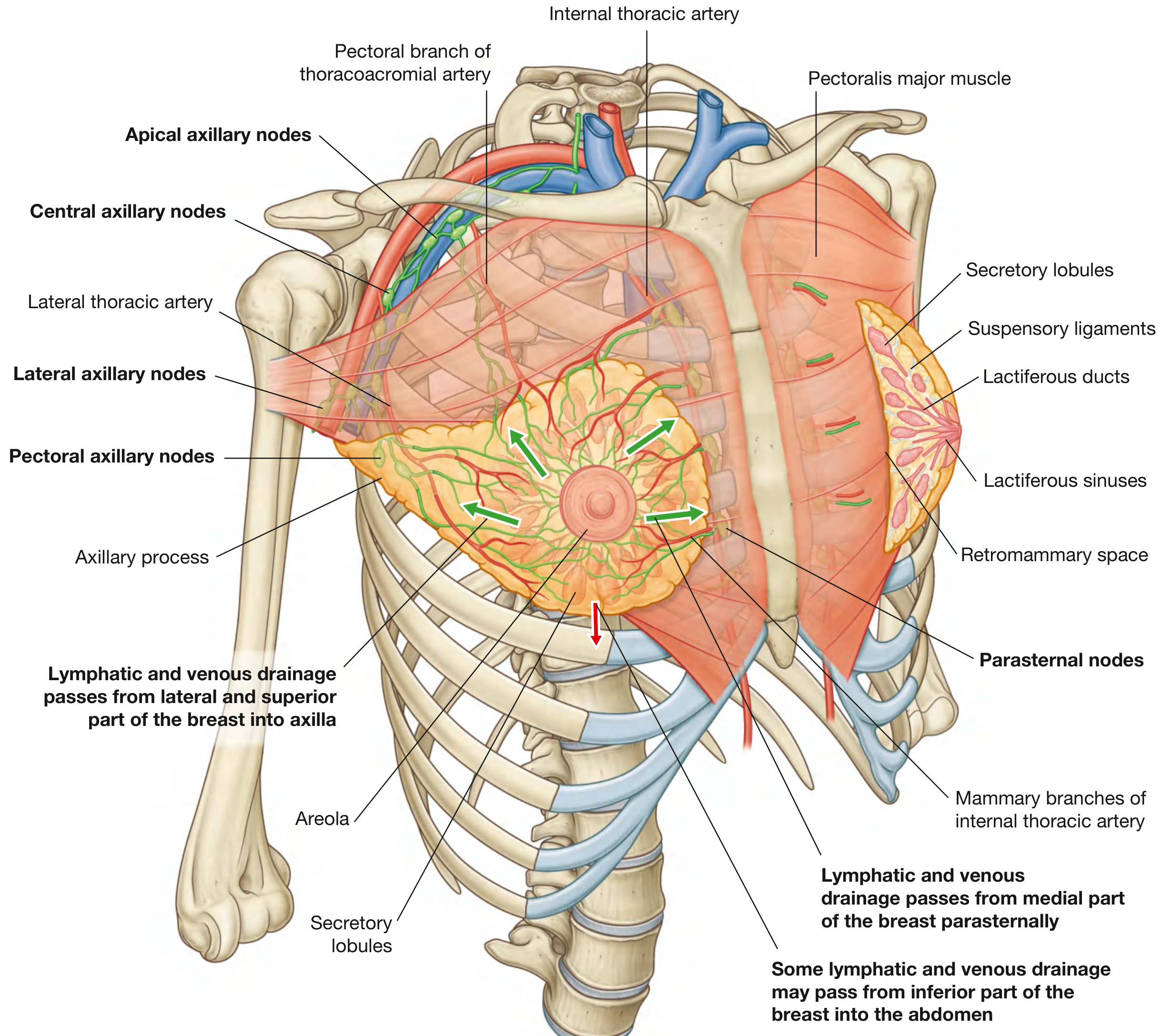
- Mammary glands are modified sweat glands lying within the superficial fascia, anterior to pectoralis major
- Made up of 15-20 lobules, each drained by a lactiferous duct opening onto the nipple
- The nipple is surrounded by a pigmented circular area - the areola
- Suspensory ligaments of Cooper - condensations of connective tissue stroma connecting the skin to deep fascia; these support the breast
- Retromammary space - a layer of loose connective tissue between the breast and deep fascia, allowing some mobility
- Base extends: rib II to VI vertically; sternum to midaxillary line horizontally
In non-lactating women, fat predominates. In lactating women, glandular tissue is more abundant.
Arterial Supply
| Source | Vessels |
|---|---|
| Lateral (from axillary artery) | Superior thoracic, thoracoacromial (pectoral branch), lateral thoracic (main supply), subscapular arteries |
| Medial | Perforating branches of internal thoracic artery (2nd-4th intercostal spaces) |
| Intercostal | 2nd to 4th intercostal arteries (lateral perforating branches) |
Venous Drainage
- Axillary vein
- Internal thoracic vein
- Intercostal veins
Nerve Supply
- Anterior and lateral cutaneous branches of intercostal nerves T2-T6
- The nipple is specifically supplied by the 4th intercostal nerve - a favourite exam fact!
Lymphatic Drainage 🔴 (Most Exam-Important Part)
| Region of Breast | Drainage |
|---|---|
| Lateral & superior (75%) | Axillary nodes (pectoral → central → apical → subclavian trunk) |
| Medial | Parasternal nodes (along internal thoracic artery) → bronchomediastinal trunk |
| Inferior | May drain into abdominal (subdiaphragmatic) nodes |
| Intercostal nodes | Drain into thoracic duct or bronchomediastinal trunk |
Axillary Lymph Node Groups (Level I, II, III)
- Level I (low axilla): Pectoral, subscapular, lateral nodes
- Level II (behind pectoralis minor): Central nodes
- Level III (above pectoralis minor): Apical nodes - final station before subclavian trunk
Axillary Tail (Tail of Spence)
- The upper outer quadrant of the breast projects around the lateral border of pectoralis major into the axilla
- This extension is called the axillary tail / axillary process / tail of Spence
- It can perforate the deep fascia and extend into the apex of the axilla
- Clinically important - lumps here may be mistaken for axillary lymphadenopathy
Applied Anatomy (Clinical Importance) 🔴
| Clinical Point | Anatomy Behind It |
|---|---|
| Skin dimpling/pitting in breast cancer | Carcinoma invades and shortens Cooper's ligaments → pulls overlying skin inward |
| Nipple retraction | Carcinoma of lactiferous ducts shortens them → nipple pulled inward |
| Peau d'orange (orange peel skin) | Tumour blocks lymphatics in skin → oedema, but skin is tethered at hair follicles creating pits |
| Breast cancer spread | Via lymphatics (axillary nodes most commonly) and veins (vertebral venous plexus → bone metastasis) |
| Most common site of breast cancer | Upper outer quadrant (contains most glandular tissue) |
| Sentinel lymph node biopsy | First axillary node to receive lymph from the tumour - biopsied to check for spread |
| Gynecomastia | Breast enlargement in men - associated with oestrogen excess, Klinefelter's, liver disease, drugs |
Exam Summary - One-liners to Remember
- Nipple = 4th intercostal nerve
- 75% lymph drains to axillary nodes (pectoral group first)
- Cooper's ligaments - support breast AND cause skin dimpling in cancer
- Axillary tail / Tail of Spence - upper outer extension into axilla
- Retromammary space - allows breast to move on pectoralis major
- Blood supply = internal thoracic + lateral thoracic + intercostal arteries
- Base = rib II to VI, sternum to midaxillary line
Source: Gray's Anatomy for Students, pp. 168-176