
Describe the Aetiology, Clinical features, and treatment of Galashundika, Tundikeri, Kacchapa (Tumours of the palate), Uvulitis, and Gilayushotha (Tonsillitis).
Reading File
These are Ayurvedic conditions related to diseases of the mouth and throat (Mukha Roga). Let me search the medical library for these topics in parallel.
Finding Sources
Finding Sources
Finding Sources
Finding Sources
Finding Sources
The library does not contain Ayurvedic textbooks. Let me check the uvulitis content from the library and also search the web for the Ayurvedic conditions.
Reading File
Searching the Web
Galashundika Tundikeri Kacchapa Ayurveda palate diseases aetiology clinical features treatment
Searching the Web
Gilayushotha tonsillitis Ayurveda Uvulitis Galashundika mukha roga treatment
Reading Web Page
https://www.easyayurveda.com/uvulitis-galashundi
Reading Web Page
https://sanatanayurveda.com/diseases/tonsillitis
Searching the Web
Galashundika uvulitis Kacchapa palate tumour Ayurveda Sushruta aetiology doshas symptoms treatment Bhedya
Reading Web Page
https://www.easyayurveda.com/uvulitis-galashundi
I now have sufficient information to compose a comprehensive answer drawing from Ayurvedic classical sources (Sushruta Samhita, Ashtanga Hridayam), the PMC article, and the Sanatan Ayurveda extraction. Let me also fetch the uvulitis image from the textbook.
Loading Image
I now have all the information needed. Here is the full, structured response:
Talugata Roga (Diseases of the Palate) and Related Throat Conditions
These conditions are described in Ayurvedic classical texts - primarily Sushruta Samhita (Nidana Sthana and Chikitsa Sthana) and Ashtanga Hridayam - under Mukha Roga (diseases of the oral cavity) and Urdhvajatrugata Roga (diseases above the clavicle).
1. Galashundika (Uvular Polyp / Elongated Uvula)
Aetiology
Galashundika is caused by the vitiation of Kapha and Rakta doshas. Etiological factors include:
- Consumption of heavy, cold, unctuous, sour, and Kapha-aggravating foods (curd, milk, black gram, fish, marshy animal meat)
- Improper dietary habits (Viruddhashana - incompatible foods)
- Exposure to cold, dust, and pollutants
- Poor oral hygiene
- Suppression of natural urges
The vitiated Kapha and Rakta accumulate in the uvula (Galashundi), leading to pathological swelling.
Clinical Features
- A fleshy, pendulous swelling arising from the uvula, resembling the fruit of the wild cotton plant (Vana-karpasa) or a small gourd
- The swelling droops down and rests or lies on the surface of the tongue
- Shotha (oedema/swelling) - erythematous and oedematous uvula
- Daha (burning sensation) in the throat
- Kandu (itching/irritation)
- Srava (excessive salivation/discharge)
- Feeling of a foreign body in the throat
- Difficulty in swallowing (Galoparodha / Dysphagia)
- Muffled or altered voice
- Gagging sensation; in severe cases, respiratory difficulty
Treatment
- Surgical (Shastra Karma): Galashundika is classified as a Bhedya Roga (condition requiring incision). The procedure involves:
- The swelling is held carefully with the thumb, finger, and a Sandamsha Yantra (forceps/tongs)
- It is then gradually excised (Bhedana/Chedana) at its base with a sharp instrument
- Post-operative care includes cleansing with medicated decoctions
- Post-operative local therapy: Pratisarana (application) with drugs having Lekhana (scraping), Shothahara (anti-inflammatory), Ropana (healing), and Rakta Stambhana (haemostatic) properties
- Saindhava (rock salt) paste
- Yavakshara (barley alkali) or Tankana (borax) application
- Kavala / Gandusha (gargling) with:
- Triphala Kashaya (decoction of three fruits)
- Trikatu (long pepper, black pepper, dry ginger) decoctions with honey
- Internal medicines to pacify Kapha and Rakta:
- Khadiradi Gutika (sucked slowly in the mouth)
- Kanchanara Guggulu (for glandular/fleshy swellings)
- Kaphaketu Rasa (for Gala Roga)
- Dietary advice: Avoid Kapha-aggravating foods, cold drinks, curd, milk, black gram
2. Tundikeri (Tonsillar Hypertrophy / Acute Tonsillitis)
Aetiology
Tundikeri is caused by vitiation of Kapha and Rakta doshas, identical causative factors to Galashundika:
- Intake of heavy, oily, cold, sour foods - curd (Dadhi), milk (Ksheera), black gram (Masha), fish
- Agnimandya (impaired digestive fire) leading to Ama (undigested metabolic toxin) accumulation
- Ama circulates and settles in the tonsillar tissue, combining with Kapha and Pitta to produce inflammation
Clinical Features
Tundikeri presents as a hard, heavy swelling at the root of the jaw (Hanu-mula), shaped like the fruit of the wild cotton plant (Vana-karpasa / Tundikeri plant). Features include:
- Kathina Shotha - hard, firm tonsillar swelling
- Toda - pricking/stabbing pain (100% of cases in clinical studies)
- Daha - burning sensation
- Paka - tendency to suppurate (form pus/abscess)
- Galoparodha - dysphagia / difficulty swallowing (noted in ~87% of patients)
- Jwara - fever
- Raaga - redness/hyperemia of the tonsils
- Mukha Dourgandhya - halitosis (bad breath)
- Aruchi - anorexia
- Hoarseness of voice
- Jugulo-digastric lymphadenopathy
Treatment
Acharya Sushruta classifies Tundikeri as a Bhedya Roga (requiring surgical incision) and directs that it be treated along the lines of Galashundika.
- Surgical: Tonsillotomy/incision when suppurated or hypertrophied
- Pratisarana (topical application):
- Apamarga Kshara Pratisarana (alkaline paste of Achyranthes aspera) - possesses Lekhana, Shothahara, Ropana, Rakta Stambhana, and Vedana Sthapana properties
- Tankana-Madhu Pratisarana (borax with honey) - anti-inflammatory, desiccant
- Internal medicines:
- Kanchanara Guggulu - for glandular swellings (Granthi, Apachi, Galaganda, Shotha); has Vatahara, Shothahara, Tikta-Kashaya Rasa properties that pacify all three doshas
- Triphala Guggulu - Shothahara (anti-inflammatory) and Vedanahara (analgesic)
- Khadiradi Gutika - specific for Mukha Roga
- Gorocanadi Vati - for Galagraha (throat obstruction)
- Kavala/Gandusha (medicated gargles):
- Triphala Kashaya with honey
- Warm saline gargles
- Trikatu-based decoctions
- Nasya (nasal instillation of medicines) to reduce inflammatory load
- Lepana (local application of paste) over the swollen region
- Dietary restrictions: Strictly avoid Amla Rasa (sour taste), Matsya (fish), Anupa Mamsa (marshy animal flesh), Dadhi (curd), Ksheera (milk), Masha (black gram), dry and hard foods
3. Kacchapa (Tumour of the Palate)
Aetiology
Kacchapa is caused by the vitiation of Kapha and Medas (fat/lipid tissue). It is classified among the Talugataroga (palate diseases). Dietary indiscretion, excessive oily and sweet foods, and chronic Kapha accumulation in the palatal region are the principal causes.
Clinical Features
Kacchapa literally means "tortoise" - the swelling is named for its shape resembling the back of a tortoise's shell:
- A smooth, dome-shaped, broad-based swelling arising from the palate
- The surface is curved, elevated, and firm - resembling the carapace (back shell) of a tortoise
- Sthira (stable/immobile)
- Manda-ruja (mild pain or painless)
- Guru (heavy, weighty sensation in the mouth/palate)
- Sensation of fullness or obstruction in the mouth
- Difficulty in chewing and swallowing
- May impair speech
- Slow, insidious growth; generally non-suppurating
Treatment
- Surgical excision (Bhedya/Chedya): Kacchapa, being a Talugataroga, is managed surgically. The swelling is carefully excised from the palate.
- Post-operative Pratisarana: Application of Kshara (alkaline caustics) or Agni Karma (cauterization) if recurrence is anticipated or if edges are ragged
- Local Kavala with Triphala decoctions and honey post-surgery
- Internal Kapha-Medas pacifying drugs:
- Kanchanara Guggulu
- Varunadi Kwatha (for fatty/lipid tissue disorders)
- Trikatu Churna (to improve Agni)
- Dietary corrections: Reduction of oily, sweet, heavy foods; Kapha-reducing diet
4. Uvulitis (Galashundi Shotha - Modern Correlation)
(Modern perspective, as described in emergency medicine texts)
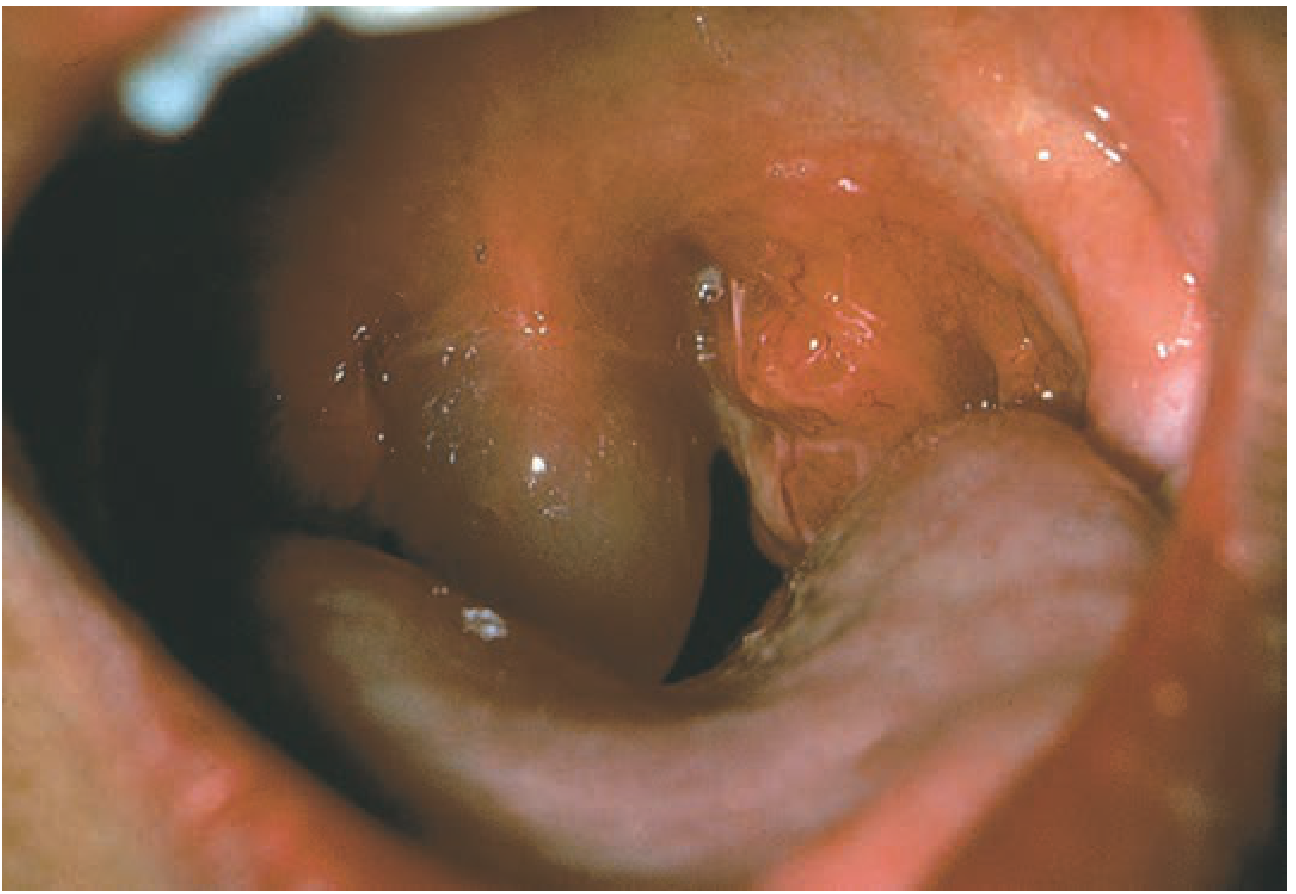
Aetiology
Isolated uvulitis is uncommon. Causes include:
- Infectious (most common):
- Group A beta-haemolytic Streptococcus (GABHS) - most common bacterial cause when associated with pharyngitis
- Haemophilus influenzae type b (in unimmunized patients; may co-occur with epiglottitis)
- Fusobacterium nucleatum, Prevotella intermedia, Streptococcus pneumoniae, Candida albicans
- Non-infectious:
- Trauma from instrumentation (e.g., endoscopy, intubation)
- Irritant inhalation (smoke, chemicals)
- Allergic reactions / angioedema
- Vasculitis
- Acid reflux (GERD)
- Smoking, excessive alcohol
Clinical Features
- Erythematous, markedly enlarged, oedematous uvula (as seen in image above)
- Fever
- Sore throat, odynophagia (pain on swallowing)
- Sensation of something in the throat
- Drooling (excessive salivation)
- Gagging, coughing
- Respiratory distress (in severe cases with concurrent epiglottitis)
- Muffled voice
Uvulitis is a clinical diagnosis. When pharyngitis co-exists, test for GABHS. H. influenzae requires culture on Loeffler or tellurite selective medium.
Treatment
-
Antibiotic therapy (for bacterial cause):
- Penicillin V (first line): Child 250 mg twice daily; Adult 500 mg twice daily x 10 days
- Amoxicillin (first line): 50 mg/kg once daily (max 1000 mg) x 10 days
- Benzathine penicillin G (single IM dose): <27 kg: 600,000 units; ≥27 kg: 1,200,000 units
- Cephalexin (penicillin-allergic without anaphylaxis): 20 mg/kg/dose twice daily x 10 days
- Clindamycin (penicillin-allergic): 7 mg/kg three times daily (max 300 mg) x 10 days
- Azithromycin: Child 12 mg/kg/day x 5 days; Adult 500 mg day 1, then 250 mg days 2-5
-
Corticosteroids to reduce uvular oedema
-
Antihistamines + epinephrine if allergic reaction or angioedema is suspected
-
Airway management: Acute airway obstruction is uncommon with isolated uvulitis, but if epiglottitis is also present, intubation may be required
-
Supportive: Rest, adequate fluids, warm saline gargles, throat lozenges, analgesics
-
Tintinalli's Emergency Medicine, p. 822
5. Gilayushotha (Tonsillitis / Tonsillar Swelling - Gilayu)
Aetiology
Gilayushotha (also written as Gilayu Shotha) is caused by vitiation of Kapha and Rakta doshas, with Kapha being predominant. Causative factors:
- Consumption of Kapha-aggravating foods: cold, heavy, oily, sweet, sour foods; curd, milk, black gram, fish
- Agnimandya (impaired digestive fire) - the primary upstream cause
- Accumulation of Ama (metabolic toxin from improper digestion) that circulates and settles in tonsillar tissue
- Seasonal factors (cold, damp seasons aggravate Kapha)
- Poor immunity
Clinical Features
Gilayu is described as a knotty, round swelling in the throat resembling the Amalaki fruit (Indian gooseberry - Phyllanthus emblica). It corresponds more closely to chronic tonsillitis or a tonsillar cyst/fibrous enlargement:
- Granthi - a stable, knotty lump in the throat resembling the Amalaki fruit
- Manda-ruja - mild pain (compared to the acute pain of Tundikeri)
- Sthira - fixed, immobile swelling
- Galoparodha - persistent feeling of obstruction or a foreign body in the throat
- Kathina Shotha - hard, firm enlargement of tonsils
- Mukha Dourgandhya - chronic halitosis
- Unlike Tundikeri, suppuration and acute fever are less prominent in Gilayu
Treatment
Treatment follows the same general principles as Tundikeri (as both are Bhedya Roga), with emphasis on Kapha-Rakta pacification and restoration of Agni:
- Surgical: Tonsillectomy-equivalent (Bhedana) when size causes obstruction
- Internal medicines:
- Khadiradi Gutika - specific for Mukha Roga; sucked slowly for local action
- Gorocanadi Vati - for Galagraha and throat diseases
- Kaphaketu Rasa - herbo-mineral formulation for Gala Roga, Galagraha, and Kasa
- Kanchanara - indicated for Gandamala (glandular swellings) and throat swellings
- Talisadi Churna - for respiratory and throat involvement with Kapha excess
- Triphala Guggulu - anti-inflammatory, analgesic
- Local therapies:
- Gandusha / Kavala (gargling) with medicated decoctions - Triphala Kashaya with honey, warm salt water
- Pratisarana with Apamarga Kshara or Tankana-Madhu
- Lepana (topical paste application over the throat)
- Nasya (nasal instillation of medicines)
- Dietary management (Pathya-Apathya):
- Avoid (Apathya): Sour foods, curd, milk, fish, marshy-animal flesh, black gram, dry/hard foods, cold drinks, sleeping with head inclined downward
- Prefer (Pathya): Warm, light, easily digestible foods; fruit juices; warm water; ginger, turmeric, honey
Summary Comparison Table
| Condition | Dosha Involved | Anatomical Site | Key Feature | Treatment Class |
|---|---|---|---|---|
| Galashundika | Kapha + Rakta | Uvula | Pendulous swelling lying on tongue | Bhedya (surgical) |
| Tundikeri | Kapha + Rakta | Tonsils (Hanu-mula) | Hard swelling like cotton fruit; suppurates | Bhedya (surgical) |
| Kacchapa | Kapha + Medas | Palate | Dome-shaped, tortoise-back swelling | Bhedya/Chedya (surgical) |
| Uvulitis | (Modern) Bacterial/Allergic | Uvula | Erythematous, oedematous uvula | Antibiotics/Steroids |
| Gilayushotha | Kapha + Rakta | Tonsils (Gala) | Stable, knotty, Amalaki-like lump; chronic | Bhedya + internal Kapha pacification |
Classical references: Sushruta Samhita (Nidana Sthana, Chikitsa Sthana), Ashtanga Hridayam; PMC evaluation of Kanchanara Guggulu in Tundikeri confirms the classical treatment principles with statistically significant results (P < 0.001 reduction in Toda, Shotha, Daha, and Jwara in clinical trials).
This is a shared conversation. Sign in to Orris to start your own chat.