
What are the preventive and medicine used for the treatment of periodic pain in menstrual cycle considering having child
dysmenorrhea treatment women wanting to conceive fertility safe options 2025
dysmenorrhea treatment fertility NSAIDs
dysmenorrhea menstrual pain pathophysiology prostaglandin uterus diagram
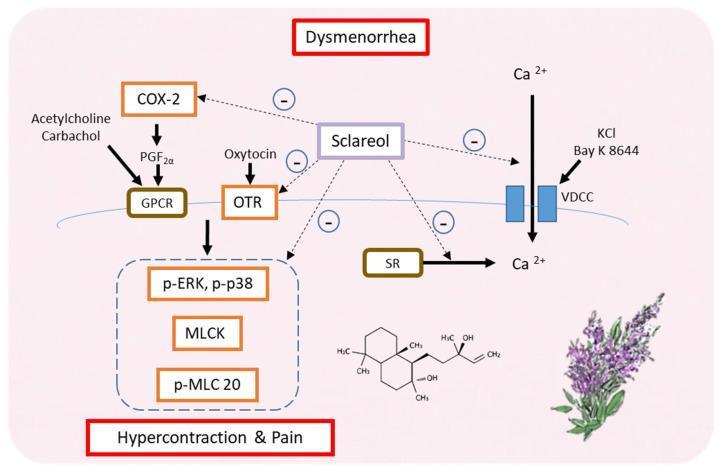
This pathophysiology diagram illustrates the molecular signaling pathways involved in primary dysmenorrhea and the inhibitory mechanism of sclareol. The flow shows how stimuli such as acetylcholine, carbachol, and prostaglandins (PGF2̡) activate G protein-coupled receptors (GPCR), while oxytocin activates oxytocin receptors (OTR). These pathways converge to increase protein expression and phosphorylation of p-ERK, p-p38, myosin light chain kinase (MLCK), and p-MLC20, leading to uterine hypercontraction and pain. Additionally, the diagram depicts calcium (Ca²⁺) influx through voltage-dependent calcium channels (VDCC) stimulated by KCl or Bay K 8644, and internal Ca²⁺ release from the sarcoplasmic reticulum (SR). Sclareol is shown as a central inhibitory agent (indicated by minus symbols) that downregulates COX-2, OTR, p-ERK/p-p38/MLCK signaling, and restricts Ca²⁺ availability. The visual includes the chemical structure of sclareol and a Salvia sclarea plant illustration, highlighting its potential therapeutic role in reducing inflammation and muscle hypercontractility associated with menstrual pain.
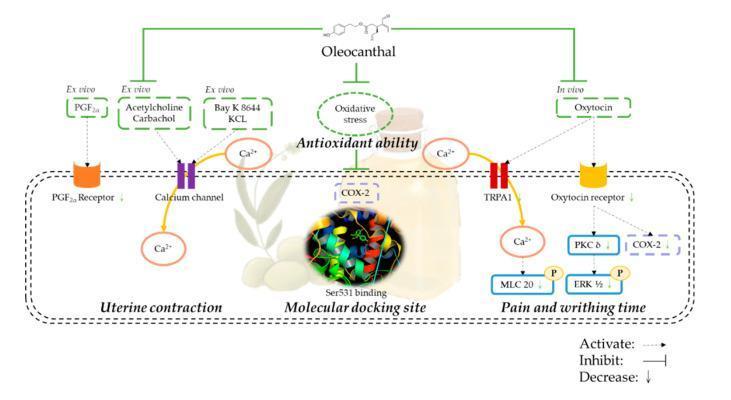
This pathophysiology diagram illustrates the molecular mechanism of Oleocanthal (OC) in alleviating primary dysmenorrhea through the inhibition of uterine hyper-contraction and pain. The schematic is divided into three functional domains: ex vivo uterine contraction (left), molecular docking (center), and in vivo pain/writhing (right). On the left, OC is shown inhibiting pathways stimulated by PGF2̡, Acetylcholine, and calcium channel activators (Bay K 8644/KCL), leading to reduced intracellular Ca2+ and uterine contraction. Centrally, the diagram highlights OC's antioxidant ability in reducing oxidative stress and its molecular docking at the Ser531 site of the COX-2 protein, mimicking the binding site of ibuprofen. The right section details the analgesic mechanism where OC inhibits Oxytocin-induced signaling. This results in the downregulation of the Oxytocin receptor, COX-2, and TRPA1-modulated calcium influx. Downstream effects include decreased phosphorylation of PKC̤, ERK 1/2, and MLC 20, collectively leading to reduced uterine contractility and pain perception. The diagram uses standard notation where flat-headed lines indicate inhibition, dashed arrows indicate activation, and downward arrows represent decreased protein expression or activity.
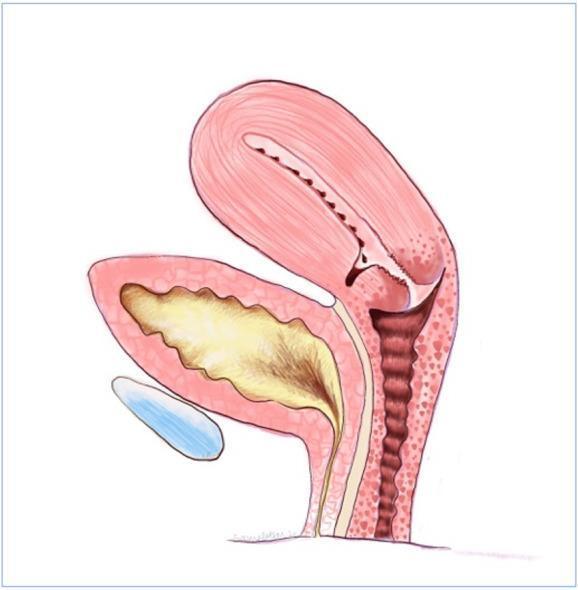
This medical illustration presents a sagittal cross-section of the female pelvis, specifically focusing on the uterus in an anteverted position. The diagram highlights the pathophysiology of a 'uterine niche' or caesarean scar defect. A distinct triangular pouch or sacculation is visible at the anterior uterine isthmus, corresponding to a previous caesarean section scar site. The illustration demonstrates the accumulation of dark yellow/brown menstrual debris within both the endometrial cavity and the niche itself. This sequestered debris is shown distal to the uterine body, explaining the mechanism of post-menstrual spotting due to impaired drainage and lack of coordinated muscular contraction at the scar site. Anatomical structures shown include the uterine corpus, cervix, vaginal canal, and the adjacent urinary bladder (represented in blue). The educational focus is on the anatomical deformity of the lower uterine segment and its clinical relevance to abnormal uterine bleeding patterns following caesarean delivery.
Dysmenorrhea (Menstrual Pain): Treatment for Women Who Want to Conceive
Understanding the Cause
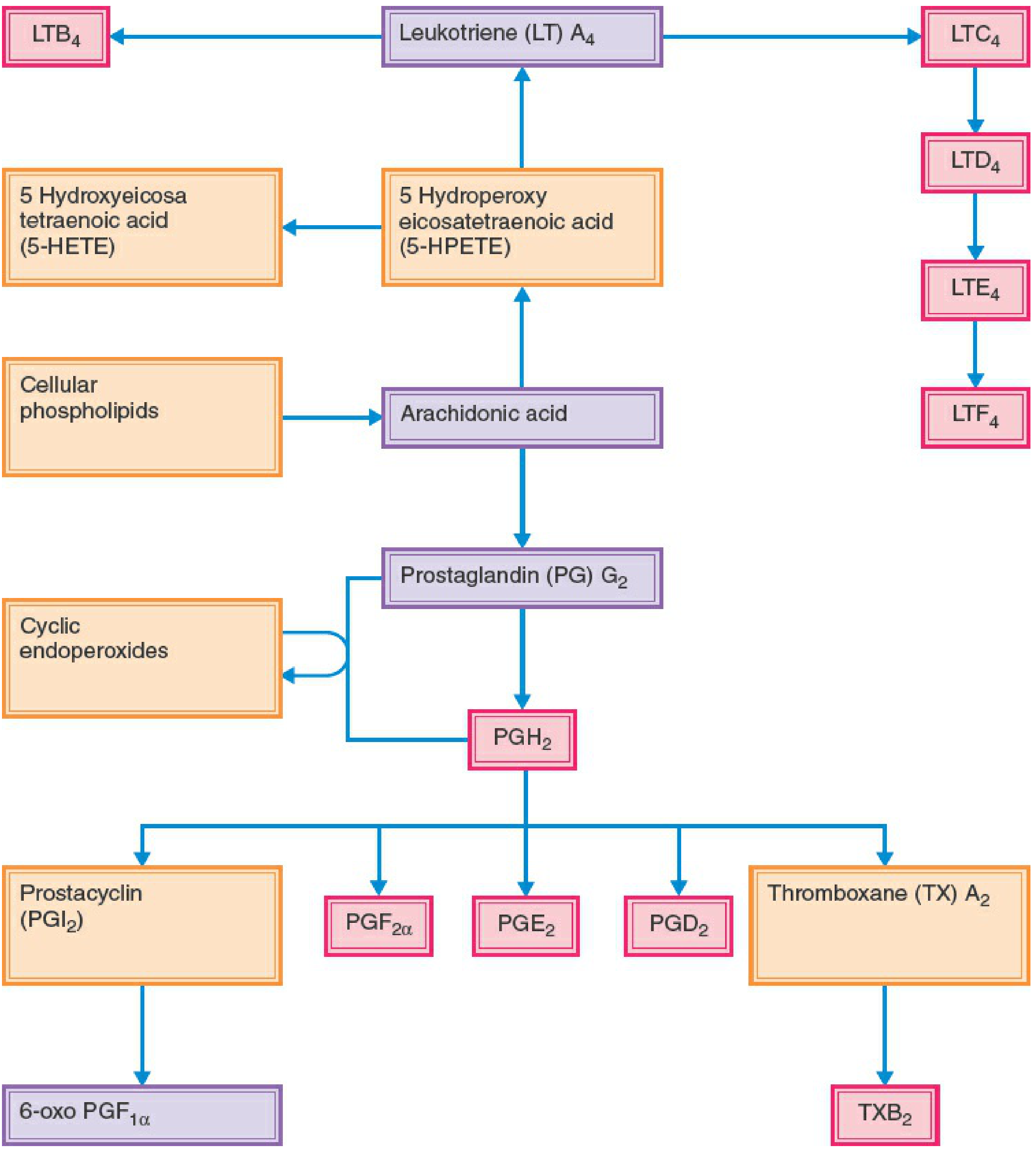
- Primary dysmenorrhea: Excess prostaglandins (PGF2α, PGE2) are released during menstruation, causing intense uterine contractions, ischemia, and pain. NSAIDs work by blocking this prostaglandin production.
- Secondary dysmenorrhea: Pain is from an underlying condition (endometriosis, fibroids, adenomyosis, IUD). Treating the root cause is the priority - and this is especially important if fertility is affected.
Medicines Safe for Women Wanting to Conceive
First-Line: NSAIDs (Non-Steroidal Anti-Inflammatory Drugs)
| Drug | Dose | Notes |
|---|---|---|
| Ibuprofen | 400-600 mg every 4-6 hrs, or 800 mg every 8 hrs | Most widely used; start 1-2 days before menses |
| Naproxen | 500 mg twice daily | Longer-acting; convenient dosing |
| Mefenamic acid | 500 mg loading, then 250 mg every 6 hrs | Effective; blocks prostaglandin synthesis + action |
| Celecoxib (COX-2 selective) | As prescribed | As effective as naproxen; but avoid near ovulation - see caution below |
Important fertility caution: COX-2 inhibitors and NSAIDs used around the time of ovulation may delay or inhibit ovulation (a reversible effect called "luteinized unruptured follicle syndrome"). If you are actively trying to conceive, try to use NSAIDs only during menstruation itself, not throughout the cycle, and avoid them in the mid-cycle ovulatory window. - (NCBI StatPearls - Dysmenorrhea)
Paracetamol (Acetaminophen) - Safe Alternative
- 1,000 mg four times daily is more effective than placebo for primary dysmenorrhea and is safe to use throughout the cycle, including when trying to conceive.
- Less effective than NSAIDs, but useful when NSAIDs are contraindicated or near ovulation.
What to AVOID When Trying to Conceive
| Treatment | Why to Avoid |
|---|---|
| Oral contraceptive pills (OCPs) | Prevent ovulation - incompatible with conception |
| Hormonal IUDs (Mirena) | Prevent pregnancy |
| Progestin injections (Depo-Provera) | Long-term fertility suppression; delayed return of fertility |
| GnRH agonists (leuprolide) | Suppress ovulation; risk of osteoporosis; temporary but contraceptive |
| Danazol | Androgenic drug; not safe in pregnancy or when trying to conceive |
| Endometrial ablation | Destroys uterine lining; not for anyone desiring future pregnancy |
Non-Drug Preventive Measures (Safe for Fertility)
1. Heat Therapy
- Apply a heating pad to the lower abdomen during painful days.
- Relaxes uterine muscles and increases pelvic blood flow. Evidence is consistent.
2. Regular Physical Exercise
- Exercise releases anti-inflammatory cytokines and reduces prostaglandin levels.
- Aerobic exercise 3-5 times/week reduces dysmenorrhea severity over time.
- Yoga has specific evidence for pain reduction.
3. Omega-3 Fatty Acids (Fish Oil / Krill Oil)
- Supplementation with omega-3 fatty acids (EPA/DHA) is evidence-supported and fertility-friendly.
- Shifts prostaglandin production toward less pro-inflammatory types (reducing PGF2α).
- Krill omega-3 phospholipids have outperformed conventional fish oil in dysmenorrhea trials. - (Berek & Novak's Gynecology)
- Bonus: omega-3 also supports conception and early pregnancy.
4. Vitamin B1 (Thiamine) - 100 mg/day
- A large RCT showed thiamine at 100 mg daily significantly reduces dysmenorrhea pain.
- Safe, inexpensive, and fertility-neutral. - (Berek & Novak's Gynecology)
5. Vitamin E
- Antioxidant effects reduce prostaglandin production; evidence from clinical trials supports use.
- Typically 200-400 IU/day starting 2 days before menstruation.
6. Magnesium
- A promising treatment; relaxes uterine smooth muscle.
- Dose not firmly established but 250-400 mg/day is commonly used.
- Also supports conception and early pregnancy health.
7. Dietary Changes
- Reduce omega-6 fatty acids (vegetable oils, processed foods) which are pro-inflammatory prostaglandin precursors.
- Increase fish, leafy vegetables, whole grains.
- Reduce caffeine and sugar during the premenstrual phase.
- These are safe and supportive of fertility.
8. Acupuncture
- Evidence is mixed but some trials show benefit; no fertility risk.
- May modulate peripheral pain pathways.
9. Transcutaneous Electrical Nerve Stimulation (TENS)
- High-frequency TENS has evidence of benefit in primary dysmenorrhea.
- Non-pharmacological and fertility-safe.
If Pain is Severe and Unresponsive - Rule Out Secondary Causes
- Endometriosis - associated with painful periods, painful intercourse, and infertility. Diagnosed by laparoscopy. Medical management includes NSAIDs + surgical treatment (preserving fertility).
- Fibroids (leiomyomas) or adenomyosis - can be treated surgically (myomectomy preserves the uterus).
- These conditions directly affect fertility and need specialist evaluation if you are trying to conceive.
Practical Summary for a Woman Trying to Conceive
- Use ibuprofen or naproxen during menstruation only - start 1-2 days before your period begins if possible, stop when bleeding ends. Avoid around ovulation (mid-cycle).
- Take omega-3 fish oil and magnesium daily as supplements - these benefit both dysmenorrhea and fertility.
- Apply heat to the lower abdomen during painful days.
- Exercise regularly between periods.
- Eat an anti-inflammatory diet (less processed food, more fish and vegetables).
- If pain is severe or if you are struggling to conceive, see a gynecologist to rule out endometriosis or other secondary causes.
Disclaimer: This is general medical information. Always consult your doctor or gynecologist before starting any treatment, especially when planning a pregnancy.
Medication for treatment of uterine pain in period
medications for uterine menstrual pain dysmenorrhea first line second line 2025
Medications for Uterine Pain During Menstruation (Dysmenorrhea)
Why Uterine Pain Happens
First-Line Medications: NSAIDs
| Drug | Initial Dose | Maintenance Dose | Notes |
|---|---|---|---|
| Ibuprofen | 800 mg | 400-800 mg every 6-8 hrs | Most widely used; OTC available |
| Naproxen sodium | 550 mg | 275 mg every 6-8 hrs (max 1375 mg/day) | Longer-acting; twice daily dosing |
| Mefenamic acid | 500 mg | 250 mg every 6 hrs | Fenamate class - blocks prostaglandin synthesis AND action; may be superior to ibuprofen |
| Diclofenac | 50 mg | 50 mg 3 times daily | Good efficacy |
| Ketoprofen | 50 mg | 50 mg 3 times daily | Alternative option |
| Piroxicam | 20 mg | 20 mg once daily | Convenient once-daily dosing |
| Celecoxib (COX-2 selective) | 200 mg | 200 mg as needed | As effective as naproxen; less GI side effects |
Side effects: Nausea, heartburn, stomach upset. Take with food to minimize GI irritation. Avoid if you have peptic ulcers, kidney disease, heart failure, or are on blood thinners. - (Goldman-Cecil Medicine; AAFP Guidelines)
Alternative First-Line: Paracetamol (Acetaminophen)
- Dose: 1,000 mg four times daily
- Less effective than NSAIDs but useful when NSAIDs are contraindicated
- Safe for stomach, kidneys
- Avoid in liver disease or alcohol use
Second-Line: Hormonal Medications
| Type | Examples | How Given | Notes |
|---|---|---|---|
| Combined oral contraceptive pill (OCP) | Ethinyl estradiol + levonorgestrel, norgestimate, etc. | Daily pill | Very effective; reduces pain by 70-80%; can be taken continuously to skip periods entirely |
| Progestin-only pill | Norethindrone, desogestrel | Daily pill | Good for women who can't take estrogen |
| Hormonal IUD | Levonorgestrel-IUD (Mirena, Kyleena) | Inserted into uterus | Highly effective; reduces menstrual flow and pain; lasts 3-8 years |
| Contraceptive patch | Norelgestromin/ethinyl estradiol | Weekly skin patch | Equivalent efficacy to pills |
| Vaginal ring | Etonogestrel/ethinyl estradiol (NuvaRing) | Monthly vaginal ring | Equally effective |
| Injectable progestin | Depo-medroxyprogesterone acetate (Depo-Provera) | Injection every 3 months | Effective; eventually stops periods; delayed return of fertility |
Hormonal contraceptives are considered equally effective to NSAIDs for long-term management of primary dysmenorrhea. Combining both (NSAID + hormonal) may be more effective than either alone. - (Berek & Novak's Gynecology)
Third-Line: When First and Second Line Fail
| Drug | Dose | Use |
|---|---|---|
| GnRH agonists (leuprorelin/leuprolide) | 3.75 mg SC monthly | Severe endometriosis-related pain; suppresses estrogen; max 6 months due to bone loss |
| GnRH antagonists (Elagolix, Relugolix) | Oral daily | Newer option; faster onset than agonists |
| Danazol | 200-800 mg/day | Androgenic drug; effective but significant side effects (weight gain, acne, voice changes) |
| Norethindrone (high-dose progestin) | 5 mg daily | For endometriosis-associated pain |
| Codeine / Tramadol | Short course | Added for 2-3 days/month only if NSAIDs and hormones insufficient; last pharmacologic resort |
Summary by Situation
| Your Situation | Best Choice |
|---|---|
| Just need pain relief, no contraception needed | NSAIDs (ibuprofen/naproxen) |
| Also need contraception | NSAIDs + combined oral contraceptive pill |
| Can't take estrogen | NSAIDs + progestin-only pill |
| Want long-term hassle-free relief | Hormonal IUD (Mirena) |
| NSAIDs cause stomach problems | Paracetamol, or celecoxib (COX-2 selective) |
| Severe pain suspected from endometriosis | See a gynecologist - may need GnRH therapy or surgery |
Note: Always consult a doctor or pharmacist before starting any medication, especially for dosing, contraindications, or if pain is getting progressively worse (which may indicate an underlying condition needing investigation).
Moa of dicyclomir and drotaverinen
mechanism of action dicyclomine drotaverine antispasmodic comparison
https://pmc.ncbi.nlm.nih.gov/articles/PMC8265406
smooth muscle relaxation mechanism cAMP phosphodiesterase inhibitor anticholinergic
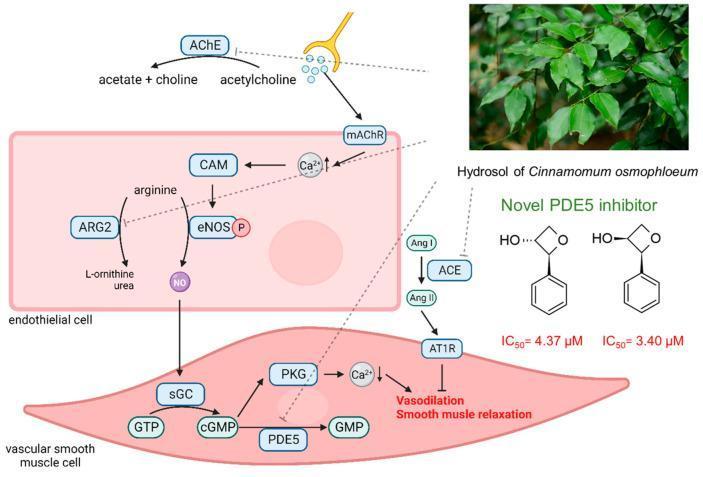
This pathophysiology diagram illustrates the biochemical mechanism by which Cinnamomum osmophloeum hydrosol influences erectile function through multi-pathway enzymatic inhibition within endothelial and vascular smooth muscle cells (VSMCs). The flowchart highlights four primary inhibitory targets: AChE (acetylcholinesterase), which breaks down acetylcholine into acetate and choline; ARG2 (arginase 2), which competes for arginine to produce L-ornithine and urea; ACE (angiotensin-converting enzyme), which converts Angiotensin I to the vasoconstrictor Angiotensin II; and PDE5 (phosphodiesterase type 5), which degrades cGMP. The diagram depicts the positive signaling cascade where acetylcholine activates muscarinic receptors (mAChR), increasing calcium and calmodulin (CAM) to activate phosphorylated eNOS (eNOS-P). This results in nitric oxide (NO) production, which diffuses to VSMCs to stimulate soluble guanylate cyclase (sGC). The sGC converts GTP to cGMP, activating protein kinase G (PKG) and leading to smooth muscle relaxation and vasodilation. Two novel PDE5 inhibitor isomers (trans- and cis-phenyloxetan-3-ol) are shown with their respective IC50 values (4.37 µM and 3.40 µM), demonstrating their structural role in maintaining cGMP levels to treat erectile dysfunction.
![A medical infographic and signaling pathway diagram illustrating the clinical uses and mechanism of phosphodiesterase 5 inhibitors (PDE5-Is). The central panel depicts the cellular NO/cGMP pathway: Nitric Oxide (NO) stimulates soluble guanylyl cyclase (sGC) to convert GTP into cGMP. cGMP then activates Protein Kinase G (PKG), leading to decreased intracellular calcium [Ca2+] and subsequent smooth muscle relaxation. PDE5-Is are shown inhibiting the degradation of cGMP into inactive 5' GMP. The diagram branches into three primary clinical applications: 1) Lower Urinary Tract (LUT), showing relaxation of prostate/bladder muscles and increased oxygen perfusion for treating LUTS secondary to Benign Prostatic Hyperplasia (BPH); 2) Penis, illustrating increased arterial inflow resulting in erection for treating Erectile Dysfunction; and 3) Lungs, detailing vasodilation and cellular changes (decreased DNA synthesis/proliferation, increased apoptosis) in pulmonary artery smooth cells for treating Pulmonary Arterial Hypertension (PAH). The illustration uses anatomical icons and flow arrows to connect molecular signaling to systemic physiological outcomes.](https://cdn.orris.care/cdss_images/pmc_clinical_VQA_bbd5a168e816825f18e6358b1adf67e917376b9f48aa4bbc0fd21c8cb511013e.jpg)
A medical infographic and signaling pathway diagram illustrating the clinical uses and mechanism of phosphodiesterase 5 inhibitors (PDE5-Is). The central panel depicts the cellular NO/cGMP pathway: Nitric Oxide (NO) stimulates soluble guanylyl cyclase (sGC) to convert GTP into cGMP. cGMP then activates Protein Kinase G (PKG), leading to decreased intracellular calcium [Ca2+] and subsequent smooth muscle relaxation. PDE5-Is are shown inhibiting the degradation of cGMP into inactive 5' GMP. The diagram branches into three primary clinical applications: 1) Lower Urinary Tract (LUT), showing relaxation of prostate/bladder muscles and increased oxygen perfusion for treating LUTS secondary to Benign Prostatic Hyperplasia (BPH); 2) Penis, illustrating increased arterial inflow resulting in erection for treating Erectile Dysfunction; and 3) Lungs, detailing vasodilation and cellular changes (decreased DNA synthesis/proliferation, increased apoptosis) in pulmonary artery smooth cells for treating Pulmonary Arterial Hypertension (PAH). The illustration uses anatomical icons and flow arrows to connect molecular signaling to systemic physiological outcomes.
Mechanism of Action: Dicyclomine vs. Drotaverine
1. Dicyclomine (Dicycloverine)
Dual Mechanism of Action
Mechanism 1: Anticholinergic (Antimuscarinic) Effect
Acetylcholine released from parasympathetic nerve
         ↓
Binds M3 muscarinic receptors on smooth muscle
         ↓
Activates Gq protein → IP3 + DAG
         ↓
IP3 → Ca²⁺ release from sarcoplasmic reticulum
         ↓
Ca²⁺ + Calmodulin → activates MLCK
         ↓
Myosin phosphorylation → MUSCLE CONTRACTION (SPASM)

DICYCLOMINE BLOCKS M3 RECEPTOR
         ↓
No Ca²⁺ release → No contraction → RELAXATION
- Dicyclomine competitively blocks M3 muscarinic receptors on smooth muscle cells
- This prevents acetylcholine from triggering the intracellular calcium cascade
- It has about 1/8 the potency of atropine at muscarinic receptors
- This effect also occurs on GI, uterine, biliary, and urinary tract smooth muscle - (Lippincott Pharmacology; FDA Drug Label)
Mechanism 2: Direct Musculotropic (Non-cholinergic) Effect
- Dicyclomine directly relaxes smooth muscle independent of the autonomic nervous system
- Evidence: it antagonizes spasms induced by bradykinin and histamine (not cholinergic in nature) in isolated gut preparations
- This action makes it useful even when spasm is not driven purely by acetylcholine - (FDA Label; Pediatric Oncall Drug Index)
Summary Table - Dicyclomine
| Property | Detail |
|---|---|
| Primary receptor | M3 muscarinic (competitive antagonist) |
| Secondary action | Direct musculotropic smooth muscle relaxation |
| Neurotransmitter blocked | Acetylcholine |
| Calcium effect | Prevents IP3-mediated Ca²⁺ release |
| Class | Anticholinergic + musculotropic |
| Key adverse effects | Dry mouth, blurred vision, urinary retention, constipation, tachycardia (classic anticholinergic side effects) |
| Typical dose | 10-20 mg orally 3-4 times daily |
2. Drotaverine
Dual Mechanism of Action
Mechanism 1: Phosphodiesterase-4 (PDE4) Inhibition
Normal smooth muscle:
cAMP is produced → PDE4 breaks cAMP down → low cAMP → muscle contracts

DROTAVERINE INHIBITS PDE4
         ↓
cAMP accumulates (not broken down)
         ↓
High cAMP → activates Protein Kinase A (PKA)
         ↓
PKA phosphorylates MLCK → MLCK becomes INACTIVE
         ↓
Myosin cannot be phosphorylated → NO CONTRACTION → RELAXATION
- Drotaverine is an isoquinoline derivative (structurally related to papaverine)
- It selectively inhibits PDE isoenzyme IV (PDE4), which is the dominant phosphodiesterase in GI and uterine smooth muscle
- PDE4 normally degrades cAMP; by blocking it, drotaverine allows cAMP to accumulate
- Elevated cAMP → activates PKA → phosphorylates and inactivates myosin light chain kinase (MLCK) → smooth muscle relaxes - (PMC Comparative Study)
Mechanism 2: Calcium-Calmodulin Complex Inhibition
Ca²⁺ enters smooth muscle cell
         ↓
Ca²⁺ binds Calmodulin → Ca²⁺-Calmodulin complex forms
         ↓
Activates MLCK → Myosin phosphorylation → Contraction

DROTAVERINE INHIBITS Ca²⁺-CALMODULIN COMPLEX
         ↓
MLCK cannot be activated
         ↓
No myosin phosphorylation → RELAXATION
- Drotaverine binds to smooth muscle cell surface and alters membrane potential/permeability
- It directly inhibits the calcium-calmodulin complex, preventing MLCK activation independent of the cAMP pathway
- This dual action (PDE4 inhibition + Ca²⁺-calmodulin antagonism) gives drotaverine potent spasmolytic effects - (PMC Study)
Summary Table - Drotaverine
| Property | Detail |
|---|---|
| Primary target | PDE4 (phosphodiesterase isoenzyme IV) |
| Secondary target | Calcium-calmodulin complex |
| Second messenger affected | cAMP (elevated by PDE4 inhibition) |
| Final pathway | Inactivation of MLCK → smooth muscle relaxation |
| Anticholinergic activity | NONE |
| Class | Pure musculotropic / direct smooth muscle relaxant |
| Key adverse effects | Minimal - headache, flushing, dizziness (no dry mouth, urinary retention etc.) |
| Typical dose | 40-80 mg orally 3 times daily |
Head-to-Head Comparison
| Feature | Dicyclomine | Drotaverine |
|---|---|---|
| Drug class | Anticholinergic + musculotropic | Pure musculotropic (PDE4 inhibitor) |
| Primary target | M3 muscarinic receptor | PDE4 enzyme |
| Secondary target | Direct smooth muscle | Ca²⁺-calmodulin complex |
| Anticholinergic effects | YES | NO |
| Dry mouth / urinary retention | Yes (significant) | No |
| Safe in glaucoma? | Contraindicated | Safe |
| Safe in urinary retention? | Contraindicated | Safe |
| Mechanism type | Neurogenic blockade + direct | Pure direct muscle relaxant |
| Structure | Synthetic tertiary amine | Isoquinoline derivative |
| Use in uterine spasm (dysmenorrhea) | Yes | Yes (preferred due to fewer side effects) |
| Use in GI/biliary/renal colic | Yes | Yes |
Why Drotaverine is Often Preferred for Uterine/Menstrual Pain
- Young women with dysmenorrhea
- Patients with glaucoma or urinary problems
- Situations where dry mouth, constipation, or blurred vision would be problematic