
Describe the structure, relations, and blood supply of the heart.
Reading File
Searching across cardiac anatomy, relations, and blood supply simultaneously.
search_medical_text
heart structure anatomy chambers valves pericardium
Bailey and Love's Short Practice of Surgery 28th Edition
Page 975
search_medical_text
heart relations surfaces borders great vessels
Harrison's Principles of Internal Medicine, Twenty First Edition
Page 7478
search_medical_image
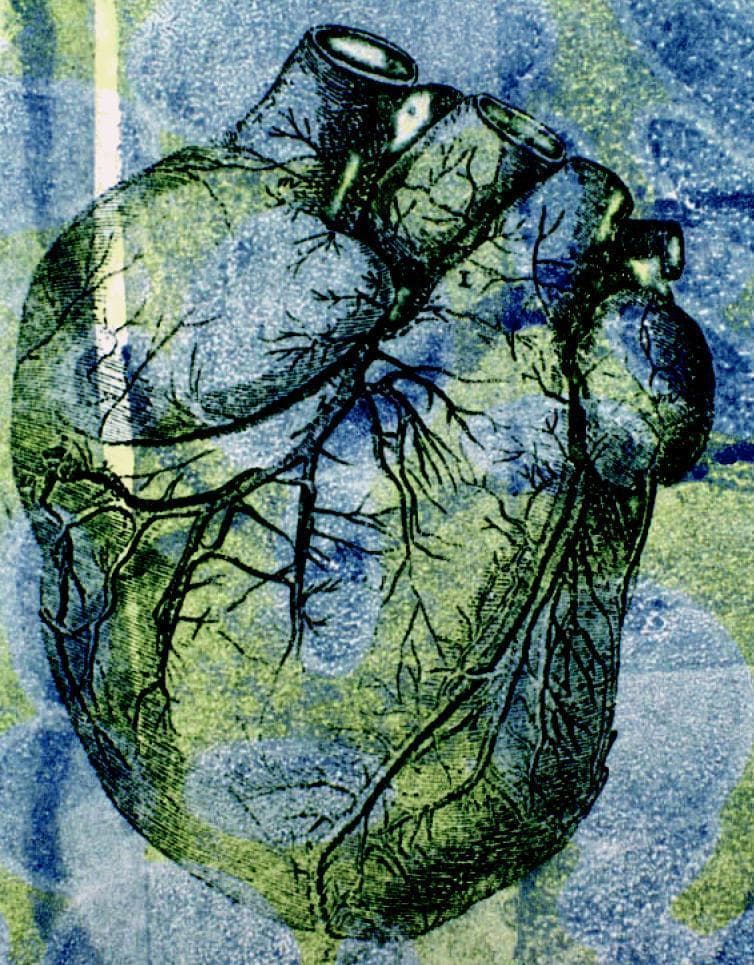
heart anatomy chambers blood supply coronary arteries diagram
Hugging Face pmc clinical VQA raw
Page 0
GradeResponse
GradeResponse
GradeResponse
search_medical_text
coronary arteries right left anterior descending circumflex blood supply myocardium
Heart: structure, relations, and blood supply
1) Structure (gross anatomy)
-
Location: Middle mediastinum, obliquely placed, about two-thirds left of midline.
-
Coverings:
- Fibrous pericardium (outer tough sac)
- Serous pericardium: parietal and visceral layers (visceral layer = epicardium)
-
Wall layers:
- Endocardium (inner lining)
- Myocardium (muscle, thickest in LV)
- Epicardium (outer serous layer)
-
Chambers:
- Right atrium (RA): receives SVC, IVC, coronary sinus
- Right ventricle (RV): pumps to pulmonary trunk
- Left atrium (LA): receives 4 pulmonary veins
- Left ventricle (LV): pumps to aorta; thickest wall
-
Valves:
- Atrioventricular: tricuspid (RA-RV), mitral (LA-LV)
- Semilunar: pulmonary and aortic
- Aortic valve is tricuspid with sinuses above leaflets, two giving rise to coronary ostia (Bailey & Love, p. 975).
-
External features:
- Apex: mainly LV, in left 5th intercostal space (midclavicular line region)
- Base: mainly LA (posterior surface)
- Surfaces: sternocostal (anterior), diaphragmatic (inferior), right pulmonary, left pulmonary
- Borders: right (RA), inferior (mostly RV), left (LV + left auricle), superior (atria + great vessels)
2) Relations
- Anterior: sternum, costal cartilages, thymic remnants, pleura/lungs
- Posterior: esophagus, descending thoracic aorta, thoracic vertebrae (via pericardium)
- Inferior: central tendon of diaphragm
- Lateral: mediastinal pleura and lungs; phrenic nerves/pericardiacophrenic vessels run along pericardium
- Superiorly continuous with great vessels: ascending aorta, pulmonary trunk, SVC, IVC, pulmonary veins
Clinical relevance of close relations: injury/hematoma around great vessels may compress adjacent structures (Harrison’s, p. 7478).
3) Blood supply of the heart
Arterial supply (coronary arteries)
Arise from ascending aorta at coronary sinuses:
-
Right coronary artery (RCA)
- Runs in right AV groove
- Branches: right marginal, usually posterior interventricular (PDA) in right-dominant hearts
- Supplies: RA, most RV, inferior LV wall (variable), often SA node (~60%), AV node (~80-90%)
-
Left coronary artery (LCA)
- Short main stem, divides into:
- LAD (anterior interventricular): anterior septum, anterior LV wall, apex
- Circumflex (LCx): lateral/posterior LV (extent varies), LA
- May give left marginal branches
- Short main stem, divides into:
Coronary dominance
- Defined by artery giving PDA:
- Right-dominant: ~70-85%
- Left-dominant: ~8-15%
- Co-dominant: remainder
Venous drainage
- Mostly via coronary sinus into RA:
- Great cardiac vein
- Middle cardiac vein
- Small cardiac vein
- Also anterior cardiac veins (direct to RA) and venae cordis minimae (Thebesian veins).
Simple flow summary
- Heart muscle gets blood from coronary arteries (not directly from chamber blood).
- Perfusion is highest in diastole, especially for the LV subendocardium.
- Any critical coronary narrowing can reduce myocardial oxygen supply and cause ischemia/infarction.
If you want, I can also provide this as a one-page exam-style table (structures, relations, supply, and key applied anatomy).
This is a shared conversation. Sign in to Orris to start your own chat.