
Acute and chronic tonsillitis
Reading File
Now let me search the medical library for tonsillitis content in parallel.
Finding Sources
Finding Sources
Searching PubMed
tonsillitis management treatment
Excellent results. Let me now read the key sections in parallel - Scott-Brown's ORL (best ENT reference), Bailey & Love's Surgery, Goldman-Cecil Medicine, and K.J. Lee's Otolaryngology.
Reading File
Reading File
Reading File
Searching Images
acute tonsillitis inflamed tonsils throat
Now let me read more from Scott-Brown's (complications, recurrent/chronic tonsillitis) and Goldman-Cecil for internal medicine perspective, plus the Robbins pathology section.
Reading File
Reading File
Finding Sources
Searching Images
peritonsillar abscess quinsy throat
Now let me read the Bailey & Love tonsillectomy indications table and the Cummings guidelines section.
Reading File
Reading File
I now have comprehensive material. Let me compile the full answer.
Tonsillitis: Acute and Chronic
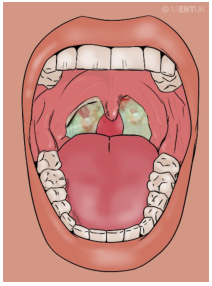
Anatomy and Background
The palatine tonsils are lymphoid aggregates located in the oropharynx between the anterior and posterior faucial pillars. They serve as part of Waldeyer's ring, playing an immune surveillance role. Tonsil inflammation may be a localized episode, in association with an upper respiratory illness, or part of a generalized systemic infection such as infectious mononucleosis. - Scott-Brown's Otorhinolaryngology Head & Neck Surgery Vol. 2
Etiology and Causative Organisms
Viral Causes (most common overall)
- Rhinovirus - most common cause of common cold
- Coronavirus
- Parainfluenza virus
- Adenovirus - pharyngoconjunctival fever
- Coxsackie A - herpangina
- Epstein-Barr virus (EBV) - infectious mononucleosis (the most important viral mimic of bacterial tonsillitis)
- Cytomegalovirus (CMV)
- Herpes simplex types 1 and 2
- HIV - acute retroviral syndrome
Bacterial Causes
- Group A beta-hemolytic Streptococcus (GABHS / S. pyogenes) - most common bacterial cause; causes tonsillitis, scarlet fever
- Non-group A beta-hemolytic streptococci (Groups B, C, G)
- Haemophilus influenzae, Streptococcus pneumoniae, Staphylococcus aureus
- Mixed anaerobes - Vincent's angina
- Neisseria gonorrhoeae
- Corynebacterium diphtheriae - diphtheria (grayish pseudomembrane; can cause cardiac toxicity if removed)
- Arcanobacterium haemolyticum - pharyngitis with scarlatiniform rash
- Yersinia enterocolitica, Francisella tularensis, Treponema pallidum (secondary syphilis)
- Mycoplasma pneumoniae, Chlamydia pneumoniae
Fungal
- Candida spp. (mainly in immunocompromised patients)
Approximately half of tonsillitis cases are bacterial and half are viral. Importantly, there is no evidence that viral tonsillitis is more or less severe than bacterial tonsillitis - both tend to resolve quickly without treatment. - Scott-Brown's, Bailey & Love's
ACUTE TONSILLITIS
Clinical Features
- Sudden-onset sore throat with fever and odynophagia (pain on swallowing)
- General malaise, dysphagia
- Referred otalgia (ear pain referred via the glossopharyngeal nerve)
- On examination: swollen, erythematous tonsils, sometimes with yellow/white pustules or exudate on the palatine tonsils (called "follicular tonsillitis")
- Tender jugulodigastric lymphadenopathy (tonsillar nodes)
- Enlarged upper cervical nodes
Investigations
- Throat swab for culture and sensitivity
- Blood for EBV testing (Monospot test) to exclude infectious mononucleosis - sensitivity <50% in children, 70-90% in adults
Management
- Symptomatic treatment is the mainstay: analgesia (paracetamol ± NSAIDs), hydration, saline gargles
- Antibiotics: If no improvement within 48-72 hours, start antibiotics. If clinical concern about severity, start earlier.
- Drug of choice: benzylpenicillin (IV) or phenoxymethylpenicillin (penicillin V) orally
- Alternatives: cephalosporins
- Ampicillin/amoxicillin must be avoided if infectious mononucleosis is suspected - causes a florid rash in ~90% of EBV cases (amoxicillin rash rate ~30%)
- Corticosteroids: Provide symptomatic relief of pain in sore throat in addition to antibiotic therapy, especially in severe cases. Oral or IM corticosteroids expedite resolution of pain.
COMPLICATIONS OF ACUTE TONSILLITIS
Local Complications
- Peritonsillar abscess (Quinsy) - most common local complication; pus collection lateral to the tonsil capsule between the tonsil and superior constrictor muscle
- Features: severe unilateral sore throat, odynophagia, trismus (pterygoid muscle spasm), uvular deviation to the contralateral side, lymphadenopathy
- Treatment: IV high-dose penicillin or cephalosporin; needle aspiration or incision and drainage under local anesthesia; interval tonsillectomy if recurrent
- Parapharyngeal abscess
- Retropharyngeal abscess
- Septicemia
- Quincke disease - isolated edema/swelling of the uvula, often in association with acute bacterial tonsillitis
Non-infective (Post-streptococcal) Complications
- Rheumatic fever - Group A streptococcal tonsillitis can trigger this autoimmune complication
- Post-streptococcal glomerulonephritis
These non-infective complications underscore the importance of treating bacterial tonsillitis adequately. - Scott-Brown's, Bailey & Love's
INFECTIOUS MONONUCLEOSIS (Glandular Fever)
This important mimic of bacterial tonsillitis deserves special mention:
- Caused by Epstein-Barr virus (EBV), commonly seen in young adults
- Presents as acute tonsillitis with significant systemic upset, splenomegaly, derangement of haematological and liver function tests
- In 30% of patients, secondary bacterial tonsil infection occurs
- Diagnosed via Monospot test (Paul-Bunnell) and confirmed by specific EBV antibody titres
- Treatment: high-dose IV penicillin or cephalosporins for secondary bacterial infection; avoid ampicillin/amoxicillin
- For significant tonsillar swelling compromising the airway: a short course of corticosteroids (with antibiotics)
- Antiviral medications (acyclovir) are debatable and should be considered only in severe cases
RECURRENT TONSILLITIS
Significant numbers of patients suffer from recurring episodes of acute tonsillitis. These may gradually settle or may continue for several years. Each episode is treated depending on its severity. There is no evidence of benefit from long-term prophylactic antibiotics. - Scott-Brown's
CHRONIC TONSILLITIS
Pathophysiology
Chronic tonsillitis usually results from repeated attacks of acute tonsillitis in which the tonsils become progressively damaged by inflammatory processes and provide a reservoir for infective organisms. - Bailey & Love's
Clinical Features
- Persistent or intermittent chronic throat discomfort
- Production of smelly white/yellow debris from tonsillar crypts (tonsillar caseous material)
- Occasionally this debris becomes inspissated, calcifies, and forms a tonsillolith (tonsil stone) with foul taste and odor
- Halitosis
- Chronic sore throat due to persistent infection
- Deep tonsillar crypts accumulate food debris and sloughed mucosa - ideal environment for bacterial growth, especially anaerobes
Treatment
- Frequent gargling with hydrogen peroxide mouthwash
- Manual expression of debris
- Long-term amoxicillin (500 mg TDS for 21 days) or clindamycin (300 mg TDS for 21 days) may help
- Presence of Actinomyces (commensal of oropharynx) indicates chronic infection requiring tonsillectomy, since long-term antibiotics are unlikely to be effective
- Multiple episodes of acute tonsillitis, especially with peritonsillar abscess, are also indications for surgery - Goldman-Cecil Medicine
TONSILLECTOMY
Indications
| Category | Indications |
|---|---|
| Absolute | Sleep apnea / chronic respiratory obstruction / cor pulmonale; Suspected tonsillar malignancy |
| Relative | Documented recurrent acute tonsillitis; Chronic tonsillitis; Peritonsillar abscess (Quinsy); Tonsillar asymmetry; Tonsillitis causing febrile convulsions; Diphtheria carrier state; Systemic disease caused by beta-haemolytic Streptococcus (nephritis, rheumatic fever) |
Table adapted from Bailey & Love's Short Practice of Surgery, 28th ed.
Cummings/AAO-HNS Guidelines Criteria
Children with recurrent throat infection may be considered for tonsillectomy. Children with less severe or less frequent disease are unlikely to have long-term benefits from surgery.
Important Notes on Tonsillectomy
- Procedure should ideally be performed when the tonsils are not acutely infected
- Adenotonsillectomy decreases sore throat episodes and sick days in the first year after surgery in children; value in adults is less clear
- Many adults improve spontaneously - potential benefit must be weighed against risks (hemorrhage, pain - more prevalent in adults)
- Children undergoing tonsillectomy for recurrent tonsillitis have increased risk of post-operative hemorrhage
- Blood type and screen should be done for children under 15 kg
Surgical Technique (Dissection Tonsillectomy)
Performed under general anaesthesia. The anterior faucial pillar mucosa is incised, the tonsil capsule identified, and blunt dissection separates the tonsil from its bed until a small inferior pedicle remains. This pedicle is then separated from the lingual tonsil. - Bailey & Love's
DIFFERENTIAL DIAGNOSIS OF TONSILLAR PATHOLOGY
| Condition | Key Features |
|---|---|
| Bacterial (GABHS) tonsillitis | Exudate, fever, no cough, tender cervical nodes |
| Viral tonsillitis | Often with coryza, cough |
| Infectious mononucleosis | Systemic upset, splenomegaly, EBV serology |
| Diphtheria | Grey pseudomembrane, "bull neck" |
| Vincent's angina | Mixed anaerobes, unilateral ulceration |
| Tonsillar lymphoma | Asymmetry, painless, constitutional symptoms |
| Peritonsillar abscess | Trismus, uvular deviation, unilateral |
PFAPA Syndrome (Periodic Fever with Aphthous ulcers, Pharyngitis, and Adenopathy)
PFAPA is the most common cause of pediatric recurrent fever. Features include:
- Recurring fevers lasting 3-6 days, every 2-8 weeks, with asymptomatic intervals
- Associated with at least one of: aphthous stomatitis, cervical adenitis, or pharyngitis
- Strict criteria for diagnosis: periodic fevers with accompanying symptoms above
- May respond to tonsillectomy - Cummings Otolaryngology
Sources: Scott-Brown's Otorhinolaryngology Head & Neck Surgery Vol. 2 | Bailey & Love's Short Practice of Surgery, 28th ed. | Goldman-Cecil Medicine | K.J. Lee's Essential Otolaryngology | Cummings Otolaryngology Head and Neck Surgery
Paradise criteria
The Paradise criteria are a set of evidence-based guidelines for tonsillectomy in children with recurrent throat infections. The threshold is 7+ episodes in 1 year, 5+ per year for 2 years, or 3+ per year for 3 years, each episode meeting at least one clinical feature (fever ≥38.3°C, cervical adenopathy, tonsillar exudate, or positive GABHS culture).
Searching sources...
Finding Sources
Finding Sources
Searching PubMed
Paradise criteria tonsillectomy recurrent tonsillitis
Good - I have the key file paths. Let me read all three relevant sections in parallel.
Reading File
Reading File
Finding Sources
Let me read the SIGN guidelines section and the Cummings table of Paradise criteria.
Reading File
Finding Sources
Now let me get the original Paradise criteria features (clinical qualifiers for each episode) and the Cummings table.
Finding Sources
Reading File
Let me search for the specific clinical qualifiers in the original Paradise criteria (fever, adenopathy, exudate, positive culture).
Finding Sources
Searching the Web
Paradise criteria tonsillectomy clinical qualifiers fever exudate adenopathy streptococcal culture
I now have all the information needed for a complete, detailed answer on the Paradise criteria.
Paradise Criteria for Tonsillectomy
The Paradise criteria were established by Jack L. Paradise and colleagues (published 1984) from their landmark randomized controlled trial at the Children's Hospital of Pittsburgh. They provide an evidence-based, standardized threshold for selecting children most likely to benefit from tonsillectomy in the setting of recurrent throat infections. They are the most widely used and cited criteria globally and form the basis of both the AAO-HNS clinical practice guidelines and the SIGN/ENTUK guidelines used in the UK. - Scott-Brown's Otorhinolaryngology Head & Neck Surgery (both volumes)
The Criteria: Two Components
A child must satisfy BOTH components:
Component 1: Minimum Frequency of Sore Throat Episodes
The "7-5-3 rule":
| Time Frame | Minimum Episodes Required |
|---|---|
| In the preceding 1 year | ≥ 7 episodes |
| In each of the preceding 2 years | ≥ 5 episodes per year |
| In each of the preceding 3 years | ≥ 3 episodes per year |
Component 2: Clinical Qualifiers for Each Episode
Each counted episode must be a sore throat PLUS at least one of the following four features:
| Feature | Definition/Threshold |
|---|---|
| Fever | Temperature > 38.3°C (> 100.9°F) |
| Cervical adenopathy | Tender lymph nodes OR lymph node size > 2 cm |
| Tonsillar exudate | Visible exudate on the tonsils |
| Positive streptococcal culture | Culture positive for Group A beta-haemolytic Streptococcus (GABHS) |
Component 3: Treatment
- Antibiotics must have been administered in the conventional dosage for proved or suspected streptococcal episodes.
Documentation Requirement
This is a critical and often overlooked aspect of the original criteria:
Each episode and its qualifying features must have been substantiated by contemporaneous notation in a clinical record (medical notes/GP records).
Parental history alone is not sufficient. Proper, contemporaneous clinical documentation is mandatory. This strict documentation requirement is what made the trial methodologically rigorous and is why children may otherwise clinically qualify but cannot proceed to surgery without records. - AAO-HNS Clinical Practice Guideline; Scott-Brown's
Evidence Supporting the Threshold
Original Paradise Trial (1984)
- Randomized children with sore throats meeting the criteria into surgical vs. non-surgical groups
- Showed tonsillectomy was efficacious for 2 years (and sometimes a third) in severely affected children
- Recruitment took many years as few families were willing to undergo randomization; a large parallel non-randomized cohort was also studied
NESTAC Trial
- Large multicentre RCT using the same inclusion criteria as Paradise
- Demonstrated significant improvements in sore throat episodes, need for consultations, quality of life, and health costs vs. medical management
Trials in Children Below the Threshold
- Two further trials (a second Paradise trial, and a Dutch trial) enrolled children with milder symptoms who did not meet the original Paradise criteria
- Both failed to show a significant advantage of surgery over watchful waiting
- Conclusion: the original Paradise criteria represent a reasonable threshold - children below the threshold should be managed expectantly, not surgically - Scott-Brown's, Vol. 2
Cochrane Review (2009)
- Severely affected children (meeting Paradise criteria): tonsillectomy reduces sore throat episodes from an average of 3 to 1 episode in the first year post-surgery, at the cost of one post-operative pain episode
- Less severely affected children: surgery reduces episodes from ~3 to ~2 per year - a more modest benefit
- Limited evidence of benefit in adults - Scott-Brown's ORL (Volume 1)
SIGN / ENTUK / AAO-HNS Guidelines (Based on Paradise Criteria)
The SIGN (Scottish Intercollegiate Guidelines Network) and ENTUK (ENT UK / British Association of Otolaryngologists) guidelines, as well as the AAO-HNS Clinical Practice Guideline, all adopt the Paradise frequency thresholds. For both adults and children, patients should meet all of the following:
- Sore throats are due to tonsillitis (not just non-specific pharyngitis)
- The episodes are disabling and prevent normal functioning
- They meet the 7-5-3 frequency threshold above (well-documented, clinically significant, adequately treated)
- Cognisance should be taken of whether frequency is increasing or decreasing over time
Key Exam Points
- The criteria apply primarily to children, though they are used as a guide in adults
- Sore throat alone does not count - there must be an associated qualifying feature
- Episodes must be documented in clinical records (not just recalled by parents)
- Children who do not meet the criteria are unlikely to benefit from tonsillectomy
- The natural history of recurrent tonsillitis is for episodes to become less frequent over time - this must be factored in
- The mnemonic is 7-5-3: 7 in 1 year / 5 per year for 2 years / 3 per year for 3 years
Sources: Scott-Brown's Otorhinolaryngology Head & Neck Surgery (Vol. 1 & 2) | AAO-HNS Clinical Practice Guideline (Otolaryngology–Head and Neck Surgery, 2011) | SIGN Guidelines | AAFP summary of AAO-HNS Tonsillectomy Guideline
This is a shared conversation. Sign in to Orris to start your own chat.