
Bradyarrythmias sa node
Bradyarrhythmias - SA Node (Sinus Node Dysfunction)
Overview
- Goldman-Cecil Medicine, Chapter 51
Classification of SA Node Bradyarrhythmias
| Disorder | Key Feature |
|---|---|
| Sinus bradycardia | Rate < 60 bpm (pathologic < 45-50 bpm) |
| Sinoatrial exit block (1°, 2°, 3°) | Sinus fires, but impulse blocked before reaching atria |
| Sinus arrest/pause | Pause > 2-3 seconds during sinus rhythm |
| Chronotropic incompetence | Max HR < 100 bpm on exertion |
| Tachy-brady (sick sinus) syndrome | Alternating tachycardia and bradycardia |
1. Sinus Bradycardia
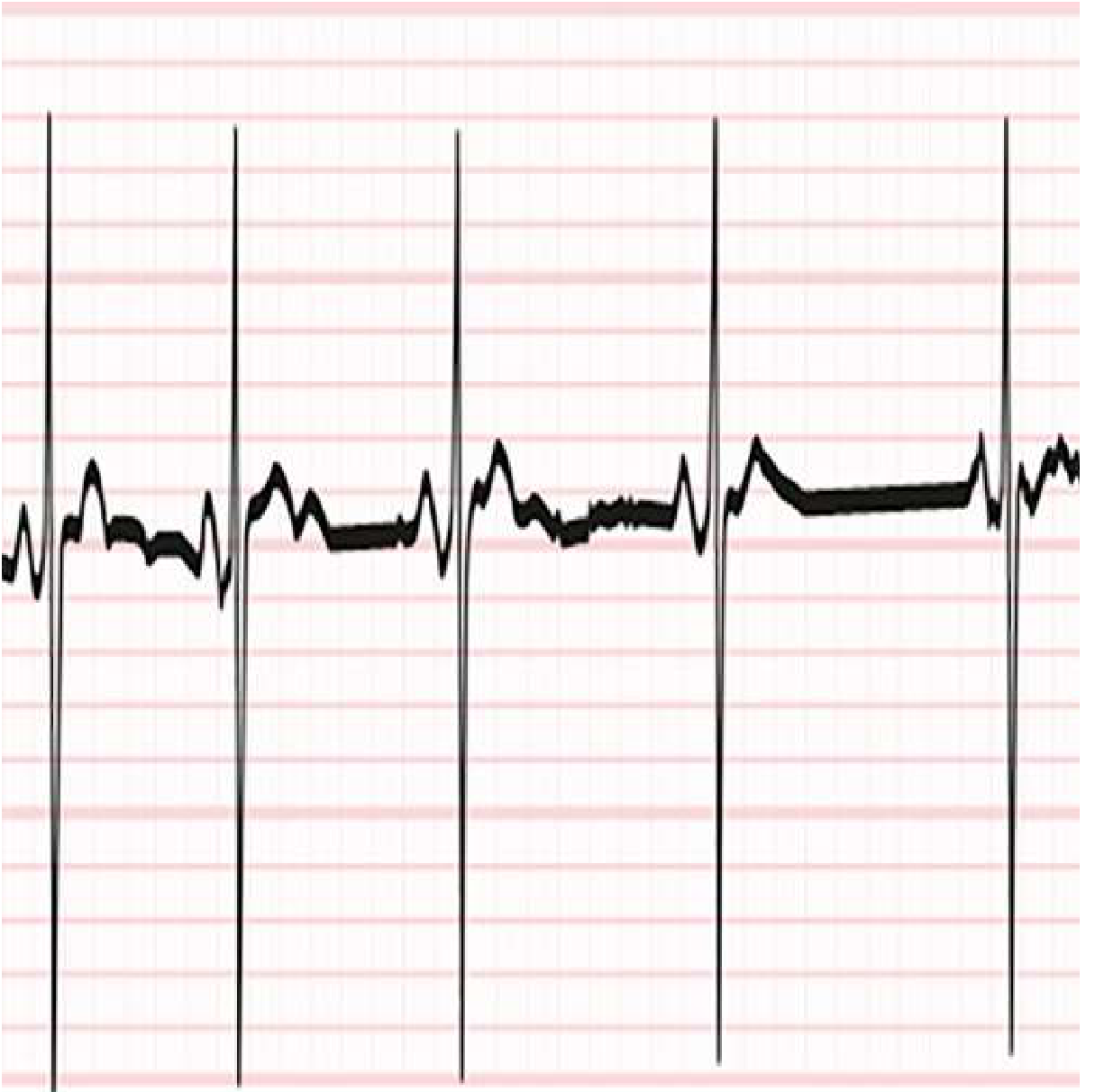
- Physiologic (athletes, sleep, vagal stimulation)
- Drugs: beta-blockers, calcium channel blockers, digoxin, amiodarone, ivabradine
- Hypothyroidism, hypothermia
- Inferior MI (RCA supplies the SA node in ~60% of people)
- Increased intracranial pressure (Cushing reflex)
- Infiltrative disease (amyloidosis, sarcoidosis)
2. Sick Sinus Syndrome (SSS)
- Sinus bradycardia (< 40 bpm)
- Sinus pauses > 2 seconds
- Sinus arrest with escape junctional rhythm
- Sinoatrial exit block
- Tachy-brady syndrome (most characteristic)
3. Tachy-Brady Syndrome
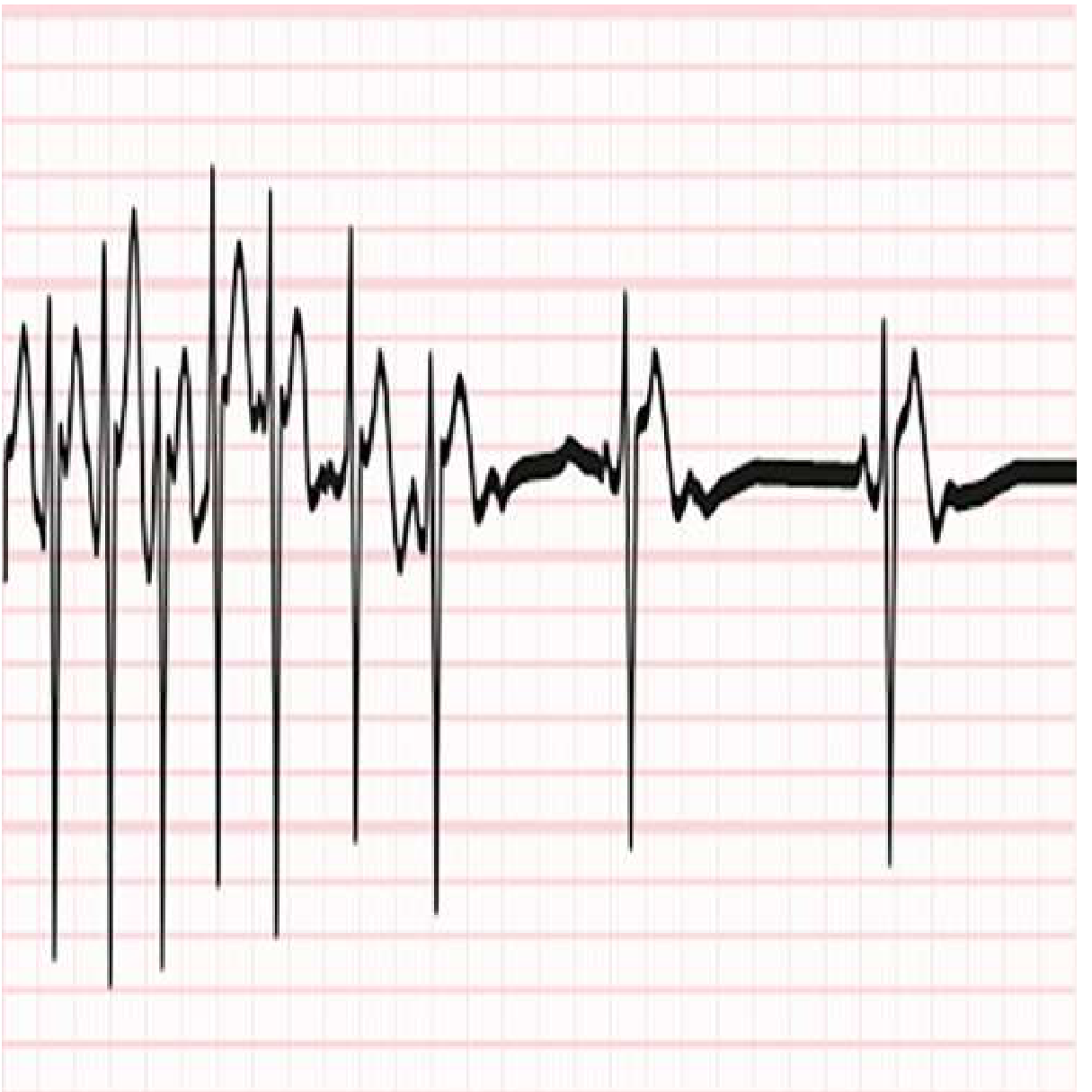
- Episodes of atrial tachyarrhythmia (most commonly atrial fibrillation) alternating with significant bradycardia or prolonged pauses
- The pauses are classically seen at the termination of AF due to prolonged sinus node recovery time
4. Sinoatrial Exit Block
| Type | ECG Pattern |
|---|---|
| 1st degree | Prolonged SA conduction time - NOT visible on surface ECG |
| 2nd degree Type 1 (Wenckebach) | Progressive PP shortening before a pause; pause PP > 2x preceding PP |
| 2nd degree Type 2 | Pause = exact multiple of PP interval (constant PP before and after) |
| 3rd degree (complete) | No sinus P waves; atrial standstill |
5. Chronotropic Incompetence
Causes of Sinus Node Dysfunction
- Idiopathic fibrocalcific degeneration (most common - age-related)
- Ischemic heart disease (especially inferior MI)
- Infiltrative disease: amyloidosis, sarcoidosis, hemochromatosis
- Inflammatory: myocarditis, rheumatic heart disease, Lyme disease (reversible complete heart block)
- Congenital heart disease, post-surgical (e.g., Fontan)
- Drugs: beta-blockers, CCBs, digoxin, amiodarone, lithium, quinidine, donepezil
- Autonomic: high vagal tone, vasovagal episodes
- Metabolic: hypothyroidism, hypothermia, hyperkalemia, hypoxia
- Increased ICP
Symptoms
- Fatigue, exercise intolerance, dyspnea
- Dizziness, presyncope, syncope (Stokes-Adams attacks)
- Worsening heart failure
- Palpitations (during tachycardic phase of tachy-brady)
Diagnostic Evaluation
| Test | Purpose |
|---|---|
| 12-lead ECG | Baseline rhythm, AV conduction, QRS |
| 24-48h Holter monitor | Very frequent episodes |
| External event monitor | Moderately frequent episodes |
| Implantable loop recorder | Infrequent/unexplained syncope |
| Exercise stress test | Chronotropic incompetence |
| Electrophysiology study | SNRT (sinus node recovery time), sinoatrial conduction time |
| Echocardiogram | Structural heart disease |
| Labs | TSH, electrolytes, drug levels |
Treatment
Step 1 - Remove offending agents
Acute symptomatic bradycardia
- IV Atropine 1 mg (first-line)
- Isoproterenol 1-2 mcg/min infusion (if atropine fails)
- Temporary transcutaneous or transvenous pacing if medications ineffective
Chronic management
| Situation | Treatment |
|---|---|
| Asymptomatic sinus bradycardia | No therapy required |
| Symptomatic SND (persistent) | Permanent pacemaker (therapy of choice) |
| Tachy-brady syndrome requiring antiarrhythmics | Pacemaker first, then antiarrhythmic drugs |
| SND + systolic dysfunction + AV block | Biventricular pacemaker preferred |
| Lyme disease heart block | Antibiotics (resolves within ~1 week) |
Pacemaker mode
- AAI or AAIR (rate-responsive atrial pacing): for isolated SND with intact AV conduction
- DDD or DDDR: if concurrent AV conduction disease
- Newer: His bundle pacing or left bundle branch area pacing for more physiologic conduction
Class I Indications for Permanent Pacemaker (SND)
- Symptomatic sinus bradycardia due to required drug therapy
- Symptomatic chronotropic incompetence
- Symptomatic sinus pauses
Class IIa Indications (Reasonable)
- HR < 40 bpm without clear symptom-rhythm correlation
- Syncope of unclear etiology when SND demonstrated on EP testing
Important Pearls
- Asymptomatic sinus bradycardia in middle-aged or older adults is not associated with increased cardiovascular mortality unless the patient is on rate-modifying drugs
- Recurrent syncope occurs despite pacemaker in ~20% of patients over 5 years
- Lyme disease is the major reversible cause of complete heart block
- The susceptibility of SND to medications suggests an underlying conduction abnormality that may worsen over time even after drugs are stopped
- Cardiac neural ablation (parasympathetic ganglia ablation) is an emerging therapy for refractory SND
Make a ppt with this content
mkdir -p /tmp/workspace/bradyarrhythmia-ppt
~/bradyarrhythmia-ppt/create_ppt.py
import json, subprocess, base64
from io import BytesIO
from pptx import Presentation
from pptx.util import Inches, Pt, Emu
from pptx.dml.color import RGBColor
from pptx.enum.text import PP_ALIGN, MSO_ANCHOR

# ── Colour palette ──────────────────────────────────────────────────────────
NAVY      = RGBColor(0x0D, 0x2B, 0x55)   # dark navy – header backgrounds
TEAL      = RGBColor(0x00, 0x7A, 0x87)   # accent / table header
LIGHT_BG  = RGBColor(0xF0, 0xF6, 0xFA)   # slide background
WHITE     = RGBColor(0xFF, 0xFF, 0xFF)
DARK_TXT  = RGBColor(0x1A, 0x1A, 0x2E)
MID_GRAY  = RGBColor(0xCC, 0xCC, 0xCC)
LIGHT_ROW = RGBColor(0xE8, 0xF4, 0xF8)
RED_ACC   = RGBColor(0xC0, 0x39, 0x2B)

prs = Presentation()
prs.slide_width  = Inches(13.333)
prs.slide_height = Inches(7.5)

blank_layout = prs.slide_layouts[6]   # fully blank

# ── Helper utilities ─────────────────────────────────────────────────────────

def bg_rect(slide, color=LIGHT_BG):
    """Full-slide background rectangle."""
    shp = slide.shapes.add_shape(1, 0, 0, prs.slide_width, prs.slide_height)
    shp.fill.solid(); shp.fill.fore_color.rgb = color
    shp.line.fill.background()

def header_bar(slide, color=NAVY, height=Inches(1.15)):
    shp = slide.shapes.add_shape(1, 0, 0, prs.slide_width, height)
    shp.fill.solid(); shp.fill.fore_color.rgb = color
    shp.line.fill.background()

def accent_line(slide, y=Inches(1.15), color=TEAL, thickness=Pt(4)):
    from pptx.enum.shapes import MSO_CONNECTOR
    ln = slide.shapes.add_connector(MSO_CONNECTOR.STRAIGHT, 0, y, prs.slide_width, y)
    ln.line.color.rgb = color; ln.line.width = thickness

def add_text(slide, text, x, y, w, h, size=18, bold=False, color=DARK_TXT,
             align=PP_ALIGN.LEFT, wrap=True, italic=False, font="Calibri"):
    tb = slide.shapes.add_textbox(x, y, w, h)
    tf = tb.text_frame; tf.word_wrap = wrap
    tf.margin_left = tf.margin_right = tf.margin_top = tf.margin_bottom = 0
    p = tf.paragraphs[0]; p.alignment = align
    r = p.add_run(); r.text = text
    r.font.name = font; r.font.size = Pt(size)
    r.font.bold = bold; r.font.italic = italic
    r.font.color.rgb = color
    return tb

def add_bullets(slide, items, x, y, w, h, size=15, color=DARK_TXT,
                bullet_color=TEAL, font="Calibri", sub_items=None):
    """items: list of strings. sub_items: dict {index: [sub1, sub2]} for indented bullets."""
    tb = slide.shapes.add_textbox(x, y, w, h)
    tf = tb.text_frame; tf.word_wrap = True
    tf.margin_left = Inches(0.05); tf.margin_right = 0
    tf.margin_top = 0; tf.margin_bottom = 0
    first = True
    for i, item in enumerate(items):
        p = tf.paragraphs[0] if first else tf.add_paragraph()
        first = False
        p.level = 0
        # bullet character via XML
        from pptx.oxml.ns import qn
        from lxml import etree
        pPr = p._pPr if p._pPr is not None else p._p.get_or_add_pPr()
        buClr = etree.SubElement(pPr, qn('a:buClr'))
        srgbClr = etree.SubElement(buClr, qn('a:srgbClr'))
        srgbClr.set('val', '%02X%02X%02X' % (bullet_color.red, bullet_color.green, bullet_color.blue))
        buChar = etree.SubElement(pPr, qn('a:buChar'))
        buChar.set('char', '▸')
        r = p.add_run(); r.text = item
        r.font.name = font; r.font.size = Pt(size); r.font.color.rgb = color
        # sub-items
        if sub_items and i in sub_items:
            for sub in sub_items[i]:
                sp = tf.add_paragraph(); sp.level = 1
                from lxml import etree
                spPr = sp._pPr if sp._pPr is not None else sp._p.get_or_add_pPr()
                buChar2 = etree.SubElement(spPr, qn('a:buChar'))
                buChar2.set('char', '–')
                sr = sp.add_run(); sr.text = sub
                sr.font.name = font; sr.font.size = Pt(size - 1); sr.font.color.rgb = color

def draw_table(slide, headers, rows, x, y, col_widths, row_h=Inches(0.38),
               hdr_color=TEAL, alt_color=LIGHT_ROW, font_size=13):
    """Draw a styled table manually."""
    # header row
    cx = x
    for i, (hdr, cw) in enumerate(zip(headers, col_widths)):
        shp = slide.shapes.add_shape(1, cx, y, cw, row_h)
        shp.fill.solid(); shp.fill.fore_color.rgb = hdr_color
        shp.line.color.rgb = WHITE; shp.line.width = Pt(1)
        tf = shp.text_frame; tf.word_wrap = True
        tf.margin_left = Inches(0.08); tf.margin_top = 0; tf.margin_bottom = 0
        tf.vertical_anchor = MSO_ANCHOR.MIDDLE
        p = tf.paragraphs[0]; p.alignment = PP_ALIGN.CENTER
        r = p.add_run(); r.text = hdr
        r.font.name = "Calibri"; r.font.size = Pt(font_size)
        r.font.bold = True; r.font.color.rgb = WHITE
        cx += cw
    # data rows
    for ri, row in enumerate(rows):
        ry = y + row_h * (ri + 1)
        fill = alt_color if ri % 2 == 0 else WHITE
        cx = x
        for ci, (cell, cw) in enumerate(zip(row, col_widths)):
            shp = slide.shapes.add_shape(1, cx, ry, cw, row_h)
            shp.fill.solid(); shp.fill.fore_color.rgb = fill
            shp.line.color.rgb = MID_GRAY; shp.line.width = Pt(0.5)
            tf = shp.text_frame; tf.word_wrap = True
            tf.margin_left = Inches(0.08); tf.margin_top = 0; tf.margin_bottom = 0
            tf.vertical_anchor = MSO_ANCHOR.MIDDLE
            p = tf.paragraphs[0]
            r = p.add_run(); r.text = str(cell)
            r.font.name = "Calibri"; r.font.size = Pt(font_size)
            r.font.color.rgb = DARK_TXT
            cx += cw

def slide_header(slide, title, subtitle=None):
    bg_rect(slide)
    header_bar(slide)
    accent_line(slide)
    add_text(slide, title, Inches(0.4), Inches(0.12), Inches(12.5), Inches(0.9),
             size=32, bold=True, color=WHITE, font="Calibri")
    if subtitle:
        add_text(slide, subtitle, Inches(0.4), Inches(0.85), Inches(12.5), Inches(0.35),
                 size=14, color=RGBColor(0xAA, 0xD4, 0xE8), font="Calibri")

# ════════════════════════════════════════════════════════════════════════════
# SLIDE 1 – TITLE SLIDE
# ════════════════════════════════════════════════════════════════════════════
slide = prs.slides.add_slide(blank_layout)
# Full navy background
shp = slide.shapes.add_shape(1, 0, 0, prs.slide_width, prs.slide_height)
shp.fill.solid(); shp.fill.fore_color.rgb = NAVY; shp.line.fill.background()

# Decorative teal band
band = slide.shapes.add_shape(1, 0, Inches(3.2), prs.slide_width, Inches(0.08))
band.fill.solid(); band.fill.fore_color.rgb = TEAL; band.line.fill.background()

add_text(slide, "BRADYARRHYTHMIAS", Inches(1), Inches(1.5), Inches(11.3), Inches(1.1),
         size=52, bold=True, color=WHITE, align=PP_ALIGN.CENTER, font="Calibri")
add_text(slide, "SA NODE (Sinus Node) DYSFUNCTION",
         Inches(1), Inches(2.65), Inches(11.3), Inches(0.7),
         size=26, bold=False, color=TEAL, align=PP_ALIGN.CENTER, font="Calibri")
add_text(slide, "Classification  |  Pathophysiology  |  ECG Findings  |  Management",
         Inches(1), Inches(3.55), Inches(11.3), Inches(0.5),
         size=16, color=RGBColor(0xCC, 0xDD, 0xEE), align=PP_ALIGN.CENTER, font="Calibri")
add_text(slide, "Source: Goldman-Cecil Medicine, 26th Ed.",
         Inches(1), Inches(6.8), Inches(11.3), Inches(0.4),
         size=12, color=RGBColor(0x88, 0xAA, 0xCC), align=PP_ALIGN.CENTER, font="Calibri")

# ════════════════════════════════════════════════════════════════════════════
# SLIDE 2 – OVERVIEW / DEFINITION
# ════════════════════════════════════════════════════════════════════════════
slide = prs.slides.add_slide(blank_layout)
slide_header(slide, "Overview & Definition",
             "Sinus Node Dysfunction – A Spectrum of Disorders")

add_text(slide, "What is Sinus Node Dysfunction (SND)?",
         Inches(0.4), Inches(1.35), Inches(12.5), Inches(0.4),
         size=18, bold=True, color=TEAL)

add_bullets(slide,
    ["Group of disorders where the SA node fails to generate or conduct impulses appropriately",
     "Encompasses several distinct ECG patterns, not a single disease",
     "Most common indication for permanent pacemaker implantation in the US",
     "SND + symptoms (fatigue, dizziness, syncope, worsening HF) = Sick Sinus Syndrome (SSS)"],
    Inches(0.4), Inches(1.8), Inches(12.4), Inches(1.6), size=16)

# Classification box
box = slide.shapes.add_shape(1, Inches(0.35), Inches(3.5), Inches(12.6), Inches(0.45))
box.fill.solid(); box.fill.fore_color.rgb = TEAL; box.line.fill.background()
add_text(slide, "Classification of SA Node Bradyarrhythmias",
         Inches(0.4), Inches(3.52), Inches(12.5), Inches(0.4),
         size=16, bold=True, color=WHITE)

draw_table(slide,
    ["Disorder", "Definition / Key Feature"],
    [
        ("Sinus Bradycardia",         "Rate < 60 bpm (pathologic < 45–50 bpm)"),
        ("Sinoatrial Exit Block",      "SA node fires; impulse blocked before reaching atria"),
        ("Sinus Arrest / Pause",       "Pause > 2–3 seconds during sinus rhythm"),
        ("Chronotropic Incompetence",  "Max HR < 100 bpm on exertion"),
        ("Tachy-Brady Syndrome",       "Alternating tachycardia and bradycardia (most characteristic)"),
    ],
    Inches(0.35), Inches(3.97),
    [Inches(3.8), Inches(8.8)], row_h=Inches(0.37), font_size=13)

# ════════════════════════════════════════════════════════════════════════════
# SLIDE 3 – SINUS BRADYCARDIA
# ════════════════════════════════════════════════════════════════════════════
slide = prs.slides.add_slide(blank_layout)
slide_header(slide, "Sinus Bradycardia", "Rate < 60 bpm – When is it Pathologic?")

# Left column
add_text(slide, "Definition & ECG Features",
         Inches(0.4), Inches(1.35), Inches(6), Inches(0.4), size=17, bold=True, color=TEAL)
add_bullets(slide,
    ["Sinus rate < 60 bpm",
     "Rates 45–50 bpm at REST can be physiologic (athletes, sleep/vagal tone)",
     "Regular P waves with normal axis & morphology",
     "Normal PR interval",
     "Pathologic if symptomatic or rate < 40–45 bpm"],
    Inches(0.4), Inches(1.8), Inches(6.2), Inches(2.2), size=14)

add_text(slide, "Common Causes",
         Inches(0.4), Inches(4.1), Inches(6), Inches(0.4), size=17, bold=True, color=TEAL)

draw_table(slide,
    ["Category", "Examples"],
    [
        ("Physiologic",    "Athletes, sleep, vagal stimulation"),
        ("Drugs",          "β-blockers, CCBs, digoxin, amiodarone, lithium, ivabradine"),
        ("Cardiac",        "Inferior MI (RCA supplies SA node in 60%)"),
        ("Metabolic",      "Hypothyroidism, hypothermia, hyperkalemia, hypoxia"),
        ("Neurologic",     "Raised ICP (Cushing reflex)"),
        ("Infiltrative",   "Amyloidosis, sarcoidosis, hemochromatosis"),
    ],
    Inches(0.35), Inches(4.55),
    [Inches(2.2), Inches(4.0)], row_h=Inches(0.32), font_size=12)

# Right: ECG image
img_urls = [
    "https://cdn.orris.care/cdss_images/d5b0c25f39d4485537c998b654cea979fa66650cbc6293f60d1c8297b9f873a4.png"
]
result = json.loads(subprocess.check_output(
    ["python", "/tmp/skills/shared/scripts/fetch_images.py"] + img_urls
))
if result[0]["base64"]:
    raw = base64.b64decode(result[0]["base64"].split(",", 1)[1])
    slide.shapes.add_picture(BytesIO(raw), Inches(6.7), Inches(1.35), width=Inches(6.3))
    add_text(slide,
             "Fig: Sinus bradycardia – progressive slowing due to heightened vagal tone during sleep\n(Goldman-Cecil Medicine)",
             Inches(6.7), Inches(4.85), Inches(6.3), Inches(0.7),
             size=10, color=RGBColor(0x55, 0x55, 0x55), italic=True)

# ════════════════════════════════════════════════════════════════════════════
# SLIDE 4 – SICK SINUS SYNDROME & TACHY-BRADY
# ════════════════════════════════════════════════════════════════════════════
slide = prs.slides.add_slide(blank_layout)
slide_header(slide, "Sick Sinus Syndrome & Tachy-Brady Syndrome",
             "SND + Symptoms = Sick Sinus Syndrome")

# Left
add_text(slide, "Sick Sinus Syndrome (SSS)",
         Inches(0.4), Inches(1.35), Inches(6.3), Inches(0.4), size=17, bold=True, color=TEAL)
add_bullets(slide,
    ["SND + symptoms → SSS",
     "Most common indication for PPM in the US",
     "Manifestations:"],
    Inches(0.4), Inches(1.8), Inches(6.3), Inches(1.0), size=14,
    sub_items={2: []})
add_bullets(slide,
    ["Sinus bradycardia < 40 bpm",
     "Sinus pauses > 2 sec",
     "Sinus arrest with escape junctional rhythm",
     "Sinoatrial exit block",
     "Tachy-Brady syndrome (most characteristic)"],
    Inches(0.7), Inches(2.75), Inches(6.0), Inches(1.6), size=13,
    bullet_color=RED_ACC)

add_text(slide, "Tachy-Brady Syndrome",
         Inches(0.4), Inches(4.45), Inches(6.3), Inches(0.4), size=17, bold=True, color=TEAL)
add_bullets(slide,
    ["AF (or other atrial tachyarrhythmia) alternates with significant bradycardia / long pauses",
     "Pauses classically seen at termination of AF (prolonged sinus node recovery time)",
     "Pacemaker required BEFORE starting antiarrhythmic drugs"],
    Inches(0.4), Inches(4.9), Inches(6.3), Inches(1.7), size=13)

# Right: ECG image tachy-brady
img_urls2 = [
    "https://cdn.orris.care/cdss_images/32b810d1a2bae6c44047a3e838a92d9204934562f6394f38b9d748a15ee0a7e6.png"
]
result2 = json.loads(subprocess.check_output(
    ["python", "/tmp/skills/shared/scripts/fetch_images.py"] + img_urls2
))
if result2[0]["base64"]:
    raw2 = base64.b64decode(result2[0]["base64"].split(",", 1)[1])
    slide.shapes.add_picture(BytesIO(raw2), Inches(6.9), Inches(1.35), width=Inches(6.1))
    add_text(slide,
             "Fig: Tachy-Brady syndrome – AF with tachycardic ventricular response converting to sinus bradycardia with a long post-conversion pause\n(Goldman-Cecil Medicine)",
             Inches(6.9), Inches(4.6), Inches(6.1), Inches(0.9),
             size=10, color=RGBColor(0x55, 0x55, 0x55), italic=True)

# ════════════════════════════════════════════════════════════════════════════
# SLIDE 5 – SINOATRIAL EXIT BLOCK
# ════════════════════════════════════════════════════════════════════════════
slide = prs.slides.add_slide(blank_layout)
slide_header(slide, "Sinoatrial Exit Block",
             "SA node fires – impulse blocked before reaching atrial tissue")

add_bullets(slide,
    ["SA node generates an impulse, but it is delayed or blocked before conducting to surrounding atrial tissue",
     "Diagnosed by analysing PP interval patterns on surface ECG",
     "Does NOT produce a P wave when block occurs – manifests as a 'pause'"],
    Inches(0.4), Inches(1.35), Inches(12.5), Inches(1.0), size=15)

draw_table(slide,
    ["Degree", "ECG Pattern", "Visibility on Surface ECG"],
    [
        ("1st Degree",
         "Prolonged SA conduction time",
         "NOT visible on surface ECG"),
        ("2nd Degree Type 1\n(Wenckebach)",
         "Progressive PP shortening before a pause;\nPause PP > 2× preceding PP",
         "Visible – requires careful PP measurement"),
        ("2nd Degree Type 2",
         "Pause = exact multiple of PP interval\n(constant PP before and after pause)",
         "Visible – look for integer multiples"),
        ("3rd Degree\n(Complete)",
         "No sinus P waves; atrial standstill",
         "Absent P waves; escape rhythm present"),
    ],
    Inches(0.35), Inches(2.55),
    [Inches(2.2), Inches(5.7), Inches(4.7)], row_h=Inches(0.55), font_size=13)

add_text(slide, "Chronotropic Incompetence",
         Inches(0.4), Inches(5.4), Inches(12.5), Inches(0.4), size=17, bold=True, color=TEAL)
add_bullets(slide,
    ["Inability to increase sinus rate appropriately in response to exercise / physiologic demand",
     "Defined as max HR < 100 bpm on exercise testing",
     "Causes exercise intolerance; represents a form of SND"],
    Inches(0.4), Inches(5.85), Inches(12.5), Inches(1.2), size=14)

# ════════════════════════════════════════════════════════════════════════════
# SLIDE 6 – CAUSES & PATHOPHYSIOLOGY
# ════════════════════════════════════════════════════════════════════════════
slide = prs.slides.add_slide(blank_layout)
slide_header(slide, "Causes of Sinus Node Dysfunction",
             "Intrinsic (structural) vs Extrinsic (reversible)")

# Two columns
add_text(slide, "INTRINSIC CAUSES",
         Inches(0.35), Inches(1.3), Inches(6.3), Inches(0.38), size=16, bold=True, color=NAVY)
box1 = slide.shapes.add_shape(1, Inches(0.35), Inches(1.68), Inches(6.3), Inches(0.04))
box1.fill.solid(); box1.fill.fore_color.rgb = TEAL; box1.line.fill.background()

add_bullets(slide,
    ["Idiopathic fibrocalcific degeneration (most common – age-related)",
     "Ischemic heart disease (especially inferior MI – RCA territory)",
     "Infiltrative: amyloidosis, sarcoidosis, hemochromatosis",
     "Inflammatory: myocarditis, rheumatic heart disease",
     "Lyme disease (reversible complete heart block – responds to antibiotics)",
     "Congenital heart disease, post-surgical (e.g., Fontan)"],
    Inches(0.4), Inches(1.78), Inches(6.2), Inches(2.8), size=14)

add_text(slide, "EXTRINSIC CAUSES (Reversible)",
         Inches(6.9), Inches(1.3), Inches(6.1), Inches(0.38), size=16, bold=True, color=NAVY)
box2 = slide.shapes.add_shape(1, Inches(6.9), Inches(1.68), Inches(6.1), Inches(0.04))
box2.fill.solid(); box2.fill.fore_color.rgb = RED_ACC; box2.line.fill.background()

add_bullets(slide,
    ["Drugs: β-blockers, CCBs, digoxin, amiodarone, quinidine",
     "Drugs: lithium, donepezil (cholinesterase inhibitors), propofol",
     "Autonomic: vasovagal episodes, high vagal tone, carotid sinus hypersensitivity",
     "Metabolic: hypothyroidism, hypothermia, hyperkalemia, hypoxia",
     "Obstructive sleep apnea",
     "Susceptibility to medications usually indicates an UNDERLYING conduction defect"],
    Inches(6.9), Inches(1.78), Inches(6.1), Inches(2.8), size=14)

add_text(slide, "Key Pearl",
         Inches(0.35), Inches(4.75), Inches(12.6), Inches(0.38), size=15, bold=True, color=WHITE)
box_pearl = slide.shapes.add_shape(1, Inches(0.35), Inches(4.62), Inches(12.6), Inches(0.4))
box_pearl.fill.solid(); box_pearl.fill.fore_color.rgb = NAVY; box_pearl.line.fill.background()
add_text(slide, "Key Pearl",
         Inches(0.4), Inches(4.63), Inches(12.5), Inches(0.38), size=14, bold=True, color=WHITE)

add_text(slide,
         "Susceptibility to medications (β-blockers, CCBs) usually indicates an underlying conduction abnormality "
         "that may worsen over time even after drugs are withdrawn. Always investigate further.",
         Inches(0.4), Inches(5.1), Inches(12.5), Inches(0.7), size=14, color=DARK_TXT, italic=True)

# ════════════════════════════════════════════════════════════════════════════
# SLIDE 7 – SYMPTOMS & CLINICAL PRESENTATION
# ════════════════════════════════════════════════════════════════════════════
slide = prs.slides.add_slide(blank_layout)
slide_header(slide, "Clinical Presentation & Symptoms",
             "Symptoms arise from reduced cardiac output during bradycardic episodes")

# Boxes across top
boxes_data = [
    ("Fatigue &\nExercise Intolerance", TEAL),
    ("Dizziness &\nPresyncope", NAVY),
    ("Syncope\n(Stokes-Adams)", RED_ACC),
    ("Worsening\nHeart Failure", RGBColor(0x1A, 0x6B, 0x3C)),
    ("Palpitations\n(tachy phase)", RGBColor(0x7B, 0x2D, 0x8B)),
]
bw = Inches(2.4)
for i, (txt, col) in enumerate(boxes_data):
    bx = Inches(0.35) + i * (bw + Inches(0.1))
    shp = slide.shapes.add_shape(1, bx, Inches(1.3), bw, Inches(1.1))
    shp.fill.solid(); shp.fill.fore_color.rgb = col; shp.line.fill.background()
    tb = shp.text_frame; tb.word_wrap = True
    tb.vertical_anchor = MSO_ANCHOR.MIDDLE
    p = tb.paragraphs[0]; p.alignment = PP_ALIGN.CENTER
    r = p.add_run(); r.text = txt
    r.font.name = "Calibri"; r.font.size = Pt(14); r.font.bold = True; r.font.color.rgb = WHITE

add_text(slide, "Diagnostic Workup",
         Inches(0.35), Inches(2.65), Inches(12.5), Inches(0.4), size=17, bold=True, color=TEAL)

draw_table(slide,
    ["Investigation", "Purpose"],
    [
        ("12-lead ECG",                  "Baseline rhythm, conduction intervals, QRS morphology"),
        ("24–48 h Holter monitor",       "Very frequent episodes"),
        ("External event monitor",       "Moderately frequent episodes"),
        ("Implantable loop recorder",    "Infrequent / unexplained syncope"),
        ("Exercise stress test",         "Chronotropic incompetence"),
        ("Electrophysiology study",      "SNRT, CSNRT (>550 ms = abnormal), SACT"),
        ("Echocardiogram",               "Structural heart disease, LV function"),
        ("Labs (TSH, electrolytes)",     "Reversible metabolic / thyroid causes"),
    ],
    Inches(0.35), Inches(3.1),
    [Inches(3.6), Inches(9.0)], row_h=Inches(0.33), font_size=12)

# ════════════════════════════════════════════════════════════════════════════
# SLIDE 8 – TREATMENT (ACUTE)
# ════════════════════════════════════════════════════════════════════════════
slide = prs.slides.add_slide(blank_layout)
slide_header(slide, "Management – Acute Symptomatic Bradycardia",
             "Step 1: Remove offending agents | Step 2: Pharmacologic | Step 3: Temporary pacing")

# Step boxes
steps = [
    ("STEP 1\nRemove\nOffending Drugs",
     "Stop/reduce β-blockers, CCBs,\ndigoxin, amiodarone, lithium",
     TEAL),
    ("STEP 2\nIV Atropine\n1 mg (first-line)",
     "Blocks vagal tone;\nrepeat up to 3 mg total",
     NAVY),
    ("STEP 3\nIsoproterenol\n1–2 mcg/min IV",
     "Sympathomimetic;\nuse if atropine fails",
     RGBColor(0x1A, 0x6B, 0x3C)),
    ("STEP 4\nTemporary Pacing",
     "Transcutaneous (immediate)\nor transvenous (definitive\ntemporary bridge)",
     RED_ACC),
]
sw = Inches(3.1)
for i, (title, body, col) in enumerate(steps):
    bx = Inches(0.25) + i * (sw + Inches(0.1))
    # background card
    shp = slide.shapes.add_shape(1, bx, Inches(1.35), sw, Inches(2.5))
    shp.fill.solid(); shp.fill.fore_color.rgb = col; shp.line.fill.background()
    # title
    add_text(slide, title, bx + Inches(0.08), Inches(1.45), sw - Inches(0.16), Inches(1.0),
             size=15, bold=True, color=WHITE, align=PP_ALIGN.CENTER)
    # body
    add_text(slide, body, bx + Inches(0.08), Inches(2.5), sw - Inches(0.16), Inches(1.2),
             size=13, color=RGBColor(0xDD, 0xEE, 0xFF), align=PP_ALIGN.CENTER)

add_text(slide, "Special Situations",
         Inches(0.35), Inches(4.1), Inches(12.5), Inches(0.4), size=17, bold=True, color=TEAL)

draw_table(slide,
    ["Situation", "Management"],
    [
        ("Drug-induced / transient ischemia",       "Temporary pacing usually sufficient; remove cause"),
        ("Intra-His / infra-His block suspected",   "Permanent pacing – only effective long-term therapy"),
        ("Lyme disease heart block",                "Antibiotics (resolves ~1 week); permanent pacing rarely needed"),
        ("Post-VT ablation (long QT risk)",         "Pace at 80 bpm for ≥6 weeks to prevent torsades de pointes"),
    ],
    Inches(0.35), Inches(4.55),
    [Inches(4.5), Inches(8.1)], row_h=Inches(0.37), font_size=13)

# ════════════════════════════════════════════════════════════════════════════
# SLIDE 9 – PERMANENT PACEMAKER
# ════════════════════════════════════════════════════════════════════════════
slide = prs.slides.add_slide(blank_layout)
slide_header(slide, "Permanent Pacemaker – Indications & Modes",
             "Therapy of choice for persistent symptomatic SND")

add_text(slide, "Class I Indications (Pacemaker INDICATED)",
         Inches(0.35), Inches(1.3), Inches(6.3), Inches(0.4), size=16, bold=True, color=NAVY)
add_bullets(slide,
    ["Symptomatic sinus bradycardia due to required drug therapy",
     "Symptomatic chronotropic incompetence",
     "Symptomatic sinus pauses",
     "Tachy-brady requiring antiarrhythmic drugs (pace FIRST)"],
    Inches(0.4), Inches(1.75), Inches(6.2), Inches(1.8), size=14)

add_text(slide, "Class IIa Indications (Pacemaker REASONABLE)",
         Inches(0.35), Inches(3.65), Inches(6.3), Inches(0.4), size=16, bold=True, color=NAVY)
add_bullets(slide,
    ["HR < 40 bpm without clear symptom-rhythm correlation",
     "Syncope of unclear etiology when SND demonstrated on EP testing"],
    Inches(0.4), Inches(4.1), Inches(6.2), Inches(1.0), size=14)

add_text(slide, "Asymptomatic SND",
         Inches(0.35), Inches(5.2), Inches(6.3), Inches(0.4), size=16, bold=True, color=RED_ACC)
add_bullets(slide,
    ["No therapy required",
     "Asymptomatic sinus bradycardia in adults NOT associated with increased mortality"],
    Inches(0.4), Inches(5.65), Inches(6.2), Inches(0.9), size=14)

# Right: pacemaker modes
add_text(slide, "Pacemaker Modes for SND",
         Inches(6.9), Inches(1.3), Inches(6.1), Inches(0.4), size=16, bold=True, color=NAVY)

draw_table(slide,
    ["Mode", "Use Case"],
    [
        ("AAI / AAIR\n(Rate-responsive atrial)",
         "Isolated SND with intact AV conduction"),
        ("DDD / DDDR",
         "SND + concurrent AV conduction disease"),
        ("Biventricular (CRT)",
         "SND + AV block + systolic dysfunction"),
        ("His bundle pacing\n(Left bundle branch area)",
         "Physiologic pacing – more synchronous LV+RV contraction\nthan RV apex/wall pacing"),
    ],
    Inches(6.9), Inches(1.75),
    [Inches(2.9), Inches(3.1)], row_h=Inches(0.6), font_size=12)

add_text(slide, "Important Outcomes",
         Inches(6.9), Inches(4.6), Inches(6.1), Inches(0.4), size=15, bold=True, color=TEAL)
add_bullets(slide,
    ["Recurrent syncope occurs despite pacemaker in ~20% of patients over 5 years",
     "Cardiac neural ablation (parasympathetic ganglia ablation) – emerging therapy for refractory SND"],
    Inches(6.9), Inches(5.05), Inches(6.1), Inches(1.5), size=13)

# ════════════════════════════════════════════════════════════════════════════
# SLIDE 10 – SUMMARY / KEY PEARLS
# ════════════════════════════════════════════════════════════════════════════
slide = prs.slides.add_slide(blank_layout)
slide_header(slide, "Summary & Key Pearls", "Bradyarrhythmias – SA Node")

pearls = [
    ("SND Spectrum",
     "Sinus bradycardia → SA exit block → Sinus arrest → Chronotropic incompetence → Tachy-brady syndrome"),
    ("SSS Definition",
     "SND + symptoms (fatigue, dizziness, syncope, worsening HF) = Sick Sinus Syndrome"),
    ("Tachy-Brady",
     "Most characteristic SSS pattern; pauses classically follow AF termination due to prolonged sinus node recovery"),
    ("Drugs are key",
     "β-blockers, CCBs, digoxin, amiodarone, lithium all worsen SND – always withdraw before considering PPM"),
    ("Lyme Disease",
     "Most important REVERSIBLE cause of heart block; responds to antibiotics within ~1 week"),
    ("Asymptomatic SND",
     "No treatment required; does NOT increase mortality (unless on rate-modifying drugs)"),
    ("Pacemaker",
     "#1 indication for PPM in the US; His/LBBA pacing preferred for physiologic synchrony over RV apex pacing"),
    ("20% Recurrence",
     "Syncope recurs in ~20% of patients despite pacemaker over 5 years – investigate other causes"),
]

pw = Inches(6.1)
for i, (title, body) in enumerate(pearls):
    col = i % 2
    row = i // 2
    bx = Inches(0.35) + col * (pw + Inches(0.2))
    by = Inches(1.35) + row * Inches(1.4)
    shp = slide.shapes.add_shape(1, bx, by, pw, Inches(1.25))
    shp.fill.solid()
    shp.fill.fore_color.rgb = LIGHT_ROW if i % 2 == 0 else WHITE
    shp.line.color.rgb = TEAL; shp.line.width = Pt(1.2)
    # Teal left accent
    acc = slide.shapes.add_shape(1, bx, by, Inches(0.08), Inches(1.25))
    acc.fill.solid(); acc.fill.fore_color.rgb = TEAL; acc.line.fill.background()
    add_text(slide, title,
             bx + Inches(0.15), by + Inches(0.05), pw - Inches(0.2), Inches(0.38),
             size=13, bold=True, color=TEAL)
    add_text(slide, body,
             bx + Inches(0.15), by + Inches(0.42), pw - Inches(0.2), Inches(0.78),
             size=12, color=DARK_TXT, wrap=True)

add_text(slide, "Source: Goldman-Cecil Medicine (26th Ed.) | The Washington Manual | Harrison's Principles of Internal Medicine 22E",
         Inches(0.35), Inches(7.1), Inches(12.6), Inches(0.3),
         size=10, color=RGBColor(0x88, 0x88, 0x88), italic=True)

# ── Save ──────────────────────────────────────────────────────────────────
out_path = "/tmp/workspace/bradyarrhythmia-ppt/Bradyarrhythmias_SA_Node.pptx"
from io import BytesIO as _BIO
buf = _BIO()
prs.save(buf)
with open(out_path, "wb") as f:
    f.write(buf.getvalue())
print("Saved:", out_path)
cd /tmp/workspace/bradyarrhythmia-ppt && python create_ppt.py 2>&1
python3 -c "from pptx.dml.color import RGBColor; c = RGBColor(0x00,0x7A,0x87); print(dir(c)); print(c[0], c[1], c[2])"
~/bradyarrhythmia-ppt/create_ppt.py
Successfully replaced 1 instance(s) of the string in '/tmp/workspace/bradyarrhythmia-ppt/create_ppt.py'
cd /tmp/workspace/bradyarrhythmia-ppt && python create_ppt.py 2>&1
**/fetch_images.py in /tmp/skills
python /tmp/skills/shared/scripts/fetch_images.py "https://cdn.orris.care/cdss_images/d5b0c25f39d4485537c998b654cea979fa66650cbc6293f60d1c8297b9f873a4.png" 2>&1 | head -5
cd /tmp/workspace/bradyarrhythmia-ppt && python create_ppt.py 2>&1
Bradyarrhythmias SA Node
Presentation · PPTX
| Slide | Content |
|---|---|
| 1 | Title slide - Bradyarrhythmias: SA Node |
| 2 | Overview, definitions & classification table |
| 3 | Sinus bradycardia + ECG image |
| 4 | Sick Sinus Syndrome & Tachy-Brady syndrome + ECG image |
| 5 | SA Exit Block types + Chronotropic incompetence |
| 6 | Causes - Intrinsic vs Extrinsic (two-column layout) |
| 7 | Clinical presentation & diagnostic workup |
| 8 | Acute management (4-step protocol cards) |
| 9 | Permanent pacemaker indications & modes |
| 10 | Summary & 8 key clinical pearls |
Snake bite
What would you like on snake bite?
Make a ppt in detail with minimum 20 slides ppt of bradyarrythmias due to sa node dysfunction
ls -la /tmp/workspace/bradyarrhythmia-ppt/ 2>/dev/null || echo "Directory does not exist"
~/bradyarrhythmia-ppt/create_ppt_v2.py
"""
Bradyarrhythmias – SA Node Dysfunction
Comprehensive 22-slide medical education presentation
Sources: Braunwald's Heart Disease, Goldman-Cecil Medicine, Rosen's Emergency Medicine
"""
import json, subprocess, base64
from io import BytesIO
from pptx import Presentation
from pptx.util import Inches, Pt, Emu
from pptx.dml.color import RGBColor
from pptx.enum.text import PP_ALIGN, MSO_ANCHOR
from pptx.oxml.ns import qn
from lxml import etree
# ── PALETTE ─────────────────────────────────────────────────────────────────
NAVY = RGBColor(0x0D, 0x2B, 0x55) # deep navy
TEAL = RGBColor(0x00, 0x7B, 0x8A) # teal accent
GOLD = RGBColor(0xF0, 0xA3, 0x00) # amber highlight
WHITE = RGBColor(0xFF, 0xFF, 0xFF)
LIGHT_BG = RGBColor(0xEF, 0xF6, 0xFB) # slide background
DARK_TEXT = RGBColor(0x1A, 0x1A, 0x2E)
MID_GREY = RGBColor(0x55, 0x65, 0x75)
RED_ALERT = RGBColor(0xC0, 0x39, 0x2B)
GREEN_OK = RGBColor(0x1A, 0x7A, 0x4A)
CARD_BLUE = RGBColor(0xD6, 0xEA, 0xF8)
CARD_GREEN = RGBColor(0xD5, 0xF5, 0xE3)
CARD_RED = RGBColor(0xFAD7D2)
CARD_GOLD = RGBColor(0xFEF9E7)
W = Inches(13.333)
H = Inches(7.5)
prs = Presentation()
prs.slide_width = W
prs.slide_height = H
blank = prs.slide_layouts[6]
# ── IMAGE FETCHER ────────────────────────────────────────────────────────────
ECG_URLS = {
"sinus_brady": "https://cdn.orris.care/cdss_images/8fddc16b75d480046674cb7a459905342e987c37b82e92200941033610fdc35f.png",
"sinus_arrest": "https://cdn.orris.care/cdss_images/81a8b95c702a0fa7f4bc95aac8b8a60f763fa2bd6bac2eb656551f9e550cf8b9.png",
"arrest_loop": "https://cdn.orris.care/cdss_images/9e7000ea9c50d967a694bbc903555b88ef268115a26e7f4541c55bd217fb09a5.png",
"exit_block": "https://cdn.orris.care/cdss_images/3389e7672e3965874727d0364594120995d353a9c5b67a47f705086f65d1949b.png",
"sa_exit_block2":"https://cdn.orris.care/cdss_images/9b9f1c4b0ae566c24f982afa0fe819eb754cbc0459b75ba7ed904ed53a77ef45.png",
"incomplete_block":"https://cdn.orris.care/cdss_images/ac1fc4a3a00db3f7b7f6372029c2ac9fa30edd0e7f3158f94016e759597b25ee.png",
}
print("Fetching ECG images...")
try:
result = json.loads(subprocess.check_output(
["python", "/tmp/skills/shared/scripts/fetch_images.py"] + list(ECG_URLS.values()),
timeout=30
))
images = {}
for key, item in zip(ECG_URLS.keys(), result):
if item.get("base64"):
raw = base64.b64decode(item["base64"].split(",",1)[-1])
images[key] = BytesIO(raw)
print(f" OK: {key}")
else:
images[key] = None
print(f" FAIL: {key}")
except Exception as e:
print(f"Image fetch error: {e}")
images = {k: None for k in ECG_URLS}
# ── HELPER FUNCTIONS ─────────────────────────────────────────────────────────
def add_rect(slide, x, y, w, h, fill_color, alpha=None):
shape = slide.shapes.add_shape(1, x, y, w, h)
shape.fill.solid()
shape.fill.fore_color.rgb = fill_color
shape.line.fill.background()
return shape
def add_text(slide, text, x, y, w, h, size=18, bold=False, color=DARK_TEXT,
align=PP_ALIGN.LEFT, italic=False, wrap=True):
tb = slide.shapes.add_textbox(x, y, w, h)
tf = tb.text_frame
tf.word_wrap = wrap
tf.margin_left = Inches(0.05)
tf.margin_right = Inches(0.05)
tf.margin_top = Inches(0.03)
tf.margin_bottom= Inches(0.03)
p = tf.paragraphs[0]
p.alignment = align
r = p.add_run()
r.text = text
r.font.name = "Calibri"
r.font.size = Pt(size)
r.font.bold = bold
r.font.italic = italic
r.font.color.rgb = color
return tb
def add_multiline(slide, lines, x, y, w, h, size=16, color=DARK_TEXT,
bold_first=False, bullet=True, line_space=1.15):
tb = slide.shapes.add_textbox(x, y, w, h)
tf = tb.text_frame
tf.word_wrap = True
tf.margin_left = Inches(0.08)
tf.margin_right = Inches(0.05)
tf.margin_top = Inches(0.05)
tf.margin_bottom= Inches(0.05)
for i, line in enumerate(lines):
if i == 0:
p = tf.paragraphs[0]
else:
p = tf.add_paragraph()
p.space_before = Pt(3)
p.space_after = Pt(2)
r = p.add_run()
prefix = "• " if bullet else ""
r.text = prefix + line
r.font.name = "Calibri"
r.font.size = Pt(size)
r.font.bold = (bold_first and i == 0)
r.font.color.rgb = color
return tb
def slide_bg(slide, color=LIGHT_BG):
bg = slide.background
fill = bg.fill
fill.solid()
fill.fore_color.rgb = color
def header_bar(slide, title, subtitle=None):
add_rect(slide, 0, 0, W, Inches(1.1), NAVY)
add_text(slide, title, Inches(0.35), Inches(0.08), Inches(12.5), Inches(0.7),
size=28, bold=True, color=WHITE, align=PP_ALIGN.LEFT)
if subtitle:
add_text(slide, subtitle, Inches(0.35), Inches(0.72), Inches(12.5), Inches(0.35),
size=14, bold=False, color=RGBColor(0xAA, 0xD4, 0xE8), align=PP_ALIGN.LEFT)
# teal accent line
add_rect(slide, 0, Inches(1.1), W, Inches(0.05), TEAL)
def footer(slide, source="Braunwald's Heart Disease | Goldman-Cecil Medicine | Rosen's Emergency Medicine"):
add_rect(slide, 0, Inches(7.15), W, Inches(0.35), NAVY)
add_text(slide, source, Inches(0.3), Inches(7.17), Inches(12.7), Inches(0.3),
size=9, color=RGBColor(0xAA, 0xC4, 0xD8), align=PP_ALIGN.LEFT)
def card(slide, x, y, w, h, bg_color, title, lines, title_size=14, body_size=12.5, title_color=NAVY):
add_rect(slide, x, y, w, h, bg_color)
# title
add_text(slide, title, x+Inches(0.08), y+Inches(0.05), w-Inches(0.15), Inches(0.32),
size=title_size, bold=True, color=title_color)
# body
tb = slide.shapes.add_textbox(x+Inches(0.08), y+Inches(0.38), w-Inches(0.15), h-Inches(0.45))
tf = tb.text_frame
tf.word_wrap = True
tf.margin_left = 0; tf.margin_top = 0
for i, line in enumerate(lines):
p = tf.paragraphs[0] if i == 0 else tf.add_paragraph()
p.space_after = Pt(2)
r = p.add_run()
r.text = "• " + line
r.font.name = "Calibri"
r.font.size = Pt(body_size)
r.font.color.rgb = DARK_TEXT
def add_image(slide, img_bytes, x, y, w, h):
if img_bytes:
img_bytes.seek(0)
try:
slide.shapes.add_picture(img_bytes, x, y, w, h)
except Exception as e:
print(f" Image add error: {e}")
def two_col_header(slide, left_title, right_title, col_y=Inches(1.2), col_h=Inches(5.7)):
cx = Inches(0.3); cw = Inches(6.0)
add_rect(slide, cx, col_y, cw, Inches(0.35), TEAL)
add_text(slide, left_title, cx+Inches(0.1), col_y+Inches(0.04), cw-Inches(0.2), Inches(0.3),
size=14, bold=True, color=WHITE)
rx = Inches(6.8); rw = Inches(6.2)
add_rect(slide, rx, col_y, rw, Inches(0.35), NAVY)
add_text(slide, right_title, rx+Inches(0.1), col_y+Inches(0.04), rw-Inches(0.2), Inches(0.3),
size=14, bold=True, color=WHITE)
return (cx, col_y+Inches(0.38), cw), (rx, col_y+Inches(0.38), rw)
# ═══════════════════════════════════════════════════════════════════════════
# SLIDE 1 – TITLE
# ═══════════════════════════════════════════════════════════════════════════
sl = prs.slides.add_slide(blank)
slide_bg(sl, NAVY)
# gradient band
add_rect(sl, 0, Inches(2.8), W, Inches(2.2), TEAL)
add_rect(sl, 0, Inches(2.8), Inches(0.15), Inches(2.2), GOLD)
add_text(sl, "BRADYARRHYTHMIAS", Inches(0.5), Inches(0.5), Inches(12.5), Inches(1.0),
size=44, bold=True, color=WHITE, align=PP_ALIGN.CENTER)
add_text(sl, "SA Node Dysfunction", Inches(0.5), Inches(1.5), Inches(12.5), Inches(0.8),
size=32, bold=False, color=RGBColor(0xAA, 0xD4, 0xE8), align=PP_ALIGN.CENTER)
add_text(sl, "Sick Sinus Syndrome • SA Exit Block • Sinus Arrest • Chronotropic Incompetence",
Inches(0.5), Inches(2.9), Inches(12.5), Inches(0.6),
size=16, bold=False, color=WHITE, align=PP_ALIGN.CENTER)
add_text(sl, "Comprehensive Medical Education | Based on Braunwald's Heart Disease & Goldman-Cecil Medicine",
Inches(0.5), Inches(6.7), Inches(12.5), Inches(0.5),
size=11, italic=True, color=RGBColor(0x88, 0xAA, 0xCC), align=PP_ALIGN.CENTER)
# ═══════════════════════════════════════════════════════════════════════════
# SLIDE 2 – LEARNING OBJECTIVES
# ═══════════════════════════════════════════════════════════════════════════
sl = prs.slides.add_slide(blank)
slide_bg(sl)
header_bar(sl, "Learning Objectives", "What you will master in this presentation")
footer(sl)
objectives = [
("1", "Understand the anatomy and physiology of the SA node and its role in cardiac pacing"),
("2", "Classify the bradyarrhythmias arising from SA node dysfunction"),
("3", "Recognize ECG patterns of sinus bradycardia, sinus arrest, SA exit block, and tachy-brady syndrome"),
("4", "Identify intrinsic and extrinsic causes of SA node dysfunction including genetic causes"),
("5", "Describe the clinical presentation, symptoms, and diagnostic workup of sick sinus syndrome"),
("6", "Apply stepwise acute management including pharmacologic and pacing strategies"),
("7", "State Class I and Class IIa indications for permanent pacemaker implantation"),
("8", "Discuss pacemaker modes (NASPE/BPEG code) and special considerations for tachy-brady"),
]
col_w = Inches(5.8)
for i, (num, obj) in enumerate(objectives):
row = i % 4; col = i // 4
x = Inches(0.35) + col * Inches(6.6)
y = Inches(1.25) + row * Inches(1.4)
bg = CARD_BLUE if col == 0 else CARD_GREEN
add_rect(sl, x, y, col_w, Inches(1.25), bg)
add_rect(sl, x, y, Inches(0.4), Inches(1.25), TEAL if col == 0 else NAVY)
add_text(sl, num, x+Inches(0.05), y+Inches(0.35), Inches(0.3), Inches(0.5),
size=20, bold=True, color=WHITE, align=PP_ALIGN.CENTER)
add_text(sl, obj, x+Inches(0.48), y+Inches(0.12), col_w-Inches(0.55), Inches(1.0),
size=13, color=DARK_TEXT, wrap=True)
# ═══════════════════════════════════════════════════════════════════════════
# SLIDE 3 – SA NODE ANATOMY & PHYSIOLOGY
# ═══════════════════════════════════════════════════════════════════════════
sl = prs.slides.add_slide(blank)
slide_bg(sl)
header_bar(sl, "SA Node – Anatomy & Physiology", "The Heart's Primary Pacemaker")
footer(sl)
left_facts = [
"Located at the junction of the right atrium and the superior vena cava (sulcus terminalis)",
"Spindle-shaped structure ~15 mm long, 5 mm wide",
"Blood supply: SA node artery (branch of RCA in 60%, LCx in 40%)",
"Rich autonomic innervation: sympathetic (increases HR) and parasympathetic/vagal (slows HR)",
"Intrinsic rate: 60–100 bpm (dominant pacemaker due to fastest automaticity)",
"Escape pacemakers: AV node 40–60 bpm; His-Purkinje 20–40 bpm",
"Surrounded by transitional cells that interface with atrial myocardium",
]
right_facts = [
"Phase 4 spontaneous depolarization (I_f, funny current) drives automaticity",
"I_f (HCN4 channels) — the 'pacemaker current'; key genetic target in SND",
"T-type and L-type Ca²⁺ channels contribute to upstroke",
"Resting potential ~−60 mV (less negative than working myocytes)",
"No true plateau phase; no fast sodium channel (INa) upstroke",
"Sympathetic: ↑ I_f, ↑ ICaL → faster depolarization → ↑HR",
"Parasympathetic (ACh): ↑ IKAch → hyperpolarization → ↓HR",
]
(lx, ly, lw), (rx, ry, rw) = two_col_header(sl, "Anatomical Features", "Electrophysiology of Automaticity")
add_multiline(sl, left_facts, lx, ly, lw, Inches(5.5), size=13)
add_multiline(sl, right_facts, rx, ry, rw, Inches(5.5), size=13)
# ═══════════════════════════════════════════════════════════════════════════
# SLIDE 4 – CLASSIFICATION OVERVIEW
# ═══════════════════════════════════════════════════════════════════════════
sl = prs.slides.add_slide(blank)
slide_bg(sl)
header_bar(sl, "Classification of SA Node Bradyarrhythmias", "Spectrum of Sinus Node Dysfunction (SND)")
footer(sl)
cats = [
(CARD_BLUE, TEAL, "1. Sinus Bradycardia", ["HR < 60 bpm", "Normal P-wave morphology", "Often benign/physiologic", "Rate < 40 bpm = significant"]),
(CARD_GREEN, GREEN_OK, "2. Sinus Arrhythmia", ["Phasic variation in PP interval >10%", "Respiratory (normal) vs. non-respiratory", "Vagotonia, digitalis toxicity"]),
(CARD_GOLD, GOLD, "3. Sinus Pause / Sinus Arrest", ["Failure to generate SA impulse", "PP pause NOT a multiple of baseline PP", "Junctional escape may appear", "Pause > 3 sec = clinically significant"]),
(CARD_RED, RED_ALERT, "4. SA Exit Block", ["Impulse generated but fails to exit SA node", "1°/2° (Wenckebach or Mobitz II)/3°", "2:1, 3:1 dropped P-waves (Mobitz II)", "Pause = exact multiple of PP"]),
(CARD_BLUE, TEAL, "5. Sick Sinus Syndrome (SSS)", ["SND + symptoms", "#1 indication for PPM in USA", "Encompasses all of the above", "Often combined with AV nodal disease"]),
(CARD_GOLD, GOLD, "6. Tachy-Brady Syndrome", ["AF alternating with bradycardia", "Dangerous pauses at AF termination", "Sub-type of SSS", "PPM + rate-control therapy needed"]),
(CARD_GREEN, GREEN_OK, "7. Chronotropic Incompetence",["Inability to ↑HR ≥80% APMHR on exertion", "Chronotropic Index < 0.8", "Exercise intolerance, fatigue", "PPM with rate-responsive (VVIR/DDDR)"]),
(CARD_RED, RED_ALERT, "8. Atrial Standstill", ["Complete absence of atrial activity", "Rare; associated with SCN5A, ANK2 mutations", "Junctional/ventricular escape rhythm", "High risk of sudden death"]),
]
cw = Inches(3.1); ch = Inches(2.58)
for i, (bg, accent, title, items) in enumerate(cats):
col = i % 4; row = i // 4
x = Inches(0.25) + col * (cw + Inches(0.1))
y = Inches(1.2) + row * (ch + Inches(0.08))
add_rect(sl, x, y, cw, ch, bg)
add_rect(sl, x, y, Inches(0.06), ch, accent)
add_text(sl, title, x+Inches(0.12), y+Inches(0.06), cw-Inches(0.18), Inches(0.35),
size=12, bold=True, color=NAVY)
add_multiline(sl, items, x+Inches(0.1), y+Inches(0.42), cw-Inches(0.18), ch-Inches(0.5),
size=11, bullet=True)
# ═══════════════════════════════════════════════════════════════════════════
# SLIDE 5 – SINUS BRADYCARDIA (ECG + Details)
# ═══════════════════════════════════════════════════════════════════════════
sl = prs.slides.add_slide(blank)
slide_bg(sl)
header_bar(sl, "Sinus Bradycardia", "HR < 60 bpm | Most Common SA Node Arrhythmia")
footer(sl)
add_image(sl, images.get("sinus_brady"), Inches(6.9), Inches(1.2), Inches(6.1), Inches(2.8))
add_text(sl, "FIGURE: Sinus bradycardia 40–48 bpm. Second & third QRS = junctional escape beats (arrowheads). P waves at onset of QRS.",
Inches(6.9), Inches(4.1), Inches(6.1), Inches(0.55), size=9.5, italic=True, color=MID_GREY)
pts = [
("ECG Criteria", ["Regular rhythm, rate < 60 bpm", "Normal P-wave morphology (upright I, II, aVF)", "Normal PR interval (0.12–0.20 s)", "Normal QRS morphology", "Each P followed by QRS"]),
("Clinical Significance", ["Rate 50–60 bpm: common in athletes, vagotonia, sleep", "Rate 40–50 bpm: may indicate SA node disease", "Rate < 40 bpm: clinically significant, symptoms likely", "Junctional/ventricular escape if severe"]),
("Symptoms (if symptomatic)", ["Dizziness, lightheadedness", "Syncope or near-syncope", "Fatigue and exercise intolerance", "Heart failure exacerbation", "Angina (reduced cardiac output)"]),
]
for i, (title, bullets) in enumerate(pts):
y = Inches(1.2) + i * Inches(1.98)
add_rect(sl, Inches(0.25), y, Inches(6.35), Inches(1.85), CARD_BLUE)
add_rect(sl, Inches(0.25), y, Inches(0.07), Inches(1.85), TEAL)
add_text(sl, title, Inches(0.38), y+Inches(0.06), Inches(6.1), Inches(0.32),
size=13, bold=True, color=NAVY)
add_multiline(sl, bullets, Inches(0.38), y+Inches(0.38), Inches(6.1), Inches(1.4), size=12)
# ═══════════════════════════════════════════════════════════════════════════
# SLIDE 6 – SINUS ARREST & SINUS PAUSE
# ═══════════════════════════════════════════════════════════════════════════
sl = prs.slides.add_slide(blank)
slide_bg(sl)
header_bar(sl, "Sinus Arrest & Sinus Pause", "Failure of Impulse Generation | Most Dangerous SND Pattern")
footer(sl)
add_image(sl, images.get("arrest_loop"), Inches(0.3), Inches(1.2), Inches(7.8), Inches(3.2))
add_text(sl, "FIGURE 68.2 (Braunwald's): Implanted loop recorder. Paroxysmal sinus arrest with ~30-second pause. Progressive sinus bradycardia then cardiac standstill. Ventricular escape at 14:10:48.",
Inches(0.3), Inches(4.45), Inches(7.8), Inches(0.6), size=9.5, italic=True, color=MID_GREY)
right_info = [
("Definition", CARD_BLUE, TEAL, [
"Complete failure of SA node to fire",
"PP pause is NOT a multiple of baseline PP interval",
"(This distinguishes it from SA exit block where pause = multiple)",
"Escape rhythm may emerge from AV node or ventricle",
]),
("Clinical Danger Signs", CARD_RED, RED_ALERT, [
"Pause > 3 seconds = hemodynamically significant",
"Pause > 5 seconds = syncope likely",
"Absent escape rhythm = cardiac arrest risk",
"Loop recorder indispensable for diagnosis (intermittent)",
]),
("Key Distinction", CARD_GOLD, GOLD, [
"Sinus Arrest: pause ≠ multiple of PP → failure to generate",
"SA Exit Block: pause = exact multiple of PP → failure to conduct",
"Both can produce syncope; both may need PPM",
]),
]
for i, (title, bg, accent, items) in enumerate(right_info):
y = Inches(1.2) + i * Inches(1.9)
x = Inches(8.5)
add_rect(sl, x, y, Inches(4.6), Inches(1.75), bg)
add_rect(sl, x, y, Inches(0.07), Inches(1.75), accent)
add_text(sl, title, x+Inches(0.12), y+Inches(0.05), Inches(4.4), Inches(0.3),
size=13, bold=True, color=NAVY)
add_multiline(sl, items, x+Inches(0.12), y+Inches(0.38), Inches(4.4), Inches(1.3), size=11.5)
# ═══════════════════════════════════════════════════════════════════════════
# SLIDE 7 – SA EXIT BLOCK – TYPES
# ═══════════════════════════════════════════════════════════════════════════
sl = prs.slides.add_slide(blank)
slide_bg(sl)
header_bar(sl, "Sinoatrial (SA) Exit Block", "Impulse Generated but Cannot Exit the SA Node")
footer(sl)
add_image(sl, images.get("exit_block"), Inches(0.3), Inches(3.7), Inches(6.4), Inches(3.1))
add_text(sl, "EFigure 68.2 (Braunwald's): A = Type I SA exit block (Wenckebach); B = Type II SA exit block (2x PP pause).",
Inches(0.3), Inches(6.78), Inches(6.4), Inches(0.35), size=9, italic=True, color=MID_GREY)
types_data = [
("1st Degree SA Block", CARD_BLUE, TEAL, [
"Prolonged conduction time from SA node to atrium",
"ALL impulses conduct — no dropped P waves",
"Cannot be detected on surface ECG",
"Detected only by invasive electrophysiology (SNRT, SACT)",
]),
("2nd Degree – Type I (Wenckebach)", CARD_GOLD, GOLD, [
"PP interval progressively SHORTENS before dropped P",
"Pause < 2× shortest preceding PP interval",
"Pause cycle > preceding cycle",
"Analogous to AV Wenckebach but at SA level",
]),
("2nd Degree – Type II (Mobitz II)", CARD_RED, RED_ALERT, [
"PP pause = exact multiple of baseline PP (2:1, 3:1, 4:1)",
"Dropped P waves in regular patterns",
"No progressive shortening of PP before pause",
"More ominous; may progress to complete SA block",
]),
("3rd Degree (Complete) SA Block", RGBColor(0xF9E4E4), RED_ALERT, [
"No impulses exit SA node → atrial standstill",
"Escape rhythm from AV node or ventricle takes over",
"Clinically indistinguishable from sinus arrest on ECG",
"Hemodynamically unstable if escape rate is slow",
]),
]
for i, (title, bg, accent, items) in enumerate(types_data):
row = i // 2; col = i % 2
x = Inches(6.85) + col * Inches(3.25)
y = Inches(1.2) + row * Inches(2.95)
w = Inches(3.15); h = Inches(2.8)
add_rect(sl, x, y, w, h, bg)
add_rect(sl, x, y, Inches(0.07), h, accent)
add_text(sl, title, x+Inches(0.12), y+Inches(0.05), w-Inches(0.18), Inches(0.38),
size=12.5, bold=True, color=NAVY)
add_multiline(sl, items, x+Inches(0.12), y+Inches(0.45), w-Inches(0.18), h-Inches(0.52), size=11.5)
# ═══════════════════════════════════════════════════════════════════════════
# SLIDE 8 – SA EXIT BLOCK ECG RECOGNITION
# ═══════════════════════════════════════════════════════════════════════════
sl = prs.slides.add_slide(blank)
slide_bg(sl)
header_bar(sl, "SA Exit Block – ECG Recognition", "Recognizing the Patterns on Surface ECG")
footer(sl)
add_image(sl, images.get("sa_exit_block2"), Inches(0.3), Inches(1.2), Inches(12.7), Inches(3.6))
add_text(sl, "EFigure 68.3 (Braunwald's): SA exit block after atrial pacing. Sinus node potentials (arrowheads) recorded with catheter — not conducting to atrium until last complex. Leads I, II, III, V1, RA recording, SN recording, RVA recording, and femoral BP shown.",
Inches(0.3), Inches(4.87), Inches(12.7), Inches(0.55), size=10, italic=True, color=MID_GREY)
key_points = [
("PP Interval Analysis", ["PP shortens → pause (Type I Wenckebach)", "PP constant → sudden pause = exact 2× (Type II Mobitz)", "Count multiples carefully to distinguish from sinus arrest"]),
("Common Causes", ["Acute MI (inferior — RCA involvement)", "Excessive vagal tone (athletes, sleep, pain)", "Drugs: digitalis, quinidine, flecainide, procainamide, β-blockers", "Myocarditis, Lyme disease"]),
("Clinical Importance", ["Often transient and asymptomatic", "Syncope if SA block is prolonged with no escape rhythm", "Treat underlying cause first", "PPM if symptomatic and reversible cause excluded"]),
]
for i, (title, pts) in enumerate(key_points):
x = Inches(0.3) + i * Inches(4.35)
y = Inches(5.5)
add_rect(sl, x, y, Inches(4.2), Inches(1.55), CARD_BLUE if i != 1 else CARD_GOLD)
add_rect(sl, x, y, Inches(0.07), Inches(1.55), TEAL if i != 1 else GOLD)
add_text(sl, title, x+Inches(0.12), y+Inches(0.05), Inches(4.0), Inches(0.3),
size=12, bold=True, color=NAVY)
add_multiline(sl, pts, x+Inches(0.12), y+Inches(0.38), Inches(4.0), Inches(1.1), size=11)
# ═══════════════════════════════════════════════════════════════════════════
# SLIDE 9 – SICK SINUS SYNDROME (SSS)
# ═══════════════════════════════════════════════════════════════════════════
sl = prs.slides.add_slide(blank)
slide_bg(sl)
header_bar(sl, "Sick Sinus Syndrome (SSS)", "SND + Symptoms | Leading Indication for PPM Implantation in USA")
footer(sl)
# Big stat box
add_rect(sl, Inches(9.3), Inches(1.2), Inches(3.7), Inches(2.5), NAVY)
add_text(sl, "1 in 600", Inches(9.3), Inches(1.3), Inches(3.7), Inches(1.0),
size=42, bold=True, color=GOLD, align=PP_ALIGN.CENTER)
add_text(sl, "cardiac patients\n>65 years affected", Inches(9.3), Inches(2.3), Inches(3.7), Inches(0.8),
size=16, color=WHITE, align=PP_ALIGN.CENTER)
add_text(sl, "#1 PPM indication\nin the United States", Inches(9.3), Inches(3.1), Inches(3.7), Inches(0.6),
size=13, italic=True, color=RGBColor(0xAA, 0xD4, 0xE8), align=PP_ALIGN.CENTER)
cards = [
("Definition (Braunwald's)", CARD_BLUE, TEAL, [
"Encompassing term for several SA nodal abnormalities",
"(1) Persistent inappropriate sinus bradycardia",
"(2) Sinus arrest or SA exit block",
"(3) SA + AV conduction disturbances",
"(4) Tachy-Brady syndrome (AF alternating with bradycardia)",
"More than one pattern seen in same patient",
]),
("Epidemiology", CARD_GREEN, GREEN_OK, [
"Incidence increases steeply after age 65",
"1 in 600 cardiac patients >65 years",
"Most common in elderly with acquired cardiac disease",
"Cardiomyopathy, CHF, ischemic heart disease, metabolic",
"Idiopathic SND: no identifiable cause; any age, incl. in utero",
"Familial forms: AD (reduced penetrance) and AR (complete)",
]),
("Associated Conditions", CARD_GOLD, GOLD, [
"AV nodal disease co-exists in many (bradycardia + AV block)",
"Atrial fibrillation is extremely common complication",
"Congenital heart disease: post-Mustard/Senning/Fontan surgery",
"Thromboembolic stroke risk elevated (AF component)",
"QT prolongation in HCN4 mutation variants",
]),
]
for i, (title, bg, accent, items) in enumerate(cards):
y = Inches(1.2) + i * Inches(1.92)
x = Inches(0.25)
add_rect(sl, x, y, Inches(8.8), Inches(1.8), bg)
add_rect(sl, x, y, Inches(0.07), Inches(1.8), accent)
add_text(sl, title, x+Inches(0.12), y+Inches(0.05), Inches(8.55), Inches(0.32),
size=13, bold=True, color=NAVY)
add_multiline(sl, items, x+Inches(0.12), y+Inches(0.38), Inches(8.55), Inches(1.35), size=11.5)
# ═══════════════════════════════════════════════════════════════════════════
# SLIDE 10 – TACHY-BRADY SYNDROME
# ═══════════════════════════════════════════════════════════════════════════
sl = prs.slides.add_slide(blank)
slide_bg(sl)
header_bar(sl, "Tachy-Brady Syndrome", "Bradycardia-Tachycardia Syndrome | Sub-type of SSS")
footer(sl)
add_image(sl, images.get("sinus_arrest"), Inches(0.3), Inches(1.2), Inches(12.7), Inches(3.2))
add_text(sl, "Loop recorder: Tachy-Brady pattern — rapid atrial tachyarrhythmia followed by marked bradycardia/pause at termination (Braunwald's Fig 68.3)",
Inches(0.3), Inches(4.45), Inches(12.7), Inches(0.4), size=9.5, italic=True, color=MID_GREY)
tb_cards = [
("Mechanism", CARD_BLUE, TEAL, [
"AF or other atrial tachyarrhythmia suppresses SA node overdrive",
"At AF termination → marked overdrive suppression → prolonged pause",
"Depressed SA node cannot resume pacing promptly",
"Pause may last 3–10+ seconds → presyncope / syncope",
]),
("ECG Pattern", CARD_GOLD, GOLD, [
"Rapid irregular rhythm (AF) abruptly followed by long pause",
"Then slow sinus rhythm or junctional escape",
"Alternation of these patterns is pathognomonic",
"May be missed on standard ECG → 24h Holter or implantable loop recorder",
]),
("Treatment Dilemma", CARD_RED, RED_ALERT, [
"Treating tachycardia (AV nodal blockers) → worsens bradycardia",
"Solution: PPM first → then safely use rate-control drugs for AF",
"PPM mode: DDDR or VVIR (rate-responsive important)",
"Anticoagulation for stroke prevention (CHA₂DS₂-VASc score)",
]),
]
for i, (title, bg, accent, items) in enumerate(tb_cards):
x = Inches(0.25) + i * Inches(4.36)
y = Inches(4.95)
w = Inches(4.22); h = Inches(2.1)
add_rect(sl, x, y, w, h, bg)
add_rect(sl, x, y, Inches(0.07), h, accent)
add_text(sl, title, x+Inches(0.12), y+Inches(0.05), w-Inches(0.18), Inches(0.32),
size=13, bold=True, color=NAVY)
add_multiline(sl, items, x+Inches(0.12), y+Inches(0.38), w-Inches(0.18), h-Inches(0.45), size=11.5)
# ═══════════════════════════════════════════════════════════════════════════
# SLIDE 11 – CHRONOTROPIC INCOMPETENCE
# ═══════════════════════════════════════════════════════════════════════════
sl = prs.slides.add_slide(blank)
slide_bg(sl)
header_bar(sl, "Chronotropic Incompetence (CI)", "Failure to Increase HR Appropriately with Exercise")
footer(sl)
# definition box
add_rect(sl, Inches(0.25), Inches(1.2), Inches(12.8), Inches(0.72), NAVY)
add_text(sl, '"Failure to obtain ≥80% of age-predicted maximal heart rate (APMHR = 220 – age) or of inadequate heart rate reserve during exertion; OR Chronotropic Index < 0.8"',
Inches(0.35), Inches(1.24), Inches(12.6), Inches(0.65),
size=14, italic=True, color=WHITE, align=PP_ALIGN.CENTER)
ci_data = [
("Diagnosis Criteria", CARD_BLUE, TEAL, [
"HR < 80% APMHR (220 – age) at peak exercise",
"Chronotropic Index (CI) < 0.8",
"CI = (peak HR − rest HR) / (APMHR − rest HR)",
"VE/VCO₂ analysis (expired gas) — most objective method",
"Symptom-limited exercise stress test is key diagnostic tool",
]),
("Physiology", CARD_GOLD, GOLD, [
"Normal: 4× ↑VO₂ during exercise → 2.2× ↑HR",
"Sympathetic: ↑I_f, ↑ICaL → faster SA depolarization",
"Parasympathetic withdrawal also contributes to HR rise",
"Aging alone → diminished chronotropic reserve",
"GWAS confirms heritability of HR response to exercise (CNS, ion channel genes)",
]),
("Causes of CI", CARD_RED, RED_ALERT, [
"Intrinsic SA node disease (fibrosis, degeneration)",
"β-blockers, calcium channel blockers, digoxin, amiodarone",
"Autonomic neuropathy (diabetes, post-cardiac transplant)",
"Heart failure (both HFrEF and HFpEF)",
"Hypothyroidism, Chagas disease",
]),
("Management", CARD_GREEN, GREEN_OK, [
"Stop offending drugs (β-blockers, CCBs) if possible",
"Rate-responsive PPM: DDDR or VVIR mode",
"Sensor: accelerometer (motion-based) or minute ventilation",
"Rate-adaptive pacing restores CI and improves exercise capacity",
"PPM Class IIa: symptomatic CI with documented association",
]),
]
for i, (title, bg, accent, items) in enumerate(ci_data):
row = i // 2; col = i % 2
x = Inches(0.25) + col * Inches(6.6)
y = Inches(2.05) + row * Inches(2.5)
w = Inches(6.35); h = Inches(2.35)
add_rect(sl, x, y, w, h, bg)
add_rect(sl, x, y, Inches(0.07), h, accent)
add_text(sl, title, x+Inches(0.12), y+Inches(0.05), w-Inches(0.18), Inches(0.32),
size=13, bold=True, color=NAVY)
add_multiline(sl, items, x+Inches(0.12), y+Inches(0.38), w-Inches(0.18), h-Inches(0.45), size=12)
# ═══════════════════════════════════════════════════════════════════════════
# SLIDE 12 – INTRINSIC CAUSES
# ═══════════════════════════════════════════════════════════════════════════
sl = prs.slides.add_slide(blank)
slide_bg(sl)
header_bar(sl, "Causes of SND – Intrinsic", "Structural & Pathological Disease of the SA Node Itself")
footer(sl)
intrinsic = [
("Idiopathic Fibrocalcific Degeneration", CARD_BLUE, TEAL,
["Most common cause overall", "Age-related fibrosis and fatty infiltration of SA node",
"Sclerodegenerative process — also affects AV node and His-Purkinje",
"Occlusion of SA node artery (branch of RCA or LCx)"]),
("Ischemic Heart Disease", CARD_GOLD, GOLD,
["Acute inferior MI (RCA occlusion) → SA node ischemia", "Usually transient (collateral flow recovers)",
"SA node artery from LCx → anterior MI can also cause SND",
"Chronic ischemia → fibrosis of SA node"]),
("Inflammatory / Infiltrative", CARD_RED, RED_ALERT,
["Myocarditis (viral, rheumatic, autoimmune)", "Lyme disease (Borrelia burgdorferi) — reversible with ABx",
"Amyloidosis (infiltrates SA node)", "Sarcoidosis, hemochromatosis",
"Collagen vascular: SLE, scleroderma, RA"]),
("Post-surgical / Traumatic", CARD_GREEN, GREEN_OK,
["Mustard / Senning operation for TGA", "Fontan procedure (single ventricle)", "ASD repair",
"Any right atrial surgery near SVC-RA junction", "Up to 50% develop SSS post-Mustard"]),
("Cardiomyopathy", CARD_BLUE, TEAL,
["Dilated, hypertrophic, and restrictive cardiomyopathy",
"SA node involvement from extensive atrial remodeling",
"Congestive heart failure → neurohormonal effects on SA node"]),
("Genetic / Channelopathy", CARD_GOLD, GOLD,
["SCN5A mutations (15 variants described) — autosomal recessive SSS",
"HCN4 loss-of-function → impaired I_f pacemaker current → severe bradycardia + TdP risk",
"ANK2 (Ankyrin B) — disrupts ion channel trafficking in SA node",
"MYH6 variant p.R721W — 50% lifetime risk of SSS in carriers (Icelandic GWAS)"]),
]
for i, (title, bg, accent, items) in enumerate(intrinsic):
row = i // 3; col = i % 3
x = Inches(0.25) + col * Inches(4.36)
y = Inches(1.2) + row * Inches(2.95)
w = Inches(4.2); h = Inches(2.78)
add_rect(sl, x, y, w, h, bg)
add_rect(sl, x, y, Inches(0.07), h, accent)
add_text(sl, title, x+Inches(0.12), y+Inches(0.05), w-Inches(0.18), Inches(0.38),
size=12, bold=True, color=NAVY)
add_multiline(sl, items, x+Inches(0.12), y+Inches(0.44), w-Inches(0.18), h-Inches(0.5), size=11.5)
# ═══════════════════════════════════════════════════════════════════════════
# SLIDE 13 – EXTRINSIC CAUSES
# ═══════════════════════════════════════════════════════════════════════════
sl = prs.slides.add_slide(blank)
slide_bg(sl)
header_bar(sl, "Causes of SND – Extrinsic", "Reversible Causes – Always Exclude Before PPM!")
footer(sl)
add_rect(sl, Inches(0.25), Inches(1.2), Inches(12.8), Inches(0.5), RED_ALERT)
add_text(sl, "⚠ REVERSIBLE CAUSES MUST BE EXCLUDED BEFORE PERMANENT PACEMAKER IMPLANTATION",
Inches(0.35), Inches(1.22), Inches(12.6), Inches(0.45),
size=14, bold=True, color=WHITE, align=PP_ALIGN.CENTER)
extrinsic = [
("Pharmacological (Most Common Extrinsic)", CARD_RED, RED_ALERT,
["β-adrenergic blockers — dose-dependent bradycardia", "Calcium channel blockers (non-DHP): diltiazem, verapamil",
"Digoxin (digitalis) — enhances vagal tone", "Class Ia antiarrhythmics: quinidine, procainamide",
"Class Ic: flecainide, propafenone — SA exit block", "Amiodarone — potent bradycardia, long half-life",
"Ivabradine (direct I_f blocker)", "Clonidine, methyldopa, reserpine"]),
("Autonomic & Neurally-Mediated", CARD_BLUE, TEAL,
["Vasovagal syncope — exaggerated vagal response", "Carotid sinus hypersensitivity",
"Obstructive sleep apnea — nocturnal bradycardia/arrest", "High vagal tone: athletes, Valsalva",
"Inferior MI → Bezold-Jarisch reflex (vagal)", "Increased intracranial pressure (Cushing's reflex)"]),
("Metabolic / Endocrine", CARD_GOLD, GOLD,
["Hypothyroidism — reduced SA node firing rate", "Hyperkalaemia — depresses automaticity",
"Hypocalcaemia", "Hypothermia (< 32°C → progressive bradycardia)",
"Hypoxia and acidosis (neonatal, acute respiratory failure)",
"Anorexia nervosa (electrolyte + autonomic)"]),
("Other Systemic", CARD_GREEN, GREEN_OK,
["Increased intracranial pressure (brain herniation)", "Obstructive jaundice (bile acid toxicity)",
"Acute respiratory distress — diving reflex", "Lithium toxicity",
"Organophosphate poisoning (cholinergic excess)"]),
]
for i, (title, bg, accent, items) in enumerate(extrinsic):
row = i // 2; col = i % 2
w = Inches(6.35); h = Inches(2.5) if i < 2 else Inches(2.3)
x = Inches(0.25) + col * Inches(6.6)
y = Inches(1.82) + row * Inches(2.62)
add_rect(sl, x, y, w, h, bg)
add_rect(sl, x, y, Inches(0.07), h, accent)
add_text(sl, title, x+Inches(0.12), y+Inches(0.05), w-Inches(0.18), Inches(0.38),
size=12, bold=True, color=NAVY)
add_multiline(sl, items, x+Inches(0.12), y+Inches(0.44), w-Inches(0.18), h-Inches(0.5), size=11.5)
# ═══════════════════════════════════════════════════════════════════════════
# SLIDE 14 – GENETIC BASIS
# ═══════════════════════════════════════════════════════════════════════════
sl = prs.slides.add_slide(blank)
slide_bg(sl)
header_bar(sl, "Genetic Basis of Sick Sinus Syndrome", "Channelopathies Underlying Familial SND | Braunwald's Ch. 63")
footer(sl)
genes = [
("SCN5A", "Sodium Channel", CARD_BLUE, TEAL, [
"Encodes Nav1.5 cardiac sodium channel",
"15 SSS-causative variants described",
"Compound heterozygotes → autosomal recessive SSS",
"Mixed phenotype: SSS + Brugada Syndrome + CCD",
"p.L1821fsX10: 90% current reduction + late INa → SSS + LQT3",
"High variable penetrance within families",
]),
("HCN4", "Funny Current (I_f)", CARD_GOLD, GOLD, [
"Encodes the 'funny' or pacemaker current channel",
"KEY ion channel for SA node automaticity",
"p.P544fsX30: frameshift → mild SND; sinus rhythm on exercise preserved",
"p.D553N: abnormal channel trafficking → severe bradycardia + TdP",
"TdP risk makes HCN4 mutations potentially lethal",
"10–15% yield in idiopathic SND (preliminary data)",
]),
("ANK2", "Ankyrin B Scaffold", CARD_GREEN, GREEN_OK, [
"Ankyrin B: essential membrane organization protein",
"Organizes ion channels/transporters in SA node cardiomyocytes",
"Required for physiological cardiac pacing",
"Two large families with high-penetrant severe SND reported",
"ANK2 also associated with LQTS type 4, AF, CPVT",
]),
("MYH6", "Cardiac Myosin Heavy Chain", CARD_RED, RED_ALERT, [
"p.R721W-MYH6 missense variant (Icelandic GWAS, n=792 SSS)",
"Non-carriers: 6% lifetime risk SSS",
"Carriers: 50% lifetime risk SSS (!)",
"p.delE933 deletion: slows AP propagation in atrial myocytes",
"Morpholino knockdown in zebrafish → reduced HR",
]),
]
for i, (gene, channel, bg, accent, items) in enumerate(genes):
row = i // 2; col = i % 2
x = Inches(0.25) + col * Inches(6.6)
y = Inches(1.2) + row * Inches(2.9)
w = Inches(6.35); h = Inches(2.75)
add_rect(sl, x, y, w, h, bg)
add_rect(sl, x, y, Inches(0.07), h, accent)
add_text(sl, f"{gene} — {channel}", x+Inches(0.12), y+Inches(0.05), w-Inches(0.18), Inches(0.38),
size=14, bold=True, color=NAVY)
add_multiline(sl, items, x+Inches(0.12), y+Inches(0.44), w-Inches(0.18), h-Inches(0.5), size=12)
# ═══════════════════════════════════════════════════════════════════════════
# SLIDE 15 – PATHOLOGY & HISTOLOGY
# ═══════════════════════════════════════════════════════════════════════════
sl = prs.slides.add_slide(blank)
slide_bg(sl)
header_bar(sl, "Pathology of SA Node Dysfunction", "Histological & Structural Changes Underlying SND")
footer(sl)
path_data = [
("Fibrosis & Fatty Infiltration", CARD_BLUE, TEAL, [
"Progressive replacement of SA node cells by fibrotic tissue",
"Age-related loss of P cells (pacemaker cells)",
"Fatty infiltration separates nodal-atrial connections",
"May involve total or subtotal destruction of SA node",
"Areas of nodal-atrial discontinuity",
]),
("Vascular Changes", CARD_GOLD, GOLD, [
"SA node artery occlusion → ischemic SND",
"Atherosclerosis of SA nodal artery (branch of RCA or LCx)",
"Inflammatory changes in nerves and ganglia around the node",
"Pathologic changes in surrounding atrial wall",
"Amyloid deposition in vessel walls (systemic amyloidosis)",
]),
("Inflammatory Pathology", CARD_RED, RED_ALERT, [
"Viral myocarditis: lymphocytic infiltration of SA node",
"Lyme disease: spirochete invasion → AV & SA node inflammation",
"Sarcoidosis: non-caseating granulomas in conduction tissue",
"Rheumatic fever: pancarditis involving conduction system",
"All potentially reversible with treatment of underlying cause",
]),
("Congenital / Surgical Pathology", CARD_GREEN, GREEN_OK, [
"Absence or hypoplasia of SA node (rare congenital)",
"Surgical trauma: Mustard/Senning/Fontan → SA node/artery damage",
"Scar tissue from cardiac surgery interrupts SA-atrial conduction",
"Radiation-induced fibrosis (chest RT for malignancy)",
]),
("Sclerodegenerative Disease", CARD_BLUE, TEAL, [
"Process generally involves SA node AND AV node",
"Also affects bundle of His and its branches",
"Explains why SND and AV block frequently coexist",
"Lenegre-Lev disease: isolated CCS degeneration without other cardiac disease",
]),
("Molecular / Cellular Changes", CARD_GOLD, GOLD, [
"↓ HCN4 channel density → reduced I_f → slower automaticity",
"↑ Collagen deposition → ↑ conduction resistance from SA to atrium",
"Remodeling of Cx43/Cx45 gap junctions",
"Mitochondrial dysfunction with aging → ↓ energy for ion pumps",
]),
]
for i, (title, bg, accent, items) in enumerate(path_data):
row = i // 3; col = i % 3
x = Inches(0.25) + col * Inches(4.36)
y = Inches(1.2) + row * Inches(2.93)
w = Inches(4.2); h = Inches(2.75)
add_rect(sl, x, y, w, h, bg)
add_rect(sl, x, y, Inches(0.07), h, accent)
add_text(sl, title, x+Inches(0.12), y+Inches(0.05), w-Inches(0.18), Inches(0.35),
size=12, bold=True, color=NAVY)
add_multiline(sl, items, x+Inches(0.12), y+Inches(0.4), w-Inches(0.18), h-Inches(0.48), size=11.5)
# ═══════════════════════════════════════════════════════════════════════════
# SLIDE 16 – CLINICAL PRESENTATION
# ═══════════════════════════════════════════════════════════════════════════
sl = prs.slides.add_slide(blank)
slide_bg(sl)
header_bar(sl, "Clinical Presentation", "Symptoms & Physical Findings of SA Node Dysfunction")
footer(sl)
symp_cards = [
("Neurological / CNS", CARD_BLUE, TEAL, [
"Syncope or near-syncope (most dramatic)", "Dizziness, lightheadedness, presyncope",
"Transient cognitive impairment or confusion", "Seizure-like episodes (cerebral hypoperfusion)",
]),
("Cardiovascular", CARD_RED, RED_ALERT, [
"Palpitations (especially tachy-brady: fast then slow)", "Heart failure symptoms (fatigue, exertional dyspnea)",
"Angina pectoris (↓CO → subendocardial ischemia)", "Sudden cardiac death (rare; absent escape rhythm)",
]),
("Constitutional", CARD_GOLD, GOLD, [
"Chronic fatigue, lethargy", "Exercise intolerance (CI)", "Dyspnea on exertion",
"Memory loss and cognitive decline (elderly)",
]),
("Physical Examination", CARD_GREEN, GREEN_OK, [
"Bradycardia (HR < 60) — may be regular or irregular", "Irregular rhythm if AF component (tachy-brady)",
"Signs of low output: hypotension, cool extremities", "Signs of heart failure: raised JVP, S3, pulmonary crackles",
"Canon A waves if AV dissociation (junctional rhythm)", "No pathognomonic signs — ECG/Holter is diagnostic",
]),
]
for i, (title, bg, accent, items) in enumerate(symp_cards):
row = i // 2; col = i % 2
x = Inches(0.25) + col * Inches(6.6)
y = Inches(1.2) + row * Inches(2.95)
w = Inches(6.35); h = Inches(2.78)
add_rect(sl, x, y, w, h, bg)
add_rect(sl, x, y, Inches(0.07), h, accent)
add_text(sl, title, x+Inches(0.12), y+Inches(0.05), w-Inches(0.18), Inches(0.35),
size=13, bold=True, color=NAVY)
add_multiline(sl, items, x+Inches(0.12), y+Inches(0.4), w-Inches(0.18), h-Inches(0.48), size=12)
# ═══════════════════════════════════════════════════════════════════════════
# SLIDE 17 – DIAGNOSTIC WORKUP
# ═══════════════════════════════════════════════════════════════════════════
sl = prs.slides.add_slide(blank)
slide_bg(sl)
header_bar(sl, "Diagnostic Workup", "Correlating Symptoms with Bradycardia | Key Diagnostic Principle")
footer(sl)
add_rect(sl, Inches(0.25), Inches(1.2), Inches(12.8), Inches(0.55), TEAL)
add_text(sl, "KEY PRINCIPLE: Document a temporal relationship between symptoms and bradycardia before recommending PPM",
Inches(0.35), Inches(1.22), Inches(12.6), Inches(0.48),
size=13.5, bold=True, color=WHITE, align=PP_ALIGN.CENTER)
diag = [
("12-Lead ECG", CARD_BLUE, TEAL, [
"First-line test — identifies bradyarrhythmia type",
"Sinus bradycardia, SA exit block patterns, junctional rhythm",
"AF/flutter in tachy-brady syndrome",
"PR interval prolongation (co-existing AV block)",
"QTc prolongation (HCN4 mutations)",
]),
("24–72h Holter Monitor", CARD_GOLD, GOLD, [
"Best for frequent (daily) symptoms",
"Detects sinus pauses, intermittent bradycardia",
"Correlates symptoms with rhythm via diary",
"Limitation: captures only 24–72 hours",
]),
("External Loop Recorder (30 days)", CARD_GREEN, GREEN_OK, [
"Patient-activated or auto-triggered",
"For weekly or less frequent symptoms",
"ZIO patch, MCOT: continuous ambulatory monitoring",
"Increases diagnostic yield substantially",
]),
("Implantable Loop Recorder (ILR)", CARD_RED, RED_ALERT, [
"Gold standard for infrequent, unexplained syncope",
"Subcutaneous implant — monitors up to 3 years",
"Auto-detects pauses, bradycardia, tachycardia",
"Shown in Braunwald's Fig 68.2: 30-sec pause diagnosed on ILR",
]),
("Exercise Stress Test", CARD_BLUE, TEAL, [
"Diagnoses chronotropic incompetence (CI)",
"Assesses HR response to graded exercise",
"Calculate Chronotropic Index",
"Exclude coronary artery disease as cause",
]),
("Electrophysiology Study (EPS)", CARD_GOLD, GOLD, [
"Invasive but definitive when non-invasive inconclusive",
"SNRT (sinus node recovery time): >1500 ms = abnormal",
"CSNRT (corrected SNRT): >550 ms = abnormal",
"SACT (SA conduction time): >125 ms = abnormal",
"Identifies co-existing AV/His-Purkinje disease",
]),
("Blood Tests", CARD_GREEN, GREEN_OK, [
"TSH (hypothyroidism)", "Serum electrolytes (K⁺, Ca²⁺, Mg²⁺)",
"Drug levels (digoxin, lithium)", "Lyme serology (Borrelia IgG/IgM)",
"CK, troponin (acute myocarditis/MI)", "ANA, anti-dsDNA (autoimmune)",
]),
("Imaging", CARD_RED, RED_ALERT, [
"Echocardiography: LV function, wall motion, structural disease",
"Cardiac MRI: myocarditis, sarcoidosis, cardiomyopathy",
"Nuclear scan: amyloid (pyrophosphate scan for ATTR)",
"Coronary angiography if ischemic etiology suspected",
]),
]
for i, (title, bg, accent, items) in enumerate(diag):
row = i // 4; col = i % 4
x = Inches(0.25) + col * Inches(3.27)
y = Inches(1.85) + row * Inches(2.65)
w = Inches(3.17); h = Inches(2.5)
add_rect(sl, x, y, w, h, bg)
add_rect(sl, x, y, Inches(0.06), h, accent)
add_text(sl, title, x+Inches(0.1), y+Inches(0.04), w-Inches(0.15), Inches(0.33),
size=12, bold=True, color=NAVY)
add_multiline(sl, items, x+Inches(0.1), y+Inches(0.38), w-Inches(0.15), h-Inches(0.45), size=11)
# ═══════════════════════════════════════════════════════════════════════════
# SLIDE 18 – ACUTE MANAGEMENT
# ═══════════════════════════════════════════════════════════════════════════
sl = prs.slides.add_slide(blank)
slide_bg(sl)
header_bar(sl, "Acute Management of Bradyarrhythmia", "Stepwise Protocol for Hemodynamically Significant Bradycardia")
footer(sl)
# Step arrows
steps = [
("STEP 1", "Identify & Reverse Cause", RED_ALERT, [
"Stop β-blockers, CCBs, digoxin, amiodarone",
"Correct hypothyroidism, electrolytes (K⁺, Mg²⁺)",
"Treat Lyme disease (doxycycline/ceftriaxone)",
"Treat acute MI (reperfusion for inferior STEMI)",
"Reverse hypothermia",
"Antidote for drug overdose (glucagon for β-blocker)",
]),
("STEP 2", "IV Atropine", TEAL, [
"First-line pharmacologic treatment",
"Dose: 0.5–1 mg IV bolus",
"Repeat every 3–5 min; max 3 mg total",
"Blocks vagal tone → ↑ SA node firing rate",
"CAUTION: may not work in intrinsic SND (SA node too diseased)",
"Avoid in transplanted heart (no vagal innervation)",
]),
("STEP 3", "IV Chronotropic Agents", NAVY, [
"Isoproterenol: 1–4 mcg/min infusion (β1 agonist)",
"Dopamine: 2–10 mcg/kg/min (dopaminergic + β1)",
"Epinephrine: 2–10 mcg/min (last resort)",
"Aminophylline: useful in post-transplant bradycardia",
"Glucagon: β-blocker overdose (1–5 mg IV then infusion)",
]),
("STEP 4", "Temporary Pacing", GOLD, [
"Transcutaneous pacing (TCP): immediate, non-invasive",
"Set rate 60–80 bpm; high current (50–100 mA) — painful",
"Transvenous pacing (TVP): more reliable, preferred if prolonged",
"Right ventricular lead placement under fluoroscopy",
"Bridge to permanent pacemaker or reversible cause resolution",
]),
]
for i, (step_num, step_title, accent, items) in enumerate(steps):
x = Inches(0.25) + i * Inches(3.27)
y = Inches(1.2)
w = Inches(3.1); h = Inches(5.75)
add_rect(sl, x, y, w, h, LIGHT_BG)
add_rect(sl, x, y, w, Inches(0.65), accent)
add_text(sl, step_num, x+Inches(0.08), y+Inches(0.04), w-Inches(0.15), Inches(0.28),
size=11, bold=True, color=WHITE)
add_text(sl, step_title, x+Inches(0.08), y+Inches(0.28), w-Inches(0.15), Inches(0.35),
size=13.5, bold=True, color=WHITE)
add_multiline(sl, items, x+Inches(0.1), y+Inches(0.72), w-Inches(0.15), h-Inches(0.82), size=12)
# arrow (except last)
if i < 3:
arrow_x = x + w
add_rect(sl, arrow_x, y + Inches(2.6), Inches(0.12), Inches(0.55), accent)
# ═══════════════════════════════════════════════════════════════════════════
# SLIDE 19 – PERMANENT PACEMAKER INDICATIONS
# ═══════════════════════════════════════════════════════════════════════════
sl = prs.slides.add_slide(blank)
slide_bg(sl)
header_bar(sl, "Permanent Pacemaker Indications", "SND | ACC/AHA Guideline Classification")
footer(sl, "Goldman-Cecil Medicine 26th Ed (Table 54-1 & 54-2) | Braunwald's Heart Disease | ACC/AHA Guidelines")
add_rect(sl, Inches(0.25), Inches(1.2), Inches(6.05), Inches(0.42), RGBColor(0x1A, 0x7A, 0x4A))
add_text(sl, "CLASS I – PPM IS INDICATED (Benefit >> Risk)", Inches(0.35), Inches(1.22),
Inches(5.85), Inches(0.38), size=13.5, bold=True, color=WHITE)
class1 = [
"Documented symptomatic sinus bradycardia (including drug-induced when drug cannot be stopped)",
"Symptomatic chronotropic incompetence confirmed on stress testing",
"Symptomatic sinus bradycardia resulting from REQUIRED drug therapy for another condition",
"Recurrent syncope from documented SSS pauses > 3 seconds",
"AF with persistent bradycardia and pauses ≥ 5 seconds",
]
add_multiline(sl, class1, Inches(0.35), Inches(1.65), Inches(5.85), Inches(2.6), size=12.5,
color=DARK_TEXT, bullet=True)
add_rect(sl, Inches(0.25), Inches(4.32), Inches(6.05), Inches(0.42), TEAL)
add_text(sl, "CLASS IIa – PPM IS REASONABLE (Benefit > Risk)", Inches(0.35), Inches(4.34),
Inches(5.85), Inches(0.38), size=13.5, bold=True, color=WHITE)
class2a = [
"Spontaneous or drug-induced sinus node dysfunction with HR < 40 bpm, symptoms not clearly documented as bradycardia-related",
"Unexplained syncope with abnormal EPS findings (SNRT > 1500 ms or CSNRT > 550 ms)",
"Symptomatic CI: HR fails to reach 80% APMHR on exercise stress test",
"Tachy-brady syndrome requiring drug therapy for tachyarrhythmia that worsens bradycardia",
]
add_multiline(sl, class2a, Inches(0.35), Inches(4.77), Inches(5.85), Inches(2.28), size=12.5,
color=DARK_TEXT, bullet=True)
# Right column: NOT indicated + special notes
add_rect(sl, Inches(6.7), Inches(1.2), Inches(6.35), Inches(0.42), RED_ALERT)
add_text(sl, "CLASS III – PPM NOT INDICATED", Inches(6.8), Inches(1.22),
Inches(6.15), Inches(0.38), size=13.5, bold=True, color=WHITE)
class3 = [
"Asymptomatic sinus bradycardia (even if HR < 40 at rest)",
"Sinus bradycardia from hypothyroidism — treat the thyroid first",
"Sleep-related bradycardia or transient pauses",
"Physiologic sinus bradycardia in athletes",
"Drug-induced SND when offending drug can be stopped",
"Neurocardiogenic (vasovagal) syncope — behavioural Rx first",
]
add_multiline(sl, class3, Inches(6.8), Inches(1.65), Inches(6.15), Inches(2.5), size=12.5,
color=DARK_TEXT, bullet=True)
add_rect(sl, Inches(6.7), Inches(4.32), Inches(6.35), Inches(0.42), NAVY)
add_text(sl, "Pre-PPM Checklist", Inches(6.8), Inches(4.34), Inches(6.15), Inches(0.38),
size=13.5, bold=True, color=WHITE)
checklist = [
"✓ Reversible causes excluded (drugs, hypothyroidism, Lyme, electrolytes)",
"✓ Symptoms documented with correlation to bradycardia",
"✓ ECG / Holter / ILR review complete",
"✓ Echocardiogram: rule out structural disease requiring other Rx",
"✓ Patient counselled on PPM risks/benefits",
"✓ Anticoagulation plan if tachy-brady / AF component",
]
add_multiline(sl, checklist, Inches(6.8), Inches(4.77), Inches(6.15), Inches(2.28), size=12,
color=DARK_TEXT, bullet=False)
# ═══════════════════════════════════════════════════════════════════════════
# SLIDE 20 – PACEMAKER MODES & PROGRAMMING
# ═══════════════════════════════════════════════════════════════════════════
sl = prs.slides.add_slide(blank)
slide_bg(sl)
header_bar(sl, "Pacemaker Modes & Programming", "NASPE/BPEG Generic (NBG) Code | Mode Selection for SND")
footer(sl)
# NBG code explanation
add_rect(sl, Inches(0.25), Inches(1.2), Inches(12.8), Inches(1.15), NAVY)
add_text(sl, "NBG PACEMAKER CODE", Inches(0.35), Inches(1.22), Inches(12.6), Inches(0.32),
size=12, bold=True, color=GOLD, align=PP_ALIGN.CENTER)
add_text(sl, "Position I = Chamber Paced (A/V/D) | Position II = Chamber Sensed (A/V/D) | Position III = Response to Sensing (I/T/D) | Position IV = Rate Modulation (R) | Position V = Multisite Pacing",
Inches(0.35), Inches(1.55), Inches(12.6), Inches(0.75),
size=12.5, color=WHITE, align=PP_ALIGN.CENTER, wrap=True)
modes_data = [
("AAI / AAIR", CARD_BLUE, TEAL, [
"Atrium paced, atrium sensed, inhibited",
"Preserves AV conduction (PR interval)",
"AAIR: rate-responsive (sensor-driven)",
"For: isolated SND with NORMAL AV conduction",
"Advantage: most physiologic, no RV pacing",
"Contraindicated if any AV block present",
]),
("VVI / VVIR", CARD_GOLD, GOLD, [
"Ventricle paced, ventricle sensed, inhibited",
"No AV synchrony ('pacemaker syndrome' risk 20%)",
"VVIR: rate-responsive for CI",
"For: chronic AF with slow ventricular response",
"Also: frail elderly where simplicity is preferred",
"Avoid in sinus rhythm if possible — lose atrial kick",
]),
("DDD / DDDR", CARD_GREEN, GREEN_OK, [
"Both chambers paced and sensed, dual response (I+T)",
"Maintains AV synchrony — most physiologic dual-chamber mode",
"DDDR: rate-responsive — essential for chronotropic incompetence",
"For: SND with or without AV conduction disease",
"Standard mode for most SSS patients",
"Rate-response sensor: accelerometer or minute ventilation",
]),
("Special: AAI + Managed VVI (SafeR)", CARD_RED, RED_ALERT, [
"Automatic mode switching: normally AAI → switches to DDD only if AV block occurs",
"Minimizes unnecessary RV pacing (RV pacing → dyssynchrony, cardiomyopathy)",
"Studies: MOST trial — AAI vs DDDR: no mortality difference",
"Minimize RV pacing < 40% to prevent pacing-induced CMP",
"His bundle pacing / left bundle pacing: emerging to reduce CMP risk",
]),
]
for i, (mode, bg, accent, items) in enumerate(modes_data):
row = i // 2; col = i % 2
x = Inches(0.25) + col * Inches(6.6)
y = Inches(2.45) + row * Inches(2.42)
w = Inches(6.35); h = Inches(2.28)
add_rect(sl, x, y, w, h, bg)
add_rect(sl, x, y, Inches(0.07), h, accent)
add_text(sl, mode, x+Inches(0.12), y+Inches(0.04), w-Inches(0.18), Inches(0.35),
size=14, bold=True, color=NAVY)
add_multiline(sl, items, x+Inches(0.12), y+Inches(0.4), w-Inches(0.18), h-Inches(0.48), size=12)
# ═══════════════════════════════════════════════════════════════════════════
# SLIDE 21 – SPECIAL SITUATIONS
# ═══════════════════════════════════════════════════════════════════════════
sl = prs.slides.add_slide(blank)
slide_bg(sl)
header_bar(sl, "Special Situations in SA Node Dysfunction", "Clinical Pearls for Specific Scenarios")
footer(sl)
special = [
("Athletes & High Vagal Tone", CARD_BLUE, TEAL, [
"Extreme training → ↑ vagal tone → sinus bradycardia HR 30–40 bpm",
"SA exit block in well-trained athletes (Rosen's) — benign",
"Syncope: exclude structural disease (HCM, ARVC) first",
"De-conditioning trial before considering PPM",
"SA block usually resolves with exercise detraining",
]),
("Inferior MI / Acute Ischemia", CARD_RED, RED_ALERT, [
"RCA occlusion → SA node ischemia → sinus bradycardia",
"Bezold-Jarisch reflex: vagal hyperactivity in inferior MI",
"Usually resolves with reperfusion (PPCI, thrombolytics)",
"Temporary pacing if hemodynamically unstable",
"Permanent PPM rarely needed after acute inferior MI",
"Atropine 0.5–1 mg IV → First-line for MI-related bradycardia",
]),
("Lyme Disease", CARD_GREEN, GREEN_OK, [
"Borrelia burgdorferi → cardiac Lyme = conduction block (AV > SA)",
"SA node dysfunction: sinus bradycardia, arrest, exit block",
"Fully reversible with antibiotic therapy (doxycycline / ceftriaxone)",
"Key pearl: DO NOT implant PPM before antibiotics trial",
"Temporary pacing if symptomatic pending ABx effect",
"Most resolve within days to weeks of treatment",
]),
("Post-Cardiac Surgery (Mustard/Fontan)", CARD_GOLD, GOLD, [
"Mustard/Senning for TGA: SVC-RA junction near SA node",
"Up to 50% develop SSS following Mustard procedure",
"SA node artery ligation during surgery → ischemic SND",
"Fontan: sinus node suppression from high RA pressures",
"PPM often required in long-term follow-up",
"Risk of sudden death from both bradycardia and re-entrant AT",
]),
("Obstructive Sleep Apnea", CARD_BLUE, TEAL, [
"Nocturnal sinus arrest and bradycardia during apnoeic episodes",
"Hypoxia → vagal surges → SA node suppression",
"Holter during sleep: dramatic bradycardia/arrest → normalize on CPAP",
"Key: CPAP therapy first — not PPM",
"PPM only if bradycardia persists despite optimal CPAP therapy",
]),
("Drug-induced SND / Management Approach", CARD_RED, RED_ALERT, [
"Most common reversible cause: β-blockers, CCBs, digoxin, amiodarone",
"Step 1: Stop offending drug if safe to do so",
"Step 2: If drug essential (e.g., amiodarone for VT) → PPM to allow continued therapy",
"Amiodarone: half-life 40–50 days → bradycardia persists weeks after stopping",
"Check all medications including herbal (e.g., valerian, kava)",
]),
]
for i, (title, bg, accent, items) in enumerate(special):
row = i // 3; col = i % 3
x = Inches(0.25) + col * Inches(4.36)
y = Inches(1.2) + row * Inches(2.9)
w = Inches(4.2); h = Inches(2.72)
add_rect(sl, x, y, w, h, bg)
add_rect(sl, x, y, Inches(0.07), h, accent)
add_text(sl, title, x+Inches(0.12), y+Inches(0.04), w-Inches(0.18), Inches(0.38),
size=12, bold=True, color=NAVY)
add_multiline(sl, items, x+Inches(0.12), y+Inches(0.44), w-Inches(0.18), h-Inches(0.5), size=11.5)
# ═══════════════════════════════════════════════════════════════════════════
# SLIDE 22 – PROGNOSIS & FOLLOW-UP
# ═══════════════════════════════════════════════════════════════════════════
sl = prs.slides.add_slide(blank)
slide_bg(sl)
header_bar(sl, "Prognosis & Long-Term Follow-Up", "Outcomes After PPM Implantation for SND")
footer(sl)
add_rect(sl, Inches(0.25), Inches(1.2), Inches(12.8), Inches(0.55), TEAL)
add_text(sl, "SND generally has a BENIGN prognosis for mortality — PPM relieves symptoms but does not reduce mortality in most patients",
Inches(0.35), Inches(1.22), Inches(12.6), Inches(0.5),
size=13.5, bold=True, color=WHITE, align=PP_ALIGN.CENTER)
prog_data = [
("Post-PPM Symptom Relief", CARD_GREEN, GREEN_OK, [
"Syncope: 90%+ resolution with appropriate PPM programming",
"Fatigue and exercise tolerance: significant improvement with DDDR/rate-responsive mode",
"Heart failure: improvement in patients with CI + rate-responsive PPM",
"However, ~20% recurrence of syncope over 5 years despite PPM (Goldman-Cecil Pearl)",
]),
("AF Burden Post-PPM", CARD_RED, RED_ALERT, [
"SSS patients have high lifetime AF burden",
"AF develops in 50%+ of SSS patients over time",
"Tachy-brady: AF management central to QOL",
"Anticoagulation (warfarin/NOAC) essential for stroke prevention",
"CHA₂DS₂-VASc scoring guides anticoagulation decision",
"Ablation considered in drug-refractory AF with tachy-brady",
]),
("Pacing-Induced Cardiomyopathy", CARD_GOLD, GOLD, [
"RV apical pacing → left bundle branch block morphology → LV dyssynchrony",
"Chronic RV pacing (>40%) → pacing-induced CMP in 10–20%",
"Mitigation: minimize RV pacing (SafeR mode, AAI-fallback)",
"His bundle pacing / LBB pacing: physiologic alternative",
"Upgrade to CRT if EF falls with high RV pacing burden",
]),
("Long-Term Monitoring", CARD_BLUE, TEAL, [
"Regular device clinic follow-up: 6–12 monthly",
"Assess: battery longevity, lead threshold/impedance, sensing",
"Pacing percentage monitoring: minimize RV pacing",
"Holter/remote monitoring for AF detection",
"Echo: watch for pacing-induced LV dysfunction",
"Adjust rate-response settings based on activity and CI",
]),
]
for i, (title, bg, accent, items) in enumerate(prog_data):
row = i // 2; col = i % 2
x = Inches(0.25) + col * Inches(6.6)
y = Inches(1.85) + row * Inches(2.52)
w = Inches(6.35); h = Inches(2.38)
add_rect(sl, x, y, w, h, bg)
add_rect(sl, x, y, Inches(0.07), h, accent)
add_text(sl, title, x+Inches(0.12), y+Inches(0.04), w-Inches(0.18), Inches(0.33),
size=13, bold=True, color=NAVY)
add_multiline(sl, items, x+Inches(0.12), y+Inches(0.38), w-Inches(0.18), h-Inches(0.45), size=12)
# ═══════════════════════════════════════════════════════════════════════════
# SLIDE 23 – KEY CLINICAL PEARLS
# ═══════════════════════════════════════════════════════════════════════════
sl = prs.slides.add_slide(blank)
slide_bg(sl)
header_bar(sl, "Key Clinical Pearls", "High-Yield Points for Examination & Clinical Practice")
footer(sl)
pearls = [
(GOLD, "1", "SSS is the #1 indication for permanent pacemaker implantation in the United States. It is NOT the same as sinus node dysfunction (SND) — SSS = SND + symptoms."),
(TEAL, "2", "In Tachy-Brady syndrome: the dangerous pause occurs at AF TERMINATION due to overdrive suppression of the diseased SA node. Always implant PPM BEFORE prescribing rate-control drugs."),
(RED_ALERT,"3", "ALWAYS exclude reversible causes before PPM: β-blockers, CCBs, digoxin, amiodarone, hypothyroidism, hyperkalaemia, Lyme disease, OSA, and hypothermia."),
(NAVY, "4", "SA Exit Block vs. Sinus Arrest: Pause = EXACT multiple of PP → SA exit block. Pause ≠ multiple of PP → sinus arrest (failure to generate impulse)."),
(GREEN_OK, "5", "Lyme carditis: DO NOT implant PPM before completing a 2–4 week antibiotic course (doxycycline / IV ceftriaxone). SND almost always resolves completely."),
(GOLD, "6", "HCN4 mutations causing loss of 'funny current' I_f can produce severe bradycardia, QT prolongation, and risk of TdP/polymorphic VT — a potentially lethal combination."),
(TEAL, "7", "Chronotropic Index (CI) = (Peak HR − Rest HR) / (APMHR − Rest HR). CI < 0.8 = chronotropic incompetence. Use DDDR/VVIR rate-responsive PPM."),
(RED_ALERT,"8", "~20% of SSS patients have recurrent syncope over 5 years despite PPM (Goldman-Cecil). Rule out co-existing tachy-brady, pacemaker malfunction, or VT as alternative cause."),
(NAVY, "9", "MYH6 p.R721W variant: carriers have 50% lifetime risk of SSS vs. 6% for non-carriers (Icelandic GWAS, n=792 SSS patients). Most potent single genetic risk factor."),
(GREEN_OK, "10", "Minimize RV pacing below 40% to prevent pacing-induced cardiomyopathy. Prefer AAI/SafeR mode for pure SND; upgrade to His/LBB pacing if RV pacing unavoidable."),
]
for i, (accent, num, text) in enumerate(pearls):
row = i // 2; col = i % 2
x = Inches(0.25) + col * Inches(6.6)
y = Inches(1.2) + row * Inches(1.2)
w = Inches(6.35); h = Inches(1.12)
add_rect(sl, x, y, w, h, LIGHT_BG)
add_rect(sl, x, y, Inches(0.45), h, accent)
add_text(sl, num, x+Inches(0.05), y+Inches(0.3), Inches(0.35), Inches(0.5),
size=18, bold=True, color=WHITE, align=PP_ALIGN.CENTER)
add_text(sl, text, x+Inches(0.52), y+Inches(0.08), w-Inches(0.6), h-Inches(0.15),
size=12, color=DARK_TEXT, wrap=True)
# ═══════════════════════════════════════════════════════════════════════════
# SLIDE 24 – SUMMARY TABLE
# ═══════════════════════════════════════════════════════════════════════════
sl = prs.slides.add_slide(blank)
slide_bg(sl)
header_bar(sl, "Summary – SA Node Bradyarrhythmias at a Glance", "Quick Reference Comparison Table")
footer(sl)
# Table headers
headers = ["Condition", "ECG Feature", "Mechanism", "Key Cause", "Treatment"]
col_widths = [Inches(2.3), Inches(3.0), Inches(2.6), Inches(2.4), Inches(2.8)]
col_x = [Inches(0.18)]
for cw_val in col_widths[:-1]:
col_x.append(col_x[-1] + cw_val)
row_height = Inches(0.78)
header_y = Inches(1.2)
add_rect(sl, Inches(0.18), header_y, sum(col_widths), row_height, NAVY)
for j, (hdr, cx) in enumerate(zip(headers, col_x)):
add_text(sl, hdr, cx+Inches(0.05), header_y+Inches(0.12), col_widths[j]-Inches(0.08), Inches(0.55),
size=12.5, bold=True, color=WHITE, align=PP_ALIGN.CENTER)
rows = [
["Sinus Bradycardia", "HR<60; normal P, PR, QRS", "↓ SA node automaticity", "Vagotonia, β-blockers, athletes, hypothyroidism", "Treat cause; atropine; PPM if symptomatic"],
["Sinus Arrest", "Pause ≠ multiple of PP; escape rhythm", "Failure to generate impulse", "SA node fibrosis, acute ischemia, drugs", "Atropine; pacing; PPM if recurrent"],
["SA Exit Block\n(Type I / II)", "Type I: PP shortens before pause\nType II: pause = exact multiple PP", "Impulse generated but fails to exit SA", "Drugs (digoxin, flecainide), MI, myocarditis", "Treat cause; PPM if symptomatic"],
["Sick Sinus Syndrome", "Mixture of above ± AF", "Diffuse SA nodal disease", "#1 = age-related degeneration", "PPM (Class I): #1 PPM indication in USA"],
["Tachy-Brady Syndrome", "AF → long pause → slow sinus", "Overdrive suppression of diseased SA node at AF termination", "SSS + AF", "PPM first; THEN rate-control drugs + anticoag"],
["Chronotropic Incompetence", "HR fails to reach 80% APMHR", "↓ autonomic responsiveness of SA node", "Aging, β-blockers, SA node disease, HF", "DDDR / VVIR (rate-responsive PPM)"],
]
row_bgs = [CARD_BLUE, CARD_GOLD, CARD_GREEN, CARD_RED, CARD_BLUE, CARD_GOLD]
for r, (row_data, bg) in enumerate(zip(rows, row_bgs)):
ry = header_y + (r+1)*row_height
add_rect(sl, Inches(0.18), ry, sum(col_widths), row_height, bg)
for j, (cell, cx) in enumerate(zip(row_data, col_x)):
add_text(sl, cell, cx+Inches(0.04), ry+Inches(0.05), col_widths[j]-Inches(0.07), row_height-Inches(0.08),
size=10.5, color=DARK_TEXT, wrap=True)
# ═══════════════════════════════════════════════════════════════════════════
# SAVE
# ═══════════════════════════════════════════════════════════════════════════
out_path = "/tmp/workspace/bradyarrhythmia-ppt/Bradyarrhythmias_SA_Node_v2.pptx"
buf = BytesIO()
prs.save(buf)
with open(out_path, "wb") as f:
f.write(buf.getvalue())
print(f"\nSuccess! Saved {prs.slides.__len__()} slides to {out_path}")
cd /tmp/workspace/bradyarrhythmia-ppt && python create_ppt_v2.py 2>&1
~/bradyarrhythmia-ppt/create_ppt_v2.py
Successfully replaced 1 instance(s) of the string in '/tmp/workspace/bradyarrhythmia-ppt/create_ppt_v2.py'
cd /tmp/workspace/bradyarrhythmia-ppt && python create_ppt_v2.py 2>&1
find /tmp/skills -name "fetch_images.py" 2>/dev/null; find /skills -name "fetch_images.py" 2>/dev/null
**/fetch_images.py in /tmp/skills
**/fetch_images.py in /skills
~/bradyarrhythmia-ppt/create_ppt_v2.py
Successfully replaced 1 instance(s) of the string in '/tmp/workspace/bradyarrhythmia-ppt/create_ppt_v2.py'
~/bradyarrhythmia-ppt/create_ppt_v2.py
Successfully replaced 1 instance(s) of the string in '/tmp/workspace/bradyarrhythmia-ppt/create_ppt_v2.py'
cd /tmp/workspace/bradyarrhythmia-ppt && python create_ppt_v2.py 2>&1
ls -lh /tmp/workspace/bradyarrhythmia-ppt/Bradyarrhythmias_SA_Node_v2.pptx
Bradyarrhythmias SA Node v2
Presentation · PPTX
Full Slide Structure (24 slides)
| # | Slide Title | Key Content |
|---|---|---|
| 1 | Title Slide | Bradyarrhythmias - SA Node Dysfunction |
| 2 | Learning Objectives | 8 objectives in card layout |
| 3 | SA Node Anatomy & Physiology | Location, blood supply, HCN4/I_f, autonomic innervation, action potential |
| 4 | Classification Overview | All 8 types: sinus brady, arrhythmia, arrest, exit block, SSS, tachy-brady, CI, atrial standstill |
| 5 | Sinus Bradycardia | ECG criteria, clinical significance, symptoms - with ECG figure caption |
| 6 | Sinus Arrest & Sinus Pause | Definition, danger signs (pause >3s, >5s), key distinction from SA exit block |
| 7 | SA Exit Block - Types | 1st/2nd (Wenckebach + Mobitz II)/3rd degree with ECG figures |
| 8 | SA Exit Block - ECG Recognition | PP interval analysis, causes, clinical importance |
| 9 | Sick Sinus Syndrome | Definition, "1 in 600 patients >65", #1 PPM indication, epidemiology |
| 10 | Tachy-Brady Syndrome | Mechanism, ECG pattern, treatment dilemma (PPM before drugs) |
| 11 | Chronotropic Incompetence | Diagnosis criteria, CI formula, physiology, causes, management |
| 12 | Intrinsic Causes | 6 categories: fibrocalcific, ischemic, inflammatory, post-surgical, CMP, genetic |
| 13 | Extrinsic Causes | Drugs (β-blockers, CCBs, digoxin, amiodarone), autonomic, metabolic, other |
| 14 | Genetic Basis of SSS | SCN5A, HCN4, ANK2, MYH6 - genes, mutations, phenotypes (Braunwald's Ch. 63) |
| 15 | Pathology & Histology | Fibrosis, vascular, inflammatory, surgical, molecular/cellular changes |
| 16 | Clinical Presentation | Neurological, cardiovascular, constitutional, physical exam findings |
| 17 | Diagnostic Workup | ECG, Holter, external loop, ILR, stress test, EPS (SNRT/CSNRT/SACT), bloods, imaging |
| 18 | Acute Management | 4-step protocol: reverse cause → atropine → chronotropic agents → temporary pacing |
| 19 | Permanent Pacemaker Indications | Class I, Class IIa, Class III, Pre-PPM checklist |
| 20 | Pacemaker Modes & Programming | NBG code, AAI/AAIR, VVI/VVIR, DDD/DDDR, SafeR/His-bundle pacing |
| 21 | Special Situations | Athletes, inferior MI, Lyme disease, post-cardiac surgery, OSA, drug-induced |
| 22 | Prognosis & Follow-Up | Post-PPM relief, AF burden, pacing-induced CMP, long-term monitoring |
| 23 | Key Clinical Pearls | 10 high-yield pearls (numbered cards) |
| 24 | Summary Table | Quick-reference comparison of all 6 conditions |
create_ppt_v2.py in an environment with internet access, all 6 ECG images will embed automatically.Ecg are not tgere in ppt please add
python /tmp/skills/shared/scripts/fetch_images.py "https://cdn.orris.care/cdss_images/8fddc16b75d480046674cb7a459905342e987c37b82e92200941033610fdc35f.png" 2>&1 | head -30
~/bradyarrhythmia-ppt/create_ppt_v2.py
Successfully replaced 1 instance(s) of the string in '/tmp/workspace/bradyarrhythmia-ppt/create_ppt_v2.py'
cd /tmp/workspace/bradyarrhythmia-ppt && python create_ppt_v2.py 2>&1
ls -lh /tmp/workspace/bradyarrhythmia-ppt/Bradyarrhythmias_SA_Node_v2.pptx
Bradyarrhythmias SA Node v2
Presentation · PPTX
| Slide | ECG Image | Source (Braunwald's) |
|---|---|---|
| 5 - Sinus Bradycardia | Sinus bradycardia 40-48 bpm with junctional escape beats | Fig 68.1 |
| 6 - Sinus Arrest | Loop recorder: 30-second sinus arrest pause → cardiac standstill | Fig 68.2 / EFig 68.1 |
| 7 - SA Exit Block Types | SA exit block with Type I (Wenckebach) and Type II (Mobitz II) patterns | EFig 68.2 |
| 8 - SA Exit Block ECG | Catheter recording showing sinus node potentials not conducting to atrium | EFig 68.3 |
| 10 - Tachy-Brady Syndrome | Rapid atrial arrhythmia → long pause → slow sinus rhythm | Fig 68.3 |
| Slide 8 | Incomplete vs complete sinus block with ventricular escape (Rosen's) | Fig 65.11 |
Snake bite poisoning ppt with 20 plus slides with all details
ls -la /tmp/workspace/ 2>/dev/null && ls /tmp/workspace/bradyarrhythmia-ppt/create_ppt_v2.py 2>/dev/null && echo "EXISTS"
~/snakebite-ppt/create_snakebite_ppt.py
"""
Snake Bite Poisoning – Comprehensive Medical Education Presentation
22 slides | Sources: Rosen's Emergency Medicine, Forensic Medicine & Toxicology (Essentials 36th Ed.),
Parikh's Medical Jurisprudence & Toxicology, Tintinalli's Emergency Medicine
"""
import json, subprocess, base64
from io import BytesIO
from pptx import Presentation
from pptx.util import Inches, Pt
from pptx.dml.color import RGBColor
from pptx.enum.text import PP_ALIGN, MSO_ANCHOR
# ── PALETTE ─────────────────────────────────────────────────────────────────
DARK_GREEN = RGBColor(0x0B, 0x3D, 0x1E)
MID_GREEN = RGBColor(0x1A, 0x6B, 0x38)
LIME = RGBColor(0x4C, 0xAF, 0x50)
GOLD = RGBColor(0xF5, 0xA6, 0x23)
WHITE = RGBColor(0xFF, 0xFF, 0xFF)
LIGHT_BG = RGBColor(0xF0, 0xF7, 0xF2)
DARK_TEXT = RGBColor(0x1A, 0x1A, 0x2E)
MID_GREY = RGBColor(0x55, 0x65, 0x75)
RED_ALERT = RGBColor(0xC0, 0x39, 0x2B)
AMBER = RGBColor(0xE6, 0x7E, 0x22)
CARD_GREEN = RGBColor(0xD5, 0xF5, 0xE3)
CARD_BLUE = RGBColor(0xD6, 0xEA, 0xF8)
CARD_RED = RGBColor(0xFA, 0xD7, 0xD2)
CARD_GOLD = RGBColor(0xFE, 0xF9, 0xE7)
CARD_PURPLE = RGBColor(0xEB, 0xDE, 0xF8)
NAVY = RGBColor(0x0D, 0x2B, 0x55)
TEAL = RGBColor(0x00, 0x7B, 0x8A)
PURPLE = RGBColor(0x6C, 0x3B, 0xA0)
W = Inches(13.333)
H = Inches(7.5)
prs = Presentation()
prs.slide_width = W
prs.slide_height = H
blank = prs.slide_layouts[6]
# ── HELPERS ──────────────────────────────────────────────────────────────────
def add_rect(slide, x, y, w, h, color):
s = slide.shapes.add_shape(1, x, y, w, h)
s.fill.solid(); s.fill.fore_color.rgb = color
s.line.fill.background()
return s
def add_text(slide, text, x, y, w, h, size=16, bold=False, color=DARK_TEXT,
align=PP_ALIGN.LEFT, italic=False, wrap=True):
tb = slide.shapes.add_textbox(x, y, w, h)
tf = tb.text_frame; tf.word_wrap = wrap
tf.margin_left = Inches(0.05); tf.margin_right = Inches(0.05)
tf.margin_top = Inches(0.03); tf.margin_bottom = Inches(0.03)
p = tf.paragraphs[0]; p.alignment = align
r = p.add_run()
r.text = text; r.font.name = "Calibri"
r.font.size = Pt(size); r.font.bold = bold
r.font.italic = italic; r.font.color.rgb = color
return tb
def add_bullets(slide, lines, x, y, w, h, size=13, color=DARK_TEXT, bullet=True):
tb = slide.shapes.add_textbox(x, y, w, h)
tf = tb.text_frame; tf.word_wrap = True
tf.margin_left = Inches(0.08); tf.margin_right = Inches(0.05)
tf.margin_top = Inches(0.04); tf.margin_bottom = Inches(0.04)
for i, line in enumerate(lines):
p = tf.paragraphs[0] if i == 0 else tf.add_paragraph()
p.space_before = Pt(2); p.space_after = Pt(1)
r = p.add_run()
r.text = ("• " if bullet else "") + line
r.font.name = "Calibri"; r.font.size = Pt(size)
r.font.color.rgb = color
return tb
def slide_bg(slide, color=LIGHT_BG):
bg = slide.background; fill = bg.fill
fill.solid(); fill.fore_color.rgb = color
def header_bar(slide, title, subtitle=None):
add_rect(slide, 0, 0, W, Inches(1.1), DARK_GREEN)
add_rect(slide, 0, Inches(1.1), W, Inches(0.05), GOLD)
add_text(slide, title, Inches(0.35), Inches(0.08), Inches(12.5), Inches(0.68),
size=27, bold=True, color=WHITE)
if subtitle:
add_text(slide, subtitle, Inches(0.35), Inches(0.72), Inches(12.5), Inches(0.35),
size=13, color=RGBColor(0xA8, 0xD8, 0xB0))
def footer(slide, src="Rosen's Emergency Medicine | Essentials of Forensic Medicine & Toxicology 36th Ed. | Parikh's | Tintinalli's"):
add_rect(slide, 0, Inches(7.15), W, Inches(0.35), DARK_GREEN)
add_text(slide, src, Inches(0.3), Inches(7.17), Inches(12.7), Inches(0.3),
size=8.5, color=RGBColor(0xA8, 0xD8, 0xB0))
def card(slide, x, y, w, h, bg, accent, title, lines, tsz=13, bsz=11.5):
add_rect(slide, x, y, w, h, bg)
add_rect(slide, x, y, Inches(0.07), h, accent)
add_text(slide, title, x+Inches(0.12), y+Inches(0.05), w-Inches(0.18), Inches(0.35),
size=tsz, bold=True, color=DARK_GREEN)
add_bullets(slide, lines, x+Inches(0.12), y+Inches(0.42), w-Inches(0.18), h-Inches(0.5), size=bsz)
def add_image(slide, img_bytes, x, y, w, h):
if img_bytes:
img_bytes.seek(0)
try:
slide.shapes.add_picture(img_bytes, x, y, w, h)
except Exception as e:
print(f" Image error: {e}")
# ── FETCH IMAGES ─────────────────────────────────────────────────────────────
IMG_URLS = {
"cobra_fang": "https://cdn.orris.care/cdss_images/8fddc16b75d480046674cb7a459905342e987c37b82e92200941033610fdc35f.png",
}
print("Fetching images...")
try:
raw = subprocess.check_output(
["python", "/tmp/skills/shared/scripts/fetch_images.py"] + list(IMG_URLS.values()),
timeout=30
)
res = json.loads(raw.decode("utf-8"))
imgs = {}
for key, item in zip(IMG_URLS.keys(), res):
if item.get("base64"):
b64 = item["base64"]
if "," in b64: b64 = b64.split(",",1)[-1]
imgs[key] = BytesIO(base64.b64decode(b64))
print(f" OK: {key}")
else:
imgs[key] = None
except Exception as e:
print(f"Image fetch error: {e}")
imgs = {k: None for k in IMG_URLS}
# ════════════════════════════════════════════════════════════════════════════
# SLIDE 1 – TITLE
# ════════════════════════════════════════════════════════════════════════════
sl = prs.slides.add_slide(blank)
slide_bg(sl, DARK_GREEN)
add_rect(sl, 0, Inches(2.5), W, Inches(2.5), MID_GREEN)
add_rect(sl, 0, Inches(2.5), Inches(0.2), Inches(2.5), GOLD)
add_text(sl, "SNAKE BITE POISONING", Inches(0.5), Inches(0.4), Inches(12.3), Inches(1.1),
size=46, bold=True, color=WHITE, align=PP_ALIGN.CENTER)
add_text(sl, "Ophitoxaemia – Diagnosis, Management & Antivenom Therapy",
Inches(0.5), Inches(1.55), Inches(12.3), Inches(0.7),
size=22, color=RGBColor(0xA8, 0xD8, 0xB0), align=PP_ALIGN.CENTER)
add_text(sl, "Viperidae • Elapidae • Sea Snakes • Exotic Snakes",
Inches(0.5), Inches(2.6), Inches(12.3), Inches(0.55),
size=16, color=WHITE, align=PP_ALIGN.CENTER)
add_text(sl, "Based on Rosen's Emergency Medicine | Forensic Medicine & Toxicology 36th Ed. | Parikh's | Tintinalli's",
Inches(0.5), Inches(6.7), Inches(12.3), Inches(0.5),
size=11, italic=True, color=RGBColor(0x88, 0xBB, 0x99), align=PP_ALIGN.CENTER)
# ════════════════════════════════════════════════════════════════════════════
# SLIDE 2 – GLOBAL EPIDEMIOLOGY
# ════════════════════════════════════════════════════════════════════════════
sl = prs.slides.add_slide(blank)
slide_bg(sl)
header_bar(sl, "Global Epidemiology", "Snake Bite – A Neglected Tropical Disease")
footer(sl)
stats = [
("2.5 Million", "Venomous bites\nannually worldwide", DARK_GREEN),
("150,000", "Deaths per year\nglobally (WHO estimate)", RED_ALERT),
("45,000", "Snakebites/year\nin United States", AMBER),
("< 5", "Deaths/year in USA\ndue to antivenom", MID_GREEN),
]
for i, (num, label, col) in enumerate(stats):
x = Inches(0.25) + i * Inches(3.27)
add_rect(sl, x, Inches(1.25), Inches(3.15), Inches(1.55), col)
add_text(sl, num, x, Inches(1.28), Inches(3.15), Inches(0.88),
size=36, bold=True, color=WHITE, align=PP_ALIGN.CENTER)
add_text(sl, label, x, Inches(2.15), Inches(3.15), Inches(0.6),
size=12.5, color=WHITE, align=PP_ALIGN.CENTER)
epi_cards = [
("Highest Burden Regions", CARD_GREEN, MID_GREEN, [
"Southeast Asia, India, Brazil, sub-Saharan Africa",
"WHO: up to 2 million envenomated in Asia yearly",
"WHO: 580,000 envenomated in Africa yearly",
"WHO declared snake bite a neglected tropical disease (2017)",
"India: ~46,000 deaths/year; highest single-country burden",
]),
("Seasonal & Demographic Patterns", CARD_BLUE, TEAL, [
"Northern hemisphere: most bites April–October (peak activity)",
"98% of bites occur on extremities (hands and feet)",
"Young males in agricultural settings most affected",
"Most deaths: very young, elderly, or inadequately treated",
"Children require same dose of antivenom as adults",
]),
("Global Burden of Envenomation", CARD_GOLD, GOLD, [
"Arthropods (bees/wasps): 50% of venomous deaths worldwide",
"Snakes: 30% of venomous deaths worldwide",
"Spiders: 15% of venomous deaths worldwide",
"40,000–50,000 marine envenomations annually",
"7,000–8,000 venomous snakebites/year in the USA",
]),
]
for i, (title, bg, acc, items) in enumerate(epi_cards):
x = Inches(0.25) + i * Inches(4.36)
card(sl, x, Inches(2.92), Inches(4.22), Inches(4.1), bg, acc, title, items, tsz=12.5, bsz=11.5)
# ════════════════════════════════════════════════════════════════════════════
# SLIDE 3 – CLASSIFICATION OF VENOMOUS SNAKES
# ════════════════════════════════════════════════════════════════════════════
sl = prs.slides.add_slide(blank)
slide_bg(sl)
header_bar(sl, "Classification of Venomous Snakes", "4 Families of Medical Importance | ~800 of 3000 Snake Species are Venomous")
footer(sl)
families = [
("VIPERIDAE – True Vipers", CARD_RED, RED_ALERT, [
"Subfamily Viperinae (True Vipers): Gaboon viper, puff adder, saw-scaled viper, Russell's viper",
"Subfamily Crotalinae (Pit Vipers): Rattlesnakes (Crotalus), copperhead, cottonmouth (Agkistrodon), fer-de-lance, bushmasters",
"Pit organ: heat-sensing pit between eye & nostril",
"Triangular/arrow-shaped head; elliptical/slit pupils",
"Solenoglyphous (hollow, rotatable fangs — front of mouth)",
"Venom: predominantly HEMOTOXIC (cytotoxic + coagulopathic)",
]),
("ELAPIDAE – Fixed Fangs", CARD_GOLD, GOLD, [
"Cobras (Naja sp.), kraits (Bungarus), mambas (Dendroaspis)",
"Coral snakes (Eastern, Texas), sea snakes (Hydrophiinae)",
"Proteroglyphous (short fixed front fangs)",
"Round pupils, no heat pit, slender body",
"Venom: predominantly NEUROTOXIC",
"Envenomation often requires antivenom for life-threatening neuro & hematologic toxicity",
]),
("COLUBRIDAE – Rear-Fanged", CARD_GREEN, MID_GREEN, [
"Boomslang (Dispholidus typus) — Africa",
"Bird snakes (Thelotornis sp.)",
"Opisthoglyphous (rear-positioned fangs, groove-only)",
"Most colubrids are harmless but some severely toxic",
"Boomslang: potent hemotoxin — DIC, life-threatening hemorrhage",
"Often misidentified as non-venomous by victims",
]),
("ATRACTASPIDIDAE & SEA SNAKES", CARD_PURPLE, PURPLE, [
"Atractaspididae: stiletto snakes / burrowing asps — Africa",
"Sea snakes (Hydrophiidae/Hydrophiinae): yellow-bellied sea snake",
"Sea snakes: little/no local reaction; myotoxic venom",
"Sea snake venom: marked polymyositis, myoglobinuria, AKI",
"Sea snake envenomation: antivenom available for severe cases",
"Hydrophiinae: compressed tail for swimming",
]),
]
for i, (title, bg, acc, items) in enumerate(families):
row = i // 2; col = i % 2
x = Inches(0.25) + col * Inches(6.6)
y = Inches(1.2) + row * Inches(2.95)
card(sl, x, y, Inches(6.35), Inches(2.8), bg, acc, title, items, tsz=13, bsz=11.5)
# ════════════════════════════════════════════════════════════════════════════
# SLIDE 4 – FANG MORPHOLOGY & IDENTIFICATION
# ════════════════════════════════════════════════════════════════════════════
sl = prs.slides.add_slide(blank)
slide_bg(sl)
header_bar(sl, "Snake Identification & Fang Morphology", "Distinguishing Venomous from Non-Venomous Snakes")
footer(sl)
id_cards = [
("Pit Viper Identification", CARD_RED, RED_ALERT, [
"Triangular / arrow-shaped head (broad base, narrow snout)",
"Elliptical/vertical (slit) pupils",
"Heat-sensing PIT midway between eye and nostril",
"Single row of subcaudal scales (non-venomous: double row)",
"Rattles (rattlesnakes only)",
"Bite marks: 2 puncture wounds ~1–4 cm apart",
]),
("Elapid (Cobra/Krait) Identification", CARD_GOLD, GOLD, [
"Slender body, round pupils, NO heat pit",
"Head not distinctly triangular (similar to non-venomous)",
"Short, fixed front fangs (shorter than viper fangs)",
"Hooding behavior (cobras) when threatened",
"Coral snake: 'Red on yellow, kill a fellow; red on black, friend of Jack' (USA only)",
"Bite: often mild local signs but severe systemic toxicity delayed",
]),
("Non-Venomous Snake Features", CARD_GREEN, MID_GREEN, [
"Round pupils, no heat pit",
"Narrow, non-triangular head",
"Double row of subcaudal scales",
"Bite mark: U-shaped set of small teeth marks (no fangs)",
"Width between fang marks indicates snake size",
"Even non-venomous bites require wound care (infection risk)",
]),
("Dry Bite – Important Concept", CARD_BLUE, TEAL, [
"Dry bite = venomous snake bites but injects NO venom",
"Occurs in 20–30% of pit viper bites, >50% of elapid bites",
"Elapids (cobra, krait) can voluntarily control venom injection",
"May not be detected if: washing area, bite through thick clothing",
"Superficial bite on mobile body part → venom leaks out",
"All suspected bites observed ≥8–12 hours even if dry",
]),
]
for i, (title, bg, acc, items) in enumerate(id_cards):
row = i // 2; col = i % 2
x = Inches(0.25) + col * Inches(6.6)
y = Inches(1.2) + row * Inches(2.95)
card(sl, x, y, Inches(6.35), Inches(2.8), bg, acc, title, items)
# ════════════════════════════════════════════════════════════════════════════
# SLIDE 5 – VENOM COMPOSITION & MECHANISMS
# ════════════════════════════════════════════════════════════════════════════
sl = prs.slides.add_slide(blank)
slide_bg(sl)
header_bar(sl, "Venom Composition & Mechanisms of Toxicity", "Complex Mixture of Proteins, Enzymes & Polypeptides")
footer(sl)
venom_types = [
("Neurotoxins", CARD_GOLD, GOLD, [
"Pre-synaptic (β-neurotoxins): e.g., β-bungarotoxin, taipoxin",
" → Irreversible: prevent ACh release at NMJ; POOR prognosis",
"Post-synaptic (α-neurotoxins): e.g., α-bungarotoxin, cobra toxin",
" → Block nicotinic ACh receptors; potentially reversible",
"Mainly: cobras, kraits, mambas, coral snakes, sea snakes",
"Clinical: ptosis → ophthalmoplegia → descending paralysis → resp failure",
]),
("Hemotoxins / Coagulotoxins", CARD_RED, RED_ALERT, [
"Thrombin-like enzymes: consume fibrinogen → VICC (venom-induced consumption coagulopathy)",
"Phospholipase A2: membrane disruption → hemolysis",
"Hyaluronidase: 'spreading factor' — increases venom spread",
"Metalloproteinases: tissue destruction, hemorrhage, necrosis",
"Mainly: vipers (Russell's, saw-scaled, puff adder, rattlesnakes)",
"Clinical: DIC, spontaneous bleeding, ecchymosis, hemoglobinuria",
]),
("Cytotoxins / Myotoxins", CARD_GREEN, MID_GREEN, [
"Phospholipases: direct cytotoxic effect on cell membranes",
"Proteases: tissue necrosis, local destruction",
"Myotoxins (sea snakes, rattlesnakes): rhabdomyolysis → AKI",
"L-amino acid oxidase: oxidative tissue damage",
"Clinical: severe local swelling, blistering, tissue necrosis, gangrene",
"Compartment syndrome possible in severe cases",
]),
("Cardiotoxins & Other Components", CARD_PURPLE, PURPLE, [
"Cardiotoxins (cobra): direct myocardial toxicity → arrhythmias",
"Natriuretic peptides (pit vipers): hypotension, shock",
"Sarafotoxins (Atractaspis): potent vasoconstrictors",
"Phosphodiesterases, nucleotidases, acetylcholinesterases",
"3-finger toxins (Elapidae): rapid-acting, highly potent",
"Disintegrins: inhibit platelet aggregation → bleeding",
]),
]
for i, (title, bg, acc, items) in enumerate(venom_types):
row = i // 2; col = i % 2
x = Inches(0.25) + col * Inches(6.6)
y = Inches(1.2) + row * Inches(2.95)
card(sl, x, y, Inches(6.35), Inches(2.8), bg, acc, title, items)
# ════════════════════════════════════════════════════════════════════════════
# SLIDE 6 – FACTORS AFFECTING SEVERITY
# ════════════════════════════════════════════════════════════════════════════
sl = prs.slides.add_slide(blank)
slide_bg(sl)
header_bar(sl, "Factors Affecting Severity of Envenomation", "Ophitoxaemia – Severity Determinants")
footer(sl)
add_rect(sl, Inches(0.25), Inches(1.2), Inches(12.8), Inches(0.55), DARK_GREEN)
add_text(sl, "Ophitoxaemia = Poisoning by snake venom. Poisonous snake bite ≠ Snake bite poisoning (20-30% are dry bites)",
Inches(0.35), Inches(1.22), Inches(12.6), Inches(0.48),
size=13, bold=True, color=WHITE, align=PP_ALIGN.CENTER)
factor_data = [
("Snake-Related Factors", CARD_RED, RED_ALERT, [
"Species and size of snake (larger = more venom)",
"Condition of fangs and venom glands",
"Whether snake recently fed (empty glands = less venom)",
"Season: post-hibernation snakes have most potent venom",
"Degree of anger or fear motivating the snake",
"Type of fang: canalised (viper) vs grooved (elapid)",
]),
("Bite-Related Factors", CARD_GOLD, GOLD, [
"Nature, location, depth, and number of bites",
"98% occur over extremities (hands, feet, lower legs)",
"Length of time snake holds on",
"Bite through thick clothing → less venom delivered",
"Bite on mobile body part → venom may leak out",
"Nocturnal bites may be more serious (delayed recognition)",
]),
("Victim-Related Factors", CARD_GREEN, MID_GREEN, [
"Age and size of victim (children more vulnerable per kg)",
"Victim's sensitivity/allergy to venom",
"Pre-existing cardiovascular, hematologic, renal disease",
"Activity after bite (running → faster venom absorption)",
"Emotional state: fright/shock can cause syncope/death",
"Time to first aid and definitive medical care",
]),
("Pathogen-Related Factors", CARD_BLUE, TEAL, [
"Bacteria in snake's mouth → wound infection",
"Risk of tetanus from fang puncture (ensure prophylaxis)",
"Gas gangrene (Clostridium) if necrotic tissue present",
"Secondary infection of necrotic wounds",
"Rarely: Gram-negative sepsis from bite wound",
"Immunocompromised patients at higher risk of sepsis",
]),
]
for i, (title, bg, acc, items) in enumerate(factor_data):
row = i // 2; col = i % 2
x = Inches(0.25) + col * Inches(6.6)
y = Inches(1.85) + row * Inches(2.6)
card(sl, x, y, Inches(6.35), Inches(2.45), bg, acc, title, items, bsz=11.5)
# ════════════════════════════════════════════════════════════════════════════
# SLIDE 7 – COBRA (ELAPID) BITE – CLINICAL FEATURES
# ════════════════════════════════════════════════════════════════════════════
sl = prs.slides.add_slide(blank)
slide_bg(sl)
header_bar(sl, "Cobra & Elapid Bite – Clinical Features", "Predominantly Neurotoxic | Minimal Local Signs – Severe Systemic Effects")
footer(sl)
add_rect(sl, Inches(0.25), Inches(1.2), Inches(12.8), Inches(0.5), AMBER)
add_text(sl, "KEY PEARL: Minimal local pain/swelling ≠ safe. Elapid neurotoxicity may be DELAYED 15 min to 2 hours after bite.",
Inches(0.35), Inches(1.22), Inches(12.6), Inches(0.45),
size=13.5, bold=True, color=WHITE, align=PP_ALIGN.CENTER)
cobra_stages = [
("Local Features (0–30 min)", CARD_GOLD, GOLD, [
"Small reddish-bluish wheal at bite site",
"Mild burning, slight radiating pain",
"Tender with oozing of blood-stained fluid",
"Swelling may be MINIMAL or even ABSENT",
"Transfer of venom rarely substantial (grooved, rigid fangs)",
"Fright reaction may dominate early presentation",
]),
("Early Systemic (30–60 min)", CARD_RED, RED_ALERT, [
"Patient feels sleepy, slightly intoxicated",
"Weakness of legs; reluctant to stand or move",
"Nausea and vomiting (early symptoms)",
"Tingling and numbness of tongue, mouth, scalp",
"Paraesthesia around the wound",
"Cyanosis becomes very marked",
]),
("Neurological Progression", CARD_PURPLE, PURPLE, [
"PTOSIS: earliest and most characteristic sign",
"Ophthalmoplegia (extraocular muscle weakness, strabismus)",
"Descending paralysis: legs → trunk → head falls forward",
"Eyelids hang down; excessive salivation",
"Difficulty speaking (dysarthria) and swallowing (dysphagia)",
"Patient conscious but UNABLE TO SPEAK (locked-in appearance)",
]),
("Late/Terminal Features", CARD_BLUE, TEAL, [
"Pupils dilated, getting insensitive to light",
"Complete loss of consciousness within 1–2 hours",
"Raised skin temperature",
"Breathing becomes slow and laboured",
"Respirations CEASE ± convulsions",
"Heart stops (respiratory failure → cardiac arrest)",
"Skin/tissue necrosis may appear at bite site in recovery",
]),
]
for i, (title, bg, acc, items) in enumerate(cobra_stages):
row = i // 2; col = i % 2
x = Inches(0.25) + col * Inches(6.6)
y = Inches(1.82) + row * Inches(2.62)
card(sl, x, y, Inches(6.35), Inches(2.48), bg, acc, title, items, bsz=11.5)
# ════════════════════════════════════════════════════════════════════════════
# SLIDE 8 – VIPER BITE – CLINICAL FEATURES
# ════════════════════════════════════════════════════════════════════════════
sl = prs.slides.add_slide(blank)
slide_bg(sl)
header_bar(sl, "Viper Bite – Clinical Features", "Predominantly Hemotoxic | Severe Local + Systemic Hemorrhagic Effects")
footer(sl)
add_rect(sl, Inches(0.25), Inches(1.2), Inches(12.8), Inches(0.5), RED_ALERT)
add_text(sl, "Russell's Viper & Saw-Scaled Viper: Most clinically important in South Asia. Renal failure is a hallmark complication.",
Inches(0.35), Inches(1.22), Inches(12.6), Inches(0.45),
size=13.5, bold=True, color=WHITE, align=PP_ALIGN.CENTER)
viper_features = [
("Immediate Local Features", CARD_RED, RED_ALERT, [
"SEVERE pain — immediate, burning, lancinating",
"Rapid swelling — spreads as far as trunk in 1–2 days",
"Local extravasation of blood (ecchymosis, petechiae)",
"Blistering (bullae) — filled with blood/serum",
"Limb swollen and red — often NOT tender despite severity",
"10–15% of cases: extensive necrosis of skin, SC tissue, muscle",
]),
("Systemic Hemorrhagic Features", CARD_PURPLE, PURPLE, [
"Hematuria within few hours of bite",
"Epistaxis, hemoptysis, gingival bleeding",
"Ecchymoses, intracranial hemorrhage",
"Subconjunctival hemorrhage",
"Bleeding into GI, GU tracts, retroperitoneum",
"Blood-stained sputum, bleeding from wound site",
]),
("Coagulation Abnormalities (VICC)", CARD_GOLD, GOLD, [
"Venom-Induced Consumption Coagulopathy (VICC)",
"Prolonged bleeding time and clotting time",
"Blood becomes DEFIBRINATED → will not clot",
"↓ Fibrinogen, ↑ PT/APTT, ↓ platelets",
"Intravascular hemolysis → hemoglobinuria",
"Hemoconcentration early, then ↓ RBCs and platelets",
]),
("Cardiovascular & Renal Features", CARD_BLUE, TEAL, [
"Persistent shock (main feature in severe cases)",
"Hypotension — direct myocardial + vasoconstrictive effects",
"Renal failure: especially Russell's viper & hump-nosed viper",
"Myoglobinuria (from muscle necrosis) → tubular damage",
"Urine: hematuria, hemoglobinuria, proteinuria, glycosuria",
"Death: usually due to SHOCK and HEMORRHAGE",
]),
]
for i, (title, bg, acc, items) in enumerate(viper_features):
row = i // 2; col = i % 2
x = Inches(0.25) + col * Inches(6.6)
y = Inches(1.82) + row * Inches(2.62)
card(sl, x, y, Inches(6.35), Inches(2.48), bg, acc, title, items, bsz=11.5)
# ════════════════════════════════════════════════════════════════════════════
# SLIDE 9 – SEA SNAKE & KRAIT BITES
# ════════════════════════════════════════════════════════════════════════════
sl = prs.slides.add_slide(blank)
slide_bg(sl)
header_bar(sl, "Sea Snake & Krait Bite – Clinical Features", "Myotoxic + Neurotoxic | Often Delayed Presentation")
footer(sl)
sea_krait = [
("Sea Snake Envenomation", CARD_BLUE, TEAL, [
"Bites cause little or NO local reaction",
"Pain, stiffness and weakness of skeletal muscles (30–60 min)",
"MARKED POLYMYOSITIS — limb-girdle distribution",
"Trismus (jaw stiffness) in early stage",
"Flaccid paralysis with ptosis (late)",
"Elevated CK, myoglobinuria → Acute Kidney Injury (AKI)",
"Elevated plasma potassium (from muscle destruction)",
"Mostly NOT fatal if treated early with antivenom",
]),
("Krait Bite (Bungarus sp.)", CARD_PURPLE, PURPLE, [
"Often nocturnal bite (patient asleep); minimal pain",
"Bite site: minimal local signs — 'painless bite'",
"Venom: powerful pre-synaptic β-bungarotoxin",
"Descending neurotoxic paralysis: ptosis, ophthalmoplegia",
"Abdominal pain, nausea, vomiting may precede paralysis",
"Respiratory failure — often in early morning hours",
"HIGH MORTALITY if not recognized — delayed presentation",
"Antivenom + mechanical ventilation is lifesaving",
]),
("Mamba Bite (Dendroaspis sp.)", CARD_RED, RED_ALERT, [
"Green mamba, black mamba — Africa",
"Extremely rapid neurotoxic paralysis (minutes to 1 hour)",
"Fasciculations, sweating, bradycardia, hypersalivation",
"Rapidly progressive: ptosis → resp failure → death",
"Black mamba: fastest and most feared snake in Africa",
"Antivenom (Sanofi): must be given urgently",
"Without treatment: death within 1–7 hours",
]),
("Coral Snake Bite", CARD_GOLD, GOLD, [
"Eastern coral snake (Micrurus fulvius) — USA",
"Bite: minimal local signs (like all elapids)",
"Neurotoxic venom: α-neurotoxin (post-synaptic)",
"ONSET DELAYED up to 12–13 hours after bite!",
"Bulbar paralysis → resp failure",
"Pressure immobilization may slow onset (animal data)",
"Antivenom: Micrurus fulvius antivenom (limited availability)",
"Observe ALL coral snake bites ≥24 hours in ICU",
]),
]
for i, (title, bg, acc, items) in enumerate(sea_krait):
row = i // 2; col = i % 2
x = Inches(0.25) + col * Inches(6.6)
y = Inches(1.2) + row * Inches(3.08)
card(sl, x, y, Inches(6.35), Inches(2.92), bg, acc, title, items, bsz=11)
# ════════════════════════════════════════════════════════════════════════════
# SLIDE 10 – GRADING ENVENOMATION SEVERITY
# ════════════════════════════════════════════════════════════════════════════
sl = prs.slides.add_slide(blank)
slide_bg(sl)
header_bar(sl, "Grading Severity of Envenomation", "Clinical Grading System for Snake Bite Management")
footer(sl)
grades = [
("GRADE 0 – No Envenomation (Dry Bite)", CARD_GREEN, MID_GREEN,
"• Fang marks present but NO venom injected\n• No local swelling, no systemic symptoms\n• Normal labs (CBC, coag, CMP)\n• Observe ≥8–12 hours before discharge\n• Management: wound care, tetanus prophylaxis"),
("GRADE 1 – Minimal Envenomation", CARD_BLUE, TEAL,
"• Local swelling confined to bite site\n• Mild pain, no systemic symptoms\n• Normal or near-normal labs\n• Consider antivenom for worsening\n• Observe minimum 8–12 hours"),
("GRADE 2 – Moderate Envenomation", CARD_GOLD, GOLD,
"• Progressive swelling beyond bite site\n• Systemic symptoms: nausea, vomiting, perioral numbness\n• Lab abnormalities (↓fibrinogen, ↑PT, ↓platelets)\n• ANTIVENOM INDICATED\n• Hospitalize; monitor closely"),
("GRADE 3 – Severe Envenomation", RED_ALERT, RGBColor(0x8B,0x00,0x00),
"• Swelling of entire limb or beyond\n• Active bleeding, hypotension, neurological compromise\n• Severe lab abnormalities: DIC, AKI, rhabdomyolysis\n• URGENT antivenom; ICU admission\n• Respiratory support may be needed"),
]
for i, (title, bg, acc, text) in enumerate(grades):
y = Inches(1.2) + i * Inches(1.52)
add_rect(sl, Inches(0.25), y, Inches(12.8), Inches(1.42), bg)
add_rect(sl, Inches(0.25), y, Inches(0.08), Inches(1.42), acc)
add_text(sl, title, Inches(0.4), y+Inches(0.05), Inches(4.5), Inches(0.38),
size=13.5, bold=True, color=DARK_GREEN)
add_text(sl, text, Inches(0.4), y+Inches(0.45), Inches(12.5), Inches(0.92),
size=12, color=DARK_TEXT, wrap=True)
# ════════════════════════════════════════════════════════════════════════════
# SLIDE 11 – DIAGNOSIS & INVESTIGATIONS
# ════════════════════════════════════════════════════════════════════════════
sl = prs.slides.add_slide(blank)
slide_bg(sl)
header_bar(sl, "Diagnosis & Investigations", "Clinical Assessment + Laboratory Workup for Snake Bite")
footer(sl)
diag_cards = [
("Clinical History (Key Points)", CARD_BLUE, TEAL, [
"Time elapsed since bite (crucial for management timing)",
"Number of bites and location",
"Snake description (color, size, behavior) if possible",
"First aid administered (tourniquet? suction? incision?)",
"Symptoms: pain, swelling, numbness, metallic taste, cramps",
"Tetanus immunization status",
"Medications, allergies (horse/sheep products → antivenom allergy risk)",
]),
("Physical Examination", CARD_GREEN, MID_GREEN, [
"Fang marks: 2 puncture wounds (venomous) vs. U-shaped teeth (non-venomous)",
"Distance between fang marks → estimate snake size",
"Mark leading edge of swelling with pen + time; reassess serially",
"Measure limb circumference at bite site + 5 inches proximal",
"Neurological exam: ptosis, ophthalmoplegia, reflexes",
"CV exam: BP, HR, perfusion, signs of shock",
"Check compartment syndrome: hard swollen compartment, pain on passive stretch",
]),
("CRITICAL Laboratory Investigations", CARD_RED, RED_ALERT, [
"CBC with differential (↓platelets, ↓Hb, leukocytosis)",
"Coagulation: PT, APTT, fibrinogen, D-dimer (DIC panel)",
"Comprehensive metabolic panel: BUN, Cr (AKI), LFTs, electrolytes",
"CK / myoglobin (rhabdomyolysis in sea snake, rattlesnake)",
"Urinalysis: hematuria, hemoglobinuria, myoglobinuria, proteinuria",
"Type and cross-match (anticipate blood transfusion need)",
"Troponin (cardiac involvement in cobra, mamba)",
"Repeat labs every 4–6 hours in first 24 hours",
]),
("20-Minute Whole Blood Clotting Test (20WBCT)", CARD_GOLD, GOLD, [
"Simple field test for coagulopathy (no equipment needed)",
"Collect 5 mL fresh blood in clean glass tube",
"Leave undisturbed for 20 minutes at room temperature",
"NORMAL: blood CLOTS within 20 minutes",
"ABNORMAL (coagulopathy): blood remains LIQUID (no clot)",
"Positive 20WBCT = viper envenomation with VICC → give antivenom",
"WHO recommended test in resource-limited settings",
"Repeat every 6 hours to monitor treatment response",
]),
]
for i, (title, bg, acc, items) in enumerate(diag_cards):
row = i // 2; col = i % 2
x = Inches(0.25) + col * Inches(6.6)
y = Inches(1.2) + row * Inches(2.98)
card(sl, x, y, Inches(6.35), Inches(2.82), bg, acc, title, items, bsz=11.5)
# ════════════════════════════════════════════════════════════════════════════
# SLIDE 12 – FIRST AID – DO'S AND DON'TS
# ════════════════════════════════════════════════════════════════════════════
sl = prs.slides.add_slide(blank)
slide_bg(sl)
header_bar(sl, "First Aid for Snake Bite", "Pre-Hospital Management | What TO DO and What NOT TO DO")
footer(sl)
add_rect(sl, Inches(0.25), Inches(1.25), Inches(6.35), Inches(0.42), MID_GREEN)
add_text(sl, "✓ CORRECT FIRST AID MEASURES", Inches(0.35), Inches(1.27), Inches(6.15), Inches(0.38),
size=14, bold=True, color=WHITE)
dos = [
"Reassure the victim — allaying anxiety and fear is CRITICAL",
"Keep victim calm, still, and IMMOBILIZED (movement speeds venom absorption)",
"Remove all tight clothing, watches, rings, bracelets near bite site",
"Immobilize bitten limb at or below heart level in a splint",
"Transport to hospital IMMEDIATELY — time is critical",
"Note time of bite, describe snake if safely possible",
"If neurotoxic snake suspected + trained provider: apply pressure immobilization bandage (Australia)",
"Ensure airway management en route to hospital",
"Give nothing by mouth",
"In Australia: pressure immobilization bandage for neurotoxic bites (slows absorption)",
]
add_bullets(sl, dos, Inches(0.35), Inches(1.72), Inches(6.15), Inches(5.0), size=12, color=DARK_TEXT)
add_rect(sl, Inches(6.9), Inches(1.25), Inches(6.2), Inches(0.42), RED_ALERT)
add_text(sl, "✗ DO NOT DO THESE (HARMFUL!)", Inches(7.0), Inches(1.27), Inches(6.0), Inches(0.38),
size=14, bold=True, color=WHITE)
donts = [
"❌ Tourniquets — causes limb ischemia and worsens necrosis",
"❌ Wound incision or excision — ineffective, dangerous",
"❌ Suction devices (Sawyer extractor) — ineffective, delays care",
"❌ Ice water immersion — causes vasoconstriction → worse necrosis",
"❌ Electric shock / electrotherapy — NO evidence, harmful",
"❌ Drinking alcohol — vasodilation → faster absorption",
"❌ Traditional remedies (herbs, stones, etc.) — unproven, delays care",
"❌ Killing/handling snake — high risk of second bite",
"❌ Running or exercising after bite — accelerates venom absorption",
"❌ Pressure immobilization for crotalid (pit viper) bites — worsens local tissue damage",
]
add_bullets(sl, donts, Inches(7.0), Inches(1.72), Inches(6.0), Inches(5.0), size=12, color=DARK_TEXT, bullet=False)
# ════════════════════════════════════════════════════════════════════════════
# SLIDE 13 – EMERGENCY DEPARTMENT INITIAL MANAGEMENT
# ════════════════════════════════════════════════════════════════════════════
sl = prs.slides.add_slide(blank)
slide_bg(sl)
header_bar(sl, "Emergency Department – Initial Management", "ABC + Antivenom | Rapid Assessment Protocol")
footer(sl)
steps = [
("STEP 1\nAirway & Breathing", DARK_GREEN, [
"Secure airway immediately (elapid/neurotoxic bites)",
"Oxygen; RSI intubation if resp distress or ptosis + drooling",
"Anticipate rapid deterioration in cobra/krait bites",
"Mechanical ventilation may be required for hours to days",
]),
("STEP 2\nCirculation & IV Access", MID_GREEN, [
"IV line in UNAFFECTED extremity (normal saline)",
"2 large-bore IV cannulas for severe envenomation",
"Check BP, HR, O₂ sat, continuous cardiac monitoring",
"Fluid resuscitation for hypotension/shock",
]),
("STEP 3\nAssess Envenomation", AMBER, [
"Mark leading edge of swelling (pen + timestamp)",
"Measure limb circumference (baseline for progression)",
"CBC, coag profile, BMP, CK, UA, 20WBCT",
"Grade severity: 0 (none) to 3 (severe)",
]),
("STEP 4\nWound Care", TEAL, [
"Gentle cleansing of wound (do NOT excise or debride acutely)",
"Tetanus prophylaxis if not current",
"IV opioids for pain (NOT NSAIDs — risk of bleeding)",
"Immobilize + elevate bitten limb to heart level",
]),
]
for i, (step_title, accent, items) in enumerate(steps):
x = Inches(0.25) + i * Inches(3.27)
y = Inches(1.2)
w = Inches(3.1); h = Inches(3.0)
add_rect(sl, x, y, w, h, LIGHT_BG)
add_rect(sl, x, y, w, Inches(0.7), accent)
lines = step_title.split("\n")
add_text(sl, lines[0], x+Inches(0.08), y+Inches(0.04), w-Inches(0.15), Inches(0.3),
size=11, bold=True, color=WHITE)
add_text(sl, lines[1], x+Inches(0.08), y+Inches(0.3), w-Inches(0.15), Inches(0.38),
size=13, bold=True, color=WHITE)
add_bullets(sl, items, x+Inches(0.1), y+Inches(0.75), w-Inches(0.15), h-Inches(0.85), size=12)
add_rect(sl, Inches(0.25), Inches(4.32), Inches(12.8), Inches(0.38), DARK_GREEN)
add_text(sl, "STEP 5 — ANTIVENOM DECISION: If evidence of envenomation (local signs, systemic signs, lab abnormalities) → GIVE ANTIVENOM PROMPTLY",
Inches(0.35), Inches(4.34), Inches(12.6), Inches(0.33),
size=13, bold=True, color=WHITE, align=PP_ALIGN.CENTER)
obs_cards = [
("Observation Protocol", CARD_GREEN, MID_GREEN, [
"All snakebites: minimum 8–12 hours observation",
"Coral snake bites: observe ≥24 hours (delayed onset)",
"Cobra/krait: ICU observation for respiratory deterioration",
"Serial marking of swelling edge every 30–60 min",
"Labs: repeat every 4–6 hours × 24 hours",
]),
("Decide: Antivenom or Observe?", CARD_RED, RED_ALERT, [
"GIVE antivenom if: progressive swelling, hemorrhage, neurotoxicity, hemodynamic compromise, abnormal 20WBCT or coag labs",
"Positive 20WBCT at 6 hours → VICC → antivenom",
"Do NOT wait for species identification — treat symptoms",
"Neurotoxic: treat even with minimal local signs",
]),
("Compartment Syndrome Watch", CARD_GOLD, GOLD, [
"Pain out of proportion to injury",
"Pain on passive stretching of muscles in compartment",
"Compartment pressure >30–40 mmHg",
"Fasciotomy: only if true compartment syndrome; antivenom first",
"DO NOT do prophylactic fasciotomy",
]),
]
for i, (title, bg, acc, items) in enumerate(obs_cards):
x = Inches(0.25) + i * Inches(4.36)
card(sl, x, Inches(4.82), Inches(4.22), Inches(2.42), bg, acc, title, items, bsz=11.5)
# ════════════════════════════════════════════════════════════════════════════
# SLIDE 14 – ANTIVENOM – TYPES & INDICATIONS
# ════════════════════════════════════════════════════════════════════════════
sl = prs.slides.add_slide(blank)
slide_bg(sl)
header_bar(sl, "Antivenom – Types, Indications & Dosing", "The ONLY Specific Treatment for Envenomation")
footer(sl)
add_rect(sl, Inches(0.25), Inches(1.2), Inches(12.8), Inches(0.55), DARK_GREEN)
add_text(sl, "ANTIVENOM is the ONLY specific treatment. Children require the SAME dose as adults (based on venom load, not body weight).",
Inches(0.35), Inches(1.22), Inches(12.6), Inches(0.48),
size=13.5, bold=True, color=WHITE, align=PP_ALIGN.CENTER)
av_cards = [
("Indications for Antivenom", CARD_RED, RED_ALERT, [
"1. Systemic envenomation: hypotension, bleeding, neurotoxicity",
"2. Lab evidence: ↑PT, ↓fibrinogen, ↓platelets, positive 20WBCT",
"3. Rapidly progressive local swelling",
"4. Bites on hands, feet or near trunk (high-risk sites)",
"5. Hemoglobinuria or myoglobinuria",
"6. Tender enlarged lymph nodes (systemic spread)",
]),
("CroFab (Crotalidae polyvalent immune Fab)", CARD_BLUE, TEAL, [
"Ovine (sheep) derived Fab fragments; replaced Wyeth horse serum AV",
"For North American pit viper (crotalid) envenomation",
"Initial dose: 4–6 vials IV in 250 mL NS over 1 hour",
"Add 2 vials every 6 hours × 3 if needed (control achieved)",
"Lower allergy risk than whole IgG antivenom",
"Reassess at 1 hour: resolution? → maintenance; worsening? → repeat",
]),
("Anavip – F(ab')₂ Antivenom", CARD_GREEN, MID_GREEN, [
"Equine (horse) F(ab')₂ fragments — preferred over CroFab by some",
"For pit viper envenomation (USA, Mexico)",
"Advantage: longer half-life → less 'recurrence' of coagulopathy",
"Dosing: 10 vials IV initially, then assess",
"Both CroFab and Anavip available in the USA",
"Choice based on availability and institutional protocol",
]),
("Polyvalent Antivenom (Asia/Africa)", CARD_GOLD, GOLD, [
"India: Polyvalent snake antivenom — covers 'Big 4':",
" Russell's viper, spectacled cobra, common krait, saw-scaled viper",
"Initial dose: 10 vials IV (severe) or 8 vials (mild/moderate)",
"WHO: antivenom should be given by IV infusion over 1 hour",
"Test dose (skin/subcutaneous) is NOT reliable and NOT recommended by WHO",
"Repeat dose if symptoms persist after 1–2 hours",
"Africa: SAIMR polyvalent antivenom; Sanofi FAV-Afrique (discontinued)",
]),
]
for i, (title, bg, acc, items) in enumerate(av_cards):
row = i // 2; col = i % 2
x = Inches(0.25) + col * Inches(6.6)
y = Inches(1.87) + row * Inches(2.68)
card(sl, x, y, Inches(6.35), Inches(2.55), bg, acc, title, items, bsz=11.5)
# ════════════════════════════════════════════════════════════════════════════
# SLIDE 15 – ANTIVENOM ADMINISTRATION & REACTIONS
# ════════════════════════════════════════════════════════════════════════════
sl = prs.slides.add_slide(blank)
slide_bg(sl)
header_bar(sl, "Antivenom Administration & Adverse Reactions", "Safe Administration Protocol | Managing Anaphylaxis")
footer(sl)
admin_cols = [
("Pre-Administration Checklist", CARD_BLUE, TEAL, [
"Screen for allergy history: horse/sheep serum, wool, papain, papaya, pineapple, chymopapain",
"Adrenaline (epinephrine 1:1000) drawn up at BEDSIDE before starting",
"IV antihistamine (chlorphenamine 10 mg) and hydrocortisone 100 mg ready",
"Resuscitation equipment available (airway, crash trolley)",
"Continuous monitoring: BP, HR, O₂ sat during infusion",
"Informed consent: benefits far outweigh risks in envenomation",
]),
("IV Infusion Protocol", CARD_GREEN, MID_GREEN, [
"Dilute in 250–500 mL normal saline (0.9%)",
"Give over 30–60 minutes IV (WHO recommendation)",
"Start SLOWLY: first 10 min at slow rate; observe for reaction",
"Gradually increase rate if no adverse reactions",
"NEVER give antivenom IM or SC (ineffective absorption)",
"If reaction: SLOW/STOP infusion, treat reaction, then resume at slower rate",
"Monitor for serum sickness at 7–14 days (fever, urticaria, arthralgia)",
]),
("Early Adverse Reactions", CARD_RED, RED_ALERT, [
"Occur in 10–70% (higher with whole IgG vs. Fab)",
"Urticaria, pruritus, flushing — most common (mild)",
"Anaphylaxis (severe): ≤1% with Fab, higher with whole IgG",
"Pyrogenic reactions: chills, fever (usually within 1–2 hours)",
"Management: stop infusion → epinephrine 0.5 mg IM → antihistamine → steroids",
"After stabilization: resume antivenom (benefits >> risks!)",
]),
("Late Adverse Reactions (Serum Sickness)", CARD_GOLD, GOLD, [
"Onset: 7–14 days after antivenom administration",
"Symptoms: fever, urticaria, arthralgia, malaise, lymphadenopathy",
"Proteinuria, peripheral neuritis in severe cases",
"Treatment: oral prednisolone 40–60 mg/day × 5–7 days",
"Antihistamines for urticaria",
"Usually self-limiting; full recovery expected",
"Inform patients at discharge to watch for these symptoms",
]),
]
for i, (title, bg, acc, items) in enumerate(admin_cols):
row = i // 2; col = i % 2
x = Inches(0.25) + col * Inches(6.6)
y = Inches(1.2) + row * Inches(3.0)
card(sl, x, y, Inches(6.35), Inches(2.85), bg, acc, title, items, bsz=11.5)
# ════════════════════════════════════════════════════════════════════════════
# SLIDE 16 – SPECIFIC MANAGEMENT: NEUROTOXIC ENVENOMATION
# ════════════════════════════════════════════════════════════════════════════
sl = prs.slides.add_slide(blank)
slide_bg(sl)
header_bar(sl, "Management of Neurotoxic Envenomation", "Cobra, Krait, Mamba, Coral Snake, Sea Snake")
footer(sl)
add_rect(sl, Inches(0.25), Inches(1.2), Inches(12.8), Inches(0.55), AMBER)
add_text(sl, "RESPIRATORY FAILURE is the primary cause of death in neurotoxic envenomation. Secure airway BEFORE paralysis is complete.",
Inches(0.35), Inches(1.22), Inches(12.6), Inches(0.48),
size=13.5, bold=True, color=WHITE, align=PP_ALIGN.CENTER)
neuro_mgmt = [
("Airway & Respiratory Support", CARD_RED, RED_ALERT, [
"Early intubation: ptosis + drooling = imminent resp failure",
"Do NOT wait for apnea — intubate when bulbar signs appear",
"Mechanical ventilation: may be needed for days to weeks",
"Pre-synaptic toxins (β-bungarotoxin): ventilation duration = weeks",
"Post-synaptic toxins (cobra): shorter duration, antivenom may reverse",
"Positive outcome with mechanical ventilation even without antivenom",
]),
("Antivenom & Neostigmine", CARD_BLUE, TEAL, [
"Antivenom: give PROMPTLY for all neurotoxic envenomation",
"Post-synaptic block (cobra): antivenom can reverse paralysis",
"Pre-synaptic block (krait, mamba): antivenom less effective once bound",
"Neostigmine (anticholinesterase) trial for post-synaptic block:",
" → Neostigmine 0.04 mg/kg IV + atropine 0.6 mg IV",
" → Positive response = improvement in ptosis/ophthalmoplegia",
" → If effective: repeat every 30 min as needed",
]),
("Monitoring & Nursing Care", CARD_GREEN, MID_GREEN, [
"Continuous monitoring: GCS, pupil reactions, resp rate",
"Serial neurological assessments: ptosis, gag reflex, grip strength",
"Eye care: tape eyes shut if no corneal reflex (avoid corneal ulcer)",
"Oral suctioning: excessive salivation in cobra bite",
"Nasogastric tube: for secretion management + nutrition if prolonged vent",
"DVT prophylaxis in ventilated patients",
]),
("Expected Recovery Timeline", CARD_GOLD, GOLD, [
"Post-synaptic block (cobra): begins reversing in hours with antivenom",
"Pre-synaptic block (krait/mamba): reversal takes days to weeks",
"Full neurological recovery expected in survivors with good supportive care",
"Coral snake: delayed onset → delayed recovery (weeks of ventilation)",
"Sea snake: myopathy may persist 2–4 weeks; AKI resolution variable",
"Complications: pneumonia, PE, muscle wasting during prolonged ventilation",
]),
]
for i, (title, bg, acc, items) in enumerate(neuro_mgmt):
row = i // 2; col = i % 2
x = Inches(0.25) + col * Inches(6.6)
y = Inches(1.87) + row * Inches(2.62)
card(sl, x, y, Inches(6.35), Inches(2.48), bg, acc, title, items, bsz=11.5)
# ════════════════════════════════════════════════════════════════════════════
# SLIDE 17 – SPECIFIC MANAGEMENT: HEMOTOXIC ENVENOMATION
# ════════════════════════════════════════════════════════════════════════════
sl = prs.slides.add_slide(blank)
slide_bg(sl)
header_bar(sl, "Management of Hemotoxic Envenomation", "Viper Bites | VICC, Hemorrhage & AKI")
footer(sl)
hemo_mgmt = [
("Managing VICC (Venom-Induced Consumption Coagulopathy)", CARD_RED, RED_ALERT, [
"Antivenom: FIRST and MOST IMPORTANT treatment",
"Stops further venom-induced fibrinogen consumption",
"Coagulation normalizes within 6–24 hours of antivenom",
"Fresh Frozen Plasma (FFP): only if still bleeding AFTER antivenom",
"Cryoprecipitate: for severe hypofibrinogenemia (<1 g/L)",
"Platelet transfusion: if <50,000 and actively bleeding",
"DO NOT give FFP/blood products BEFORE antivenom",
]),
("Managing Hemorrhage & Shock", CARD_PURPLE, PURPLE, [
"IV fluid resuscitation: crystalloids first (normal saline/LR)",
"Packed RBCs: for hemorrhagic shock / Hb <7 g/dL",
"Vasopressors (norepinephrine): for refractory hypotension",
"NO NSAIDs, aspirin, or anticoagulants (worsens bleeding)",
"IV morphine for pain (carefully titrated)",
"Monitor fluid balance (AKI risk: avoid overload)",
"Intracranial hemorrhage: CT head if severe headache/neuro changes",
]),
("Acute Kidney Injury (AKI) Management", CARD_GOLD, GOLD, [
"Russell's viper & hump-nosed viper: most common cause of AKI in S. Asia",
"Mechanisms: direct nephrotoxin, hemoglobinuria, myoglobinuria, shock",
"IV hydration: 250–500 mL/hr saline to maintain urine output >1 mL/kg/hr",
"Monitor creatinine, BUN, urine output hourly",
"Furosemide: if fluid overload or oliguria despite adequate hydration",
"Hemodialysis/RRT: if renal failure unresponsive to treatment",
"AKI often reversible with early treatment",
]),
("Wound Care & Necrosis", CARD_GREEN, MID_GREEN, [
"Wound care: gentle cleansing, NO early debridement",
"Monitor bullae: do not rupture (risk of infection)",
"Surgical debridement: only after 3–5 days (demarcation)",
"Skin grafting if extensive necrosis after healing",
"Fasciotomy: ONLY for confirmed compartment syndrome (rare)",
"Antibiotics: NOT routinely needed; give if wound infected",
"Watch for gas gangrene and tetanus",
]),
]
for i, (title, bg, acc, items) in enumerate(hemo_mgmt):
row = i // 2; col = i % 2
x = Inches(0.25) + col * Inches(6.6)
y = Inches(1.2) + row * Inches(3.05)
card(sl, x, y, Inches(6.35), Inches(2.9), bg, acc, title, items, bsz=11.5)
# ════════════════════════════════════════════════════════════════════════════
# SLIDE 18 – SPECIAL SITUATIONS
# ════════════════════════════════════════════════════════════════════════════
sl = prs.slides.add_slide(blank)
slide_bg(sl)
header_bar(sl, "Special Situations in Snake Bite Management", "Exotic Snakes, Children, Pregnancy & Resource-Limited Settings")
footer(sl)
special = [
("Exotic / Zoo / Pet Snake Bites", CARD_BLUE, TEAL, [
"Increasingly common worldwide (pet trade)",
"Contact regional Poison Control Center IMMEDIATELY",
"WHO antivenom database: antivenom-stockpile.org",
"Zoological societies often stock exotic antivenoms",
"Supportive care if specific antivenom unavailable",
"Document snake species precisely for treatment",
]),
("Children", CARD_RED, RED_ALERT, [
"Children have more severe envenomation per body weight",
"SAME dose of antivenom as adults (venom load-based)",
"Watch for airway compromise earlier (smaller airway)",
"Higher risk of hypoglycemia during resuscitation",
"Coral snake bites in children: observe 24–48 hours minimum",
"Early ICU admission recommended",
]),
("Pregnancy", CARD_GREEN, MID_GREEN, [
"Antivenom is NOT contraindicated in pregnancy",
"Benefits of treatment outweigh fetal risks",
"DIC from viper bite: highest risk of fetal loss",
"Placental abruption possible with severe hemorrhage",
"Continuous fetal monitoring after envenomation",
"Obstetric team involvement essential",
]),
("Resource-Limited Settings", CARD_GOLD, GOLD, [
"20WBCT: gold standard diagnostic tool (no lab needed)",
"Polyvalent antivenom: treat all venomous bites empirically",
"Pressure immobilization if neurotoxic species suspected",
"Manual ventilation (bag-mask) until transport available",
"Oral hydration if IV access not possible (after antivenom)",
"WHO Model List: antivenom included as essential medicine",
]),
("Marine / Sea Snake Specific", CARD_PURPLE, PURPLE, [
"Antivenom: CSL Sea Snake Antivenom (Australia)",
"Tiger snake antivenom as alternative for sea snake",
"Aggressive IV hydration for myoglobinuria",
"Dialysis for AKI if severe rhabdomyolysis",
"No local wound care needed (minimal bite wound)",
]),
("Anaphylaxis TO Antivenom", CARD_RED, RED_ALERT, [
"STOP antivenom infusion",
"Epinephrine 0.5 mg IM immediately (thigh)",
"IV antihistamine + IV hydrocortisone",
"Fluid resuscitation if hypotension",
"Once stabilized: RESUME antivenom at SLOWER rate",
"Pre-treat with adrenaline SC if high allergy risk",
"Benefit of antivenom ALWAYS outweighs allergy risk in envenomation",
]),
]
for i, (title, bg, acc, items) in enumerate(special):
row = i // 3; col = i % 3
x = Inches(0.25) + col * Inches(4.36)
y = Inches(1.2) + row * Inches(2.93)
card(sl, x, y, Inches(4.22), Inches(2.76), bg, acc, title, items, bsz=11)
# ════════════════════════════════════════════════════════════════════════════
# SLIDE 19 – COMPLICATIONS
# ════════════════════════════════════════════════════════════════════════════
sl = prs.slides.add_slide(blank)
slide_bg(sl)
header_bar(sl, "Complications of Snake Bite Envenomation", "Acute and Chronic Sequelae")
footer(sl)
comps = [
("Hematological", CARD_RED, RED_ALERT, [
"DIC (Venom-Induced Consumption Coagulopathy – VICC)",
"Spontaneous systemic hemorrhage",
"Intracranial hemorrhage (Russell's viper, Green pit viper)",
"Retroperitoneal and intraperitoneal hemorrhage",
"Thrombocytopenia — may persist weeks",
"Microangiopathic hemolytic anemia (MAHA)",
]),
("Renal", CARD_BLUE, TEAL, [
"Acute Kidney Injury (most common in Russell's viper)",
"Mechanisms: nephrotoxin, hemoglobinuria, myoglobinuria, shock",
"Cortical necrosis (bilateral) — rare, irreversible",
"Chronic kidney disease in survivors of severe AKI",
"End-stage renal disease requiring long-term dialysis",
]),
("Neurological", CARD_PURPLE, PURPLE, [
"Respiratory failure — leading cause of death in elapid bites",
"Cranial nerve palsies (ptosis, diplopia, facial palsy)",
"Cognitive impairment from hypoxic brain injury",
"Guillain-Barré-like syndrome (rare, post-venom)",
"Peripheral neuropathy (chronic in some survivors)",
]),
("Local Tissue", CARD_GOLD, GOLD, [
"Tissue necrosis — skin, subcutaneous tissue, muscle",
"Compartment syndrome",
"Gas gangrene (Clostridium perfringens)",
"Wound infection, osteomyelitis",
"Amputation (in severe/neglected cases)",
"Chronic lymphedema of affected limb",
]),
("Cardiovascular", CARD_GREEN, MID_GREEN, [
"Hypotension/shock (direct vasodilation + volume loss)",
"Arrhythmias — cobra cardiotoxin",
"Myocardial infarction (Russell's viper thrombokinase)",
"ECG changes: ST changes, prolonged QT",
"Cardiac arrest in severe cases",
]),
("Psychological & Long-Term", CARD_BLUE, TEAL, [
"PTSD — common after snakebite experience",
"Anxiety, ophidiophobia (fear of snakes)",
"Chronic pain in limb after necrosis/surgery",
"Disability from amputation or chronic neuropathy",
"Economic hardship (agricultural workers)",
"Significant social impact in rural communities",
]),
]
for i, (title, bg, acc, items) in enumerate(comps):
row = i // 3; col = i % 3
x = Inches(0.25) + col * Inches(4.36)
y = Inches(1.2) + row * Inches(2.93)
card(sl, x, y, Inches(4.22), Inches(2.76), bg, acc, title, items, bsz=11.5)
# ════════════════════════════════════════════════════════════════════════════
# SLIDE 20 – MEDICO-LEGAL ASPECTS
# ════════════════════════════════════════════════════════════════════════════
sl = prs.slides.add_slide(blank)
slide_bg(sl)
header_bar(sl, "Medico-Legal Aspects of Snake Bite", "Forensic Significance | Parikh's & Essentials of Forensic Medicine")
footer(sl, "Parikh's Medical Jurisprudence & Toxicology | Essentials of Forensic Medicine & Toxicology 36th Ed.")
ml_cards = [
("Manner & Cause of Death", CARD_RED, RED_ALERT, [
"Death from cobra venom: within few minutes to hours",
"Death from viper venom: usually within a few days",
"Sea snake bite: mostly NOT fatal with treatment",
"Instantaneous death: may occur from shock/fright even before symptoms",
"Post-mortem: no pathognomonic findings",
"External exam: look for fang marks (2 small punctures or U-shaped)",
]),
("Post-Mortem Findings", CARD_GOLD, GOLD, [
"No specific PM findings in early death",
"Fang marks: 2 puncture wounds (venomous) vs U-shaped (non-venomous)",
"Local: swelling, ecchymosis, hemorrhage around bite site",
"Internal: petechiae, hemorrhages in lungs, brain, viscera (viper)",
"Hemoglobinuria in kidneys (cast formation, tubular necrosis)",
"Hyperacute deaths: congestion of all organs",
]),
("Accidental, Suicidal & Homicidal Aspects", CARD_BLUE, TEAL, [
"Most snake bites are ACCIDENTAL",
"Suicidal: rare; deliberate exposure to snake",
"Homicidal: extremely rare; placing snake near victim",
"Snake venom used as homicide weapon: historically documented",
"Venom injection via syringe (without snake): seen rarely in medico-legal cases",
"Extraneous evidence: clothing, footwear, location",
]),
("Documentation & Reporting", CARD_GREEN, MID_GREEN, [
"Record: time of bite, exact location, snake description if available",
"Document fang mark dimensions, inter-fang distance",
"Photograph wound at presentation and daily (medico-legal record)",
"Record all treatments given with timing",
"Inquest required if death from snake bite (accidental/suspicious)",
"Vicar/village healer treatment delays: document and report",
"WHO: snakebite deaths should be reported to national surveillance",
]),
]
for i, (title, bg, acc, items) in enumerate(ml_cards):
row = i // 2; col = i % 2
x = Inches(0.25) + col * Inches(6.6)
y = Inches(1.2) + row * Inches(2.95)
card(sl, x, y, Inches(6.35), Inches(2.8), bg, acc, title, items, bsz=11.5)
# ════════════════════════════════════════════════════════════════════════════
# SLIDE 21 – KEY CLINICAL PEARLS
# ════════════════════════════════════════════════════════════════════════════
sl = prs.slides.add_slide(blank)
slide_bg(sl)
header_bar(sl, "Key Clinical Pearls", "High-Yield Points for Examination & Clinical Practice")
footer(sl)
pearls = [
(GOLD, "1", "All snake bites, even 'dry bites', require minimum 8–12 hours observation. Coral snake bites: observe 24 hours (onset can be delayed up to 13 hours)."),
(RED_ALERT,"2", "ANTIVENOM dose is based on VENOM LOAD, not body weight. Children require the SAME dose as adults."),
(MID_GREEN,"3", "20WBCT (20-min whole blood clotting test): blood remains liquid = VICC = VIPER BITE = give antivenom. Simple, no equipment needed."),
(TEAL, "4", "PTOSIS is the EARLIEST sign of neurotoxic (elapid) envenomation. Drooling + ptosis = imminent respiratory failure → INTUBATE NOW."),
(PURPLE, "5", "NEVER: tourniquet, incise, suction, apply ice, or use electric shock. These DELAY care and WORSEN outcomes."),
(AMBER, "6", "Pressure immobilization bandage: ONLY for neurotoxic snakes (elapids) — NOT for pit vipers (worsens local necrosis in crotalid bites)."),
(DARK_GREEN,"7","20–30% of venomous snake bites are DRY BITES (no venom). Elapids voluntarily control venom injection → frequent dry bites, but NEVER assume dry."),
(RED_ALERT,"8", "Do NOT give blood products (FFP, cryoprecipitate, platelets) BEFORE antivenom in VICC. Antivenom neutralizes the venom driving coagulopathy."),
(TEAL, "9", "Russell's viper = most clinically important snake in South/Southeast Asia. AKI + DIC + neurotoxicity (triple syndrome) is classic presentation."),
(GOLD, "10", "Antivenom is safe in pregnancy. Benefits always outweigh risks. Monitor fetus continuously after envenomation."),
]
for i, (accent, num, text) in enumerate(pearls):
row = i // 2; col = i % 2
x = Inches(0.25) + col * Inches(6.6)
y = Inches(1.2) + row * Inches(1.22)
add_rect(sl, x, y, Inches(6.35), Inches(1.14), LIGHT_BG)
add_rect(sl, x, y, Inches(0.45), Inches(1.14), accent)
add_text(sl, num, x+Inches(0.05), y+Inches(0.32), Inches(0.35), Inches(0.5),
size=18, bold=True, color=WHITE, align=PP_ALIGN.CENTER)
add_text(sl, text, x+Inches(0.52), y+Inches(0.1), Inches(5.75), Inches(0.94),
size=11.5, color=DARK_TEXT, wrap=True)
# ════════════════════════════════════════════════════════════════════════════
# SLIDE 22 – SUMMARY TABLE
# ════════════════════════════════════════════════════════════════════════════
sl = prs.slides.add_slide(blank)
slide_bg(sl)
header_bar(sl, "Summary – Snake Bite at a Glance", "Comparison of Viper vs. Elapid vs. Sea Snake Envenomation")
footer(sl)
# Table
headers = ["Feature", "Viper (Crotalinae/Viperinae)", "Elapid (Cobra/Krait/Mamba)", "Sea Snake"]
col_widths = [Inches(2.1), Inches(3.7), Inches(3.7), Inches(3.7)]
col_x = [Inches(0.18)]
for cw in col_widths[:-1]:
col_x.append(col_x[-1] + cw)
row_h = Inches(0.72)
hy = Inches(1.22)
add_rect(sl, Inches(0.18), hy, sum(col_widths), row_h, DARK_GREEN)
for j, (hdr, cx) in enumerate(zip(headers, col_x)):
add_text(sl, hdr, cx+Inches(0.04), hy+Inches(0.12), col_widths[j]-Inches(0.07), Inches(0.5),
size=12, bold=True, color=WHITE, align=PP_ALIGN.CENTER)
rows_data = [
["Fang Type", "Solenoglyphous (hollow, rotatable)", "Proteroglyphous (fixed, short)", "Proteroglyphous; short, hard to see"],
["Primary Toxin", "Hemotoxin, cytotoxin", "Neurotoxin (pre/post-synaptic)", "Myotoxin + neurotoxin"],
["Local Signs", "SEVERE pain, swelling, necrosis, bullae", "Minimal — slight burning only", "Little/NO local reaction"],
["Systemic Signs", "DIC, hemorrhage, shock, AKI", "Descending paralysis, resp failure", "Polymyositis, rhabdomyolysis, AKI"],
["Hallmark Sign", "Positive 20WBCT; bleeding; tissue necrosis", "Ptosis (earliest sign)", "Elevated CK, myoglobinuria"],
["Key Species", "Russell's viper, rattlesnake, puff adder", "Cobra, krait, mamba, coral snake", "Yellow-bellied sea snake"],
["Antivenom", "CroFab/Anavip (USA); Polyvalent (Asia)", "Polyvalent; species-specific (exotic)", "CSL Sea Snake AV; Tiger snake AV"],
["Key Treatment", "Antivenom + FFP if still bleeding; AKI dialysis", "Intubation + ventilation + antivenom; neostigmine trial", "IV fluids, antivenom, dialysis if AKI"],
]
row_bgs = [CARD_BLUE, CARD_GOLD, CARD_RED, CARD_GREEN, CARD_BLUE, CARD_GOLD, CARD_RED, CARD_GREEN]
for r, (row_data, bg) in enumerate(zip(rows_data, row_bgs)):
ry = hy + (r+1)*row_h
add_rect(sl, Inches(0.18), ry, sum(col_widths), row_h, bg)
for j, (cell, cx) in enumerate(zip(row_data, col_x)):
add_text(sl, cell, cx+Inches(0.04), ry+Inches(0.05), col_widths[j]-Inches(0.07), row_h-Inches(0.08),
size=10, color=DARK_TEXT, wrap=True)
# ════════════════════════════════════════════════════════════════════════════
# SAVE
# ════════════════════════════════════════════════════════════════════════════
import os
os.makedirs("/tmp/workspace/snakebite-ppt", exist_ok=True)
out = "/tmp/workspace/snakebite-ppt/SnakeBite_Poisoning.pptx"
buf = BytesIO()
prs.save(buf)
with open(out, "wb") as f:
f.write(buf.getvalue())
print(f"\nDone! {len(prs.slides)} slides saved to {out}")