
FFP and all other types of anticoagulants for intraoperative procedures used in OT
Reading File
Searching sources...
This is a broad clinical question covering FFP, anticoagulants, and procoagulants used intraoperatively. Let me run parallel searches across the textbook library.
Finding Sources
Finding Sources
Finding Sources
Finding Sources
Finding Sources
Finding Sources
Reading File
Finding Sources
Reading File
Finding Sources
Reading File
Reading File
Reading File
Finding Sources
Reading File
Reading File
Reading File
Finding Sources
I now have comprehensive information. Let me also fetch the coagulation cascade image found earlier, and compile the full answer.
Loading Image
Here is a complete, structured reference on FFP and all other blood products / anticoagulants used intraoperatively in the OT, drawn from multiple authoritative anesthesia and surgery textbooks.
Intraoperative Blood Products & Anticoagulants in the OT
Understanding where these agents act requires a grasp of the coagulation cascade:
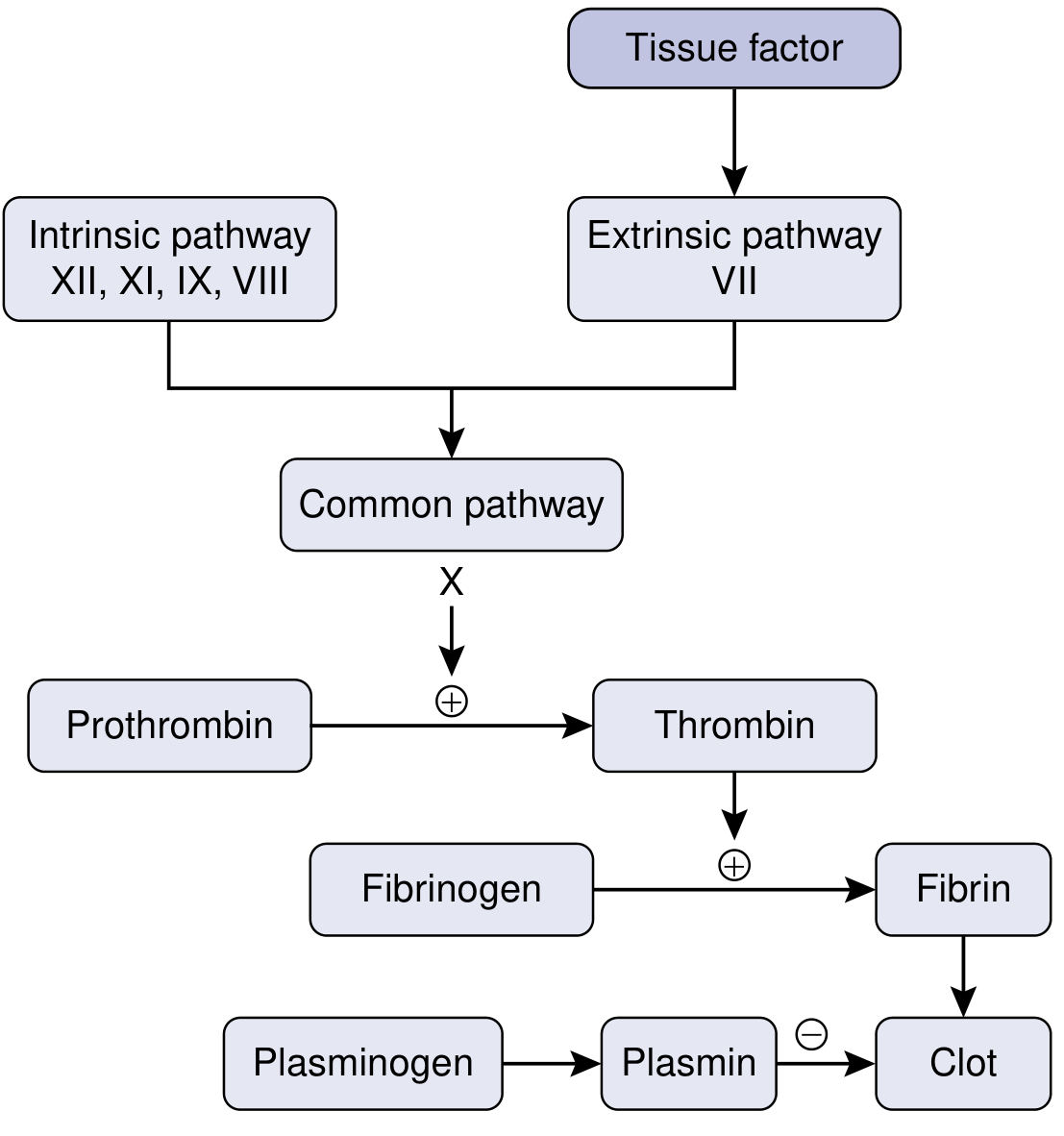
PART 1: PROCOAGULANT / HEMOSTATIC BLOOD PRODUCTS
These are used to correct coagulopathy, reverse anticoagulation, and manage intraoperative bleeding.
1. Fresh Frozen Plasma (FFP)
- Composition: Contains all coagulation factors (I, II, V, VII, VIII, IX, X, XI), fibrinogen, AT-III, proteins C and S. Prepared by rapid freezing of the plasma supernatant after centrifugation of whole blood - rapid freezing preserves the labile factors V and VIII.
- Indications:
- Reversal of warfarin effect (immediate; vitamin K takes hours)
- Correction of multiple coagulation factor deficiencies
- Massive transfusion protocols - 1:1:1 ratio (FFP : platelets : PRBCs) used in trauma damage control resuscitation
- Coagulopathy of liver disease
- Dilutional coagulopathy after large-volume PRBCs
- Dose: Typically 10-15 mL/kg; 1 unit raises factor levels by ~2-3%
- Key monitoring: INR/PT, aPTT
- Risks: Transfusion-related acute lung injury (TRALI), TACO, allergic reactions, ABO incompatibility, infection
- Source: Morgan and Mikhail's Clinical Anesthesiology, 7e; Barash Clinical Anesthesia, 9e; Current Surgical Therapy, 14e
2. Cryoprecipitate
- Composition: Prepared by slow thawing of FFP - yields a gelatinous precipitate containing concentrated factor VIII, factor XIII, von Willebrand factor (vWF), and fibrinogen.
- Indications:
- Hypofibrinogenemia (fibrinogen <100-150 mg/dL)
- Hemophilia A (factor VIII deficiency)
- von Willebrand disease
- Uremic bleeding
- Major surgical hemorrhage with depleted fibrinogen
- Dose: 1 unit per 5-10 kg body weight; raises fibrinogen by ~50 mg/dL per 10 units
- Source: Morgan and Mikhail's, 7e; Barash, 9e
3. Platelets
- Storage: 20°C-24°C for up to 5 days; ~50-70 mL plasma per unit
- Indications:
- Thrombocytopenia with bleeding (threshold: count <50,000 for most surgery; <100,000 for neurosurgery)
- Platelet dysfunction (e.g., post-cardiopulmonary bypass, uremia, antiplatelet drugs)
- Massive transfusion (1:1:1 protocol)
- Dose: 1 apheresis unit raises platelet count by 30,000-60,000/µL
- Neurosurgery note: Patients having neurosurgical procedures should have platelet count >100,000 preoperatively - intraoperative or postoperative bleeding has a significantly adverse impact on outcome. - Barash, 9e
- Source: Morgan and Mikhail's, 7e; Barash, 9e
4. Prothrombin Complex Concentrate (PCC)
- Types:
- 3-factor PCC - contains factors II, IX, X
- 4-factor PCC - contains factors II, VII, IX, X + proteins C and S
- Indications:
- Urgent reversal of warfarin/vitamin K antagonists (preferred over FFP for speed and volume)
- Life-threatening hemorrhage
- Perioperative coagulopathy when benefit outweighs thrombosis risk
- Advantage over FFP: Small volume (20-40 mL vs. 250 mL), no cross-matching, immediate availability
- Source: Morgan and Mikhail's, 7e; Fischer's Mastery of Surgery, 8e
5. Recombinant Factor VIIa (rFVIIa, NovoSeven)
- Mechanism: Activates the extrinsic pathway by forming a complex with tissue factor at the site of vascular injury, generating a large thrombin burst. Acts at supraphysiologic doses even without tissue factor.
- Indications (OT):
- Hemophilia A or B with inhibitors
- Uncontrolled surgical hemorrhage refractory to conventional therapy
- Major liver surgery, trauma, necrotizing enterocolitis with massive bleeding
- Caution: Risk of thromboembolism; use only when benefit outweighs risk
- Source: Morgan and Mikhail's, 7e; Fischer's Mastery of Surgery, 8e
6. Fibrinogen Concentrate
- Mechanism: Directly supplements fibrinogen (Factor I), the substrate for thrombin to form fibrin clot
- Indications: Congenital afibrinogenemia, acquired hypofibrinogenemia in massive hemorrhage
- Advantage over cryoprecipitate: Standardized dosing, no blood group compatibility required, smaller volume, faster administration
- Source: Miller's Anesthesia, 10e; Fischer's Mastery of Surgery, 8e
7. Packed Red Blood Cells (PRBCs)
- Hematocrit: ~70% per unit; volume ~250-350 mL
- Trigger: Hb <7 g/dL in most patients; Hb <8-10 g/dL in cardiac disease or high-risk surgery
- Intraoperative use: Restore oxygen-carrying capacity; threshold must balance against transfusion risks
- Storage anticoagulant: CPDA-1 (citrate as anticoagulant, phosphate as buffer, dextrose, adenosine) - shelf life 35 days; AS-1/AS-3 extend to 6 weeks
- Massive transfusion: 1:1:1 with FFP and platelets
- Source: Morgan and Mikhail's, 7e
PART 2: ANTICOAGULANTS USED INTRAOPERATIVELY
These are used to prevent thrombosis during vascular/cardiac procedures, in patients with HIT, or as ongoing therapy.
1. Unfractionated Heparin (UFH)
- Mechanism: Activates antithrombin III (AT-III), which then inhibits thrombin (IIa) and factor Xa (and to a lesser extent IXa, XIa, XIIa). Prevents fibrin formation.
- Primary intraoperative use: Standard anticoagulant for cardiopulmonary bypass (CPB) in cardiac surgery; also used in vascular surgery (e.g., carotid endarterectomy, peripheral arterial bypass, AV fistula creation)
- Dose for CPB: 300-400 units/kg IV; target activated clotting time (ACT) >480 sec for CPB, >200 sec for vascular procedures
- Monitoring: ACT (intraoperatively); aPTT (ward)
- Reversal: Protamine sulfate (1 mg per 100 units of heparin administered); given at end of CPB
- Complication: Heparin-Induced Thrombocytopenia with Thrombosis (HITT) - immune complex causes paradoxical thrombosis; must switch to direct thrombin inhibitors
- Source: Current Surgical Therapy, 14e; Barash, 9e
2. Low-Molecular-Weight Heparin (LMWH) - e.g., Enoxaparin, Dalteparin
- Mechanism: Consists of smaller, more uniform molecules than UFH; inhibits factor Xa only (not thrombin/IIa) - acts higher up in the cascade
- Intraoperative relevance: Primarily a preoperative/postoperative anticoagulant; must be stopped before surgery (last dose 12-24 hrs prior). Not typically used during active surgery.
- Reversal: Partial reversal with protamine (~60% efficacy)
- Source: Current Surgical Therapy, 14e
3. Bivalirudin (Angiomax)
- Class: Direct thrombin inhibitor (DTI)
- Mechanism: Directly and reversibly binds to the active site of thrombin, inhibiting thrombin-mediated clot formation. Does NOT require AT-III.
- Key intraoperative indications:
- Patients with HIT or HITT who require cardiac surgery (on-pump or off-pump) - >90% efficacy, acceptable bleeding outcomes
- Alternative to heparin in HIT patients undergoing vascular procedures
- Monitoring: ACT or aPTT
- Reversal: No reversal agent - relies on renal clearance (half-life ~25 min)
- Source: Current Surgical Therapy, 14e; Barash, 9e
4. Argatroban
- Class: Direct thrombin inhibitor
- Mechanism: Synthetic, reversible competitive inhibitor of thrombin; hepatically cleared (preferred over bivalirudin in renal impairment)
- Intraoperative use: FDA-approved for treatment of HITT; used for anticoagulation during cardiac/vascular procedures in HIT patients
- Monitoring: aPTT or ACT
- No reversal agent
- Source: Current Surgical Therapy, 14e; Barash, 9e
5. Warfarin (Perioperative Context)
- Mechanism: Vitamin K antagonist - depletes factors II, VII, IX, X and proteins C and S
- Intraoperative concern: Must be stopped preoperatively (INR must normalize). If urgent surgery needed while on warfarin, reverse with FFP (immediate) or 4-factor PCC ± vitamin K
- Bridging: Patients with mechanical valves/AF on warfarin may need heparin bridging perioperatively
- Source: Current Surgical Therapy, 14e
6. Direct Oral Anticoagulants (DOACs)
| Drug | Class | Reversal Agent |
|---|---|---|
| Dabigatran | Direct thrombin inhibitor (oral) | Idarucizumab (Praxbind) |
| Rivaroxaban | Factor Xa inhibitor | Andexanet alfa |
| Apixaban | Factor Xa inhibitor | Andexanet alfa |
| Edoxaban | Factor Xa inhibitor | Andexanet alfa |
- Intraoperative relevance: Must be stopped before elective surgery (24-48 hrs, longer for renal impairment). If emergency surgery needed with active DOAC on board, specific reversal agents should be available.
- Note: DOACs are contraindicated in patients with mechanical heart valve prostheses - warfarin remains the agent of choice in this population
- Source: Current Surgical Therapy, 14e
PART 3: ANTIFIBRINOLYTICS (Intraoperative Hemostatic Adjuncts)
These are not anticoagulants but are routinely used intraoperatively to reduce blood loss.
1. Tranexamic Acid (TXA)
- Mechanism: Reversibly binds to plasminogen at its lysine-binding site, blocking plasminogen-fibrin interaction and inhibiting plasmin's proteolytic activity. Prevents clot lysis (fibrinolysis).
- Indications:
- Cardiac surgery with CPB (reduces post-bypass bleeding and transfusion)
- Orthopedic surgery (TKA, THA, spine surgery) - most evidence
- Trauma/massive hemorrhage (military and civilian protocols)
- Liver surgery
- Dose (orthopedic): 10-15 mg/kg IV before incision + 1 mg/kg/h infusion during surgery; OR topical 1-3 g
- Evidence: Multiple meta-analyses confirm significant reductions in intraoperative/postoperative blood loss and transfusion rates in spine, TKA, THA, and cardiac surgery
- Risk: Theoretical thromboembolic risk; studies have not shown significant increase in VTE at standard doses
- Source: Miller's Anesthesia, 10e; Barash, 9e; Campbell Walsh Wein Urology
2. Epsilon-Aminocaproic Acid (EACA, Amicar)
- Mechanism: Same as TXA - binds plasminogen, inhibits fibrinolysis
- Indications: Cardiac surgery (CPB), spine surgery, hemophilia (adjunct)
- Dose: Loading 100-150 mg/kg or 5 g IV, then 10-15 mg/kg/h infusion; for THA/TKA: 5-10 g fixed dose
- Compared to TXA: Slightly less potent; less evidence in orthopedic surgery; similar cardiac surgery efficacy
- Source: Miller's Anesthesia, 10e; Barash, 9e
3. Aprotinin (Trasylol) - Serine Protease Inhibitor
- Mechanism: Broad protease inhibitor - inhibits plasmin, kallikrein, and other serine proteases; also preserves platelet function
- Historic use: Was widely used in cardiac surgery but withdrawn in many countries due to increased renal failure and mortality risk (BART trial)
- Current status: Available in some countries with restricted use
PART 4: SPECIAL SITUATIONS IN THE OT
Massive Transfusion Protocol (MTP)
- Ratio: 1:1:1 (PRBCs : FFP : platelets) - termed damage control resuscitation
- Used in trauma, ruptured aortic aneurysm, massive obstetric hemorrhage
- Based on military experience and civilian trauma studies
- Often combined with TXA (CRASH-2 trial evidence)
- Source: Morgan and Mikhail's, 7e; Fischer's Mastery of Surgery, 8e
Cardiac Surgery with CPB
- Standard protocol: UFH 300-400 units/kg → target ACT >480 sec → surgery → protamine reversal
- HIT patients: Bivalirudin or argatroban instead of heparin
- Blood conservation: Antifibrinolytics (TXA/EACA) + acute normovolemic hemodilution (ANH) + cell saver
- Post-CPB coagulopathy: FFP, platelets, cryoprecipitate as guided by TEG/ROTEM or point-of-care testing
Patient Refusing Transfusion (e.g., Jehovah's Witnesses)
- Cell salvage (autologous blood recovery)
- Erythropoietin preoperatively
- Iron supplementation
- Factor concentrates: PCC, fibrinogen concentrate, factor VIII/IX, rFVIIa, cryoprecipitate (if acceptable to patient)
Quick Reference Summary Table
| Agent | Category | Intraoperative Role | Monitoring | Reversal |
|---|---|---|---|---|
| FFP | Blood product | Coagulopathy, warfarin reversal, MTP | INR, aPTT | N/A |
| Cryoprecipitate | Blood product | Hypofibrinogenemia, vWD, hemophilia A | Fibrinogen level | N/A |
| Platelets | Blood product | Thrombocytopenia, post-CPB, MTP | Platelet count | N/A |
| PCC (4-factor) | Concentrate | Warfarin reversal, coagulopathy | INR | N/A |
| rFVIIa | Concentrate | Refractory surgical hemorrhage | - | N/A |
| Fibrinogen concentrate | Concentrate | Hypofibrinogenemia | Fibrinogen | N/A |
| UFH | Anticoagulant | CPB, vascular surgery | ACT, aPTT | Protamine |
| Bivalirudin | Anticoagulant | HIT patients needing cardiac surgery | ACT, aPTT | None |
| Argatroban | Anticoagulant | HIT/HITT treatment | aPTT, ACT | None |
| TXA | Antifibrinolytic | Cardiac, ortho, spine, trauma bleeding | Clinical | N/A |
| EACA | Antifibrinolytic | Cardiac, spine surgery | Clinical | N/A |
| Protamine | Reversal agent | Reverses UFH after CPB | ACT | N/A |
Sources:
- Morgan and Mikhail's Clinical Anesthesiology, 7e - Chapters on blood transfusion and procoagulant therapy
- Barash, Cullen, and Stoelting's Clinical Anesthesia, 9e - Transfusion therapy; Blood conservation in cardiac surgery
- Current Surgical Therapy, 14e - Heparin, warfarin, bivalirudin, direct oral anticoagulants
- Miller's Anesthesia, 10e - Antifibrinolytic drugs; perioperative blood management
- Fischer's Mastery of Surgery, 8e - Massive transfusion protocols; patients refusing transfusion
This is a shared conversation. Sign in to Orris to start your own chat.