
Acrodermatitis enterpathica
Reading File
Now let me search the medical library and PubMed simultaneously.
Finding Sources
Searching PubMed
acrodermatitis enteropathica zinc deficiency
Good - found sections in multiple textbooks. Let me read all the relevant sections in parallel.
Reading File
Reading File
Reading File
Finding Sources
Excellent - I have rich content from multiple textbooks plus clinical images. Let me read the dermatology section and fetch the key clinical images.
Reading File
Reading File
Loading Image
Loading Image
Let me get more clinical detail on histopathology, diagnosis, and treatment from the dermatology textbook, plus more images.
Reading File
Loading Image
Loading Image
I now have comprehensive information from multiple authoritative textbooks and clinical images. Let me compile the full answer.
Acrodermatitis Enteropathica (AE)
Definition and Classification
Acrodermatitis enteropathica (AE) is a rare autosomal recessive metabolic disorder of zinc absorption. Two forms exist:
| Form | Cause |
|---|---|
| Hereditary (primary) | Loss-of-function mutations in SLC39A4 gene, encoding the ZIP4 zinc transporter in the intestinal mucosa |
| Acquired (secondary) | Dietary zinc insufficiency - seen in premature infants, malnourished patients, exclusively breastfed infants from low-zinc mothers, TPN without adequate zinc, IBD, chronic alcoholism, GI surgery, renal disease, anorexia, AIDS |
The SLC39A4 gene is located on chromosome 8q24.3. ZIP4 is expressed on the luminal surface of intestinal enterocytes and is upregulated when zinc stores are depleted. Without it, zinc cannot be absorbed across the gut epithelium.
- Emery's Elements of Medical Genetics and Genomics
- Yamada's Textbook of Gastroenterology, 7th ed.
- Schwartz's Principles of Surgery, 11th ed.
Pathophysiology
Zinc is a cofactor for >300 enzymes, including:
- DNA polymerase and reverse transcriptase (cell proliferation)
- Alkaline phosphatase (marker of deficiency)
- Matrix metalloproteinases (wound healing, immune function)
Deficient zinc leads to impaired granulation tissue formation, impaired wound healing, immune dysfunction, and dermatitis. The defect specifically involves zinc transport from the intestinal lumen into enterocytes, preventing systemic absorption.
Timing of Onset
- Bottle-fed infants: Onset within the first few days of life (cow's milk zinc-binding proteins inhibit bioavailability)
- Breastfed infants: Onset days to weeks after weaning (breast milk normally has adequate zinc)
- Premature infants are at highest risk due to inadequate stores, suboptimal absorption, and high zinc requirements
Classic Triad
Dermatitis + Diarrhea + Alopecia
Clinical Features
Skin (Dermatitis)
The rash is acral and periorificial - distributed around body orifices and the extremities (especially distal limbs):
- Early lesions: Eczematous pink scaly plaques; pustular and bullous with flaccid blisters (flaccid = they collapse into crusts)
- Facial/intertriginous involvement: Patchy red dry scaling with exudation and crusting around the mouth, nose, eyes, ears, perianal region
- Angular stomatitis - a common early sign
- Perlingual erythema with superficial flaccid pustules
- Nail dystrophy: thin nails with accentuated longitudinal ridges
- Late/chronic lesions: May become psoriasiform (the typical upper epidermal pallor is lost on biopsy at this stage)
Clinical images:
Acral pustular/bullous dermatitis on the lower limb of an infant:
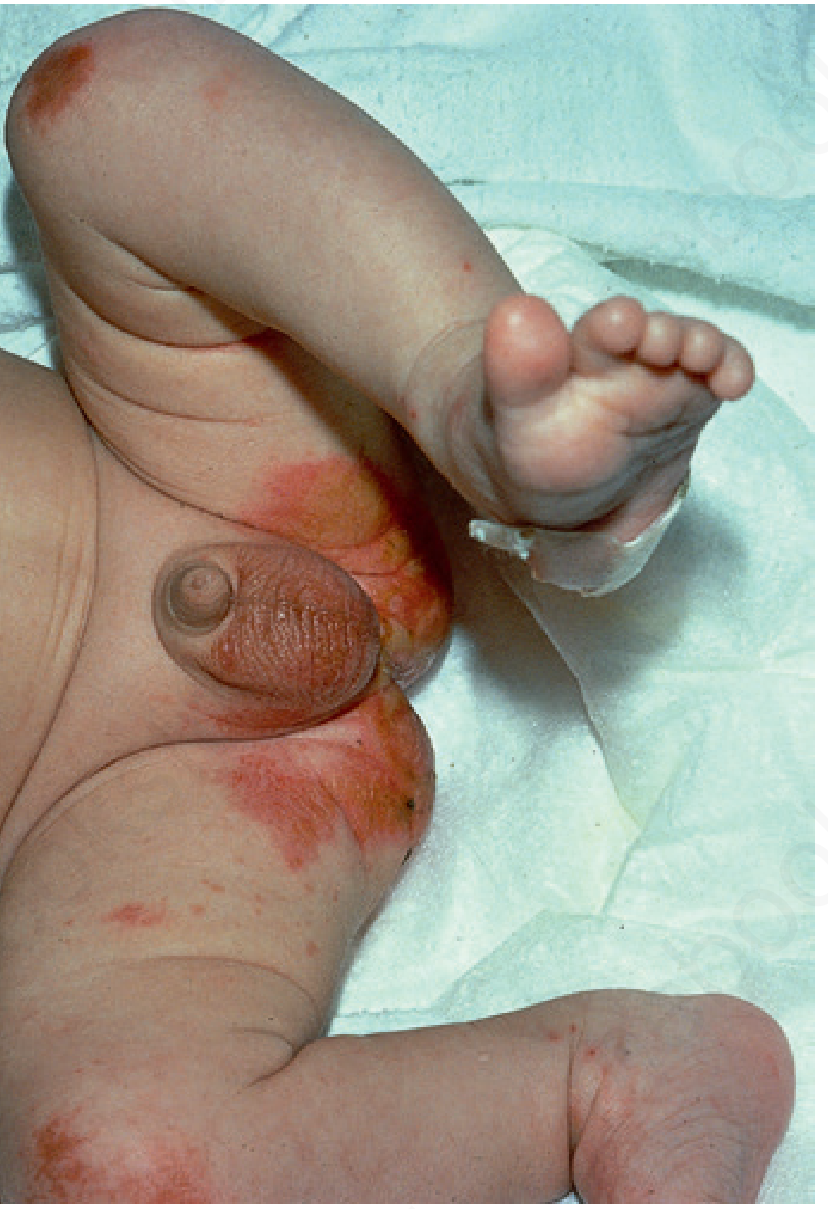
(eFig. 22.6 - Andrews' Diseases of the Skin)
Severe eczematous crusting around the face and neck:
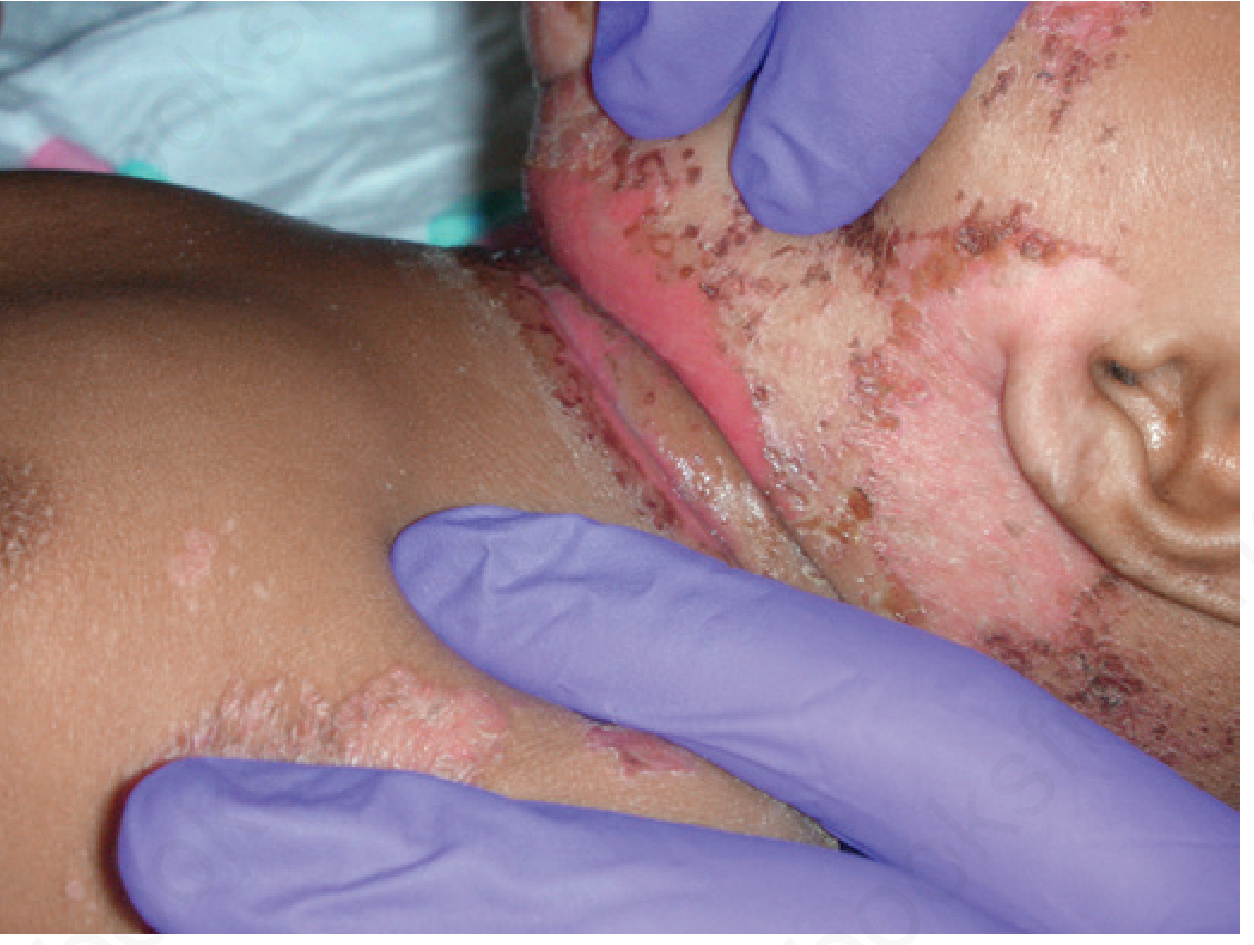
(Fig. 22.7 - Andrews' Diseases of the Skin)
Perianal erythema and scaling:
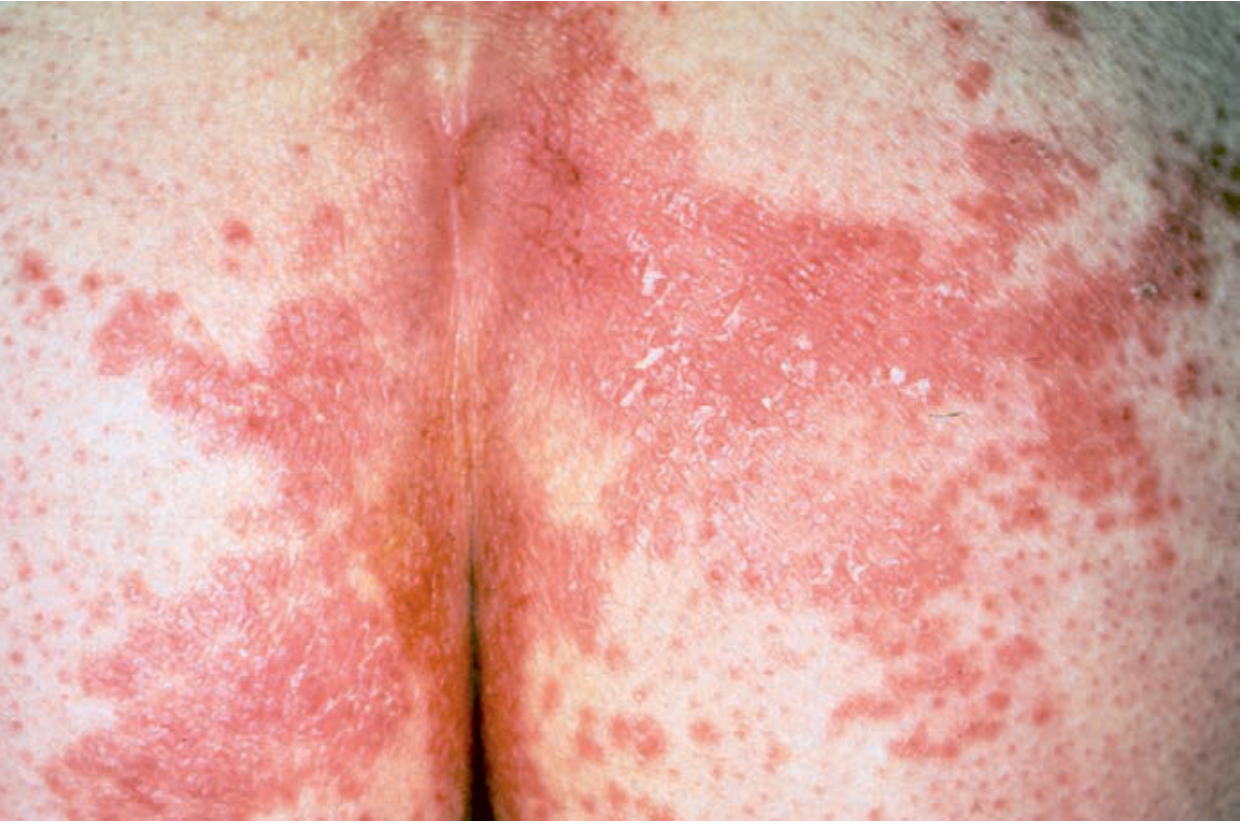
(Fig. 22.23 - Andrews' Clinical Atlas)
Severe acral involvement on the hand:
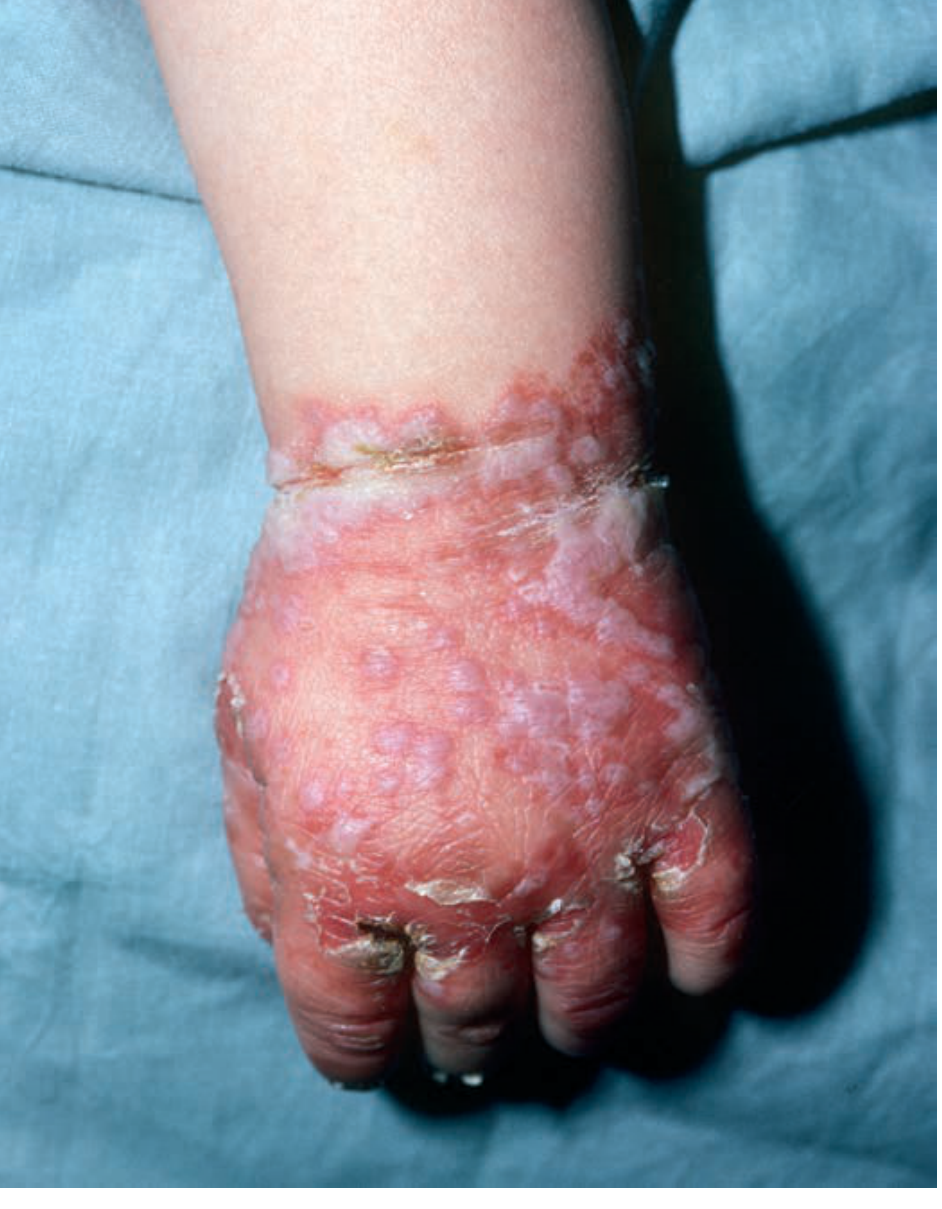
(Fig. 22.24 - Andrews' Clinical Atlas)
GI
- Diarrhea (primary GI complication, present in most cases)
Systemic
- Alopecia of scalp, eyebrows, and eyelashes (partial or complete)
- Growth retardation / failure to thrive
- Irritability and emotional lability - a characteristic finding
- Ophthalmic findings (photophobia, blepharitis)
- Impaired wound healing
- CNS manifestations
- Increased susceptibility to infections (impaired cellular immunity)
Histopathology
Early/active lesions:
- Vacuolation of keratinocytes in the upper stratum malpighii (pathognomonic early finding)
- Confluent vacuolation forms a subcorneal bulla
- Larger lesions: total epidermal necrosis with subepidermal blistering
- Neutrophils typically present
- Psoriasiform epidermal hyperplasia with confluent parakeratosis and pallor/ballooning of upper epidermal layers
Late/chronic lesions:
- The upper epidermal pallor is absent
- Biopsy shows only psoriasiform dermatitis
(Histopathology is identical in acquired and hereditary forms.)
- Andrews' Diseases of the Skin, Clinical Dermatology
Diagnosis
| Test | Significance |
|---|---|
| Serum zinc level | Low (confirms diagnosis) |
| Serum alkaline phosphatase | Low - zinc-dependent enzyme; useful when zinc level is borderline, and may be reported faster |
| Genetic testing | SLC39A4 mutations for hereditary form |
| Skin biopsy | Characteristic but not specific |
- A chronic diaper rash + diarrhea in an infant = evaluate for zinc deficiency
- Even if serum zinc is in the normal range, a therapeutic trial of zinc is warranted when clinical features are characteristic
- The Schwartz's Surgery textbook notes the diagnostic threshold as serum zinc < 100 mg/dL
Differential Diagnosis
Conditions that can mimic AE (acquired acrodermatitis-like eruptions):
- Biotinidase deficiency
- Multiple carboxylase deficiency
- Methylmalonic acidemia / Propionic acidemia
- Isoleucine deficiency (maple syrup urine disease treatment)
- Essential fatty acid deficiency
- Glucagonoma (necrolytic migratory erythema)
Treatment
| Scenario | Dose |
|---|---|
| Hereditary AE (lifelong) | Zinc sulfate 3 mg/kg/day orally, lifelong |
| General replacement | Zinc sulfate 1-2 mg/kg/day (50 mg elemental zinc per 220 mg zinc sulfate tablet) |
| Schwartz's Surgery reference | 100-400 mg zinc sulfate/day orally |
| Acquired AE | Transient zinc supplementation + correction of underlying cause |
Important caution: Overzealous zinc supplementation can cause copper deficiency (zinc competitively inhibits copper absorption). Monitor copper levels if high-dose zinc is used long term.
Response to treatment is typically rapid and dramatic - the skin clears, diarrhea resolves, and growth resumes.
Key Points Summary
| Feature | Detail |
|---|---|
| Inheritance | Autosomal recessive |
| Gene | SLC39A4 (chromosome 8q24.3) |
| Protein | ZIP4 zinc transporter |
| Defect | Failure of intestinal zinc absorption |
| Classic triad | Dermatitis + Diarrhea + Alopecia |
| Rash distribution | Acral + periorificial |
| Rash morphology | Pustular/bullous → crusted → psoriasiform |
| Key lab | Low serum zinc; low alkaline phosphatase |
| Treatment | Zinc sulfate (lifelong in hereditary form) |
Recent evidence (2025): A systematic review by Cui et al. (PMID 40584104) published in Frontiers in Nutrition confirmed the real-world clinical spectrum of AE in the pediatric population, consistent with the textbook descriptions above.
- Andrews' Diseases of the Skin: Clinical Dermatology, pp. 558-559
- Yamada's Textbook of Gastroenterology, 7th ed., pp. 2347-2348
- Emery's Elements of Medical Genetics and Genomics, p. 295
- Schwartz's Principles of Surgery, 11th ed., p. 3738
This is a shared conversation. Sign in to Orris to start your own chat.