
Therapeutic drug monitoring WHO defination
WHO definition therapeutic drug monitoring TDM official
Therapeutic Drug Monitoring (TDM) - Definition and Overview
WHO / Authoritative Definition
"The measurement of drugs in biological fluids (most often blood, plasma, or serum) at timed intervals, to maintain drug concentrations within a target therapeutic range - the concentration at which maximal benefit and minimal toxicity are expected for most patients."
- Measurement - quantitative assay of drug/metabolite concentrations
- Timing - specimens collected at specific intervals relative to dosing
- Purpose - maintaining levels within a defined therapeutic window (above minimum effective concentration, below toxic threshold)
Expanded Clinical Definition
"The measurement of serum levels of many therapeutic drugs administered to patients - both because of the possible toxic side effects of many medications, and because lack of patient compliance results in subtherapeutic levels of the drug, requiring intervention."
- Henry's Clinical Diagnosis and Management by Laboratory Methods
- Goodman & Gilman's Pharmacological Basis of Therapeutics describes TDM mathematically as using: CL/F(patient) = Dosing rate / Css (measured), then adjusting maintenance doses accordingly.
Key Principles of TDM
| Principle | Detail |
|---|---|
| Therapeutic window | Drug must remain above MEC (minimum effective concentration) and below MTC (minimum toxic concentration) |
| Steady state | Samples are collected after 4-5 elimination half-lives; sampling before next dose (trough) is standard |
| Interindividual variability | Pharmacokinetic differences between patients (genetics, renal/hepatic function, age, drug interactions) make fixed dosing unreliable |
| Narrow therapeutic index | TDM is most valuable when the toxic dose is close to the therapeutic dose |
| Specimen | Virtually all TDM assays use serum (not urine), commonly via immunoassay (FPIA, CLIA) |
When TDM is Indicated
- Have a narrow therapeutic index (small difference between effective and toxic doses)
- Show marked pharmacokinetic variability between patients
- Are used for a prolonged period with changing patient physiology
- Have effects that are difficult to distinguish clinically from disease activity
- Antiepileptics: phenytoin, carbamazepine, valproate, lamotrigine
- Antibiotics: aminoglycosides (amikacin, gentamicin), vancomycin
- Immunosuppressants: tacrolimus, sirolimus, cyclosporine
- Cardiovascular: digoxin
- Psychiatric: lithium, clozapine
- Antifungals: voriconazole, posaconazole
Purposes of TDM (Summary)
- Optimize efficacy - ensure concentrations are above the minimum effective threshold
- Minimize toxicity - prevent accumulation above toxic concentrations
- Monitor compliance/adherence - detect subtherapeutic levels due to non-adherence
- Guide dose adjustment - during changes in renal/hepatic function, age, or drug interactions
- Confirm steady state - verify that dosing has achieved stable therapeutic levels
- Individualize therapy - account for genetic and physiologic variability (pharmacogenomics)
Timing of Sampling
- Trough (pre-dose) samples: taken just before the next planned dose; best for assessing drug accumulation and adjusting maintenance doses
- Peak (post-dose) samples: taken shortly after a dose to assess whether efficacious concentrations are being reached
- Both peak and trough values together provide the most complete pharmacokinetic picture
Therapeutic index WHO DEFINATION
WHO definition therapeutic index pharmacology official
Therapeutic Index (TI) - Definition
WHO / Standard Pharmacological Definition
"The therapeutic index is a relative measure of the toxicity or safety of a drug, defined as the ratio of the median toxic dose (TD50) to the median effective dose (ED50)."
The Formula
| Term | Meaning |
|---|---|
| TD50 | Dose at which 50% of the population experiences a specific toxic effect |
| ED50 | Dose at which 50% of the population experiences the desired therapeutic effect |
| LD50 | Lethal dose in 50% of animals (used in preclinical/animal studies as a substitute for TD50) |
What TI Means in Practice
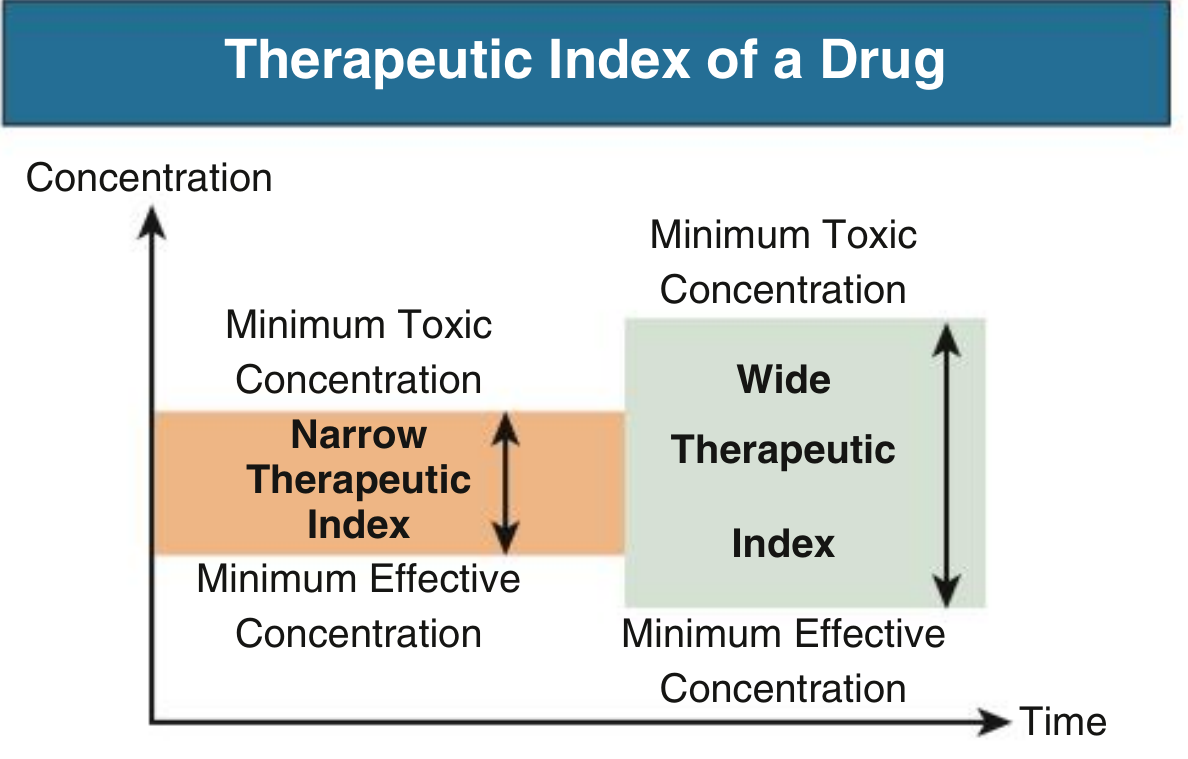
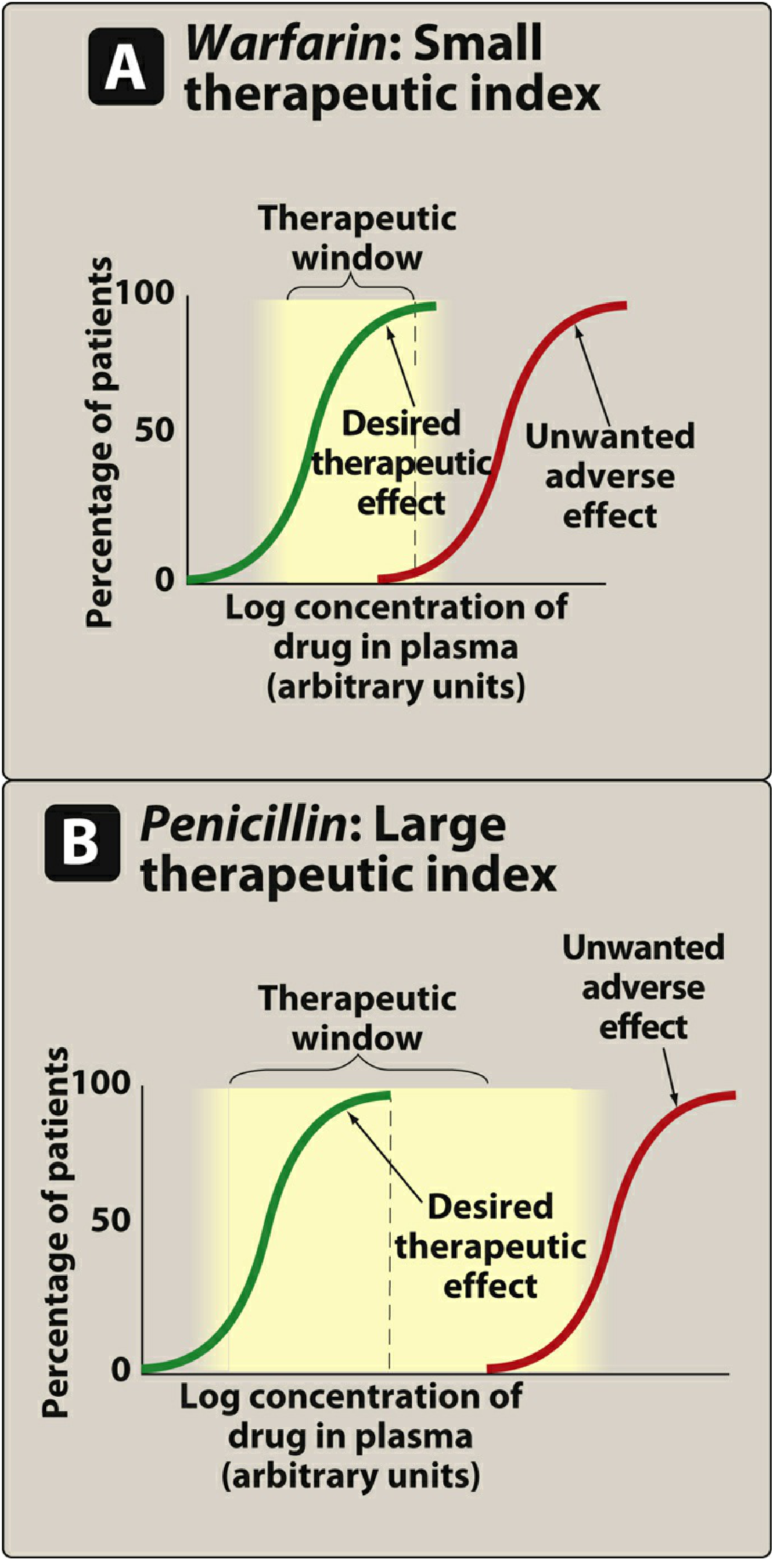
"The therapeutic window is the range of plasma drug concentrations between the minimum concentration for clinical efficacy and minimum concentration for toxicity. The therapeutic index is the ratio of these concentrations."
- A high TI = wide margin between effective and toxic doses = safer drug (e.g., penicillin)
- A low / narrow TI = small margin between effective and toxic doses = requires close monitoring (e.g., digoxin, lithium, warfarin, phenytoin)
Visual Illustration
Clinical Significance - High vs. Low TI
| Feature | Wide TI | Narrow TI |
|---|---|---|
| Safety margin | Large | Small |
| Dose flexibility | High | Very limited |
| TDM required? | Usually no | Yes - essential |
| Examples | Penicillin, most antibiotics | Digoxin, lithium, warfarin, phenytoin, gentamicin, vancomycin, tacrolimus |
"When the therapeutic index is high, as it is for haloperidol, it is reflected by the wide range of dosages in which that drug is prescribed. Conversely, the therapeutic index for lithium is relatively low, thus requiring careful monitoring of serum lithium levels."
Limitations of the TI
- LD50 is derived from animal studies and may not accurately reflect human toxicity
- Does not account for idiosyncratic reactions or genetic variation (pharmacogenomics)
- Efficacy and toxicity both show individual variation not captured by population-level ratios
- Does not reflect different types of toxicity (e.g., organ-specific vs. systemic)
Drugs with Narrow Therapeutic Index (Require TDM)
- Warfarin, digoxin, lithium, phenytoin, carbamazepine, valproate
- Aminoglycosides (gentamicin, amikacin), vancomycin
- Immunosuppressants (tacrolimus, cyclosporine, sirolimus)
- Antifungals (voriconazole), antineoplastics (5-fluorouracil, methotrexate)
- Theophylline, clozapine
Clinical pharmacology WHO defination
WHO definition clinical pharmacology official 1970
https://cioms.ch/wp-content/uploads/2017/01/Clinical_Pharmac…
Clinical Pharmacology - WHO Definition
The Official WHO Definition (1970)
"Clinical Pharmacology is the scientific study of drugs in humans."
Expanded WHO / Authoritative Definitions
"Clinical pharmacology takes scientific data on drugs into rational patient care - encompassing drug discovery and development, pharmacokinetics, pharmacodynamics, drug interactions, adverse drug reactions, and the promotion of safer and more effective use of drugs."
"Clinical pharmacology is a discipline that teaches, does research, frames policy, gives information and advice about the actions and proper uses of medicines in humans, and implements that knowledge in clinical practice."
"Two important goals of clinical pharmacology are: (1) to provide a description of conditions under which drug actions vary among human subjects; and (2) to determine mechanisms underlying this variability, with the goal of improving therapy with available drugs as well as pointing to mechanisms whose targeting by new drugs may be effective in the treatment of human disease."
Core Scope of Clinical Pharmacology
| Domain | What It Covers |
|---|---|
| Pharmacokinetics (PK) | What the body does to the drug - absorption, distribution, metabolism, excretion (ADME) |
| Pharmacodynamics (PD) | What the drug does to the body - mechanisms and effects at target sites |
| Drug Development | Phase I-IV clinical trials, first-in-human studies |
| Adverse Drug Reactions (ADRs) | Detection, mechanism, prevention, and reporting |
| Drug Interactions | PK and PD interactions in polypharmacy |
| Pharmacogenomics | How genetic variation alters drug response |
| Therapeutic Drug Monitoring | Optimizing drug levels for efficacy and safety |
| Rational Drug Use | Evidence-based prescribing, drug policies |
| Regulatory Science | Advising ethics, regulatory, and pricing bodies |
Modern WHO Vision for Clinical Pharmacology
- Teach - train safe prescribers in medical schools and postgraduate programs
- Research - conduct drug trials and mechanistic studies in humans
- Frame policy - advise governments on national drug policies
- Provide information - give unbiased, evidence-based drug advice to regulators, ethics committees, and pricing bodies
- Support clinical care - manage patients with complex polypharmacy, comorbidities, and altered pharmacokinetics
- Develop medicines policy - advocate drug quality, equitable access, and rational use
The Bridge Role of Clinical Pharmacology
"Modern clinical pharmacology aims to replace empiricism in the use of drugs with therapy based on in-depth understanding of factors that determine an individual's response to drug treatment. Molecular pharmacology, pharmacokinetics, genetics, clinical trials, and the educated prescriber all contribute to this process."
Basic Pharmacology ←→ CLINICAL PHARMACOLOGY ←→ Clinical Medicine
      (Lab/Animal)           (Humans)              (Patient Care)
Key Distinguishing Features from Basic Pharmacology
| Feature | Basic Pharmacology | Clinical Pharmacology |
|---|---|---|
| Study subject | Animals / in vitro | Humans |
| Focus | Mechanisms | Mechanisms + patient outcomes |
| Setting | Laboratory | Clinical trials + bedside |
| Goal | Understanding | Rational, safe, effective drug use |
| Output | Scientific knowledge | Prescribing guidelines, drug policies |
Alpha blockers
alpha blockers pharmacology classification mechanism uses 2024
alpha adrenergic receptor blocker mechanism pharmacology classification
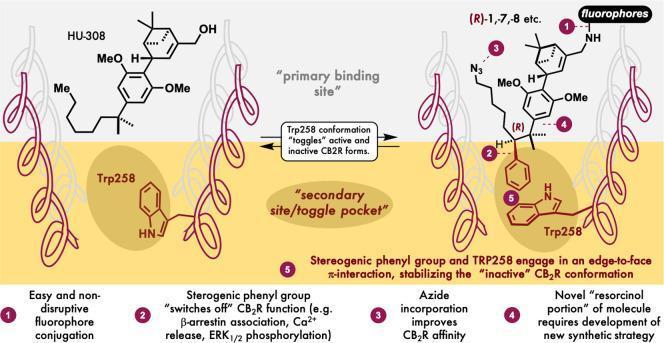
A molecular pharmacology diagram illustrating the conformational switch of the Cannabinoid Receptor 2 (CB2R) between active (left) and inactive (right) states. The visual depicts a G protein-coupled receptor (GPCR) model featuring alpha-helical transmembrane domains. The central mechanism shown is the 'toggle switch' involving the Trp258 residue within a 'secondary site/toggle pocket'. On the left, the agonist HU-308 binds to the primary site, leaving Trp258 in an upright active conformation. On the right, a modified ligand stabilizes the inactive state through a stereogenic phenyl group that engages in an edge-to-face pi-interaction with Trp258, effectively 'switching off' receptor signaling. Key molecular modifications to the ligand for therapeutic development are highlighted: 1) fluorophore conjugation for imaging, 2) stereogenic phenyl group for functional inactivation (e.g., inhibiting beta-arrestin association and ERK1/2 phosphorylation), 3) azide incorporation for improved affinity, and 4) a novel resorcinol moiety. The diagram highlights structural biology concepts in drug design, specifically targeting the active/inactive equilibrium of GPCRs for pain modulation research.
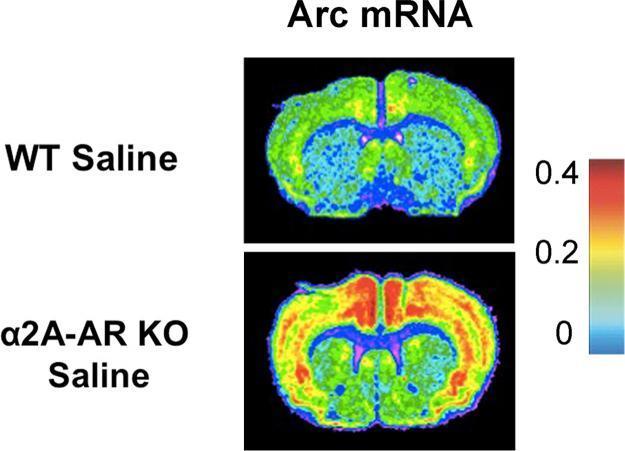
This diagnostic image shows representative in situ hybridization autoradiographs comparing Arc mRNA expression in coronal mouse brain sections. The figure contrasts a wild-type (WT) mouse with an alpha-2A adrenergic receptor knockout (α2A-AR KO) mouse, both saline-injected. A color-coded calibration bar on the right measures mRNA density in μCi/mg tissue, ranging from 0 (blue/cyan) to 0.4 (red). The WT saline brain exhibits predominantly low expression, indicated by blue and green hues, suggesting minimal baseline activity. In contrast, the α2A-AR KO saline brain demonstrates significantly higher Arc mRNA density, visible as widespread yellow and focal red regions, particularly concentrated in the cortex and central neuroanatomical structures. This comparison illustrates the regulatory role of α2A-adrenergic receptors in modulating baseline immediate early gene expression. The visual serves as an educational tool for neuroscience and pharmacology, highlighting the pathophysiological changes in gene transcription resulting from specific genetic knockouts in animal models.
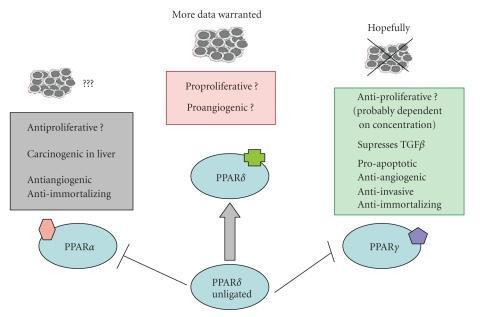
This pathophysiology diagram summarizes the influence of Peroxisome Proliferator-Activated Receptor (PPAR) ligands on breast carcinogenesis. The central mechanism illustrates unligated PPAR-delta inhibiting PPAR-alpha and PPAR-gamma while transitioning to an active ligated PPAR-delta state. The diagram compares the cellular effects of three PPAR isoforms. PPAR-alpha (left, gray box) is linked to potential antiproliferative, antiangiogenic, and anti-immortalizing effects, but is noted as carcinogenic in the liver. PPAR-delta (center, pink box) is associated with proproliferative and proangiogenic activities, labeled with the caveat 'More data warranted.' PPAR-gamma (right, green box) demonstrates predominantly antitumorigenic properties, including pro-apoptotic, anti-invasive, and anti-immortalizing effects, as well as TGF-beta suppression; its antiproliferative action is noted as concentration-dependent. The illustration uses schematic cell clusters to represent tumor progression or regression, with a crossed-out cluster over the PPAR-gamma pathway indicating therapeutic potential. This resource is intended for advanced medical education in oncology and molecular pharmacology.
Alpha Blockers (Alpha-Adrenergic Antagonists)
Definition
Classification
| Class | Drugs | Receptor Selectivity | Binding Type |
|---|---|---|---|
| Non-selective (α1 + α2) | Phenoxybenzamine | α1 + α2 | Irreversible (covalent) |
| Non-selective (α1 + α2) | Phentolamine, Tolazoline | α1 + α2 | Reversible (competitive) |
| Selective α1 (non-subtype) | Prazosin, Terazosin, Doxazosin | α1 only | Reversible (competitive) |
| Selective α1A (uroselective) | Tamsulosin, Alfuzosin, Silodosin | α1A >> α1B | Reversible |
| Selective α2 | Yohimbine | α2 only | Reversible |
| Mixed α + β blocker | Labetalol, Carvedilol | β1 > α1 | Reversible |
Mechanism of Action
"α-Adrenergic blocking agents antagonize the subtype(s) of α-adrenergic receptors. Drugs that block α1-adrenoceptors significantly affect blood pressure. Because normal sympathetic control of the vasculature occurs in large part through agonist actions on α1-adrenergic receptors, blockade reduces the sympathetic tone of blood vessels, resulting in decreased peripheral vascular resistance and a subsequent reduction in blood pressure. This decreased blood pressure induces reflex tachycardia."
| Receptor | Location | Effect when stimulated | Effect of blockade |
|---|---|---|---|
| α1A | Prostate, bladder neck, urethra | Smooth muscle contraction - obstructs urine flow | Relaxes smooth muscle - improves urine flow (BPH) |
| α1B | Vascular smooth muscle | Vasoconstriction - raises BP | Vasodilation - lowers BP |
| α2 (presynaptic) | Sympathetic nerve terminals | Inhibits NE release (negative feedback) | Increases NE release - reflex tachycardia |
"Alpha1-receptor selectivity allows norepinephrine to exert unopposed negative feedback (mediated by presynaptic α2 receptors) on its own release. In contrast, phentolamine blocks both presynaptic and postsynaptic α receptors - reflex activation of sympathetic neurons produces greater release of transmitter onto β receptors and correspondingly greater cardioacceleration."
Epinephrine Reversal
- Epinephrine's α-mediated vasoconstriction is blocked
- Epinephrine's β2-mediated vasodilation is unmasked
- Net result: Blood pressure FALLS instead of rises - this is called "epinephrine reversal"
- Norepinephrine (lacks significant β2 effect on vasculature): actions are diminished but not reversed
- Isoproterenol (pure β agonist): completely unaffected by alpha blockade
Individual Drug Profiles
1. Phenoxybenzamine
- Type: Irreversible, non-selective (α1 + α2) blocker (haloalkylamine)
- Duration: >24 hours (irreversible)
- Uses: Pheochromocytoma (pre-operative preparation, inoperable disease), hypertensive crisis from sympathomimetics, autonomic hyperreflexia in spinal cord injury, neurogenic bladder
- Dose for pheo: 10 mg BD initially, titrated to 40-120 mg/day
- ADRs: Orthostatic hypotension, reflex tachycardia, nasal stuffiness, inhibited ejaculation, GI irritation, arrhythmias
2. Phentolamine
- Type: Reversible, non-selective (α1 + α2), competitive (imidazoline)
- Duration: ~4 hours (IV half-life ~45 min)
- Uses:
- Short-term management of pheochromocytoma
- Hypertensive crisis (clonidine withdrawal, tyramine-MAOI interaction)
- Prevention of dermal necrosis after norepinephrine extravasation
- Reversing soft-tissue local anaesthetic effect in dental procedures
- Pseudo-obstruction of bowel in pheo
- ADRs: Severe hypotension with rapid IV infusion, reflex tachycardia
3. Prazosin, Terazosin, Doxazosin (Selective α1 Blockers)
- Type: Selective α1 (competitive), not α2
- Mechanism: Relax arterial AND venous smooth muscle → reduce peripheral resistance
- Minimal reflex tachycardia (α2 presynaptic feedback intact)
- Uses: Hypertension (second-line), BPH (especially in men with both conditions)
- Pharmacokinetics:
| Drug | Half-life | Dosing | Notes |
|---|---|---|---|
| Prazosin | ~3 hrs | 2-3× daily | Shortest acting |
| Terazosin | 12 hrs | Once daily | 5-20 mg/day |
| Doxazosin | 22 hrs | Once daily | 1-4 mg/day; fecal excretion |
4. Tamsulosin, Alfuzosin, Silodosin (Uroselective α1A Blockers)
- Selective for α1A receptors in prostate/bladder > α1B in vessels
- Less blood pressure lowering effect → safer in normotensive BPH patients
- Primary use: BPH (improve urine flow, reduce outlet resistance)
- Also used as medical expulsive therapy for ureteric calculi
5. Yohimbine (Selective α2 Blocker)
- Blocks presynaptic α2 → increases central sympathetic outflow + NE release
- Raises BP and HR
- Uses: Male erectile dysfunction (limited), orthostatic hypotension
- ADRs: Anxiety, tremor, excess pressor effect if NE transporter blocked
Clinical Uses Summary
| Indication | Drug of Choice |
|---|---|
| Pheochromocytoma (pre-op) | Phenoxybenzamine (irreversible, long-acting) |
| Pheochromocytoma (acute crisis) | Phentolamine IV |
| Benign Prostatic Hyperplasia (BPH) | Tamsulosin, alfuzosin, silodosin, doxazosin |
| Hypertension (2nd line) | Doxazosin, terazosin, prazosin |
| Hypertension + BPH (in men) | Doxazosin or terazosin |
| Norepinephrine extravasation | Phentolamine (local injection) |
| Clonidine withdrawal crisis | Phentolamine + β blocker |
| PTSD / nightmares | Prazosin (off-label) |
| Ureteric stone passage | Tamsulosin (medical expulsive therapy) |
| Raynaud's phenomenon | Prazosin |
Adverse Effects
| Side Effect | Mechanism | Which Drugs |
|---|---|---|
| Orthostatic hypotension | α1 blockade → venous pooling on standing | All, esp. phenoxybenzamine |
| "First-dose phenomenon" | Exaggerated BP drop with first dose → syncope | Prazosin, doxazosin, terazosin |
| Reflex tachycardia | Baroreceptor response to BP drop | Non-selective > selective |
| Nasal congestion | Vasodilation of nasal mucosa | Phenoxybenzamine |
| Inhibited ejaculation | α1 block in vas deferens, seminal vesicles | Phenoxybenzamine, tamsulosin |
| Intraoperative Floppy Iris Syndrome (IFIS) | α1A blockade in iris dilator muscle | Tamsulosin (most common) |
| Dizziness, headache, drowsiness | Vasodilation | All |
| Additive hypotension | Synergism with nitrates, PDE-5 inhibitors (sildenafil) | All α1 blockers - caution! |
- Starting at 1/3 to 1/4 the normal dose
- Administering the first dose at bedtime
- Ensuring patient is not salt/volume depleted
Contraindications / Cautions
- Phenoxybenzamine/phentolamine: Caution in cerebrovascular and cardiovascular disease (reflex tachycardia may provoke angina/arrhythmia)
- Note: Beta-blockers must never be started before alpha blockade in pheochromocytoma - doing so causes paradoxical severe hypertension (β vasodilation blocked, leaving α vasoconstriction unopposed)
- Tamsulosin: Warn patients about IFIS before any cataract surgery
- All α1 blockers + PDE-5 inhibitors (sildenafil, tadalafil): Dangerous additive hypotension