
Amyotrophic lateral scloresuis details answer with pt mangement and assessment
"amyotrophic lateral sclerosis"[MeSH Terms] AND management
Amyotrophic Lateral Sclerosis (ALS) - Comprehensive Overview
Definition
- Bradley and Daroff's Neurology in Clinical Practice
- Goldman-Cecil Medicine
Epidemiology
| Feature | Data |
|---|---|
| Incidence | ~2 per 100,000/year |
| Prevalence | 5-8 per 100,000 |
| Peak age at onset | 55-74 years |
| Male:Female ratio | ~1.6:1 (slight female predominance in bulbar-onset) |
| Sporadic vs Familial | ~90% sporadic, 5-10% familial |
| Mean survival | 2-5 years from symptom onset |
| Familial inheritance | Usually autosomal dominant |
Pathogenesis
Genetic Causes
- C9ORF72 hexanucleotide repeat expansion (GGGGCC) on chromosome 9: accounts for 40-50% of familial ALS and 7-10% of sporadic ALS - the most common genetic cause
- SOD1 mutations (chromosome 21q22.1): 20% of familial ALS, 2% overall - generates misfolded protein triggering oxidative stress, protein aggregation, mitochondrial dysfunction, excitotoxicity
- TDP-43 (TARDBP gene) and FUS/TLS - RNA-binding proteins; mutations in these converge on defective RNA processing as a shared mechanism
- Other loci: alsin, senataxin, angiogenin, VAPB, dynactin, TBK1
Key Pathogenic Mechanisms
- Oxidative stress
- Protein aggregation (SOD1 misfolding, TDP-43 inclusions)
- Mitochondrial dysfunction
- Excitotoxicity (glutamate toxicity)
- Impaired axonal transport
- Defective RNA processing
- Non-neuronal cell contribution - astrocytes expressing mutant SOD1 exert toxic effects on neighboring motor neurons
- Goldman-Cecil Medicine, Robbins & Kumar Basic Pathology
Pathology
- Atrophy of the precentral gyrus (motor cortex)
- Sclerosis and pallor of the corticospinal tracts in the spinal cord
- Thin gray anterior (ventral) spinal roots and hypoglossal nerves
- Visible muscle atrophy
- Loss of >50% of spinal anterior horn motor neurons
- Diffuse astrocytic gliosis in spinal gray matter
- Large motor unit potentials on EMG; fibrillation and positive sharp waves
- TDP-43 cytoplasmic inclusions in a subset of cases
- Spared regions: extraocular muscles, Onuf's nucleus in sacral cord (pelvic floor - bowel/bladder continence preserved until late)
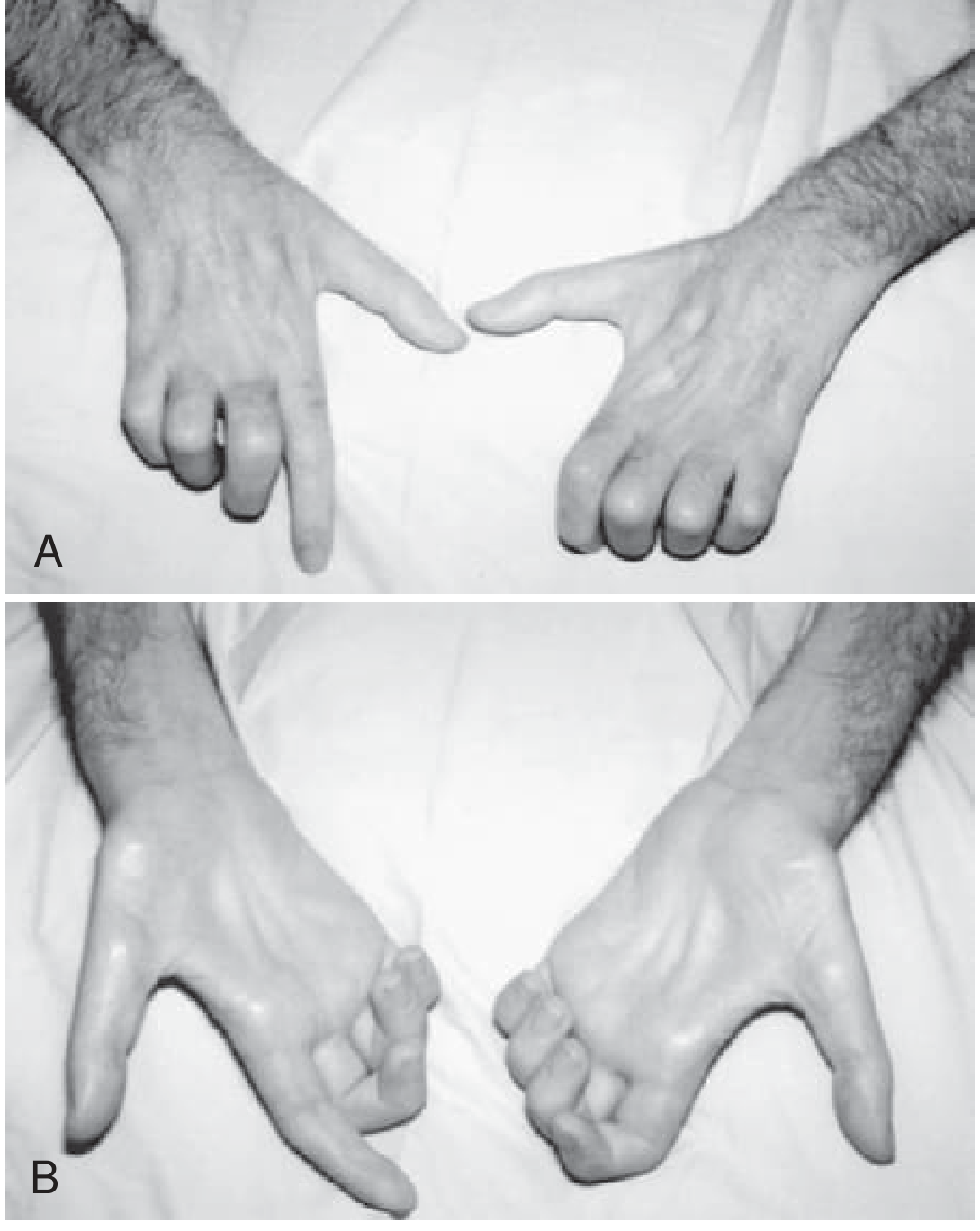
Classification of ALS
- Classic spinal-onset ALS
- Bulbar-onset ALS (~25% of cases)
- Flail-arm variant (bilateral upper extremity, more common in males)
- Flail-leg variant
- Primary Lateral Sclerosis (PLS) - UMN only
- Progressive Muscular Atrophy (PMA) - LMN only
- Progressive Bulbar Palsy (PBP)
- Mills hemiplegic variant
- Respiratory/dyspnea onset (~1-2%, predominantly male)
- Monomelic presentation
- ALS1: SOD1 mutations, chr 21q22.1, AD
- ALS2: Alsin mutations, chr 2q33, AR, juvenile
- ALS4: Senataxin, chr 9q34, AD, juvenile
- ALS6: FUS/TLS
- ALS-FTD: C9ORF72 expansion (also causes frontotemporal dementia)
Clinical Features
Upper Motor Neuron Signs
- Spasticity and hypertonia
- Hyperreflexia (paradoxically brisk reflexes in wasted limbs)
- Pathological reflexes: Babinski sign, Hoffman sign
- Pseudobulbar palsy: emotional lability, brisk jaw jerk, strained "strangled" speech
- Loss of dexterity
- Clonus
Lower Motor Neuron Signs
- Weakness and progressive muscle wasting (amyotrophy)
- Fasciculations (most noticeable in large proximal muscles)
- Reduced or absent reflexes in severely affected muscles
- Flaccid dysarthria with nasal quality
- Muscle cramps (often an early symptom)
Classic Presentation Pattern
- Onset typically focal, distal, asymmetric in one limb
- Spreads in anatomically contiguous progression
- Upper limb onset: difficulty turning keys, buttoning, opening bottles; thenar and intrinsic hand muscles most affected
- Lower limb onset: foot drop, gait instability
- Bulbar onset (25%): slurred speech initially when tired, progressing to dysarthria, dysphagia (liquids before solids), sialorrhea, weight loss, aspiration risk
- Respiratory onset (rare): presents to pulmonologist, may fail ventilator weaning
Features Usually Preserved (Clinically Important)
- Eye movements (EOMs)
- Bowel and bladder continence (pelvic floor via Onuf's nucleus)
- Sensation (sensory pathways usually spared)
Cognitive/Behavioral Features
- Overt frontotemporal dementia (FTD) in ~5%
- Subtle frontal lobe dysfunction in up to 50%
- C9ORF72 variant: higher risk of cognitive/behavioral disturbances and family history of dementia
Respiratory Progression
- Insidious diaphragmatic weakness causing dyspnea and orthopnea
- Paradoxical abdominal wall movement during inspiration
- Nocturnal CO2 retention: interrupted sleep, morning headaches, anorexia, daytime somnolence
- Ultimate cause of death: respiratory failure
Assessment
Diagnostic Criteria - El Escorial / Awaji Criteria
| Diagnostic Level | Criteria |
|---|---|
| Clinically Definite ALS | Clinical or electrophysiologic UMN and LMN signs in ≥3 regions |
| Clinically Probable ALS | UMN and LMN signs in ≥2 regions, with some UMN signs rostral to LMN signs |
| Clinically Possible ALS | UMN and LMN in only 1 region, OR UMN signs alone in ≥2 regions, OR LMN signs rostral to UMN signs |
Investigations
- EMG (mandatory): Active denervation (fibrillation potentials, positive sharp waves, fasciculation potentials) + chronic denervation (large motor unit potentials) in multiple regions not explainable by single nerve/root lesion
- Nerve conduction studies: Usually normal; exclude multifocal motor neuropathy
- CBC, ESR, CRP
- Serum calcium, thyroid function, parathyroid hormone
- Serum protein electrophoresis (SPEP)
- Creatine kinase (CK) - may be mildly elevated
- Anti-GM1 ganglioside antibodies and anti-MAG antibodies
- Acetylcholine receptor antibody (if myasthenia suspected)
- VDRL, HIV
- Heavy metal screen, urinary porphyrins
- Hexosaminidase A and B
- Borrelia titers
- MRI brain and spinal cord - to exclude structural causes (compression, tumor)
- Forced Vital Capacity (FVC) - supine position is more sensitive for diaphragmatic weakness
- FVC <50% predicted: indicates need for non-invasive ventilation (NIV)
- SNIP (Sniff Nasal Inspiratory Pressure)
- Peak cough flow
- Offered to both familial and sporadic cases in the current era of emerging gene therapy trials
- Only for atypical cases where diagnostic uncertainty persists
- Shows neurogenic atrophy
ALS Mimic Conditions to Exclude
- Multifocal motor neuropathy with conduction block
- Kennedy disease (spinal/bulbar muscular atrophy)
- Myasthenia gravis
- Cervical/lumbar myeloradiculopathy
- Spinal muscular atrophy (SMA)
- Paraneoplastic motor neuron syndrome
- Heavy metal toxicity
- Hyperthyroidism
Patient Management
1. Multidisciplinary Team (MDT) - Cornerstone of Care
- Neurologist
- Nurse specialist / ALS care coordinator
- Occupational therapist (OT)
- Physiotherapist
- Speech and language therapist (SLT)
- Dietitian
- Social worker
- Psychologist/psychiatrist
- Palliative care team
- Respiratory physician
2. Disease-Modifying Pharmacotherapy
| Drug | Mechanism | Effect |
|---|---|---|
| Riluzole (sodium glutamate antagonist) | Blocks glutamate release, reduces excitotoxicity | Extends survival ~2-3 months; slows decline; standard of care |
| Edaravone | Free radical scavenger, reduces oxidative stress | Confirmed in double-blind RCT; slows functional decline in selected patients |
| Tofersen (antisense oligonucleotide) | Targets SOD1 mRNA; reduces mutant SOD1 protein | For SOD1-ALS; emerging gene therapy approach |
| AMX0035 (sodium phenylbutyrate + taurursodiol) | Anti-apoptotic, mitochondrial protective | FDA approved 2022 for ALS |
3. Symptomatic Management
| Symptom | Pharmacotherapy | Non-pharmacological |
|---|---|---|
| Spasticity | Baclofen, tizanidine, dantrolene, diazepam | Physiotherapy, range-of-motion exercises, botulinum toxin |
| Muscle cramps | Quinine sulfate, baclofen, vitamin E, clonazepam | Massage, physiotherapy |
| Fatigue | Pyridostigmine, amantadine, modafinil, methylphenidate, antidepressants | Energy conservation, work modification, BiPAP if sleep apnea |
| Sialorrhea (drooling) | Hyoscyamine, glycopyrrolate, scopolamine patch, diphenhydramine, atropine | Suction machine, botulinum toxin into salivary glands, parotid gland radiation |
| Thick phlegm | Nebulized N-acetylcysteine, nebulized saline, propranolol | Insufflation-exsufflation (cough assist), cool mist humidifier |
| Pseudobulbar affect | TCAs, SSRIs, lithium, mirtazapine, quinidine/dextromethorphan (Nuedexta) | |
| Depression/anxiety | TCAs, SSRIs, venlafaxine, mirtazapine, bupropion | Counseling, support groups |
| Pain/joint pain | NSAIDs, analgesics | Range-of-motion exercises, heat |
| Fasciculations | Carbamazepine | Reassurance |
| Jaw clenching | Benzodiazepines | Botulinum toxin into masseters |
| Aspiration | Cisapride | Modified food consistency, thickened liquids, tracheostomy in severe cases |
| Insomnia | Zolpidem, zopiclone, TCAs | Sleep hygiene, BiPAP |
4. Nutritional Management
- Early referral to dietitian; monitor weight regularly
- Dysphagia management: modified diet textures, thickened liquids
- Percutaneous Endoscopic Gastrostomy (PEG): recommended when:
- FVC >50% (timing is critical - too late if respiratory compromise)
- Significant weight loss (>10%) or dysphagia compromising nutrition
- Prolonged meal times with aspiration risk
- High-calorie diet to maintain BMI and body weight (emerging evidence that caloric supplementation may slow progression)
5. Respiratory Management
- Serial FVC monitoring at every clinic visit
- Non-Invasive Ventilation (NIV / BiPAP):
- Indicated when FVC <50% or symptomatic orthopnea/dyspnea
- Extends survival and improves quality of life
- Also beneficial for sleep-disordered breathing
- Cough Assist Device (mechanical insufflation-exsufflation): for patients with impaired cough and secretion clearance
- Tracheostomy and invasive ventilation: discussed as advance care planning; extends life but requires intensive nursing/family care
6. Speech and Communication Management
- SLT assessment for dysarthria and dysphagia
- Low-tech aids: letter boards, writing
- Augmentative and Alternative Communication (AAC): voice amplifiers, speech-generating devices
- Eye-tracking devices (e.g., Tobii) for late-stage communication when limb function lost
- Banking the patient's natural voice early for later synthesis
7. Physical Rehabilitation
- Physiotherapy: Range-of-motion exercises, stretching, energy conservation; moderate exercise (not exhaustive)
- Resist overexertion - exercise should not cause post-exercise fatigue lasting >30 min
- Orthotics/adaptive devices: ankle-foot orthoses for foot drop, wrist splints, neck collars for head drop
- Occupational therapy: home adaptations, specialized wheelchairs, pressure-relieving mattresses, ceiling hoists
8. Ethical, Legal, and Advance Care Planning
- Early discussion of advance directives and healthcare proxy
- Decisions regarding NIV, PEG, invasive ventilation, and resuscitation should be made while the patient has capacity
- ALS requires repeated reassessment of goals of care as disease progresses
- Palliative/hospice care: symptom control, pain management, and psychosocial support - can be introduced early, not just end-of-life
9. Psychosocial Support
- Patient and family education about disease trajectory
- Access to ALS associations and support groups (e.g., ALS Association, Motor Neurone Disease Association)
- Psychological support for patient and caregivers
- Caregiver burden assessment and respite care
Prognosis
- Mean survival: 2-5 years from symptom onset
- ~10% of patients survive >10 years (long-term survivors)
- Better prognosis: younger onset, limb-onset (vs bulbar), slower rate of FVC decline
- Worse prognosis: bulbar onset, rapid FVC decline, older age at onset, early respiratory involvement
- Death is usually due to respiratory failure (aspiration pneumonia or ventilatory failure)
Recent Evidence (2024-2026)
- Physical therapy for global function in ALS (PMID 39182937, BMJ Open 2024): Meta-analysis supports physiotherapy for improving quality of life and reducing fatigue
- Respiratory muscle training in ALS (PMID 40488544, 2025): Systematic review/meta-analysis shows respiratory muscle training improves pulmonary function and may extend survival
- Management of cramping in ALS (PMID 41042709, 2025): Systematic review of cramp management strategies in ALS
Physiotherapy assessment and management
Which condition/context is this physiotherapy assessment and management for?
"amyotrophic lateral sclerosis"[MeSH Terms] AND "physical therapy"[MeSH Terms]
"amyotrophic lateral sclerosis" AND "exercise" AND rehabilitation
PMID: 38762656
PMID: 40273110
PMID: 41375893
PMID: 39182937
PMID: 40488544
PMID: 42038869
Physiotherapy Assessment and Management in ALS
Role of Physiotherapy in ALS
Part 1: Physiotherapy Assessment
1.1 Initial Assessment Framework
1.2 Subjective Assessment (History)
- Presenting complaints: pattern of weakness, location of symptom onset (limb vs. bulbar vs. respiratory)
- Functional limitations: ADL performance, gait, transfers, self-care
- Fatigue: onset, severity, aggravating/relieving factors, relationship to activity
- Respiratory symptoms: dyspnea on exertion/rest, orthopnea, morning headaches, excessive daytime sleepiness
- Pain: joint pain, cramps, spasticity-related discomfort
- Falls history: frequency, circumstances
- Home environment: stairs, accessibility, available caregivers
- Assistive devices currently in use
- Patient priorities and goals: what activities matter most to the patient
- Psychosocial status: anxiety, depression, caregiver burden
1.3 Objective Assessment
A. Muscle Strength Testing
- MRC (Medical Research Council) Scale - grade 0-5 for all major muscle groups
- Upper limbs: shoulder abductors, elbow flexors/extensors, wrist extensors, intrinsic hand muscles (thenar - most commonly affected early)
- Lower limbs: hip flexors, knee extensors/flexors, ankle dorsiflexors (foot drop assessment), plantar flexors
- Neck flexors and extensors (head drop assessment)
- Respiratory muscles: see below
- Document asymmetry and pattern (distal > proximal typically)
B. Tone and Spasticity
- Modified Ashworth Scale for spasticity in UMN-predominant cases
- Check for clonus, pathological reflexes (Babinski, Hoffman)
- Identify impact of spasticity on function and positioning
C. Range of Motion (ROM)
- Goniometric measurement of joint ROM
- Identify contractures (shoulder, ankle, wrist, finger flexors - common in weak/spastic limbs)
- Passive ROM assessment when active movement is limited
D. Functional Mobility Assessment
- Timed Up and Go (TUG) - gait speed and transfer ability
- 10-Metre Walk Test - preferred gait speed
- 6-Minute Walk Test (6MWT) - functional endurance (if feasible early-stage)
- Sit-to-stand transfers
- Stair climbing ability
- Bed mobility and rolling
E. Balance Assessment
- Berg Balance Scale (BBS) - static and dynamic balance
- Romberg test, tandem standing
- Risk of falls - STRATIFY scale
F. Respiratory Assessment (Critical - done at every visit)
- Forced Vital Capacity (FVC): the primary measure of respiratory function
- FVC in seated AND supine positions (supine FVC more sensitive for diaphragmatic weakness; a >25% drop from sitting to supine is significant)
- Refer for NIV when FVC <50% predicted (or earlier if symptomatic)
- Sniff Nasal Inspiratory Pressure (SNIP): sensitive measure of inspiratory muscle strength; <40 cmH₂O significant
- Maximal Inspiratory Pressure (MIP) and Maximal Expiratory Pressure (MEP)
- MEP <60 cmH₂O: impaired cough
- MIP <60 cmH₂O: inspiratory muscle weakness
- Peak Cough Flow (PCF):
- <270 L/min: increased risk of secretion retention
- <160 L/min: ineffective cough; cough assist device needed
- Observation for paradoxical breathing (diaphragm weakness)
- Signs of nocturnal hypoventilation: morning headaches, daytime somnolence, fragmented sleep
G. Fatigue Assessment
- Fatigue Severity Scale (FSS) - 9-item scale; score >36 indicates significant fatigue
- ALS-specific Fatigue Scale
- Pattern: is fatigue post-exertional? Does it exceed 30 min recovery? (Key safety threshold)
H. Pain Assessment
- Visual Analog Scale (VAS) or Numerical Rating Scale (NRS) for pain intensity
- Location, type (spasticity-related, joint/mechanical, neuropathic, pressure sore)
- Impact on function and sleep
I. Global Functional Rating
- ALSFRS-R (ALS Functional Rating Scale - Revised): the gold-standard, 12-item scale tracking:
- Speech, salivation, swallowing
- Handwriting, cutting food, dressing/hygiene
- Turning in bed
- Walking, climbing stairs
- Dyspnea, orthopnea, respiratory insufficiency
- Score 0-48; rate of change (decline >1 point/month = faster progression)
J. Postural and Gait Analysis
- Foot drop, steppage gait, Trendelenburg gait
- Head drop (cervical/thoracic paraspinal weakness)
- Trunk stability
- Identify orthotic needs
K. Upper Limb Function
- Grip strength (dynamometry)
- Pinch strength
- Assessment of intrinsic hand muscle atrophy (thenar/hypothenar wasting; "claw hand")
- Fine motor tasks: writing, buttoning, key-turning
1.4 Staging Systems for Assessment Guidance
| Stage | Features | Physio Focus |
|---|---|---|
| Stage 1 | Diagnosis; independently ambulant; minor deficits | Exercise, education, prevention |
| Stage 2a | Independent but with some functional limitation | Adaptive exercise, orthotics |
| Stage 2b | Dependent for some ADLs; still ambulant | Energy conservation, wheelchair |
| Stage 3 | Wheelchair dependent; upper limb function reduced | Positioning, passive ROM, respiratory |
| Stage 4 | Dependent for most ADLs | Pressure care, carer training |
| Stage 5 | End-stage; respiratory support, minimal movement | Comfort, palliative, communication |
Part 2: Physiotherapy Management
Overarching Principles
- Tailor exercise intensity to the individual - ALS muscles are vulnerable to overwork injury
- Avoid post-exercise fatigue lasting >30 minutes (key safety rule)
- Moderate exercise is beneficial; exhaustive exercise is harmful
- Adapt interventions at every visit as disease progresses
- Empower the patient and family/caregivers through education
- Set realistic, meaningful, patient-centred goals
2.1 Exercise Prescription
A. Strengthening Exercise
- Evidence is emerging but not yet definitive for strength gains due to small trial sizes and disease heterogeneity
- 2025 systematic review and meta-analysis (PMID: 40273110) found no clear superiority of strengthening over control in short-term outcomes, but no serious adverse events were reported - supporting safety
- Current practice:
- Moderate-intensity resistance training targeting relatively preserved muscle groups
- Avoid training severely wasted or denervated muscles
- Submaximal loads (60-70% max); high reps/low load preferable
- Focus on functional strength: grip, hip stabilizers, knee extensors
- Avoid eccentric-dominant exercises in weak muscles
- Frequency: 3-5 days/week
- Monitor carefully: if increased weakness or fatigue >30 min post-exercise - reduce load
B. Aerobic / Cardiovascular Exercise
- Moderate-intensity aerobic exercise is beneficial:
- Cycling (stationary bike - supported), swimming, walking
- Maintain cardiovascular health and reduce fatigue
- Low-impact options preferred as gait safety declines
- Perceived exertion (RPE) 11-13 on Borg scale (light-to-somewhat-hard)
- Network meta-analysis 2024 (PMID: 38762656): Exercise intervention had the strongest positive effect on ALSFRS-R score (SMD 1.01), FVC (SMD 0.78), quality of life, and MRC sum score among all non-pharmacological interventions in ALS
C. Flexibility and Range-of-Motion Exercises
- Daily passive and active-assisted ROM for all joints
- Priority joints: shoulder, ankle (plantarflexion contracture), hip flexors, wrist/finger flexors
- Stretching for spastic muscles (slow, sustained stretches)
- Prevents contractures and reduces pain from stiffness
- Family/carer education in ROM techniques for home program
D. Aquatic Therapy / Hydrotherapy
- Warm water buoyancy reduces gravitational load - allows movement in patients who cannot exercise on land
- Reduces spasticity, improves comfort and mood
- Suitable in early-to-middle stages (respiratory safety in water requires monitoring)
- Requires supervision; contraindicated if respiratory compromise is significant
2.2 Respiratory Physiotherapy
A. Inspiratory Muscle Training (IMT)
- Device-based (threshold loader, e.g., Threshold IMT)
- Trains inspiratory muscles to improve endurance and strength
- 2025 systematic review and meta-analysis (PMID: 40488544): Respiratory muscle training improved maximum inspiratory pressure (MIP) and maximum expiratory pressure (MEP). One study showed inspiratory muscle training as a survival predictor. No adverse events reported.
- Current recommendation: start early when FVC still >70%
B. Expiratory Muscle Training (EMT)
- Improves cough peak flow and secretion clearance
- Target MEP and PCF monitoring
C. Airway Clearance Techniques
- Manually Assisted Cough (MAC): physiotherapist or carer applies abdominal thrust timed with cough effort
- Mechanical Insufflation-Exsufflation (MIE / Cough Assist):
- Delivers positive pressure breath then rapidly reverses to negative pressure
- Simulates a cough; most effective airway clearance intervention in ALS
- Indicated when PCF <270 L/min; essential when PCF <160 L/min
- Can be used via face mask, mouthpiece, or tracheostomy
- Also used during chest infections when secretion retention is dangerous
- Glossopharyngeal breathing (frog breathing): air stacking technique to augment lung volumes
- Lung Volume Recruitment (LVR) / Air Stacking: patient takes multiple insufflations via resuscitation bag or glossopharyngeal breathing to inflate lungs beyond what inspiration alone can achieve; helps maintain lung compliance and improves cough effectiveness
- High-frequency chest wall oscillation (HFCWO): vest device that vibrates the chest wall to mobilize secretions (e.g., The Vest system)
- Postural drainage: limited use but positioning can assist in selected patients
D. Breathing Pattern Retraining
- Diaphragmatic breathing education (while diaphragm function preserved)
- Positioning: upright/semi-reclined posture optimizes diaphragm mechanics; avoid supine in patients with orthopnea
- Pursed lip breathing for dyspnea management
E. Non-Invasive Ventilation (NIV) Initiation
- Physiotherapist plays a key role in:
- Mask fitting and interface selection (nasal, oronasal, full face)
- Titrating patient comfort with BiPAP settings
- Education of patient and carers in NIV use
- Monitoring compliance and troubleshooting (mask leak, interface intolerance)
- NIV is indicated when: FVC <50%, SNIP <40 cmH₂O, MIP <60 cmH₂O, or symptomatic orthopnea/morning headaches
- NIV extends survival and improves quality of life - one of the most important interventions in ALS
2.3 Spasticity Management
- Physiotherapy is first-line before pharmacotherapy where possible
- Slow, sustained stretching (30-60 seconds holds)
- Hydrotherapy for spasticity relief
- Orthoses (ankle-foot orthosis, resting hand splints) to maintain length
- Positioning: careful positioning in chair/bed to avoid spasm
- Cryotherapy: ice packs temporarily reduce spasticity
- Adjunct: pharmacological (baclofen, tizanidine) or botulinum toxin for focal spasticity
2.4 Gait and Mobility Management
- Gait retraining: compensatory strategies for foot drop, hip weakness
- Ankle-Foot Orthosis (AFO): for foot drop; improves gait safety and reduces fall risk
- Walking aids: walking stick, quad stick, rollator frame (with forearm support if grip weak)
- Fall prevention: home hazard assessment, removal of rugs/thresholds, installation of grab rails
- Energy conservation: teach activity pacing
- Continue gait aids; upgrade to rollator or forearm crutches
- Stair management advice; plan for stair-free access
- Teach safe sit-to-stand transfers with carer
- Powered wheelchair prescription: joystick, sip-and-puff, head-switch control as upper limb function declines
- Manual wheelchair for short distances or carer-propelled
- Tilt-in-space wheelchair for trunk control and pressure relief
2.5 Positioning and Pressure Care
- 24-hour postural management plan: coordinate with OT
- Regular repositioning to prevent pressure injuries (every 2 hours in bedbound patients)
- Pressure-relieving mattresses: dynamic air mattress, memory foam
- Pressure-relieving wheelchair cushions (e.g., ROHO air cushion)
- Head support: headrest, cervical collar (soft collar or rigid for dropped head syndrome) - balance between neck support and patient comfort
- Trunk support: thoracic supports, lateral trunk supports in wheelchair
2.6 Upper Limb Management
- Functional upper limb exercises while strength preserved
- Wrist and resting hand splints: prevent wrist drop, maintain hand position for function
- Assistive devices: button hooks, key turners, dycem mats, universal cuffs
- Shoulder pain prevention: careful handling, correct sling if subluxation, avoid overhead ROM when rotator cuff weak
- Elbow extension splints overnight to prevent elbow flexion contractures
2.7 Fatigue Management
- Activity pacing: plan high-priority activities during peak energy times (typically morning)
- Energy conservation principles: seated techniques for ADLs, labor-saving devices
- Sleep quality: address nocturnal respiratory symptoms (refer for NIV if nocturnal hypoventilation)
- Aerobic conditioning (paradoxically reduces central fatigue in those who can tolerate it)
- Avoid post-exertional fatigue >30 minutes - reduce activity if this occurs
2.8 Pain Management
- Joint pain and stiffness: regular passive ROM, heat therapy
- Shoulder subluxation pain: sling, proper positioning, careful transfers
- Spasticity-related pain: stretching, splinting, baclofen
- Pressure-area pain: offloading, pressure mattress
- Cramps: gentle massage, warm baths, gentle stretching
- Refer to physiotherapist-led pain management if neuropathic pain suspected
2.9 Carer/Family Education and Training
- Manual handling techniques: safe transfers, hoisting, positioning
- Home ROM exercise program
- Use of assistive technology and mobility aids
- Airway clearance (manually assisted cough, cough assist device)
- NIV care and troubleshooting
- Recognizing respiratory deterioration - when to call for help
- Carer fatigue assessment and referral for respite care
- Home safety assessment
2.10 Telehealth and Home-Based Physiotherapy
- Telehealth-based exercise in ALS (PMID: 37564731, Front Neurol 2023): telehealth delivery of physiotherapy is feasible and acceptable in ALS, reducing travel burden for patients with limited mobility
- Particularly valuable in late-stage disease when travel to clinic is difficult
- Video-based exercise supervision, caregiver coaching, respiratory monitoring at home
Part 3: Stage-Based Summary
| ALS Stage | Primary Physio Goals | Key Interventions |
|---|---|---|
| Early | Maintain function, prevent deconditioning | Moderate aerobic + strengthening exercise, education, gait assessment, respiratory baseline |
| Middle | Maximise independence, prevent falls, respiratory support | AFO, walking aids, ROM exercises, airway clearance techniques, NIV planning, fatigue management |
| Late | Maintain comfort and dignity, prevent complications | Wheelchair, positioning, pressure care, cough assist/NIV, carer training |
| End-stage | Comfort, symptom control | Palliative positioning, secretion management, family support |
Key Outcome Measures for Physiotherapy in ALS
| Measure | What it Assesses |
|---|---|
| ALSFRS-R | Overall function (0-48) |
| MRC Sum Score | Global muscle strength |
| FVC (seated and supine) | Respiratory function |
| SNIP / MIP / MEP | Respiratory muscle strength |
| Peak Cough Flow (PCF) | Cough effectiveness |
| Fatigue Severity Scale (FSS) | Fatigue severity |
| Berg Balance Scale (BBS) | Balance |
| Timed Up and Go (TUG) | Mobility |
| 10-Metre Walk Test | Gait speed |
| Visual Analog Scale (VAS) | Pain |
| McGill Quality of Life Questionnaire | QoL |
Evidence Summary (2024-2026)
| Study | Finding |
|---|---|
| Li & Kang, Sci Rep 2024 (Network meta-analysis, 12 RCTs) | Exercise intervention had the greatest benefit on ALSFRS-R, FVC, QoL and MRC sum score among all non-pharmacological ALS interventions |
| Silva et al., BMJ Open 2024 (Systematic review) | Physiotherapy may improve short-term global function; no serious adverse events; evidence quality still low |
| Souza et al., PLoS One 2025 (Systematic review + meta-analysis) | Strengthening exercise is safe in ALS; no serious adverse events; inconclusive superiority vs. control due to small study sizes |
| Benzo-Iglesias et al., Ther Adv Respir Dis 2025 (Systematic review + meta-analysis, 5 RCTs) | Respiratory muscle training improves MIP and MEP; one study shows inspiratory training may predict survival |
| Gratzer et al., J Clin Med 2025 (Clinical review) | Evidence supports moderate tailored exercise, early respiratory therapy, spasticity and mobility management as key physiotherapy elements in ALS |
Create a structured physiotherapy intake form for ALS assessment
mkdir -p /home/daytona/workspace/als-intake-form && ls /home/daytona/workspace/als-intake-form/
~/als-intake-form/generate_form.js
const {
  Document, Packer, Paragraph, TextRun, Table, TableRow, TableCell,
  AlignmentType, HeadingLevel, BorderStyle, WidthType, ShadingType,
  VerticalAlign, PageNumber, Header, Footer, PageBreak,
  UnderlineType
} = require('docx');
const fs = require('fs');

// ─── Helpers ────────────────────────────────────────────────────────────────

const TEAL      = "1A7A8A";
const TEAL_LIGHT = "E6F4F6";
const GREY_LIGHT = "F5F5F5";
const WHITE      = "FFFFFF";
const DARK       = "1A1A2E";
const MID_GREY   = "CCCCCC";

function sectionHeader(text) {
  return new Paragraph({
    heading: HeadingLevel.HEADING_1,
    spacing: { before: 280, after: 100 },
    shading: { type: ShadingType.SOLID, color: TEAL },
    children: [
      new TextRun({
        text: text,
        color: WHITE,
        bold: true,
        size: 24,
        font: "Calibri",
      }),
    ],
  });
}

function subHeader(text) {
  return new Paragraph({
    spacing: { before: 200, after: 60 },
    children: [
      new TextRun({
        text: text,
        bold: true,
        color: TEAL,
        size: 22,
        font: "Calibri",
        underline: { type: UnderlineType.SINGLE, color: TEAL },
      }),
    ],
  });
}

function label(text) {
  return new TextRun({ text, bold: true, size: 20, font: "Calibri", color: DARK });
}

function field(width = 3500) {
  return new TextRun({ text: "_".repeat(Math.floor(width / 80)), size: 20, font: "Calibri", color: MID_GREY });
}

function labelLine(labelText, extraField = "") {
  return new Paragraph({
    spacing: { before: 80, after: 60 },
    children: [
      label(labelText + "  "),
      field(),
      ...(extraField ? [new TextRun({ text: "    " }), label(extraField + "  "), field()] : []),
    ],
  });
}

function checkboxLine(labelText, options) {
  const runs = [label(labelText + ":  ")];
  options.forEach((opt) => {
    runs.push(new TextRun({ text: "\u25A1 " + opt + "   ", size: 20, font: "Calibri" }));
  });
  return new Paragraph({ spacing: { before: 80, after: 60 }, children: runs });
}

function yesNoLine(labelText) {
  return checkboxLine(labelText, ["Yes", "No"]);
}

function multiLine(labelText) {
  return [
    new Paragraph({
      spacing: { before: 80, after: 20 },
      children: [label(labelText)],
    }),
    new Paragraph({
      spacing: { before: 0, after: 40 },
      children: [new TextRun({ text: "_".repeat(120), size: 20, font: "Calibri", color: MID_GREY })],
    }),
    new Paragraph({
      spacing: { before: 0, after: 60 },
      children: [new TextRun({ text: "_".repeat(120), size: 20, font: "Calibri", color: MID_GREY })],
    }),
  ];
}

function smallNote(text) {
  return new Paragraph({
    spacing: { before: 40, after: 40 },
    children: [new TextRun({ text, size: 17, font: "Calibri", color: "888888", italics: true })],
  });
}

function spacer() {
  return new Paragraph({ spacing: { before: 60, after: 60 }, children: [new TextRun("")] });
}

// ─── Scoring Table ───────────────────────────────────────────────────────────

function scoreTable(title, rows) {
  const headerRow = new TableRow({
    tableHeader: true,
    children: ["Domain", "Score", "Notes"].map((h) =>
      new TableCell({
        shading: { type: ShadingType.SOLID, color: TEAL },
        children: [new Paragraph({
          children: [new TextRun({ text: h, bold: true, color: WHITE, size: 20, font: "Calibri" })],
          alignment: AlignmentType.CENTER,
        })],
        verticalAlign: VerticalAlign.CENTER,
      })
    ),
  });

  const dataRows = rows.map((r, i) =>
    new TableRow({
      children: [
        new TableCell({
          shading: { type: ShadingType.SOLID, color: i % 2 === 0 ? GREY_LIGHT : WHITE },
          width: { size: 40, type: WidthType.PERCENTAGE },
          children: [new Paragraph({ children: [new TextRun({ text: r, size: 19, font: "Calibri" })] })],
        }),
        new TableCell({
          shading: { type: ShadingType.SOLID, color: i % 2 === 0 ? GREY_LIGHT : WHITE },
          width: { size: 20, type: WidthType.PERCENTAGE },
          children: [new Paragraph({ children: [new TextRun({ text: "___/___", size: 19, font: "Calibri", color: MID_GREY })] })],
        }),
        new TableCell({
          shading: { type: ShadingType.SOLID, color: i % 2 === 0 ? GREY_LIGHT : WHITE },
          width: { size: 40, type: WidthType.PERCENTAGE },
          children: [new Paragraph({ children: [new TextRun({ text: "________________________________", size: 19, font: "Calibri", color: MID_GREY })] })],
        }),
      ],
    })
  );

  return [
    subHeader(title),
    new Table({
      width: { size: 100, type: WidthType.PERCENTAGE },
      rows: [headerRow, ...dataRows],
    }),
    spacer(),
  ];
}

// ─── Two-column row helper ────────────────────────────────────────────────────

function twoColRow(left, right) {
  return new Table({
    width: { size: 100, type: WidthType.PERCENTAGE },
    borders: {
      top: { style: BorderStyle.NONE }, bottom: { style: BorderStyle.NONE },
      left: { style: BorderStyle.NONE }, right: { style: BorderStyle.NONE },
      insideH: { style: BorderStyle.NONE }, insideV: { style: BorderStyle.NONE },
    },
    rows: [
      new TableRow({
        children: [
          new TableCell({ width: { size: 50, type: WidthType.PERCENTAGE }, children: [left] }),
          new TableCell({ width: { size: 50, type: WidthType.PERCENTAGE }, children: [right] }),
        ],
      }),
    ],
  });
}

// ─── Muscle Strength Table ───────────────────────────────────────────────────

function muscleTable() {
  const muscles = [
    ["Shoulder Abductors", "", ""],
    ["Elbow Flexors", "", ""],
    ["Elbow Extensors", "", ""],
    ["Wrist Extensors", "", ""],
    ["Finger Flexors", "", ""],
    ["Intrinsic Hand / Thenar", "", ""],
    ["Hip Flexors", "", ""],
    ["Knee Extensors", "", ""],
    ["Knee Flexors", "", ""],
    ["Ankle Dorsiflexors", "", ""],
    ["Ankle Plantar Flexors", "", ""],
    ["Neck Flexors", "", ""],
    ["Neck Extensors", "", ""],
  ];

  const headerRow = new TableRow({
    tableHeader: true,
    children: ["Muscle Group", "R (MRC 0-5)", "L (MRC 0-5)", "Notes"].map((h) =>
      new TableCell({
        shading: { type: ShadingType.SOLID, color: TEAL },
        children: [new Paragraph({
          children: [new TextRun({ text: h, bold: true, color: WHITE, size: 19, font: "Calibri" })],
          alignment: AlignmentType.CENTER,
        })],
      })
    ),
  });

  const dataRows = muscles.map((m, i) =>
    new TableRow({
      children: [
        new TableCell({
          shading: { type: ShadingType.SOLID, color: i % 2 === 0 ? GREY_LIGHT : WHITE },
          width: { size: 40, type: WidthType.PERCENTAGE },
          children: [new Paragraph({ children: [new TextRun({ text: m[0], size: 19, font: "Calibri" })] })],
        }),
        ...["R", "L", "Notes"].map(() =>
          new TableCell({
            shading: { type: ShadingType.SOLID, color: i % 2 === 0 ? GREY_LIGHT : WHITE },
            width: { size: 20, type: WidthType.PERCENTAGE },
            children: [new Paragraph({ children: [new TextRun({ text: "________", size: 19, font: "Calibri", color: MID_GREY })] })],
          })
        ),
      ],
    })
  );

  return new Table({
    width: { size: 100, type: WidthType.PERCENTAGE },
    rows: [headerRow, ...dataRows],
  });
}

// ─── ALSFRS-R Table ──────────────────────────────────────────────────────────

function alsfrTable() {
  const items = [
    "1. Speech",
    "2. Salivation",
    "3. Swallowing",
    "4. Handwriting",
    "5. Cutting Food / Utensils",
    "6. Dressing / Hygiene",
    "7. Turning in Bed",
    "8. Walking",
    "9. Climbing Stairs",
    "10. Dyspnea",
    "11. Orthopnea",
    "12. Respiratory Insufficiency",
  ];

  const headerRow = new TableRow({
    tableHeader: true,
    children: ["ALSFRS-R Item", "Score (0-4)", "Notes"].map((h) =>
      new TableCell({
        shading: { type: ShadingType.SOLID, color: TEAL },
        children: [new Paragraph({
          children: [new TextRun({ text: h, bold: true, color: WHITE, size: 19, font: "Calibri" })],
          alignment: AlignmentType.CENTER,
        })],
      })
    ),
  });

  const dataRows = items.map((item, i) =>
    new TableRow({
      children: [
        new TableCell({
          shading: { type: ShadingType.SOLID, color: i % 2 === 0 ? GREY_LIGHT : WHITE },
          width: { size: 50, type: WidthType.PERCENTAGE },
          children: [new Paragraph({ children: [new TextRun({ text: item, size: 19, font: "Calibri" })] })],
        }),
        new TableCell({
          shading: { type: ShadingType.SOLID, color: i % 2 === 0 ? GREY_LIGHT : WHITE },
          width: { size: 15, type: WidthType.PERCENTAGE },
          children: [new Paragraph({ alignment: AlignmentType.CENTER, children: [new TextRun({ text: "___/4", size: 19, font: "Calibri", color: MID_GREY })] })],
        }),
        new TableCell({
          shading: { type: ShadingType.SOLID, color: i % 2 === 0 ? GREY_LIGHT : WHITE },
          width: { size: 35, type: WidthType.PERCENTAGE },
          children: [new Paragraph({ children: [new TextRun({ text: "________________________________", size: 19, font: "Calibri", color: MID_GREY })] })],
        }),
      ],
    })
  );

  const totalRow = new TableRow({
    children: [
      new TableCell({
        shading: { type: ShadingType.SOLID, color: TEAL_LIGHT },
        children: [new Paragraph({ children: [new TextRun({ text: "TOTAL SCORE", bold: true, size: 20, font: "Calibri" })] })],
      }),
      new TableCell({
        shading: { type: ShadingType.SOLID, color: TEAL_LIGHT },
        children: [new Paragraph({ alignment: AlignmentType.CENTER, children: [new TextRun({ text: "___/48", bold: true, size: 20, font: "Calibri", color: TEAL })] })],
      }),
      new TableCell({
        shading: { type: ShadingType.SOLID, color: TEAL_LIGHT },
        children: [new Paragraph({ children: [new TextRun({ text: "Rate of change: ___ pts/month", size: 19, font: "Calibri", italics: true })] })],
      }),
    ],
  });

  return new Table({
    width: { size: 100, type: WidthType.PERCENTAGE },
    rows: [headerRow, ...dataRows, totalRow],
  });
}

// ─── Respiratory Table ───────────────────────────────────────────────────────

function respiratoryTable() {
  const params = [
    ["FVC Seated (%predicted)", "____%", "Normal >80%"],
    ["FVC Supine (%predicted)", "____%", "Drop >25% from seated = significant"],
    ["SNIP (cmH₂O)", "____", "<40 = significant impairment"],
    ["MIP (cmH₂O)", "____", "<60 = inspiratory muscle weakness"],
    ["MEP (cmH₂O)", "____", "<60 = impaired cough"],
    ["Peak Cough Flow (L/min)", "____", "<270 = retention risk; <160 = ineffective cough"],
    ["Oxygen Saturation (SpO₂)", "____%", ""],
    ["Respiratory Rate (/min)", "____", "Normal 12-20"],
    ["Nocturnal symptoms", "\u25A1 Yes  \u25A1 No", "Headache / somnolence / orthopnea"],
  ];

  const headerRow = new TableRow({
    tableHeader: true,
    children: ["Parameter", "Value", "Clinical Threshold"].map((h) =>
      new TableCell({
        shading: { type: ShadingType.SOLID, color: TEAL },
        children: [new Paragraph({ children: [new TextRun({ text: h, bold: true, color: WHITE, size: 19, font: "Calibri" })] })],
      })
    ),
  });

  const dataRows = params.map((p, i) =>
    new TableRow({
      children: p.map((cell) =>
        new TableCell({
          shading: { type: ShadingType.SOLID, color: i % 2 === 0 ? GREY_LIGHT : WHITE },
          children: [new Paragraph({ children: [new TextRun({ text: cell, size: 19, font: "Calibri" })] })],
        })
      ),
    })
  );

  return new Table({ width: { size: 100, type: WidthType.PERCENTAGE }, rows: [headerRow, ...dataRows] });
}

// ─── Title Page ──────────────────────────────────────────────────────────────

function titleBlock() {
  return [
    new Paragraph({
      alignment: AlignmentType.CENTER,
      spacing: { before: 200, after: 60 },
      shading: { type: ShadingType.SOLID, color: TEAL },
      children: [
        new TextRun({ text: "  PHYSIOTHERAPY INTAKE & ASSESSMENT FORM", bold: true, size: 34, color: WHITE, font: "Calibri" }),
      ],
    }),
    new Paragraph({
      alignment: AlignmentType.CENTER,
      spacing: { before: 0, after: 40 },
      shading: { type: ShadingType.SOLID, color: "155F6B" },
      children: [
        new TextRun({ text: "  AMYOTROPHIC LATERAL SCLEROSIS (ALS / MND)", bold: true, size: 24, color: WHITE, font: "Calibri" }),
      ],
    }),
    new Paragraph({
      alignment: AlignmentType.CENTER,
      spacing: { before: 60, after: 160 },
      children: [
        new TextRun({ text: "Multidisciplinary ALS Clinic  |  Neurological Physiotherapy Department", size: 19, font: "Calibri", italics: true, color: "555555" }),
      ],
    }),
  ];
}

// ─── Build Document ──────────────────────────────────────────────────────────

const children = [

  // Title
  ...titleBlock(),

  // ═══════════════════════════════════════════
  // SECTION 1 – Patient Demographics
  // ═══════════════════════════════════════════
  sectionHeader("SECTION 1 — PATIENT DEMOGRAPHICS"),
  spacer(),
  labelLine("Patient Name:", "Date of Birth:"),
  labelLine("MRN / Hospital No.:", "Date of Assessment:"),
  labelLine("Referring Physician:", "Diagnosis Date:"),
  labelLine("ALS Clinic / Centre:", "Therapist Name:"),
  checkboxLine("ALS Type", ["Sporadic", "Familial"]),
  checkboxLine("Onset Region", ["Spinal – Upper Limb", "Spinal – Lower Limb", "Bulbar", "Respiratory", "Unknown"]),
  checkboxLine("Genetic Testing", ["Not done", "SOD1", "C9ORF72", "FUS/TLS", "TARDBP", "Other: ________"]),
  labelLine("Emergency Contact Name:", "Relationship:"),
  labelLine("Emergency Contact Phone:", ""),
  spacer(),

  // ═══════════════════════════════════════════
  // SECTION 2 – Subjective History
  // ═══════════════════════════════════════════
  sectionHeader("SECTION 2 — SUBJECTIVE HISTORY"),
  spacer(),

  subHeader("2.1  Presenting Complaints"),
  ...multiLine("Chief complaint (in patient's own words):"),
  labelLine("Date of first symptom:", "Body region first affected:"),
  labelLine("Disease duration (months):", ""),
  spacer(),

  subHeader("2.2  Symptom Profile"),
  checkboxLine("Current Symptoms", ["Weakness", "Fasciculations", "Muscle cramps", "Spasticity", "Fatigue"]),
  checkboxLine("", ["Dysphagia", "Dysarthria", "Sialorrhea", "Dyspnea", "Orthopnea"]),
  checkboxLine("", ["Foot drop", "Head drop", "Pain / joint stiffness", "Mood changes", "Sleep disturbance"]),
  checkboxLine("Cognitive Changes", ["None", "Mild frontal", "Formal FTD diagnosis"]),
  ...multiLine("Other symptoms / notes:"),
  spacer(),

  subHeader("2.3  Functional History"),
  checkboxLine("Mobility Status", ["Independently ambulant", "Ambulant with aid", "Wheelchair part-time", "Wheelchair full-time", "Bedbound"]),
  checkboxLine("Walking Aid Used", ["None", "Walking stick", "Quad stick", "Rollator", "Forearm crutches", "Walker frame"]),
  checkboxLine("Wheelchair", ["None", "Manual – self-propelled", "Manual – carer-propelled", "Powered – joystick", "Powered – alternative control"]),
  labelLine("Approximate walking distance:", "Falls in past 3 months:"),
  checkboxLine("ADL Independence", ["Fully independent", "Independent with aids", "Requires some assistance", "Fully dependent"]),
  ...multiLine("Activities most limited by ALS (patient-stated priorities):"),
  spacer(),

  subHeader("2.4  Fatigue Assessment"),
  labelLine("Fatigue Severity Scale (FSS) Score:", "(threshold: >36 = significant fatigue)"),
  checkboxLine("Post-exercise fatigue >30 minutes", ["Yes – reduce activity load", "No"]),
  ...multiLine("Fatigue pattern / triggers:"),
  spacer(),

  subHeader("2.5  Pain Assessment"),
  yesNoLine("Current pain"),
  labelLine("Pain location:", "NRS Score (0-10):"),
  checkboxLine("Pain type", ["Spasticity-related", "Joint / mechanical", "Cramps", "Pressure area", "Neuropathic", "Other"]),
  spacer(),

  subHeader("2.6  Respiratory Symptoms"),
  yesNoLine("Dyspnea on exertion"),
  yesNoLine("Orthopnea (breathlessness when lying flat)"),
  yesNoLine("Morning headaches"),
  yesNoLine("Excessive daytime sleepiness"),
  yesNoLine("Interrupted / poor-quality sleep"),
  yesNoLine("Currently on NIV / BiPAP"),
  labelLine("If on NIV – hours/night:", "Interface type:"),
  spacer(),

  subHeader("2.7  Social and Home Environment"),
  checkboxLine("Living Situation", ["Alone", "With spouse/partner", "With family", "Supported accommodation", "Residential care"]),
  checkboxLine("Home Type", ["Single storey", "Multi-storey – lift", "Multi-storey – stairs only", "Other"]),
  yesNoLine("Home modifications in place (grab rails, ramp, stairlift, hospital bed)"),
  labelLine("Primary carer:", "Carer availability (hrs/day):"),
  yesNoLine("Carer trained in manual handling"),
  checkboxLine("Employment Status", ["Working full-time", "Working part-time", "Reduced duties", "Unable to work", "Retired"]),
  spacer(),

  subHeader("2.8  Medical History & Medications"),
  ...multiLine("Relevant past medical history:"),
  labelLine("Current medications relevant to PT:", ""),
  checkboxLine("Disease-modifying therapy", ["Riluzole", "Edaravone", "Tofersen", "AMX0035", "None", "Clinical trial"]),
  checkboxLine("Medications affecting PT", ["Baclofen", "Tizanidine", "Opioids", "Benzodiazepines", "None"]),
  spacer(),

  subHeader("2.9  Patient Goals"),
  ...multiLine("Short-term goals (1-3 months):"),
  ...multiLine("Long-term goals (3-12 months):"),
  ...multiLine("Priority activities to maintain:"),
  spacer(),

  // ═══════════════════════════════════════════
  // SECTION 3 – Objective Assessment
  // ═══════════════════════════════════════════
  new Paragraph({ children: [new PageBreak()] }),
  sectionHeader("SECTION 3 — OBJECTIVE ASSESSMENT"),
  spacer(),

  subHeader("3.1  General Observations"),
  ...multiLine("Posture, affect, nutritional status, communication, resting respiratory pattern:"),
  spacer(),

  subHeader("3.2  ALS Functional Rating Scale – Revised (ALSFRS-R)"),
  smallNote("Score each item 0 (unable) to 4 (normal). Total score /48. Rate of decline >1 pt/month = faster progression."),
  spacer(),
  alsfrTable(),
  spacer(),

  // ═══════════════════════════════════════════
  // SECTION 4 – Muscle Strength
  // ═══════════════════════════════════════════
  sectionHeader("SECTION 4 — MUSCLE STRENGTH (MRC SCALE)"),
  smallNote("MRC Grade: 0 = No contraction | 1 = Flicker | 2 = Movement with gravity eliminated | 3 = Movement against gravity | 4 = Movement against resistance | 5 = Normal"),
  spacer(),
  muscleTable(),
  spacer(),
  labelLine("Grip Strength R (kg):", "Grip Strength L (kg):"),
  labelLine("Pinch Strength R:", "Pinch Strength L:"),
  ...multiLine("Notes on asymmetry, fatigue, pattern of weakness:"),
  spacer(),

  // ═══════════════════════════════════════════
  // SECTION 5 – Tone & Spasticity
  // ═══════════════════════════════════════════
  sectionHeader("SECTION 5 — TONE & SPASTICITY"),
  spacer(),
  checkboxLine("UMN Signs Present", ["Hyperreflexia", "Clonus", "Babinski sign", "Hoffman sign", "Spasticity"]),
  checkboxLine("LMN Signs Present", ["Hyporeflexia/areflexia", "Fasciculations", "Muscle wasting"]),
  ...scoreTable("Modified Ashworth Scale (MAS)", [
    "Shoulder / Elbow (R)",
    "Shoulder / Elbow (L)",
    "Wrist / Finger flexors (R)",
    "Wrist / Finger flexors (L)",
    "Hip flexors / Adductors (R)",
    "Hip flexors / Adductors (L)",
    "Ankle plantar flexors (R)",
    "Ankle plantar flexors (L)",
  ]),
  ...multiLine("Functional impact of spasticity:"),
  spacer(),

  // ═══════════════════════════════════════════
  // SECTION 6 – Range of Motion
  // ═══════════════════════════════════════════
  sectionHeader("SECTION 6 — RANGE OF MOTION"),
  spacer(),
  labelLine("Shoulder Flexion R:", "L:"),
  labelLine("Shoulder Abduction R:", "L:"),
  labelLine("Elbow Extension R:", "L:"),
  labelLine("Wrist Extension R:", "L:"),
  labelLine("Finger Extension R:", "L:"),
  labelLine("Hip Extension R:", "L:"),
  labelLine("Knee Extension R:", "L:"),
  labelLine("Ankle Dorsiflexion R:", "L:"),
  checkboxLine("Contractures Present", ["None", "Shoulder", "Elbow", "Wrist", "Finger", "Hip", "Knee", "Ankle"]),
  ...multiLine("Notes:"),
  spacer(),

  // ═══════════════════════════════════════════
  // SECTION 7 – Respiratory Assessment
  // ═══════════════════════════════════════════
  new Paragraph({ children: [new PageBreak()] }),
  sectionHeader("SECTION 7 — RESPIRATORY ASSESSMENT"),
  spacer(),
  respiratoryTable(),
  spacer(),
  checkboxLine("Paradoxical breathing (abdominal wall movement)", ["Present", "Absent"]),
  checkboxLine("Cough effectiveness", ["Effective", "Weak but functional", "Ineffective – cough assist needed"]),
  checkboxLine("Secretion management", ["Independent", "Requires airway clearance", "Cough assist device in use"]),
  checkboxLine("NIV / BiPAP Recommendation", ["Not yet indicated", "Discuss / plan for initiation", "Initiate – FVC <50% / symptomatic", "Already established"]),
  ...multiLine("Respiratory notes / plan:"),
  spacer(),

  // ═══════════════════════════════════════════
  // SECTION 8 – Functional Mobility & Balance
  // ═══════════════════════════════════════════
  sectionHeader("SECTION 8 — FUNCTIONAL MOBILITY & BALANCE"),
  spacer(),
  ...scoreTable("Functional Outcome Measures", [
    "Timed Up and Go (TUG) – seconds",
    "10-Metre Walk Test – seconds / speed (m/s)",
    "6-Minute Walk Test – metres (if safe)",
    "Berg Balance Scale (BBS) – /56",
    "Sit-to-Stand (5 times) – seconds",
  ]),
  checkboxLine("Gait Deviations", ["Foot drop / steppage gait", "Trendelenburg (hip abductor weakness)", "Head drop affecting balance", "Trunk instability", "Reduced arm swing", "None"]),
  checkboxLine("Falls Risk", ["Low (BBS >45)", "Moderate (BBS 36-45)", "High (BBS <36)"]),
  ...multiLine("Fall history details / near-misses:"),
  spacer(),

  // ═══════════════════════════════════════════
  // SECTION 9 – Posture & Pressure Care
  // ═══════════════════════════════════════════
  sectionHeader("SECTION 9 — POSTURE & PRESSURE CARE"),
  spacer(),
  checkboxLine("Head Drop", ["Absent", "Mild", "Moderate – collar considered", "Severe – collar required"]),
  checkboxLine("Trunk Control", ["Good", "Mildly impaired", "Significantly impaired – supports required"]),
  checkboxLine("Pressure Areas", ["Intact", "Red areas – at risk", "Grade 1 pressure injury", "Grade 2+", "Refer to tissue viability"]),
  checkboxLine("Seating", ["Standard chair adequate", "Adapted seating", "Tilt-in-space wheelchair", "Custom moulded seating"]),
  checkboxLine("Mattress", ["Standard", "Pressure-relieving foam", "Dynamic air mattress"]),
  ...multiLine("Postural management plan:"),
  spacer(),

  // ═══════════════════════════════════════════
  // SECTION 10 – Staging
  // ═══════════════════════════════════════════
  sectionHeader("SECTION 10 — ALS STAGING (KING'S CLINICAL STAGING)"),
  spacer(),
  checkboxLine("Current Stage", [
    "Stage 1 – Ambulant, minor deficits",
    "Stage 2a – Independent, some functional limitation",
    "Stage 2b – Dependent for some ADLs",
    "Stage 3 – Wheelchair, reduced upper limb",
    "Stage 4 – Dependent most ADLs",
    "Stage 5 – End-stage / palliative",
  ]),
  labelLine("ALSFRS-R decline rate (pts/month):", "King's stage at last visit:"),
  spacer(),

  // ═══════════════════════════════════════════
  // SECTION 11 – Problem List
  // ═══════════════════════════════════════════
  new Paragraph({ children: [new PageBreak()] }),
  sectionHeader("SECTION 11 — PHYSIOTHERAPY PROBLEM LIST"),
  spacer(),
  ...["1.", "2.", "3.", "4.", "5.", "6."].flatMap((n) => [
    new Paragraph({
      spacing: { before: 60, after: 80 },
      children: [
        new TextRun({ text: n + "  ", bold: true, size: 20, font: "Calibri", color: TEAL }),
        new TextRun({ text: "_".repeat(110), size: 20, font: "Calibri", color: MID_GREY }),
      ],
    }),
  ]),
  spacer(),

  // ═══════════════════════════════════════════
  // SECTION 12 – Physiotherapy Goals
  // ═══════════════════════════════════════════
  sectionHeader("SECTION 12 — PHYSIOTHERAPY GOALS (SMART)"),
  spacer(),
  subHeader("Short-Term Goals (1-3 months)"),
  ...["1.", "2.", "3."].flatMap((n) => [
    new Paragraph({
      spacing: { before: 60, after: 80 },
      children: [
        new TextRun({ text: n + "  ", bold: true, size: 20, font: "Calibri", color: TEAL }),
        new TextRun({ text: "_".repeat(110), size: 20, font: "Calibri", color: MID_GREY }),
      ],
    }),
  ]),
  spacer(),
  subHeader("Long-Term Goals (3-12 months)"),
  ...["1.", "2.", "3."].flatMap((n) => [
    new Paragraph({
      spacing: { before: 60, after: 80 },
      children: [
        new TextRun({ text: n + "  ", bold: true, size: 20, font: "Calibri", color: TEAL }),
        new TextRun({ text: "_".repeat(110), size: 20, font: "Calibri", color: MID_GREY }),
      ],
    }),
  ]),
  spacer(),

  // ═══════════════════════════════════════════
  // SECTION 13 – Intervention Plan
  // ═══════════════════════════════════════════
  sectionHeader("SECTION 13 — PHYSIOTHERAPY INTERVENTION PLAN"),
  spacer(),

  subHeader("13.1  Exercise Program"),
  checkboxLine("Aerobic Exercise", ["Stationary cycling", "Walking program", "Hydrotherapy", "Arm ergometer", "None currently"]),
  checkboxLine("Strengthening", ["Moderate resistance – preserved muscles", "Functional strengthening", "None – too weak / fatigued"]),
  checkboxLine("Flexibility / Stretching", ["Active stretching", "Active-assisted ROM", "Passive ROM", "Carer-assisted home program"]),
  labelLine("Exercise frequency (days/week):", "Session duration (mins):"),
  smallNote("Safety rule: post-exercise fatigue must resolve within 30 minutes. Reduce load if this is exceeded."),
  spacer(),

  subHeader("13.2  Respiratory Physiotherapy"),
  checkboxLine("Interventions Planned", ["Inspiratory Muscle Training (IMT)", "Expiratory Muscle Training (EMT)", "Manually Assisted Cough (MAC)"]),
  checkboxLine("", ["Mechanical Insufflation-Exsufflation (Cough Assist)", "Air stacking / LVR", "HFCWO vest therapy"]),
  checkboxLine("", ["NIV education and mask fitting", "Breathing pattern retraining", "Carer education in airway clearance"]),
  spacer(),

  subHeader("13.3  Mobility & Orthotics"),
  checkboxLine("Orthotics / Aids", ["Ankle-foot orthosis (AFO) – R/L", "Cervical collar / head support", "Wrist splint", "Resting hand splint"]),
  checkboxLine("", ["Walking stick", "Rollator", "Forearm crutches", "Manual wheelchair", "Powered wheelchair"]),
  checkboxLine("", ["Stair rail installation advised", "Home modifications referral (OT)", "Ceiling hoist referral"]),
  spacer(),

  subHeader("13.4  Spasticity Management"),
  checkboxLine("Physiotherapy Approach", ["Slow sustained stretching", "Positioning program", "Cryotherapy", "Hydrotherapy", "Splinting"]),
  checkboxLine("Referral for", ["Botulinum toxin (focal spasticity)", "Intrathecal baclofen review", "None"]),
  spacer(),

  subHeader("13.5  Fatigue & Pain Management"),
  checkboxLine("Fatigue Strategies", ["Activity pacing", "Energy conservation education", "Prioritisation of high-energy tasks to morning", "Sleep hygiene"]),
  checkboxLine("Pain Management", ["Heat therapy", "TENS", "Joint ROM for stiffness", "Positioning / offloading", "Referral to pain team"]),
  spacer(),

  subHeader("13.6  Carer / Family Education"),
  checkboxLine("Education Provided On", ["Safe manual handling", "Passive ROM home program", "Cough assist technique", "NIV use and care", "Pressure area prevention"]),
  checkboxLine("", ["Fall prevention", "Adaptive equipment use", "Signs of respiratory deterioration", "Caregiver self-care / respite resources"]),
  spacer(),

  subHeader("13.7  Telehealth / Home Program"),
  yesNoLine("Telehealth appropriate for this patient"),
  yesNoLine("Written home exercise program provided"),
  labelLine("Home program frequency:", "Review via telehealth:"),
  spacer(),

  // ═══════════════════════════════════════════
  // SECTION 14 – MDT Referrals
  // ═══════════════════════════════════════════
  sectionHeader("SECTION 14 — MDT REFERRALS & COORDINATION"),
  spacer(),
  checkboxLine("Referrals Made", ["Occupational Therapy", "Speech & Language Therapy", "Dietitian / Nutritionist", "Respiratory Physician"]),
  checkboxLine("", ["Palliative Care", "Psychology / Psychiatry", "Social Work", "Orthotics", "Community / Home PT"]),
  ...multiLine("Referral notes / reason:"),
  spacer(),

  // ═══════════════════════════════════════════
  // SECTION 15 – Follow-Up Plan
  // ═══════════════════════════════════════════
  sectionHeader("SECTION 15 — FOLLOW-UP & REVIEW PLAN"),
  spacer(),
  checkboxLine("Follow-up Frequency", ["Every 2 weeks", "Monthly", "Every 2 months", "Every 3 months", "As needed"]),
  labelLine("Next review date:", "Next ALSFRS-R to be completed:"),
  labelLine("Next respiratory function test:", "Planned reassessment of goals:"),
  ...multiLine("Additional notes / special considerations:"),
  spacer(),

  // ═══════════════════════════════════════════
  // SECTION 16 – Signature
  // ═══════════════════════════════════════════
  sectionHeader("SECTION 16 — CLINICIAN SIGN-OFF"),
  spacer(),
  labelLine("Physiotherapist Name (Print):", "Designation:"),
  labelLine("Signature:", "Date:"),
  labelLine("Countersigned (if applicable):", "Date:"),
  smallNote("This form is a clinical record. Handle in accordance with patient data protection and confidentiality guidelines."),
  spacer(),
];

// ─── Assemble Document ───────────────────────────────────────────────────────

const doc = new Document({
  creator: "ALS Physiotherapy Clinic",
  title: "ALS Physiotherapy Intake & Assessment Form",
  description: "Structured physiotherapy intake and assessment form for patients with Amyotrophic Lateral Sclerosis",
  styles: {
    default: {
      document: {
        run: { font: "Calibri", size: 20 },
      },
    },
  },
  sections: [
    {
      properties: {
        page: {
          margin: { top: 720, bottom: 720, left: 900, right: 900 },
        },
      },
      headers: {
        default: new Header({
          children: [
            new Paragraph({
              alignment: AlignmentType.RIGHT,
              spacing: { after: 0 },
              children: [
                new TextRun({ text: "ALS Physiotherapy Intake Form  |  Page ", size: 17, font: "Calibri", color: "888888" }),
                new TextRun({ children: [PageNumber.CURRENT], size: 17, font: "Calibri", color: "888888" }),
                new TextRun({ text: " of ", size: 17, font: "Calibri", color: "888888" }),
                new TextRun({ children: [PageNumber.TOTAL_PAGES], size: 17, font: "Calibri", color: "888888" }),
              ],
            }),
          ],
        }),
      },
      footers: {
        default: new Footer({
          children: [
            new Paragraph({
              alignment: AlignmentType.CENTER,
              children: [
                new TextRun({
                  text: "CONFIDENTIAL – Clinical Record  |  ALS / Motor Neuron Disease Service",
                  size: 16, font: "Calibri", color: "888888", italics: true,
                }),
              ],
            }),
          ],
        }),
      },
      children,
    },
  ],
});

Packer.toBuffer(doc).then((buffer) => {
  fs.writeFileSync("/home/daytona/workspace/als-intake-form/ALS_Physiotherapy_Intake_Form.docx", buffer);
  console.log("SUCCESS: Form generated at /home/daytona/workspace/als-intake-form/ALS_Physiotherapy_Intake_Form.docx");
});
cd /home/daytona/workspace/als-intake-form && node generate_form.js
python /home/daytona/skills/docx/scripts/office/validate.py /home/daytona/workspace/als-intake-form/ALS_Physiotherapy_Intake_Form.docx
python -c " import zipfile, os path = '/home/daytona/workspace/als-intake-form/ALS_Physiotherapy_Intake_Form.docx' size = os.path.getsize(path) print(f'File size: {size:,} bytes') with zipfile.ZipFile(path) as z: names = z.namelist() print('ZIP contents:', names[:10]) # Check document.xml is present and non-empty with z.open('word/document.xml') as f: content = f.read() print(f'document.xml size: {len(content):,} bytes') print('Valid XML start:', content[:200]) "
ALS Physiotherapy Intake Form
Word Document · DOCX
What's Included - 16 Sections
| # | Section | Contents |
|---|---|---|
| 1 | Patient Demographics | Name, MRN, DOB, ALS type, onset region, genetic subtype |
| 2 | Subjective History | Presenting complaints, symptom profile, fatigue (FSS), pain (NRS), respiratory symptoms, social/home environment, medications, patient goals |
| 3 | Objective Assessment | General observations + full ALSFRS-R table (12 items, /48) with rate-of-decline field |
| 4 | Muscle Strength | Full MRC table for 13 bilateral muscle groups + grip/pinch dynamometry |
| 5 | Tone & Spasticity | UMN/LMN sign checklist + Modified Ashworth Scale table (8 regions bilaterally) |
| 6 | Range of Motion | 8 joint measurements bilaterally + contracture checklist |
| 7 | Respiratory Assessment | Full respiratory table - FVC seated/supine, SNIP, MIP, MEP, PCF with clinical thresholds annotated; NIV recommendation |
| 8 | Functional Mobility & Balance | TUG, 10MWT, 6MWT, Berg Balance Scale, 5xSTS; gait deviation checklist; falls risk stratification |
| 9 | Posture & Pressure Care | Head drop, trunk control, pressure areas, seating, mattress |
| 10 | ALS Staging | King's Clinical Staging (Stages 1-5) with ALSFRS-R decline rate |
| 11 | Problem List | 6 numbered free-text problem entries |
| 12 | SMART Goals | Short-term (1-3 months) and long-term (3-12 months) goal boxes |
| 13 | Intervention Plan | Exercise, respiratory physiotherapy, mobility/orthotics, spasticity, fatigue/pain, carer education, telehealth |
| 14 | MDT Referrals | OT, SLT, Dietitian, Respiratory, Palliative, Psychology, Social Work |
| 15 | Follow-up Plan | Frequency, next review dates, reassessment schedule |
| 16 | Clinician Sign-Off | Signature, designation, countersign, confidentiality notice |
Give the short note on the patho physiology in als
Pathophysiology of ALS - Short Note
Overview
1. Genetic Basis
| Gene | Mechanism | Proportion |
|---|---|---|
| C9ORF72 (chr 9) | GGGGCC hexanucleotide repeat expansion | 40-50% of familial; 7-10% sporadic |
| SOD1 (chr 21q22) | Superoxide dismutase 1 mutations | 20% familial; 2% overall |
| TDP-43 (TARDBP) and FUS | RNA-binding protein mutations | Minority of familial cases |
- Goldman-Cecil Medicine; Robbins & Kumar Basic Pathology
2. Core Pathogenic Mechanisms
A. Excitotoxicity
B. Oxidative Stress
C. Protein Aggregation and Misfolding
- Mutant SOD1 forms misfolded aggregates that spread in a prion-like templated propagation fashion between cells
- TDP-43 normally resides in the nucleus but mislocalises to the cytoplasm in ALS, forming ubiquitinated cytoplasmic inclusions - a cardinal pathological hallmark
- These inclusions sequester normal TDP-43 function and are toxic in themselves
D. Defective RNA Processing
- C9ORF72 expansions produce RNA foci that sequester RNA-binding proteins, impairing normal RNA processing
- Altered nucleocytoplasmic transport allows repeat RNA to be translated into toxic dipeptide repeat proteins (DPRs) in the cytoplasm
- TDP-43 and FUS mutations converge on the same pathway - abnormal RNA splicing, transport, and metabolism in motor neurons
E. Mitochondrial Dysfunction
- Mutant SOD1 accumulates within mitochondria, impairing electron transport and ATP production
- Reduced energy supply is catastrophic for the large metabolic demands of long motor neuron axons
F. Impaired Axonal Transport
- Motor neuron axons can be over 1 metre long (from cortex to lumbar cord)
- Mutations affecting dynactin and other transport proteins disrupt anterograde and retrograde axonal transport
- Misfolded proteins, organelles, and trophic factors fail to reach their targets, leading to axon degeneration
G. Non-Neuronal Cell Toxicity (Neuroinflammation)
- Astrocytes expressing mutant SOD1 exert direct toxic effects on neighbouring motor neurons
- Removal of mutant SOD1 from microglia or astrocytes in mouse models slows disease progression
- Normal astrocytes conversely have a protective effect on diseased motor neurons
- Microglial activation amplifies neuroinflammation and neuronal injury
3. Pathological Consequences
Genetic trigger / environmental stress
        ↓
Protein misfolding → aggregation (SOD1, TDP-43, FUS)
        ↓
Excitotoxicity + Oxidative stress + Mitochondrial failure
        ↓
Impaired axonal transport + RNA processing defects
        ↓
Motor neuron apoptosis (UMN + LMN)
        ↓
UMN loss: corticospinal tract degeneration → spasticity, hyperreflexia
LMN loss: anterior horn cell death → denervation, wasting, fasciculations
        ↓
Progressive paralysis → respiratory failure → death
4. Gross and Microscopic Pathology
- Atrophy of the precentral gyrus (motor cortex)
- Sclerosis and pallor of the lateral corticospinal tracts ("lateral sclerosis")
- Thin, grey anterior spinal nerve roots and hypoglossal nerves
- Visible skeletal muscle atrophy
- Loss of >50% of anterior horn motor neurons with reactive astrocytic gliosis
- Ubiquitinated, TDP-43-positive cytoplasmic inclusions in residual neurons
- Angular atrophic fibres in skeletal muscle (neurogenic atrophy), with fibre-type grouping from cycles of denervation and reinnervation
- Loss of anterior root myelinated fibres
- Onuf's nucleus (sacral cord) - bowel/bladder control preserved until late
- Cranial nerve nuclei III, IV, VI - eye movements preserved until late stages
5. Why Motor Neurons Are Selectively Vulnerable
- Exceptionally large cells with very high metabolic demands
- Dependent on long-range axonal transport over enormous distances
- Rich in glutamate receptors - inherently vulnerable to excitotoxicity
- Low in calcium-buffering proteins (calbindin, parvalbumin) compared to spared neurons (e.g., extraocular motor neurons, which are calcium-buffered and thus relatively protected)
Summary Diagram
| Mechanism | Target | Result |
|---|---|---|
| Excitotoxicity (glutamate) | NMDA/AMPA receptors → Ca²⁺ overload | Apoptosis |
| Oxidative stress (SOD1 mutation) | Membrane lipids, DNA, proteins | Cell death |
| Protein aggregation (TDP-43, SOD1) | Cytoplasmic inclusions | Loss of function + toxic gain |
| RNA processing defects (C9ORF72, FUS) | mRNA splicing/transport | Neuronal dysfunction |
| Mitochondrial failure | ATP production | Energy deprivation |
| Axonal transport failure | Long motor axons | Axon degeneration |
| Astrocyte/microglial toxicity | Neighbouring motor neurons | Amplified neuronal death |
Best digram for the exam in als topic
Which diagram would be most useful for your exam?
Medical exam study diagram: ALS Pathophysiology Flowchart. Clean, professional infographic with a dark teal and white color scheme. Title at top: "ALS PATHOPHYSIOLOGY". Show a vertical cascade flowchart with labeled boxes and arrows: Box 1 "GENETIC TRIGGERS" listing C9ORF72 hexanucleotide repeat (most common), SOD1 mutation (chr 21), TDP-43 / FUS mutations. Arrow down to Box 2 "CORE MECHANISMS" with 6 colored sub-boxes in a row: (1) Excitotoxicity - glutamate excess, Ca2+ overload; (2) Oxidative Stress - ROS accumulation; (3) Protein Aggregation - TDP-43 inclusions; (4) RNA Processing Defects - dipeptide repeat proteins; (5) Mitochondrial Dysfunction - ATP failure; (6) Axonal Transport Failure. Arrow down to Box 3 "NON-NEURONAL TOXICITY" - mutant astrocytes and microglia amplify motor neuron death. Arrow down to Box 4 "MOTOR NEURON APOPTOSIS" - UMN (motor cortex) and LMN (anterior horn / brainstem). Arrow down to two side-by-side boxes: Left "UMN LOSS" = spasticity, hyperreflexia, Babinski sign, pseudobulbar palsy. Right "LMN LOSS" = wasting, weakness, fasciculations, flaccidity. Bottom box "RESPIRATORY FAILURE = cause of death". Include a small note: "Spared: eye muscles (CN III/IV/VI) and Onuf's nucleus (bowel/bladder)". Clean medical textbook style, readable font sizes, white background.
Medical exam study diagram: UMN vs LMN Signs in ALS. Professional two-column comparison table infographic. Title: "UMN vs LMN SIGNS IN ALS". Left column header "UPPER MOTOR NEURON (UMN)" in dark teal with brain/cortex icon. Right column header "LOWER MOTOR NEURON (LMN)" in navy blue with spinal cord icon. UMN column rows: Spasticity (increased tone), Hyperreflexia (brisk reflexes), Babinski sign (extensor plantar), Hoffman sign, Clonus, Pseudobulbar palsy (emotional lability, brisk jaw jerk, strained speech), Loss of dexterity, Absent abdominal reflexes. LMN column rows: Flaccidity (reduced tone), Hyporeflexia / areflexia, Fasciculations, Muscle wasting (amyotrophy), Weakness, Flaccid dysarthria (nasal quality), Dysphagia, Cramps. Center column labeled "CLASSIC ALS PARADOX" = brisk reflexes IN a wasted limb (hallmark). Bottom note in a highlighted box: "ALS = BOTH UMN + LMN signs present simultaneously - KEY DIAGNOSTIC CLUE". Clean white background, colored rows alternating, professional medical illustration style.
Medical exam study diagram: ALS Clinical Presentation by Onset Type. Clean professional infographic, white background, teal and dark blue color scheme. Title: "ALS CLINICAL PRESENTATIONS". Central label "ALS ONSET REGION". Four radiating sections arranged around center: Section 1 top-left "SPINAL UPPER LIMB (most common)" - hand/finger weakness, thenar wasting, claw hand, difficulty buttoning/key-turning; Section 2 top-right "SPINAL LOWER LIMB" - foot drop, steppage gait, falls, ankle weakness; Section 3 bottom-left "BULBAR ONSET (25%)" - slurred speech first, then dysphagia (liquids before solids), sialorrhea, nasal voice, facial weakness, tongue fasciculations, common in elderly women; Section 4 bottom-right "RESPIRATORY ONSET (1-2%)" - dyspnea, orthopnea, fail ventilator weaning, predominantly male. Below, a progression timeline arrow: "Focal onset → contiguous spread → all 4 limbs + bulbar + respiratory → Death from respiratory failure (mean 2-5 years)". Small box: "PRESERVED: Eye movements, Bowel/Bladder (Onuf nucleus)". Neat icons for each region, clear labels, medical textbook quality.
Medical exam study diagram: ALS Physiotherapy Assessment Summary. Professional clinical reference card infographic. Title: "ALS PHYSIOTHERAPY ASSESSMENT AT A GLANCE". Organized into 6 colored sections: Section 1 (teal) "FUNCTION" - ALSFRS-R /48, King's Staging 1-5, ADL independence; Section 2 (navy) "MUSCLE STRENGTH" - MRC scale 0-5, bilateral testing, grip/pinch dynamometry, thenar atrophy; Section 3 (dark red) "RESPIRATORY - CRITICAL" with alert icon - FVC seated AND supine (drop >25% = significant), SNIP <40 cmH2O, MIP <60 = inspiratory weakness, MEP <60 = impaired cough, Peak Cough Flow <160 L/min = ineffective cough, NIV when FVC <50%; Section 4 (green) "MOBILITY & BALANCE" - TUG, 10MWT, Berg Balance Scale /56, falls risk, gait deviations (foot drop, head drop); Section 5 (purple) "FATIGUE" - FSS >36 = significant, post-exercise fatigue >30 min = REDUCE LOAD safety rule; Section 6 (orange) "INTERVENTION PILLARS" - Moderate exercise (no overwork), Respiratory physio (IMT/EMT/cough assist), ROM/stretching, Orthotics (AFO/collar), Energy conservation, Carer education. Clean white background, each section clearly boxed and colored, readable font, professional medical education style.
Amyotrophic lateral scloresuis details exam based answer
Medical exam study diagram: ALS Pathophysiology Flowchart. Clean professional infographic, dark teal and white color scheme. Title at top: "ALS PATHOPHYSIOLOGY". Vertical cascade flowchart. Box 1 "GENETIC TRIGGERS": C9ORF72 hexanucleotide repeat most common, SOD1 mutation chr 21, TDP-43 and FUS mutations. Arrow down to Box 2 "CORE MECHANISMS" with 6 sub-boxes: Excitotoxicity glutamate excess Ca2+ overload; Oxidative Stress ROS accumulation; Protein Aggregation TDP-43 inclusions; RNA Processing Defects dipeptide repeat proteins; Mitochondrial Dysfunction ATP failure; Axonal Transport Failure. Arrow down to Box 3 "NON-NEURONAL TOXICITY" mutant astrocytes and microglia amplify death. Arrow down to Box 4 "MOTOR NEURON APOPTOSIS" UMN motor cortex and LMN anterior horn brainstem. Arrow to two boxes: UMN LOSS spasticity hyperreflexia Babinski; LMN LOSS wasting weakness fasciculations. Bottom: "RESPIRATORY FAILURE = cause of death". Note: "Spared: eye muscles and Onuf nucleus bowel bladder". Clean medical textbook style white background readable fonts
Medical exam study comparison table infographic. Title "UMN vs LMN SIGNS IN ALS". Two columns. Left column header "UPPER MOTOR NEURON UMN" in dark teal. Rows: Spasticity increased tone, Hyperreflexia brisk reflexes, Babinski sign extensor plantar, Hoffman sign, Clonus, Pseudobulbar palsy emotional lability brisk jaw jerk strained speech, Loss of dexterity, Absent abdominal reflexes. Right column header "LOWER MOTOR NEURON LMN" in navy blue. Rows: Flaccidity reduced tone, Hyporeflexia areflexia, Fasciculations, Muscle wasting amyotrophy, Weakness, Flaccid dysarthria nasal quality, Dysphagia, Cramps. Center highlighted box "CLASSIC ALS PARADOX: Brisk reflexes IN a wasted limb = hallmark diagnostic clue". Bottom box "ALS = BOTH UMN plus LMN signs simultaneously". White background alternating colored rows professional medical style
Medical exam study diagram ALS Clinical Presentations. Clean infographic white background teal and dark blue. Title "ALS ONSET TYPES AND CLINICAL FEATURES". Four quadrant layout around central circle "ALS". Top left quadrant "SPINAL UPPER LIMB most common": hand finger weakness, thenar wasting, claw hand, difficulty buttoning key turning. Top right quadrant "SPINAL LOWER LIMB": foot drop, steppage gait, falls, ankle weakness. Bottom left quadrant "BULBAR ONSET 25 percent": slurred speech first, dysphagia liquids before solids, sialorrhea, nasal voice, tongue fasciculations, common in elderly women. Bottom right quadrant "RESPIRATORY ONSET 1 to 2 percent": dyspnea orthopnea, fail ventilator weaning, male predominant. Bottom timeline arrow "Focal onset to contiguous spread to all regions to respiratory failure death mean 2 to 5 years". Small box "PRESERVED: Eye movements and Bowel Bladder Onuf nucleus". Professional medical education infographic style
Medical exam reference card infographic. Title "ALS PHYSIOTHERAPY ASSESSMENT AND MANAGEMENT SUMMARY". Six colored sections arranged in grid. Section 1 teal "FUNCTIONAL RATING": ALSFRS-R score out of 48, Kings Staging 1 to 5, decline greater than 1 point per month equals fast progression. Section 2 navy "MUSCLE STRENGTH": MRC scale 0 to 5, bilateral testing all major groups, thenar atrophy early sign, grip pinch dynamometry. Section 3 red with alert "RESPIRATORY CRITICAL": FVC seated and supine drop greater than 25 percent significant, SNIP less than 40 cmH2O, MIP less than 60 inspiratory weakness, Peak Cough Flow less than 160 ineffective cough, NIV when FVC less than 50 percent. Section 4 green "MOBILITY AND BALANCE": TUG test, 10 metre walk test, Berg Balance Scale out of 56, foot drop and head drop assessment, falls risk. Section 5 purple "FATIGUE SAFETY RULE": FSS greater than 36 significant fatigue, post-exercise fatigue more than 30 minutes equals reduce load immediately. Section 6 orange "INTERVENTIONS": Moderate exercise no overwork, IMT EMT cough assist respiratory, ROM stretching daily, AFO collar orthotics, energy conservation, carer education. White background professional clinical education card style clear fonts
Amyotrophic Lateral Sclerosis (ALS) - Comprehensive Overview
Definition
- Bradley and Daroff's Neurology in Clinical Practice
- Goldman-Cecil Medicine
Epidemiology
| Feature | Data |
|---|---|
| Incidence | ~2 per 100,000/year |
| Prevalence | 5-8 per 100,000 |
| Peak age at onset | 55-74 years |
| Male:Female ratio | ~1.6:1 (slight female predominance in bulbar-onset) |
| Sporadic vs Familial | ~90% sporadic, 5-10% familial |
| Mean survival | 2-5 years from symptom onset |
| Familial inheritance | Usually autosomal dominant |
Pathogenesis
Genetic Causes
- C9ORF72 hexanucleotide repeat expansion (GGGGCC) on chromosome 9: accounts for 40-50% of familial ALS and 7-10% of sporadic ALS - the most common genetic cause
- SOD1 mutations (chromosome 21q22.1): 20% of familial ALS, 2% overall - generates misfolded protein triggering oxidative stress, protein aggregation, mitochondrial dysfunction, excitotoxicity
- TDP-43 (TARDBP gene) and FUS/TLS - RNA-binding proteins; mutations in these converge on defective RNA processing as a shared mechanism
- Other loci: alsin, senataxin, angiogenin, VAPB, dynactin, TBK1
Key Pathogenic Mechanisms
- Oxidative stress
- Protein aggregation (SOD1 misfolding, TDP-43 inclusions)
- Mitochondrial dysfunction
- Excitotoxicity (glutamate toxicity)
- Impaired axonal transport
- Defective RNA processing
- Non-neuronal cell contribution - astrocytes expressing mutant SOD1 exert toxic effects on neighboring motor neurons
- Goldman-Cecil Medicine, Robbins & Kumar Basic Pathology
Pathology
- Atrophy of the precentral gyrus (motor cortex)
- Sclerosis and pallor of the corticospinal tracts in the spinal cord
- Thin gray anterior (ventral) spinal roots and hypoglossal nerves
- Visible muscle atrophy
- Loss of >50% of spinal anterior horn motor neurons
- Diffuse astrocytic gliosis in spinal gray matter
- Large motor unit potentials on EMG; fibrillation and positive sharp waves
- TDP-43 cytoplasmic inclusions in a subset of cases
- Spared regions: extraocular muscles, Onuf's nucleus in sacral cord (pelvic floor - bowel/bladder continence preserved until late)
Classification of ALS
- Classic spinal-onset ALS
- Bulbar-onset ALS (~25% of cases)
- Flail-arm variant (bilateral upper extremity, more common in males)
- Flail-leg variant
- Primary Lateral Sclerosis (PLS) - UMN only
- Progressive Muscular Atrophy (PMA) - LMN only
- Progressive Bulbar Palsy (PBP)
- Mills hemiplegic variant
- Respiratory/dyspnea onset (~1-2%, predominantly male)
- Monomelic presentation
- ALS1: SOD1 mutations, chr 21q22.1, AD
- ALS2: Alsin mutations, chr 2q33, AR, juvenile
- ALS4: Senataxin, chr 9q34, AD, juvenile
- ALS6: FUS/TLS
- ALS-FTD: C9ORF72 expansion (also causes frontotemporal dementia)
Clinical Features
Upper Motor Neuron Signs
- Spasticity and hypertonia
- Hyperreflexia (paradoxically brisk reflexes in wasted limbs)
- Pathological reflexes: Babinski sign, Hoffman sign
- Pseudobulbar palsy: emotional lability, brisk jaw jerk, strained "strangled" speech
- Loss of dexterity
- Clonus
Lower Motor Neuron Signs
- Weakness and progressive muscle wasting (amyotrophy)
- Fasciculations (most noticeable in large proximal muscles)
- Reduced or absent reflexes in severely affected muscles
- Flaccid dysarthria with nasal quality
- Muscle cramps (often an early symptom)
Classic Presentation Pattern
- Onset typically focal, distal, asymmetric in one limb
- Spreads in anatomically contiguous progression
- Upper limb onset: difficulty turning keys, buttoning, opening bottles; thenar and intrinsic hand muscles most affected
- Lower limb onset: foot drop, gait instability
- Bulbar onset (25%): slurred speech initially when tired, progressing to dysarthria, dysphagia (liquids before solids), sialorrhea, weight loss, aspiration risk
- Respiratory onset (rare): presents to pulmonologist, may fail ventilator weaning
Features Usually Preserved (Clinically Important)
- Eye movements (EOMs)
- Bowel and bladder continence (pelvic floor via Onuf's nucleus)
- Sensation (sensory pathways usually spared)
Cognitive/Behavioral Features
- Overt frontotemporal dementia (FTD) in ~5%
- Subtle frontal lobe dysfunction in up to 50%
- C9ORF72 variant: higher risk of cognitive/behavioral disturbances and family history of dementia
Respiratory Progression
- Insidious diaphragmatic weakness causing dyspnea and orthopnea
- Paradoxical abdominal wall movement during inspiration
- Nocturnal CO2 retention: interrupted sleep, morning headaches, anorexia, daytime somnolence
- Ultimate cause of death: respiratory failure
Assessment
Diagnostic Criteria - El Escorial / Awaji Criteria
| Diagnostic Level | Criteria |
|---|---|
| Clinically Definite ALS | Clinical or electrophysiologic UMN and LMN signs in ≥3 regions |
| Clinically Probable ALS | UMN and LMN signs in ≥2 regions, with some UMN signs rostral to LMN signs |
| Clinically Possible ALS | UMN and LMN in only 1 region, OR UMN signs alone in ≥2 regions, OR LMN signs rostral to UMN signs |
Investigations
- EMG (mandatory): Active denervation (fibrillation potentials, positive sharp waves, fasciculation potentials) + chronic denervation (large motor unit potentials) in multiple regions not explainable by single nerve/root lesion
- Nerve conduction studies: Usually normal; exclude multifocal motor neuropathy
- CBC, ESR, CRP
- Serum calcium, thyroid function, parathyroid hormone
- Serum protein electrophoresis (SPEP)
- Creatine kinase (CK) - may be mildly elevated
- Anti-GM1 ganglioside antibodies and anti-MAG antibodies
- Acetylcholine receptor antibody (if myasthenia suspected)
- VDRL, HIV
- Heavy metal screen, urinary porphyrins
- Hexosaminidase A and B
- Borrelia titers
- MRI brain and spinal cord - to exclude structural causes (compression, tumor)
- Forced Vital Capacity (FVC) - supine position is more sensitive for diaphragmatic weakness
- FVC <50% predicted: indicates need for non-invasive ventilation (NIV)
- SNIP (Sniff Nasal Inspiratory Pressure)
- Peak cough flow
- Offered to both familial and sporadic cases in the current era of emerging gene therapy trials
- Only for atypical cases where diagnostic uncertainty persists
- Shows neurogenic atrophy
ALS Mimic Conditions to Exclude
- Multifocal motor neuropathy with conduction block
- Kennedy disease (spinal/bulbar muscular atrophy)
- Myasthenia gravis
- Cervical/lumbar myeloradiculopathy
- Spinal muscular atrophy (SMA)
- Paraneoplastic motor neuron syndrome
- Heavy metal toxicity
- Hyperthyroidism
Patient Management
1. Multidisciplinary Team (MDT) - Cornerstone of Care
- Neurologist
- Nurse specialist / ALS care coordinator
- Occupational therapist (OT)
- Physiotherapist
- Speech and language therapist (SLT)
- Dietitian
- Social worker
- Psychologist/psychiatrist
- Palliative care team
- Respiratory physician
2. Disease-Modifying Pharmacotherapy
| Drug | Mechanism | Effect |
|---|---|---|
| Riluzole (sodium glutamate antagonist) | Blocks glutamate release, reduces excitotoxicity | Extends survival ~2-3 months; slows decline; standard of care |
| Edaravone | Free radical scavenger, reduces oxidative stress | Confirmed in double-blind RCT; slows functional decline in selected patients |
| Tofersen (antisense oligonucleotide) | Targets SOD1 mRNA; reduces mutant SOD1 protein | For SOD1-ALS; emerging gene therapy approach |
| AMX0035 (sodium phenylbutyrate + taurursodiol) | Anti-apoptotic, mitochondrial protective | FDA approved 2022 for ALS |
3. Symptomatic Management
| Symptom | Pharmacotherapy | Non-pharmacological |
|---|---|---|
| Spasticity | Baclofen, tizanidine, dantrolene, diazepam | Physiotherapy, range-of-motion exercises, botulinum toxin |
| Muscle cramps | Quinine sulfate, baclofen, vitamin E, clonazepam | Massage, physiotherapy |
| Fatigue | Pyridostigmine, amantadine, modafinil, methylphenidate, antidepressants | Energy conservation, work modification, BiPAP if sleep apnea |
| Sialorrhea (drooling) | Hyoscyamine, glycopyrrolate, scopolamine patch, diphenhydramine, atropine | Suction machine, botulinum toxin into salivary glands, parotid gland radiation |
| Thick phlegm | Nebulized N-acetylcysteine, nebulized saline, propranolol | Insufflation-exsufflation (cough assist), cool mist humidifier |
| Pseudobulbar affect | TCAs, SSRIs, lithium, mirtazapine, quinidine/dextromethorphan (Nuedexta) | |
| Depression/anxiety | TCAs, SSRIs, venlafaxine, mirtazapine, bupropion | Counseling, support groups |
| Pain/joint pain | NSAIDs, analgesics | Range-of-motion exercises, heat |
| Fasciculations | Carbamazepine | Reassurance |
| Jaw clenching | Benzodiazepines | Botulinum toxin into masseters |
| Aspiration | Cisapride | Modified food consistency, thickened liquids, tracheostomy in severe cases |
| Insomnia | Zolpidem, zopiclone, TCAs | Sleep hygiene, BiPAP |
4. Nutritional Management
- Early referral to dietitian; monitor weight regularly
- Dysphagia management: modified diet textures, thickened liquids
- Percutaneous Endoscopic Gastrostomy (PEG): recommended when:
- FVC >50% (timing is critical - too late if respiratory compromise)
- Significant weight loss (>10%) or dysphagia compromising nutrition
- Prolonged meal times with aspiration risk
- High-calorie diet to maintain BMI and body weight (emerging evidence that caloric supplementation may slow progression)
5. Respiratory Management
- Serial FVC monitoring at every clinic visit
- Non-Invasive Ventilation (NIV / BiPAP):
- Indicated when FVC <50% or symptomatic orthopnea/dyspnea
- Extends survival and improves quality of life
- Also beneficial for sleep-disordered breathing
- Cough Assist Device (mechanical insufflation-exsufflation): for patients with impaired cough and secretion clearance
- Tracheostomy and invasive ventilation: discussed as advance care planning; extends life but requires intensive nursing/family care
6. Speech and Communication Management
- SLT assessment for dysarthria and dysphagia
- Low-tech aids: letter boards, writing
- Augmentative and Alternative Communication (AAC): voice amplifiers, speech-generating devices
- Eye-tracking devices (e.g., Tobii) for late-stage communication when limb function lost
- Banking the patient's natural voice early for later synthesis
7. Physical Rehabilitation
- Physiotherapy: Range-of-motion exercises, stretching, energy conservation; moderate exercise (not exhaustive)
- Resist overexertion - exercise should not cause post-exercise fatigue lasting >30 min
- Orthotics/adaptive devices: ankle-foot orthoses for foot drop, wrist splints, neck collars for head drop
- Occupational therapy: home adaptations, specialized wheelchairs, pressure-relieving mattresses, ceiling hoists
8. Ethical, Legal, and Advance Care Planning
- Early discussion of advance directives and healthcare proxy
- Decisions regarding NIV, PEG, invasive ventilation, and resuscitation should be made while the patient has capacity
- ALS requires repeated reassessment of goals of care as disease progresses
- Palliative/hospice care: symptom control, pain management, and psychosocial support - can be introduced early, not just end-of-life
9. Psychosocial Support
- Patient and family education about disease trajectory
- Access to ALS associations and support groups (e.g., ALS Association, Motor Neurone Disease Association)
- Psychological support for patient and caregivers
- Caregiver burden assessment and respite care
Prognosis
- Mean survival: 2-5 years from symptom onset
- ~10% of patients survive >10 years (long-term survivors)
- Better prognosis: younger onset, limb-onset (vs bulbar), slower rate of FVC decline
- Worse prognosis: bulbar onset, rapid FVC decline, older age at onset, early respiratory involvement
- Death is usually due to respiratory failure (aspiration pneumonia or ventilatory failure)
Recent Evidence (2024-2026)
- Physical therapy for global function in ALS (PMID 39182937, BMJ Open 2024): Meta-analysis supports physiotherapy for improving quality of life and reducing fatigue
- Respiratory muscle training in ALS (PMID 40488544, 2025): Systematic review/meta-analysis shows respiratory muscle training improves pulmonary function and may extend survival
- Management of cramping in ALS (PMID 41042709, 2025): Systematic review of cramp management strategies in ALS
Physiotherapy Assessment and Management in ALS
Role of Physiotherapy in ALS
Part 1: Physiotherapy Assessment
1.1 Initial Assessment Framework
1.2 Subjective Assessment (History)
- Presenting complaints: pattern of weakness, location of symptom onset (limb vs. bulbar vs. respiratory)
- Functional limitations: ADL performance, gait, transfers, self-care
- Fatigue: onset, severity, aggravating/relieving factors, relationship to activity
- Respiratory symptoms: dyspnea on exertion/rest, orthopnea, morning headaches, excessive daytime sleepiness
- Pain: joint pain, cramps, spasticity-related discomfort
- Falls history: frequency, circumstances
- Home environment: stairs, accessibility, available caregivers
- Assistive devices currently in use
- Patient priorities and goals: what activities matter most to the patient
- Psychosocial status: anxiety, depression, caregiver burden
1.3 Objective Assessment
A. Muscle Strength Testing
- MRC (Medical Research Council) Scale - grade 0-5 for all major muscle groups
- Upper limbs: shoulder abductors, elbow flexors/extensors, wrist extensors, intrinsic hand muscles (thenar - most commonly affected early)
- Lower limbs: hip flexors, knee extensors/flexors, ankle dorsiflexors (foot drop assessment), plantar flexors
- Neck flexors and extensors (head drop assessment)
- Respiratory muscles: see below
- Document asymmetry and pattern (distal > proximal typically)
B. Tone and Spasticity
- Modified Ashworth Scale for spasticity in UMN-predominant cases
- Check for clonus, pathological reflexes (Babinski, Hoffman)
- Identify impact of spasticity on function and positioning
C. Range of Motion (ROM)
- Goniometric measurement of joint ROM
- Identify contractures (shoulder, ankle, wrist, finger flexors - common in weak/spastic limbs)
- Passive ROM assessment when active movement is limited
D. Functional Mobility Assessment
- Timed Up and Go (TUG) - gait speed and transfer ability
- 10-Metre Walk Test - preferred gait speed
- 6-Minute Walk Test (6MWT) - functional endurance (if feasible early-stage)
- Sit-to-stand transfers
- Stair climbing ability
- Bed mobility and rolling
E. Balance Assessment
- Berg Balance Scale (BBS) - static and dynamic balance
- Romberg test, tandem standing
- Risk of falls - STRATIFY scale
F. Respiratory Assessment (Critical - done at every visit)
- Forced Vital Capacity (FVC): the primary measure of respiratory function
- FVC in seated AND supine positions (supine FVC more sensitive for diaphragmatic weakness; a >25% drop from sitting to supine is significant)
- Refer for NIV when FVC <50% predicted (or earlier if symptomatic)
- Sniff Nasal Inspiratory Pressure (SNIP): sensitive measure of inspiratory muscle strength; <40 cmH₂O significant
- Maximal Inspiratory Pressure (MIP) and Maximal Expiratory Pressure (MEP)
- MEP <60 cmH₂O: impaired cough
- MIP <60 cmH₂O: inspiratory muscle weakness
- Peak Cough Flow (PCF):
- <270 L/min: increased risk of secretion retention
- <160 L/min: ineffective cough; cough assist device needed
- Observation for paradoxical breathing (diaphragm weakness)
- Signs of nocturnal hypoventilation: morning headaches, daytime somnolence, fragmented sleep
G. Fatigue Assessment
- Fatigue Severity Scale (FSS) - 9-item scale; score >36 indicates significant fatigue
- ALS-specific Fatigue Scale
- Pattern: is fatigue post-exertional? Does it exceed 30 min recovery? (Key safety threshold)
H. Pain Assessment
- Visual Analog Scale (VAS) or Numerical Rating Scale (NRS) for pain intensity
- Location, type (spasticity-related, joint/mechanical, neuropathic, pressure sore)
- Impact on function and sleep
I. Global Functional Rating
- ALSFRS-R (ALS Functional Rating Scale - Revised): the gold-standard, 12-item scale tracking:
- Speech, salivation, swallowing
- Handwriting, cutting food, dressing/hygiene
- Turning in bed
- Walking, climbing stairs
- Dyspnea, orthopnea, respiratory insufficiency
- Score 0-48; rate of change (decline >1 point/month = faster progression)
J. Postural and Gait Analysis
- Foot drop, steppage gait, Trendelenburg gait
- Head drop (cervical/thoracic paraspinal weakness)
- Trunk stability
- Identify orthotic needs
K. Upper Limb Function
- Grip strength (dynamometry)
- Pinch strength
- Assessment of intrinsic hand muscle atrophy (thenar/hypothenar wasting; "claw hand")
- Fine motor tasks: writing, buttoning, key-turning
1.4 Staging Systems for Assessment Guidance
| Stage | Features | Physio Focus |
|---|---|---|
| Stage 1 | Diagnosis; independently ambulant; minor deficits | Exercise, education, prevention |
| Stage 2a | Independent but with some functional limitation | Adaptive exercise, orthotics |
| Stage 2b | Dependent for some ADLs; still ambulant | Energy conservation, wheelchair |
| Stage 3 | Wheelchair dependent; upper limb function reduced | Positioning, passive ROM, respiratory |
| Stage 4 | Dependent for most ADLs | Pressure care, carer training |
| Stage 5 | End-stage; respiratory support, minimal movement | Comfort, palliative, communication |
Part 2: Physiotherapy Management
Overarching Principles
- Tailor exercise intensity to the individual - ALS muscles are vulnerable to overwork injury
- Avoid post-exercise fatigue lasting >30 minutes (key safety rule)
- Moderate exercise is beneficial; exhaustive exercise is harmful
- Adapt interventions at every visit as disease progresses
- Empower the patient and family/caregivers through education
- Set realistic, meaningful, patient-centred goals
2.1 Exercise Prescription
A. Strengthening Exercise
- Evidence is emerging but not yet definitive for strength gains due to small trial sizes and disease heterogeneity
- 2025 systematic review and meta-analysis (PMID: 40273110) found no clear superiority of strengthening over control in short-term outcomes, but no serious adverse events were reported - supporting safety
- Current practice:
- Moderate-intensity resistance training targeting relatively preserved muscle groups
- Avoid training severely wasted or denervated muscles
- Submaximal loads (60-70% max); high reps/low load preferable
- Focus on functional strength: grip, hip stabilizers, knee extensors
- Avoid eccentric-dominant exercises in weak muscles
- Frequency: 3-5 days/week
- Monitor carefully: if increased weakness or fatigue >30 min post-exercise - reduce load
B. Aerobic / Cardiovascular Exercise
- Moderate-intensity aerobic exercise is beneficial:
- Cycling (stationary bike - supported), swimming, walking
- Maintain cardiovascular health and reduce fatigue
- Low-impact options preferred as gait safety declines
- Perceived exertion (RPE) 11-13 on Borg scale (light-to-somewhat-hard)
- Network meta-analysis 2024 (PMID: 38762656): Exercise intervention had the strongest positive effect on ALSFRS-R score (SMD 1.01), FVC (SMD 0.78), quality of life, and MRC sum score among all non-pharmacological interventions in ALS
C. Flexibility and Range-of-Motion Exercises
- Daily passive and active-assisted ROM for all joints
- Priority joints: shoulder, ankle (plantarflexion contracture), hip flexors, wrist/finger flexors
- Stretching for spastic muscles (slow, sustained stretches)
- Prevents contractures and reduces pain from stiffness
- Family/carer education in ROM techniques for home program
D. Aquatic Therapy / Hydrotherapy
- Warm water buoyancy reduces gravitational load - allows movement in patients who cannot exercise on land
- Reduces spasticity, improves comfort and mood
- Suitable in early-to-middle stages (respiratory safety in water requires monitoring)
- Requires supervision; contraindicated if respiratory compromise is significant
2.2 Respiratory Physiotherapy
A. Inspiratory Muscle Training (IMT)
- Device-based (threshold loader, e.g., Threshold IMT)
- Trains inspiratory muscles to improve endurance and strength
- 2025 systematic review and meta-analysis (PMID: 40488544): Respiratory muscle training improved maximum inspiratory pressure (MIP) and maximum expiratory pressure (MEP). One study showed inspiratory muscle training as a survival predictor. No adverse events reported.
- Current recommendation: start early when FVC still >70%
B. Expiratory Muscle Training (EMT)
- Improves cough peak flow and secretion clearance
- Target MEP and PCF monitoring
C. Airway Clearance Techniques
- Manually Assisted Cough (MAC): physiotherapist or carer applies abdominal thrust timed with cough effort
- Mechanical Insufflation-Exsufflation (MIE / Cough Assist):
- Delivers positive pressure breath then rapidly reverses to negative pressure
- Simulates a cough; most effective airway clearance intervention in ALS
- Indicated when PCF <270 L/min; essential when PCF <160 L/min
- Can be used via face mask, mouthpiece, or tracheostomy
- Also used during chest infections when secretion retention is dangerous
- Glossopharyngeal breathing (frog breathing): air stacking technique to augment lung volumes
- Lung Volume Recruitment (LVR) / Air Stacking: patient takes multiple insufflations via resuscitation bag or glossopharyngeal breathing to inflate lungs beyond what inspiration alone can achieve; helps maintain lung compliance and improves cough effectiveness
- High-frequency chest wall oscillation (HFCWO): vest device that vibrates the chest wall to mobilize secretions (e.g., The Vest system)
- Postural drainage: limited use but positioning can assist in selected patients
D. Breathing Pattern Retraining
- Diaphragmatic breathing education (while diaphragm function preserved)
- Positioning: upright/semi-reclined posture optimizes diaphragm mechanics; avoid supine in patients with orthopnea
- Pursed lip breathing for dyspnea management
E. Non-Invasive Ventilation (NIV) Initiation
- Physiotherapist plays a key role in:
- Mask fitting and interface selection (nasal, oronasal, full face)
- Titrating patient comfort with BiPAP settings
- Education of patient and carers in NIV use
- Monitoring compliance and troubleshooting (mask leak, interface intolerance)
- NIV is indicated when: FVC <50%, SNIP <40 cmH₂O, MIP <60 cmH₂O, or symptomatic orthopnea/morning headaches
- NIV extends survival and improves quality of life - one of the most important interventions in ALS
2.3 Spasticity Management
- Physiotherapy is first-line before pharmacotherapy where possible
- Slow, sustained stretching (30-60 seconds holds)
- Hydrotherapy for spasticity relief
- Orthoses (ankle-foot orthosis, resting hand splints) to maintain length
- Positioning: careful positioning in chair/bed to avoid spasm
- Cryotherapy: ice packs temporarily reduce spasticity
- Adjunct: pharmacological (baclofen, tizanidine) or botulinum toxin for focal spasticity
2.4 Gait and Mobility Management
- Gait retraining: compensatory strategies for foot drop, hip weakness
- Ankle-Foot Orthosis (AFO): for foot drop; improves gait safety and reduces fall risk
- Walking aids: walking stick, quad stick, rollator frame (with forearm support if grip weak)
- Fall prevention: home hazard assessment, removal of rugs/thresholds, installation of grab rails
- Energy conservation: teach activity pacing
- Continue gait aids; upgrade to rollator or forearm crutches
- Stair management advice; plan for stair-free access
- Teach safe sit-to-stand transfers with carer
- Powered wheelchair prescription: joystick, sip-and-puff, head-switch control as upper limb function declines
- Manual wheelchair for short distances or carer-propelled
- Tilt-in-space wheelchair for trunk control and pressure relief
2.5 Positioning and Pressure Care
- 24-hour postural management plan: coordinate with OT
- Regular repositioning to prevent pressure injuries (every 2 hours in bedbound patients)
- Pressure-relieving mattresses: dynamic air mattress, memory foam
- Pressure-relieving wheelchair cushions (e.g., ROHO air cushion)
- Head support: headrest, cervical collar (soft collar or rigid for dropped head syndrome) - balance between neck support and patient comfort
- Trunk support: thoracic supports, lateral trunk supports in wheelchair
2.6 Upper Limb Management
- Functional upper limb exercises while strength preserved
- Wrist and resting hand splints: prevent wrist drop, maintain hand position for function
- Assistive devices: button hooks, key turners, dycem mats, universal cuffs
- Shoulder pain prevention: careful handling, correct sling if subluxation, avoid overhead ROM when rotator cuff weak
- Elbow extension splints overnight to prevent elbow flexion contractures
2.7 Fatigue Management
- Activity pacing: plan high-priority activities during peak energy times (typically morning)
- Energy conservation principles: seated techniques for ADLs, labor-saving devices
- Sleep quality: address nocturnal respiratory symptoms (refer for NIV if nocturnal hypoventilation)
- Aerobic conditioning (paradoxically reduces central fatigue in those who can tolerate it)
- Avoid post-exertional fatigue >30 minutes - reduce activity if this occurs
2.8 Pain Management
- Joint pain and stiffness: regular passive ROM, heat therapy
- Shoulder subluxation pain: sling, proper positioning, careful transfers
- Spasticity-related pain: stretching, splinting, baclofen
- Pressure-area pain: offloading, pressure mattress
- Cramps: gentle massage, warm baths, gentle stretching
- Refer to physiotherapist-led pain management if neuropathic pain suspected
2.9 Carer/Family Education and Training
- Manual handling techniques: safe transfers, hoisting, positioning
- Home ROM exercise program
- Use of assistive technology and mobility aids
- Airway clearance (manually assisted cough, cough assist device)
- NIV care and troubleshooting
- Recognizing respiratory deterioration - when to call for help
- Carer fatigue assessment and referral for respite care
- Home safety assessment
2.10 Telehealth and Home-Based Physiotherapy
- Telehealth-based exercise in ALS (PMID: 37564731, Front Neurol 2023): telehealth delivery of physiotherapy is feasible and acceptable in ALS, reducing travel burden for patients with limited mobility
- Particularly valuable in late-stage disease when travel to clinic is difficult
- Video-based exercise supervision, caregiver coaching, respiratory monitoring at home
Part 3: Stage-Based Summary
| ALS Stage | Primary Physio Goals | Key Interventions |
|---|---|---|
| Early | Maintain function, prevent deconditioning | Moderate aerobic + strengthening exercise, education, gait assessment, respiratory baseline |
| Middle | Maximise independence, prevent falls, respiratory support | AFO, walking aids, ROM exercises, airway clearance techniques, NIV planning, fatigue management |
| Late | Maintain comfort and dignity, prevent complications | Wheelchair, positioning, pressure care, cough assist/NIV, carer training |
| End-stage | Comfort, symptom control | Palliative positioning, secretion management, family support |
Key Outcome Measures for Physiotherapy in ALS
| Measure | What it Assesses |
|---|---|
| ALSFRS-R | Overall function (0-48) |
| MRC Sum Score | Global muscle strength |
| FVC (seated and supine) | Respiratory function |
| SNIP / MIP / MEP | Respiratory muscle strength |
| Peak Cough Flow (PCF) | Cough effectiveness |
| Fatigue Severity Scale (FSS) | Fatigue severity |
| Berg Balance Scale (BBS) | Balance |
| Timed Up and Go (TUG) | Mobility |
| 10-Metre Walk Test | Gait speed |
| Visual Analog Scale (VAS) | Pain |
| McGill Quality of Life Questionnaire | QoL |
Evidence Summary (2024-2026)
| Study | Finding |
|---|---|
| Li & Kang, Sci Rep 2024 (Network meta-analysis, 12 RCTs) | Exercise intervention had the greatest benefit on ALSFRS-R, FVC, QoL and MRC sum score among all non-pharmacological ALS interventions |
| Silva et al., BMJ Open 2024 (Systematic review) | Physiotherapy may improve short-term global function; no serious adverse events; evidence quality still low |
| Souza et al., PLoS One 2025 (Systematic review + meta-analysis) | Strengthening exercise is safe in ALS; no serious adverse events; inconclusive superiority vs. control due to small study sizes |
| Benzo-Iglesias et al., Ther Adv Respir Dis 2025 (Systematic review + meta-analysis, 5 RCTs) | Respiratory muscle training improves MIP and MEP; one study shows inspiratory training may predict survival |
| Gratzer et al., J Clin Med 2025 (Clinical review) | Evidence supports moderate tailored exercise, early respiratory therapy, spasticity and mobility management as key physiotherapy elements in ALS |
ALS Physiotherapy Intake Form
Word Document · DOCX
What's Included - 16 Sections
| # | Section | Contents |
|---|---|---|
| 1 | Patient Demographics | Name, MRN, DOB, ALS type, onset region, genetic subtype |
| 2 | Subjective History | Presenting complaints, symptom profile, fatigue (FSS), pain (NRS), respiratory symptoms, social/home environment, medications, patient goals |
| 3 | Objective Assessment | General observations + full ALSFRS-R table (12 items, /48) with rate-of-decline field |
| 4 | Muscle Strength | Full MRC table for 13 bilateral muscle groups + grip/pinch dynamometry |
| 5 | Tone & Spasticity | UMN/LMN sign checklist + Modified Ashworth Scale table (8 regions bilaterally) |
| 6 | Range of Motion | 8 joint measurements bilaterally + contracture checklist |
| 7 | Respiratory Assessment | Full respiratory table - FVC seated/supine, SNIP, MIP, MEP, PCF with clinical thresholds annotated; NIV recommendation |
| 8 | Functional Mobility & Balance | TUG, 10MWT, 6MWT, Berg Balance Scale, 5xSTS; gait deviation checklist; falls risk stratification |
| 9 | Posture & Pressure Care | Head drop, trunk control, pressure areas, seating, mattress |
| 10 | ALS Staging | King's Clinical Staging (Stages 1-5) with ALSFRS-R decline rate |
| 11 | Problem List | 6 numbered free-text problem entries |
| 12 | SMART Goals | Short-term (1-3 months) and long-term (3-12 months) goal boxes |
| 13 | Intervention Plan | Exercise, respiratory physiotherapy, mobility/orthotics, spasticity, fatigue/pain, carer education, telehealth |
| 14 | MDT Referrals | OT, SLT, Dietitian, Respiratory, Palliative, Psychology, Social Work |
| 15 | Follow-up Plan | Frequency, next review dates, reassessment schedule |
| 16 | Clinician Sign-Off | Signature, designation, countersign, confidentiality notice |
Pathophysiology of ALS - Short Note
Overview
1. Genetic Basis
| Gene | Mechanism | Proportion |
|---|---|---|
| C9ORF72 (chr 9) | GGGGCC hexanucleotide repeat expansion | 40-50% of familial; 7-10% sporadic |
| SOD1 (chr 21q22) | Superoxide dismutase 1 mutations | 20% familial; 2% overall |
| TDP-43 (TARDBP) and FUS | RNA-binding protein mutations | Minority of familial cases |
- Goldman-Cecil Medicine; Robbins & Kumar Basic Pathology
2. Core Pathogenic Mechanisms
A. Excitotoxicity
B. Oxidative Stress
C. Protein Aggregation and Misfolding
- Mutant SOD1 forms misfolded aggregates that spread in a prion-like templated propagation fashion between cells
- TDP-43 normally resides in the nucleus but mislocalises to the cytoplasm in ALS, forming ubiquitinated cytoplasmic inclusions - a cardinal pathological hallmark
- These inclusions sequester normal TDP-43 function and are toxic in themselves
D. Defective RNA Processing
- C9ORF72 expansions produce RNA foci that sequester RNA-binding proteins, impairing normal RNA processing
- Altered nucleocytoplasmic transport allows repeat RNA to be translated into toxic dipeptide repeat proteins (DPRs) in the cytoplasm
- TDP-43 and FUS mutations converge on the same pathway - abnormal RNA splicing, transport, and metabolism in motor neurons
E. Mitochondrial Dysfunction
- Mutant SOD1 accumulates within mitochondria, impairing electron transport and ATP production
- Reduced energy supply is catastrophic for the large metabolic demands of long motor neuron axons
F. Impaired Axonal Transport
- Motor neuron axons can be over 1 metre long (from cortex to lumbar cord)
- Mutations affecting dynactin and other transport proteins disrupt anterograde and retrograde axonal transport
- Misfolded proteins, organelles, and trophic factors fail to reach their targets, leading to axon degeneration
G. Non-Neuronal Cell Toxicity (Neuroinflammation)
- Astrocytes expressing mutant SOD1 exert direct toxic effects on neighbouring motor neurons
- Removal of mutant SOD1 from microglia or astrocytes in mouse models slows disease progression
- Normal astrocytes conversely have a protective effect on diseased motor neurons
- Microglial activation amplifies neuroinflammation and neuronal injury
3. Pathological Consequences
Genetic trigger / environmental stress
        ↓
Protein misfolding → aggregation (SOD1, TDP-43, FUS)
        ↓
Excitotoxicity + Oxidative stress + Mitochondrial failure
        ↓
Impaired axonal transport + RNA processing defects
        ↓
Motor neuron apoptosis (UMN + LMN)
        ↓
UMN loss: corticospinal tract degeneration → spasticity, hyperreflexia
LMN loss: anterior horn cell death → denervation, wasting, fasciculations
        ↓
Progressive paralysis → respiratory failure → death
4. Gross and Microscopic Pathology
- Atrophy of the precentral gyrus (motor cortex)
- Sclerosis and pallor of the lateral corticospinal tracts ("lateral sclerosis")
- Thin, grey anterior spinal nerve roots and hypoglossal nerves
- Visible skeletal muscle atrophy
- Loss of >50% of anterior horn motor neurons with reactive astrocytic gliosis
- Ubiquitinated, TDP-43-positive cytoplasmic inclusions in residual neurons
- Angular atrophic fibres in skeletal muscle (neurogenic atrophy), with fibre-type grouping from cycles of denervation and reinnervation
- Loss of anterior root myelinated fibres
- Onuf's nucleus (sacral cord) - bowel/bladder control preserved until late
- Cranial nerve nuclei III, IV, VI - eye movements preserved until late stages
5. Why Motor Neurons Are Selectively Vulnerable
- Exceptionally large cells with very high metabolic demands
- Dependent on long-range axonal transport over enormous distances
- Rich in glutamate receptors - inherently vulnerable to excitotoxicity
- Low in calcium-buffering proteins (calbindin, parvalbumin) compared to spared neurons (e.g., extraocular motor neurons, which are calcium-buffered and thus relatively protected)
Summary Diagram
| Mechanism | Target | Result |
|---|---|---|
| Excitotoxicity (glutamate) | NMDA/AMPA receptors → Ca²⁺ overload | Apoptosis |
| Oxidative stress (SOD1 mutation) | Membrane lipids, DNA, proteins | Cell death |
| Protein aggregation (TDP-43, SOD1) | Cytoplasmic inclusions | Loss of function + toxic gain |
| RNA processing defects (C9ORF72, FUS) | mRNA splicing/transport | Neuronal dysfunction |
| Mitochondrial failure | ATP production | Energy deprivation |
| Axonal transport failure | Long motor axons | Axon degeneration |
| Astrocyte/microglial toxicity | Neighbouring motor neurons | Amplified neuronal death |
429 Too Many Requests. {'message': '{\n "error": {\n "code": 429,\n "message": "Resource exhausted. Please try again later. Please refer to https://cloud.google.com/vertex-ai/generative-ai/docs/error-code-429 for more details.",\n "status": "RESOURCE_EXHAUSTED"\n }\n}\n', 'status': 'Too Many Requests'}
We encountered an error while processing your request. Please try again or reach out to us for help.
429 Too Many Requests. {'message': '{\n "error": {\n "code": 429,\n "message": "Resource exhausted. Please try again later. Please refer to https://cloud.google.com/vertex-ai/generative-ai/docs/error-code-429 for more details.",\n "status": "RESOURCE_EXHAUSTED"\n }\n}\n', 'status': 'Too Many Requests'}
We encountered an error while processing your request. Please try again or reach out to us for help.
I'm a traffic ltion classcal features investigation diagnosis management medical and surgicala. Als
I'm a traffic ltion classcal features investigation diagnosis management medical and surgicala. Als
ALS, give that definition, classification, causes, clinical features, investigation, diagnosis, complication, medical and surgical management, medical and surgical, give the brief 10-mark answer, good diagram, exam-based answer.
ALS, give that definition, classification, causes, clinical features, investigation, diagnosis, complication, medical and surgical management, medical and surgical, give the brief 10-mark answer, good diagram, exam-based answer.
ALS, give that definition, classification, causes, clinical features, investigation, diagnosis, complication, medical and surgical management, medical and surgical, give the brief 10-mark answer, good diagram, exam-based answer.
ALS, give that definition, classification, causes, clinical features, investigation, diagnosis, complication, medical and surgical management, medical and surgical, give the brief 10-mark answer, good diagram, exam-based answer.
Hi
Hi