
ATCOM module 2.2 and 2.3, explain for 5 marks. Okay.
Asking for Preferences
Which subject or course is ATCOM from?
Aetcom
AETCOM stands for Attitude, Ethics and Communication - the foundational module in Indian medical education (MCI/NMC curriculum). Modules 2.2 and 2.3 relate to the doctor-patient relationship.
Searching sources...
Searching the Web
AETCOM module 2.2 2.3 doctor patient relationship medical ethics India NMC
Searching the Web
AETCOM module 2 "what does it mean to be a patient" "illness experience" medical curriculum India
Reading Web Page
https://www.nmc.org.in/wp-content/uploads/2020/01/AETCOM_boo…
Here is a 5-mark level explanation of AETCOM Module 2.2 and Module 2.3 as per the NMC/MCI CBME curriculum (Professional Year 2):
AETCOM Module 2.2 - The Foundations of Bioethics
Background:
This module introduces medical students to the historical evolution of bioethics and its four cardinal pillars that guide clinical practice. It is delivered as a large group introductory session in the second professional year.
The Four Pillars of Bioethics:
-
Autonomy - Respecting the patient's right to make informed decisions about their own healthcare. The physician must share information, involve the patient, and honor their choices (shared responsibility). A patient cannot be forced into a procedure even if the doctor believes it is necessary.
-
Beneficence - The duty of the doctor to act in the best interest of the patient. Every clinical decision should aim at producing the maximum benefit for the patient.
-
Non-maleficence - "Primum non nocere" - "First, do no harm." Physicians must avoid actions or treatments that may cause unnecessary harm, side effects, or suffering.
-
Justice - Fair and equitable distribution of healthcare resources. All patients must be treated equally regardless of socioeconomic status, caste, religion, or gender.
Competencies (what students must be able to do):
- Describe and discuss the role of non-maleficence as a guiding principle in patient care
- Describe and discuss autonomy and shared responsibility in patient care
- Describe and discuss beneficence as a guiding principle
- Describe and discuss the role of justice in patient care and the physician's role in the health care system
Learning format: Large group session (2 hours) + participatory student seminar with debates on controversial ethical issues.
AETCOM Module 2.3 - Health Care as a Right
Background:
This module sensitizes students to the concept that healthcare is a fundamental right of every citizen. It explores healthcare systems, access, equity, and the doctor's social responsibility. It is conducted as a participatory student seminar with debates.
Key Topics Covered:
-
Is health care a right? - Exploration of healthcare as a universal human right vs. a privilege. Students debate the constitutional, moral, and ethical basis for this claim.
-
Implications of health care as a right - What does it mean for a society to declare healthcare a right? Includes universal access, government responsibility, and equitable distribution of services.
-
Social and economic implications - The impact of poverty, geography, and socioeconomic status on healthcare access. Why do disparities exist between rural and urban populations, and between rich and poor?
-
Missing links in the healthcare system - Gaps in infrastructure, human resources, health insurance coverage, and policy implementation that prevent equitable access.
-
Implications for doctors - The role of the doctor as a key player in bridging these gaps. Doctors must be sensitive to systemic inequities and must not discriminate among patients based on ability to pay or social status.
Competency addressed:
- Describe and discuss the role of justice as a guiding principle in patient care (KH level)
Communication skills emphasized:
Students learn to communicate in a patient, respectful, non-threatening, non-judgmental, and empathetic manner. Good communication prevents malpractice and litigation.
Learning format: Participatory student seminar with debates - 2 hours.
Assessment:
- Formative: Active participation in debates
- Summative: Short questions on rights of patients, responsibilities of patients, duties of doctors, and the boundaries of the doctor-patient relationship.
Summary Table:
| Feature | Module 2.2 | Module 2.3 |
|---|---|---|
| Topic | Foundations of Bioethics | Health Care as a Right |
| Year | Professional Year 2 | Professional Year 2 |
| Core concept | 4 pillars: Autonomy, Beneficence, Non-maleficence, Justice | Justice, equity, access, doctor's social role |
| Format | Large group session | Participatory seminar / debate |
| Duration | 2 hours | 2 hours |
| Key skill | Ethical reasoning (KH) | Critical thinking + Communication (KH) |
Both modules together build the ethical and social foundation that shapes a doctor's professional identity - from applying the four principles at the bedside (2.2) to understanding the larger societal duty of a physician (2.3).
Routrs of drug administration notes for 8 marks
Reading File
Finding Sources
Reading File
Reading File
Reading File
Reading File
Loading Image
Here are comprehensive 8-mark notes on Routes of Drug Administration, based on Lippincott Illustrated Reviews: Pharmacology:
Routes of Drug Administration
The route of administration is determined by the properties of the drug (water/lipid solubility, ionization, stability) and the therapeutic objective (rapid onset, local effect, long-term treatment). Routes are broadly classified as Enteral, Parenteral, and Other (Miscellaneous).
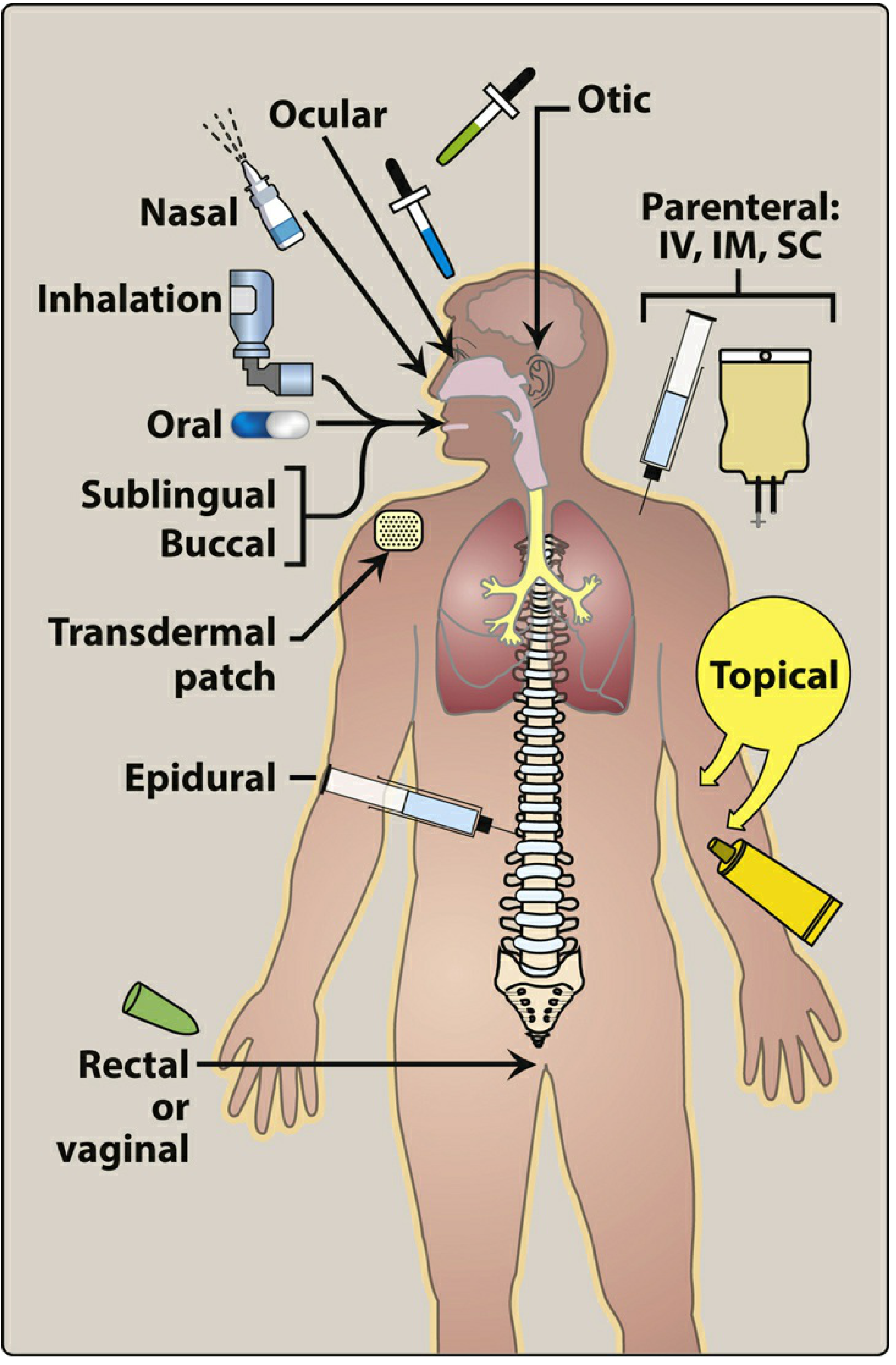
I. Enteral Routes
Enteral routes involve drug administration via the gastrointestinal (GI) tract.
1. Oral (PO)
- Most common, convenient, and economical route.
- Drug is swallowed and absorbed through the GI mucosa.
- Advantages: Easy self-administration; antidotes (e.g., activated charcoal) can be used for overdose.
- Disadvantages: Variable absorption; low gastric pH inactivates some drugs; food interactions; subject to first-pass metabolism by the liver.
- Special preparations:
- Enteric-coated: Protects acid-labile drugs (e.g., omeprazole) or stomach-irritating drugs (e.g., aspirin) - releases in the less acidic intestine.
- Extended-release (ER/XR/SR/CR): Controls drug release for slower absorption, prolonged effect, fewer doses, improved compliance - useful for drugs with short half-lives (e.g., oral morphine ER requires only 2 doses/day vs. 6 doses for immediate-release).
- Examples: Paracetamol, amoxicillin.
2. Sublingual (SL) / Buccal
- Sublingual: Drug placed under the tongue.
- Buccal: Drug placed between the cheek and gum.
- Advantages:
- Bypasses first-pass metabolism
- Bypasses harsh GI environment
- Rapid absorption into systemic circulation
- Neutral salivary pH maintains drug stability
- Disadvantages: Limited to small doses; part of drug may be swallowed.
- Examples: Nitroglycerin (SL), buprenorphine.
II. Parenteral Routes
Parenteral routes introduce drugs directly into systemic circulation, bypassing the GI tract entirely.
Used when:
- Drug is poorly absorbed or unstable in the GI tract (e.g., heparin, insulin)
- Patient is unconscious or vomiting
- Rapid onset is needed
General disadvantage: Irreversible; causes pain, fear, local tissue damage, or infection; requires sterile technique.
1. Intravenous (IV)
- Most common parenteral route; drug delivered directly into blood.
- Bolus: Immediate, full dose; rapid effect.
- IV infusion: Slower delivery, lower peak concentration, prolonged duration.
- Used in emergencies and for drugs requiring precise titration (e.g., rocuronium).
- Disadvantage: Risk of rapid toxicity; strict aseptic technique required; oily or insoluble substances cannot be given.
2. Intramuscular (IM)
- Drug injected into muscle (e.g., deltoid, gluteus).
- Aqueous solutions: Absorbed rapidly via diffusion.
- Depot preparations: Suspended in non-aqueous vehicle (oil/polyethylene glycol); drug precipitates at injection site and dissolves slowly - provides sustained release over days to weeks.
- Examples: Depot antipsychotics (haloperidol decanoate), benzathine penicillin.
3. Subcutaneous (SC)
- Injected into the loose connective tissue below the skin.
- Absorption by simple diffusion - slower than IV, similar to IM.
- Provides constant, slow, sustained drug levels.
- Contraindicated for tissue-irritating drugs (risk of pain and necrosis).
- Examples: Insulin, heparin.
4. Intradermal (ID)
- Injected into the dermis (the vascular layer below the epidermis).
- Used for diagnostic tests (tuberculin test, allergy testing) and desensitization.
III. Other (Miscellaneous) Routes
1. Inhalation / Nasal
- Delivers drug across the large surface area of respiratory mucosa/pulmonary epithelium.
- Onset is nearly as rapid as IV bolus.
- Useful for local effect in the lungs (asthma, COPD) - minimizes systemic side effects.
- Gases (anesthetic agents) and aerosols are given by inhalation.
- Nasal route: used for allergic rhinitis and for systemic delivery (e.g., desmopressin, sumatriptan nasal spray).
2. Intrathecal / Intraventricular
- Drug injected directly into the cerebrospinal fluid (CSF), bypassing the blood-brain barrier (BBB).
- Used when rapid CNS effects are needed (e.g., spinal anesthesia, intrathecal methotrexate in meningeal leukemia, antibiotics in meningitis).
3. Topical
- Applied to skin or mucous membranes for a local effect.
- Examples: Antifungal creams, eye drops, ear drops.
4. Transdermal
- Drug applied to skin via a transdermal patch for systemic absorption.
- Absorption varies with skin thickness and lipid solubility of the drug.
- Advantages: Avoids first-pass metabolism; sustained, controlled release; non-invasive.
- Examples: Nicotine patch, fentanyl patch, nitroglycerin patch.
5. Rectal
- Drug administered as suppository or enema via the rectum.
- 50% of rectal drainage bypasses portal circulation, reducing first-pass metabolism.
- Useful when patient is vomiting, unconscious, or oral route is unavailable.
- Disadvantages: Erratic and incomplete absorption; may irritate rectal mucosa.
- Examples: Diazepam rectal gel (status epilepticus in children), paracetamol suppository.
Summary Table
| Route | Absorption | Avoids First-Pass? | Onset | Key Use |
|---|---|---|---|---|
| Oral | Variable | No | Slow-moderate | Most common |
| Sublingual | Rapid | Yes | Rapid | Nitroglycerin |
| IV | Immediate | Yes | Fastest | Emergency |
| IM | Rapid/Slow (depot) | Yes | Moderate | Vaccines, depots |
| SC | Slow | Yes | Slow | Insulin, heparin |
| Inhalation | Rapid | Yes | Rapid | Asthma drugs |
| Transdermal | Slow, sustained | Yes | Slow | Nicotine, fentanyl |
| Rectal | Partial | Partial (50%) | Variable | Vomiting/unconscious |
| Intrathecal | Direct CNS | Yes | Rapid (CSF) | CNS emergencies |
Source: Lippincott Illustrated Reviews: Pharmacology
Skeletal muscle relaxants
Reading File
Finding Sources
Finding Sources
Finding Sources
Reading File
Reading File
Reading File
Reading File
Reading File
Reading File
I now have comprehensive content from Katzung's Basic and Clinical Pharmacology. Here are detailed notes on Skeletal Muscle Relaxants:
Skeletal Muscle Relaxants
Skeletal muscle relaxants are drugs that reduce muscle tone or cause muscle paralysis. They act at different sites along the neuromuscular pathway - from the CNS down to the neuromuscular junction (NMJ).
Classification
Skeletal muscle relaxants are broadly divided into three groups:
Skeletal Muscle Relaxants
├── 1. Neuromuscular Blocking Drugs (NMBDs)
│       ├── A. Non-depolarizing (competitive) blockers
│       └── B. Depolarizing blockers
├── 2. Spasmolytics (for spasticity - upper motor neuron lesions)
│       ├── Baclofen
│       ├── Diazepam
│       └── Tizanidine
└── 3. Antispasmodics (for peripheral muscle spasm)
        ├── Cyclobenzaprine
        ├── Methocarbamol
        └── Carisoprodol
I. Normal Neuromuscular Transmission
Before understanding blockers, the normal process must be clear:
- Action potential arrives at motor nerve terminal → Ca²⁺ influx → ACh released
- ACh crosses synaptic cleft and binds to nicotinic receptors (nAChR) at motor end plate (two ACh molecules bind to α-subunits)
- Na⁺/K⁺ channel opens → end plate potential → muscle action potential → muscle contraction
- ACh is rapidly destroyed by acetylcholinesterase
II. Neuromuscular Blocking Drugs (NMBDs)
Used as adjuncts in general anesthesia, for intubation, mechanical ventilation, and control of convulsions.
Key structural feature: All NMBDs contain one or two quaternary nitrogen atoms - making them poorly lipid soluble and unable to cross the blood-brain barrier (no CNS effects).
A. Non-depolarizing (Competitive) Blockers
Mechanism: Competitively antagonize ACh at nicotinic receptors at the motor end plate. They physically block receptor access without activating it → no depolarization → flaccid paralysis.
Prototype: d-Tubocurarine (curare - the original arrow poison from South America)
Modern agents:
| Drug | Duration | Family |
|---|---|---|
| Rocuronium | Intermediate | Steroid |
| Vecuronium | Intermediate | Steroid |
| Pancuronium | Long | Steroid |
| Atracurium | Intermediate | Isoquinoline |
| Cisatracurium | Intermediate | Isoquinoline |
| Mivacurium | Short | Isoquinoline |
Characteristics:
- No initial fasciculations (no activation)
- Response to tetanic stimulation: unsustained (fade)
- Post-tetanic facilitation: present
- Reversed by neostigmine (AChE inhibitor) - increases ACh to compete back
- Recovery: 30-60 min (depending on dose)
Adverse effects (d-tubocurarine): Histamine release → bronchoconstriction, hypotension; ganglion blockade. Newer agents (rocuronium, vecuronium) have fewer side effects.
B. Depolarizing Blockers
Only clinically used drug: Succinylcholine (Suxamethonium)
Structurally, succinylcholine = two acetylcholine molecules linked end-to-end.
Phase I Block (Depolarizing Block):
- Binds nicotinic receptor → opens ion channel → persistent depolarization of motor end plate
- Initial fasciculations visible (transient muscle contractions)
- Membrane remains depolarized and unresponsive → flaccid paralysis
- Succinylcholine is NOT metabolized at the synapse (unlike ACh) → sustained depolarization
- Not reversed by neostigmine (AChE inhibitors make it worse - more ACh = more depolarization)
- Recovery: 4-8 minutes (rapid, metabolized by plasma pseudocholinesterase)
Phase II Block (Desensitization Block):
- Occurs with large doses or prolonged exposure
- End plate becomes repolarized but is desensitized - no longer responds to ACh
- Behaves more like non-depolarizing block
- Can be reversed by neostigmine at this stage
Comparison Table: Depolarizing vs Non-depolarizing
| Feature | Non-depolarizing (Rocuronium) | Depolarizing Phase I (Succinylcholine) |
|---|---|---|
| Initial fasciculations | None | Present |
| Tetanic response | Fade (unsustained) | Sustained (no fade) |
| Post-tetanic facilitation | Yes | No |
| Effect of neostigmine | Reversed (antagonized) | Augmented (worsened) |
| Effect of tubocurarine | Additive | Antagonistic |
| Recovery time | 30-60 min | 4-8 min |
Clinical uses of succinylcholine:
- Rapid sequence intubation (RSI) - fastest onset and recovery
- Short surgical procedures
- Electroconvulsive therapy (ECT)
Adverse effects of succinylcholine:
- Hyperkalemia - dangerous in burns, crush injury, denervation (extrajunctional receptor proliferation releases K⁺)
- Malignant hyperthermia - with halothane (life-threatening)
- Bradycardia (especially in children)
- Increased intraocular and intragastric pressure
- Muscle pains (post-operative myalgia from fasciculations)
- Prolonged apnea in pseudocholinesterase deficiency (dibucaine number)
III. Spasmolytics (Antispastic Drugs)
Used for spasticity due to upper motor neuron (UMN) lesions - spinal cord injury, cerebral palsy, multiple sclerosis, stroke. Spasticity = increased tonic stretch reflexes + flexor spasms + muscle weakness due to hyperexcitability of alpha motor neurons from damage to descending CNS pathways.
1. Baclofen
- Structural analogue of GABA
- Acts at GABA-B receptors in the spinal cord
- Inhibits both monosynaptic and polysynaptic reflex transmission
- Dose: 40-80 mg/day orally; intrathecal pump for severe spasticity
- ADRs: Sedation, drowsiness, dizziness, muscle weakness, nausea
- Overdose: Seizures, flaccid paralysis, respiratory depression, coma - managed with ICU care, physostigmine for CNS reversal
2. Diazepam (Benzodiazepine)
- Enhances GABA-A receptor activity - increases Cl⁻ conductance → neuronal inhibition
- Acts at supraspinal and spinal levels
- Effective but causes significant sedation and dependence
- Also used for acute muscle spasm and as adjunct in tetanus
3. Tizanidine
- Alpha-2 adrenergic agonist (similar to clonidine)
- Acts in spinal cord to reduce excitatory interneuron activity
- Causes less weakness than baclofen
- ADRs: Sedation, dry mouth, hypotension, hepatotoxicity
4. Dantrolene (Peripheral Spasmolytic)
- Unique - acts directly on skeletal muscle, not the CNS
- Inhibits Ca²⁺ release from sarcoplasmic reticulum (blocks ryanodine receptor)
- Used for spasticity AND malignant hyperthermia (drug of choice)
- ADRs: Hepatotoxicity (monitoring required), muscle weakness, sedation
IV. Antispasmodics (for Peripheral Muscle Spasm)
Used for musculoskeletal conditions (acute back pain, neck pain) - not UMN spasticity.
| Drug | Mechanism | Notes |
|---|---|---|
| Cyclobenzaprine | Central (similar to TCAs) | Most commonly used for acute back pain |
| Methocarbamol | Central CNS depression | IV available |
| Carisoprodol | GABA-A modulation | Abuse potential |
| Orphenadrine | Anticholinergic + central | Also analgesic |
V. Clinical Applications Summary
| Condition | Drug of Choice |
|---|---|
| Rapid sequence intubation | Succinylcholine (or rocuronium) |
| Spasticity (MS, spinal injury) | Baclofen, diazepam, tizanidine |
| Malignant hyperthermia | Dantrolene (IV, emergency) |
| Cerebral palsy spasticity | Baclofen (intrathecal pump) |
| Acute musculoskeletal spasm | Cyclobenzaprine, diazepam |
| Electroconvulsive therapy | Succinylcholine |
Sources: Katzung's Basic and Clinical Pharmacology, 16th Ed.; The Essentials of Forensic Medicine and Toxicology, 36th Ed.
Pharmco vagillance
Pharmacovigilance is the science of detecting, assessing, understanding, and preventing adverse effects of medicines. It is a core topic in pharmacology, especially in the context of drug safety monitoring post-marketing.
Searching sources...
Finding Sources
Searching the Web
pharmacovigilance definition objectives WHO ADR reporting India PVPI
Reading File
Finding Sources
Reading Web Page
https://www.ipc.gov.in/images/news/introduction%20to%20pv-41…
Here are comprehensive notes on Pharmacovigilance:
Pharmacovigilance
Definition
Pharmacovigilance (PV) is defined by the WHO as:
"The science and activities relating to the detection, assessment, understanding and prevention of adverse effects or any other drug-related problems."
More broadly, it is the science of collecting, monitoring, researching, assessing, and evaluating information from healthcare providers and patients on the adverse effects of medications, biologicals, herbal medicines, and traditional medicines - with the goals of:
- Identifying new information about hazards associated with medicines
- Preventing harm to patients
Pharmacovigilance starts from the clinical stage (pre-marketing) and continues throughout the entire product life cycle (post-marketing).
Adverse Drug Reaction (ADR) - Key Definition
WHO (1972): "A response which is noxious and unintended, and which occurs at doses normally used in humans for prophylaxis, diagnosis, therapy of disease, or modification of physiological function."
An ADR is different from an Adverse Event (AE) - any AE is an untoward occurrence during drug use, but a causal link is not necessarily established. An ADR implies a causal relationship has been demonstrated.
Objectives / Aims of Pharmacovigilance
- Early detection of previously unknown (hitherto unknown) adverse reactions and drug interactions
- Detection of increases in frequency of known adverse reactions
- Identification of risk factors and possible mechanisms underlying adverse reactions
- Estimation of benefit-risk analysis quantitatively
- Dissemination of information needed to improve drug prescribing and regulation
- Identify new signals - unexpected patterns of harm
- Prevent harm to patients - ensure drug safety throughout the product life cycle
Classification of ADRs
By Type (Rawlins and Thompson Classification):
| Type | Name | Features | Examples |
|---|---|---|---|
| Type A | Augmented | Dose-dependent, predictable, related to pharmacological action, common | Bleeding with warfarin, hypoglycemia with insulin |
| Type B | Bizarre | Dose-independent, unpredictable, not related to pharmacology, rare but severe | Anaphylaxis with penicillin, malignant hyperthermia |
| Type C | Chronic | Related to long-term use, dose and duration dependent | Adrenal suppression with corticosteroids |
| Type D | Delayed | Appear after a delay - teratogenicity, carcinogenicity | Thalidomide teratogenicity, DES-induced vaginal cancer |
| Type E | End-of-use | Withdrawal reactions | Benzodiazepine withdrawal, rebound hypertension with clonidine |
| Type F | Failure of therapy | Unexpected failure of therapy | Antibiotic resistance, contraceptive failure with enzyme inducers |
By Severity:
- Mild - no antidote needed, resolves spontaneously (e.g., nausea)
- Moderate - may require treatment or hospitalization (e.g., drug-induced rash)
- Severe / Serious - life-threatening, causes hospitalization, disability, or death
- SUSAR = Suspected Unexpected Serious Adverse Reaction (important in clinical trials)
By Expectedness:
- Expected (Labeled) - already documented in product information
- Unexpected (Unlabeled) - not previously documented; requires special reporting
Methods of Pharmacovigilance
1. Spontaneous Reporting (Yellow Card / Voluntary Reporting)
- The backbone of PV systems worldwide
- Healthcare professionals and patients report ADRs voluntarily to national centers
- Detects signals of rare, new, or serious ADRs
- Limitation: Underreporting is a major problem (iceberg phenomenon - only 10% of ADRs are reported)
2. Cohort Event Monitoring (CEM)
- Prospective, observational study of events in patients using a specific medicine
- Patients monitored from start of treatment for a defined period
- Useful for newly approved drugs
3. Case-Control Studies
- Compare patients with ADR (cases) vs. those without (controls)
- Identifies risk factors for ADRs
4. Prescription Event Monitoring (PEM)
- Large-scale observational study linking prescriptions to subsequent events
- Used in the UK's Drug Safety Research Unit
5. Record Linkage Studies
- Links prescription databases with hospital records to find associations
6. Intensive Medicines Monitoring Programs
- Intensive surveillance of selected drugs in specific settings
Causality Assessment (WHO-UMC Scale)
When an ADR is reported, its causal relationship to the drug must be assessed:
| Term | Criteria |
|---|---|
| Certain | Plausible time relationship; cannot be explained by disease or other drugs; response to dechallenge (withdrawal); rechallenge positive if performed |
| Probable/Likely | Reasonable time relationship; unlikely due to disease; response to dechallenge; rechallenge not required |
| Possible | Reasonable time relationship; could also be explained by disease or other drugs; unclear dechallenge info |
| Unlikely | Time relationship makes drug causation improbable; disease/other drugs are plausible explanation |
| Conditional/Unclassified | More data needed for assessment |
| Unassessable/Unclassifiable | Report insufficient or contradictory; data cannot be verified |
Pharmacovigilance Programme of India (PvPI)
- Established in 2010 by the Ministry of Health and Family Welfare
- National Coordination Centre (NCC): Indian Pharmacopoeia Commission (IPC), Ghaziabad
- India is a full member of the WHO Programme for International Drug Monitoring (PIDM), based at Uppsala Monitoring Centre (UMC), Sweden
- Reports are submitted to UMC via VigiFlow (web-based tool)
- ADR reports submitted as Individual Case Safety Reports (ICSRs)
Objectives of PvPI:
- Create a nationwide system for patient safety by ensuring drug safety
- Identify and analyze new signals from reported cases
- Collaborate with WHO and global databases
- Provide regulatory recommendations to CDSCO (Central Drugs Standard Control Organisation)
ADR Reporting in India:
- Healthcare professionals report to nearest AMC (ADR Monitoring Centre)
- Over 250+ AMCs established across India
- Online portal: www.pvpi.gov.in
- Toll-free helpline: 1800-180-3024
Signal Detection
A signal in pharmacovigilance is:
Information arising from one or multiple sources, including observations and experiments, which suggests a new potentially causal association between an intervention and an event, or a new aspect of a known association, that is judged to be of sufficient likelihood to justify verification.
- Signals are detected from spontaneous reports, literature, clinical trials, epidemiological studies
- Once a signal is validated, it leads to a regulatory action (e.g., label change, restriction, withdrawal)
Benefit-Risk Analysis
A core activity in PV:
- Benefits: Proven therapeutic good; patient's subjective assessment of effects
- Risks: Probability of harm; severity; reversibility
- Drugs are approved when benefits outweigh risks for the indicated population
- Post-marketing PV continuously re-evaluates this balance
Importance / Why Pharmacovigilance Matters
| Historical Example | Lesson Learned |
|---|---|
| Thalidomide (1950s-60s) | Phocomelia in neonates - birth defects not detected in pre-clinical trials |
| Practolol | Oculomucocutaneous syndrome detected only post-marketing |
| Vioxx (Rofecoxib) | Increased cardiovascular risk → global withdrawal 2004 |
| Chloramphenicol | Gray baby syndrome, aplastic anemia |
These examples highlight that pre-marketing clinical trials cannot detect all ADRs - especially rare, delayed, or population-specific ones. Post-marketing pharmacovigilance fills this gap.
Summary Diagram
Drug Approved (Marketing Authorization)
        ↓
Post-Marketing Surveillance
        ↓
ADR Reported (Spontaneous / Active Monitoring)
        ↓
Signal Detection
        ↓
Causality Assessment (WHO-UMC Scale)
        ↓
Benefit-Risk Analysis
        ↓
Regulatory Action
(Label update / Restriction / Withdrawal)
Sources: Park's Textbook of Preventive and Social Medicine; Indian Pharmacopoeia Commission - Introduction to PV (PvPI); WHO-UMC Guidelines
This is a shared conversation. Sign in to Orris to start your own chat.