
51yr old male with raised alp 140, raised serum phosphorus 6.14 & serum chloride 97 high triglycerides.History of diabetes, hba1c 8.0 , rbs 200. Possible causes
Reading File
Now let me run parallel searches across the library and PubMed for the key abnormalities in this case.
Finding Sources
Finding Sources
Finding Sources
Searching PubMed
elevated alkaline phosphatase hyperphosphatemia diabetes mellitus
Now let me read the key sections on causes of raised ALP and hyperphosphatemia more deeply.
Reading File
Reading File
Finding Sources
Finding Sources
Reading File
Finding Sources
Finding Sources
Searching PubMed
\"alkaline phosphatase\" AND \"metabolic syndrome\" OR \"diabetes mellitus\"
Reading File
Finding Sources
Finding Sources
Now I have enough from the textbooks to give a thorough, synthesized answer. Let me fetch the diagnostic flowchart for ALP as it is directly relevant.
Loading Image
Loading Image
I now have comprehensive data to provide a full clinical synthesis. Here is the complete answer:
Clinical Analysis: 51yr Male - Raised ALP, Hyperphosphatemia, Hypertriglyceridemia + Poorly Controlled Diabetes
Lab Summary at a Glance
| Parameter | Patient Value | Interpretation |
|---|---|---|
| ALP | 140 U/L | Mildly elevated (normal ~40-129 U/L in adult males) |
| Serum Phosphorus | 6.14 mg/dL | Hyperphosphatemia (normal 2.5-4.5 mg/dL) |
| Serum Chloride | 97 mEq/L | Low-normal / borderline (normal 98-106 mEq/L) |
| Triglycerides | Raised | Dyslipidemia |
| HbA1c | 8.0% | Poorly controlled T2DM |
| RBS | 200 mg/dL | Hyperglycemia |
Most Likely Unifying Diagnosis: Diabetic Nephropathy / Chronic Kidney Disease (CKD)
This is the single most important diagnosis to consider here because it explains nearly all the abnormalities simultaneously.
Mechanism:
- Diabetes mellitus is one of the most common causes of CKD. As GFR declines, the kidney loses its ability to excrete phosphate, leading directly to hyperphosphatemia (serum phosphorus >4.5 mg/dL, and this patient's value of 6.14 is significantly elevated). - Brenner and Rector's The Kidney, Table 73.18
- Reduced renal phosphate excretion is the most common cause of hyperphosphatemia in clinical practice. - Miller's Anesthesia, 10e
- CKD-related secondary hyperparathyroidism and disordered mineral metabolism also drive elevated bone-specific ALP through increased osteoblastic activity (renal osteodystrophy). - Harrison's Principles, 22e
- Insulin resistance in CKD/T2DM drives hypertriglyceridemia via reduced lipoprotein lipase activity and increased VLDL synthesis. - Katzung's Basic & Clinical Pharmacology, 16e
The low-normal chloride (97 mEq/L) fits with a hyperchloremic metabolic acidosis pattern seen in early CKD or diabetic renal tubular acidosis (type IV RTA), where bicarbonate repletion reduces chloride relative to expected, or the modest reduction could represent a mixed acid-base picture with phosphate retention shifting anion balance.
Possible Causes - Organized by Likelihood
1. Metabolic Syndrome / Poorly Controlled Type 2 Diabetes (MOST LIKELY)
This patient has a textbook metabolic syndrome cluster:
- Hypertriglyceridemia is a hallmark of T2DM and insulin resistance - patients with type 2 DM "frequently have hypertriglyceridemia." - Rosen's Emergency Medicine
- Hypertriglyceridemia itself can cause spurious hyperphosphatemia - hyperlipidemia interferes with phosphate measurement colorimetrically. This is important: the raised phosphorus may partly be a laboratory artefact from hypertriglyceridemia. - Brenner and Rector's The Kidney (diagnostic workup note)
- Poor glycemic control (HbA1c 8.0%) promotes hepatic fat deposition (NAFLD/NASH), which can mildly raise ALP.
2. Non-Alcoholic Fatty Liver Disease (NAFLD) / Steatohepatitis
- Common in T2DM and metabolic syndrome; a 51-year-old male diabetic with hypertriglyceridemia has high risk.
- NAFLD/NASH causes intrahepatic cholestasis pattern with mild-to-moderate ALP elevation.
- The ALP isoform (liver vs. bone) should be differentiated using GGT - if GGT is also raised, hepatic origin is confirmed. - Yamada's Textbook of Gastroenterology, 7e
3. Causes of Raised ALP - Full Differential
The table from Yamada's (Table 39.6) lists:
Hepatobiliary:
- Intrahepatic cholestasis: medications/toxins, NAFLD/alcoholic hepatitis, infiltrative lesions, sarcoidosis, lymphoma, amyloidosis, liver metastases, hepatocellular carcinoma
- Biliary obstruction: choledocholithiasis, biliary strictures, cholangiocarcinoma, pancreatic cancer
Extrahepatic (bone):
- Paget's disease - "one of the most common causes of a raised bone alkaline phosphatase in adults" - Quick Compendium of Clinical Pathology, 5e
- Osteomalacia / Vitamin D deficiency
- Bone metastases
- Renal osteodystrophy (fits with CKD context here)
Physiologic/Other:
- Post-meal state (intestinal isoform) - repeat fasting sample
- Medications (anticonvulsants, oral contraceptives)
Here is the diagnostic approach to elevated ALP:
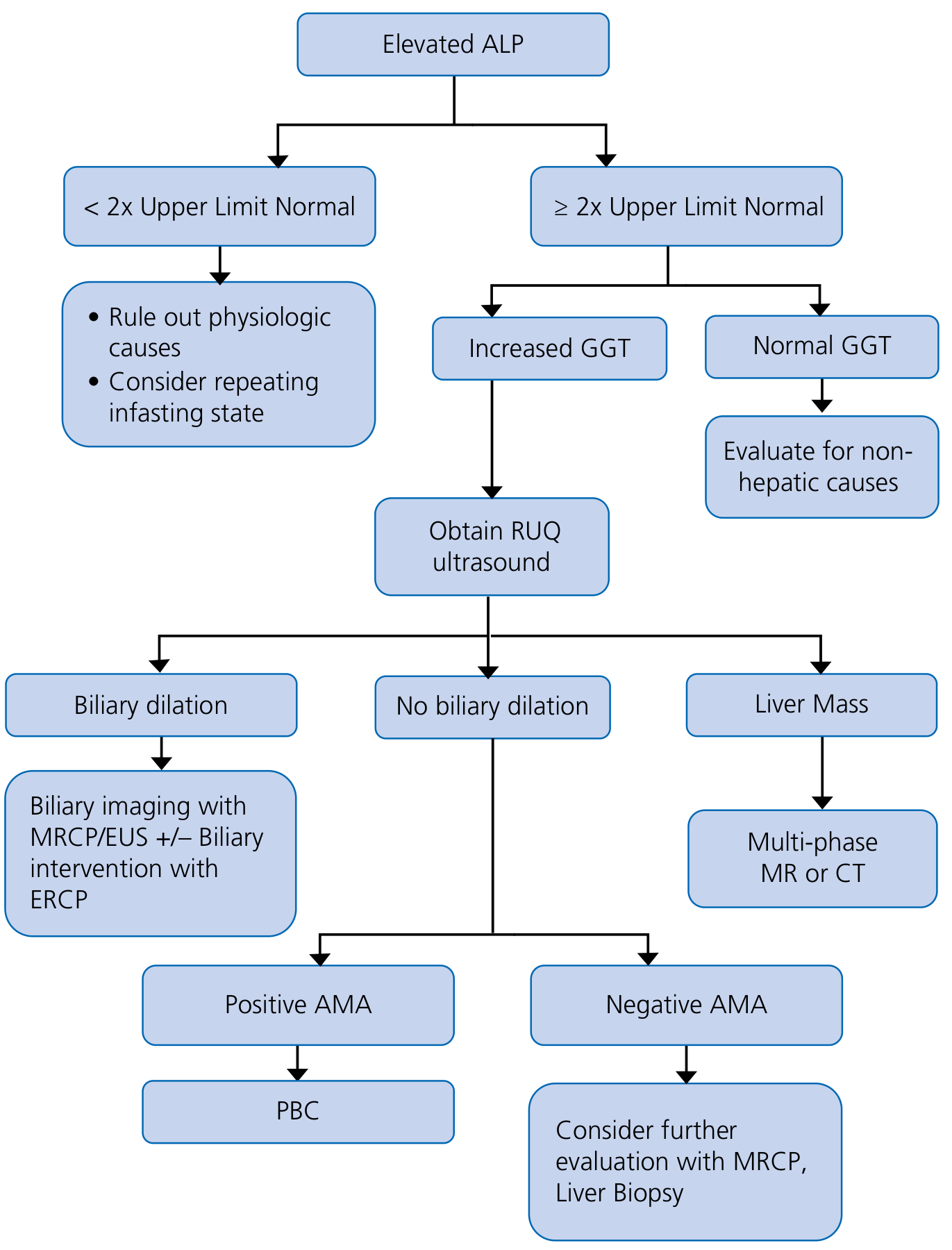
4. Causes of Hyperphosphatemia - Full Differential
The hyperphosphatemia algorithm from Brenner and Rector:
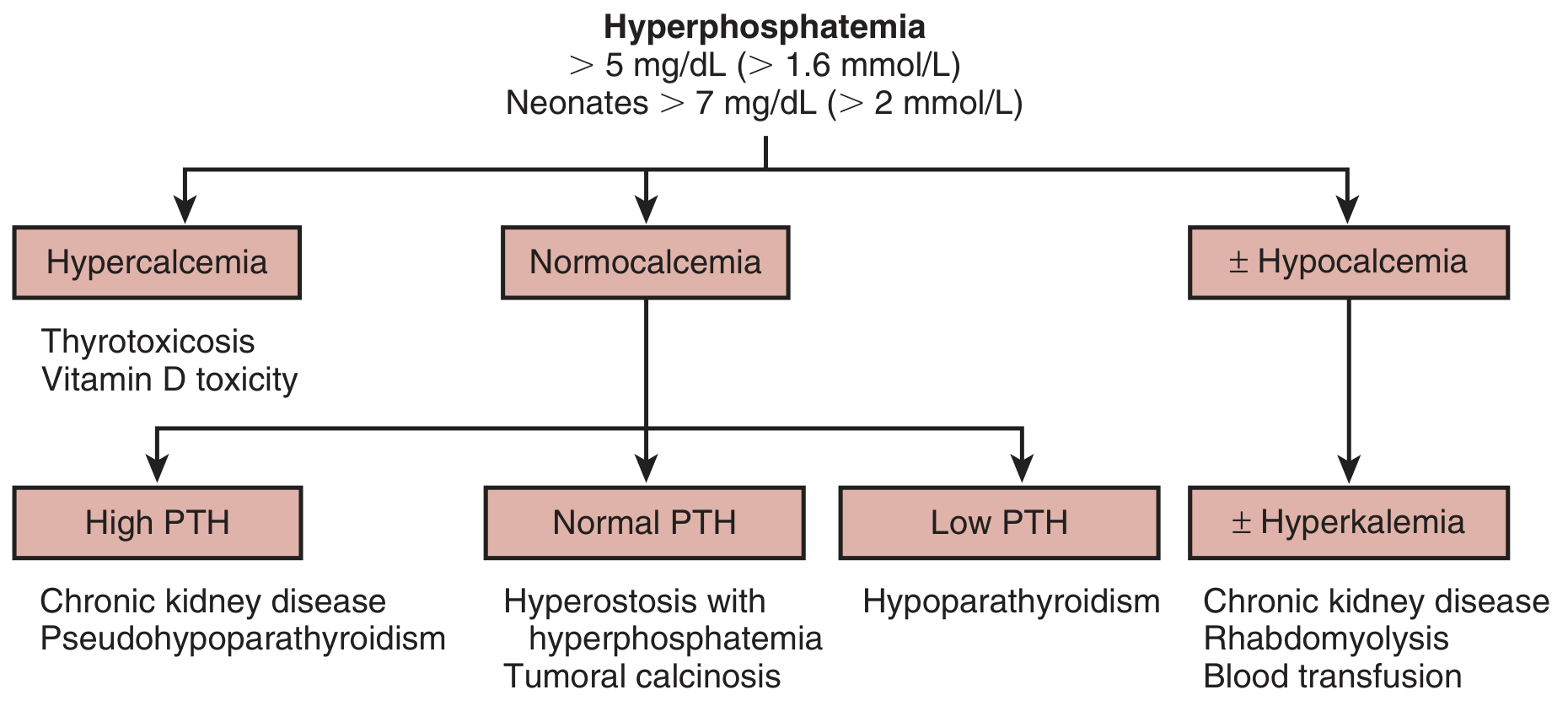
The key diagnostic branches are:
| Associated Calcium | PTH | Leading Diagnosis |
|---|---|---|
| Normocalcemia | High PTH | CKD / Pseudohypoparathyroidism |
| Normocalcemia | Normal PTH | Hyperostosis, tumoral calcinosis |
| Hypocalcemia | Low PTH | Hypoparathyroidism |
| Hypercalcemia | -- | Thyrotoxicosis, Vit D toxicity |
Other causes from the table (Brenner and Rector, Table 73.18):
- Transcellular shift: DKA (cellular shift), metabolic acidosis, rhabdomyolysis, tumor lysis, crush injury
- Increased intake: Phosphate-containing laxatives/enemas, excessive Vitamin D
- Miscellaneous: Acromegaly, tumoral calcinosis, heparin use
Integrating the Full Picture - Key Working Diagnoses
Priority order for this patient:
-
Diabetic nephropathy / CKD - explains hyperphosphatemia, secondary hyperparathyroidism raising bone ALP, hypertriglyceridemia, and borderline chloride. Check serum creatinine, eGFR, urine albumin-creatinine ratio, and PTH immediately.
-
NAFLD/MASH (Metabolic-associated steatohepatitis) - explains mild ALP rise in a diabetic male with hypertriglyceridemia. Check GGT, liver ultrasound.
-
Laboratory artefact - hypertriglyceridemia can falsely elevate measured phosphorus. Re-check phosphorus in fasting state and with lipemia correction.
-
Hypoparathyroidism - if calcium is found to be low, this must be ruled out. However, calcium would typically be low-normal or low if PTH is deficient.
-
Paget's disease of bone - if ALP origin is bone (GGT normal), this is the leading bone cause in a 51-year-old male. Check bone-specific ALP and X-ray of pelvis/spine/skull.
-
Metabolic acidosis (DKA-related or chronic) - can cause transcellular shift of phosphate out of cells, raising serum phosphorus.
Recommended Initial Workup
| Test | Rationale |
|---|---|
| Serum creatinine + eGFR | Screen for CKD |
| Urine albumin:creatinine ratio | Diabetic nephropathy |
| Serum calcium (total + ionized) | Classify hyperphosphatemia |
| PTH (intact) | Secondary vs. primary hyperparathyroidism |
| GGT | Differentiate hepatic vs. bone ALP |
| Liver ultrasound | NAFLD, biliary dilation |
| LFTs (AST, ALT, bilirubin) | Pattern of liver injury |
| Fasting phosphorus | Rule out lab artefact from lipemia |
| 25-OH Vitamin D | Exclude Vit D toxicity |
| Bone-specific ALP (if GGT normal) | Evaluate bone source |
| HCO3 / Blood gas | Assess acid-base status |
Bottom line: In this clinical profile, CKD secondary to diabetes (with renal phosphate retention) combined with NAFLD/metabolic syndrome is the most parsimonious explanation. Laboratory artefact from hypertriglyceridemia causing a spuriously elevated phosphorus must be excluded first before extensive investigation. - Brenner and Rector's The Kidney; Yamada's Textbook of Gastroenterology, 7e; Rosen's Emergency Medicine
Also complains of intermittent knee pain
Knee pain in this patient adds important diagnostic dimensions. Given his profile (51yr male, diabetes, hyperphosphatemia, raised ALP, hypertriglyceridemia), crystal arthropathy and metabolic bone disease jump to the top. Let me search the library.
Searching sources...
Finding Sources
Finding Sources
Finding Sources
Finding Sources
Finding Sources
Finding Sources
Finding Sources
Reading File
Finding Sources
Finding Sources
Reading File
Searching PubMed
\"calcium pyrophosphate\" AND \"hyperphosphatemia\" OR \"metabolic syndrome\" AND knee
Excellent - I now have enough to give a thorough integrated answer. Here is the full clinical synthesis:
Adding Intermittent Knee Pain to the Picture
This symptom is highly significant in this patient and ties the entire profile together very elegantly. The combination of raised ALP + hyperphosphatemia + intermittent knee pain in a 51-year-old male points strongly toward several linked diagnoses.
Top Diagnoses Explaining the Full Triad
1. Paget's Disease of Bone - HIGH PRIORITY
This is the single diagnosis that best explains the combination of:
- Raised bone ALP - the classic marker of Paget's; "one of the most common causes of raised bone alkaline phosphatase in adults"
- Age >50, male
- Intermittent joint pain, specifically in the hip and knee - "patient over 50 years old presenting with pain...may present with degenerative joint disease...joint degeneration is common in the hip and knee" - Miller's Review of Orthopaedics, 9e
Mechanism: Paget's involves abnormal, accelerated bone remodeling (osteoclast overactivity followed by chaotic osteoblast repair). Pagetic bone is structurally weak, enlarged, and deformed. When it involves bones adjacent to the knee (distal femur, proximal tibia), it causes secondary degenerative joint disease and intermittent articular pain.
Key imaging findings: Coarsened trabeculae, cortical remodeling, "blastic" bony appearance on X-ray. Bone scan shows intense focal uptake.
Important warning: <1% undergo malignant transformation to Paget sarcoma - suggested by abrupt onset of severe pain + soft tissue mass. This patient's intermittent pain is more consistent with the chronic degenerative pattern, not sarcoma.
2. Calcium Pyrophosphate Deposition (CPPD) / Pseudogout - HIGH PRIORITY
This is the crystal arthropathy most closely linked to hyperphosphatemia and metabolic derangement, and the knee is its most common joint target.
- CPPD is "more common in the knee" and presents as intermittent acute attacks resembling acute gouty arthritis - Campbell's Operative Orthopaedics, 15e 2026
- Attacks are episodic, self-limiting, and separated by pain-free intervals - exactly matching "intermittent knee pain"
- CPPD is associated with metabolic diseases: hypoparathyroidism, hemochromatosis, hyperparathyroidism, hypomagnesemia, and diabetes mellitus through altered pyrophosphate metabolism in cartilage
- Hyperphosphatemia promotes crystallization of calcium phosphate salts in cartilage (chondrocalcinosis)
- Definitive diagnosis: calcium pyrophosphate crystals in joint aspirate (weakly positive birefringent, rhomboid-shaped on polarized microscopy); radiograph shows chondrocalcinosis (calcification of cartilage in knee)
3. Metabolic/Diabetic Osteoarthritis - LIKELY CONTRIBUTOR
- Obesity and metabolic syndrome are independent risk factors for knee osteoarthritis beyond mechanical loading - recent review in Osteoarthritis Cartilage (2022) confirms that "obesity and metabolic factors" directly drive OA pathogenesis through systemic inflammation, adipokines, and advanced glycation end-products (AGEs)
- AGEs from chronic hyperglycemia stiffen and weaken articular cartilage collagen matrix
- Poorly controlled diabetes (HbA1c 8.0%) accelerates cartilage degradation
- This would cause chronic, progressive, bilateral knee pain rather than episodic attacks
4. Diabetic Neuropathic Arthropathy (Charcot Joint) - Less likely but important to exclude
- Long-standing diabetes can cause peripheral neuropathy leading to Charcot arthropathy
- Usually affects feet/ankles, but can affect knees in rare cases
- Presents as painless or minimally painful joint destruction with swelling - the "intermittent" description is less typical, but worth checking for peripheral neuropathy signs
5. Renal Osteodystrophy / CKD-Mineral Bone Disease (CKD-MBD)
If CKD is confirmed (as discussed previously):
- Secondary hyperparathyroidism causes high bone turnover, subperiosteal erosions, and painful bone disease
- Hyperphosphatemia + secondary HPT = periarticular calcification (metastatic calcification) that can cause joint pain
- Look for: raised iPTH, low calcium, reduced eGFR, subperiosteal erosions on X-ray of radial aspect of middle phalanges
Integrated Diagnostic Picture
| Feature | Paget's | CPPD / Pseudogout | Metabolic OA | CKD-MBD |
|---|---|---|---|---|
| Raised ALP | ✅ Bone isoform elevated | Mild or normal | Normal | ✅ Bone isoform |
| Hyperphosphatemia | Normal (unless CKD co-exists) | ✅ Promotes crystal deposition | Normal | ✅ Primary mechanism |
| Intermittent knee pain | ✅ Degenerative, around knee | ✅ Episodic attacks | Chronic, progressive | Diffuse bone pain |
| Age 51yr male | ✅ Classic demographic | ✅ Middle to older age | ✅ | Any age with CKD |
| Diabetes | Co-existing | Associated | ✅ Directly linked | ✅ Major cause |
| Hypertriglyceridemia | Unrelated | Metabolic syndrome link | ✅ Metabolic syndrome | CKD dyslipidemia |
Recommended Additional Investigations
| Test | What it rules in/out |
|---|---|
| X-ray knee (AP + lateral) | Chondrocalcinosis (CPPD), pagetic bony changes, OA features |
| Bone-specific ALP | Confirms bone source of raised ALP |
| Bone scan (99mTc) | Focal uptake = Paget's; polyostotic involvement |
| Serum uric acid | Gout (another crystal arthropathy common in metabolic syndrome) |
| Synovial fluid aspiration + polarized microscopy | Definitive for CPPD vs. gout crystals |
| Serum PTH (intact) | CKD-MBD vs. hypoparathyroidism |
| Serum calcium | Low in CKD/hypoparathyroidism, normal-high in Paget's |
| eGFR + urine ACR | Confirm/exclude CKD |
| X-ray pelvis, skull, tibia | Paget's - "blastic" appearance with cortical thickening |
| Peripheral nerve conduction study | Diabetic neuropathy / Charcot risk |
Clinical bottom line: The triad of raised bone ALP + intermittent knee pain in a male over 50 is a classic presentation of Paget's disease of bone until proven otherwise. Simultaneously, CPPD (pseudogout) must be considered given the hyperphosphatemia, metabolic syndrome, and episodic nature of knee pain. These two conditions can co-exist. Both investigations (knee X-ray and bone-specific ALP) should be done as the immediate first step. - Miller's Review of Orthopaedics, 9e; Campbell's Operative Orthopaedics, 15e 2026
This is a shared conversation. Sign in to Orris to start your own chat.