
Compare and contrast between 1st antihistamine vs 2nd generation Antihistamine
Reading File
Now let me search the medical library for antihistamine content in parallel.
Finding Sources
Finding Sources
Finding Sources
Good results. Let me now read the most relevant sections from Lippincott Pharmacology, Goodman & Gilman, and Tintinalli's in parallel.
Reading File
Reading File
Reading File
Excellent data. Let me now fetch the diagram image from Lippincott and read more from Goodman & Gilman for pharmacokinetics, adverse effects, and clinical uses.
Loading Image
Reading File
Reading File
Now let me read more from Lippincott for adverse effects, pharmacokinetics, and contraindications sections.
Reading File
Reading File
I now have comprehensive data. Let me compile the full comparison.
1st Generation vs 2nd Generation Antihistamines: A Detailed Comparison
Antihistamines (H1-receptor blockers) are competitive antagonists at histamine H1 receptors. They do not block histamine release - they compete with histamine at the receptor level and prevent the receptor-mediated response. Both generations share the same basic mechanism, but differ profoundly in their CNS penetration, receptor selectivity, duration of action, and adverse effect profiles.
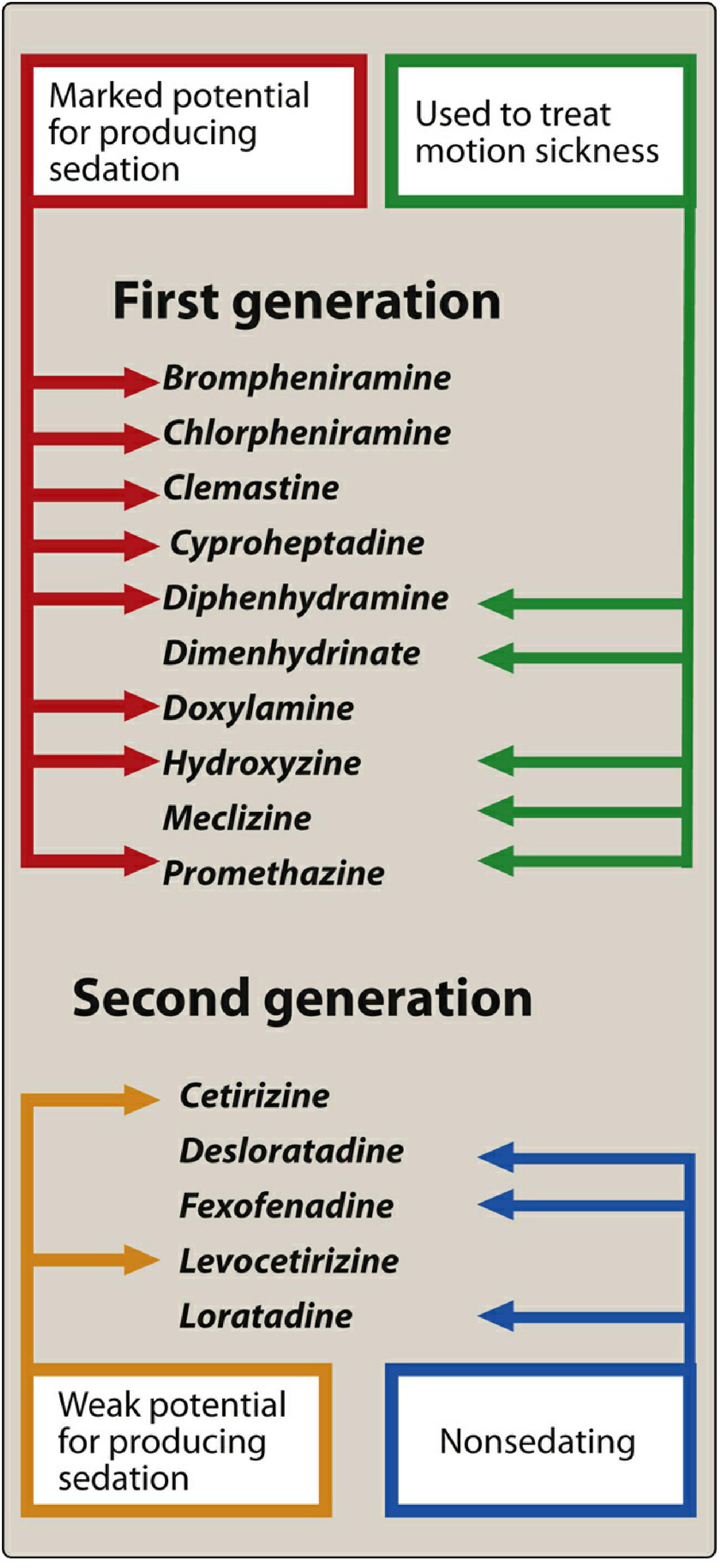
Figure 39.4 from Lippincott Illustrated Reviews: Pharmacology - 1st generation drugs with marked sedation potential vs. 2nd generation nonsedating/minimally sedating agents.
1. Mechanism of Action
Both generations competitively block H1 receptors and are more effective at preventing histamine-mediated symptoms than reversing them once established. However:
- 1st generation: Low receptor selectivity. They also bind to muscarinic-cholinergic, alpha-adrenergic, and serotonin receptors, producing a wide range of off-target effects.
- 2nd generation: Selective for peripheral H1 receptors only. Their structural polarity (e.g., carboxyl groups added - cetirizine is the carboxylated derivative of hydroxyzine) prevents CNS penetration and receptor promiscuity.
Some agents in both generations have additional properties: azelastine and ketotifen also stabilize mast cells; cyproheptadine (1st gen) uniquely antagonizes 5-HT2A receptors; olopatadine (2nd gen) has mast cell-stabilizing and anti-inflammatory properties.
2. Drug Examples
| Class | 1st Generation | 2nd Generation |
|---|---|---|
| Ethanolamines | Diphenhydramine, Doxylamine, Dimenhydrinate | - |
| Ethylenediamines | Pyrilamine | - |
| Alkylamines | Chlorpheniramine, Brompheniramine | Acrivastine |
| Piperazines | Hydroxyzine, Cyclizine, Meclizine | Cetirizine, Levocetirizine |
| Piperidines | Cyproheptadine | Loratadine, Desloratadine, Fexofenadine |
| Phenothiazines | Promethazine | - |
| Dibenzoxepins | Doxepin | Olopatadine |
3. Pharmacokinetics
| Parameter | 1st Generation | 2nd Generation |
|---|---|---|
| Absorption | Well absorbed orally | Well absorbed orally |
| Onset of action | 1-3 hours | 1-3 hours |
| Duration of action | 4-6 hours (requires multiple daily dosing) | 12-24 hours (once-daily dosing) |
| CNS penetration | Yes - highly lipophilic, crosses BBB readily | No (or minimal) - made polar by structural modifications |
| Metabolism | Hepatic CYP450 system | Variable: desloratadine and loratadine via CYP450; cetirizine and levocetirizine excreted unchanged in urine; fexofenadine excreted unchanged in feces |
| Distribution | All tissues including CNS | Largely peripheral |
- Lippincott Illustrated Reviews: Pharmacology, p. 1313-1314
4. CNS Effects and Sedation
This is the most clinically significant difference:
| 1st Generation | 2nd Generation | |
|---|---|---|
| Sedation | Prominent - most frequent adverse effect | Minimal to none |
| Mechanism of sedation | Block H1 receptors in CNS, inhibiting the wakefulness-promoting role of histamine | Do not cross BBB; no CNS H1 blockade |
| Examples by sedation level | Promethazine > Diphenhydramine > Hydroxyzine > Chlorpheniramine | Fexofenadine = Desloratadine = Loratadine (nonsedating) > Cetirizine/Levocetirizine (mildly sedating) |
| Paradoxical stimulation | Can cause hyperactivity in young children (diphenhydramine) | Not seen |
| Other CNS effects | Fatigue, dizziness, lack of coordination, tremors; elderly especially sensitive | Headache (most common) |
Sedation from 1st generation agents can be therapeutically useful (insomnia, preoperative sedation) or harmful (impaired driving, work performance). 2nd generation agents have no value for inducing sleep.
5. Anticholinergic (Antimuscarinic) Effects
- 1st generation: Significant anticholinergic activity producing dry mouth/nasal passages, blurred vision, urinary retention, constipation, tachycardia. This is due to their affinity for muscarinic receptors.
- 2nd generation: Minimal to no anticholinergic effects. Cetirizine has "minimal anticholinergic effects" per Goodman & Gilman.
Clinical implication: 1st generation agents (especially diphenhydramine) can reduce the effectiveness of cholinesterase inhibitors (donepezil, rivastigmine, galantamine) in Alzheimer disease treatment - a critical drug interaction to remember.
6. Therapeutic Uses
| Indication | 1st Generation | 2nd Generation |
|---|---|---|
| Allergic rhinitis | Yes (but sedation limits use) | Preferred (nonsedating, once daily) |
| Urticaria (acute) | Yes (hydroxyzine commonly used) | Yes (preferred for chronic urticaria) |
| Allergic conjunctivitis | Topical formulations | Topical (olopatadine, ketotifen) - preferred |
| Motion sickness/nausea | Yes (diphenhydramine, dimenhydrinate, meclizine, promethazine are most effective) | No |
| Insomnia | Yes (diphenhydramine, doxylamine) | No |
| Pruritus | Yes | Yes (less effective for sedation-dependent relief) |
| Anaphylaxis adjunct | Diphenhydramine IV/IM | Not first-line |
| Preoperative sedation/antiemesis | Promethazine | No |
Note: Neither generation is indicated as primary therapy for bronchial asthma, since histamine is only one of several mediators responsible for bronchospasm. Epinephrine remains the drug of choice for systemic anaphylaxis.
7. Adverse Effects Summary
| Adverse Effect | 1st Generation | 2nd Generation |
|---|---|---|
| Sedation | +++ | +/- (cetirizine) to 0 (fexofenadine) |
| Anticholinergic effects | ++ | 0 |
| GI side effects | Common (ethylenediamines) | Headache most common |
| Cardiac (QT prolongation) | Less common | Rare (astemizole/terfenadine withdrawn for this reason) |
| Paradoxical CNS stimulation in children | Yes (diphenhydramine) | No |
| Overdose toxicity | CNS: hallucinations, excitement, ataxia, convulsions, coma, cardiorespiratory collapse | Mild |
| Contact dermatitis | Topical diphenhydramine | Uncommon |
8. Drug Interactions
| Interaction | 1st Generation | 2nd Generation |
|---|---|---|
| CNS depressants / alcohol | Significant potentiation | Minimal |
| MAO inhibitors | Contraindicated - exacerbates sedative and anticholinergic effects | Less concern |
| Cholinesterase inhibitors | Antagonism (reduces efficacy in Alzheimer therapy) | Not significant |
9. Special Populations
| Population | 1st Generation | 2nd Generation |
|---|---|---|
| Elderly | Use with caution - increased CNS sensitivity (falls, confusion) | Preferred |
| Pregnancy | Some used (promethazine for hyperemesis) with caution | Loratadine/cetirizine generally preferred (less systemic effect) |
| Breastfeeding | Avoid - significant transfer, infant sedation risk | Preferred - fewer side effects and toxicities per Fitzpatrick's |
| Children | Diphenhydramine used but risk of paradoxical excitation | Preferred for daytime use; note min age restrictions (≥6 years for OTC cetirizine, fexofenadine, loratadine) |
| Pilots/drivers | Contraindicated | Safe (fexofenadine especially) |
10. Summary Table
| Feature | 1st Generation | 2nd Generation |
|---|---|---|
| H1 receptor selectivity | Low (also binds muscarinic, adrenergic, serotonin receptors) | High (peripheral H1 only) |
| CNS penetration | Yes (lipophilic) | No (polar/charged molecules) |
| Sedation | Prominent | Minimal (loratadine, fexofenadine, desloratadine) to mild (cetirizine) |
| Duration of action | 4-6 hours | 12-24 hours |
| Anticholinergic effects | Yes | No |
| Motion sickness | Effective | Not effective |
| Sleep induction | Yes | No |
| Preferred in allergic rhinitis | No (sedating) | Yes |
| Preferred in breastfeeding | No | Yes |
| Cost | Generally cheaper, OTC | Slightly more expensive (many now OTC) |
| Prototype examples | Diphenhydramine, Chlorpheniramine, Promethazine, Hydroxyzine | Cetirizine, Loratadine, Fexofenadine, Desloratadine |
Sources:
- Lippincott Illustrated Reviews: Pharmacology, Ch. 39, pp. 1309-1317
- Goodman & Gilman's Pharmacological Basis of Therapeutics, Ch. 43, pp. 880-885
- Tintinalli's Emergency Medicine, p. 3075-3077
- Fitzpatrick's Dermatology, Vol. 1-2, pp. 4871-4965
Make all this in one table
Here is everything consolidated into one comprehensive comparison table:
| Feature | 1st Generation | 2nd Generation |
|---|---|---|
| MECHANISM | ||
| Receptor selectivity | Low - also binds muscarinic, alpha-adrenergic, and serotonin receptors | High - selective for peripheral H1 receptors only |
| CNS penetration | Yes (highly lipophilic) | No (polar/charged molecules; carboxyl groups added) |
| Mast cell stabilization | Some (azelastine, ketotifen) | Some (olopatadine, cetirizine, levocetirizine) |
| DRUG EXAMPLES | ||
| Ethanolamines | Diphenhydramine, Doxylamine, Dimenhydrinate | - |
| Ethylenediamines | Pyrilamine | - |
| Alkylamines | Chlorpheniramine, Brompheniramine | Acrivastine |
| Piperazines | Hydroxyzine, Cyclizine, Meclizine | Cetirizine, Levocetirizine |
| Piperidines | Cyproheptadine | Loratadine, Desloratadine, Fexofenadine |
| Phenothiazines | Promethazine | - |
| Dibenzoxepins | Doxepin | Olopatadine |
| PHARMACOKINETICS | ||
| Onset of action | 1-3 hours | 1-3 hours |
| Duration of action | 4-6 hours (multiple daily doses needed) | 12-24 hours (once-daily dosing) |
| Metabolism | Hepatic CYP450 | Desloratadine/Loratadine via CYP450; Cetirizine/Levocetirizine excreted unchanged in urine; Fexofenadine unchanged in feces |
| Distribution | All tissues including CNS | Largely peripheral |
| CNS EFFECTS | ||
| Sedation | Prominent (+++) - most frequent adverse effect | Minimal to none; Fexofenadine = Desloratadine = Loratadine (nonsedating); Cetirizine/Levocetirizine (mildly sedating) |
| Paradoxical stimulation in children | Yes (diphenhydramine) | No |
| Other CNS effects | Fatigue, dizziness, incoordination, tremors | Headache (most common) |
| Value for insomnia | Yes (diphenhydramine, doxylamine) | No |
| ANTICHOLINERGIC EFFECTS | ||
| Dry mouth/nasal passages | Yes | No |
| Blurred vision | Yes | No |
| Urinary retention | Yes | No |
| Constipation | Yes | No |
| THERAPEUTIC USES | ||
| Allergic rhinitis | Yes (sedation limits daytime use) | Preferred (nonsedating, once daily) |
| Acute urticaria | Yes (hydroxyzine commonly used) | Yes |
| Chronic urticaria | Yes | Preferred (start here per guidelines) |
| Allergic conjunctivitis | Topical formulations | Preferred (olopatadine, ketotifen) |
| Motion sickness/nausea | Yes - most effective (diphenhydramine, dimenhydrinate, meclizine, promethazine) | No |
| Pruritus | Yes | Yes |
| Anaphylaxis adjunct | Yes (diphenhydramine IV/IM) | Not first-line |
| Preoperative sedation/antiemesis | Yes (promethazine) | No |
| Insomnia | Yes | No |
| Bronchial asthma | Not indicated (histamine is only one mediator) | Not indicated |
| ADVERSE EFFECTS | ||
| Sedation | +++ | +/- to 0 |
| Anticholinergic effects | ++ | 0 |
| GI side effects | Common (especially ethylenediamines) | Uncommon |
| Cardiac (QT prolongation) | Less common | Rare (astemizole/terfenadine withdrawn for this) |
| Overdose toxicity | Hallucinations, ataxia, convulsions, coma, cardiorespiratory collapse | Mild |
| Contact dermatitis | Yes (topical diphenhydramine) | Uncommon |
| DRUG INTERACTIONS | ||
| CNS depressants / alcohol | Significant potentiation | Minimal |
| MAO inhibitors | Contraindicated (worsens sedation and anticholinergic effects) | Less concern |
| Cholinesterase inhibitors (donepezil, rivastigmine) | Antagonism - reduces efficacy in Alzheimer treatment | Not significant |
| SPECIAL POPULATIONS | ||
| Elderly | Caution - high CNS sensitivity, falls, confusion | Preferred |
| Breastfeeding | Avoid (infant sedation risk) | Preferred (fewer toxicities) |
| Children | Used but risk of paradoxical excitation; note age limits | Preferred for daytime use (min age ≥6 yrs for OTC agents) |
| Drivers / pilots | Contraindicated | Safe (fexofenadine especially) |
| Pregnancy | Some used with caution (promethazine for hyperemesis) | Loratadine/cetirizine generally preferred |
| GENERAL | ||
| Cost | Generally cheaper, widely OTC | Slightly higher (many now OTC) |
| Dosing frequency | 3-4x daily | Once daily |
| Preferred overall for allergies | No (daytime sedation) | Yes |
This is a shared conversation. Sign in to Orris to start your own chat.