
Perineal body
Reading File
The perineal body is a fibromuscular node at the center of the perineum, serving as a key landmark and structural anchor for many muscles of the pelvic floor.
Searching sources...
Finding Sources
Finding Sources
Reading File
Reading File
Reading File
Reading File
Loading Image
Here is a complete overview of the perineal body drawn from Gray's Anatomy for Students and Campbell-Walsh-Wein Urology.
Perineal Body
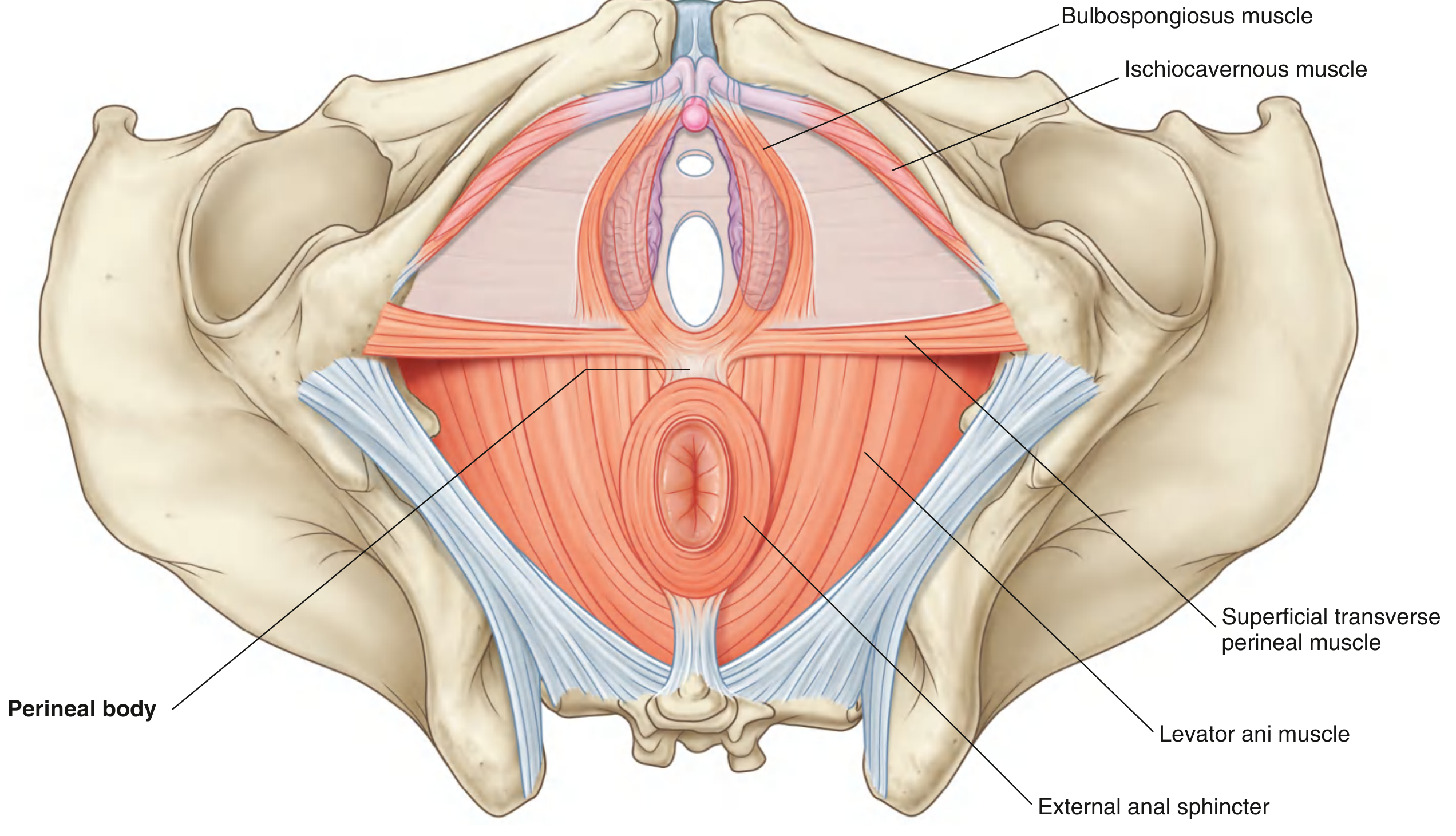
Fig. 5.17 - Perineal Body (Gray's Anatomy for Students)
Definition and Location
The perineal body (also called the central perineal tendon) is a poorly defined fibromuscular node located:
- At the center of the perineum, in the midline
- Just anterior to the anus
- Approximately midway between the two ischial tuberosities
- Along the posterior border of the perineal membrane, to which it attaches
- At the junction between the urogenital and anal triangles of the perineum
It lies at the intersection of pelvic floor structures (from above) and perineal structures (from below). - Gray's Anatomy for Students
Muscles Attaching to the Perineal Body
Eight muscles converge on the perineal body, making it a major structural anchor:
| Muscle | Notes |
|---|---|
| Levator ani (pelvic diaphragm) | Posterior end of the urogenital hiatus connects to it |
| External anal sphincter | Anterior fibers attach to it |
| Superficial transverse perineal muscles | Arise from ischial tuberosities and extend medially to stabilize it |
| Deep transverse perineal muscles | Intersect at the perineal body |
| Bulbospongiosus | Fixed to it by its most posterior fibers |
| Ischiocavernosus | Attached posteriorly |
| Sphincter urethrovaginalis (females) | Attaches to perineal body in women |
| Sphincter urethrae | Fibers reach the perineal body |
- Campbell-Walsh-Wein Urology, Superficial Perineal Space
Clinical Significance
In Women
The perineal body is particularly important in females because it serves as the principal anchoring point for pelvic organ support. If it is injured or disrupted:
- Prolapse of the vagina, uterus, or bladder may result
- This is why episiotomy incisions are directed away from the perineal body during vaginal delivery - to protect it and the external anal sphincter
In Men
- The sphincter urethrae does not fuse with the perineal body in men
- A fascial plane therefore exists between the perineal body and the external anal sphincter in men (this plane is absent in women)
Obstetric Relevance
- Episiotomies are performed to limit tearing of the perineum and the perineal body during difficult vaginal deliveries
- After stretching during delivery, the attached muscles typically regain most or all of their tone over subsequent months
- Tearing through the perineal body can injure the external anal sphincter, causing fecal incontinence
Surgical Relevance
- It serves as a landmark in sacral colpoperineopexy for perineal descent (a continuous graft is placed from the anterior longitudinal ligament of the sacrum down to the perineal body)
- Reconstruction of the perineal body is a key step in pelvic floor repair surgery
Summary
The perineal body is ill-defined anatomically but functionally indispensable - it is the fibromuscular keystone of the perineal floor, where muscles from the urogenital triangle, anal triangle, and pelvic diaphragm all converge. Its integrity is central to continence and pelvic organ support, and its disruption - particularly in women during childbirth - is a leading cause of pelvic floor dysfunction.
- Gray's Anatomy for Students, p. 514 & 534
- Campbell-Walsh-Wein Urology, Superficial Perineal Space
This is a shared conversation. Sign in to Orris to start your own chat.