
Write a note on chest manipulation for 10 marks with reference of pt cvts textbooks
chest physiotherapy percussion vibration postural drainage technique
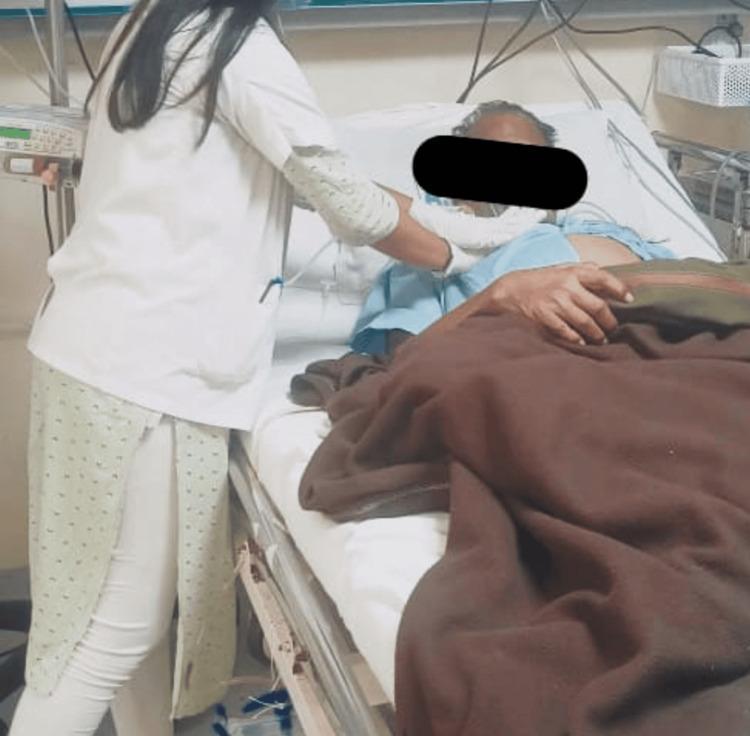
This clinical photograph illustrates a healthcare professional, likely a physical therapist, performing chest physiotherapy on a patient in an inpatient setting. The clinician is seen standing at the bedside, applying manual chest vibration techniques to the patient's anterior thoracic region. The patient is positioned supine in a hospital bed, equipped with side rails and integrated medical devices. Visible equipment includes a bedside monitor or infusion pump on a vertical pole, along with various wires and tubing consistent with continuous clinical monitoring or oxygen therapy. The educational focus of the image is on respiratory rehabilitation interventions, specifically the manual clearance of secretions (airway clearance therapy) in patients with conditions like pneumonia or chronic obstructive pulmonary disease. The image demonstrates the practical application of chest PT, emphasizing the tactile and manual nature of vibration and percussion to facilitate mucus drainage and improve pulmonary function.
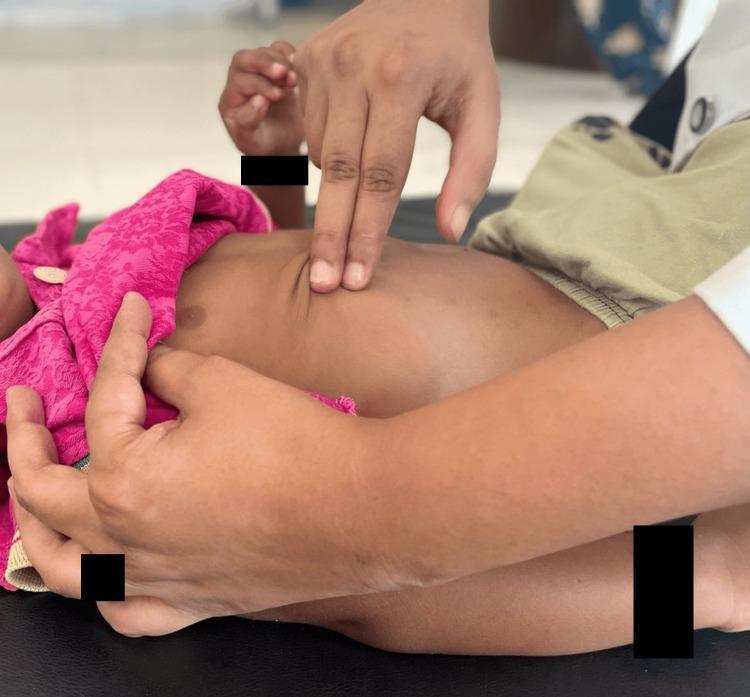
A clinical photograph demonstrating a manual chest vibration technique, a component of chest physiotherapy (CPT), performed on a pediatric patient. The patient is in a supine position on a treatment surface. A healthcare professional, wearing a white clinical coat, is shown applying manual tactile pressure to the thoracic region. One hand is positioned with fingers spread across the lower left lateral rib cage to stabilize and monitor respiratory excursion. The other hand uses a three-finger contact technique on the upper right quadrant of the chest, specifically targeting the apical or upper lobes for vibration therapy. This procedure is typically used in pulmonary rehabilitation to facilitate airway clearance, mobilize secretions, and improve ventilation-perfusion matching in patients with respiratory conditions such as cystic fibrosis, pneumonia, or chronic obstructive lung diseases. The image illustrates the specific hand placement and ergonomic approach required for small-frame pediatric patients.
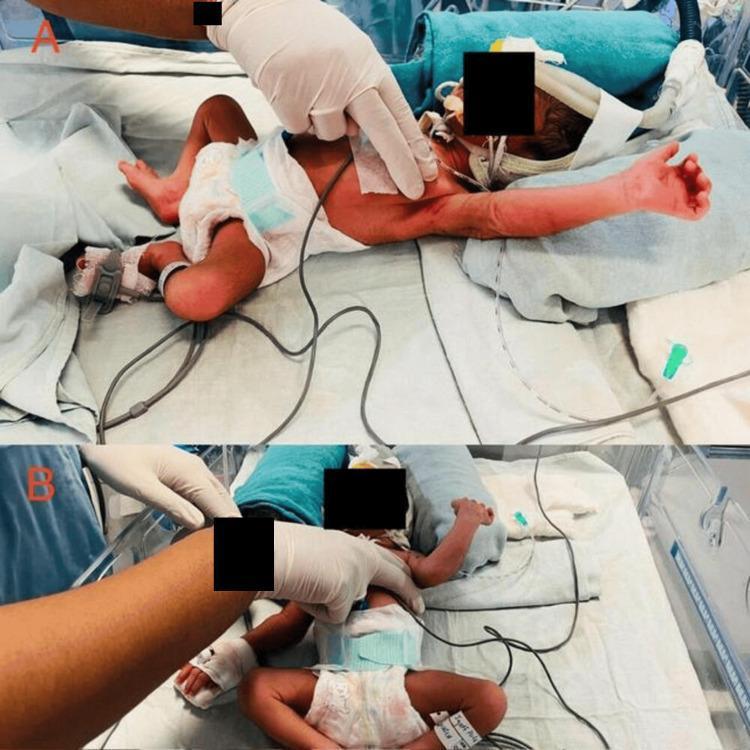
This procedural clinical photograph illustrates manual airway clearance techniques performed on a neonate in a Neonatal Intensive Care Unit (NICU) setting. The composite image is divided into two panels: Panel A demonstrates chest percussion, where a clinician using gloved hands applies two-finger rhythmic tapping to the upper chest wall, just below the clavicle, to loosen mucus. Panel B demonstrates chest vibration, showing the clinician applying gentle, rapid manual vibrations to the chest wall during exhalation to mobilize secretions toward larger airways. The neonate is positioned supine within an isolette and exhibits signs of intensive monitoring and support, including various leads for vital sign monitoring (ECG/respiratory rate), pulse oximetry on the foot, and respiratory support equipment. These chest physiotherapy (CPT) techniques are essential components of managing neonatal respiratory distress syndrome (NRDS) to improve ventilation and secretion clearance. The visual focus is on proper hand placement and finger technique for safe and effective pediatric pulmonary rehabilitation.
CHEST MANIPULATION
(Chest Physical Therapy / Chest Physiotherapy)
Definition
Indications
- Chronic obstructive pulmonary disease (COPD)
- Cystic fibrosis
- Bronchiectasis
- Post-operative chest conditions (thoracic surgery, cardiac surgery)
- Pneumonia with retained secretions
- Neuromuscular diseases with impaired cough (e.g., ALS, Guillain-Barre syndrome)
- Patients on mechanical ventilation with secretion retention
- Patients with excessive mucus production during acute exacerbations
Techniques of Chest Manipulation
1. Postural Drainage
- Each position is maintained for 5-15 minutes
- Often combined with percussion and vibration for maximum effect
- Positions vary depending on the lobe/segment affected (e.g., Trendelenburg for lower lobes, lateral decubitus for middle/upper lobes)
2. Chest Percussion (Clapping)
- Hands are cupped (not flat) to avoid pain and bruising
- Applied over a towel or thin clothing, never over bare skin
- Applied rhythmically at 3-5 Hz (clapping rate), alternating hands
- Performed during both inspiration and expiration
- Duration: 3-5 minutes per segment
3. Chest Vibration
- Applied only during expiration (unlike percussion)
- Fine, oscillatory pressure is transmitted through the chest wall
- Can be performed manually or with mechanical vibrators
- Particularly useful in children and patients who cannot tolerate percussion
4. Directed / Assisted Cough Techniques
- Manually Assisted Cough (MAC): The therapist applies costophrenic compression or Heimlich-type abdominal thrusts during the expiratory phase to augment expiratory flow and raise peak cough flow
- Breath stacking: Multiple insufflations are delivered before the cough to maximize inspiratory volume
- Huff coughing: A series of forceful exhalations with open glottis, less fatiguing than a full cough
5. High-Frequency Chest Wall Oscillation (HFCWO) / Chest Wall Compression (HFCWC)
- HFCWO: A pneumatic vest encases the thorax; it rapidly inflates and deflates, generating high-frequency oscillations (5-25 Hz) that produce oscillatory airflow in the airways, loosening mucus
- HFCWC: Similar vest but tonically inflates and provides a different oscillation pattern
- Intrapulmonary Percussive Ventilation (IPV): Delivers high-frequency bursts of gas into the airways via a mouthpiece
6. Breathing Retraining Techniques
- Pursed-lip breathing: Patient inhales through the nose and exhales slowly through pursed lips over 4-6 seconds; this increases tidal volume, reduces respiratory rate, stents collapsible airways open with positive end-expiratory pressure effect, and reduces dyspnea and hypoxemia. First described by Laennec in 1830.
- Diaphragmatic breathing: Conscious coordination of abdominal wall expansion with inspiration; primary effect is slow respiratory rate and increased tidal volume
- Forward lean / body-forward bending: Alleviates dyspnea and increases maximal inspiratory pressure in COPD by improving the length-tension relationship of the diaphragm
7. Positive Expiratory Pressure (PEP) Devices
- High-frequency oscillation to loosen mucus from airway walls
- Positive expiratory pressure to splint the airways open and prevent collapse during expiration
Physiological Basis
- Ciliary beating (mucociliary clearance)
- Cough-dependent clearance
- Two-phase gas-liquid interaction: high airflow shearing thin liquid layers off airway walls
Clinical Application in CVTS
- Pre-operatively: To clear secretions and optimize lung function before surgery
- Post-operatively: To prevent and treat atelectasis, pneumonia, and sputum retention following thoracotomy or sternotomy
- After cardiac surgery, patients are encouraged deep breathing and assisted coughing (splinting the sternum with a pillow during cough to reduce pain)
Contraindications / Precautions
| Condition | Precaution |
|---|---|
| Osteoporosis | Avoid vigorous percussion |
| Active hemoptysis | Avoid chest percussion |
| Rib fractures / flail chest | Avoid direct chest wall techniques |
| Pulmonary embolism (acute) | Use caution; positioning may worsen hemodynamics |
| Undrained pneumothorax | Contraindicated |
| Recent thoracic/spinal surgery | Modified or deferred |
| Severe bronchospasm | Caution; may trigger |
Conclusion
References (PT/CVTS Textbooks)
- Murray & Nadel's Textbook of Respiratory Medicine, 2-Volume - Section: Inspiratory Muscle Training, Breathing Training, and Chest Physical Therapy
- Fishman's Pulmonary Diseases and Disorders, 2-Volume Set - Sections: Bronchial Hygiene; Respiratory and Chest Physiotherapy Techniques; Secretion Mobilization Techniques (Adjunctive Treatments)