
Septic shock short note on 5 pHe
"septic shock"[MeSH Terms] AND "management"
Septic Shock (short note, 5 marks)
- Septic shock is sepsis with circulatory and cellular/metabolic abnormalities severe enough to raise mortality substantially.
- Clinically, it means sepsis that needs a vasopressor to keep MAP ≥ 65 mmHg and has serum lactate > 2 mmol/L despite adequate fluid resuscitation.
- Hospital mortality is above 40%.
- Pathogen-associated molecular patterns (such as LPS) act on Toll-like receptors. This releases TNF-α, IL-1 and IL-6.
- The result is widespread vasodilation, from nitric oxide and prostacyclin release, and loss of vascular tone.
- Endothelial injury increases capillary permeability and causes relative hypovolaemia.
- Myocardial depression and microvascular thrombosis (DIC) add to the problem.
- Mitochondrial dysfunction causes cytopathic hypoxia, then lactic acidosis, and finally multi-organ failure.
- It is a distributive shock: warm, with low SVR, and usually a high cardiac output.
- Fever or hypothermia, tachycardia, tachypnoea, and warm peripheries with bounding pulses early on.
- Hypotension, altered sensorium, oliguria, and mottled, cold skin in late shock.
- Features of the source of infection: lung, urinary tract, abdomen, skin or CNS.
- Organ dysfunction shows as raised creatinine, thrombocytopenia, raised bilirubin, hypoxaemia and coagulopathy.
- Lactate, blood cultures (two sets, taken before antibiotics) and cultures from the suspected source.
- CBC, procalcitonin/CRP, renal and liver function, coagulation profile and ABG.
- Imaging (chest X-ray, ultrasound, CT) to find the source.
- Measure lactate and remeasure it if it is above 2 mmol/L.
- Take blood cultures before antibiotics.
- Give broad-spectrum IV antibiotics within 1 hour, then de-escalate by culture results.
- Give 30 mL/kg crystalloid (balanced solution preferred) for hypotension or lactate ≥ 4 mmol/L. Guide further fluid by dynamic measures.
- Start vasopressors if MAP stays below 65 mmHg.
- Norepinephrine is the first-line vasopressor. It can be started peripherally in the emergency setting. This is supported by Rosen's Emergency Medicine and Goldman-Cecil Medicine.
- Add vasopressin (0.03 units/min) as a second-line agent or norepinephrine-sparing agent. Epinephrine can also be added. Dobutamine is used when there is myocardial dysfunction.
- Goldman-Cecil Medicine notes that vasopressin is not superior to norepinephrine as a single agent.
- Source control (drainage, debridement or device removal) as early as feasible.
- Hydrocortisone 200 mg/day if hypotension persists despite fluids and vasopressors.
- Supportive care:
- Lung-protective ventilation for ARDS.
- VTE prophylaxis, stress ulcer prophylaxis, and glucose control (target 140-180 mg/dL).
- Renal replacement therapy if indicated.
- Early enteral nutrition.
- Mortality rises with delayed antibiotics, higher lactate, and the number of failing organs.
5 page short note
Surviving Sepsis Campaign adult guidelines 2026 septic shock recommendations
pathophysiology of sepsis and septic shock diagram
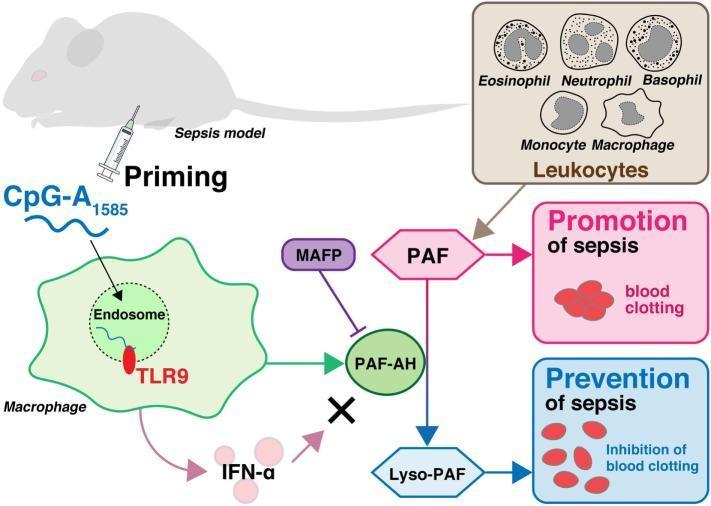
This medical schematic diagram illustrates the pathophysiology and therapeutic priming mechanism in a murine sepsis model. At the cellular level, the diagram depicts a macrophage endocytosing the molecule CpG-A1585, which subsequently binds to Toll-like receptor 9 (TLR9) within an endosome. This signaling pathway triggers the activation of platelet-activating factor acetylhydrolase (PAF-AH). While CpG-A1585 also induces interferon-alpha (IFN-α), a cross mark indicates that IFN-α does not contribute to PAF-AH activation. The diagram further details a leukocyte panel (eosinophils, neutrophils, basophils, monocytes, and macrophages) that produces platelet-activating factor (PAF), a mediator shown to promote sepsis and pathological blood clotting. PAF-AH serves as a critical regulatory enzyme by converting pro-septic PAF into Lyso-PAF, which prevents sepsis through the inhibition of blood clotting. Additionally, the specific inhibitor MAFP is shown antagonizing PAF-AH activity. This illustration highlights the clinical relevance of TLR9-mediated enzymatic pathways in mitigating endotoxin shock and disseminated intravascular coagulation (DIC).
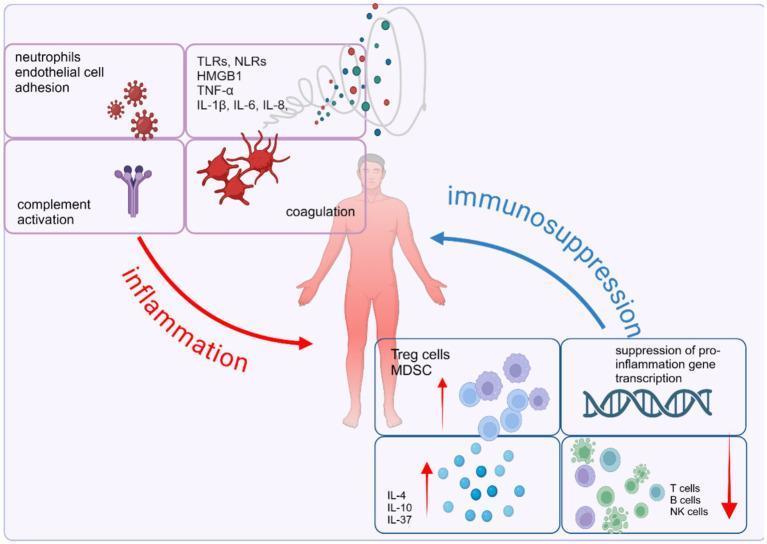
This pathophysiology diagram illustrates the dysregulated host immune response in sepsis, characterized by an imbalance between concurrent pro-inflammatory and anti-inflammatory pathways. Centered on a human figure, the left side (red 'inflammation' arrow) details the acute systemic inflammatory response syndrome (SIRS), featuring neutrophil-endothelial cell adhesion, complement activation, and coagulation cascades. A molecular cloud identifies key mediators including DAMPs/PAMPs (HMGB1, TLRs, NLRs) and pro-inflammatory cytokines (TNF-α, IL-1β, IL-6, IL-8). Conversely, the right side (blue 'immunosuppression' arrow) represents the compensatory anti-inflammatory response syndrome (CARS). This includes the expansion of suppressor cells (Treg cells, MDSCs) and anti-inflammatory cytokines (IL-4, IL-10, IL-37), the suppression of pro-inflammatory gene transcription, and the depletion or exhaustion of effector cells (T cells, B cells, and NK cells). The diagram serves as an educational tool for understanding the complex signaling pathways and cellular interactions that drive multi-organ dysfunction and immune homeostasis failure during septic shock.
https://www.sccm.org/clinical-resources/guidelines/guideline…
mkdir -p /tmp/workspace/septic-shock-note && cd /tmp/workspace/septic-shock-note && curl -sL -o sepsis_patho.jpg "https://cdn.orris.care/cdss_images/pmc_clinical_VQA_068567e08d01f798c650ab7e8777d08409e588e4a9e85b4527081d042fdf81c8.jpg" && ls -la && python3 -c "from PIL import Image; im=Image.open('sepsis_patho.jpg'); print(im.size)"
cat > /tmp/workspace/septic-shock-note/build.py <<'EOF' from docx import Document from docx.shared import Pt, Inches, RGBColor from docx.enum.text import WD_ALIGN_PARAGRAPH from docx.enum.table import WD_TABLE_ALIGNMENT from docx.oxml.ns import qn from docx.oxml import OxmlElement NAVY = RGBColor(0x1F,0x3A,0x5F) doc = Document() sec = doc.sections[0] sec.page_width, sec.page_height = Inches(8.27), Inches(11.69) for a in ("left_margin","right_margin"): setattr(sec,a,Inches(0.9)) sec.top_margin = Inches(0.8); sec.bottom_margin = Inches(0.8) st = doc.styles["Normal"]; st.font.name="Arial"; st.font.size=Pt(10.5) st.element.rPr.rFonts.set(qn("w:eastAsia"),"Arial") st.paragraph_format.space_after = Pt(4); st.paragraph_format.line_spacing = 1.12 for name,size in (("Heading 1",14),("Heading 2",11.5)): h = doc.styles[name]; h.font.name="Arial"; h.font.size=Pt(size); h.font.bold=True h.font.color.rgb = NAVY h.element.rPr.rFonts.set(qn("w:eastAsia"),"Arial") h.paragraph_format.space_before = Pt(10 if name=="Heading 1" else 6) h.paragraph_format.space_after = Pt(3) h.paragraph_format.keep_with_next = True def shade(cell, color): tcPr = cell._tc.get_or_add_tcPr(); s = OxmlElement("w:shd") s.set(qn("w:val"),"clear"); s.set(qn("w:color"),"auto"); s.set(qn("w:fill"),color); tcPr.append(s) def para(text="", bold_lead=None, style=None, italic=False, size=None, align=None): p = doc.add_paragraph(style=style) if bold_lead: r = p.add_run(bold_lead); r.bold=True r = p.add_run(text); r.italic = italic if size: for x in p.runs: x.font.size = Pt(size) if align: p.alignment = align return p def bullet(text, lead=None): p = doc.add_paragraph(style="List Bullet") p.paragraph_format.space_after = Pt(2) if lead: r = p.add_run(lead); r.bold=True p.add_run(text); return p def table(rows, widths, header=True, size=9.5): t = doc.add_table(rows=len(rows), cols=len(rows[0])); t.style="Table Grid" t.alignment = WD_TABLE_ALIGNMENT.CENTER for i,row in enumerate(rows): for j,val in enumerate(row): c = t.cell(i,j); c.width = Inches(widths[j]); c.text="" p = c.paragraphs[0]; p.paragraph_format.space_after=Pt(1) r = p.add_run(val); r.font.size=Pt(size) if header and i==0: r.bold=True; r.font.color.rgb=RGBColor(255,255,255); shade(c,"1F3A5F") elif j==0: r.bold=True; shade(c,"E8EEF5") doc.add_paragraph().paragraph_format.space_after=Pt(2) return t # footer page numbers fp = sec.footer.paragraphs[0]; fp.alignment = WD_ALIGN_PARAGRAPH.CENTER r = fp.add_run("Septic Shock: Short Note | Page "); r.font.size=Pt(8.5) r2 = fp.add_run(); r2.font.size=Pt(8.5) for t,txt in (("begin",None),("instr"," PAGE "),("end",None)): if t=="instr": e = OxmlElement("w:instrText"); e.set(qn("xml:space"),"preserve"); e.text=txt else: e = OxmlElement("w:fldChar"); e.set(qn("w:fldCharType"),t) r2._r.append(e) # Title tp = doc.add_paragraph(); tp.alignment = WD_ALIGN_PARAGRAPH.CENTER r = tp.add_run("SEPTIC SHOCK"); r.bold=True; r.font.size=Pt(22); r.font.color.rgb=NAVY sp = doc.add_paragraph(); sp.alignment = WD_ALIGN_PARAGRAPH.CENTER r = sp.add_run("Short note: definition, pathophysiology, diagnosis and management"); r.italic=True; r.font.size=Pt(11) doc.add_heading("1. Introduction and Definitions", 1) para("Sepsis is a life-threatening organ dysfunction caused by a dysregulated host response to infection (Sepsis-3, 2016). Septic shock is the subset of sepsis in which circulatory, cellular and metabolic abnormalities are profound enough to substantially increase mortality. It is a form of distributive shock: vasodilation, capillary leak and myocardial depression combine to cause tissue hypoperfusion.") table([ ["Term","Definition (Sepsis-3)"], ["Infection","Suspected or proven infection (bacterial, viral, fungal or parasitic)."], ["Sepsis","Infection plus acute rise in SOFA score of 2 or more points from baseline (organ dysfunction)."], ["Septic shock","Sepsis with persistent hypotension needing vasopressors to keep MAP of 65 mmHg or more AND serum lactate above 2 mmol/L despite adequate fluid resuscitation. Hospital mortality exceeds 40%."], ["qSOFA (bedside screen)","Any 2 of: respiratory rate 22/min or more, altered mentation (GCS below 15), systolic BP 100 mmHg or less. A positive screen prompts a full SOFA assessment. It is a screening prompt, not a diagnostic test."], ],[1.6,5.0]) para("The older term \"severe sepsis\" has been dropped. SIRS (two or more of: temperature above 38 or below 36 C, heart rate above 90, respiratory rate above 20, WBC above 12,000 or below 4,000/mm3) is no longer part of the definition because it is non-specific, though it is still seen in older texts and exam answers.", size=10) doc.add_heading("2. Epidemiology and Aetiology", 1) para("Sepsis affects tens of millions of people worldwide each year and is a leading cause of in-hospital death. Septic shock develops in roughly one in five to one in three septic patients in ICU series. Risk is highest at the extremes of age and in people with comorbidities.") doc.add_heading("Common sources", 2) bullet(" pneumonia (most common), including community-acquired and ventilator-associated.", "Respiratory:") bullet(" peritonitis, cholangitis, perforation, intra-abdominal abscess.", "Abdominal:") bullet(" pyelonephritis, obstructive uropathy, catheter-associated infection.", "Urinary:") bullet(" cellulitis, necrotising fasciitis, toxic shock syndrome, line-related bacteraemia.", "Skin, soft tissue and devices:") bullet(" meningitis, endocarditis, post-partum or post-abortal sepsis.", "Others:") doc.add_heading("Risk factors", 2) para("Age over 65 or under 1 year, diabetes, malignancy, chemotherapy, immunosuppression, HIV, cirrhosis, chronic kidney disease, alcohol misuse, indwelling catheters or recent surgery, and pregnancy or the puerperium. Gram-negative organisms (E. coli, Klebsiella, Pseudomonas) and Gram-positive cocci (Staph. aureus, Streptococcus pneumoniae, group A strep) are the commonest pathogens. Fungi matter mainly in immunocompromised or prolonged-ICU patients.") doc.add_heading("3. Pathophysiology", 1) para("Pathogen-associated molecular patterns (such as bacterial lipopolysaccharide) and host damage-associated molecular patterns (such as HMGB1) bind pattern-recognition receptors, mainly Toll-like receptors, on macrophages and endothelium. This triggers NF-kB signalling and release of TNF-alpha, IL-1, IL-6 and IL-8. A pro-inflammatory phase and a compensatory anti-inflammatory phase (IL-10, regulatory T-cells, lymphocyte apoptosis) run in parallel, which explains both early shock and later immunoparalysis with secondary infections.") p = doc.add_paragraph(); p.alignment = WD_ALIGN_PARAGRAPH.CENTER p.add_run().add_picture("/tmp/workspace/septic-shock-note/sepsis_patho.jpg", width=Inches(3.6)) para("Figure. Dysregulated host response in sepsis: concurrent pro-inflammatory (SIRS) and anti-inflammatory/immunosuppressive (CARS) pathways. Source: Orris medical image library.", italic=True, size=8.5, align=WD_ALIGN_PARAGRAPH.CENTER) doc.add_heading("Key mechanisms leading to shock", 2) bullet(" Inducible nitric oxide synthase, prostacyclin and a relative deficiency of vasopressin cause loss of vascular smooth muscle tone and low systemic vascular resistance (SVR). Catecholamine hyporesponsiveness develops through receptor down-regulation and K-ATP channel activation.", "Vasodilation:") bullet(" Glycocalyx shedding and endothelial injury cause leaky capillaries, interstitial oedema and effective hypovolaemia. Venodilation lowers venous return.", "Capillary leak:") bullet(" Cytokines, nitric oxide and altered calcium handling reduce contractility (septic cardiomyopathy). Ejection fraction may fall even when cardiac output is high.", "Myocardial depression:") bullet(" Tissue factor expression, reduced antithrombin and protein C, and raised PAI-1 produce microthrombi and DIC, worsening organ perfusion.", "Coagulopathy:") bullet(" Tissue hypoxia itself activates NF-kB, cytokine synthesis, nitric oxide and HMGB-1, and induces coagulation (Goldman-Cecil Medicine, section on tissue hypoxia in septic shock). Mitochondrial dysfunction prevents oxygen use even when delivery is restored, giving cytopathic hypoxia and lactate rise.", "Microcirculatory and cellular failure:") para("The haemodynamic picture is typically a warm, vasodilated state (high or normal cardiac output, low SVR) early on, which becomes cold and hypodynamic if volume depletion or myocardial failure dominates.") doc.add_heading("4. Clinical Features", 1) table([ ["System","Features"], ["General / CVS","Fever or hypothermia, rigors, tachycardia, warm flushed peripheries and bounding pulses early; hypotension, cold mottled skin and delayed capillary refill late."], ["Respiratory","Tachypnoea, hypoxaemia, ARDS (PaO2/FiO2 below 300 with bilateral infiltrates)."], ["CNS","Confusion, agitation, drowsiness, reduced GCS (septic encephalopathy)."], ["Renal","Oliguria (below 0.5 mL/kg/h), rising creatinine (acute kidney injury)."], ["Haematological","Thrombocytopenia, prolonged PT/aPTT, purpura (DIC)."], ["Hepatic / GI","Jaundice, raised bilirubin, ileus, stress ulceration."], ["Source clues","Cough and consolidation, dysuria and flank pain, abdominal guarding, spreading erythema, meningism, new murmur, petechial rash."], ],[1.4,5.2]) para("Elderly, diabetic and immunosuppressed patients may present without fever, with only confusion or a fall in functional state.", size=10) doc.add_heading("5. Investigations", 1) bullet(" at least two sets of blood cultures before antibiotics (without delaying them by more than 45 minutes), plus cultures of urine, sputum, wound, CSF or line tips as indicated.", "Microbiology:") bullet(" serum lactate (repeat if above 2 mmol/L), arterial blood gas, CBC with differential, CRP and procalcitonin, urea, creatinine, electrolytes, LFTs, coagulation profile with fibrinogen and D-dimer, glucose.", "Blood tests:") bullet(" chest X-ray, bedside ultrasound (IVC, cardiac function, abdomen), CT or MRI to find and plan control of the source.", "Imaging:") bullet(" ECG, urine output monitoring, arterial line for continuous BP, central venous access for vasopressors where needed. Echocardiography helps assess cardiac function and fluid responsiveness.", "Monitoring:") bullet(" SOFA score (PaO2/FiO2, platelets, bilirubin, MAP or vasopressor dose, GCS, creatinine or urine output) to quantify organ dysfunction and track progress.", "Scoring:") doc.add_heading("6. Management", 1) para("Septic shock is a time-critical emergency. Management follows the Surviving Sepsis Campaign (SSC) approach, now updated in the [SSC 2026 adult guidelines](https://www.sccm.org/clinical-resources/guidelines/guidelines/surviving-sepsis-campaign-international-guidelines-for-management-of-sepsis-and-septic-shock-2026). Recommendation strengths below are taken from that document unless marked as 2021.".replace("[SSC 2026 adult guidelines](https://www.sccm.org/clinical-resources/guidelines/guidelines/surviving-sepsis-campaign-international-guidelines-for-management-of-sepsis-and-septic-shock-2026)","SSC 2026 adult guidelines")) doc.add_heading("6.1 Hour-1 bundle (resuscitate while you investigate)", 2) table([ ["Step","Action"], ["1","Recognise early; call for senior and ICU help; give oxygen to target SpO2 of 92-96%."], ["2","Measure lactate; repeat within 2-4 hours if raised. Use capillary refill time as an adjunct perfusion marker (SSC 2026, conditional)."], ["3","Take blood cultures before antibiotics, if this causes no significant delay."], ["4","Give broad-spectrum IV antimicrobials immediately, ideally within 1 hour of recognition in possible, probable or definite septic shock (strong recommendation)."], ["5","Start IV crystalloid resuscitation. The classical dose is 30 mL/kg within the first 3 hours (suggested in SSC 2021); give in boluses and reassess after each, as dosing should be individualised."], ["6","Start vasopressors if hypotension persists during or after fluids, to keep MAP at 65 mmHg or more."], ],[0.6,6.0]) doc.add_heading("6.2 Antimicrobial therapy", 2) bullet("Choose empiric cover by likely source, local resistance patterns, recent antibiotic exposure and immune status. Use one or more agents covering all likely pathogens, and add MRSA or antifungal cover only where risk factors exist (SSC 2026 advises against routine empiric antifungals).") bullet("Optimise dosing using pharmacokinetic principles; consider prolonged beta-lactam infusion.") bullet("De-escalate by culture results and clinical response. Use the shortest effective course (commonly 7-10 days; longer for undrained foci, bacteraemia with S. aureus or slow response). Procalcitonin can help decide when to stop.") doc.add_heading("6.3 Fluid resuscitation", 2) bullet("Crystalloids are first-line; balanced crystalloids (Ringer's lactate, Plasma-Lyte) are suggested over 0.9% saline, except in traumatic brain injury (SSC 2026).") bullet("Crystalloids alone are suggested over adding albumin. Albumin may be considered when large volumes are needed or in cirrhosis.") bullet("Avoid starch solutions and gelatins. Use dynamic measures (passive leg raise, pulse pressure variation, ultrasound) and capillary refill to guide further fluid, and avoid fluid overload once the patient is no longer fluid responsive.") doc.add_heading("6.4 Vasopressors and inotropes", 2) bullet(" is the first-line vasopressor (strong recommendation, SSC 2026), preferred over dopamine, epinephrine or selepressin. It can be started peripherally through a good proximal vein while central access is arranged. Rosen's Emergency Medicine notes that peripheral initiation is reasonable in the emergency setting.", "Norepinephrine") bullet(" Initial MAP target is 65 mmHg (strong). A range of 60-65 mmHg is suggested for patients aged 65 or over.", "Target:") bullet(" Vasopressin (up to 0.03 units/min) is added when norepinephrine alone is insufficient, as a second-line agent (Goldman-Cecil Medicine: not superior as a single agent). Epinephrine can be added as a third agent. SSC 2026 suggests against terlipressin.", "Adding agents:") bullet(" Dobutamine (or epinephrine) is considered if there is evidence of myocardial dysfunction with persistent hypoperfusion despite adequate MAP and volume.", "Inotropes:") bullet(" Insert an arterial line as soon as practical.", "Monitoring:") doc.add_heading("6.5 Corticosteroids", 2) para("IV corticosteroids are suggested for septic shock (conditional, SSC 2026). A typical regimen is hydrocortisone 200 mg/day (50 mg every 6 hours or by infusion), started when ongoing vasopressor need persists (SSC 2021: norepinephrine 0.25 mcg/kg/min or more for at least 4 hours). Fludrocortisone is optional.") doc.add_heading("6.6 Source control", 2) para("Identify an anatomic source within 6-12 hours and control it as soon as medically and logistically practical: drain abscesses and empyema, decompress obstructed biliary or urinary tracts, debride necrotic tissue, and remove infected intravascular devices after establishing alternative access.") doc.add_heading("6.7 Organ support and general care", 2) bullet(" Low tidal volume (6 mL/kg predicted body weight) with plateau pressure below 30 cmH2O for sepsis-induced ARDS; prone positioning for moderate-severe ARDS (PaO2/FiO2 below 150); VV-ECMO in selected severe cases at experienced centres.", "Ventilation:") bullet(" Renal replacement therapy for standard indications (refractory acidosis, hyperkalaemia, uraemia, fluid overload), not for creatinine rise alone.", "Renal:") bullet(" Restrictive transfusion (threshold haemoglobin 7 g/dL) is recommended in the absence of myocardial ischaemia or active bleeding.", "Blood products:") bullet(" Start insulin at glucose of 180 mg/dL (10 mmol/L) or above and aim for 144-180 mg/dL.", "Glucose:") bullet(" Pharmacological prophylaxis alone (low-molecular-weight heparin preferred); stress-ulcer prophylaxis in those at risk of GI bleeding; early enteral nutrition within 72 hours.", "VTE, GI and nutrition:") bullet(" Admit to ICU within 6 hours; discuss goals of care early; plan post-discharge follow-up.", "Disposition:") bullet(" Sodium bicarbonate is not recommended for lactic acidosis unless severe acidaemia (pH below 7.2) with AKI; high-dose vitamin C and routine immunoglobulins are not recommended.", "Not recommended:") doc.add_heading("6.8 Resuscitation end-points", 2) para("MAP of 65 mmHg or more, falling lactate, improving capillary refill and mottling, urine output above 0.5 mL/kg/h, improving mental state and decreasing vasopressor requirement. Refractory shock needs a search for missed source, adrenal insufficiency, tamponade, pneumothorax, and drug or fluid problems.") doc.add_heading("7. Complications", 1) para("ARDS, acute kidney injury, DIC, septic cardiomyopathy, ischaemic hepatitis, ileus and stress ulcer bleeding, critical-illness polyneuropathy and myopathy, secondary infections (immunoparalysis), peripheral gangrene (symmetrical purpura fulminans), and multi-organ dysfunction syndrome. Long-term effects of survivors include post-sepsis syndrome: cognitive impairment, PTSD and depression, weakness and readmission.") doc.add_heading("8. Prognosis", 1) para("Hospital mortality is roughly 10% for sepsis and above 40% for septic shock. Adverse prognostic factors include delayed antibiotics or source control, high or non-clearing lactate, higher SOFA score, number of failing organs, advanced age, immunosuppression and inappropriate empiric therapy. Each hour of antibiotic delay in shock is associated with higher mortality.") doc.add_heading("9. Quick Revision Points", 1) for t in [ "Septic shock = sepsis + vasopressor need for MAP 65 + lactate above 2 despite fluids; mortality above 40%.", "Distributive shock: low SVR, capillary leak, myocardial depression, cytopathic hypoxia.", "Antibiotics within 1 hour; cultures first if no delay; lactate measured early.", "Balanced crystalloids first-line; 30 mL/kg is the traditional starting volume; reassess with dynamic measures.", "Norepinephrine first, MAP target 65; add vasopressin, then consider epinephrine; hydrocortisone for refractory shock.", "Control the source early; supportive care (lung-protective ventilation, restrictive transfusion, VTE prophylaxis, early feeding).", ]: bullet(t) doc.add_heading("Sources", 2) para("Surviving Sepsis Campaign: International Guidelines for Management of Sepsis and Septic Shock 2026 (SCCM / Intensive Care Medicine). Singer M et al. The Third International Consensus Definitions for Sepsis and Septic Shock (Sepsis-3). JAMA 2016;315:801-810. Goldman-Cecil Medicine International Edition (Circulatory Therapy; Vasopressors; Tissue Hypoxia in Septic Shock). Rosen's Emergency Medicine (Vasoactive Drug Therapy). Tintinalli's Emergency Medicine (Norepinephrine). Dosing details marked as 2021 come from the earlier SSC 2021 guideline and should be checked against current local protocols.", size=9) doc.save("/tmp/workspace/septic-shock-note/Septic_Shock_Short_Note.docx") EOF cd /tmp/workspace/septic-shock-note && python3 build.py && python3 -c " from docx import Document d=Document('Septic_Shock_Short_Note.docx') w=sum(len(p.text.split()) for p in d.paragraphs)+sum(len(c.text.split()) for t in d.tables for r in t.rows for c in r.cells) print(w)"
cd /tmp/workspace/septic-shock-note && python3 -c " from docx import Document d=Document('Septic_Shock_Short_Note.docx') t=' '.join(p.text for p in d.paragraphs)+' '.join(c.text for tb in d.tables for r in tb.rows for c in r.cells) print('\u2014' in t, '\u2013' in t)"; ls -la
Septic Shock Short Note
Word Document · DOCX
- Introduction and definitions (Sepsis-3, qSOFA)
- Epidemiology and aetiology
- Pathophysiology, with a diagram of the dysregulated pro- and anti-inflammatory response
- Clinical features
- Investigations
- Management
- Hour-1 bundle, antibiotics and fluids
- Vasopressors and inotropes
- Corticosteroids and source control
- Organ support
- Resuscitation end-points
- Complications
- Prognosis
- Quick revision points and sources
- The management section follows the 2026 Surviving Sepsis Campaign adult guidelines, published this year.
- Antibiotics within 1 hour.
- Balanced crystalloids first-line.
- Norepinephrine first-line, with a MAP target of 65 mmHg (60-65 in patients aged 65 or over).
- IV corticosteroids suggested.
- Terlipressin not suggested.
- Some dosing details are marked "2021" because I didn't confirm they are unchanged in the 2026 guideline. These are the 30 mL/kg fluid volume, the hydrocortisone start threshold, and vasopressin at up to 0.03 units/min. Check them against your local protocol.
- The pathophysiology and vasopressor points draw on Goldman-Cecil Medicine and Rosen's Emergency Medicine.
- The definition table is written from my own knowledge of Sepsis-3, not retrieved from the textbooks.
- Several smaller items are also from my own knowledge and not checked against a source: the SIRS criteria, the 7-10 day antibiotic course, the ARDS ventilation and prone-positioning thresholds, and the bicarbonate and vitamin C advice.
5 page short note on septic shock
Septic Shock Short Note
Word Document · DOCX
Septic Shock: Short Note
1. Introduction and definitions
| Term | Definition |
|---|---|
| Sepsis | Suspected or proven infection plus an acute rise in SOFA score of 2 or more from baseline |
| Septic shock | Sepsis with persistent hypotension needing vasopressors to keep MAP at 65 mmHg or more, and lactate above 2 mmol/L despite adequate fluids. Hospital mortality is above 40%. |
| qSOFA (screen only) | Any 2 of: respiratory rate 22/min or more, altered mentation, systolic BP 100 mmHg or less |
2. Epidemiology and aetiology
- Sepsis affects tens of millions of people each year worldwide and is a leading cause of in-hospital death.
- Common sources:
- Respiratory: pneumonia is the commonest source.
- Abdominal: peritonitis, cholangitis, abscess.
- Urinary: pyelonephritis, obstructive uropathy.
- Skin, soft tissue and devices: necrotising fasciitis, toxic shock syndrome, line infection.
- Others: meningitis, endocarditis, puerperal sepsis.
- Risk factors: extremes of age, diabetes, malignancy, immunosuppression, cirrhosis, CKD, alcohol misuse, indwelling devices, recent surgery, and pregnancy.
- Organisms: Gram-negatives (E. coli, Klebsiella, Pseudomonas) and Gram-positives (Staph. aureus, pneumococcus, group A strep). Fungi matter mainly in the immunocompromised.
3. Pathophysiology
- Pathogen-associated molecular patterns (such as LPS) and host damage-associated patterns (such as HMGB1) bind Toll-like receptors on macrophages and endothelium.
- NF-kB activation releases TNF-alpha, IL-1, IL-6 and IL-8.
- A pro-inflammatory phase and a compensatory anti-inflammatory phase run in parallel. The second phase explains later immunoparalysis and secondary infections.
- Vasodilation: inducible nitric oxide synthase, prostacyclin and relative vasopressin deficiency lower systemic vascular resistance. Catecholamine responsiveness falls.
- Capillary leak: glycocalyx and endothelial injury cause oedema and effective hypovolaemia. Venodilation reduces venous return.
- Myocardial depression: cytokines and nitric oxide impair contractility (septic cardiomyopathy).
- Coagulopathy: tissue factor expression, low antithrombin and protein C, and raised PAI-1 cause microthrombi and DIC.
- Cytopathic hypoxia: tissue hypoxia itself activates NF-kB, cytokines, nitric oxide and HMGB-1, and induces coagulation (Goldman-Cecil Medicine). Mitochondrial dysfunction stops cells using oxygen even when delivery is restored, so lactate rises.
4. Clinical features
- General and cardiovascular: fever or hypothermia, rigors, tachycardia. Early on the peripheries are warm with bounding pulses. Later there is hypotension, cold mottled skin and delayed capillary refill.
- Respiratory: tachypnoea, hypoxaemia, ARDS.
- CNS: confusion, drowsiness, septic encephalopathy.
- Renal: oliguria and acute kidney injury.
- Haematological: thrombocytopenia, prolonged clotting times, purpura (DIC).
- Hepatic and GI: jaundice, ileus, stress ulcers.
- Source clues: consolidation, flank pain, abdominal guarding, spreading erythema, meningism, a new murmur.
- Elderly, diabetic and immunosuppressed patients may have no fever and present only with confusion.
5. Investigations
- Microbiology: at least two sets of blood cultures before antibiotics, if this causes no significant delay. Add urine, sputum, wound, CSF or line-tip cultures as indicated.
- Blood tests: lactate (repeat if raised), ABG, CBC, CRP and procalcitonin, renal and liver function, coagulation profile, glucose.
- Imaging: chest X-ray, bedside ultrasound, and CT or MRI to find and plan control of the source.
- Monitoring: ECG, urine output, arterial line, central access for vasopressors, echocardiography for cardiac function.
- SOFA score: quantifies and tracks organ dysfunction.
6. Management
- Recognise early, call for senior and ICU help, and give oxygen to keep SpO2 at 92-96%.
- Measure lactate and repeat it if raised. Capillary refill time is a suggested adjunct to judge perfusion.
- Take blood cultures.
- Give broad-spectrum IV antimicrobials ideally within 1 hour of recognition (strong recommendation).
- Start IV crystalloid. The traditional dose is 30 mL/kg in the first 3 hours (suggested in 2021). Give it in boluses, reassess after each, and individualise the dose.
- Start vasopressors if hypotension persists, to keep MAP at 65 mmHg or more.
- Choose empiric cover by likely source, local resistance, recent antibiotic exposure and immune status.
- Add MRSA or antifungal cover only when risk factors exist. The 2026 guideline advises against routine empiric antifungals.
- Optimise dosing and consider prolonged beta-lactam infusion.
- De-escalate by culture results. Use the shortest effective course, commonly 7-10 days. Procalcitonin can help decide when to stop.
- Crystalloids are first-line. Balanced crystalloids are suggested over 0.9% saline, except in traumatic brain injury.
- Crystalloid alone is suggested over adding albumin. Albumin is reserved for special situations such as cirrhosis or large fluid requirements.
- Avoid starches. Use dynamic measures (passive leg raise, pulse pressure variation, ultrasound) to guide more fluid. Avoid fluid overload.
- Norepinephrine is first-line (strong recommendation), preferred over dopamine, epinephrine or selepressin. It can be started peripherally while central access is arranged (Rosen's Emergency Medicine).
- MAP target is 65 mmHg. A range of 60-65 mmHg is suggested for patients aged 65 or over.
- Vasopressin (up to 0.03 units/min) is added as a second-line agent. It is not superior to norepinephrine alone (Goldman-Cecil Medicine). Epinephrine can be a third agent. Terlipressin is not suggested.
- Dobutamine is considered for myocardial dysfunction with persistent hypoperfusion.
- Insert an arterial line as soon as practical.
- IV corticosteroids are suggested (conditional recommendation).
- The usual regimen is hydrocortisone 200 mg/day (50 mg every 6 hours).
- It is started when vasopressor need persists. The 2021 threshold was norepinephrine at 0.25 mcg/kg/min or more for at least 4 hours.
- Ventilation: tidal volume 6 mL/kg predicted body weight and plateau pressure below 30 cmH2O. Use prone positioning in moderate-severe ARDS. Consider VV-ECMO at experienced centres.
- Renal replacement therapy: for the usual indications, not for a creatinine rise alone.
- Transfusion: restrictive strategy, with a haemoglobin threshold of about 7 g/dL.
- Glucose: start insulin at 180 mg/dL (10 mmol/L) or above.
- VTE and GI: pharmacological VTE prophylaxis alone is suggested. Give stress-ulcer prophylaxis to those at risk.
- Nutrition: enteral feeding within 72 hours.
- Disposition: admit to ICU within 6 hours, discuss goals of care early, and arrange follow-up.
7. Complications
- ARDS, acute kidney injury, DIC and septic cardiomyopathy.
- Ischaemic hepatitis, ileus and stress ulcer bleeding.
- Critical-illness polyneuropathy and myopathy.
- Secondary infections from immunoparalysis.
- Peripheral gangrene and purpura fulminans.
- Multi-organ dysfunction.
- Post-sepsis syndrome in survivors: cognitive impairment, PTSD, depression, weakness and readmission.
8. Prognosis
- delayed antibiotics or source control
- high or non-clearing lactate
- a high SOFA score and more failing organs
- advanced age and immunosuppression
- inappropriate empiric therapy
9. Quick revision
- Septic shock means sepsis plus a vasopressor need for MAP 65 plus lactate above 2 despite fluids. Mortality is above 40%.
- It is a distributive shock: low SVR, capillary leak, myocardial depression and cytopathic hypoxia.
- Give antibiotics within 1 hour, with cultures first if there is no delay.
- Use balanced crystalloids first, and reassess with dynamic measures.
- Use norepinephrine first, then add vasopressin, then consider epinephrine. Hydrocortisone is for ongoing vasopressor need.
- Control the source early and give supportive care.