
Ng tube irrigation its use and how to manage a pt of hemitemesis, poisoning and other relatef pts whose treatment is done through ng tube
Reading File
Now let me search the medical library for NG tube irrigation, hematemesis management, and poisoning treatment simultaneously.
Finding Sources
Finding Sources
Finding Sources
Reading File
Reading File
Finding Sources
Reading File
Reading File
Finding Sources
Reading File
Reading File
Finding Sources
Reading File
Reading File
Reading File
Reading File
Finding Sources
Reading File
Finding Sources
I now have sufficient information from multiple authoritative sources to compile a comprehensive answer. Let me also fetch the Salem-sump tube image.
Loading Image
Here is a comprehensive guide on NG tube irrigation, hematemesis management, poisoning management, and other related uses - drawn from multiple authoritative textbooks.
Nasogastric (NG) Tube: Irrigation, Uses & Patient Management
1. What Is an NG Tube?
A nasogastric (NG) tube is a flexible tube passed through the nose, down the nasopharynx, and into the stomach. It is made of polyurethane, PVC, or silicone.
The Salem-Sump Tube (most commonly used):
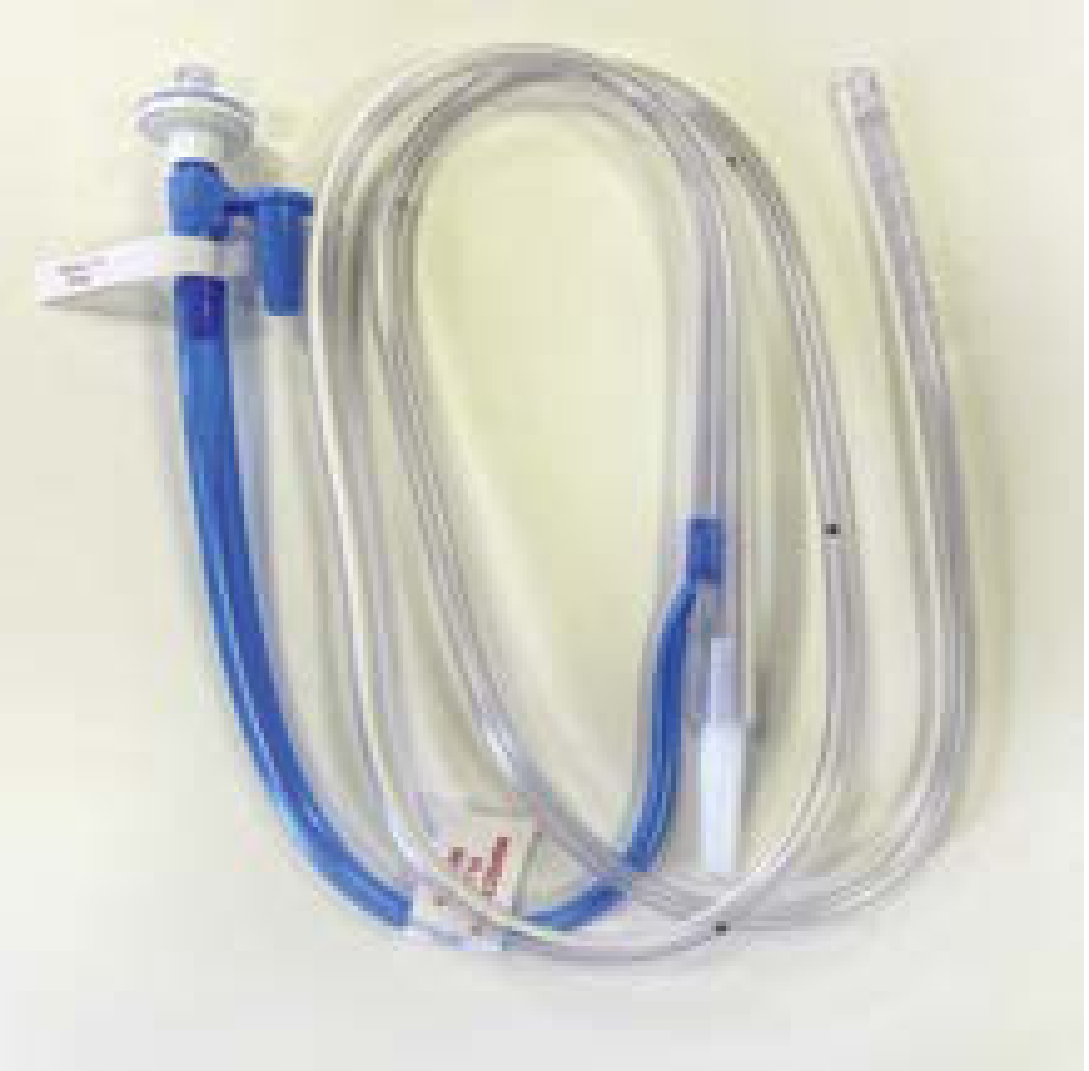
- Has two lumens: the larger lumen connects to wall suction for aspiration; the smaller lumen vents to atmosphere to prevent gastric wall adherence
- Can also deliver medications or feeds when not on suction
The Levin Tube: Single-lumen, multiple distal holes. Larger internal diameter but cannot vent, so risks mucosal ischemia from suction - now uncommonly used.
- Current Surgical Therapy 14e, p.162
2. Indications for NG Tube Placement
| Indication | Use |
|---|---|
| Acute intestinal/gastric obstruction | Decompression |
| Prolonged ileus with vomiting | Decompression, prevent aspiration |
| Upper GI bleeding | Lavage and diagnosis |
| Poisoning/overdose | Gastric lavage, activated charcoal, WBI |
| Enteral nutrition | Feeding in patients who cannot eat orally |
| Medication delivery | When oral route not feasible |
| Surgical decompression | Intraoperative / postoperative |
3. Contraindications
Absolute:
- Basilar skull fracture or mid-face fractures (risk of intracranial penetration)
- History of alkali ingestion (risk of esophageal perforation if blind placement)
- Esophageal stricture
Relative:
- Esophageal varices (though evidence for bleeding risk is limited - one study of 75 hepatic transplant patients found zero bleeding episodes after NG placement)
- Coagulopathy / severe thrombocytopenia
- Roberts and Hedges' Clinical Procedures in Emergency Medicine, p.1725
4. Placement Technique (Step-by-Step)
- Position: Head of bed elevated to upright
- Estimate length: Nose-to-earlobe + earlobe-to-xiphoid + 15 cm
- Select nostril: Ask patient to sniff while occluding each side; choose most patent
- Anesthesia: Apply lidocaine gel or Cetacaine to nares and nasopharynx
- Insert tube: Apply gentle pressure through posterior nasopharynx
- Facilitate passage: Ask patient to sip water; flex neck forward once in nasopharynx to direct tube toward esophagus, not trachea
- Signs of tracheal misplacement: Excessive coughing, voice changes, condensation in tube - STOP and remove immediately
- Secure: Commercial adhesive holder on nose
Confirm placement before use - gold standard is a chest/upper-abdomen X-ray. Auscultation alone is unreliable.
- Current Surgical Therapy 14e, p.163
5. NG Tube Irrigation / Lavage Technique
General Irrigation Principle
- Instill fluid through the tube and aspirate/siphon back
- The Salem-sump's vent port maintains suction without mucosal adherence
- Keep suction mild and intermittent - vigorous suction causes gastric erosions
6. NG Tube in Hematemesis / Upper GI Bleeding
Role of NG Lavage in Upper GI Bleed
The NG tube serves a diagnostic and preparatory role in upper GI hemorrhage:
- Positive aspirate (bloody, maroon, or coffee-ground material) = strong evidence of upper GI source
- Negative aspirate does NOT exclude upper GI bleeding (only positive in 23% of patients with occult bleeding) - intermittent bleeding or pyloric spasm cause false negatives
- Guaiac testing of aspirate: unreliable - visual inspection is more dependable
Lavage Procedure for Hematemesis
- Place NG tube and confirm position
- If bright red blood or clots are present, perform gentle gastric lavage
- Irrigant: Room-temperature water (preferred) or normal saline, 200-300 mL aliquots
- Aspirate contents; repeat until return fluid is clear
- Maintain tube on mild intermittent suction
- Early lavage is associated with decreased time to endoscopy
Risk Stratification Table (Tintinalli's Emergency Medicine)
| Very Low Risk | High Risk |
|---|---|
| Age < 60 years | Advanced age |
| No major comorbidities | Comorbidities |
| No history of red hematemesis | Red hematemesis |
| No hematochezia | Hematochezia or melena |
| Negative NG aspirate | Positive NG aspirate |
| Hemodynamically stable | Hemodynamically unstable |
| Normal labs | Abnormal lab studies |
Key Management Points
- Avoid varices fear: no proven evidence that NG tube passage provokes variceal bleeding
- Upper endoscopy (EGD) is the gold standard for diagnosis and treatment of upper GI hemorrhage - NG lavage is now primarily used to improve endoscopic visualization in high-risk cases
- Tintinalli's Emergency Medicine, p.538; Current Surgical Therapy 14e, p.318
7. NG Tube in Poisoning / Overdose
A. Gastric Lavage
When to use: Life-threatening poisons that cannot be adequately managed with charcoal or other methods (e.g., colchicine overdose), ideally within 1-2 hours of ingestion.
Technique (Parikh's Forensic Medicine & Toxicology; Harrison's Principles of Internal Medicine):
- Position patient prone or semi-prone on left side, hips higher than head (Trendelenburg + left lateral decubitus) - prevents aspiration
- Remove dentures; secure airway; use mouth gag in unconscious patients
- Use a No. 40 French orogastric tube (adults) or Ryle's tube / No. 8-12 French catheter (children)
- Lubricate with liquid paraffin or glycerine
- Insert through mouth (or nose in children) to the 50 cm mark in adults (45 cm = cardia; mark at 50 cm)
- Confirm position: Insufflate air and auscultate over stomach; bubbling = correct; hissing = trachea
- First wash: ~250 mL warm water (35°C) - run in by gravity (funnel held above mouth), then lower funnel below stomach to siphon out. Save first wash for chemical/forensic analysis
- Subsequent washes: 500 mL aliquots, repeated until return fluid is same color and character as lavage fluid
- Lavage decreases absorption by: ~52% at 5 min, 26% at 30 min, 16% at 60 min
- After lavage, leave an appropriate antidote or solution in the stomach (e.g., activated charcoal, sodium bicarbonate for aspirin, magnesium sulfate for purgation)
- Pinch the tube before removal to prevent aspiration of tube contents
Efficacy note: Significant drug recovery occurs in fewer than 10% of patients. Aspiration complication rate is up to 10%.
Contraindications to gastric lavage:
- Corrosive (acid/alkali) ingestion - risk of esophageal perforation
- Petroleum distillate (kerosene) ingestion - extreme aspiration risk
- Strychnine poisoning: control convulsions first
- Comatose patients without protected airway - intubate first
- Bowel obstruction
B. Activated Charcoal via NG Tube
- Dose: 1 g/kg body weight (generally; optimum = 10x weight of ingested substance)
- Administer orally or through small-bore NG tube as a suspension in water
- Palatability improved by adding sorbitol, chocolate, or cola syrup
- Reduces absorption by 73% at 5 min, 51% at 30 min, 36% at 60 min
Substances NOT bound by activated charcoal:
- Heavy metals (iron, lead, arsenic, lithium)
- Mineral acids and alkalis
- Cyanide, fluoride
- Solvents, pesticides
Contraindications to charcoal: Corrosive ingestion (obscures endoscopy), unprotected airway, ileus
C. Whole Bowel Irrigation (WBI) via NG Tube
Indications: Extended-release preparations, illicit drug packets (body packers), metals (iron, lead), agents poorly adsorbed by charcoal.
Technique:
- Place NG tube and confirm position
- Patient must be in sitting position
- Administer polyethylene glycol (PEG)-electrolyte solution (GoLytely/Colyte)
- Adults: 2 L/hour
- Children: 0.5 L/hour
- Continue until rectal effluent is clear
Contraindications to WBI:
-
Bowel obstruction or ileus
-
Hemodynamic instability
-
Unprotected airway
-
Gut hypoperfusion
-
Harrison's Principles of Internal Medicine 22e, p.3752; Rosen's Emergency Medicine; Tintinalli's Emergency Medicine
Summary Table: GI Decontamination Methods
| Method | Route | Best For | Time Window | Key Contraindications |
|---|---|---|---|---|
| Activated charcoal | Oral / NG tube | Most oral overdoses | < 1-2 hours | Corrosives, ileus, unprotected airway |
| Gastric lavage | Large orogastric / NG tube | Life-threatening ingestions | < 1-2 hours | Corrosives, petroleum distillates |
| Whole bowel irrigation | NG tube | Metals, drug packets, extended-release | Flexible | Obstruction, hemodynamic instability |
| Cathartics | Oral / NG tube | Adjunct to charcoal | Not proven effective; rarely used now |
8. NG Tube for Enteral Nutrition
When patients cannot meet nutritional needs orally within 72 hours, a nasogastric or nasoenteric feeding tube is placed:
- Small-bore NG tube for feeding
- For complex/post-surgical patients or pancreatitis, a nasoenteric tube distal to the injury site is preferred
- NG feeds are started with small volumes, titrated up
- The Washington Manual of Medical Therapeutics; Fischer's Mastery of Surgery
9. NG Tube Complications
| Complication | Notes |
|---|---|
| Tracheal intubation | Most serious - always confirm placement by X-ray |
| Epistaxis | Especially in coagulopathy |
| Sinusitis | With prolonged placement |
| Aspiration pneumonia | Most common serious complication of lavage |
| Mucosal erosion/pressure injury | Prolonged insertion; use bridling for long-term |
| Esophageal/gastric perforation | Rare (~1%) with lavage; more likely with blind placement in stricture |
| Electrolyte disturbances | With excessive lavage using hypotonic solutions |
10. Quick Clinical Scenarios
| Patient | NG Tube Role | Key Action |
|---|---|---|
| Hematemesis / suspected upper GI bleed | Lavage to confirm source, clear field for endoscopy | Room-temp water lavage; mild intermittent suction; then urgent EGD |
| Drug overdose (unknown tablet) | Activated charcoal delivery | 1 g/kg via NG; only if airway protected and < 1-2 hours |
| Body packer (cocaine/drug packets) | WBI | PEG 2 L/hr via NG; monitor closely; surgery if packets rupture |
| Iron poisoning | WBI preferred (charcoal ineffective) | PEG 2 L/hr; deferoxamine if systemic toxicity |
| Corrosive ingestion | Avoid lavage and charcoal | Dilution with milk/water only; proceed to endoscopy |
| GI obstruction | Decompression | Salem-sump to wall suction |
| Post-op/ICU patient unable to eat | Enteral nutrition | Small-bore NG or nasoenteric tube feeds |
| Hemodynamically unstable + melena | NG lavage to rule out upper source | Bloody aspirate = upper GI; negative + bilious = likely lower GI |
Key clinical pearl: NG lavage is now primarily a diagnostic and preparatory tool - not a substitute for endoscopy in GI bleeding. In poisoning, activated charcoal is the first-line decontamination method in most cases; gastric lavage is reserved for life-threatening ingestions. The NG tube's vent port in a Salem-sump must never be clamped during suction, as this prevents mucosal adherence and ischemia.
This is a shared conversation. Sign in to Orris to start your own chat.