
Make notes on Propofol
Reading File
Finding Sources
Searching PubMed
propofol pharmacology anesthesia
Reading File
Reading File
Reading File
Finding Sources
Reading File
Reading File
Reading File
Reading File
Reading File
Reading File
Reading File
Reading File
I now have all the information needed to compile comprehensive notes. Let me put it all together.
Propofol - Comprehensive Notes
Miller's Anesthesia, 10e | Morgan & Mikhail's Clinical Anesthesiology, 7e | Harriet Lane Handbook, 23e
1. Overview & History
- Most commonly used IV hypnotic since its introduction in the 1970s
- Developed in the UK by Imperial Chemical Industries as ICI 35868
- Original 1977 formulation in Cremophor EL was withdrawn due to anaphylactic reactions
- Reintroduced in 1986 as a soybean oil/propofol emulsion
- Used for: induction and maintenance of general anesthesia, and procedural/ICU sedation
2. Physicochemical Characteristics
- Chemical name: 2,6-diisopropylphenol - an alkylphenol derivative
- Highly lipid-soluble; insoluble in water alone
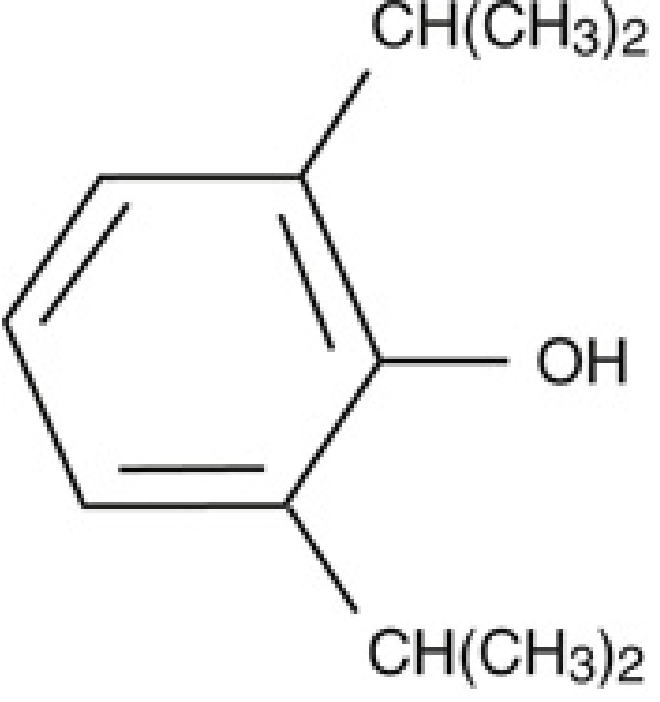
Standard formulation (1%):
- 1% propofol
- 10% soybean oil
- 1.2% purified egg phospholipid (emulsifier)
- 2.25% glycerol (tonicity adjustment)
- Sodium hydroxide to adjust pH to 7
- EDTA added for bacteriostatic activity (to address microbial growth concerns)
Appearance: Slightly viscous, milky white emulsion (small lipid droplets in solution)
Other formulations: 2% propofol available in Europe; medium/long-chain triglyceride mixtures also available. All formulations are stable at room temperature, not light sensitive, and can be diluted with 5% dextrose.
Fospropofol (Lusedra): FDA-approved December 2008 - a water-soluble prodrug metabolized by alkaline phosphatases in the liver to active propofol. 1.86 mg fospropofol = 1 mg propofol. No pain on injection, but causes perineal paresthesias and pruritus.
3. Pharmacokinetics
| Parameter | Value |
|---|---|
| Distribution half-life (initial) | 2-8 minutes |
| Distribution half-life (slow) | 30-70 minutes |
| Elimination half-life | 4-23.5 hours |
| Context-sensitive half-time (≤8 hr infusion) | < 40 minutes |
| Volume of distribution (central compartment) | 6-40 L |
| Volume of distribution (steady state) | 150-700 L |
| Clearance | 1.5-2.2 L/min |
Key pharmacokinetic points:
- Best described by a three-compartment model
- Blood levels decrease rapidly after bolus due to redistribution and elimination
- Clearance exceeds hepatic blood flow - extrahepatic metabolism confirmed
- Major extrahepatic site: kidney (accounts for up to 30% of clearance)
- Lungs: ~20-30% first-pass elimination in humans
- Also confirmed during anhepatic phase of liver transplant
Metabolism:
- Oxidized to 1,4-diisopropyl quinol in the liver
- Conjugated with glucuronic acid -> propofol-1-glucuronide, quinol-glucuronides -> renal excretion
- <1% excreted unchanged in urine; only 2% in feces
- Metabolites excreted for >60 hours after a 2.5-hour anesthetic
- Metabolites considered inactive
Drug interactions (pharmacokinetic):
- Propofol is a CYP3A4 inhibitor - at 3 mcg/mL, reduces CYP3A4 activity by ~37%
- Midazolam raises propofol concentrations by ~25% (reduces metabolic clearance 1.94 -> 1.61 L/min)
- Alfentanil decreases propofol elimination clearance (2.1 -> 1.9 L/min)
- Combined midazolam + alfentanil increases propofol concentrations by 20-30%
- Propofol reduces clearance of high-extraction ratio drugs by decreasing hepatic blood flow
Special populations:
- Elderly: Smaller central compartment (reduced cardiac output), higher peak concentrations - reduce dose
- Children: Larger central compartment + rapid clearance - require higher induction and maintenance doses
- Obese patients: Use LBM for bolus dosing; TBW or corrected body weight (CBW = IBW + 0.4 × [TBW - IBW]) for infusions
- Hemorrhagic shock: Blood propofol concentrations increase; 2.7-fold decrease in EC50 for BIS effect
4. Mechanism of Action
Primary mechanism - GABA-A receptor potentiation:
- Binds to β subunit of GABA-A receptor (β1, β2, and β3 transmembrane domain sites are crucial)
- Indirect effect (low concentrations): Potentiates GABA-induced Cl- current, shifts concentration-response relationship leftward
- Direct effect (high concentrations): Directly activates GABA-A receptor channels
- α and γ2 subunit subtypes also modulate propofol's effects
Additional mechanisms:
- Inhibits NMDA (glutamate) receptors via sodium channel gating modulation
- Direct depressant effect on spinal cord neurons (acts on GABA-A and glycine receptors)
- Inhibits acetylcholine release in hippocampus and prefrontal cortex (via hippocampal GABA-A)
- α2-adrenoreceptor system indirectly contributes to sedative effects
CNS correlates:
- Suppresses the default mode network (posterior cingulate, medial frontal cortex, bilateral parietal cortices)
- PET imaging: reduced activity in thalamic and precuneus regions during hypnosis
- Increases dopamine in nucleus accumbens -> sense of well-being (and abuse potential)
- Decreases serotonin in area postrema (via GABA receptors) -> antiemetic effect
5. Pharmacodynamics
Central Nervous System
Onset and duration:
- Onset: Rapid - one arm-brain circulation (~30-45 seconds)
- Peak effect: 90-100 seconds after 2.5 mg/kg
- Duration: 5-10 minutes after 2-2.5 mg/kg
Doses for loss of consciousness:
- ED50 (bolus): 1-1.5 mg/kg
- Age effects: ED95 is 2.88 mg/kg in children <2 years; decreases progressively with age
Sedative (subhypnotic) effects:
- Anxiolysis, amnesia
- EEG: dose-dependent progression - beta activity -> alpha slowing -> burst suppression -> flat EEG
- Anti-emetic at subhypnotic doses (0.5-1 mg/kg or infusion of 10-20 mcg/kg/min)
Cerebral hemodynamics:
- Decreases CBF by 53-79% and CMR by 48-58% in surgical doses
- Decreases ICP and cerebral blood volume
- CO2 responsiveness preserved
- Autoregulation preserved, even at burst-suppression doses
- Neuroprotection: experimental evidence of reduced ischemic injury comparable to pentobarbital; protection is not durable with severe ischemia
Anticonvulsant:
- ECT seizures are shorter after propofol induction vs. methohexital - consistent with anticonvulsant effect
- Dystonic/choreiform movements can occur but systematic studies do not confirm proconvulsant activity
- Safe for awake intracranial resection of seizure foci
Cardiovascular System
- Induction dose (2-2.5 mg/kg) causes 25-40% reduction in systolic BP
- Decreases: cardiac output (-15%), stroke volume index (-20%), SVR (-15-25%), LVSWI (-30%)
- Mechanism of vasodilation: ↓ sympathetic activity + direct effect on smooth muscle Ca2+ mobilization + ↓ prostacyclin synthesis + ↓ angiotensin II-mediated Ca2+ entry + K+-ATP channel activation + NO stimulation
- Heart rate: Does not change significantly; propofol inhibits baroreflex tachycardic response and decreases cardiac parasympathetic tone
- Effect-site equilibration: Hypnotic effect: 2-3 min; hemodynamic effect: ~7 min (BP continues to fall after loss of consciousness)
- Minimal effect on SA node or AV conduction; suppresses supraventricular tachycardias
- During infusion maintenance, hemodynamic depression is much less than after bolus induction
- Global myocardial O2 supply/demand ratio likely preserved (↓ MBF and ↓ MVO2 in parallel)
- Cardiac surgery note: Postoperative troponin levels and hemodynamic function are better with volatile agents (sevoflurane/desflurane) than propofol - volatile agents preferred for cardiac surgery
Respiratory System
- Causes apnea after induction doses
- Depresses upper airway reflexes (beneficial for LMA insertion)
- Decreases tidal volume and respiratory rate during sedation
- Does not trigger malignant hyperthermia - safe choice in susceptible patients
Other Effects
- No analgesic effect (important clinical consideration)
- No effect on evoked EMG or twitch tension
- Antiemetic at subhypnotic doses
- Does not affect neuromuscular blocking drugs, but acceptable intubating conditions achieved after propofol alone
- Tolerance does not develop after long-term infusions
- Immunosuppression: Inhibits phagocytosis and killing of S. aureus and E. coli
6. Clinical Uses and Dosing
| Indication | Dose |
|---|---|
| Induction (adults) | 1.5-2.5 mg/kg IV |
| Induction (elderly/compromised) | 1-1.5 mg/kg IV (reduce by ~30-50%) |
| Induction (children <2 yrs) | ~2.88 mg/kg IV (ED95) |
| Maintenance (infusion) | 100-200 mcg/kg/min |
| Maintenance blood target (alone) | 2.5-4.5 mcg/mL |
| Maintenance blood target (with N2O or opioid) | 2.5-8 mcg/mL |
| Sedation | 25-75 mcg/kg/min |
| Antiemetic (rescue) | 10-20 mg IV bolus |
Infusion schemes: After induction, start at 100-200 mcg/kg/min and titrate. Optimal propofol + opioid TIVA: propofol 1-1.5 mg/kg -> 140 mcg/kg/min x 10 min -> 100 mcg/kg/min + alfentanil 30 mcg/kg -> 0.25 mcg/kg/min.
Target-controlled infusion (TCI): Pharmacokinetic model-driven systems are widely used. The Eleveld model is widely validated. A 2025 systematic review confirms TCI produces stable, predictable propofol concentrations across populations (PMID: 40289063).
Pediatric notes (Harriet Lane Handbook):
- Rapid onset; brief recovery (5-15 min) with bolus administration
- Has antiemetic and euphoric effects; no analgesic effects
- Caution: respiratory depression, apnea, hypotension
7. Side Effects and Contraindications
| Side Effect | Notes |
|---|---|
| Pain on injection | Very common; use large antecubital vein; pre-treat with lidocaine 1-2 mg/kg or small propofol dose, opioids, ketamine, NSAID |
| Apnea | After induction; prepare airway management |
| Hypotension | 25-40% fall in SBP; worst with bolus induction |
| Myoclonus | Involuntary movements on induction; not epileptiform |
| Thrombophlebitis | Rare; avoid dorsum of hand veins |
| PRIS | See below |
| Fetal neurotoxicity | FDA warning (Dec 2016) - animal studies show concern for fetal brain development with prolonged/repetitive exposure |
| Microbial contamination | Fat emulsion is an excellent growth medium; use within 12 hours of opening; strict aseptic technique |
8. Propofol Infusion Syndrome (PRIS)
- Rare but potentially fatal complication
- Classic threshold: infusion ≥4 mg/kg/h for ≥48 hours, but cases reported with lower doses and as short as 3 hours
Clinical features (diagnostic criteria):
- Acute refractory bradycardia leading to asystole, PLUS one or more of:
- Metabolic acidosis (base deficit >10 mmol/L)
- Rhabdomyolysis
- Hyperlipidemia
- Enlarged or fatty liver
Additional features: Cardiomyopathy with acute cardiac failure, skeletal myopathy, hyperkalemia, hepatomegaly, lipemia
Pathophysiology: Mitochondrial dysfunction -> impaired fatty acid oxidation -> muscle injury -> release of intracellular toxic contents
Risk factors:
- Poor oxygen delivery
- Sepsis
- Serious cerebral injury
- High propofol doses
- Genetic disorders of fatty acid metabolism (e.g., MCAD deficiency)
- Low carbohydrate supply
Early warning sign: Rising triglycerides/lipemia preceding full syndrome
9. Drug Interactions Summary
| Drug | Interaction |
|---|---|
| Midazolam | ↑ propofol concentration ~25%; ↓ propofol clearance |
| Alfentanil/fentanyl | ↓ propofol clearance; reduce propofol infusion rate |
| Opioids (general) | Synergistic hypnosis; reduce propofol dose |
| CYP3A4 substrates | Propofol inhibits CYP3A4; ↑ levels of co-administered drugs |
| High-extraction drugs | ↑ levels due to propofol reducing hepatic blood flow |
10. Key Comparisons
| Feature | Propofol | Thiopental | Etomidate |
|---|---|---|---|
| Antiemetic | Yes | No | No |
| Pain on injection | Yes | Minimal | Minimal |
| Cardiovascular stability | Poor | Moderate | Best |
| PONV | Lowest | High | High |
| Malignant hyperthermia safe | Yes | Yes | Yes |
| Adrenal suppression | No | No | Yes |
| Context-sensitive half-time | Short (<40 min) | Long | Short |
Sources: Miller's Anesthesia, 2-Volume Set, 10e | Morgan & Mikhail's Clinical Anesthesiology, 7e | The Harriet Lane Handbook, 23e | PMID 40289063 (TCI systematic review, 2025)
Please attach a small small notes on all hard words or medical terms in simple language
Here is a Quick Reference Glossary of all the hard medical/scientific terms used in the Propofol notes, explained in plain language:
📖 Glossary of Medical Terms – Propofol Notes
Chemistry & Formulation Terms
| Term | Simple Explanation |
|---|---|
| 2,6-diisopropylphenol | The chemical name of propofol - a phenol (ring-shaped carbon molecule) with two isopropyl (3-carbon) arms attached |
| Alkylphenol | A family of chemicals made of a benzene ring + carbon chains attached; propofol belongs to this family |
| Lipid-soluble | Dissolves easily in fat; this is why propofol crosses the brain barrier so quickly |
| Emulsion | A mixture of oil droplets suspended in water (like salad dressing that's been shaken) - what propofol looks like (milky white) |
| Soybean oil / egg phospholipid | Natural fatty substances used to keep propofol's oil droplets stable in water |
| Glycerol | A simple sugar-alcohol used to make the solution match the saltiness of blood (tonicity) |
| EDTA | A chemical (ethylenediaminetetraacetic acid) added to prevent bacteria from growing in the fat-rich solution |
| Bacteriostatic | Stops bacteria from growing (doesn't kill them, just prevents multiplication) |
| Tonicity | How concentrated a solution is compared to blood; must match blood to avoid cell damage |
| Fospropofol | A water-soluble "inactive" form of propofol that the body converts into active propofol - called a prodrug |
| Prodrug | A drug that is inactive when given but becomes active after the body processes it |
| Alkaline phosphatase | An enzyme (body's chemical tool) found in the liver that cuts fospropofol apart to release propofol |
Pharmacokinetics Terms (What the Body Does to the Drug)
| Term | Simple Explanation |
|---|---|
| Pharmacokinetics | The study of how the body absorbs, distributes, breaks down, and removes a drug |
| Distribution half-life | How long it takes for the drug to spread from blood into body tissues - when this happens fast, the drug's effect wears off quickly |
| Elimination half-life | How long it takes for half the drug to be permanently removed from the body |
| Context-sensitive half-time | How long it takes for the drug level to fall by 50% after stopping an infusion - depends on how long the drip was running |
| Volume of distribution | Imagine how much water you'd need to dilute the drug to match the blood concentration - large volume = drug spreads widely into tissues |
| Central compartment | The blood + highly perfused organs (heart, lungs, liver) where drug goes first |
| Clearance | How much blood the body completely "cleans" of a drug per minute |
| Redistribution | Drug moves from blood into fat and muscle, making the effect wear off even before it's fully broken down |
| Three-compartment model | A mathematical way to describe how propofol distributes into three "pools" - blood, fast tissues, slow tissues |
| Extrahepatic metabolism | Drug breakdown that happens outside the liver (propofol is also broken down by kidneys and lungs) |
| Anhepatic phase | The period during a liver transplant when the patient has no liver at all - propofol is still metabolized during this time |
| CYP3A4 | A specific liver enzyme responsible for breaking down many drugs; propofol slows it down, causing other drugs to build up |
| Glucuronic acid / Glucuronide | A molecule the body adds to propofol to make it water-soluble so the kidneys can flush it out in urine |
| EC50 | The drug concentration that produces 50% of the maximum possible effect |
| Extraction ratio | How efficiently the liver removes a drug from the blood as it passes through - "high extraction" drugs are removed very efficiently |
Mechanism of Action Terms
| Term | Simple Explanation |
|---|---|
| GABA | Gamma-aminobutyric acid - the brain's main "calming" chemical; it slows nerve activity |
| GABA-A receptor | A protein on nerve cells that GABA binds to, opening a channel that lets chloride (Cl-) flow in and quiets the nerve |
| β subunit | A specific piece/component of the GABA-A receptor protein where propofol attaches |
| Chloride current | The flow of negatively charged chloride ions into a nerve cell, which makes the cell less excitable (calmer) |
| NMDA receptor | A nerve-cell receptor for glutamate (the brain's "excite" chemical); propofol partially blocks it, adding to its calming effect |
| Glutamate | The brain's main "exciting" chemical - the opposite of GABA |
| Sodium channel gating | The opening and closing of channels that let sodium into nerve cells (affects how easily nerves fire) |
| Default mode network (DMN) | A set of brain areas active when you're daydreaming or at rest; propofol disrupts this network to cause unconsciousness |
| Nucleus accumbens | A part of the brain associated with reward and pleasure; propofol raises dopamine here (explains the sense of well-being and abuse potential) |
| Dopamine | A brain chemical linked to reward, pleasure, and motivation |
| Serotonin | A brain chemical involved in mood, nausea/vomiting, and sleep; propofol lowers it in the vomiting center |
| Area postrema | The brain's "vomiting center" - propofol reduces serotonin here, which is why it prevents nausea |
| Thalamus / Precuneus | Brain regions involved in consciousness and awareness; propofol reduces activity here during sedation |
| α2-adrenoreceptor | A receptor for adrenaline-like chemicals; involved in sedation (also targeted by dexmedetomidine) |
Pharmacodynamics Terms (What the Drug Does to the Body)
| Term | Simple Explanation |
|---|---|
| Pharmacodynamics | The study of what a drug actually does to the body - its effects and mechanisms |
| ED50 | The dose effective in 50% of patients (half the people will fall asleep at this dose) |
| ED95 | The dose effective in 95% of patients |
| Burst suppression | A pattern on brain monitoring (EEG) where the brain alternates between short bursts of activity and silence - seen with very deep anesthesia |
| EEG (Electroencephalogram) | A recording of the brain's electrical activity using scalp electrodes |
| BIS (Bispectral Index) | A number (0-100) calculated from the EEG to estimate depth of anesthesia; 40-60 = general anesthesia |
| Spectral entropy | Another EEG-based number used to measure depth of sedation |
| CBF (Cerebral Blood Flow) | How much blood flows through the brain per unit time |
| CMR (Cerebral Metabolic Rate) | How much oxygen and glucose the brain is consuming - its "activity level" |
| ICP (Intracranial Pressure) | Pressure inside the skull; propofol lowers it |
| CPP (Cerebral Perfusion Pressure) | The pressure driving blood into the brain = Mean Arterial Pressure - ICP |
| CBV (Cerebral Blood Volume) | The total amount of blood inside the brain's blood vessels |
| Autoregulation | The brain's ability to keep blood flow constant despite changes in blood pressure; propofol preserves this |
| CO2 responsiveness | The brain's normal response of widening blood vessels when CO2 rises; preserved with propofol |
| Anticonvulsant | A drug that prevents or stops seizures |
| Neuroprotection | Protection of brain cells from damage (e.g., during reduced blood supply) |
Cardiovascular Terms
| Term | Simple Explanation |
|---|---|
| Systolic blood pressure (SBP) | The top number in a blood pressure reading; represents peak pressure when the heart contracts |
| Mean arterial pressure (MAP) | The average blood pressure throughout the whole heartbeat cycle |
| SVR (Systemic Vascular Resistance) | The resistance of all blood vessels to blood flow; when this drops, blood pressure drops |
| Cardiac output | How much blood the heart pumps per minute |
| Cardiac index | Cardiac output adjusted for the person's body size |
| Stroke volume index | How much blood the heart ejects with each beat, adjusted for body size |
| LVSWI (Left Ventricular Stroke Work Index) | A measure of how hard the left heart is working per beat |
| Vasodilation | Widening of blood vessels, causing blood pressure to drop |
| Inotropic effect | Effect on the strength of the heart's contraction (positive = stronger, negative = weaker) |
| Lusitropic effect | Effect on how well the heart relaxes after contracting |
| Baroreflex | The body's automatic response to low blood pressure - normally speeds up the heart; propofol blunts this |
| Sinoatrial (SA) node | The heart's natural pacemaker that sets the rhythm |
| Parasympathetic tone | The "rest and digest" nervous system's influence on the heart - slows heart rate |
| Supraventricular tachycardia (SVT) | A fast abnormal heart rhythm originating above the ventricles; propofol suppresses it |
| Prostacyclin | A chemical made by blood vessel walls that keeps vessels open; propofol inhibits its synthesis |
| Nitric oxide (NO) | A gas produced in blood vessels that causes them to relax and widen |
| K+-ATP channels | Potassium channels in vessel walls linked to the cell's energy state; opening them causes vasodilation |
| Troponin | A protein released into blood when heart muscle is damaged; used to measure cardiac injury |
Respiratory Terms
| Term | Simple Explanation |
|---|---|
| Apnea | Complete stopping of breathing - a common side effect after propofol induction |
| Tidal volume | The amount of air breathed in with each normal breath |
| Upper airway reflexes | Protective reflexes (coughing, gagging) that guard the airway; propofol suppresses them, allowing LMA insertion |
| LMA (Laryngeal Mask Airway) | A tube-like device placed in the throat (not into the windpipe) to keep the airway open during anesthesia |
| Malignant hyperthermia (MH) | A rare, life-threatening reaction to certain anesthetic gases causing the body's temperature to skyrocket; propofol does NOT trigger it |
Side Effect & Complication Terms
| Term | Simple Explanation |
|---|---|
| Myoclonus | Sudden involuntary muscle jerks - can occur when propofol is given, not dangerous |
| Thrombophlebitis | Inflammation and clot formation in a vein at the injection site |
| PONV (Postoperative Nausea and Vomiting) | Feeling sick or vomiting after surgery/anesthesia; propofol greatly reduces this |
| Phagocytosis | The process by which immune cells "eat" and destroy bacteria; propofol slightly impairs this |
| Rhabdomyolysis | Breakdown of muscle tissue, releasing harmful proteins into the blood that can damage the kidneys |
| Metabolic acidosis | A buildup of acid in the blood (base deficit >10 mmol/L in PRIS) from impaired metabolism |
| Cardiomyopathy | Disease/weakening of the heart muscle |
| Hepatomegaly | Enlarged liver |
| Lipemia / Hyperlipidemia | Too much fat in the blood; a warning sign of PRIS |
| Hyperkalemia | Too much potassium in the blood; dangerous for the heart |
| Mitochondrial dysfunction | The cell's "power plants" stop working properly - the core problem in PRIS |
| MCAD deficiency | A genetic condition where the enzyme for burning medium-length fatty acids is missing - a risk factor for PRIS |
| Fatty acid oxidation | The process of burning fat for energy; impaired in PRIS |
| Asystole | Complete stopping of the heartbeat - the fatal endpoint of severe PRIS |
| Fetal neurotoxicity | Harm to the developing baby's brain; the FDA warned about this with prolonged propofol use in pregnancy |
Clinical / Procedural Terms
| Term | Simple Explanation |
|---|---|
| TIVA (Total Intravenous Anesthesia) | Anesthesia maintained entirely with IV drugs (propofol + opioid) rather than inhaled gases |
| TCI (Target-Controlled Infusion) | A pump that automatically adjusts propofol infusion rate to maintain a target blood or brain concentration |
| ECT (Electroconvulsive Therapy) | A psychiatric treatment using brief electrical seizures to treat severe depression; propofol can be used for sedation |
| Induction | The phase of anesthesia when the patient is first put to sleep |
| Maintenance | Keeping the patient asleep during the surgical procedure |
| Monitored Anesthesia Care (MAC) | A level of sedation lighter than general anesthesia, where the patient can still breathe independently |
| LBM (Lean Body Mass) | Body weight minus all fat - used for propofol bolus dosing in obese patients |
| TBW (Total Body Weight) | The patient's actual weight on the scale |
| IBW (Ideal Body Weight) | The "expected" weight for a person's height - a calculated number |
| CBW (Corrected Body Weight) | A middle-ground weight used for dosing obese patients: IBW + 0.4 × (TBW - IBW) |
| Arm-brain circulation | The time it takes blood to travel from the arm vein (where propofol is injected) to the brain (~30-45 seconds) |
| Carotid endarterectomy (CEA) | Surgery to remove blockage from the carotid artery in the neck |
These terms are presented in the order they appear in the notes. Use this glossary alongside the main notes for quick reference while studying.
This is a shared conversation. Sign in to Orris to start your own chat.