


IMG-20260528-WA0008.jpg
+2 more
These are rashes of a diabetic patient, 60 years old. What exactly are they and what is the treatment
Reading File
Looking at these images carefully before searching the library. The photos show:
- Image 1: Large confluent erythematous plaque on the trunk/back with numerous white/cream-colored pustules and bullae on a red base - highly characteristic of a candidal or bacterial skin infection with pustular component
- Images 2 & 3: Linear/dermatomal distribution of crusted, ulcerated plaques along what appears to be the lateral trunk/flank - very suggestive of Herpes Zoster (shingles) in its crusting/post-vesicular phase
The combination in a 60-year-old diabetic points strongly to two co-existing conditions. Now let me search the library.
Searching sources...
Finding Sources
Finding Sources
Searching PubMed
herpes zoster diabetes mellitus treatment
Reading File
Reading File
Finding Sources
Reading File
Finding Sources
Reading File
Finding Sources
Reading File
Finding Sources
Reading File
Reading File
Reading File
Finding Sources
Now I have comprehensive information. Let me also fetch the zoster image from the textbook for visual reference.
Loading Image
Loading Image
I now have all the information needed for a thorough answer. Here is my full analysis:
Clinical Assessment: Two Concurrent Skin Conditions in a 60-Year-Old Diabetic
Image 1 - Cutaneous Candidiasis (Candida Intertrigo)
What it is: The first image shows a large, moist, intensely erythematous plaque with numerous white/cream satellite pustules scattered at the periphery of the main rash. This is the hallmark appearance of cutaneous candidiasis - the satellite pustules just outside the main body of the rash are the single most characteristic sign of Candida albicans skin infection.
Compare with the textbook image of Candida Intertrigo:
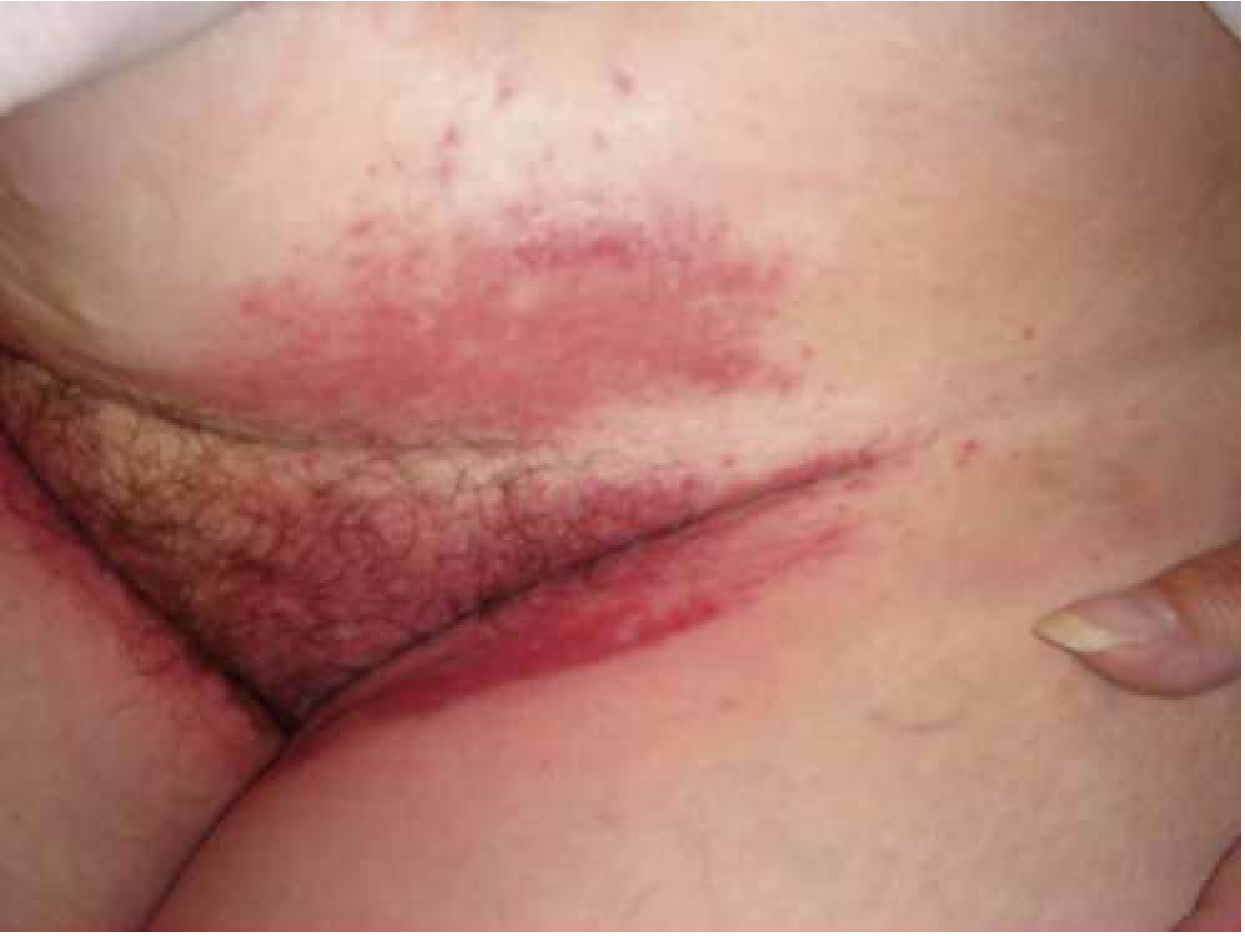
Why this patient: Diabetes mellitus is one of the most common predisposing factors for cutaneous candidiasis. Elevated glucose in skin secretions feeds Candida overgrowth. The erythema, maceration, and pustular satellite lesions on what appears to be a body fold area fit perfectly. Intertriginous zones (groin, axilla, under the breasts, intergluteal folds) are most commonly affected.
Images 2 & 3 - Herpes Zoster (Shingles)
What it is: Images 2 and 3 show a linear, dermatomal band of crusted, ulcerated, and partially healing lesions along the lateral trunk/flank - unilateral and following a nerve root distribution. This is classic Herpes Zoster in its crusting/healing phase, following vesicle rupture.
Compare with the textbook image of Herpes Zoster on the trunk:
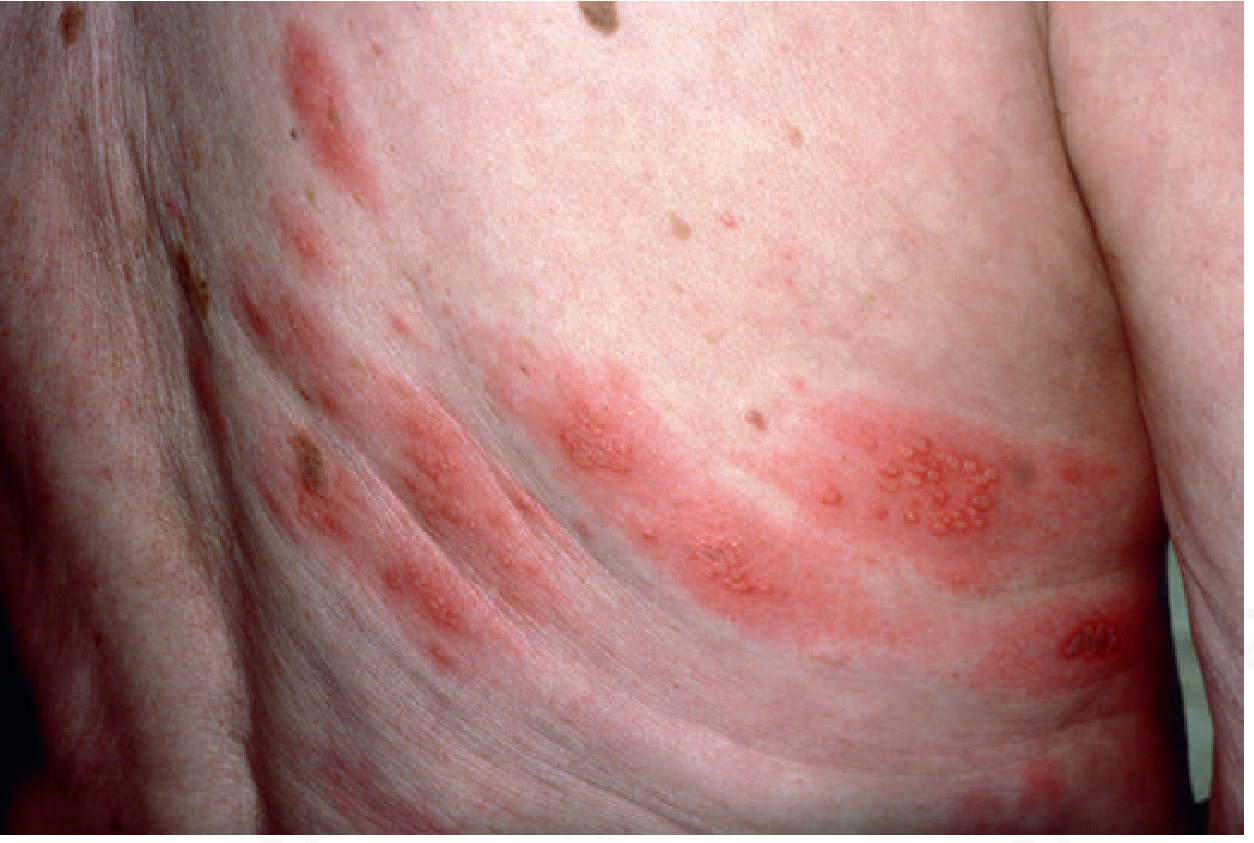
Why this patient: Diabetes and advanced age (60 years) are both independent risk factors for zoster reactivation. VZV lies dormant in the dorsal root ganglia after primary chickenpox and reactivates when cell-mediated immunity declines - which occurs with aging and diabetic immune dysfunction. The thoracic dermatomes are affected in ~55% of cases, exactly as seen here. The crusted, ulcerated appearance indicates the lesions are in the late vesicular/crusting stage.
Treatment Plan
1. Herpes Zoster - Urgent Priority
Antiviral therapy should start immediately, even if beyond the 72-hour window, as this patient has active lesions and is at high risk for postherpetic neuralgia (PHN occurs in up to 40% of patients over 60).
| Drug | Dose | Duration |
|---|---|---|
| Valacyclovir (preferred) | 1000 mg orally 3x/day | 7 days |
| Famciclovir | 500 mg orally 3x/day | 7 days |
| Acyclovir (if cost is a concern) | 800 mg orally 5x/day | 7 days |
Pain management:
- Acetaminophen or NSAIDs for mild-moderate pain
- Opioid analgesics if pain is severe
- Gabapentin or pregabalin if neuropathic pain persists (for prevention/treatment of PHN)
- Topical lidocaine patches or lidocaine gel (10%) can help locally
- Cool compresses during the acute phase
Wound care: Keep crusted lesions clean, cover with semi-permeable dressings (not plain gauze) to reduce transmission and protect.
Watch for complications:
- If lesions are near the eye or nose tip (Hutchinson sign) - urgent ophthalmology referral
- If >20 scattered lesions outside the dermatome - consider disseminated zoster, which requires IV acyclovir (10 mg/kg every 8 hours)
2. Cutaneous Candidiasis
First-line topical treatment:
- Clotrimazole 1% cream applied twice daily for 4 weeks
- Alternatives: miconazole, ketoconazole, or econazole cream BID
If extensive or not responding to topical treatment:
- Fluconazole 100 mg orally once daily for 2 weeks
- Or itraconazole 100 mg orally once daily for 2 weeks
Essential supportive measures:
- Keep the affected skin area dry - moisture drives Candida growth
- Loose-fitting, breathable clothing
- Treat any underlying hyperglycemia aggressively - the most important step, as persistently elevated blood glucose will cause recurrence
3. Diabetes Management (Underlying Driver)
Both conditions are being driven or worsened by poorly controlled diabetes. This patient's glycemic control should be reviewed urgently:
- Check HbA1c and fasting glucose
- Optimize insulin or oral hypoglycemic dosing
- Without glucose control, both infections are likely to recur or worsen
Summary
| Condition | Diagnosis | Treatment |
|---|---|---|
| Image 1 | Cutaneous Candidiasis | Clotrimazole 1% cream BID x 4 weeks ± oral fluconazole; keep dry |
| Images 2 & 3 | Herpes Zoster (crusting stage) | Valacyclovir 1g TID x 7 days + analgesia; monitor for PHN |
| Underlying | Diabetic immunosuppression | Optimize glycemic control urgently |
Disclaimer: This analysis is for educational purposes. A dermatologist or physician should examine the patient in person, confirm diagnosis (KOH preparation for Candida; Tzanck smear or PCR for zoster if needed), and tailor treatment to renal function and other comorbidities.
- Andrews' Diseases of the Skin, 13e, pp. 436-441
- Rosen's Emergency Medicine, 9e, pp. 2409-2410
- Textbook of Family Medicine, 9e, p. 944
This is a shared conversation. Sign in to Orris to start your own chat.