
Acute secondary bacterial peritonitis: pathophysiology, Causative organisms, Clinical findings differential diagnosis and treatment. Primary peritonitis. Detoxication, Gonococcal peritonitis. Tuberculous peritonitis. Granulomatous peritonitis. Peritoneal adhesions. Give all imp details about this topic explain well sorce : scwartz , doherty
Reading File
Now let me search the library database in parallel across multiple topics.
Finding Sources
Finding Sources
Finding Sources
Finding Sources
Finding Sources
Finding Sources
Finding Sources
Finding Sources
Now let me read the key sections from Schwartz and Bailey & Love in parallel:
Reading File
Reading File
Reading File
Finding Sources
Reading File
Finding Sources
Reading File
Reading File
Reading File
Reading File
Reading File
Reading File
Reading File
Reading File
I now have all the essential content needed. Let me also fetch the relevant TB peritonitis and adhesions sections from the Sleisenger text, which I partially captured above.
Reading File
I have gathered extensive content from Schwartz's Principles of Surgery, Bailey & Love, and Sleisenger & Fordtran (which is co-authored by Doherty and is the closest match). Let me now compile the comprehensive answer.
Peritonitis: A Comprehensive Overview
Sources: Schwartz's Principles of Surgery (11th Ed.), Bailey & Love's Short Practice of Surgery (28th Ed.), Sleisenger & Fordtran's Gastrointestinal and Liver Disease
Classification of Peritonitis
Peritonitis is inflammation of the peritoneum and can be:
- Localised or Diffuse
- Acute or Chronic
- Primary, Secondary, or Tertiary
- Bacterial, Chemical, Granulomatous, or Ischemic
Causes include: bacterial (GI and non-GI), chemical (bile, barium), allergic (starch), traumatic (operative handling), ischemia (strangulated bowel), and miscellaneous (familial Mediterranean fever).
ACUTE SECONDARY BACTERIAL PERITONITIS
Definition
Secondary peritonitis occurs when the peritoneal cavity is contaminated following perforation or severe inflammation and infection of an intra-abdominal organ. Examples include appendicitis, perforated peptic ulcer, diverticulitis, and bowel ischemia.
- Schwartz, p. 199
Pathophysiology
Routes of bacterial entry:
- Transmural inflammation with luminal obstruction
- Perforation of the GI tract
- Bacterial translocation
- Intestinal ischemia
The initial bacterial inoculum is determined by the normal flora of the involved GI segment. The large bowel harbors the richest flora; colonic perforation carries the highest morbidity.
- Sleisenger, p. 640
Peritoneal Defense Mechanisms (overwhelmed in peritonitis):
| Category | Mechanism |
|---|---|
| Removal | Bacterial clearance via diaphragm/thoracic duct |
| Leukocyte-attracting | ICAM-1, VCAM-1, mesothelial microvilli, neutrophil recruitment via omental HEVs |
| Killing | Macrophages (glutamate burst), neutrophils, opsonins (C3b, IgG), fibronectin, mast cell leukotrienes |
| Sequestration | Fibrin trapping, fibrinous adhesions, omental loculation |
Within 6 minutes of intraperitoneal bacterial inoculation, bacteria are cultured in thoracic lymph; within 12 minutes, bacteremia is detectable. This diaphragmatic clearance is why Fowler's position (head-up, pelvis-down) was historically recommended.
Adjuvant substances that worsen outcome by interfering with bacterial killing: devitalized tissue, mucus, bile, hemoglobin, barium.
Peritoneal response:
- The peritoneum becomes reddened, thickened, and velvety
- Plaques of yellow/white fibrin form, causing bowel loops to adhere
- Serous exudate, progressively turbid, eventually forming frank pus
- Reflex ileus occurs
- Bailey & Love, p. 1109
Tertiary peritonitis: When standard therapy fails, patients develop intra-abdominal abscess, anastomotic leak, or tertiary (persistent) peritonitis. This is more common in immunosuppressed patients. Organisms include E. faecalis/faecium, S. epidermidis, C. albicans, and P. aeruginosa - typically in combination. Mortality >50% even with appropriate therapy.
- Schwartz, p. 199
Causative Organisms
The flora of surgical peritonitis rapidly simplifies after contamination. Key organisms:
Aerobes (gram-negative):
- Escherichia coli - most common cause of bacteremia and death in experimental peritonitis
- Klebsiella pneumoniae
- Enterobacter spp.
- Pseudomonas aeruginosa (nosocomial)
Aerobes (gram-positive):
- Enterococcus spp.
- Streptococcus spp.
- Staphylococcus spp. (nosocomial)
Anaerobes:
- Bacteroides fragilis - responsible for abscess formation
- Clostridium spp.
Fungi:
- Candida spp. - treat if septic shock, immunocompromised, or hospital-acquired; can safely observe in hemodynamically stable community-acquired cases
Microbial pattern in ruptured colonic diverticulitis:
- Mixed aerobic + anaerobic flora: 74% of peritonitis, 77% of abscesses
- Anaerobes alone: 18% of abscesses
- Aerobes alone: 5% of abscesses
There is synergy between aerobic and anaerobic bacteria - E. coli drives mortality via bacteremia, while anaerobes (especially B. fragilis) drive abscess formation.
- Sleisenger, p. 640-641
Clinical Findings
Symptoms:
- Abdominal pain - hallmark; sudden onset with perforated viscus, insidious with localized infection
- Character, location, radiation, change over time are diagnostically important
- Nausea and vomiting (due to ileus)
- Anorexia, malaise, lassitude
Signs:
- Patient lies still - movement worsens pain
- Fever 100°F or higher; tachycardia
- Hypotension (late sign of sepsis)
- Localised peritonitis: Involuntary guarding, rebound tenderness at affected area
- Diffuse peritonitis: "Board-like" rigidity, absent bowel sounds, abdominal distension, Hippocratic facies
- Loss of hepatic dullness on percussion = free air (pneumoperitoneum)
- Pelvic peritonitis: deep tenderness on rectal or vaginal examination; referred shoulder tip pain (phrenic irritation, C5 dermatome)
- In obese, elderly, immunosuppressed, CNS-injured, or intoxicated patients: signs may be markedly attenuated
Investigations:
- FBC: leukocytosis (or leukopenia in overwhelming sepsis)
- Serum lactate, electrolytes, LFTs, amylase/lipase
- Erect CXR: Subdiaphragmatic gas = pneumoperitoneum; lateral decubitus film if patient too unwell to stand
- CT abdomen (investigation of choice): Identifies source, free air, fluid collections, abscesses; guides drainage
- Ultrasound: Less specific; useful for pelvic pathology, free fluid
- Laparoscopy: If imaging inconclusive
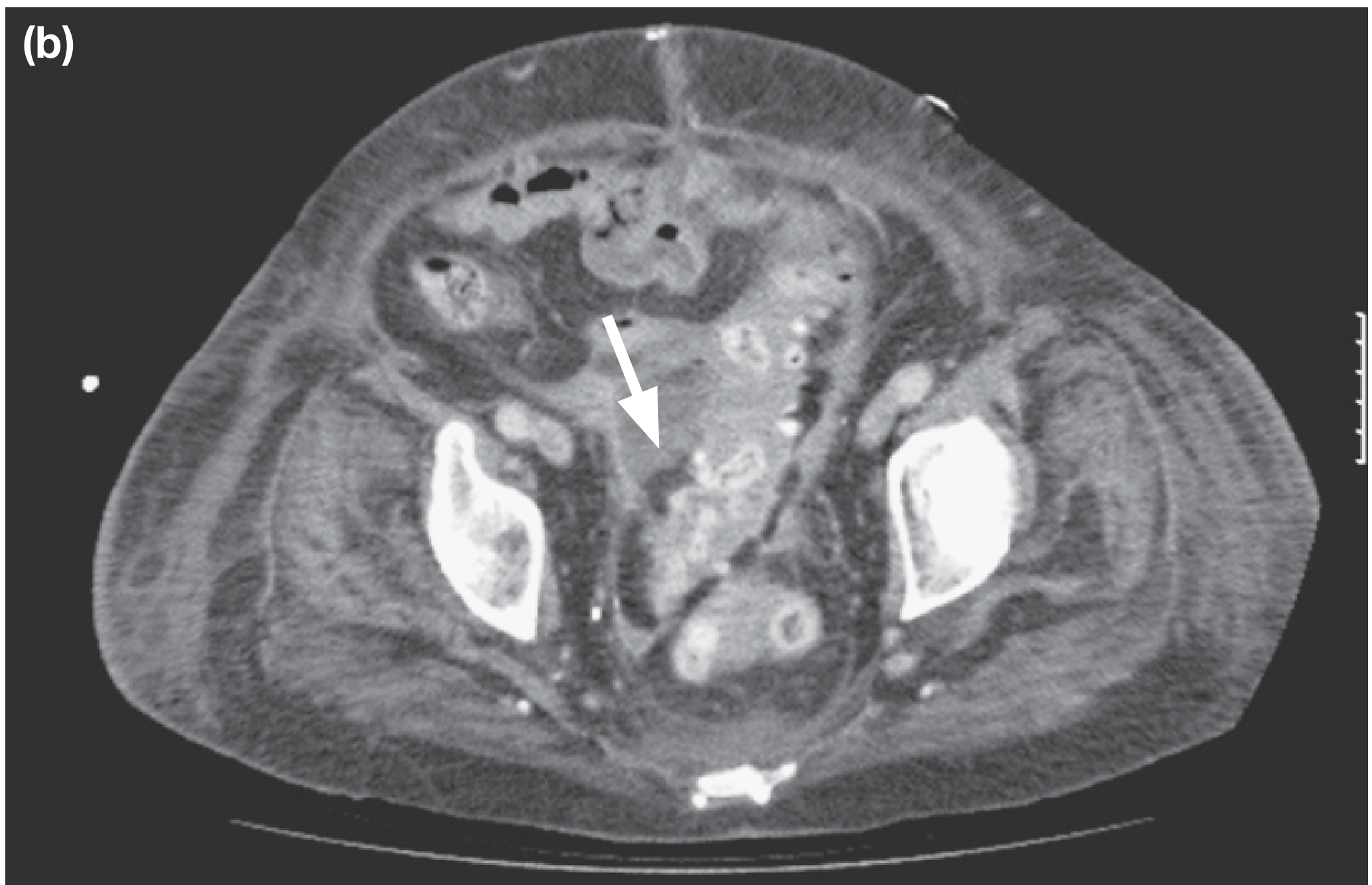
CT image demonstrating localised sigmoid diverticular perforation (arrow) - Bailey & Love, Fig. 65.7
Differential Diagnosis
Secondary peritonitis has numerous causes:
| Category | Specific Cause |
|---|---|
| Upper GI | Perforated peptic ulcer (gastric or duodenal) |
| Hepatobiliary | Acute cholecystitis, bile duct perforation, biliary peritonitis |
| Pancreatic | Acute pancreatitis |
| Small bowel | Ischemia, obstruction with strangulation, Crohn's perforation |
| Large bowel | Diverticulitis, colonic perforation (obstructed/ischemic), appendicitis |
| Pelvic | PID, ruptured ectopic pregnancy, tubo-ovarian abscess |
| Post-surgical | Anastomotic leak, iatrogenic perforation |
| Vascular | Ruptured AAA (hemorrhagic peritonitis) |
| Autoimmune | SLE, endometriosis (peritoneal irritation but rarely clinical peritonitis) |
Non-bacterial causes to exclude:
- Hemorrhagic peritonitis - ruptured ectopic pregnancy, ovarian cyst, aneurysm; blood is highly irritating to peritoneum
- Biliary peritonitis - sterile bile can be surprisingly asymptomatic; contaminated bile causes florid peritonitis
- Sleisenger, p. 640
Treatment
The three pillars are: source control + antibiotic therapy + supportive care
1. General/Supportive Care
- IV fluid resuscitation (correct fluid and electrolyte imbalance)
- Urinary catheter + nasogastric drainage
- Analgesia
- Vital system support (ICU if needed)
2. Antibiotic Therapy
Community-acquired peritonitis: Coverage for susceptible gram-negative bacilli, strict anaerobes, and enterococci.
Hospital/healthcare-acquired peritonitis: Broader coverage for resistant organisms (MRSA, multiresistant Pseudomonas, Enterobacter, Enterococcus, Candida).
Regimen options (shown equivalent in multiple trials):
- Second- or third-generation cephalosporins
- Broad-spectrum beta-lactams (monotherapy as effective as beta-lactam + aminoglycoside)
- Fluoroquinolones + metronidazole
- Carbapenems (for healthcare-associated/resistant)
- Aminoglycosides are now rarely needed given availability of broad-spectrum agents with less nephrotoxicity
Duration: The STOP-IT trial showed 4 ± 1 days post-source-control was equivalent to antibiotics until fever/leukocytosis resolved (~8 days).
- Sleisenger, p. 641-642
Candida: Treat only if: septic shock, immunocompromised state, or hospital-acquired infection.
3. Surgical Intervention (Source Control)
- Antibiotics without source control cannot cure surgical peritonitis
- Requires: Resection or repair of diseased organ; debridement of necrotic tissue; peritoneal lavage
- Intra-abdominal abscesses: Majority drained percutaneously under CT guidance; surgery reserved for multiple abscesses, proximity to vital structures, or ongoing enteric leak
- Catheter left until output <10 mL/day and cavity collapse confirmed; short antibiotic course (3-5 days) during drainage
Outcomes:
- Effective source control + antibiotics: mortality ~5-6%; response rate 70-90%
- Failure of source control: mortality >40%
- Schwartz, p. 199-200
DETOXICATION (PERITONEAL CLEARANCE)
The peritoneum has a remarkable ability to clear bacteria and toxins:
- Diaphragmatic lymphatics: The primary clearance site - bacteria pass through diaphragmatic stomata into the thoracic duct, reaching systemic circulation within 6-12 minutes
- Phagocytosis by peritoneal macrophages and recruited neutrophils, aided by complement (C3b), IgG, and fibronectin as opsonins
- Omental loculation: The "policeman of the abdomen" - the omentum physically walls off infection, limiting spread
- Fibrin deposition traps bacteria but also leads to adhesion formation
Blockade of the thoracic duct in animal models decreases bacteremic episodes but increases mortality (due to liver necrosis from endotoxin accumulation), confirming that systemic clearance via the diaphragm is protective.
- Sleisenger, p. 640-641
PRIMARY PERITONITIS (Spontaneous Bacterial Peritonitis - SBP)
Definition
Peritonitis without a known surgical source - microbial invasion of the peritoneal cavity via hematogenous dissemination or direct inoculation into pre-existing ascitic fluid.
- Schwartz, p. 199
Who is at risk?
- Cirrhosis with ascites (most common)
- Nephrotic syndrome with ascites
- Patients on peritoneal dialysis (CAPD)
- Children (pneumococcal primary peritonitis - historically, now rare)
Organisms
- Without CAPD: E. coli, K. pneumoniae, S. pneumoniae (gram-negatives predominate)
- With CAPD: Gram-positives dominate (S. epidermidis, other skin flora); less commonly gram-negative bacilli, Pseudomonas, fungi, Mycobacterium tuberculosis
- SBP is invariably monomicrobial; polymicrobial infection suggests secondary peritonitis
Diagnosis
- Paracentesis: >250 neutrophils/mL in ascitic fluid
- Culture is negative in up to 60% of cases with clinical SBP
- A floridly positive Gram stain suggests secondary bacterial peritonitis (high bacterial load)
- Runyon criteria used to differentiate SBP from secondary peritonitis (total protein, LDH, glucose on ascitic fluid)
Treatment
- No surgical intervention required
- Empirical antibiotics immediately (before culture results):
- Third-generation cephalosporin (e.g., cefotaxime) - first-line (avoids aminoglycoside renal toxicity)
- Alternatives: amoxicillin/clavulanic acid, ciprofloxacin
- CAPD peritonitis: intraperitoneal route preferred; vancomycin or cephalosporin empirically; catheter removal for fungal or recurrent bacterial infections
- Duration: 14-21 days typically
- Indwelling devices (CAPD catheter) may need removal for recurrent infections
- Bailey & Love, p. 1111; Schwartz, p. 198-199
Primary Pneumococcal Peritonitis
- Incidence has declined greatly; now rare
- Affects children, especially girls (route: vagina → Fallopian tubes) or via blood-borne spread from respiratory/middle-ear infection
- Also in nephrotic syndrome and cirrhosis in children
- Onset: Sudden; pain lower abdomen; temperature ≥39°C; frequent vomiting; after 24-48h, profuse diarrhea (characteristic); increased urinary frequency
- Signs: diffuse peritonism but less prominent than with perforated viscus
- Causative organism confirmed on culture; must exclude secondary cause before labelling as primary peritonitis
- Bailey & Love, p. 1111
GONOCOCCAL PERITONITIS (Fitz-Hugh-Curtis Syndrome)
Pathogenesis
- Pelvic infection via the Fallopian tubes accounts for a high proportion of non-gastrointestinal peritonitis
- Chlamydia spp. and Neisseria gonorrhoeae are the most common offending organisms
- These organisms cause thinning of cervical mucus, allowing bacteria to pass into the uterus and oviducts, causing pelvic inflammatory disease (PID)
- Fitz-Hugh-Curtis syndrome: Transperitoneal spread of gonococcal/chlamydial organisms to the liver capsule, causing perihepatitis with formation of violin-string scar tissue on Glisson's capsule
- 10-40% of women with untreated lower-tract gonococcal infection progress to PID (salpingitis, endometritis, oophoritis, peritonitis)
- Bailey & Love, p. 1110; Sleisenger, p. 643 (Box 39.2)
Clinical Features
- Abdominal pain (may mimic acute abdomen)
- Cervical motion tenderness, adnexal tenderness
- In Fitz-Hugh-Curtis: right upper quadrant pain (perihepatitis), pleuritic component
- Vaginal discharge
Treatment
- Antibiotic therapy for PID (dual therapy covering gonorrhea and chlamydia per current guidelines)
- No surgical intervention unless complicated (tubo-ovarian abscess requiring drainage)
TUBERCULOUS PERITONITIS
Epidemiology & Risk Factors
- Uncommon form of extrapulmonary tuberculosis caused by Mycobacterium tuberculosis
- Increased risk in: HIV infection, cirrhosis, diabetes mellitus, underlying malignancy
- Sleisenger, p. 643
Pathogenesis
- Spread from: tuberculous lymph node, intestinal focus, or infected Fallopian tube
- Haematogenous seeding can also occur
Clinical Forms
- Exudative (wet) type: Ascites predominates (straw-coloured exudate)
- Plastic (dry) type: Dense fibrinous adhesions, omental thickening, bowel obstruction; insidious onset with abdominal pain, weight loss, distension
- Fibrotic/fixed (mixed) type
Clinical Features
- Abdominal pain, night sweats, malaise, weight loss
- Ascites (may be loculated)
- Can present as a pelvic mass mimicking ovarian cancer (elevated CA-125)
- May be clinically indistinguishable from acute bacterial peritonitis in its acute form
- Bailey & Love, p. 1111
Diagnostic Investigations
| Test | Finding |
|---|---|
| Ascitic fluid protein | High (>25-30 g/L) |
| Ascitic fluid glucose | Low |
| SAAG | Low (<1.1 g/dL) in non-cirrhotic patients |
| Ascitic WBC | Elevated, lymphocytic predominance (>40%) |
| AFB smear | Often negative |
| Culture | May take 4-8 weeks |
| Adenosine deaminase (ADA) | Elevated - high sensitivity and specificity for TB peritonitis; differentiates from carcinomatosis |
| Xpert MTB/RIF (PCR) | Rapid, noninvasive; emerging role |
| ELISPOT | Novel noninvasive test |
| QuantiFERON Gold | Poor specificity for active disease, especially in BCG-vaccinated populations |
| CT/Ultrasound | Ascites, lymphadenopathy, diffuse peritoneal/omental/mesenteric thickening |
| Laparoscopy + biopsy | Near-100% sensitive; couples macroscopic appearances (caseating nodules) with histology |
Distinguishing feature: Afebrile patients with lymphocytic ascites → malignancy (10x more common than TB); febrile patients → TB
Cancer: cytology positive >90% → avoid laparoscopy; if cytology negative → laparoscopy (near 100% sensitive for TB)
Treatment
- Medical (first-line):
- 2 months: Isoniazid + Rifampicin + Pyrazinamide + Ethambutol
- Then 4 months: Isoniazid + Rifampicin
- Total: 6-month course
- Drug-resistant strains may require extended or modified regimens
- Monitor for hepatotoxicity, especially in cirrhotic patients
- Surgical: Only for complications (intestinal obstruction - though may respond to anti-TB therapy without surgery)
- Nutritional and hydration support
- Sleisenger, p. 643-644; Bailey & Love, p. 1111
GRANULOMATOUS PERITONITIS
Definition
Peritoneal inflammation characterized by granuloma formation. Often has a chronic, indolent course.
Causes
- Tuberculous peritonitis (caseating granulomas) - most common infective cause
- Starch/Talc peritonitis: Historically from surgical glove powder (cornstarch or talc)
- Cornstarch potentiates wound infection, forms peritoneal adhesions, induces granulomatous peritonitis, and serves as a carrier of latex allergen
- Glove powder granulomas can mimic peritoneal carcinomatosis on imaging
- Sleisenger, p. 643
- Fungal infections (Histoplasma, Coccidioides, Cryptococcus) - especially in AIDS/immunocompromised
- Sarcoidosis
- Crohn's disease
- Foreign body (suture material, barium from previous contrast studies)
- Parasitic (e.g., schistosomiasis)
Clinical Features
- Abdominal pain (may be sudden or insidious depending on cause)
- Ascites with lymphocytic predominance
- Constitutional symptoms (fever, weight loss)
Diagnosis
- CT: peritoneal thickening, ascites, nodular deposits (indistinguishable from carcinomatosis)
- Laparoscopy + biopsy with histology is definitive
- AFB staining and culture for TB
- Ascitic ADA for TB
Treatment
Directed at the underlying cause:
- TB: anti-tuberculous regimen as above
- Starch peritonitis: supportive; steroids in severe cases
- Fungal: amphotericin B or azole antifungals
- Foreign body: surgical removal when feasible
PERITONEAL ADHESIONS
Definition
Fibrous bands of scar tissue connecting surfaces within the peritoneal cavity that are normally separate.
Pathogenesis
After peritoneal injury (surgical, inflammatory, ischemic), fibrin is deposited as part of the healing response (sequestration mechanism). Normally, fibrin is lysed by peritoneal fibrinolytic activity. When fibrinolysis is inadequate (e.g., due to ongoing ischemia, infection, or foreign material), fibrin organizes into permanent fibrous adhesions.
Factors promoting adhesion formation:
- Peritoneal infection or inflammation
- Surgical trauma (drying, handling, devascularization of peritoneum)
- Foreign bodies (sutures, mesh, glove powder, barium)
- Ischemia
- CAPD peritonitis (repeated infections lead to sclerosing encapsulating peritonitis / "abdominal cocoon")
Clinical Consequences
- Small bowel obstruction (most common consequence; adhesions account for ~60% of all SBO cases)
- Chronic abdominal pain
- Infertility (in females - tubo-ovarian adhesions from PID or pelvic surgery)
- Difficulty at re-operative surgery
- Sclerosing encapsulating peritonitis (abdominal cocoon): Complication of repeated CAPD peritonitis; loss of surface area for effective dialysis; associated with repeated infections
- Sleisenger, p. 643
Prevention
- Gentle tissue handling during surgery
- Use of adhesion barriers (sodium hyaluronate/carboxymethylcellulose membrane, e.g., Seprafilm) in high-risk cases
- Peritoneal lavage to remove blood, fibrin, and contamination
- Minimally invasive (laparoscopic) surgery produces fewer adhesions than open surgery
- Heparin addition to dialysis bags in CAPD peritonitis may reduce fibrin and postinfection adhesions (though urokinase showed no benefit)
- Sleisenger, p. 643
Treatment of Adhesion-Related SBO
- Conservative: IV fluids, NG decompression, monitoring
- Surgical: Adhesiolysis (open or laparoscopic) for complete obstruction or failure of conservative management; risk of enterotomy and recurrent adhesions
Summary Table: Key Comparisons
| Feature | Primary (SBP) | Secondary Bacterial | Tuberculous | Granulomatous |
|---|---|---|---|---|
| Source | No surgical source | Viscus perforation/inflammation | M. tuberculosis | TB, fungi, starch, FB |
| Organisms | Monomicrobial | Polymicrobial (aerobes + anaerobes) | M. tuberculosis | Varies |
| Ascites WBC | >250 PMNs | High PMNs | Lymphocytic >40% | Lymphocytic |
| ADA | Normal | Normal | Elevated | Elevated (TB) |
| Gram stain | Negative (low bacterial load) | Positive/florid | Negative | Negative |
| Surgery needed | No | Yes (source control) | Only complications | Only complications |
| Treatment | Antibiotics 14-21d | Source control + antibiotics 4d | 6-month anti-TB | Cause-directed |
Sources:
- Schwartz's Principles of Surgery, 11th Ed., pp. 198-200
- Bailey & Love's Short Practice of Surgery, 28th Ed., pp. 1109-1113
- Sleisenger & Fordtran's Gastrointestinal and Liver Disease, pp. 639-647
Tumors of the peritoneum and retropetorneum. Source :- doherty Nd scwartz
Finding Sources
Finding Sources
Reading File
Reading File
Reading File
Reading File
Reading File
Reading File
Reading File
Reading File
Reading File
Reading File
Reading File
Reading File
Reading File
Reading File
Reading File
Reading File
Reading File
I now have comprehensive content. Let me compile the full, detailed answer.
Tumors of the Peritoneum and Retroperitoneum
Sources: Schwartz's Principles of Surgery (11th Ed.), Bailey & Love's Short Practice of Surgery (28th Ed.), Sleisenger & Fordtran's Gastrointestinal and Liver Disease
CLASSIFICATION OVERVIEW
| Category | Peritoneum | Retroperitoneum |
|---|---|---|
| Primary benign | Peritoneal inclusion cysts | Retroperitoneal cysts, benign lipoma |
| Primary malignant | Mesothelioma, primary peritoneal carcinoma, DSRCT | Retroperitoneal sarcoma (liposarcoma, leiomyosarcoma) |
| Secondary malignant | Peritoneal carcinomatosis, pseudomyxoma peritonei | Lymphoma, germ cell tumors, metastatic cancer |
| Other | Desmoid tumors, GIST | Retroperitoneal fibrosis (tumor-like) |
PART I: TUMORS OF THE PERITONEUM
A. PRIMARY TUMORS OF THE PERITONEUM
Primary peritoneal tumors are rare and arise from the mesothelium of the peritoneum.
- Bailey & Love, p. 1112
1. PERITONEAL MESOTHELIOMA
Epidemiology
- 65-70% of all mesotheliomas arise in the pleura; 25% arise in the peritoneum
- Most peritoneal mesotheliomas are malignant
- Associated with asbestos exposure (families of asbestos workers also at risk)
- Detected typically 35-40 years after initial asbestos exposure
- Patients with malignant peritoneal mesothelioma often harbor sporadic and occasionally germline BRCA-associated protein-1 (BAP-1) mutations
- Sleisenger, p. 646
- Bailey & Love: has a predilection for the pelvic peritoneum; equally lethal as pleural mesothelioma
Histological Variants
- Malignant (epithelioid) - most common; aggressive
- Well-differentiated papillary mesothelioma - indolent course
- Multicystic mesothelioma - indolent course
- Sarcomatoid - worst prognosis
Clinical Features
- Diffuse abdominal pain and distension
- Ascites (malignant mesothelial cells occasionally found on ascitic fluid analysis)
- Weight loss
- Diagnosis usually made at laparotomy or laparoscopy
Diagnosis
- CT/MRI: peritoneal thickening, nodular deposits, ascites
- Ascitic fluid cytology (occasionally positive)
- Laparoscopy + biopsy - definitive
- BAP-1 mutation testing
Treatment
- Best treated in a multidisciplinary setting
- Cytoreductive surgery (CRS) + HIPEC (Heated Intraperitoneal Chemotherapy)
- HIPEC agents: cisplatin/Adriamycin/mitomycin-C
- 5-year survival: 29-70% with CRS + HIPEC
- Systemic chemotherapy: Cisplatin + pemetrexed
- Sleisenger, p. 646 (Table 39.1)
2. PRIMARY PERITONEAL CARCINOMA
- Resembles high-grade serous ovarian carcinoma histologically but arises from the peritoneal surface without clear ovarian primary
- Treated similarly to ovarian cancer
Treatment (Table 39.1, Sleisenger)
- Systemic: Taxane + carboplatin (neoadjuvant or adjuvant)
- Surgery: Optimal cytoreduction
- Regional: Intraperitoneal chemotherapy (cisplatin/paclitaxel) ± HIPEC (cisplatin/carboplatin)
3. DESMOPLASTIC SMALL ROUND CELL TUMOR (DSRCT)
- Rare, aggressive sarcoma affecting the peritoneum, primarily in young males
- Harbors EWS-WT1 gene fusion (translocation-associated sarcoma)
- Treatment:
- Systemic: Cyclophosphamide, doxorubicin, vincristine alternating with ifosfamide and etoposide; autologous stem cell rescue; whole abdominal radiation
- Optimal cytoreductive surgery + HIPEC (cisplatin)
- Sleisenger, p. 646 (Table 39.1)
B. SECONDARY PERITONEAL TUMORS (PERITONEAL CARCINOMATOSIS)
Definition & Epidemiology
Peritoneal carcinomatosis refers to malignant nodules on the surface of the peritoneum. It is common and normally arises in conjunction with:
- Ovarian malignancy
- Malignancy in an organ of the mesenteric domain (colorectal, appendiceal, gastric, pancreatic)
- Any peritoneal surface can be involved
- Sometimes the omentum is diffusely involved, forming a mass termed an "omental cake"
- Bailey & Love, p. 1112
Clinical Features
- Symptoms are mainly related to the primary pathology
- With considerable tumour burden: palpable mass, substantial ascites, abdominal distension
- Subacute intestinal obstruction
Diagnosis
- CT or MRI is usually diagnostic (shows peritoneal nodules, omental thickening, ascites)
- Histological or cytological confirmation is essential to distinguish from:
- Peritoneal TB (laparoscopy if cytology negative)
- Pseudomyxoma peritonei
- Serum CA-125 (elevated in ovarian + peritoneal primaries but also TB)
- Ascitic cytology (>90% positive if peritoneal metastases present)
Treatment
- If curative resection is feasible: Primary tumour resection + peritonectomy + HIPEC
- HIPEC: highly concentrated, heated (41-42°C) chemotherapy delivered directly into the abdomen for 90 minutes after cytoreductive surgery
- Particularly valuable in pseudomyxoma peritonei (standard of care in carefully selected patients at specialist centres - Sugarbaker technique)
- In majority of patients: Treatment is palliative
- Subacute obstruction: intestinal bypass or defunctioning stoma
- Malignant ascites: drained externally or via peritoneovenous shunt (LeVeen shunt)
- Bailey & Love, p. 1112-1113
C. PSEUDOMYXOMA PERITONEI (PMP)
Definition
Not a diagnosis in itself but a syndrome of mucinous ascites primarily associated with appendiceal epithelial neoplasms; can also occur with ovarian, pancreatic, colorectal, and gastric mucinous tumors.
- Sleisenger, p. 645-646
Pathogenesis
- Appendiceal mucinous neoplasms develop peritoneal dissemination
- Histologic origin of mucinous ascites predicts outcome:
- Low-grade appendiceal mucinous neoplasms (formerly cystadenoma/mucocele) - better prognosis
- High-grade (adenocarcinoma, goblet cell carcinoma, signet ring cell) - worse prognosis
Clinical Features
- Presenting symptoms: Painless abdominal distension (typical)
- Progressive accumulation of jelly-like mucinous material
Diagnosis
- Definitive: characteristic jelly-like material encountered at laparotomy or laparoscopy
- CT: "scalloping" of visceral surfaces by mucinous deposits; omental caking
- Differentiate low-grade from high-grade histology (guides prognosis and adjuvant therapy)
Treatment
- Standard of care: Cytoreductive surgery (CRS) + HIPEC (mitomycin-C for low-grade; mitomycin-C ± systemic chemotherapy for high-grade)
- Parietal and visceral peritonectomies + intraperitoneal heated chemotherapy (42°C, usually mitomycin-C)
- Right hemicolectomy can be avoided in patients in whom complete cytoreductive surgery is possible without removing the colon (nodal metastases rare in low-grade)
- Can be performed laparoscopically when disease detected early and is low volume
- Previously considered a morbid surgery; now at high-volume centres, morbidity and mortality are similar to any major open GI procedure
- Schwartz, p. 1368; Sleisenger, p. 645-646
| Histological Subtype | Systemic Therapy | Surgery | HIPEC |
|---|---|---|---|
| Low-grade appendiceal | None | Optimal cytoreduction | Mitomycin-C |
| High-grade appendiceal | Fluoropyrimidine, oxaliplatin, irinotecan, anti-EGFR, anti-VEGF | Optimal cytoreduction | Mitomycin-C |
| Colorectal carcinoma | Fluoropyrimidine, oxaliplatin, irinotecan, bevacizumab, cetuximab | Optimal cytoreduction | Mitomycin-C/oxaliplatin |
| Ovarian | Taxane/carboplatin | Optimal cytoreduction | HIPEC (cisplatin) |
D. PERITONEAL INCLUSION CYSTS
- Benign cysts lined by peritoneal mesothelium
- Can arise at any location of the peritoneum (parietal or visceral surface)
- Gradually expand; rarely rupture
- Most are asymptomatic - identified incidentally on cross-sectional imaging
- Loose association with ovarian malignancy - MRI of ovaries advisable in premenopausal women
- Treatment (if symptomatic): image-guided drainage, deroofing, or excision; recurrence rates are high
- Bailey & Love, p. 1112
PART II: TUMORS OF THE RETROPERITONEUM
Anatomy Recap
The retroperitoneum is bound by:
- Anteriorly: Peritoneum
- Posteriorly: Iliopsoas and lumbar muscles
- Superiorly: Diaphragm
- Inferiorly: Levator ani muscles
Three spaces: anterior pararenal, perirenal, and posterior pararenal. Tumors tend to expand anteriorly toward the peritoneal cavity given the rigidity of posterior margins.
- Schwartz, p. 1589
A. RETROPERITONEAL SARCOMA
Epidemiology
- Most retroperitoneal tumors are malignant; ~one-third are soft tissue sarcomas
- ~1000 new cases of retroperitoneal sarcoma diagnosed annually in the United States
- Accounts for 10-15% of all adult soft tissue sarcomas
- ~two-thirds are high grade (grade 2 or 3)
- Sarcomas: 50-60% originate in extremity; 15% in retroperitoneum; 19% in trunk; 9% head and neck
- Schwartz, p. 1582
Common Histologies in the Retroperitoneum
- Liposarcoma - most common retroperitoneal sarcoma
- Leiomyosarcoma - second most common
Other retroperitoneal tumors (differential):
- Primary germ cell tumors
- Lymphoma
- Metastatic testicular cancer
Soft Tissue Sarcoma Subtypes (>70 histologic subtypes total)
Historically most common (adults, excluding Kaposi sarcoma): malignant fibrous histiocytoma (28%), liposarcoma (15%), leiomyosarcoma (12%), synovial sarcoma.
Molecular pathogenesis (Schwartz classification):
| Group | Mechanism | Examples |
|---|---|---|
| 1 | Specific translocations | Ewing's (EWS-FLI1), myxoid liposarcoma (TLS-CHOP), alveolar RMS (PAX3-FHKR), synovial sarcoma (SS18-SSX), DSRCT (EWS-WT1), clear cell sarcoma (EWS-ATF1) |
| 2 | Gene amplification | Amplification-associated sarcomas |
| 3 | Oncogenic mutations | GIST (KIT, PDGFRA mutations) |
| 4 | Complex genomic rearrangements | Older patients, pleomorphic cytology, p53 dysfunction |
Risk Factors for Sarcoma
- Radiation exposure (post-radiation sarcoma)
- Occupational chemical exposure
- Chronic lymphedema (Stewart-Treves syndrome - lymphangiosarcoma after axillary dissection; average survival 19 months)
- Trauma - no causal relationship established; trauma often merely reveals a preexisting tumor
- Schwartz, p. 1595-1596
Clinical Presentation
- Retroperitoneal sarcomas present as large masses - 70% are >10 cm at diagnosis
- Do not produce symptoms until large enough to compress/invade contiguous structures
- When symptomatic: abdominal pain, early satiety, obstructive GI symptoms
- Must exclude lymphoma symptoms: fever, night sweats; testicular examination in men (germ cell tumors)
- Schwartz, p. 1582
Staging (AJCC 8th Edition - revised)
- Subsites now created separately (retroperitoneum as distinct subsite from extremity)
- Histologic grade is the most important prognostic factor:
- Grade 1 (well differentiated): 5-year survival 90%; metastasis in 5-10%
- Grade 2 (moderately differentiated): 5-year survival 70%; metastasis in 25-30%
- Grade 3 (poorly differentiated): 5-year survival 40%; metastasis in 50-60%
- Grading based on: cellularity, differentiation, pleomorphism, necrosis (<50% vs ≥50%), mitoses per HPF
- Size criteria (trunk/extremity): T1 <5cm; T2 5-10cm; T3 10-15cm; T4 >15cm
- Lymph node metastases rare overall but higher for: epithelioid sarcoma, pediatric RMS, clear cell sarcoma, synovial sarcoma, angiosarcoma
- Schwartz, p. 1595-1596
Diagnostic Workup
- History: Exclude lymphoma (B symptoms), check lactate dehydrogenase (elevated = suggests lymphoma), β-hCG/AFP (germ cell tumor)
- CT abdomen/pelvis with contrast (investigation of choice):
- Defines tumor extent and relationship to vascular structures for surgical planning
- Can distinguish well-differentiated vs dedifferentiated liposarcoma
- Evaluates liver (metastases), peritoneum (discontiguous disease), kidneys (function)
- Thoracic CT: Evaluate for lung metastases (11% of patients present with synchronous metastatic disease)
- Angiography/MR arteriography-venography: When involvement of critical vascular structures suspected
- CT-guided core needle biopsy: For tissue diagnosis; well-differentiated liposarcoma may be diagnosed by CT alone (negative biopsy should NOT delay operative intervention)
- Schwartz, p. 1582
Treatment
Surgery (cornerstone):
- Complete surgical resection is the most effective treatment for primary or recurrent retroperitoneal sarcoma
- En bloc resection often necessitates sacrificing contiguous structures:
- Colon, kidney, spleen, pancreas, psoas muscle, small bowel, inferior vena cava, aorta
- In a review of 25 patients with major vascular involvement: postoperative morbidity 36%, mortality 4%; vessel patency >88%; vascular resection is treatment of choice when major vessels are involved
- Goal is R0 (microscopically negative margins) - local control and survival rates are favorable with tumor-free margins
- Extended procedures are feasible and safe at experienced centres
- Schwartz, p. 1582-1583
Radiation Therapy:
- Debate exists on optimal sequencing (pre- vs post-operative)
- Preoperative RT (50 Gy) vs postoperative RT (66 Gy) - randomized trial (NCI Canada/Canadian Sarcoma Group):
- Wound complications higher pre-op (35% vs 17%)
- Late toxicity (fibrosis, joint stiffness, edema) more common post-op (48% vs 32%)
- Recurrence and progression-free survival similar in both groups
- Brachytherapy: Shorter treatment (4-6 days vs 4-6 weeks for external beam); catheters spaced at 1-cm increments, loaded after 5th postoperative day with iridium-192 (42-45 Gy)
- IMRT: Delivers radiation more precisely, minimizing dose to surrounding tissues
- Schwartz, p. 2051-2062
Systemic Therapy (chemotherapy):
- Doxorubicin-based regimens are the backbone
- Limited efficacy in retroperitoneal sarcoma compared to extremity sarcomas
- Histology-specific approaches being developed
B. GASTROINTESTINAL STROMAL TUMORS (GIST) - Special Sarcoma Category
Molecular Biology
- Arise from interstitial cells of Cajal (pacemaker cells of GI tract)
- >80% harbor activating mutations in KIT (c-KIT) proto-oncogene
- ~10-15% harbor mutations in PDGFR-alpha (PDGFRA)
- Small fraction: KIT/PDGFRA wild-type (e.g., SDH-deficient, NF1-associated)
Clinical Presentation
- Most common sites: stomach (50-60%), small intestine (20-30%), colon/rectum
- Symptoms: GI bleeding, abdominal mass, obstruction, or incidental finding
Treatment of GIST
Localized disease - Surgery:
- Wide local excision with negative margins; no lymphadenectomy required (nodal metastases rare)
Advanced/Metastatic disease - Targeted therapy:
Imatinib (Gleevec): First-line tyrosine kinase inhibitor (TKI) targeting KIT/PDGFR
- FDA approved; dramatically improved survival
Sunitinib: Second-line; multi-kinase inhibitor (targets VEGFR, PDGFRA, KIT, FLT3)
- Phase 3 trial: median time to progression 27.3 weeks vs 6.4 weeks with placebo
- Adverse effects: diarrhea, fatigue, nausea, hand-foot reaction, hypertension, cardiotoxicity, hypothyroidism
- FDA approved in 2006 for imatinib-resistant/intolerant GIST
Regorafenib: Third-line; structurally unique multi-kinase inhibitor (KIT, PDGFR)
- Phase 3 trial: median PFS 4.8 months vs 0.9 months with placebo
- Other options after regorafenib: sorafenib, dasatinib, nilotinib
Multidisciplinary/Surgery for advanced disease:
- Surgery for isolated disease progression during imatinib therapy
- Surgical resection of residual imatinib-sensitive metastatic disease: progression-free survival in 70-96%
Postoperative (adjuvant) imatinib:
- ACOSOG trial: evaluated 1 year of postoperative imatinib in high-risk resectable GIST (large size or high mitotic count); demonstrated improved recurrence-free survival
- Schwartz, p. 2303-2315
C. SCLEROSING MESENTERITIS (Mesenteric Tumors/Fibrosis)
- Rare disorder: idiopathic fibrosis of the mesentery affecting hollow viscera and mesenteric vessels
- Spectrum: mesenteric lipodystrophy (localised) → mesenteric panniculitis (diffuse) → sclerosing mesenteritis (fibrosis)
- Aetiology: Unknown; may be related to: prior abdominal surgery, autoimmune disease, paraneoplastic syndrome, previous infection (typhoid, TB, influenza, rheumatic fever), vascular insult
- Demographics: White patients, 50-70 years; male predominance
Clinical Features:
- Abdominal pain (most common), nausea/vomiting, weight loss, anorexia, altered bowel habits
- Up to 50% have an abdominal mass that transmits aortic pulsations
CT Findings:
- Soft tissue mass with higher density than normal mesenteric tissue
- "Tumour pseudocapsule" - hypodense zone around fibrotic mass
- "Fat ring sign" - area of preserved fat near mesenteric vessels coursing through areas of fibrosis
- May be calcified
Treatment:
- Pathologic confirmation required (laparoscopic or open biopsy)
- Medical therapy: corticosteroids, tamoxifen, colchicine (for IgG4-related disease)
- Schwartz, p. 1587
D. RETROPERITONEAL FIBROSIS (Ormond's Disease) - Tumour-like Condition
- Fibroinflammatory process encasing the retroperitoneal structures
- Causes: Idiopathic (majority - often IgG4-related), drugs (methysergide, beta-blockers), malignancy (lymphoma, carcinoid), infections, aortic aneurysm (periaortitis)
- Manifestations: Ureteral obstruction (hydronephrosis), vascular compression
- Treatment: Steroids; tamoxifen; surgical ureterolysis for obstruction
- Schwartz, p. 1589-1562
E. RETROPERITONEAL CYSTS AND BENIGN TUMORS
- Primary retroperitoneal mucinous cystadenoma (rare)
- Benign lipoma
- Mature teratoma (in young patients - germ cell origin)
- Lymphangioma/cystic hygroma
PART III: OMENTUM AND MESENTERY - TUMORS
Omentum Tumors
The omentum (the "policeman of the abdomen") has primarily a defensive role. Acquired omental disorders include:
- Omental torsion and infarction (pseudotumour on imaging)
- Omental GIST - rare; treat as per standard GIST protocol
- Metastatic omental involvement (omental cake) - from GI, ovarian, or other peritoneal malignancies
- Primary omental sarcoma - extremely rare
Mesenteric Cysts
- Arise from mesenteric lymphatics (lymphangioma) or mesothelium
- Present as abdominal mass ± pain
- Treatment: surgical excision
Mesenteric Tumors
- GISTs can arise in the mesentery (extragastrointestinal stromal tumor)
- Desmoid tumors: Associated with Gardner syndrome (FAP); locally aggressive but do not metastasize; treated with surgery, NSAIDs, tamoxifen, imatinib
- Carcinoid (NET): Often cause a desmoplastic mesenteric reaction with tethering of bowel loops
SUMMARY TABLE: Key Peritoneal/Retroperitoneal Tumors
| Tumor | Origin | Key Feature | Treatment |
|---|---|---|---|
| Peritoneal mesothelioma | Mesothelium | Asbestos exposure; BAP-1 mutation | CRS + HIPEC (cisplatin/ADM/MMC) |
| Pseudomyxoma peritonei | Appendix (mostly) | Jelly-like mucinous ascites | CRS + HIPEC (MMC) |
| Peritoneal carcinomatosis | Secondary (ovary, colon, etc.) | Omental cake; malignant ascites | CRS + HIPEC if resectable; palliative otherwise |
| DSRCT | Peritoneum (young males) | EWS-WT1 fusion | CRS + HIPEC + systemic chemo |
| Retroperitoneal liposarcoma | Retroperitoneal fat | Most common RP sarcoma; >10cm at diagnosis | En bloc resection ± RT |
| Retroperitoneal leiomyosarcoma | Smooth muscle (IVC, etc.) | Second most common; IVC often involved | En bloc resection ± RT |
| GIST | Interstitial cells of Cajal | KIT/PDGFRA mutation | Surgery ± imatinib/sunitinib/regorafenib |
| Desmoid | Musculoaponeurotic fibroblasts | FAP association; locally aggressive | Surgery, tamoxifen, imatinib |
| Sclerosing mesenteritis | Mesenteric fat | "Fat ring sign" + pseudocapsule on CT | Steroids, tamoxifen |
Sources:
- Schwartz's Principles of Surgery, 11th Ed., Chapter 35 (pp. 1557-1590) and Chapter 36 (pp. 1567-1590)
- Bailey & Love's Short Practice of Surgery, 28th Ed., Chapter 65 (pp. 1112-1113)
- Sleisenger & Fordtran's Gastrointestinal and Liver Disease, Chapter 39 (pp. 640-647, Table 39.1)
This is a shared conversation. Sign in to Orris to start your own chat.