
Lung anatomy in short
Reading File
Finding Sources
Finding Sources
Reading File
Finding Sources
Reading File
Reading File
I now have comprehensive information from Murray & Nadel's Textbook of Respiratory Medicine. Let me compile a clear, concise anatomy summary with key images.
Loading Image
Here is a concise but complete overview of lung anatomy drawn from Murray & Nadel's Textbook of Respiratory Medicine.
Lung Anatomy - Overview
General Facts
- Two lungs occupy the thoracic cavity, separated by the mediastinum (heart, great vessels, trachea, esophagus).
- Each lung weighs 450-500 g (combined 900-1000 g), with ~40-50% of that weight being blood.
- Gas volume ranges from ~2.5 L at end-expiration (FRC) to ~6 L at total lung capacity (TLC).
- Lung density is highest (~1 g/mL) near the hilum and lowest (~0.1 g/mL) peripherally - hence the peripheral lung looks "empty" on chest X-ray.
Lobes and Fissures
| Lung | Lobes | Fissures |
|---|---|---|
| Right | 3 lobes: upper (RUL), middle (RML), lower (RLL) | Oblique (major) + horizontal (minor) |
| Left | 2 lobes: upper (LUL), lower (LLL) | Oblique (major) fissure only |
- The left lung has a cardiac notch to accommodate the heart, and the lingula (tongue-like projection of the upper lobe) corresponds roughly to the right middle lobe.
- Each lobe is divided into bronchopulmonary segments - the smallest independent, surgically resectable units (10 right, 8-10 left).
Airways (Conducting Zone)
Trachea → Main bronchi → Lobar bronchi → Segmental bronchi → Bronchioles → Terminal bronchioles
- The trachea bifurcates at the carina (T4-T5 level, angle of Louis) into right and left main bronchi.
- Right main bronchus is wider, shorter, and more vertical - so aspirated foreign bodies preferentially enter the right lung.
- Bronchi have cartilage rings in their walls; bronchioles do not.
- Airways branch dichotomously for ~23 generations (Weibel model).
- The conducting zone (generations 0-16) warms, filters, and humidifies air but does not participate in gas exchange - this is anatomical dead space (~150 mL).
Respiratory Zone (Gas Exchange)
Respiratory bronchioles → Alveolar ducts → Alveolar sacs → Alveoli
- Approximately 300-500 million alveoli in the adult lung.
- Total alveolar surface area: ~70-80 m² (size of a tennis court).
- Alveolar walls are extremely thin (<0.5 µm) to minimize diffusion distance for O₂ and CO₂.
-
50% of all alveoli lie in the outer 30% of the lung (hilum to chest wall).
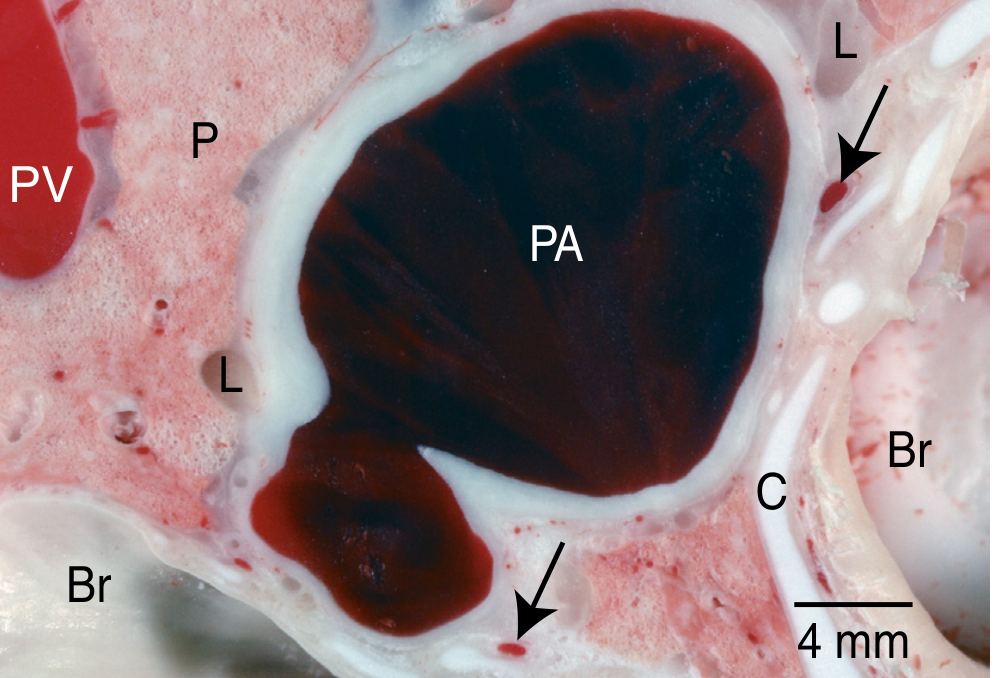
Cross-section of frozen lung tissue: pulmonary artery (PA, dark = deoxygenated), pulmonary vein (PV, crimson = oxygenated), bronchus (Br), parenchyma (P), cartilage (C), lymphatics (L). - Murray & Nadel's Textbook of Respiratory Medicine, p. 32
Vasculature
Pulmonary Circulation (gas exchange)
- Pulmonary artery (right ventricle → lungs): carries deoxygenated blood.
- Pulmonary veins (lungs → left atrium): return oxygenated blood.
- Runs alongside bronchi in the peribronchovascular sheath.
- Vascular pressure increases from apex to base at ~1 cm H₂O per cm height - so lower lung zones are better perfused.
Bronchial Circulation (nutrition)
- Bronchial arteries arise from the aorta (systemic circulation) and supply the airway walls down to the terminal bronchioles.
- Drain via bronchial veins into the azygos system or pulmonary veins.
Lymphatics
- Form two networks: subpleural and peribronchial/perivascular.
- Drain toward hilar and mediastinal lymph nodes.
- Parietal pleura contains lymphatic stomata (1-12 µm openings) that drain pleural fluid.
- Lymphatic drainage follows a zone-based pattern: lower lobe → subcarinal nodes; upper lobe → superior mediastinal nodes.
Pleura
- Visceral pleura: covers the lung surface (including fissures); no pain fibers.
- Parietal pleura: lines the thoracic wall, diaphragm, and mediastinum; has pain fibers.
- Pleural space: a real (not potential) space containing 0.1-0.2 mL/kg of fluid, keeping the two layers separated by only 10-20 µm.
- Negative intrapleural pressure keeps the lung expanded against the elastic recoil tendency to collapse.
Innervation
- Parasympathetic (vagus nerve): bronchoconstriction, mucus secretion, pulmonary vasodilation.
- Sympathetic (T2-T5 sympathetic ganglia): bronchodilation, vasoconstriction.
- Sensory: C-fibers (J-receptors) in alveolar walls detect stretch and irritants; rapidly adapting receptors (RARs) in airways respond to chemical stimuli and trigger cough.
Key Cellular Components
| Cell Type | Location | Function |
|---|---|---|
| Type I pneumocytes | Alveolar wall (95% of surface) | Gas exchange (thin, flat) |
| Type II pneumocytes | Alveolar corners (5% of surface) | Surfactant synthesis; progenitor cells |
| Alveolar macrophages | Alveolar lumen | Host defense, particle clearance |
| Clara (Club) cells | Terminal/respiratory bronchioles | Detoxification, progenitor function |
| Goblet cells | Large airways | Mucus secretion |
| Ciliated cells | Trachea to bronchioles | Mucociliary escalator |
Sources: Murray & Nadel's Textbook of Respiratory Medicine (Section A: Anatomy and Development of the Respiratory Tract, Chapter 1 - Anatomy), pp. 32-134.
Ok provide me
I need a bit more context to help you effectively!
Asking for Preferences
What would you like me to provide?
Let me pull diagrams from the textbook and also fetch some high-quality anatomy images for you.
Finding Sources
Loading Image
Finding Sources
Loading Image
Loading Image
Finding Sources
Loading Image
Loading Image
Finding Sources
Loading Image
Loading Image
Here are all the key lung anatomy diagrams from Murray & Nadel's Textbook of Respiratory Medicine:
Lung Anatomy - Diagrams & Images
1. Lung Position in the Chest (Gross Anatomy)
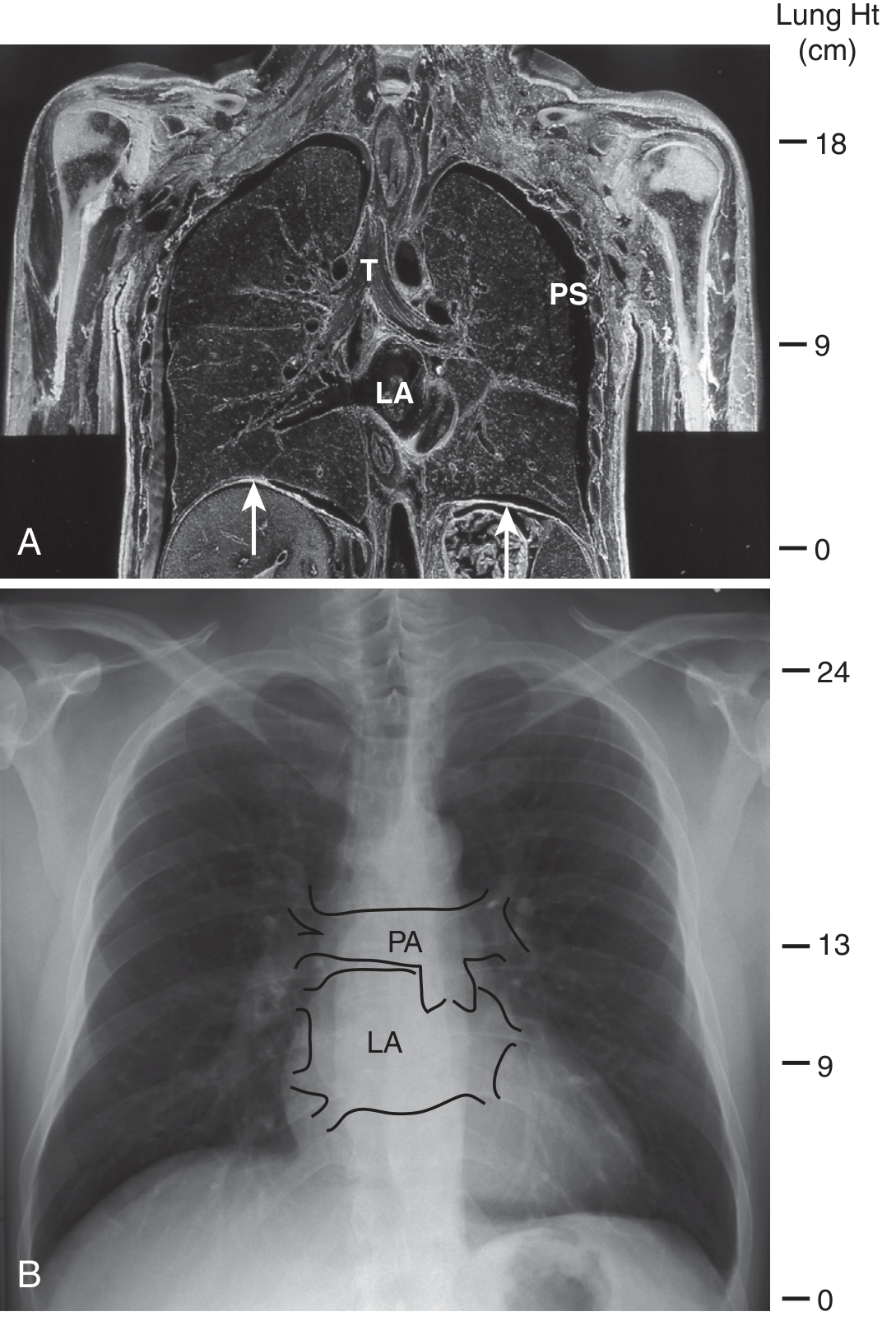
(A) Midfrontal section of frozen human cadaver - shows trachea (T), left atrium (LA), pleural space (PS), and elevated diaphragm.
(B) PA chest X-ray at FRC - lung height ~24 cm; pulmonary artery (PA) and LA outlined; vessels more prominent at lung base due to gravity.
2. Lung Tissue Cross-Section (Blood Oxygenation)
Pulmonary artery (PA) = dark purple (deoxygenated blood) | Pulmonary vein (PV) = crimson (oxygenated) | Bronchus (Br) | Parenchyma (P) | Cartilage (C) | Lymphatics (L)
3. Bronchial Wall - Histology
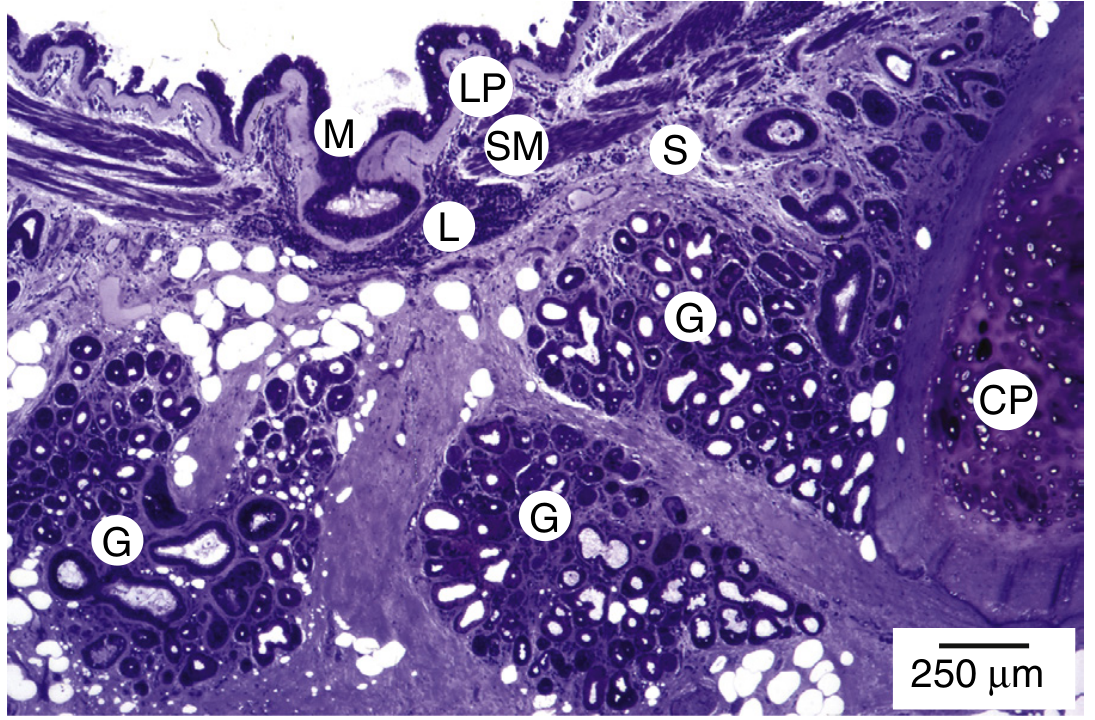
Bronchial wall layers: Mucosa (M) → Lamina propria (LP) → Smooth muscle (SM) → Submucosa (S). Seromucous glands (G) lie between spiral bands of smooth muscle and cartilaginous plates (CP). Lymphoid tissue (L) infiltrates the wall.
4. Terminal vs Respiratory Bronchioles
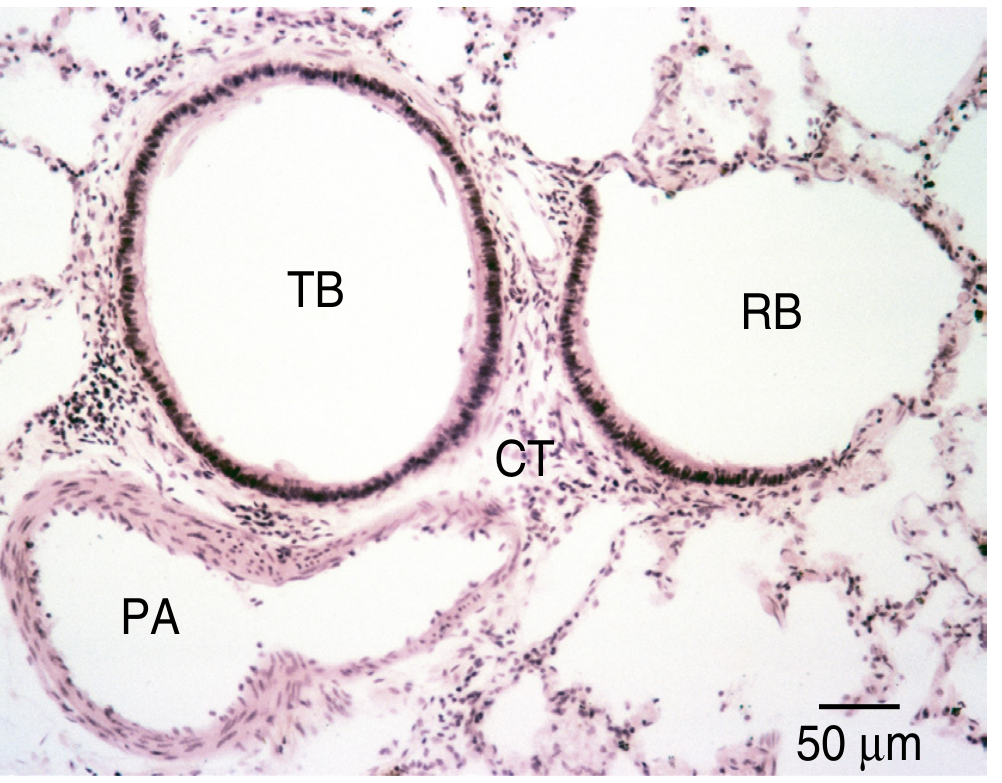
- Terminal bronchiole (TB): Single layer of ciliated cuboidal epithelium + smooth muscle; no alveoli in wall - conducting zone only
- Respiratory bronchiole (RB): Partially lined by ciliated epithelium, partially by squamous; alveoli begin opening in walls here - this is where gas exchange starts
- Pulmonary artery (PA) travels alongside
5. Pulmonary Artery Running Alongside Bronchi
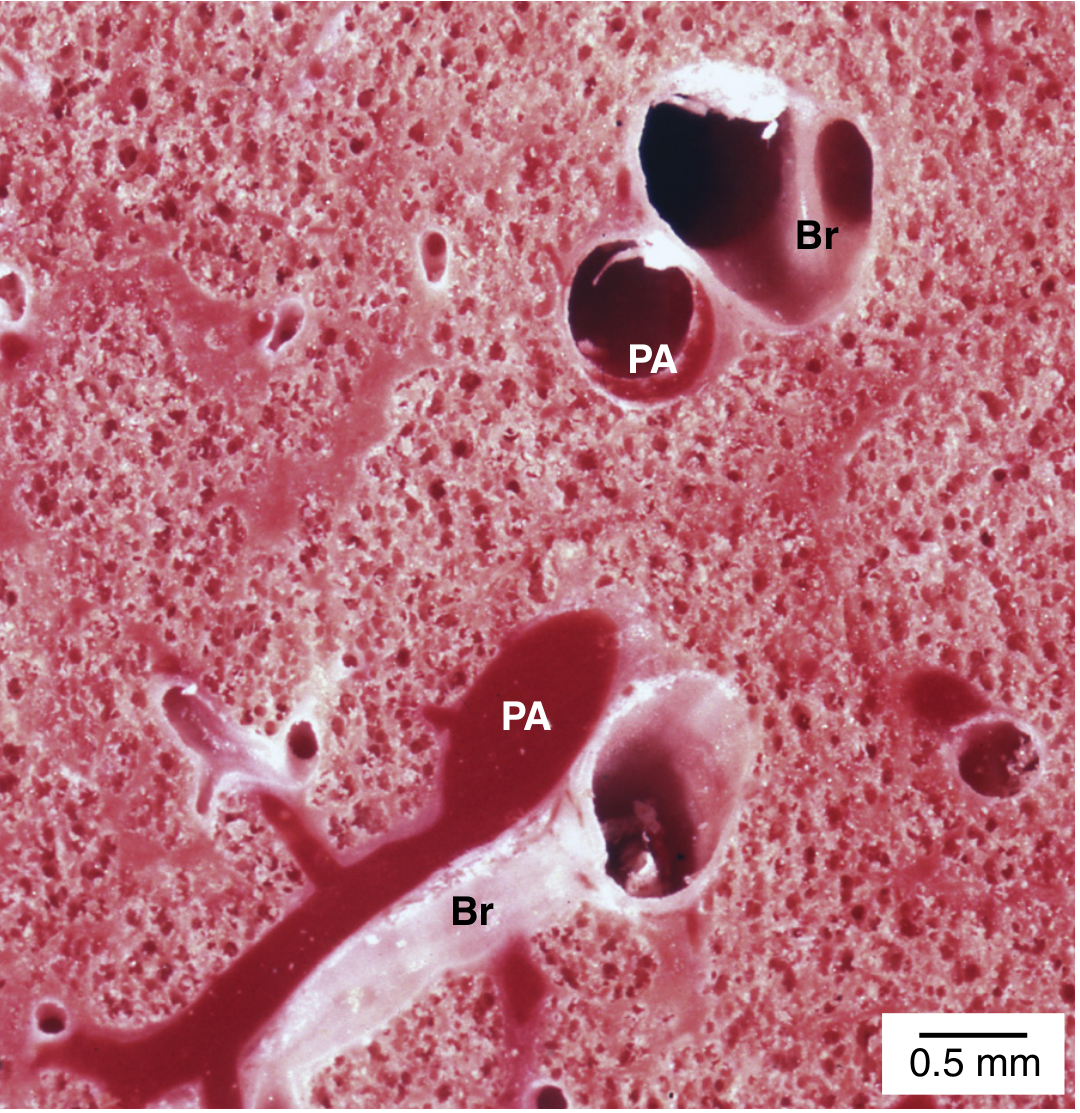
The pulmonary artery (PA) divides and travels beside the bronchi (Br) at every airway generation - all the way out to respiratory bronchioles. This tight pairing is the structural basis of ventilation-perfusion matching.
6. Terminal Respiratory Unit (Acinus)
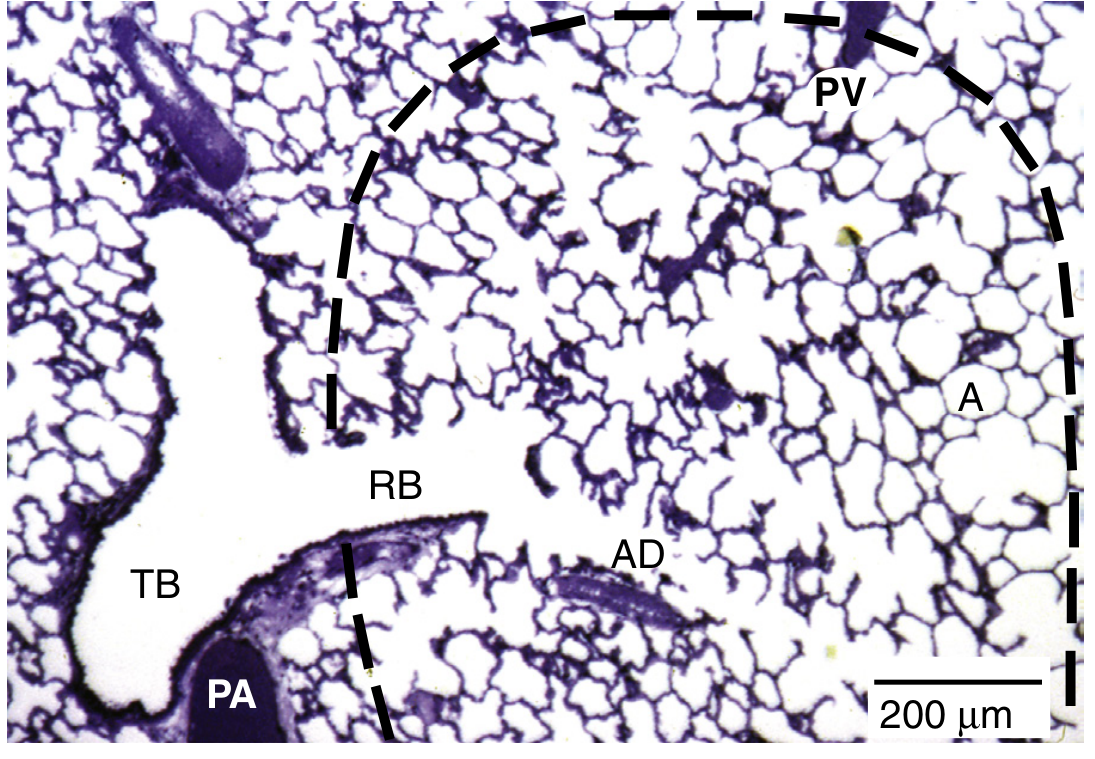
The functional unit of gas exchange (the acinus): Terminal bronchiole (TB) → Respiratory bronchiole (RB) → Alveolar ducts (AD) → Alveoli (A). Pulmonary veins (PV) run peripherally in the connective tissue envelope, while PA runs centrally.
7. Alveolar Structure - Scanning Electron Microscopy
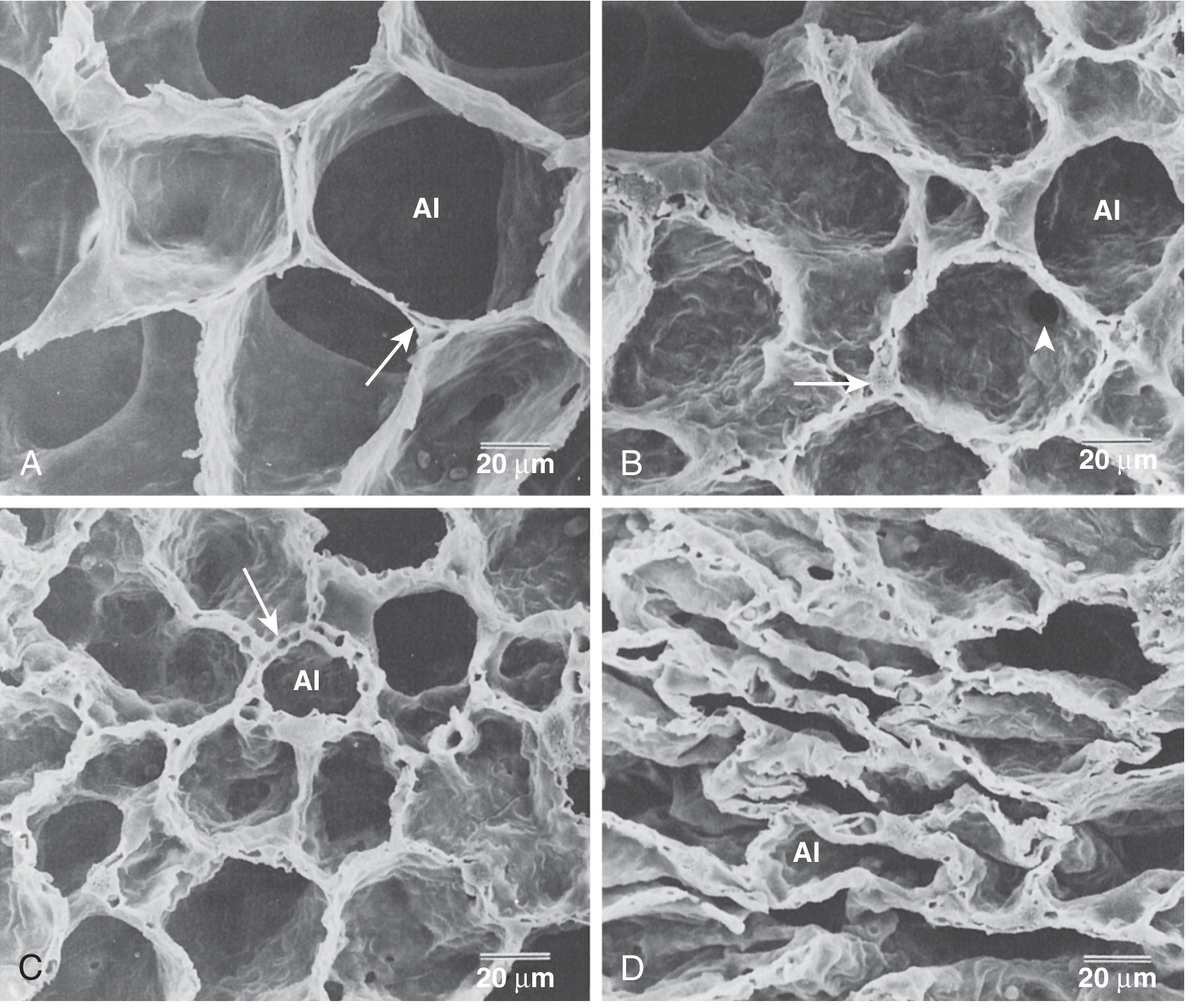
Four panels showing alveoli (Al) at different inflation states:
- (A-C): Normal alveoli - polygonal, thin-walled, interconnected via pores of Kohn (arrows)
- (D): Collapsed/atelectatic alveoli - walls fold and distort
- Scale: 20 µm each panel - shows just how thin the gas exchange surface is
8. Pleural Space
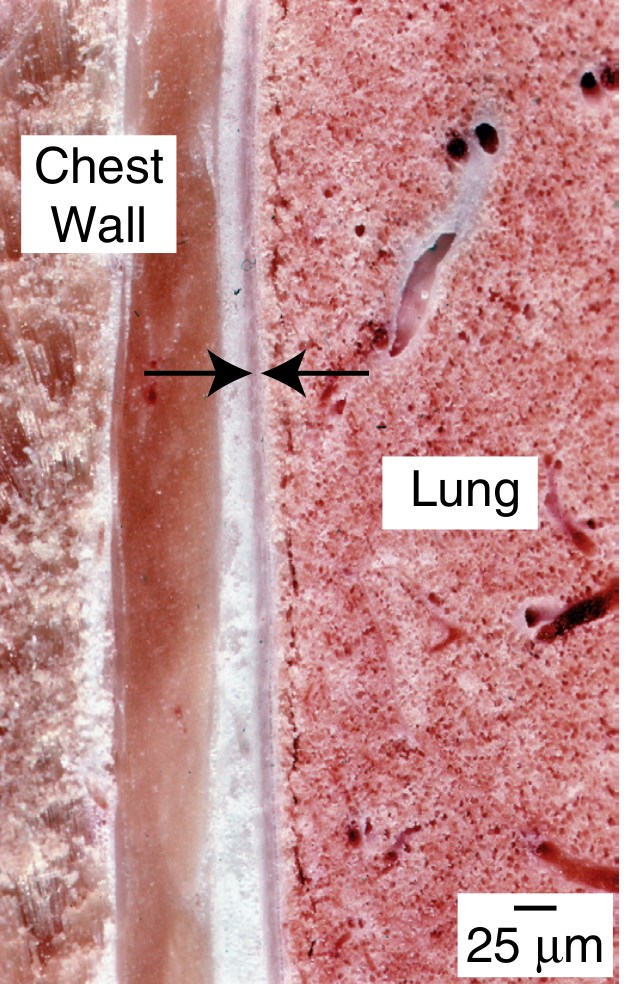
The pleural space (arrows) between chest wall and lung is a real space only ~10-20 µm wide in life - not a "potential" space. Negative pressure here keeps the lung expanded against its own elastic recoil.
All images from: Murray & Nadel's Textbook of Respiratory Medicine, Chapter 1 - Anatomy, pp. 32-134
This is a shared conversation. Sign in to Orris to start your own chat.