
Loose motions plus stomach pain
Reading File
Checking Date & Time
Finding Sources
Finding Sources
Finding Sources
Finding Sources
Reading File
Reading File
Reading File
Reading File
Loading Image
Here is a comprehensive overview of loose motions (acute diarrhea) with stomach pain, based on Harrison's Principles of Internal Medicine and Sleisenger & Fordtran's GI and Liver Disease.
Acute Diarrhea with Abdominal Pain
What Is It?
Diarrhea lasting <2 weeks is considered acute. More than 90% of cases are caused by infectious agents (bacteria, viruses, parasites) and are often accompanied by vomiting, fever, and abdominal pain. The remaining ~10% stem from medications, toxic ingestions, ischemia, or food-related causes.
Common Causes
Infectious (most common):
| Source | Likely Pathogen |
|---|---|
| Undercooked chicken | Salmonella, Campylobacter, Shigella |
| Undercooked hamburger | E. coli O157:H7 |
| Fried/reheated rice | Bacillus cereus |
| Mayonnaise/creams | Staphylococcus aureus, Salmonella |
| Raw seafood | Vibrio, hepatitis A |
| Travel abroad | E. coli (enterotoxigenic), Campylobacter, Giardia, norovirus |
| Recent antibiotics | Clostridioides difficile |
Non-infectious causes:
- Medications (laxatives, antibiotics, NSAIDs, metformin)
- Irritable bowel syndrome (IBS) flare
- Inflammatory bowel disease (IBD — Crohn's/UC)
- Ischemic colitis (especially in older adults)
- Food intolerance (lactose, gluten)
Red Flag Symptoms — Seek Medical Attention
Evaluation is warranted if any of the following are present:
- Profuse diarrhea with signs of dehydration (dry mouth, no urination, dizziness)
- Bloody or black stools
- Fever ≥38.5°C (101°F)
- Duration >48 hours without improvement
- Recent antibiotic use
- Severe abdominal pain, especially if aged >50
- Elderly (≥70 years) or immunocompromised patients
Management Algorithm
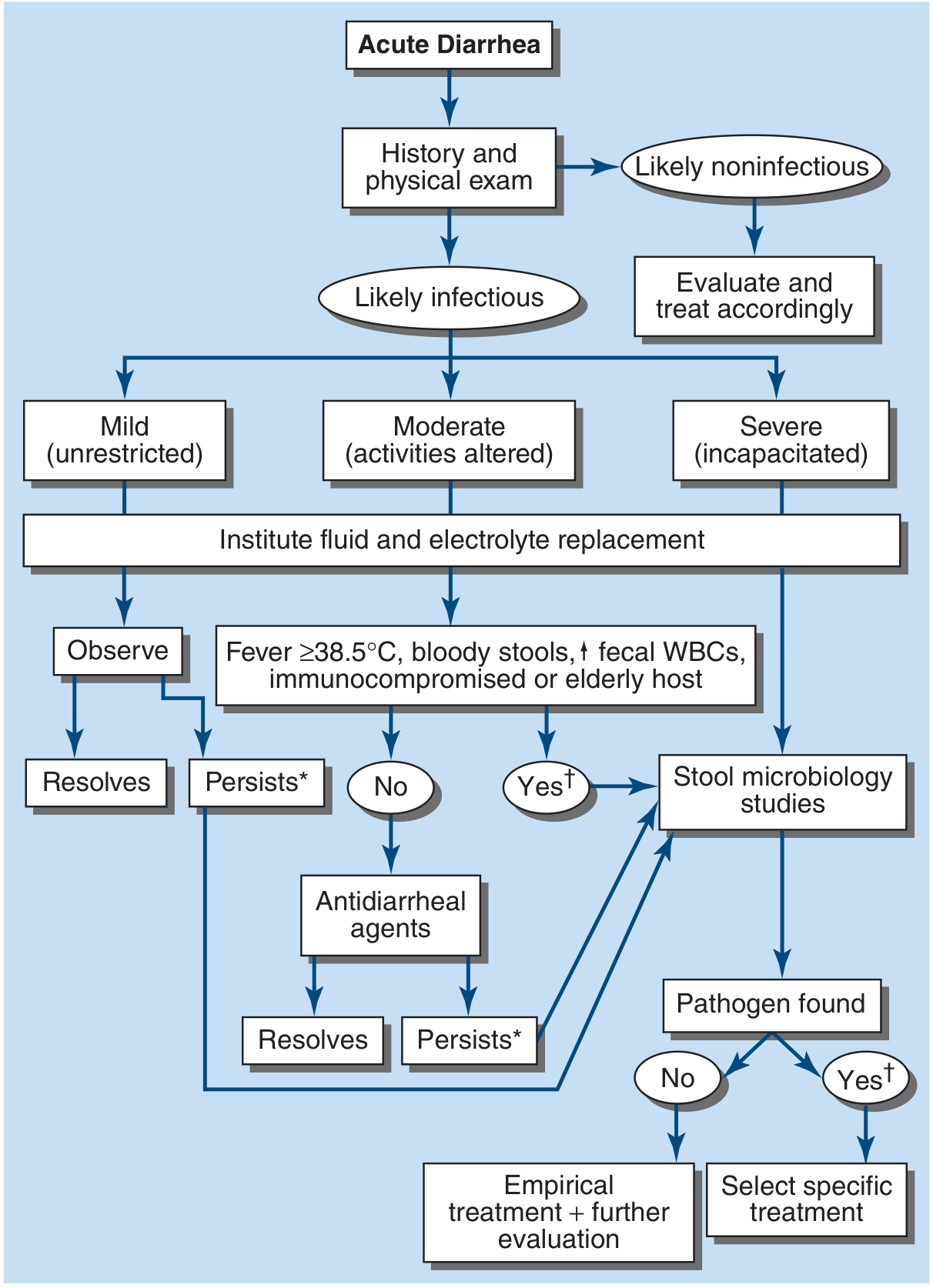
Treatment
1. Fluids first — most important step
- Oral rehydration is the cornerstone: use ORS (oral rehydration solution), sports drinks, or coconut water
- Sip frequently even if nauseous
- Severely dehydrated patients (especially infants, elderly) need IV fluids
2. Antidiarrheal medications (mild–moderate, non-febrile, non-bloody)
- Loperamide (Imodium) — reduces stool frequency; do not use if fever or bloody stools (can worsen bacterial dysentery)
- Bismuth subsalicylate (Pepto-Bismol) — helps nausea and diarrhea; avoid in immunocompromised or renal impairment
3. Antibiotics (only when indicated)
- Empirical for moderate-to-severe febrile diarrhea:
- Azithromycin 500 mg single dose, or
- Ciprofloxacin 500 mg twice daily × 3–5 days
- Suspected Giardia: Metronidazole 250 mg 4×/day × 7 days
- C. difficile: requires specific targeted therapy
4. Diet
- Continue eating if tolerated — the old "starve a fever" approach is outdated
- BRAT diet (Banana, Rice, Applesauce, Toast) helps settle the stomach
- Avoid dairy, caffeine, alcohol, and fatty/spicy food temporarily
- Probiotics may shorten duration slightly
When to Go to a Doctor
- Diarrhea lasting >2–3 days with no improvement
- Blood in stool
- High fever
- Signs of dehydration (not urinating, confusion, extreme weakness)
- Symptoms in a child under 2, elderly person, or immunocompromised individual
Disclaimer: This information is educational and not a substitute for professional medical advice. If symptoms are severe or persistent, please consult a healthcare provider.
— Harrison's Principles of Internal Medicine 22E, Chapter 49 | Sleisenger and Fordtran's GI and Liver Disease, Chapter 16
This is a shared conversation. Sign in to Orris to start your own chat.