
HKMLE Essential hypertension,Secondary hypertension and Systemic disorders affecting the heart notes from Davidson's. Full coverage, mnemonics, HK high yield, quick cheat sheet, recent guidelines, drawings/tables/results if needed. No duplication.
Reading File
Finding Sources
Finding Sources
Finding Sources
Davidson's isn't directly in the DB by that name. Let me search more broadly and find the relevant sections across the best available sources (Harrison's 22E, Robbins, Goldman-Cecil, Fuster's Heart).
Finding Sources
Finding Sources
Davidson's is not in the library. I'll use the best available sources: Harrison's 22E, Braunwald's Heart Disease, Robbins, and Goldman-Cecil — which cover the same content. Let me now read the key sections in parallel.
Reading File
Reading File
Finding Sources
Searching PubMed
"hypertension" AND "guidelines"
Excellent. I have the 2025 AHA/ACC guideline (PMID 40811516) — that's the most recent. Now let me read the full Harrison's secondary hypertension section and search for systemic disorders affecting the heart.
Reading File
Finding Sources
Finding Sources
Finding Sources
Reading File
Searching the Web
2025 AHA ACC hypertension guidelines summary BP targets treatment algorithm
Reading File
Reading File
Finding Sources
Loading Image
Reading File
Reading File
Now I have comprehensive data from Harrison's 22E (2025), Robbins Pathology, and Goldman-Cecil. Let me compile the full HKMLE notes.
🩺 HKMLE Master Notes: Hypertension & Systemic Disorders Affecting the Heart
Sources: Harrison's 22E (2025) · Robbins & Cotran Pathologic Basis of Disease · Goldman-Cecil Medicine · 2025 AHA/ACC Guideline (PMID 40811516) (Davidson's is not in the library; equivalent or superior content sourced from the above)
RAAS Diagram (Robbins, Fig. 11.4)
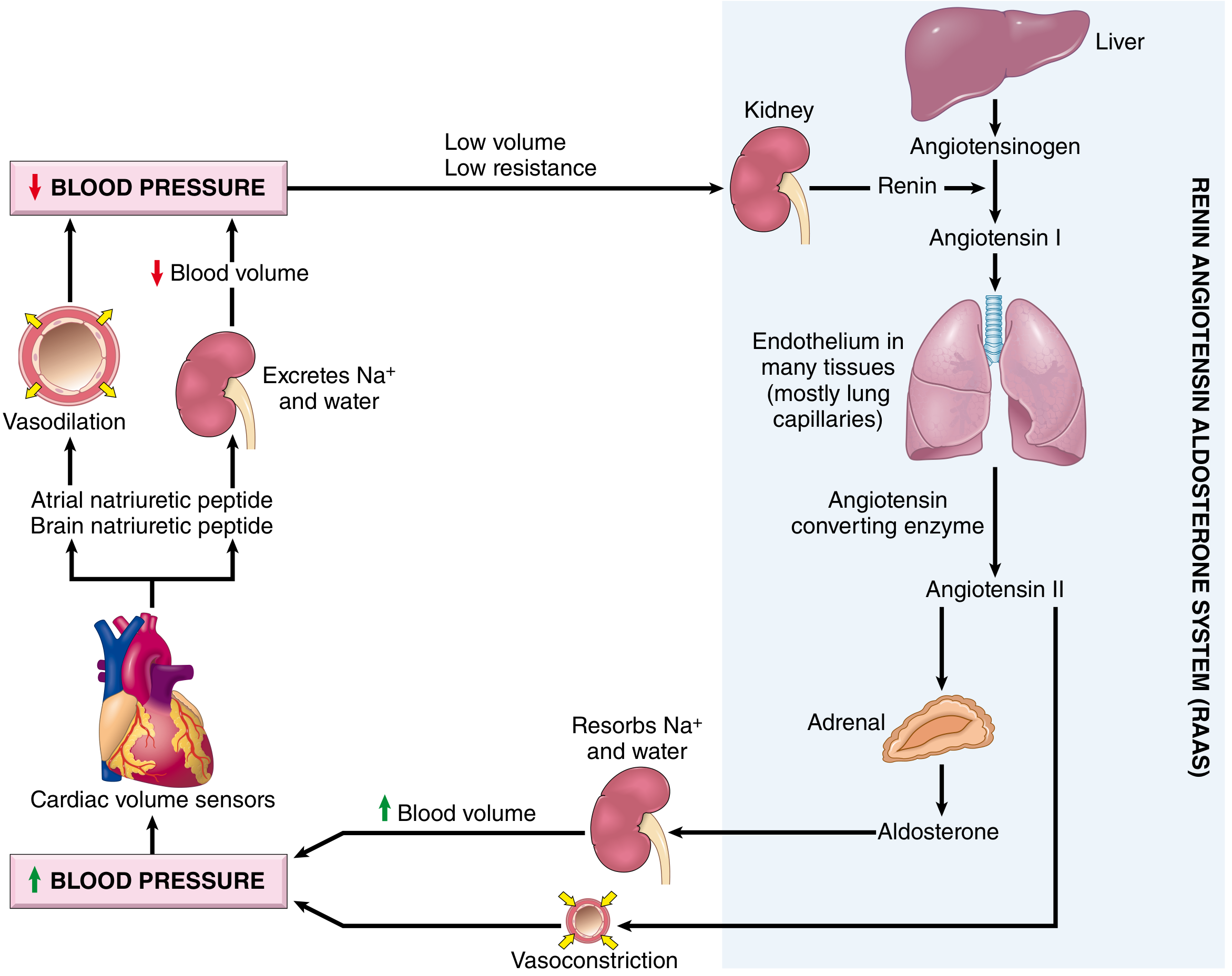
PART 1 — ESSENTIAL (PRIMARY) HYPERTENSION
1.1 Definition & Classification (2025 AHA/ACC)
| Category | SBP (mmHg) | DBP (mmHg) |
|---|---|---|
| Normal | <120 | <80 |
| Elevated | 120–129 | <80 |
| Stage 1 HTN | 130–139 | 80–89 |
| Stage 2 HTN | ≥140 | ≥90 |
| Hypertensive Crisis | >180 | >120 |
ESH 2023 vs AHA 2025: ESH keeps threshold at ≥140/90. AHA defines HTN from ≥130/80. In HK exams, know both thresholds — "grade 1 HTN" in ESH = Stage 1 in AHA.
White-coat HTN: Office ≥130/80 but home/ABPM normal → CVD risk resembles normotensive; treat with lifestyle only + close monitoring.
Masked HTN: Office normal but ABPM/home elevated → CVD risk similar to sustained HTN; may need drug therapy.
Masked HTN: Office normal but ABPM/home elevated → CVD risk similar to sustained HTN; may need drug therapy.
1.2 Epidemiology
- ~1.3 billion people worldwide have hypertension
- Prevalence rises steeply with age; >70% of adults ≥70 years
- Using AHA ≥130/80 criteria → ~half of general population are hypertensive
- Hong Kong prevalence ~27% of adults (standard 140/90 threshold)
1.3 Pathophysiology of Essential Hypertension
Mnemonic: "SNARES"
- Sodium retention (impaired pressure natriuresis → ↑ fluid vol → ↑ CO → ↑ SVR)
- Neurogenic activation (↑ SNS tone → vasoconstriction, ↑ renin)
- Angiotensin II excess (RAAS overactivation)
- Renin–aldosterone axis dysfunction
- Endothelial dysfunction (↓ NO, ↑ endothelin)
- Structural vascular remodeling (↑ wall:lumen ratio)
Key mechanism (Robbins): Insufficient renal Na⁺ excretion at normal BP → ↑ fluid vol → ↑ CO → peripheral vasoconstriction → hypertension → new steady state of Na⁺ balance at expense of elevated BP ("resetting of pressure natriuresis")
Genetic component: >500 genetic variants linked to BP (GWAS); rare monogenic causes exist (see below). Twin studies confirm heritable component.
Environmental factors (Harrison's 22E — Table 288-2):
| Factor | Expected SBP Change |
|---|---|
| DASH diet adherence | −5 mmHg (HTN), −2–3 (non-HTN) |
| 1 kg weight loss | −1 mmHg |
| Na⁺ reduction ~25% | −5 mmHg (HTN), −2–3 (non-HTN) |
| K⁺ increase to 3500 mg/day | −4–5 mmHg |
| Aerobic exercise (≥150 min/wk) | −4–5 mmHg |
| Alcohol ≤1–2 drinks/day | −3–4 mmHg |
Environmental exposures: PM2.5, heavy metals (Pb, Hg, Cd, As), seasonal temperature variation, high altitude (acute hypoxia + cold)
1.4 Vascular Pathology in Hypertension (Robbins)
| Lesion | Type | Feature | Seen in |
|---|---|---|---|
| Hyaline arteriolosclerosis | Benign HTN | Pink hyaline thickening, luminal narrowing | Mild–moderate HTN, elderly, DM |
| Hyperplastic arteriolosclerosis | Malignant HTN | "Onion-skin" concentric laminations of SMCs | Severe/malignant HTN |
| Necrotizing arteriolitis | Malignant HTN | Fibrinoid necrosis of vessel wall | Malignant HTN, kidney |
1.5 Target Organ Damage (TOD)
Mnemonic: "4 B's" → Brain, Blood vessels, the Boss organ (Heart), Bladder organ (Kidneys)
| Organ | Manifestation |
|---|---|
| Heart | LVH → diastolic dysfunction → HFpEF; IHD; AF (LA enlargement); SCD |
| Brain | Lacunar infarcts; intracerebral hemorrhage; hypertensive encephalopathy; dementia |
| Kidney | Nephrosclerosis; proteinuria; CKD → ESRD |
| Eye | Hypertensive retinopathy (grades 1–4); AV nipping, flame hemorrhages, papilloedema (grade 4) |
| Aorta/Arteries | Accelerated atherosclerosis; aortic dissection; aneurysm |
1.6 Management — Lifestyle (Non-Pharmacological)
Mnemonic: "AWED SK"
- Alcohol ≤2 drinks/day
- Weight loss (1 kg → −1 mmHg SBP)
- Exercise ≥150 min/week aerobic
- DASH diet
- Sodium <2300 mg/day (optimal <1500 mg/day)
- K⁺ adequate intake (3500–5000 mg/day)
1.7 Pharmacological Treatment
2025 AHA/ACC BP Target: SBP/DBP <130/80 mmHg for most adults (including elderly ≥65 years — target SBP <130)
First-line drug classes (A-C-D framework for HK exams):
| Class | Drugs | Preferred in |
|---|---|---|
| A — ACEi/ARB | Ramipril, Losartan | DM, CKD, HF, post-MI |
| C — CCB | Amlodipine, Nifedipine | Elderly, isolated systolic HTN, Black patients |
| D — Diuretic (thiazide-like) | Chlorthalidone, Indapamide* | Volume-overloaded, Black patients |
| β-blocker | Bisoprolol, Carvedilol | IHD, HFrEF, AF |
Prefer chlorthalidone or indapamide over hydrochlorothiazide (HCTZ) — longer-acting, more effective SBP reduction (Harrison's 22E)
Drug Combination Sequence:
- Single agent if Stage 1 + low risk, or lifestyle alone
- Dual therapy (A+C preferred) for most Stage 2 or high-risk Stage 1
- Triple therapy (A+C+D) for uncontrolled
-
- MRA (spironolactone) for resistant HTN
Compelling indications table:
| Condition | Preferred Agent(s) |
|---|---|
| Post-MI | β-blocker + ACEi/ARB |
| HFrEF | ACEi/ARB, β-blocker, MRA, ARNI |
| CKD/Proteinuria | ACEi/ARB (first line) |
| Diabetes | ACEi/ARB |
| AF (rate control) | β-blocker or CCB (non-DHP) |
| Isolated systolic HTN (elderly) | CCB or thiazide |
| Pregnancy | Methyldopa, Labetalol, Nifedipine |
| Hyperaldosteronism | Spironolactone/Eplerenone |
Drugs to AVOID:
- ACEi + ARB combination (↑ AKI, hyperK)
- ACEi/ARB in pregnancy
- β-blocker in asthma/reactive airways
- CCB (non-DHP) in HFrEF
1.8 Resistant Hypertension
Definition: SBP/DBP ≥130/80 on ≥3 drugs (including a diuretic) OR requiring ≥4 drugs
Approach (mnemonic: "PASTA"):
- Pseudoresistance excluded (poor measurement, white coat)
- Adherence confirmed
- Secondary causes excluded
- Tiazide-like diuretic substituted (switch HCTZ → chlorthalidone)
- Add spironolactone (MRA) as 4th agent
2023 FDA approved: Renal denervation (ultrasound/radiofrequency) as adjunct for resistant HTN
PART 2 — SECONDARY HYPERTENSION
2.1 When to Suspect Secondary HTN
Mnemonic: "RAWLY"
- Resistant hypertension (≥3 drugs still uncontrolled)
- Abrupt worsening of previously controlled BP
- Worsening disproportionate TOD for the BP level
- Lab abnormalities: unprovoked hypokalemia, proteinuria, LVH
- Young patient (<30 years) with severe HTN
2.2 Causes of Secondary Hypertension
Mnemonic: "CHOPS-R" (covers 6 most common + rare)
| # | Cause | Prevalence | Key Clue | Screen | Confirm | Treatment |
|---|---|---|---|---|---|---|
| 1 | Obstructive Sleep Apnea | Most common (~30% of HTN) | Obese, snoring, daytime somnolence, resistant HTN | Epworth + overnight oximetry | Polysomnography | CPAP |
| 2 | Chronic Kidney Disease | ~1–3% | Elevated creatinine, proteinuria | eGFR, urine ACR | Renal US, biopsy | ACEi/ARB, BP <130/80 |
| 3 | Hyperaldosteronism (Primary) | ~5–10% of HTN | Unprovoked hypoK, adrenal incidentaloma | Aldosterone-to-renin ratio (ARR) >30 | CT adrenal, adrenal vein sampling | Surgery (adenoma) / Spironolactone (bilateral) |
| 4 | Phaeochromocytoma/Paraganglioma | <0.5% | Paroxysmal HTN, "5Ps" (see below), sweating, pallor | 24h urine metanephrines or plasma free metanephrines | CT/MRI adrenal + MIBG | Surgical resection (α-block first) |
| 5 | Renovascular HTN (Renal Artery Stenosis) | ~1–2% | Flash pulmonary oedema, abdominal bruit, ↑ creatinine on ACEi | Duplex US renal arteries | CT/MR angiography | Revascularisation (PTRA) or medical |
| 6 | Steroid (Cushing's syndrome) | Rare | Moon face, buffalo hump, striae, DM | 24h urinary cortisol, overnight 1mg DST | CRH stim test, inferior petrosal sinus sampling | Tumour resection |
Other causes (rare):
- Thyroid disease (hypo → diastolic HTN; hyper → systolic HTN)
- Coarctation of the aorta (young, radio-femoral delay, rib notching)
- Monogenic HTN syndromes (Liddle syndrome, Gordon syndrome, 11β-hydroxylase def, 17α-hydroxylase def)
- Drug-induced (NSAIDs, OCP, sympathomimetics, liquorice, calcineurin inhibitors, erythropoietin)
"5 Ps" of Phaeochromocytoma:
Paroxysmal HTN · Palpitations · Perspiration · Pallor · Pain (headache)
Liddle syndrome: ENaC-γ mutation → excessive distal Na⁺ reabsorption → hypertension + hypokalemia + LOW renin + LOW aldosterone
2.3 Monogenic Hypertension — Quick Table
| Syndrome | Gene/Defect | Mechanism | K⁺ | Aldosterone | Renin |
|---|---|---|---|---|---|
| Liddle syndrome | ENaC-γ gain-of-function | ↑ distal Na⁺ reabsorption | ↓ | ↓ | ↓ |
| Primary hyperaldosteronism | Aldosterone synthase excess | ↑ Na⁺/water retention | ↓ | ↑ | ↓ |
| 11β-hydroxylase deficiency | ↑ DOC | ↑ mineralocorticoid effect | ↓ | ↓ | ↓ |
| 17α-hydroxylase deficiency | ↑ DOC | ↑ mineralocorticoid effect | ↓ | ↓ | ↓ |
| Glucocorticoid-remediable aldosteronism (GRA) | CYP11B1/B2 fusion | ACTH drives aldosterone | ↓ | ↑ | ↓ |
2.4 Renovascular HTN — Pathophysiology
- Renal artery stenosis → ↓ glomerular flow → ↓ afferent arteriole pressure → ↑ renin secretion
- Renin → Ang I → Ang II → vasoconstriction + ↑ aldosterone → Na⁺/H₂O retention → ↑ BP
Most common cause: Atherosclerotic (elderly, risk factors) > Fibromuscular dysplasia (young women, "string of beads" on angiography)
PART 3 — SYSTEMIC DISORDERS AFFECTING THE HEART
3.1 Hypertensive Heart Disease (HHD) — Robbins Pathology
Minimal diagnostic criteria (Robbins):
- LVH (usually concentric) in the absence of other cardiovascular pathology
- Clinical history or pathologic evidence of HTN in other organs
Morphology:
- Heart weight may exceed 500 g (normal ≤400 g)
- LV wall thickness may exceed 2.0 cm (normal ≤1.2 cm)
- Initially without ventricular dilatation → concentric hypertrophy
- Over time: ↑ interstitial fibrosis → stiffness → diastolic dysfunction → LA enlargement
Microscopy (Robbins):
- Earliest: ↑ transverse diameter of myocytes (may be subtle)
- Advanced: cellular + nuclear enlargement, perivascular + interstitial fibrosis
Clinical progression (Robbins — Framingham study):
"Even mild hypertension (≥140/90) — if sufficiently prolonged — induces LVH"
Possible outcomes:
- Normal longevity (well-controlled)
- IHD (atherosclerosis + ↑ O₂ demand from hypertrophic muscle)
- Renal damage / cerebrovascular stroke
- Progressive HF (HFpEF) or Sudden Cardiac Death
- AF (from LA enlargement)
Effective BP control → prevents LVH and can lead to its regression
3.2 Cor Pulmonale (Pulmonary Hypertensive Heart Disease)
| Feature | Detail |
|---|---|
| Definition | RV pressure overload → RV hypertrophy ± dilation ± RV failure |
| Cause | Lung disease (COPD, emphysema), pulmonary HTN, PE |
| Acute cor pulmonale | Massive pulmonary embolism |
| Chronic cor pulmonale | COPD (most common), ILD, primary pulmonary HTN |
| Distinction | Pulmonary HTN most commonly a complication of left-sided heart disease (not cor pulmonale per se) |
3.3 Other Systemic Disorders — Heart Involvement
| Disease | Cardiac Manifestation | Key Feature |
|---|---|---|
| Diabetes mellitus | Diabetic cardiomyopathy; IHD (2–4× risk); autonomic neuropathy; silent MI | Microangiopathy + macroangiopathy |
| Hypothyroidism | Bradycardia; pericardial effusion; diastolic dysfunction; ↑ cholesterol → IHD | ↑ TSH; treat with levothyroxine |
| Hyperthyroidism | Sinus tachycardia; AF; high-output HF; ↑ SBP (wide pulse pressure) | ↑ FT4, ↓ TSH |
| Amyloidosis | Restrictive cardiomyopathy; thick "sparkling" LV on echo; diastolic HF; conduction defects; low-voltage ECG | AA or AL amyloid; apple-green birefringence Congo red |
| Sarcoidosis | Complete heart block; VT/VF; restrictive/dilated CMP; sudden death | Noncaseating granulomas; gadolinium LGE on CMR |
| Haemochromatosis | Dilated cardiomyopathy; arrhythmias; HF | ↑ ferritin, ↑ transferrin sat; iron deposition |
| SLE | Libman-Sacks endocarditis (sterile verrucous); pericarditis; myocarditis; ↑ IHD (antiphospholipid) | Nonbacterial vegetation on mitral valve undersurface |
| Rheumatoid Arthritis | Pericarditis (most common); rarely myocarditis; ↑ ASCVD | Extra-articular RA |
| Systemic Sclerosis (SSc) | Pulmonary HTN (PAH); pericarditis; myocardial fibrosis; arrhythmias | Anti-Scl-70; anti-centromere |
| Carcinoid syndrome | Right-sided valvular disease (tricuspid regurgitation + pulmonary stenosis) | 5-HIAA in urine; serotonin |
| Alcohol | Dilated cardiomyopathy; AF ("holiday heart"); Beriberi (high-output) | Direct toxic effect |
| Obesity | ↑ CO → eccentric LVH; HFpEF; AF; OSA; pulmonary HTN | BMI ≥30 |
| Acromegaly | Biventricular hypertrophy; LVH; diastolic dysfunction; IHD; arrhythmias | ↑ GH/IGF-1 |
| Phaeochromocytoma | Catecholamine cardiomyopathy (takotsubo-like); hypertensive heart disease; arrhythmias | Episodic HTN + 5Ps |
| Marfan syndrome | Aortic root dilatation/dissection; mitral valve prolapse; AR | FBN1 mutation; tall, lens dislocation |
3.4 Key ECG/Investigation Clues for HK Exams
| Finding | Think |
|---|---|
| LVH criteria on ECG (Sokolow-Lyon: SV1+RV5 ≥35 mm) | HTN, HCM, AS |
| Low-voltage ECG + thick LV on echo | Cardiac amyloidosis |
| Complete heart block in young person | Sarcoidosis, Lyme disease |
| AF + low TSH | Hyperthyroidism |
| Tricuspid regurgitation + pulmonary stenosis (right-sided) | Carcinoid syndrome |
| Libman-Sacks endocarditis (mitral, undersurface) | SLE |
| Pericardiitis + pleuritis | SLE, RA, viral |
| Bilateral hilar adenopathy + heart block | Sarcoidosis |
| Pericardial effusion + bradycardia | Hypothyroidism |
PART 4 — CHEAT SHEET / QUICK RECALL
BP Classification Mnemonic: "Normal Elevated 1-2 Crisis" = 120/80 → 130/80 → 140/90 → 180/120
Secondary HTN Causes — "CHOPS-R":
CKD · Hyperaldosteronism · OSA · Phaeochromocytoma · Steroid (Cushing) · Renovascular + Coarctation
Resistant HTN Workup — "PASTA":
Pseudoresistance → Adherence → Secondary causes → Thiazide-like upgrade → Add MRA
Drug mnemonics:
- "ACE first in DM/CKD" — ACEi/ARB protect kidneys
- "CCB for elderly/Black" — amlodipine
- "No ACE in pregnancy" — use methyldopa/labetalol
- "Chlorthalidone > HCTZ" — longer acting, more effective
- "Spiro for resistant" — 4th drug = MRA
HHD Diagnosis Criteria (Robbins):
- Concentric LVH (no other CV pathology) + 2. Clinical/pathological evidence of HTN
Systemic disease → specific cardiac lesion:
- SLE → Libman-Sacks (mitral, undersurface)
- Carcinoid → Right-sided valvular disease (TR + PS)
- Amyloid → Restrictive CMP + low-voltage ECG
- Sarcoid → Heart block + VT
- Haemochromatosis → DCM
- Marfan → Aortic root ± MVP
PART 5 — RECENT GUIDELINE UPDATES (High-Yield HK)
| Guideline | Year | Key Change |
|---|---|---|
| 2025 AHA/ACC Hypertension Guideline (PMID 40811516) | 2025 | BP target <130/80 for most adults incl. elderly ≥65; renal denervation now FDA-approved adjunct; finerenone (non-steroidal MRA) option for resistant HTN |
| 2023 ESH Hypertension Guideline | 2023 | Threshold ≥140/90 maintained; target <130/80 if tolerated; emphasises drug initiation with fixed-dose combinations |
| 2023 AHA/ACC Chronic Coronary Disease Guideline | 2023 | BP target <130/80 in CCD; ACEi/ARB preferred |
⚠️ HKMLE High-Yield: The exams may test both AHA (≥130/80) and ESH (≥140/90) thresholds. Know that the 2025 AHA/ACC keeps BP target at <130/80 for high-risk patients. Renal denervation is now a guideline-endorsed option for truly resistant HTN (FDA 2023).
PART 6 — HKMLE PEARL BOXES
Pearl 1: Unprovoked hypokalemia in a hypertensive patient → primary hyperaldosteronism until proven otherwise. Screen with ARR.
Pearl 2: Creatinine rise >30% after starting ACEi/ARB → suspect bilateral renal artery stenosis or severe unilateral RAS. Stop ACEi/ARB.
Pearl 3: Hypertension + flash pulmonary oedema + abdominal bruit = renovascular HTN (atherosclerotic RAS).
Pearl 4: OSA is the most common secondary cause of hypertension. Always consider in obese, resistant HTN patients.
Pearl 5: In Cushing's syndrome, hypertension is due to mineralocorticoid excess from cortisol + DOC (not just cortisol).
Pearl 6: "Onion-skin" lesion on renal biopsy = malignant hypertension (hyperplastic arteriolosclerosis).
Pearl 7: LV wall >2 cm + LV mass >500 g → severe systemic HHD (Robbins criteria).
Pearl 8: Carcinoid tumor of the gut → 5-HT inactivated in lung → right-sided valve disease. Carcinoid in lung → left-sided disease.
Pearl 9: Libman-Sacks endocarditis in SLE is non-infective, sterile, affects mitral valve (usually undersurface/posterior leaflet), and is associated with antiphospholipid syndrome.
Pearl 10: Hypertensive heart disease = concentric LVH → diastolic dysfunction → HFpEF (preserved EF). Do NOT confuse with DCM (eccentric, reduced EF).
*Sources: Harrison's Principles of Internal Medicine 22E (2025, McGraw-Hill) · Robbins & Cotran Pathologic Basis of Disease · Goldman-Cecil Medicine · 2025 AHA/ACC Hypertension Practice Guideline (Hypertension, PMID 40811516)*You've run out of free credits. Sign up for a free account to continue using Orris.
This is a shared conversation. Sign in to Orris to start your own chat.