
Stye treatment
A stye (hordeolum) is a red, painful lump on the eyelid caused by a bacterial infection of an oil gland or hair follicle. The main treatment is warm compresses applied for 10-15 minutes, 3-4 times daily - this helps the stye drain naturally. Most resolve on their own within 1-2 weeks. Antibiotic eye drops or ointments may be used for persistent cases, and a doctor can drain it if it doesn't resolve.
Searching sources...
Reading File
Searching the Web
stye hordeolum treatment 2025 guidelines
Finding Sources
Searching PubMed
hordeolum stye treatment management
Reading File
Reading File
Reading File
Reading File
Let me also get the treatment content from Tintinalli's and check the Rosen's data for hordeolum-specific treatment:
Reading File
Reading File
Now let me fetch the clinical image to include in the answer:
Loading Image
Here is a complete, textbook-sourced guide to stye treatment:
Stye (Hordeolum) - Treatment
What Is a Stye?
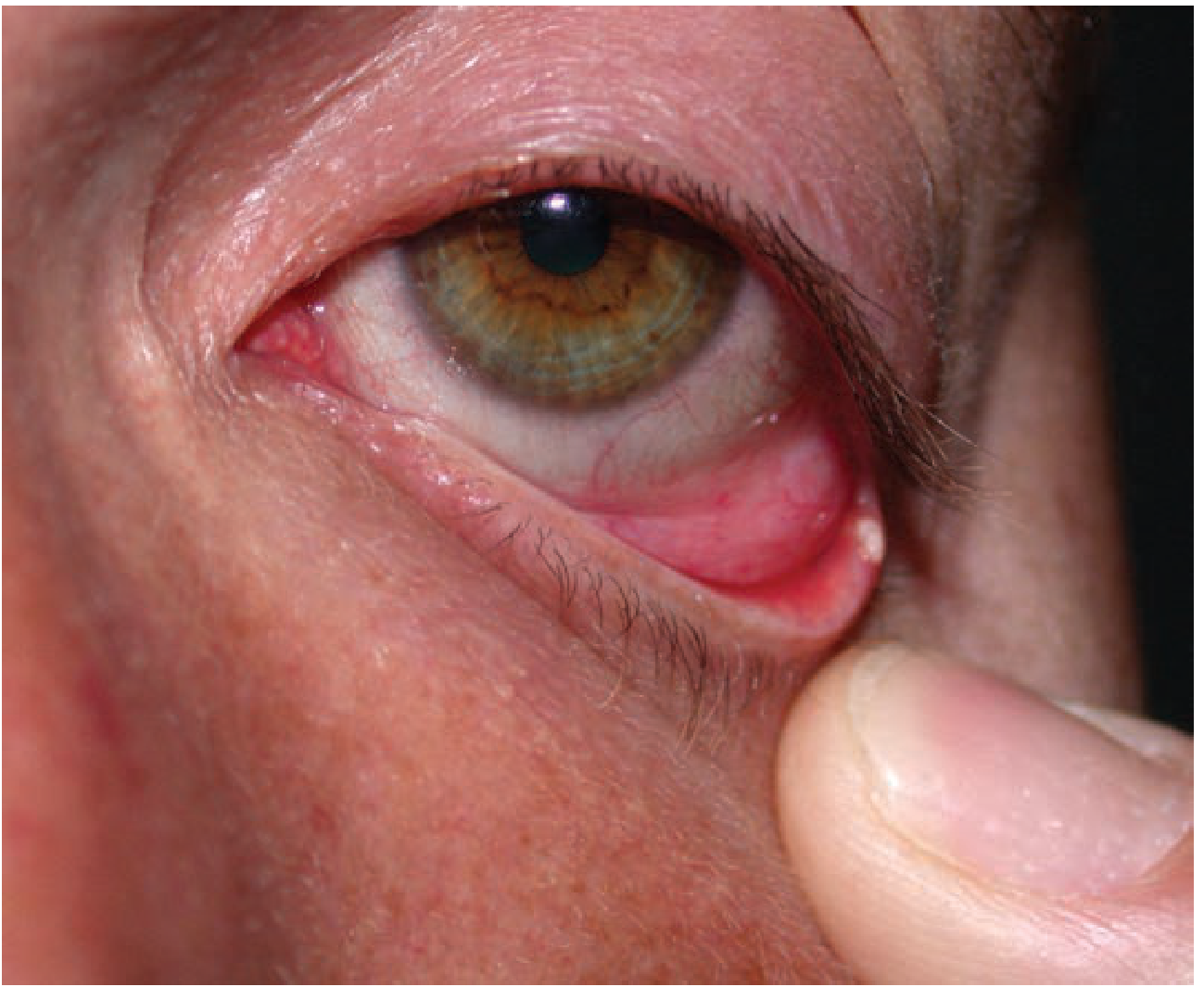
A hordeolum (stye) is an acute bacterial infection - most commonly Staphylococcus aureus - of the oil glands (Zeis or meibomian) or hair follicle at the eyelid margin.
- External hordeolum: abscess of the Zeis gland or follicle at the lash line - appears as a small pustule on the eyelid margin
- Internal hordeolum: abscess of the meibomian gland - pustule on the inner tarsal surface
Treatment
1. First-Line: Warm Compresses (All Cases)
- Apply a warm, moist compress for 10-15 minutes, 3-5 times daily
- Follow with gentle massage over the lesion
- This is the primary treatment - it promotes drainage by normalizing flow through the obstructed oil gland
- Most styes resolve on their own with this alone within 1-2 weeks
2. Topical Antibiotics (For Hordeolum)
Use a short course when infection is apparent:
- Erythromycin ophthalmic ointment twice daily for 7-10 days (preferred)
- Bacitracin ointment b.i.d. for 1-2 weeks
- Tobramycin eye drops/ointment b.i.d. for 1-2 weeks
- Removing the offending eyelash can also be considered
3. Topical Antibiotic/Steroid (For Chalazion - chronic form)
If the lesion has evolved into a chalazion (non-tender, chronic):
- Neomycin/polymyxin B/dexamethasone ointment b.i.d. for 1-2 weeks
4. Systemic Antibiotics
Indicated when there is significant surrounding cellulitis (preseptal spread). Options include:
- Oral amoxicillin-clavulanate 875 mg twice daily for 10-14 days
- If MRSA is suspected: add clindamycin or TMP-SMX
5. Chronic Low-Dose Doxycycline
For multiple or recurrent styes/chalazia, or in patients with ocular rosacea:
- Doxycycline 20-50 mg orally daily to twice daily (for its antibacterial and anti-inflammatory properties)
Procedural Management (When Medical Therapy Fails)
| Scenario | Intervention |
|---|---|
| Hordeolum worsens or forms abscess | Incision and drainage (I&D) - refer to ophthalmologist |
| Chalazion persists >3-4 weeks | Incision and curettage OR intralesional steroid injection |
| Intralesional steroid | Triamcinolone 40 mg/mL mixed 1:1 with 2% lidocaine/epinephrine, 0.2-1.0 mL |
Note: Steroid injections carry a risk of permanent skin depigmentation or atrophy, especially in dark-skinned individuals. Rarely, retrograde intra-arterial infiltration can cause central retinal artery occlusion. Always discuss risks with the patient.
When to Refer/Admit
- Vision affected
- Lesion does not improve after a few days of home treatment
- Signs of preseptal cellulitis (spreading erythema, warmth, fever) - oral antibiotics and close follow-up
- Signs of orbital (post-septal) cellulitis (proptosis, ophthalmoplegia, pain with eye movement, chemosis) - hospitalize for IV antibiotics and CT imaging
What NOT To Do
- Do not squeeze or pop the stye - this can spread infection
- Do not wear contact lenses until the stye resolves
- Do not apply makeup to the affected eye area
Stye vs Chalazion - Key Distinction
| Feature | Hordeolum (Stye) | Chalazion |
|---|---|---|
| Onset | Acute | Subacute/chronic |
| Tenderness | Painful | Usually painless |
| Cause | Bacterial infection | Sterile granulomatous inflammation |
| Location | Lash line margin | Within lid/tarsal plate |
| Treatment | Warm compresses + antibiotics | Warm compresses; I&C or steroid injection if persistent |
Sources: Wills Eye Manual 6e, Tintinalli's Emergency Medicine, Rosen's Emergency Medicine
This is a shared conversation. Sign in to Orris to start your own chat.