
Treatment for scorpion bite
Reading File
Now let me search the medical library and PubMed in parallel.
Finding Sources
Searching PubMed
scorpion sting envenomation treatment
Searching the Web
scorpion sting treatment management guidelines 2024
Good - I have two sections in Harrison's 22E (2025) and one in Andrews' Dermatology. Let me read them all in parallel.
Reading File
Reading File
I have comprehensive content. Let me read the rest of the Harrison's treatment section that was truncated.
Reading File
I now have all the information needed for a thorough answer. Let me also fetch the scorpion image from the textbook.
Loading Image
Here is a thorough, textbook-based overview of scorpion sting treatment.
Scorpion Sting - Treatment
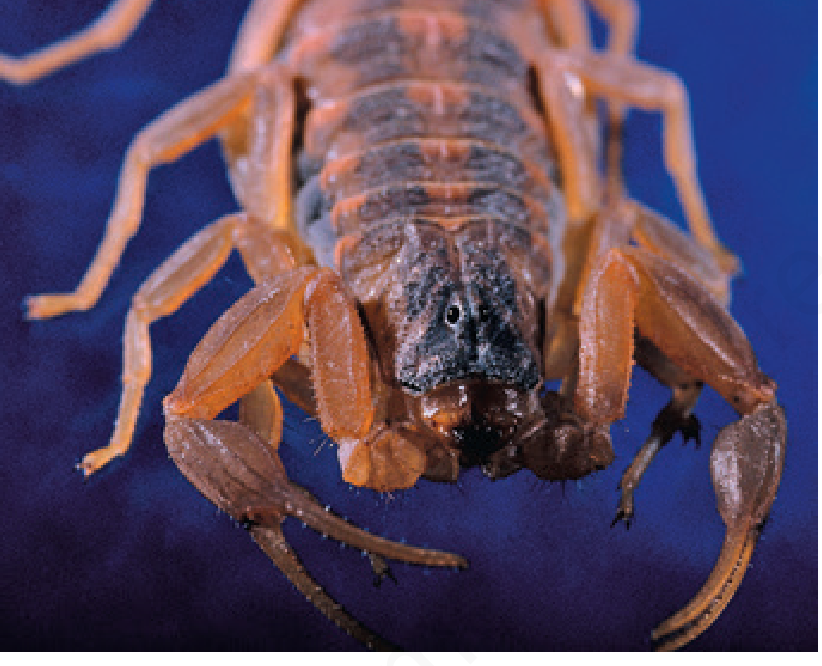
Step 1 - Identify the Scorpion (Species Matters)
Treatment is guided heavily by which species caused the sting:
| Region | Dangerous Species | Key Effect |
|---|---|---|
| USA (Southwest) | Centruroides sculpturatus / C. exilicauda | Neurotoxic - Na+ channels remain open |
| Middle East / N. Africa | Leiurus quinquestriatus, Androctonus spp. | Catecholamine storm, arrhythmias, pulmonary edema |
| India | Mesobuthus tamulus | Hypertensive crisis, myocardial damage |
| Brazil | Tityus serrulatus / T. trinitatis | Cardiac toxicity, acute pancreatitis |
| Iran | Hemiscorpius lepturus | Cytotoxic - hemolysis, tissue necrosis, AKI |
- Harrison's Principles of Internal Medicine 22E (2025), p. 3778
Step 2 - Severity Assessment
- Most stings (non-dangerous species, adults): Local pain, paresthesia, edema, burning - resolve within hours. These can be managed at home.
- Severe envenomation signs (especially Centruroides in US): Cranial nerve dysfunction (blurred vision, abnormal eye movements, slurred speech, profuse salivation), skeletal muscle hyperexcitability, restlessness, diaphoresis, tachycardia, arrhythmias, hypertension, rhabdomyolysis.
- Tap test: Paresthesia accentuated by tapping the sting site is characteristic of C. sculpturatus envenomation.
- Children and the elderly are at highest risk of fatal respiratory arrest.
Treatment by Category
1. Mild / Non-Dangerous Species
- Ice packs to the sting site
- Oral analgesics (NSAIDs or acetaminophen)
- Oral antihistamines (for local reaction / allergic component)
- Observe at home; return if neurological signs develop
- Harrison's 22E, p. 3778
2. General / All Significant Envenomations
- Keep the patient calm
- Apply pressure dressings and cold packs to reduce venom absorption
- Stabilize airway and vital signs
- Tetanus prophylaxis when appropriate
- Cleanse and disinfect the wound
3. Neurological / Neuromuscular Symptoms (e.g., Centruroides)
- Midazolam (IV, continuous infusion) - drug of choice to reduce agitation and involuntary muscle movements
- Sedatives or opiates may be used but require close respiratory monitoring
- Antivenom (see below)
- Harrison's 22E, p. 3778
4. Cardiovascular Complications (e.g., catecholamine storm species)
- Hypertension / Pulmonary edema: nifedipine, nitroprusside, hydralazine, or prazosin
- Bradydysrhythmia: atropine
- Note: Steroids, antihistamines, calcium channel blockers, and diuretics should be avoided in cardiac complications from envenomation - they can worsen outcomes due to negative cardiac effects (UN DHMOSH guidelines)
5. Antivenom (Antivenin)
- Represents the most effective intervention for dangerous species
- USA: FDA-approved equine-derived C. sculpturatus IgG F(ab')₂ antivenin - IV administration rapidly reverses cranial-nerve dysfunction and muscular symptoms
- Commercially prepared antivenins also available in several other countries for local dangerous species (North Africa, Middle East, Brazil, India, South Africa)
- Antivenom criteria are based on: severity of envenomation, age of patient (more dangerous in children), and time elapsed since sting
- Transfer patients with moderate-to-severe symptoms (grades 3-4) to a center with antivenom capability if not locally available
- Harrison's 22E, p. 3778; Andrews' Diseases of the Skin
6. Special Considerations - Hemiscorpius lepturus (Iran/adjacent regions)
- Initial sting may be deceptively mild
- Monitor closely from day 1 onward for hemolysis, hemoglobinuria, tissue necrosis, and acute kidney injury
- Supportive management of AKI as needed
Avoid the Following
- Negative-pressure extraction devices - utility not established for scorpion stings
- Calcium channel blockers, steroids, antihistamines, diuretics - can worsen cardiac complications in serious envenomations
Disposition
- Home: Adults with local pain only, no systemic signs
- Emergency Department / Hospital: Any patient with systemic symptoms, children stung by known dangerous species, or any sting where species is uncertain in a high-risk area
- Aggressive supportive care combined with judicious use of antivenom can eliminate deaths from severe envenomations
Sources:
- Harrison's Principles of Internal Medicine 22E (2025), pp. 3778-3779
- Andrews' Diseases of the Skin - Clinical Dermatology, p. (block 6)
- UN DHMOSH Guidance for Prevention & Management of Scorpion Stings (2026)
This is a shared conversation. Sign in to Orris to start your own chat.