
Napkin rash
Reading File
Napkin (diaper) rash is a contact dermatitis in the nappy area, most commonly caused by prolonged skin contact with urine and feces. It typically spares the skin folds and is managed by keeping the area dry, barrier creams, and treating secondary Candida infection with topical antifungals if needed.
Searching sources...
Finding Sources
Finding Sources
Searching PubMed
"diaper dermatitis" OR "napkin rash" management
Finding Sources
Finding Sources
Finding Sources
Good results. Now let me read the detailed content from multiple sources simultaneously.
Reading File
Reading File
Reading File
Excellent content retrieved. Let me also get the treatment section from Fitzpatrick's and the Andrews' treatment section:
Reading File
Reading File
I now have comprehensive content to provide a thorough answer. Let me also fetch the napkin psoriasis image which was referenced:
Loading Image
Here is a comprehensive overview of napkin (diaper) rash based on authoritative dermatology texts.
Napkin (Diaper) Dermatitis
Napkin rash is one of the most common skin problems in infants, with the highest prevalence between 6 and 12 months of age. It also occurs in adults with urinary or fecal incontinence who wear diapers. It has decreased significantly since the introduction of highly absorbent disposable diapers.
Pathophysiology
Multiple interrelated factors drive the condition:
- Prolonged moisture exposure - causes maceration, increased frictional damage, decreased barrier function, and increased reactivity to irritants
- Contact with urine and feces - reducing substances in stool and irritants in urine are direct chemical irritants
- Fecal proteolytic and lipolytic enzymes - degrade the skin barrier
- Increased skin pH - bacteria raise local pH, amplifying the activity of fecal lipases and proteases, leading to further skin breakdown
- Secondary infection - Candida albicans from intestinal flora frequently becomes a secondary invader, especially if the rash has persisted >3 days; bacterial superinfection (S. aureus, group A beta-haemolytic streptococci) can also occur
Breastfeeding is protective; diarrhoea is a risk factor.
Types of Napkin Rash
1. Irritant Contact Dermatitis (most common)
- Erythematous, moist, sometimes scaly patches on the convex surfaces of genitalia and buttocks
- Skin folds are classically spared - this is the key distinguishing feature from candidiasis and intertrigo
- Well-demarcated borders
2. Candidal Diaper Dermatitis (second most common)
- Bright red erythematous, moist papules, patches, and plaques
- Involves both skin folds AND convex surfaces (opposite of irritant type)
- Satellite papules and pustules at the periphery - the hallmark finding
- Oral thrush may be present concurrently
- Consider if rash has persisted >72 hours without improvement
3. Allergic Contact Dermatitis
- Less common; allergens include preservatives, fragrances, rubber additives, disperse dyes in diapers or baby wipes
- Sorbitan sesquioleate, cyclohexylthiophthalimide, and mercaptobenzothiazole (from rubber diaper covers) are recognised allergens
4. Jacquet Erosive Dermatitis
- Uncommon, severe form
- Well-demarcated, punched-out ulcers and erosions
5. Granuloma Gluteale Infantum
- Reddish-purple nodules (0.5-3 cm) on convexities of the diaper area
- An uncommon but striking variant; can simulate herpetic infection or genital warts
6. Pseudoverrucous Papules and Nodules
- Flat-topped, skin-coloured papules in chronic moisture exposure
- Seen in persistent incontinence of any age
Differential Diagnosis
Conditions that can mimic or co-exist with napkin rash:
| Condition | Key Features |
|---|---|
| Napkin psoriasis | Well-demarcated erythema; may involve skin folds; often ~3-6 months of age; look for psoriasis elsewhere |
| Seborrheic dermatitis | Scalp involvement (cradle cap); first weeks of life |
| Atopic dermatitis | Family history; involves face/flexures |
| Langerhans cell histiocytosis | Petechial/erosive rash, scalp involvement, systemic signs |
| Tinea cruris | Older children; scaling at border |
| Acrodermatitis enteropathica | Zinc deficiency; perioral/perianal involvement |
| Perianal streptococcal infection | Warm, macular, well-demarcated perianal erythema; may desquamate |
| Congenital syphilis, biotin deficiency, aminoacidurias | Consider in refractory cases |
Refractory diaper dermatitis that fails standard treatment should prompt a biopsy to exclude these conditions.
Napkin psoriasis - note the involvement of the skin folds:
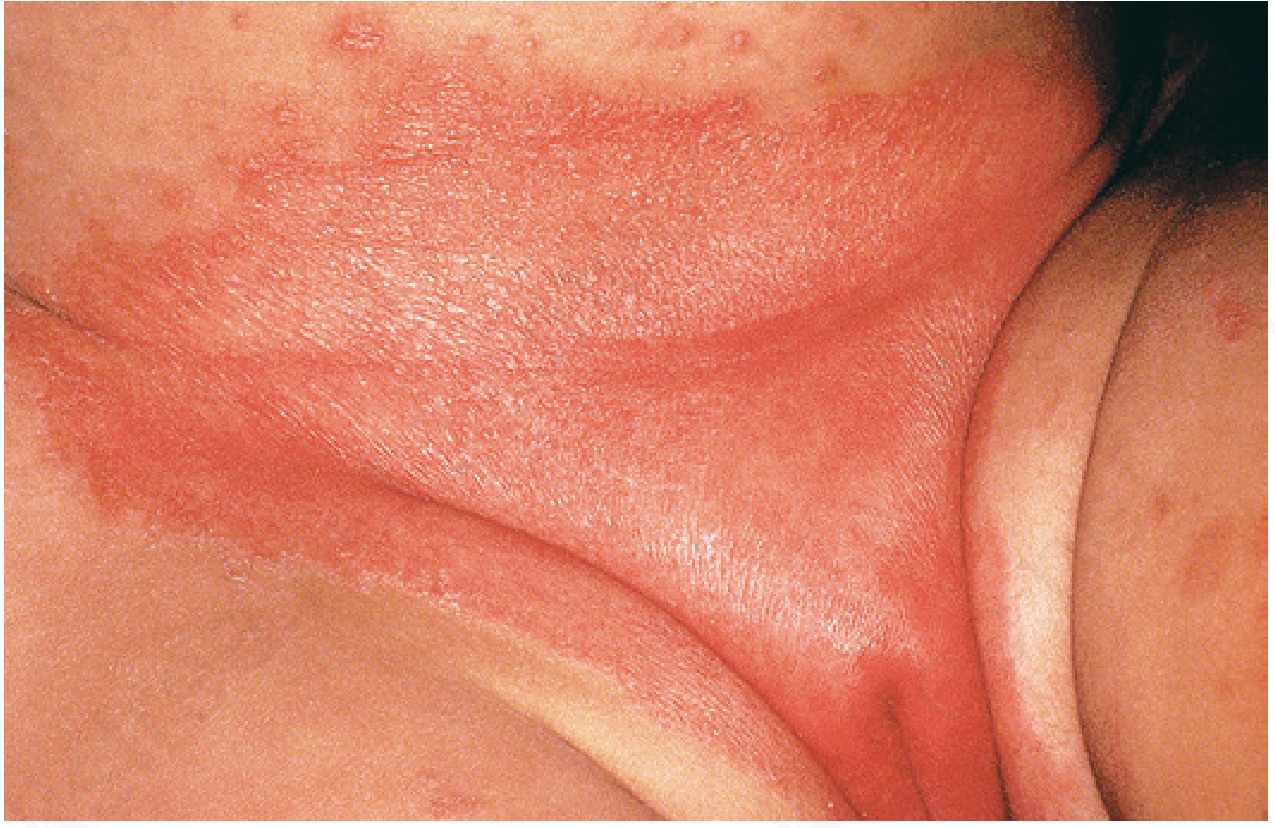
Fig. 5.13 Napkin psoriasis - Andrews' Diseases of the Skin
Treatment
Prevention (most important)
- Superabsorbent gel diapers are the most effective prevention - they wick urine and stool away from skin and buffer pH. Cloth diapers and regular disposables are inferior and are equal to each other in causing rash. The recent trend back to cloth/bamboo diapers has caused a resurgence of severe diaper dermatitis in parts of Europe.
- Frequent diaper changes - every 2 hours for newborns, every 3-4 hours for older infants
Irritant Diaper Dermatitis
- Good hygiene - gentle cleansing at each change
- Air drying - allow skin to dry before reapplying diaper
- Barrier creams/ointments - zinc oxide paste or petrolatum are both effective; they physically block urine and stool from contacting the irritated skin
- If not improving, add a very low-potency topical steroid (e.g. 1% hydrocortisone cream) for a few days
Candidal Diaper Dermatitis
- Topical antifungal - nystatin cream 100,000 units/gram applied 3 times daily for 10-14 days (applied first)
- Barrier ointment (zinc oxide applied over nystatin)
- For severely inflamed lesions: add 1-2% hydrocortisone cream (applied between nystatin and zinc oxide)
- Check for oral thrush - if present, treat with oral nystatin suspension:
- Infants: 2 mL (200,000 units) four times daily
- Children: 4-6 mL four times daily
- Continue for 48 hours after lesion resolution
Key Clinical Pearls
- Folds spared = irritant; folds involved = candidal (or napkin psoriasis, seborrheic dermatitis)
- Candida should be suspected in any rash persisting >3 days despite standard measures
- The tip of the penis may become irritated with crusting, leading to dysuria and blood spots on the diaper
- Do not switch to cloth diapers when rash occurs - superabsorbent gel diapers are superior
Sources: Fitzpatrick's Dermatology, 9th ed. | Andrews' Diseases of the Skin, 13th ed. | Tintinalli's Emergency Medicine
What's the difference between candidal and irritant diaper rash on exam?
The single biggest distinguishing feature is skin fold involvement: irritant rash spares the folds, candidal rash involves them. Satellite pustules are the other hallmark of candidal infection.
Searching sources...
Finding Sources
Reading File
Reading File
I also need to find the Swanson's answer for question 11 about the candidal vs irritant distinction:
Reading File
Here is a focused comparison based on examination findings.
Candidal vs Irritant Diaper Rash: Exam Findings
| Feature | Irritant Dermatitis | Candidal Dermatitis |
|---|---|---|
| Skin folds | Spared | Involved |
| Satellite lesions | Absent | Present - pustules at a distance from the main rash edge |
| Distribution | Convex surfaces (outer genitalia, buttocks - areas in direct contact with wet diaper) | Both folds and convexities |
| Lesion type | Erythematous, scaly, moist patches; may have papulovesicles, fissures, erosions | Confluent erythematous plaque of papules and vesiculopustules |
| Border | Well-demarcated | Scalloped border, sharply demarcated edge |
| Colour | Pink-red, erythematous | Bright red |
| Mouth | Normal | Check for oral thrush (co-existing in ~same reservoir) |
| Duration clue | Acute onset, responds to barrier care | Often persisting >3 days without improvement |
The Two Key Pearls
-
Fold involvement - the single most reliable sign. Irritant rash is caused by skin contact with urine and feces, so it hits the areas that press against the wet diaper (convexities) and spares the warm creased folds. Candida thrives in warm, moist, occluded skin, so it preferentially colonises the folds.
-
Satellite pustules - small pustules scattered beyond the margins of the main rash. This is the hallmark of candidal infection and is not seen in pure irritant dermatitis.
Additional Clues Toward Candida
- Rash not responding to barrier cream after 3 days (Candida from intestinal flora can superinfect any rash lasting >72 hours)
- Oral thrush present
- Recent antibiotic use
- Worsening with topical corticosteroids alone (steroids promote candidal overgrowth)
Irritant-Only Features
- Fissures, erosions, and occasionally bullae in more severe cases
- Patchy or confluent pattern following the diaper contact zone
- Responds quickly to frequent diaper changes, air drying, and zinc oxide
The classic exam question answer (Swanson's): "Candidal diaper rash tends to involve the warm, moist folds of the skin, whereas irritant diaper dermatitis tends to spare the folds. Candidal rash also presents with satellite lesions and will worsen with prolonged topical corticosteroid therapy."
- Fitzpatrick's Dermatology, 9th ed. | Andrews' Diseases of the Skin, 13th ed. | Swanson's Family Medicine Review
This is a shared conversation. Sign in to Orris to start your own chat.