
Diabetes management in adults
I'll start by reading the medical library skill, then search for comprehensive diabetes management content.
Reading File
Now I'll run parallel searches across headings, paragraphs, PubMed, and the web simultaneously.
Finding Sources
Finding Sources
Searching PubMed
"diabetes mellitus type 2" AND "management" AND "adults"
Searching the Web
diabetes management adults 2025 guidelines ADA
Now let me read the most comprehensive textbook sections in parallel.
Reading File
Reading File
Finding Sources
Finding Sources
Prescription for stye
A stye (hordeolum) is usually treated with warm compresses as first-line. Topical antibiotics (erythromycin or bacitracin ointment) are commonly prescribed, and oral antibiotics are reserved for spreading infection or systemic signs. Most styes resolve within 1-2 weeks with conservative care.
Searching sources...
Reading File
Finding Sources
Finding Sources
Searching the Web
stye hordeolum prescription treatment antibiotic 2024
Now let me read both textbook sections in parallel for detailed clinical content.
Reading File
Reading File
Searching PubMed
"hordeolum" AND "treatment"
Let me also fetch the clinical image of a stye for visual reference.
Loading Image
Loading Image
Here is a complete, evidence-based guide to prescribing for a stye (hordeolum), drawn from Goldman-Cecil Medicine, Tintinalli's Emergency Medicine, and current clinical sources.
Stye (Hordeolum) - Prescription & Management
What Is a Stye?
A stye is an acute bacterial abscess of the eyelid, almost always caused by Staphylococcus aureus. There are two types:
| Type | Location | Gland Involved |
|---|---|---|
| External hordeolum | Eyelid margin, at lash base | Zeis (sebaceous) or Moll (sweat) glands |
| Internal hordeolum | Inner tarsal surface | Meibomian glands |
Both present with pain, swelling, erythema, and a localized pustule.
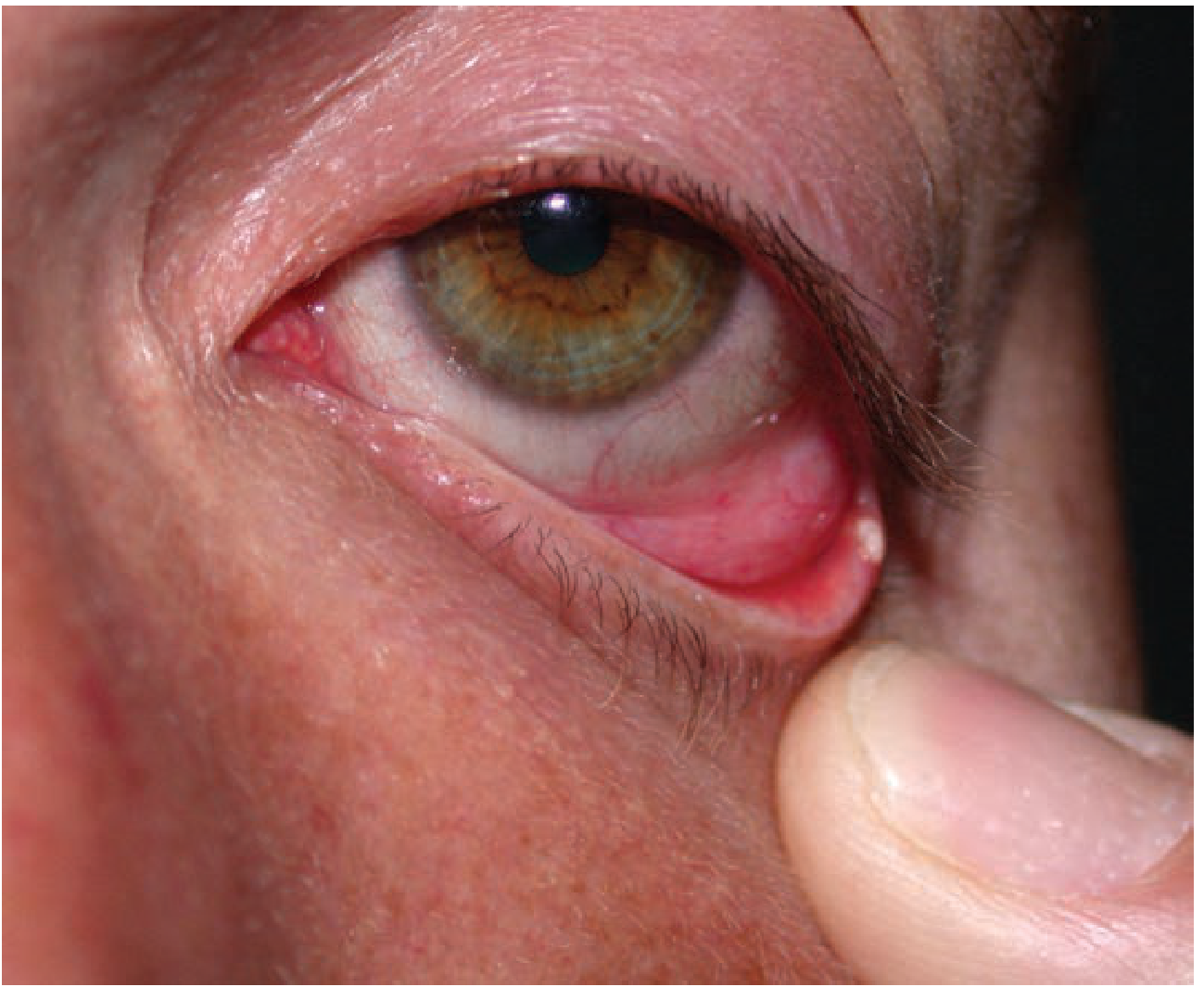
External hordeolum showing erythema and swelling at the lower lid margin - Tintinalli's Emergency Medicine
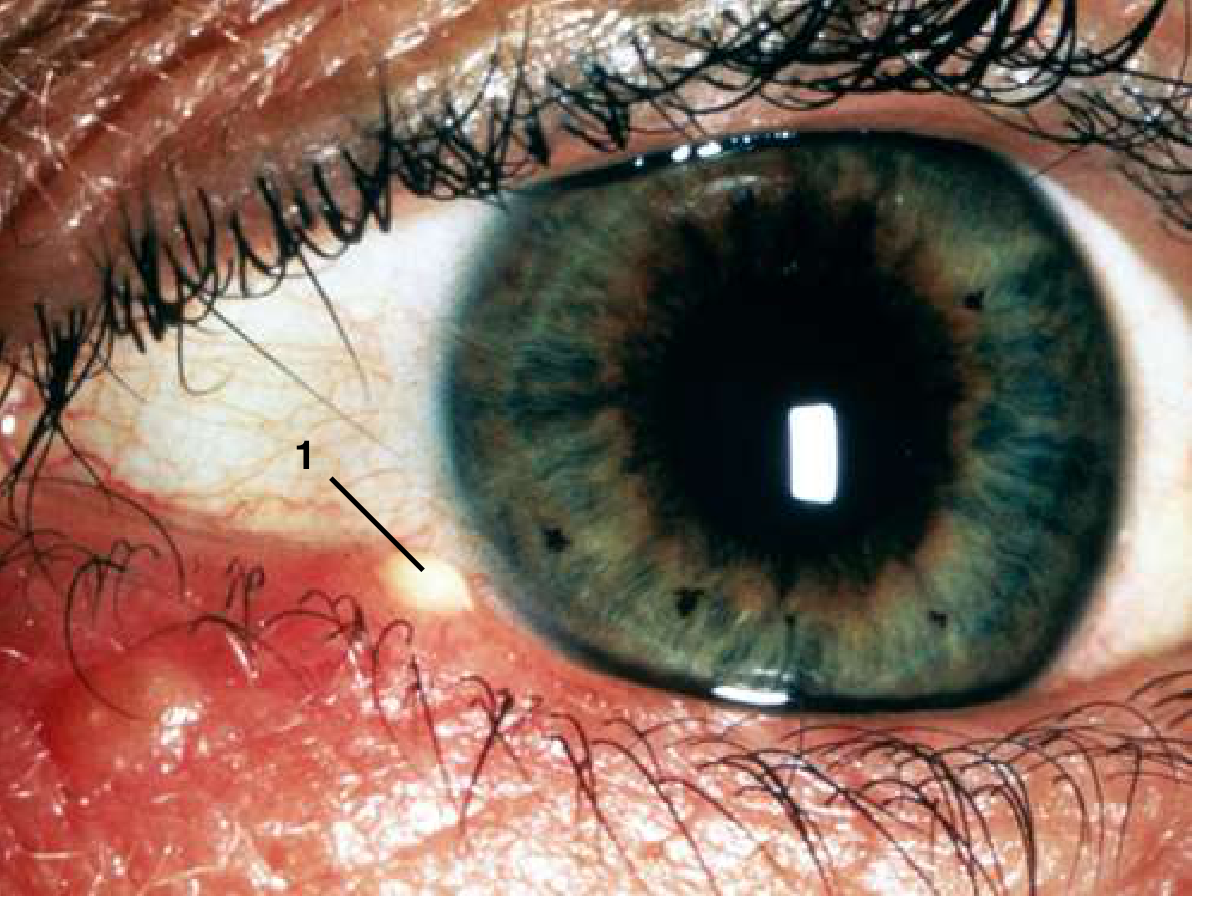
Lower lid stye (1) - Goldman-Cecil Medicine
Step-by-Step Treatment
1. First-Line: Warm Compresses (Always)
- Warm moist compress applied for 10 minutes, 4 times daily
- Promotes spontaneous drainage
- Most styes resolve within 1-2 weeks with this alone
- Good eyelid hygiene (lid scrubs) should accompany compresses
2. Topical Antibiotic Prescription
Indicated when: the stye is draining, there is accompanying blepharoconjunctivitis, or the lesion is not improving after a few days.
| Drug | Formulation | Dosing |
|---|---|---|
| Erythromycin ophthalmic ointment 0.5% | Ointment | Apply to lower conjunctival fornix or lid margin twice daily for 7-10 days |
| Bacitracin ophthalmic ointment | Ointment | Apply to affected lid 2-4x daily for 7-10 days |
| Moxifloxacin 0.5% drops (Vigamox) | Drops | 1 drop 3x daily for 7 days |
| Gatifloxacin 0.3% drops (Zymaxid) | Drops | 1 drop 4x daily for 7 days |
Erythromycin or bacitracin ointments are the most commonly used and cost-effective options. Fluoroquinolone drops (moxifloxacin, gatifloxacin) are appropriate if broader coverage or a drop formulation is preferred. - Goldman-Cecil Medicine, Tintinalli's Emergency Medicine
3. Oral Antibiotics - When Required
Reserved for specific indications:
| Indication | Drug of Choice |
|---|---|
| Significant surrounding periorbital/preseptal cellulitis | Dicloxacillin 500 mg PO QID x 7 days or Amoxicillin-clavulanate 875 mg PO BID x 7 days |
| Recurrent or multiple styes, chronic meibomitis | Doxycycline 100 mg PO BID x 4-6 weeks (also has anti-inflammatory effect on meibomian glands) |
| MRSA concern | TMP-SMX DS (Bactrim) PO BID x 7 days |
Oral doxycycline is particularly useful for patients with recurrent hordeola, meibomian gland dysfunction, or ocular rosacea, due to both its antimicrobial and anti-inflammatory properties. - Medscape Hordeolum Treatment
4. Adjunctive Measures
- Eyelash epilation: If the stye is centered around a lash follicle, pulling the offending lash can enhance drainage
- Avoid eye makeup and contact lenses until resolved
- Do not squeeze or puncture the stye (risk of spreading infection)
5. Incision & Drainage (I&D)
- Indicated if the hordeolum is large, not draining, or refractory to medical therapy after 48 hours
- External hordeolum: skin incision through orbicularis
- Internal hordeolum: incision through tarsal conjunctiva
- Refer to ophthalmology if I&D is needed, or if no improvement after 1-2 weeks
Sample Prescription (Typical Uncomplicated Stye)
Rx: Erythromycin ophthalmic ointment 0.5% (3.5g tube)
    Apply a thin ribbon to the lower conjunctival sac or along the lid margin
    Twice daily (morning and night) x 7-10 days

Instructions:
- Apply warm moist compresses for 10 minutes, 4 times per day
- Do not wear eye makeup or contact lenses until resolved
- Do not squeeze or attempt to pop the stye
- Return if worsening pain, spreading redness, fever, or no improvement in 1 week
When to Refer to Ophthalmology
- No improvement after 1-2 weeks of treatment
- Signs of preseptal or orbital cellulitis (proptosis, restricted eye movement, fever)
- Stye involving the inner tarsal surface requiring I&D
- Recurrent chalazion requiring steroid injection or curettage
- Any vision changes
Sources: Goldman-Cecil Medicine, 26th ed. | Tintinalli's Emergency Medicine, 9th ed. | Bailey & Love's Surgery, 28th ed. | Medscape Hordeolum Treatment | NIH StatPearls - Hordeolum
This is a shared conversation. Sign in to Orris to start your own chat.