I now have comprehensive information. Let me compile a thorough FMGE-focused teaching note.
Barbiturates & Benzodiazepines for FMGE
PART 1: BARBITURATES
Chemistry & Structure
Barbiturates are derivatives of barbituric acid (2,4,6-trioxohexahydropyrimidine), formed by condensation of malonic acid and urea. Barbituric acid itself is NOT hypnotically active. Hypnotic activity comes from substitutions at position 5 (aryl/alkyl groups).
Two major classes:
- Oxybarbiturates - oxygen at position 2 (e.g., phenobarbitone, methohexital)
- Thiobarbiturates - sulfur at position 2 (e.g., thiopental, thiamylal) - sulfur makes them more lipid-soluble and faster acting
Classification (FMGE High-Yield Table)
| Duration | Drug | Key Use |
|---|
| Ultra-short acting | Thiopental (Thiopentone), Thiamylal, Methohexital | IV anesthesia induction |
| Short acting | Pentobarbitone, Secobarbitone | Insomnia (rarely used now) |
| Intermediate acting | Amylobarbitone, Butobarbitone | Sedation |
| Long acting | Phenobarbitone | Epilepsy (most important!) |
FMGE Mnemonic - Ultra-short: "The Thief Made a Rapid Escape" = Thiopental, Thiamylal, Methohexital
Mechanism of Action
Barbiturates act on the GABA-A receptor (pentameric chloride ion channel).
- At low doses: Barbiturates increase the DURATION of Cl⁻ channel opening → enhanced GABA action → hyperpolarization
- At high (anesthetic) doses: Barbiturates directly activate the Cl⁻ channel even without GABA (GABA-mimetic effect)
- Additional actions: Block excitatory neurotransmitters (glutamate/NMDA, acetylcholine), inhibit Ca²⁺ channels, reduce CMRO₂
FMGE Key Distinction: Barbiturates = increase DURATION of Cl⁻ channel opening | Benzodiazepines = increase FREQUENCY of Cl⁻ channel opening
Pharmacokinetics
- Thiopental (thiobarbiturate): Highly lipid soluble - rapid onset (30 sec), short action due to redistribution (not metabolism) - "context-sensitive" distribution
- Highly protein-bound (albumin)
- Metabolized by liver (CYP450) - phenobarbitone is a potent enzyme inducer (CYP2C9, 3A4 - reduces levels of warfarin, OCP, other AEDs)
- Phenobarbitone has the longest half-life (~80-100 hours)
CNS Effects
- Dose-dependent depression: sedation → hypnosis → anesthesia → coma
- Decrease CMRO₂ and CBF (brain protective in ischemia)
- Anticonvulsant (especially phenobarbitone)
- Suppress REM sleep - rebound on withdrawal
- At subanesthetic doses: may increase sensitivity to pain (anti-analgesic effect) - "hyperalgesia"
- NOT analgesic
Clinical Uses
| Indication | Drug |
|---|
| IV anesthesia induction | Thiopentone (rapidly replaced by propofol) |
| Status epilepticus (3rd line) | IV Phenobarbitone (20 mg/kg, max 100 mg/min) |
| Chronic epilepsy | Phenobarbitone |
| ECT anesthesia | Methohexital (drug of choice) |
| Raised ICP (refractory) | Pentobarbital (barbiturate coma) |
| Wada test (cerebral lateralization) | Amobarbital (intracarotid) |
| Narcoanalysis ("truth serum") | Amobarbital |
| Neonatal seizures | Phenobarbitone |
Adverse Effects
- Respiratory depression - most dangerous; dose-dependent
- Laryngospasm (especially with thiopentone if given with airway stimulation)
- Cardiovascular depression - hypotension, decreased cardiac output
- Precipitates porphyria (absolute contraindication in acute porphyria - increases ALA synthase)
- Enzyme induction - multiple drug interactions
- Paradoxical excitement in elderly and children
- Physical and psychological dependence; narrow therapeutic index
- Arterial injection of thiopentone → intense vasoconstriction, gangrene (treat with papaverine/lidocaine)
Contraindications
- Acute intermittent porphyria (AIP) - most important FMGE contraindication
- Severe respiratory disease / airway obstruction
- Shock / hypovolemia
- Fixed cardiac output states
Overdose / Barbiturate Poisoning
- No specific antidote (unlike benzodiazepines)
- Supportive: ABC, mechanical ventilation
- Urinary alkalinization with sodium bicarbonate (increases ionization → reduces renal reabsorption) - works best for phenobarbitone (long-acting)
- Activated charcoal (multiple doses for phenobarbitone)
PART 2: BENZODIAZEPINES (BZDs)
Classification
| Duration | Drug | T½ |
|---|
| Ultra-short | Triazolam | 2-3 h |
| Short acting | Midazolam, Oxazepam, Lorazepam | 2-12 h |
| Intermediate | Temazepam, Alprazolam | 10-20 h |
| Long acting | Diazepam, Chlordiazepoxide, Clonazepam, Nitrazepam | 20-100+ h |
FMGE Mnemonic - Short-acting BZDs: "MOLT" = Midazolam, Oxazepam, Lorazepam, Triazolam
Water-soluble BZDs (no propylene glycol vehicle, less phlebitis, IM safe): Midazolam, Lorazepam
Lipid-soluble (fastest CNS onset): Diazepam, Midazolam
Mechanism of Action
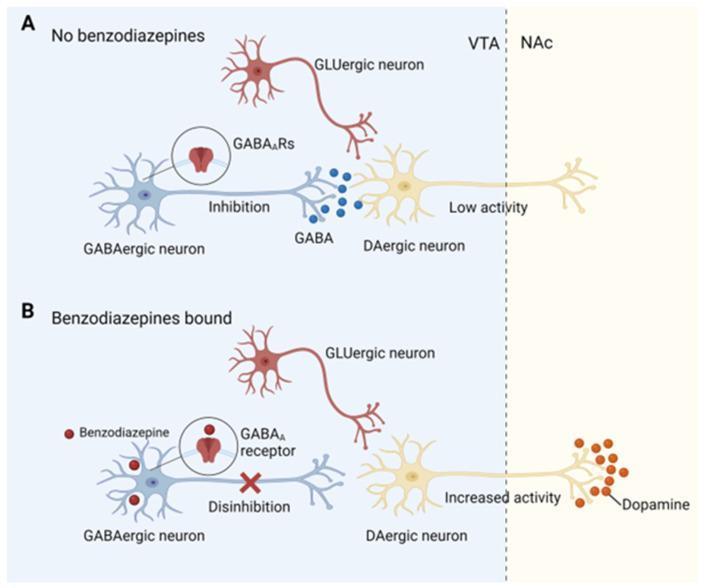
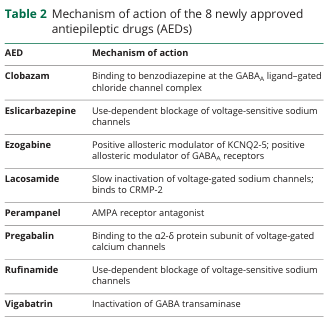
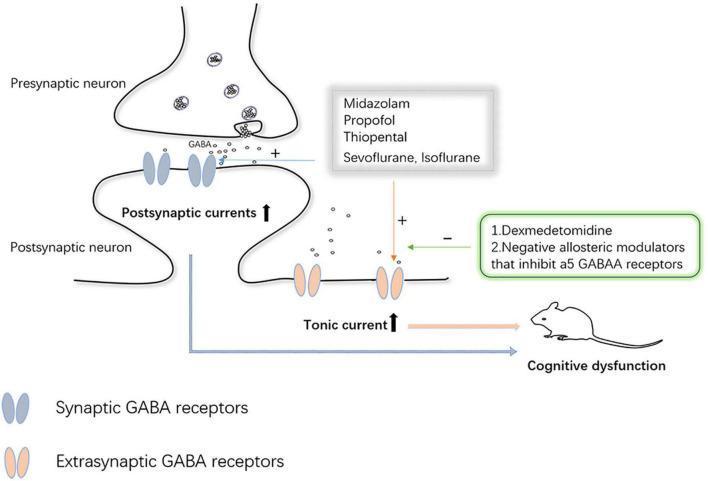
BZDs act at the benzodiazepine-binding site on the GABA-A receptor (allosteric site between α and γ subunits):
- They do NOT activate GABA-A receptors directly
- They increase the FREQUENCY of Cl⁻ channel opening in the presence of GABA (indirect, GABA-dependent effect)
- This is why BZDs are safer than barbiturates - they require GABA to be present (ceiling effect on respiratory depression)
GABA-A subunit selectivity:
- α₁ subunit → Sedation, hypnosis, anterograde amnesia, anticonvulsant
- α₂ subunit → Anxiolysis, muscle relaxation
Receptor potency order: Lorazepam > Midazolam > Diazepam (lorazepam is 5-10x more potent, midazolam 3-6x more potent than diazepam) - Miller's Anesthesia 10e
Pharmacological Effects (FMGE 6 Key Actions)
All benzodiazepines share 6 actions:
- Anxiolysis (anti-anxiety)
- Sedation/Hypnosis
- Anterograde amnesia (patients forget events after drug - used in endoscopy/procedures)
- Anticonvulsant
- Muscle relaxation (central, spinal cord, via α₂ subunit)
- Anesthesia (at high doses)
BZDs are NOT analgesic
Key Individual Drugs (FMGE Favorites)
| Drug | Special Feature |
|---|
| Diazepam | Most widely used; long t½; active metabolite (desmethyldiazepam); rectal route for pediatric seizures |
| Lorazepam | Drug of choice (DOC) for status epilepticus (IV/IM, no active metabolites, not redistributed) |
| Midazolam | DOC for procedural sedation, shortest acting IV BZD, most amnesic, water-soluble |
| Clonazepam | DOC for myoclonic seizures and absence seizures; long-acting |
| Alprazolam | DOC for panic disorder |
| Nitrazepam | Used in infantile spasms (West syndrome) |
| Chlordiazepoxide | DOC for alcohol withdrawal |
| Oxazepam | Preferred in elderly/liver disease (direct glucuronidation, no active metabolites) |
Clinical Uses
| Indication | Drug |
|---|
| Status epilepticus (1st line) | Lorazepam IV > Diazepam IV |
| Alcohol withdrawal | Chlordiazepoxide / Diazepam |
| Panic disorder | Alprazolam |
| Generalized anxiety disorder | Diazepam / Buspirone |
| Insomnia (short-term) | Nitrazepam, Triazolam |
| Premedication / procedural sedation | Midazolam |
| Spastic conditions, muscle spasm | Diazepam |
| Infantile spasms (West syndrome) | Nitrazepam, Clonazepam |
| Myoclonic epilepsy | Clonazepam |
| Febrile seizures (acute) | Diazepam rectal/IV |
| Adjunct in anesthesia | Midazolam |
Pharmacokinetics (FMGE Points)
- All BZDs are highly protein-bound and lipid-soluble (cross BBB rapidly)
- Metabolized in liver via CYP3A4 → conjugation to glucuronide
- Diazepam → active metabolite desmethyldiazepam (long t½ ~200 h) → explains prolonged effect
- Oxazepam, Lorazepam, Temazepam (LOT) undergo direct glucuronidation - no active metabolites - safe in elderly and liver disease
- Midazolam: imidazole ring fused, making it water-soluble at low pH but lipid-soluble at physiological pH
Adverse Effects
- Anterograde amnesia (desired for procedures, unwanted otherwise)
- Sedation, cognitive impairment, psychomotor slowing
- Respiratory depression (less than barbiturates; but additive with opioids - synergistic)
- Paradoxical disinhibition/agitation (especially in elderly, children, personality disorders)
- Dependence and withdrawal (rebound anxiety, insomnia, seizures)
- No hepatotoxicity or enzyme induction (unlike barbiturates)
Benzodiazepine Overdose / Antidote
Antidote = FLUMAZENIL (competitive antagonist at BZD receptor)
Key facts about Flumazenil for FMGE:
- Competitive antagonist at GABA-A benzodiazepine binding site
- IV dose: 0.2 mg increments every 1-2 min
- Very short t½ ~1 hour (shortest of all BZDs) - may need repeat doses or infusion (resedation risk!)
- Has NO intrinsic CNS effect when given alone
- Does NOT reverse barbiturate or opioid effects
- Can precipitate seizures in chronic BZD users or mixed overdose (use carefully)
Comparison Table: Barbiturates vs. Benzodiazepines
| Feature | Barbiturates | Benzodiazepines |
|---|
| Receptor mechanism | Increase Cl⁻ channel DURATION | Increase Cl⁻ channel FREQUENCY |
| GABA-dependent? | No (at high doses, act directly) | Yes (GABA must be present) |
| Safety margin | Narrow | Wide (ceiling effect) |
| Analgesic? | No (anti-analgesic at low doses) | No |
| Antidote | None | Flumazenil |
| Enzyme induction | Yes (CYP450) | No |
| Tolerance | Rapid | Slower |
| Porphyria risk | Yes (absolute CI) | No |
| Preferred in liver disease | No | LOT group (oxazepam etc.) |
| Respiratory depression | Severe (direct) | Milder (indirect) |
FMGE High-Yield Mnemonics & One-Liners
- Barbiturates = Duration | Benzodiazepines = Frequency (of Cl⁻ channel opening) - Most commonly tested!
- DOC Status Epilepticus = Lorazepam (first-line IV); phenobarbitone = 3rd line
- DOC Alcohol Withdrawal = Chlordiazepoxide
- DOC Panic Disorder = Alprazolam
- DOC Myoclonic Seizures = Clonazepam
- DOC Infantile Spasms = Nitrazepam (also ACTH/vigabatrin)
- Safe BZDs in liver disease = LOT (Lorazepam, Oxazepam, Temazepam)
- Antidote for BZD = Flumazenil (no antidote for barbiturates)
- Methohexital = DOC for ECT anesthesia
- Thiopentone CI = Acute Porphyria
- Arterial injection of thiopentone → gangrene (crystallizes in arteries)
- Midazolam = most amnesic, water-soluble BZD
- Barbiturate urinary alkalinization = phenobarbitone (ion trapping)
Sources: Miller's Anesthesia 10e, Kaplan & Sadock's Comprehensive Textbook of Psychiatry, Kaplan and Sadock's Synopsis of Psychiatry, Goodman & Gilman's Pharmacological Basis of Therapeutics