Now I have enough information from the medical library, textbooks, and current web sources to give a thorough, well-organized answer.
Diet in Hypothyroidism: Foods to Eat and Avoid
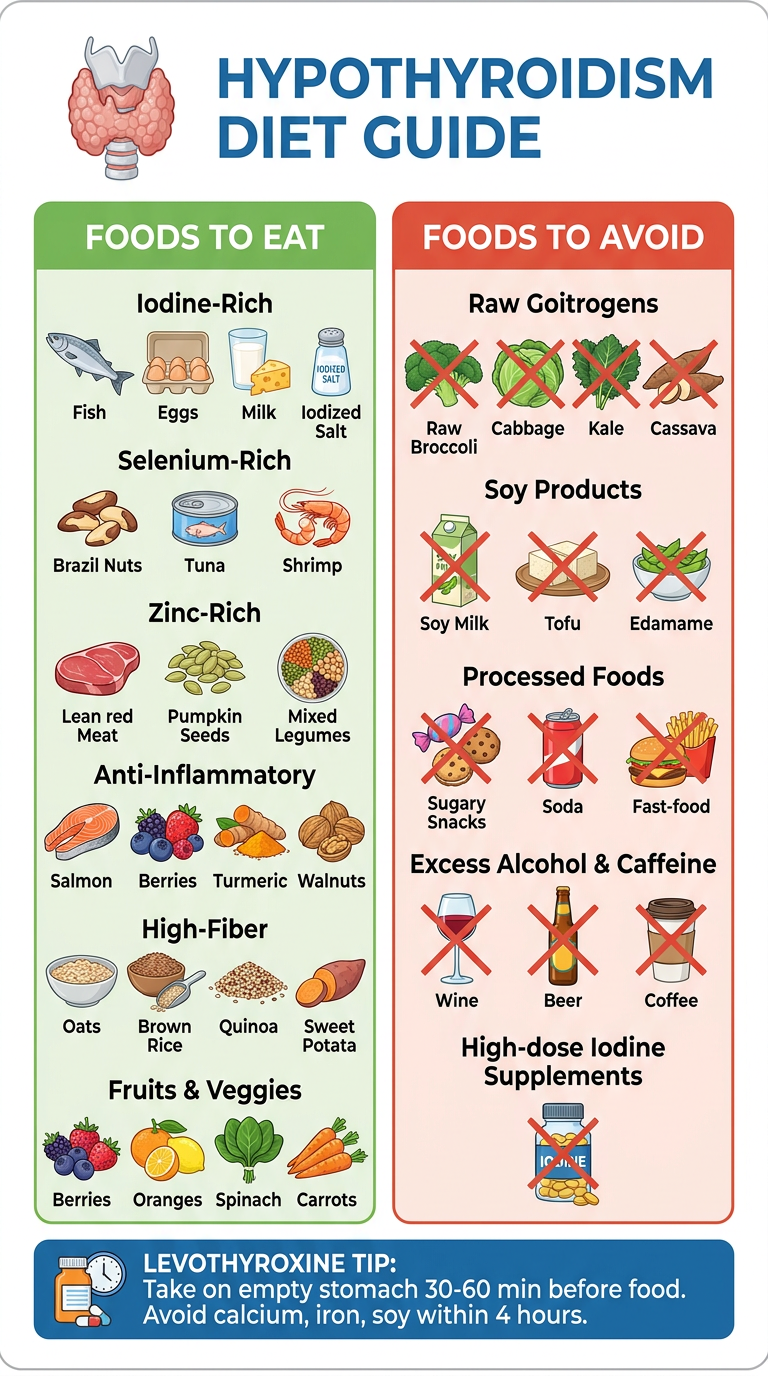
Hypothyroidism means the thyroid gland is underactive and produces insufficient T3/T4 hormones. Diet cannot replace thyroid hormone therapy (levothyroxine), but it plays a major supporting role - by supplying key micronutrients for hormone synthesis, avoiding compounds that suppress thyroid function, and managing the drug-food interactions of levothyroxine.
FOODS TO EAT
1. Iodine-Rich Foods
Iodine is the essential building block of thyroid hormones T3 and T4. Deficiency is the most common cause of hypothyroidism worldwide.
| Food | Iodine Content |
|---|
| Baked cod (3 oz) | ~146 mcg (97% DV) |
| Cooked oysters (3 oz) | ~93 mcg (62% DV) |
| Plain nonfat Greek yogurt (¾ cup) | ~87 mcg (58% DV) |
| Nonfat milk (1 cup) | ~84 mcg (56% DV) |
| Iodized table salt (¼ tsp) | ~78 mcg (52% DV) |
| Hard-boiled egg (1 large) | ~31 mcg (21% DV) |
- Sea fish (tuna, cod, haddock), seaweed, and dairy are the best natural sources.
- Mulholland & Greenfield's Surgery, 7e notes that iodine is a key component of the thyroid hormonal system and deficiency manifests as goiter and hypothyroidism.
2. Selenium-Rich Foods
Selenium is required for the enzyme iodothyronine deiodinase, which converts T4 (inactive) into T3 (active hormone). It also protects the thyroid from oxidative damage.
| Food | Selenium Content |
|---|
| Brazil nuts (6-8 nuts / 1 oz) | ~544 mcg (989% DV) - limit to 1-2/day |
| Yellowfin tuna (3 oz cooked) | ~92 mcg |
| Shrimp (3 oz cooked) | ~42 mcg |
| Roasted turkey (3 oz) | ~26 mcg |
| Roasted chicken (3 oz) | ~22 mcg |
| Cottage cheese (1 cup) | ~20 mcg |
3. Zinc-Rich Foods
Zinc supports thyroid hormone synthesis and helps the pituitary gland sense T3/T4 levels. Foods rich in zinc include:
- Lean red meat, chicken, oysters
- Legumes (chickpeas, lentils, beans)
- Pumpkin seeds, nuts
Tietz Textbook of Laboratory Medicine confirms zinc is a component of thyroid-related metalloenzymes and transcription factors.
4. Anti-Inflammatory and Antioxidant Foods
Hashimoto's thyroiditis (the most common cause of hypothyroidism) involves autoimmune inflammation. Anti-inflammatory foods can reduce disease burden:
- Fatty fish (salmon, mackerel, sardines) - omega-3 fatty acids
- Berries (blueberries, strawberries) - antioxidants
- Turmeric (curcumin) - anti-inflammatory
- Walnuts - anti-inflammatory omega-3s
- Leafy green vegetables (spinach, kale - preferably cooked)
5. High-Fiber Foods
Hypothyroidism slows metabolism and can cause constipation. High-fiber foods help bowel motility:
- Whole grains: oats, brown rice, quinoa
- Legumes: lentils, beans, chickpeas
- Vegetables: artichokes, carrots, sweet potato, asparagus
6. Lean Proteins
Support metabolism and muscle maintenance:
- Eggs, chicken breast, turkey, fish
- Legumes for plant-based protein
7. Fruits and Non-Starchy Vegetables
- Apples, pears, citrus, peaches, grapes, pineapple, bananas
- Zucchini, peppers, mushrooms, carrots, spinach, artichokes
FOODS TO AVOID OR LIMIT
1. Raw Goitrogenic Vegetables (Limit Raw; Cook Them)
Goitrogens are compounds that interfere with iodine uptake and thyroid hormone synthesis. Cooking largely neutralizes their effect, so these foods are fine in moderation when cooked:
- Broccoli, cauliflower, cabbage, Brussels sprouts, kale, bok choy, collard greens
- Cassava (yuca) - this root vegetable is a notable exception and should be avoided even when cooked, as it produces linamarin which generates cyanogenic compounds interfering with iodine metabolism.
2. Soy Products (Limit)
Soy isoflavones can:
- Inhibit thyroid peroxidase (the enzyme needed for hormone synthesis)
- Reduce absorption of levothyroxine medication
- Avoid: Soy milk, edamame, tofu, soy-based supplements in large quantities, especially within 4 hours of taking levothyroxine.
3. Foods That Interfere with Levothyroxine Absorption
Take levothyroxine on an empty stomach, 30-60 minutes before eating. The following foods/substances directly reduce drug absorption (as documented in Goodman & Gilman's Pharmacological Basis of Therapeutics):
| Substance | Mechanism |
|---|
| Calcium-rich foods (milk, cheese) | Adsorbs levothyroxine, reduces absorption |
| Iron-rich foods or supplements | Chelates levothyroxine |
| High-fiber meals | Reduces GI absorption |
| Coffee | Delays absorption |
4. Processed and Ultra-Processed Foods
- Refined sugars, candy, soda, packaged snacks
- Promote weight gain (hypothyroidism already slows metabolism)
- Cause inflammation which worsens autoimmune thyroid disease
- Offer no micronutrients to support thyroid function
5. Gluten (For Hashimoto's Patients Specifically)
Patients with Hashimoto's thyroiditis have a higher prevalence of celiac disease and non-celiac gluten sensitivity. In those individuals, a gluten-free diet may reduce thyroid antibody levels.
- Wheat, barley, rye - avoid if co-existing celiac/gluten sensitivity is confirmed
6. Excessive Alcohol and Caffeine
- Alcohol directly suppresses thyroid gland function and T3/T4 secretion
- Excessive caffeine can interfere with levothyroxine absorption if taken together
- Both can disrupt sleep, worsen fatigue (already a major symptom)
7. Excessive Iodine (Paradox)
While iodine deficiency causes hypothyroidism, excess iodine can paradoxically worsen it (Wolff-Chaikoff effect), especially in autoimmune thyroid disease. Avoid mega-dose iodine supplements and excessive seaweed (kelp) consumption.
LEVOTHYROXINE TIMING - KEY RULE
| Timing | Recommendation |
|---|
| Before meals | Take levothyroxine 30-60 minutes before breakfast on an empty stomach |
| Avoid within 4 hours | Calcium supplements, iron supplements, antacids, soy products, high-fiber meals |
| Coffee | Wait at least 30 minutes after taking the medication |
QUICK REFERENCE SUMMARY
| Category | Recommended | Avoid/Limit |
|---|
| Protein | Fish, chicken, eggs, turkey, legumes | Soy (large amounts) |
| Grains | Oats, brown rice, quinoa | Refined flour/sugar |
| Dairy | Low-fat milk, Greek yogurt, cheese | Consuming near levothyroxine dose |
| Vegetables | Cooked cruciferous veggies, leafy greens, carrots, sweet potato | Raw goitrogens in excess, cassava |
| Fruits | Berries, citrus, apples, banana | No major restrictions |
| Fats | Olive oil, avocado, fatty fish, walnuts, coconut oil | Trans fats, processed fats |
| Supplements | Selenium, zinc (if deficient) | High-dose iodine, biotin (interferes with TSH test) |
| Beverages | Water, herbal tea | Alcohol, coffee with medication |
Important note: Biotin supplements are increasingly popular but should be stopped 2 days before TSH blood tests, as biotin falsely lowers TSH results and can lead to misdiagnosis or incorrect dose adjustments. -
Cleveland Clinic Hypothyroidism Diet
Diet optimizes thyroid function and medication efficacy but does not replace levothyroxine. Always consult your endocrinologist or registered dietitian for personalized guidance.