
Dengue preventing, cautions,drugs...problems..give me every knowledge
Reading File
Finding Sources
Searching PubMed
dengue prevention vaccine
Searching the Web
dengue fever prevention drugs treatment warning signs 2026
Reading File
Reading File
Reading File
Reading File
Reading File
Dengue Fever: Complete Clinical Overview
What it is
Dengue is caused by a flavivirus (Aedes aegypti/albopictus-borne) with four (some sources now count five) serotypes (DENV-1 to DENV-4/5). Infection with one serotype gives lifelong immunity to that serotype only, but a weak, cross-reactive antibody response to the others - this is central to why re-infection can be more dangerous than the first. It infects an estimated 390-400 million people/year, with about 100 million symptomatic and up to 40,000 deaths from severe disease (Robbins Pathologic Basis of Disease, p. 336; Comprehensive Clinical Nephrology, p. 978).
Clinical picture
- Incubation: 4-10 days
- Classic dengue fever ("breakbone fever"): high fever, severe headache, retro-orbital pain, myalgia/arthralgia, macular/maculopapular rash, leukopenia, thrombocytopenia (Washington Manual of Medical Therapeutics; ROSEN's Emergency Medicine, p. 2630)
- Minor bleeding signs: petechiae, purpura, ecchymosis, epistaxis, gum bleeding, positive tourniquet test
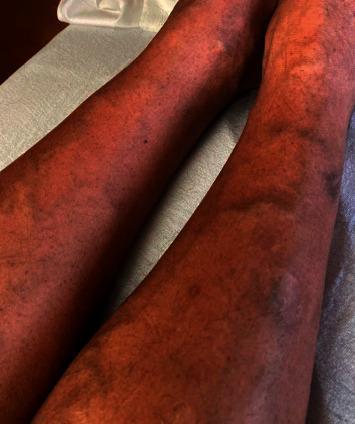
Warning signs (watch for these - signal progression to severe dengue)
These typically appear around defervescence (day 3-7), during the "critical phase":
- Severe/persistent abdominal pain
- Persistent vomiting
- Bleeding from mucosa (gums, nose, GI)
- Lethargy, restlessness, or altered mental status
- Liver enlargement (>2 cm)
- Rising hematocrit with falling platelets (hemoconcentration)
- Clinical fluid accumulation (pleural effusion, ascites)
- Postural hypotension
Any of these mandates inpatient monitoring (CDC Clinical Care guidance).
Severe dengue / "problems" (complications)
- Dengue hemorrhagic fever (DHF): plasma leakage (rising hematocrit, effusions/ascites) + thrombocytopenia + fever 2-7 days + hemorrhagic tendency
- Dengue shock syndrome (DSS): DHF plus circulatory collapse - the most severe, life-threatening form
- Hepatic: hepatitis, occasionally fulminant liver failure
- Renal: acute kidney injury (via hypoperfusion, rhabdomyolysis, hemolysis in G6PD deficiency, acute tubular necrosis, and rarely immune-complex glomerulonephritis or anti-GBM disease), proteinuria (sometimes nephrotic-range), hemolytic uremic syndrome, electrolyte disturbances (Comprehensive Clinical Nephrology, p. 978-979; Brenner & Rector's The Kidney)
- Respiratory: diffuse alveolar damage/ARDS-type picture from severe leakage
- Neurological: encephalopathy, reduced consciousness
- Pregnancy: risk of vertical transmission around delivery, and maternal infection is linked to preterm birth, low birth weight, and fetal distress (Creasy & Resnik's Maternal-Fetal Medicine; Mayo Clinic)
- Antibody-dependent enhancement: second infection with a different serotype (especially DENV-2) is the classic setup for severe disease - non-neutralizing antibodies from the first infection actually help the second virus enter macrophages via Fc receptors
Drugs and treatment - what actually works and what to avoid
There is no specific antiviral for dengue. Management is entirely supportive (ROSEN's Emergency Medicine; Washington Manual):
Use:
- Acetaminophen (paracetamol) for fever/pain
- Oral or IV fluid/electrolyte replacement (oral rehydration solutions reverse early shock)
- Tepid sponging for fever control
- Close monitoring of hematocrit, platelets, and hemodynamics
- Blood/platelet products only if significant bleeding or per clinical protocol (not prophylactically for isolated thrombocytopenia)
- ICU-level support (IV fluids, organ support) for DHF/DSS
AVOID - important caution:
- Aspirin and other NSAIDs (e.g., ibuprofen) - these worsen bleeding tendency and are explicitly warned against by WHO, CDC, and every clinical source reviewed
- Unnecessary IM injections (bleeding risk)
- Steroids - evidence for steroid use in severe dengue remains inconclusive/low-quality; not currently recommended
Prevention
- Vector control - the primary strategy: eliminate standing water/breeding sites, use screens, air conditioning, EPA-approved insect repellents, protective clothing, and daytime bite avoidance (Aedes bites mainly during the day). Even highly resourced places like Singapore still struggle to fully control outbreaks because mosquitoes breed in tiny water pockets.
- Novel vector approaches - intentional release of Wolbachia-infected Aedes mosquitoes (which suppress viral replication/transmission) has reduced dengue cases by 95-97% in trial areas of Colombia - a promising expanding strategy.
- Vaccines:
- Dengvaxia (CYD-TDV) and the newer tetravalent Qdenga (TAK-003) are available in various countries.
- Important caution: vaccination in someone without prior dengue infection (seronegative) can theoretically prime for antibody-dependent enhancement and more severe disease on natural infection later - this is why vaccines are generally targeted at people with evidence of prior dengue exposure, particularly in endemic areas.
- Recent 2025 systematic reviews (PMIDs 41287091, 40195054, 41453168) confirm reasonable efficacy and immunogenicity of tetravalent vaccines, especially in adolescents/prior-exposed individuals, but continue to flag the seronegative-recipient safety signal as something requiring careful pre-vaccination screening or population targeting - worth discussing with a travel medicine/ID specialist before vaccination.
Key cautions to remember
- No second infection is "just like the first" - assume any repeat dengue exposure carries higher severe-disease risk.
- Anyone with dengue and warning signs should be admitted, not managed at home.
- Avoid NSAIDs/aspirin from the moment dengue is suspected, not just confirmed.
- In pregnancy, dengue needs obstetric-infectious disease co-management given fetal risks.
- In endemic-area travelers, distinguish dengue from chikungunya, Zika, malaria, leptospirosis, and other viral hemorrhagic fevers (Ebola, Marburg, yellow fever) since presentations overlap.
If you want, I can go deeper into any single piece - e.g. the WHO/CDC severe dengue classification and inpatient fluid protocol, vaccine eligibility criteria in detail, or dengue in pregnancy/pediatrics specifically.
Most of the make research from epubmed
Reading File
Searching PubMed
"dengue" AND "treatment"
Searching PubMed
"dengue vaccine" AND "efficacy"
Searching PubMed
"dengue" AND "vector control"
Searching PubMed
"severe dengue" AND "complications"
Reading Article
PMID: 41214477
Reading Article
PMID: 38306389
Reading Article
PMID: 35648794
Reading Article
PMID: 38408457
Reading Article
PMID: 41287091
Reading Article
PMID: 40563017
Reading Article
PMID: 37352828
Reading Article
PMID: 40373783
Reading Article
PMID: 40819682
Dengue: PubMed Evidence Review (Recent Clinical Trials & Systematic Reviews)
Here's what the current peer-reviewed literature actually shows, organized by the same categories you asked about.
1. Treatment / Drugs - what the trials show
No specific antiviral is proven yet. A 2025 systematic review pooling 26 clinical trials confirms this directly:
[Systematic Review . 2025] Effectiveness of antiviral, immunomodulatory and platelet-enhancing agents for treatment of dengue [PMID: 41214477]
- Doxycycline + Carica papaya leaf extract combination showed the most consistent benefit: shorter hospital stay (7.3 vs 9.1 days) and a larger platelet rise (+154.1 x 10⁹/L vs +66.0 x 10⁹/L over 7 days) than comparators.
- Immunomodulatory drugs overall did not show efficacy, though rupatadine showed some signal for raising platelets.
- Platelet-enhancing agents (recombinant IL-11, anti-D immunoglobulin, eltrombopag) did significantly raise platelet counts, but these are not standard-of-care and sample sizes were small.
- Bottom line from the authors: evidence is still preliminary: "larger clinical trials are needed."
Two specific drug trials worth flagging:
[RCT . 2024] Montelukast for preventing dengue with warning signs [PMID: 38306389] - a 358-patient, multicenter, placebo-controlled trial in Thailand found montelukast did not reduce the incidence of warning signs (HR 1.36, p=0.105), no difference in severe dengue, shock, or death. It did modestly reduce liver enzyme elevations, but this needs further study. Practical takeaway: montelukast is not supported as a dengue treatment.
[RCT . 2022] Rupatadine to reduce dengue hemorrhagic fever [PMID: 35648794] - phase 2 trial (n=249) in Sri Lanka showed a non-significant trend toward less DHF with rupatadine (9.7% vs 17.5%, p=0.09), plus a significant reduction in severe thrombocytopenia and symptom duration. Promising but not yet definitive - described as needing combination-therapy follow-up.
[Phase 1 RCT . 2024] Dengue monoclonal antibody (VIS513) [PMID: 38408457] - first-in-human safety trial in Australia of a tetravalent-neutralizing monoclonal antibody. No serious adverse events across all doses; mild-moderate reactions (headache, infusion reactions, transient lymphopenia) were common. This is an early safety step, not yet a proven treatment - real-world efficacy data still pending.
Caution reaffirmed by all sources: aspirin and NSAIDs remain contraindicated due to bleeding risk; management is still fluids, antipyretics (paracetamol), and monitoring.
2. Vaccines - efficacy and safety concerns
[Systematic Review . 2025] Dengue vaccine effectiveness and safety: systematic analysis of clinical trial data [PMID: 41287091]
- Pooled 14 studies (2020-2025): TAK-003 (Qdenga) and TV005 showed the highest protection.
- TAK-003 reduced risk of hospitalized/symptomatic dengue by 85% (RR 0.15, 95% CI 0.07-0.33) in its trial populations.
- Safety varied: TAK-003 and CYD-TDV (Dengvaxia) reduced serious events overall, while TV005 had more reactogenicity.
[Nature Medicine . 2025] Efficacy, public health impact and optimal use of the Takeda dengue vaccine [PMID: 40563017] - this modeling study is the most important caution to flag:
- Efficacy varies by serotype, serological status, and age.
- In moderate-to-high transmission settings, routine vaccination of children >6 years could cut hospitalized dengue burden by only 10-22% over 10 years - more modest than headline efficacy numbers suggest.
- Evidence of vaccine-induced disease enhancement risk in seronegative recipients for serotypes 3 and 4, especially in children under 6. This directly validates the caution I gave earlier: pre-vaccination serostatus matters, and benefit is uncertain in lower-transmission areas.
Net effect: confirms Qdenga/TAK-003 is currently the best-performing vaccine, but the antibody-dependent enhancement risk in the seronegative is a real, evidence-backed concern, not theoretical.
3. Prevention / vector control - mixed real-world results
This is the most sobering finding: rigorous trials show vector control is harder to prove effective than commonly assumed.
[Meta-analysis . 2023] Household-level interventions against Aedes/dengue [PMID: 37352828] - screened 14,272 articles down to 61 studies. Interventions against larval stages performed best (86% positive entomological outcomes) but the pooled meta-analysis on actual dengue seroconversion showed no statistically significant reduction (log odds ratio -0.18, 95% CI -0.51 to 0.14). Practical implementation barriers (compliance, efficacy decay) were cited as key limitations.
[Cluster-RCT . 2025, Lancet ID] Integrated vector management in urban Malaysia [PMID: 40373783] - a large trial (900,000+ people, 280 housing blocks) combining community engagement, residual spraying, and autodissemination devices found no significant reduction in dengue incidence (RR 0.86, 95% CI 0.70-1.06, p=0.17), though COVID-era disruption may have reduced statistical power.
[Systematic Review . 2023] Mathematical models of dengue transmission/vector control [PMID: 36680294] included Wolbachia-based approaches as a modeled strategy, consistent with the strong observational data (95-97% case reduction in Colombia) I noted earlier - Wolbachia deployment remains the most promising vector-control innovation, though this particular review is modeling-based rather than trial-based.
Takeaway: standard vector control (spraying, larvicide, community programs) has weaker trial-level evidence than public health messaging implies. Wolbachia-based mosquito release remains the standout intervention with the strongest effect sizes.
4. Complications / problems - severity data
[Multicenter cohort . 2025] Critically ill dengue patients in Brazil, 2012-2024 [PMID: 40819682] - the largest and most current real-world severity dataset (11,047 ICU admissions across 253 ICUs):
- 10.1% of ICU dengue admissions developed complications requiring non-invasive ventilation, invasive ventilation, vasopressors, blood transfusion, or renal replacement therapy (103 needed dialysis).
- Independent risk factors for complications: age ≥80 (OR 3.10), liver cirrhosis (OR 3.65), chronic kidney disease (OR 2.94), platelets <50,000/mm³ (OR 2.25), leukocytes >7,000/mm³ (OR 2.47).
- A machine-learning risk tool was proposed for early identification - useful context given Brazil accounted for 71% of global dengue cases in 2024.
Case-report-level literature also documents rarer but serious complications consistent with what textbooks describe: Guillain-Barré syndrome with multi-organ failure (PMID 39109140), fulminant acute liver failure in a child (PMID 39019809), and fatal subarachnoid hemorrhage (PMID 33510120) - all reinforcing that severe dengue is a multi-system disease, not just a bleeding/shock syndrome.
Overall synthesis
- Drugs: still no approved antiviral; doxycycline+papaya extract and rupatadine are the most promising investigational options but not yet standard care; avoid NSAIDs/aspirin.
- Vaccines: TAK-003/Qdenga is the current best performer, but seronegative vaccinees (especially young children) carry a real enhancement risk for serotypes 3/4 - vaccination strategy should be transmission-setting- and serostatus-dependent.
- Prevention: conventional vector control has weaker trial evidence than assumed; Wolbachia-mosquito programs are the strongest emerging intervention.
- Complications: age, comorbidities (renal/hepatic disease), and lab markers (low platelets, high leukocytes) predict who is more likely to need ICU-level intervention - useful for triage in endemic settings.
This is a shared conversation. Sign in to Orris to start your own chat.