
Syndromic management of vaginal discharge from park Psm book
syndromic management vaginal discharge flowchart algorithm
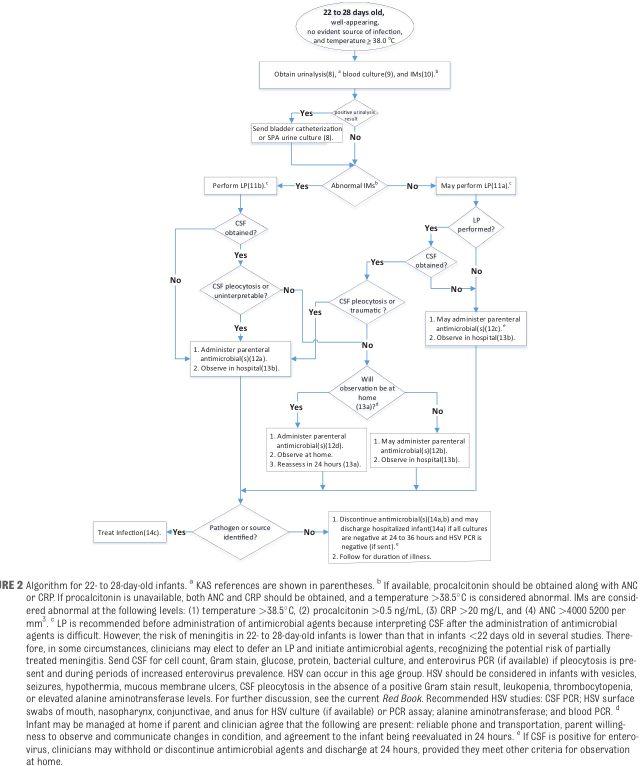
Summary : This flowchart provides a stepwise clinical algorithm for the evaluation and management of well-appearing infants aged 22 to 28 days with fever (temperature ≥38.0°C) and no evident source of infection, based on laboratory findings and clinical decision points. flowchart: # Nodes : • Start (rectangle): "22 to 28 days old, well-appearing, no evident source of infection, and temperature ≥38.0°C" • Process (rectangle): "Obtain urinalysis, blood culture, and IMD" • Decision (diamond): "Positive urinalysis result?" • Process (rectangle): "Send bladder catheterization or SPA urine culture" • Decision (diamond): "Abnormal IMs?" • Process (rectangle): "Perform LP" • Decision (diamond): "CSF obtained?" • Decision (diamond): "CSF pleocytosis or uninterpretable?" • Process (rectangle): "1. Administer parenteral antimicrobials 2. Observe in hospital" • Process (rectangle): "Treat infection" • Decision (diamond): "May perform LP?" • Decision (diamond): "LP performed?" • Decision (diamond): "CSF obtained?" • Decision (diamond): "CSF pleocytosis or traumatic?" • Decision (diamond): "Will observation be at home?" • Process (rectangle): "1. Administer parenteral antimicrobials 2. Observe at home 3. Reassess in 24 hours" • Process (rectangle): "1. May administer parenteral antimicrobials 2. Observe in hospital" • Process (rectangle): "Discontinue antimicrobials, discharge hospitalized infant if all cultures negative at 24 to 36 hours and HSV PCR is negative if sent. 2. Follow for duration of illness." • Process (rectangle): "Pathogen or source identified?" # Connectors : • Arrows indicate the flow from one node to the next, with branches at each decision diamond for "Yes" and "No" responses. • The flow begins at the top with patient presentation, proceeds through laboratory testing, and branches based on test results (e.g., urinalysis, IMs, CSF findings). • Multiple decision points determine whether to perform lumbar puncture (LP), administer antimicrobials, observe in hospital or at home, or discontinue treatment. • The flow merges at points where similar management is indicated regardless of the path taken (e.g., observation, reassessment, or discharge). # Layout : • The flowchart is arranged vertically, starting from the top with the initial patient presentation and moving downward through sequential decision points. • Branches split horizontally at each decision diamond, with "Yes" and "No" paths leading to different subsequent nodes. • Some branches reconverge after parallel processes (e.g., after observation or treatment). • Explanatory footnotes and references are included at the bottom, clarifying criteria and recommendations. # Analysis : • The flowchart provides a structured, evidence-based approach for clinicians to evaluate febrile infants aged 22 to 28 days. • Key decision points are based on laboratory findings (urinalysis, IMs, CSF analysis) and clinical feasibility (e.g., ability to observe at home). • The algorithm emphasizes early identification of serious bacterial infection, appropriate use of antimicrobials, and safe discharge criteria. • The process allows for flexibility based on test availability and clinical judgment, with clear guidance for both inpatient and outpatient management.
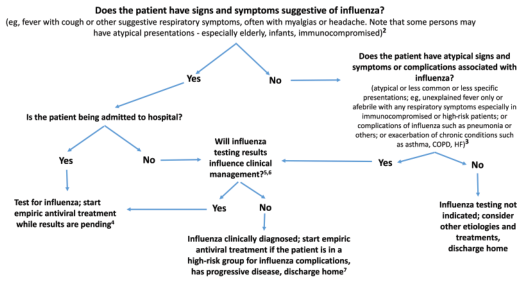
Summary : This flowchart provides a decision-making algorithm for clinicians to determine whether to test for influenza and/or start empiric antiviral treatment in patients presenting with respiratory symptoms, based on symptomatology, risk factors, and hospital admission status. flowchart: # Nodes : • "Does the patient have signs and symptoms suggestive of influenza? (eg, fever with cough or other suggestive respiratory symptoms, often with myalgias or headache. Note that some persons may have atypical presentations - especially elderly, infants, immunocompromised)" – (top-level decision node) • "Does the patient have atypical signs and symptoms or complications associated with influenza? (atypical or less common or less specific presentations; eg, unexplained fever only or afebrile with any respiratory symptoms especially in immunocompromised or high-risk patients; or complications of influenza such as pneumonia or others; or exacerbation of chronic conditions such as asthma, COPD, HF)" – (right branch from top node) • "Is the patient being admitted to hospital?" – (left branch from top node) • "Test for influenza; start empiric antiviral treatment while results are pending" – (left branch from "Is the patient being admitted to hospital?" if Yes) • "Will influenza testing results influence clinical management?" – (right branch from "Is the patient being admitted to hospital?" if No) • "Influenza clinically diagnosed; start empiric antiviral treatment if the patient is in a high-risk group for influenza complications, has progressive disease, discharge home" – (left branch from "Will influenza testing results influence clinical management?" if Yes) • "Influenza testing not indicated; consider other etiologies and treatments, discharge home" – (right branch from "Does the patient have atypical signs and symptoms or complications associated with influenza?" if No) • "Influenza testing not indicated; consider other etiologies and treatments, discharge home" – (right branch from "Will influenza testing results influence clinical management?" if No) # Connectors : • Top node splits into two branches: Yes (left) and No (right). • "Yes" from top node leads to "Is the patient being admitted to hospital?". • "No" from top node leads to "Does the patient have atypical signs and symptoms or complications associated with influenza?". • "Yes" from "Is the patient being admitted to hospital?" leads to "Test for influenza; start empiric antiviral treatment while results are pending". • "No" from "Is the patient being admitted to hospital?" leads to "Will influenza testing results influence clinical management?". • "Yes" from "Will influenza testing results influence clinical management?" leads to "Influenza clinically diagnosed; start empiric antiviral treatment if the patient is in a high-risk group for influenza complications, has progressive disease, discharge home". • "No" from "Will influenza testing results influence clinical management?" leads to "Influenza testing not indicated; consider other etiologies and treatments, discharge home". • "Yes" from "Does the patient have atypical signs and symptoms or complications associated with influenza?" leads back to "Is the patient being admitted to hospital?" (loop). • "No" from "Does the patient have atypical signs and symptoms or complications associated with influenza?" leads to "Influenza testing not indicated; consider other etiologies and treatments, discharge home". # Layout : • The flowchart is organized in a top-down manner, starting with the main decision node at the top. • Branches split left and right based on Yes/No answers. • There is a loop from the right branch ("Does the patient have atypical signs...") back to the hospital admission question. • Terminal nodes are at the bottom, indicating either testing/treatment or discharge home. # Analysis : • The flowchart prioritizes testing and empiric antiviral treatment for patients with typical influenza symptoms who are being admitted to hospital, or for those whose test results would influence management. • Patients with atypical symptoms or complications are considered for testing/treatment if they are high-risk or being admitted. • If neither typical nor atypical symptoms are present, or if testing would not influence management, the recommendation is to consider other diagnoses and discharge home. • The algorithm emphasizes risk stratification and resource stewardship in influenza testing and treatment decisions.
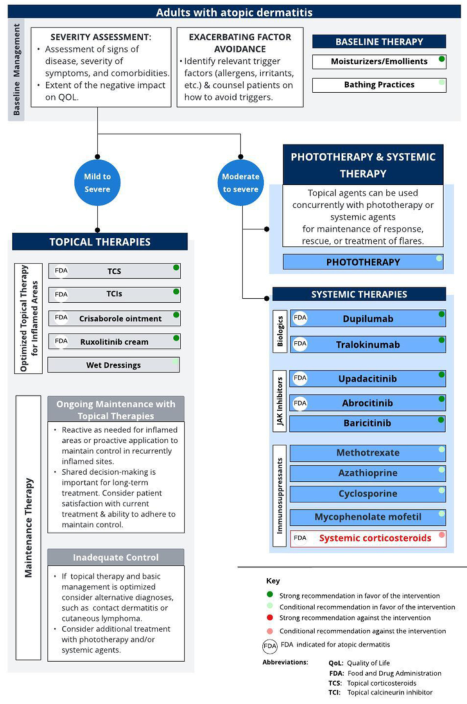
Summary : This flowchart provides a comprehensive management algorithm for adults with atopic dermatitis, detailing baseline management, topical therapies, phototherapy, and systemic therapies, including FDA-approved and recommended treatments, maintenance strategies, and escalation steps for inadequate control. flowchart: # Baseline Management : • Severity Assessment: Assessment of signs of disease, severity of symptoms, comorbidities, and impact on quality of life (QOL). • Exacerbating Factor Avoidance: Identify trigger factors (allergens, irritants, etc.) and counsel patients on avoidance. • Baseline Therapy: Moisturizers/Emollients (strong recommendation), Bathing Practices (conditional recommendation). # Initial Pathways : • Mild to Severe: Proceed to Topical Therapies. • Moderate to Severe: Proceed to Phototherapy & Systemic Therapy. # Topical Therapies : ## Optimized Topical Therapy for Inflamed Areas : • TCS (Topical corticosteroids) (FDA, strong recommendation) • TCIs (Topical calcineurin inhibitors) (FDA, strong recommendation) • Crisaborole ointment (FDA, strong recommendation) • Ruxolitinib cream (FDA, strong recommendation) • Wet Dressings (strong recommendation) ## Ongoing Maintenance with Topical Therapies : • Reactive or proactive application for maintenance. • Shared decision-making for long-term treatment. • Consider patient satisfaction and adherence. ## Inadequate Control : • If topical therapy and basic management optimized, consider alternative diagnoses. • Consider additional treatment with phototherapy and/or systemic agents. # Phototherapy & Systemic Therapy : • Topical agents can be used concurrently with phototherapy or systemic agents for maintenance, rescue, or flares. # Phototherapy : • No specific agents listed; included as a treatment option for moderate to severe cases. # Systemic Therapies : ## Biologics : • Dupilumab (FDA, strong recommendation) • Tralokinumab (FDA, strong recommendation) ## JAK Inhibitors : • Upadacitinib (FDA, strong recommendation) • Abrocitinib (FDA, strong recommendation) • Baricitinib (strong recommendation) ## Immunosuppressants : • Methotrexate (strong recommendation) • Azathioprine (strong recommendation) • Cyclosporine (strong recommendation) • Mycophenolate mofetil (strong recommendation) • Systemic corticosteroids (FDA, strong recommendation against use) # Key : • Green circle: Strong recommendation in favor. • Yellow circle: Conditional recommendation in favor. • Red circle: Strong recommendation against. • Orange circle: Conditional recommendation against. • FDA: Indicated for atopic dermatitis. # Abbreviations : • QOL: Quality of Life • FDA: Food and Drug Administration • TCS: Topical corticosteroids • TCI: Topical calcineurin inhibitor # Layout : • The flowchart is organized from baseline management at the top, splitting into two main pathways (mild to severe and moderate to severe), with further branches into topical, phototherapy, and systemic therapies. • Maintenance and escalation steps are included for ongoing management and inadequate control. # Analysis : • The algorithm emphasizes starting with baseline management and topical therapies, escalating to phototherapy and systemic therapies for more severe or refractory cases. • Strong recommendations are visually highlighted for first-line agents, with systemic corticosteroids strongly discouraged. • FDA-approved options are clearly marked, supporting evidence-based decision-making. • The flowchart supports a stepwise, patient-centered approach, integrating maintenance and escalation strategies.
Syndromic Management of Vaginal Discharge
Causative Organisms
| Type | Organisms |
|---|---|
| Vaginitis | Trichomonas vaginalis (TV); Candida albicans; Gardnerella vaginalis, Mycoplasma (causing Bacterial Vaginosis - BV) |
| Cervicitis | Neisseria gonorrhoeae, Chlamydia trachomatis, Trichomonas vaginalis, Herpes simplex virus |
History to Be Elicited
- Menstrual history - to rule out pregnancy
- Nature and type of discharge (amount, smell, color, consistency)
- Genital itching
- Burning while passing urine, increased frequency
- Presence of any ulcer or swelling on the vulval or inguinal region
- Genital complaints in sexual partners
- Low backache
Examination
- Trichomoniasis - greenish frothy discharge
- Candidiasis - curdy white discharge
- Bacterial vaginosis - adherent discharge
- Mixed infections may present with atypical discharge
- Cervical erosion / cervical ulcer / mucopurulent cervical discharge
- Bimanual pelvic examination to rule out Pelvic Inflammatory Disease (PID)
- If speculum examination is not possible or client is hesitant, treat for both vaginitis and cervicitis
Laboratory Investigations (if available)
- Wet mount microscopy of the discharge for Trichomonas vaginalis and clue cells
- 10% KOH preparation for Candida albicans
- Gram's stain of vaginal smear for clue cells (seen in bacterial vaginosis)
- Gram's stain of endocervical smear to detect gonococci
Treatment
Vaginitis (TV + BV + Candida)
- Tab. Secnidazole 2 gm orally, single dose OR Tab. Tinidazole 500 mg orally, twice daily for 5 days
- Tab. Metoclopramide taken 30 minutes before Secnidazole, to prevent gastric intolerance
- Treat for candidiasis with Tab. Fluconazole 150 mg orally, single dose OR local Clotrimazole 500 mg vaginal pessaries once
Cervicitis (Chlamydia + Gonorrhea)
- Tab. Cefixime 400 mg orally, single dose
- Plus Tab. Azithromycin 1 gram, 1 hour before lunch (if vomiting within 1 hour, give anti-emetic and repeat)
Note: If both vaginitis and cervicitis are present, treat for both.
- Instruct client to avoid douching
- Pregnancy, diabetes, HIV may influence recurrent infections - must be considered
- Follow-up after one week
Management in Pregnant Women
Treatment for Vaginitis (TV + BV + Candida) in Pregnancy
- Local treatment with Clotrimazole vaginal pessary/cream only for candidiasis
- Oral Fluconazole is CONTRAINDICATED in pregnancy
- Metronidazole pessaries or cream intravaginally if trichomoniasis or BV is suspected
- Tab. Secnidazole 2 gm orally, single dose OR
- Tab. Tinidazole 500 mg orally, twice daily for 5 days
- Tab. Metoclopramide taken 30 minutes before, to prevent gastric intolerance
Partner Management (Specific Guidelines)
- Treat current partner only if no improvement after initial treatment
- If partner is symptomatic, treat both client and partner using above protocols
- Advise sexual abstinence during the course of treatment
- Provide condoms; educate about correct and consistent use
- Schedule return visit after 7 days
Key Points to Remember
| Feature | Trichomoniasis | Candidiasis | Bacterial Vaginosis |
|---|---|---|---|
| Discharge | Greenish, frothy | Curdy white | Adherent, fishy odour |
| Organism | T. vaginalis | C. albicans | Gardnerella, Mycoplasma |
| Treatment | Secnidazole/Tinidazole | Fluconazole/Clotrimazole | Secnidazole/Tinidazole |
Classify acute respiratory infections according to park psm textbook
Classification of Acute Respiratory Infections (ARI)
Overview Definition
CLASSIFICATION 1: By Site of Infection (Anatomical)
| Level | Infections Included |
|---|---|
| AURI (Upper Respiratory Tract Infections) | Common cold, Pharyngitis, Otitis media |
| ALRI (Lower Respiratory Tract Infections) | Epiglottitis, Laryngitis, Laryngotracheitis, Bronchitis, Bronchiolitis, Pneumonia |
CLASSIFICATION 2: By Clinical Severity (WHO - Practical/Field Use)
A. Child aged 2 months up to 5 years (4 categories)
I. Very Severe Disease
- Not able to drink
- Convulsions
- Abnormally sleepy or difficult to wake
- Stridor in a calm child
- Severe malnutrition
II. Severe Pneumonia
- Chest indrawing (lower chest wall moves inward when child breathes in)
- If recurrent wheezing is also present - go directly to treat wheezing
III. Pneumonia (Not Severe)
- No chest indrawing, BUT fast breathing:
- ≥ 50 breaths/minute in child 2-12 months
- ≥ 40 breaths/minute in child 12 months up to 5 years
IV. No Pneumonia: Cough or Cold
- No chest indrawing
- No fast breathing
B. Young Infant (less than 2 months) - 3 categories
Important principle: Any pneumonia in a young infant is considered SEVERE. Cut-off for fast breathing is 60 breaths/minute.
| Classification | Signs | Treatment |
|---|---|---|
| Very Severe Disease | Stopped feeding well; Convulsions; Abnormally sleepy/difficult to wake; Stridor when calm; Wheezing; Fever (≥38°C) or low body temperature (hypothermia) | Refer URGENTLY; keep warm; first dose antibiotic |
| Severe Pneumonia | Severe chest indrawing, OR fast breathing (≥60/min) | Refer URGENTLY; keep warm; first dose antibiotic |
| No Pneumonia: Cough or Cold | No severe chest indrawing AND no fast breathing (<60/min) | Home care: keep warm, breastfeed frequently, clear nose. Return quickly if breathing worsens |
CLASSIFICATION 3: By Causative Agent
Bacterial Agents
| Agent | Age Group | Clinical Features |
|---|---|---|
| Bordetella pertussis | Infants and young children | Paroxysmal cough |
| Corynebacterium diphtheriae | Children | Nasal/tonsillar/pharyngeal membranous exudate ± severe toxaemia |
| Haemophilus influenzae | Adults/Children | Acute exacerbations of chronic bronchitis; epiglottitis (Hib) |
| Klebsiella pneumoniae | Adults | Lobar pneumonia ± lung abscess |
| Legionella pneumophila | Adults | Pneumonia |
| Staphylococcus pyogenes | All ages | Lobar/bronchopneumonia (esp. secondary to influenza) ± lung abscess |
| Streptococcus pneumoniae | All ages | Lobar/multilobular pneumonia; acute exacerbations of chronic bronchitis |
| Streptococcus pyogenes | All ages | Acute pharyngitis and tonsillitis |
Viral Agents
| Agent | Age Group | Clinical Features |
|---|---|---|
| Adenoviruses (endemic types 1,2,5) | Young children | Lower respiratory tract infections |
| Adenoviruses (epidemic types 3,4,7) | Older children and young adults | Febrile pharyngitis, influenza-like illness |
| Enteroviruses (ECHO & Coxsackie) | All ages | Variable respiratory |
| Influenza A | All ages | Fever, aching, malaise, variable respiratory; occasional primary pneumonia |
| Influenza B | School children | Secondary bacterial pneumonia in elderly |
| Measles | Young children | Mild upper respiratory with characteristic rash |
| Parainfluenza 1 | Young children | Croup |
| Parainfluenza 3 | Infants | Re-infection in later life: mild upper respiratory |
| Respiratory Syncytial Virus (RSV) | Infants and young children | Most common viral cause of pneumonia |
Key Fast Breathing Thresholds (to remember)
| Age | Fast Breathing Cutoff |
|---|---|
| < 2 months (young infant) | ≥ 60 breaths/minute |
| 2 months to 12 months | ≥ 50 breaths/minute |
| 12 months to 5 years | ≥ 40 breaths/minute |
Various type of learning from health education I’m psm park book