
Create a health education topic is prevention of catract in detailed summary and information
Reading File
Checking Date & Time
Finding Sources
Finding Sources
Searching PubMed
cataract prevention risk factors
Good — I have strong ophthalmology sources. Let me pull the core cataract content from Kanski's (most comprehensive ophthalmology text) and Goldman-Cecil, plus search for risk factors and prevention content.
Reading File
Reading File
Finding Sources
Let me now pull the detailed Kanski's acquired cataract section and search for risk factors specifically.
Reading File
Finding Sources
Reading File
Finding Sources
Reading File
Finding Sources
Finding Sources
Finding Sources
Reading File
Searching Images
cataract types lens opacity slit lamp
I now have comprehensive content from the textbooks. Let me compile the full health education material on cataract prevention.
🏥 Health Education Topic: Prevention of Cataract
What Is a Cataract?
A cataract is an opacification (clouding) of the crystalline lens of the eye. The lens normally focuses light onto the retina to produce a clear image. When it becomes cloudy, light cannot pass through properly, causing blurred, hazy, or dim vision.
The lens doubles in volume between birth and age 70 as new fiber cells are continuously added. Older fibers are compressed toward the center (the nucleus), and over time this compression and chemical change leads to loss of transparency — a process known as nuclear sclerosis. As the density of the nucleus increases, some patients may temporarily develop acquired nearsightedness, sometimes called "second sight of the aged" — a brief improvement in near vision before the cataract progresses. — Goldman-Cecil Medicine International Edition
Cataract is the leading cause of reversible blindness worldwide. It accounts for approximately 51% of world blindness.
Types of Cataract
Understanding the different types helps target prevention strategies:
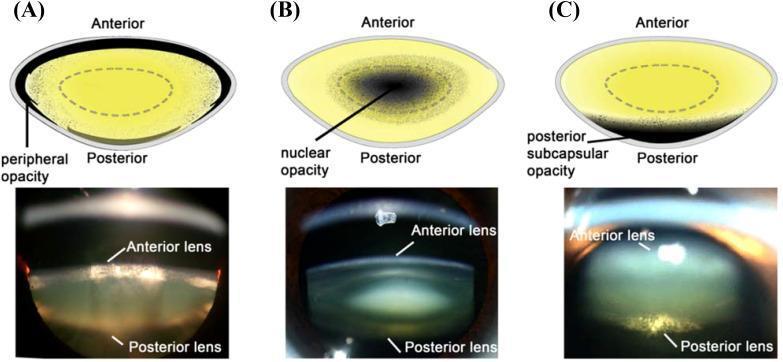
| Type | Location | Key Features | Common Associations |
|---|---|---|---|
| Nuclear Sclerotic | Lens nucleus (center) | Yellowish-brown discoloration; "second sight" initially | Normal aging, smoking, UV exposure |
| Cortical | Lens cortex | Spoke-like or wedge-shaped opacities; glare | Diabetes, UV radiation |
| Posterior Subcapsular (PSC) | Just behind the lens center | Profound glare, worse in bright light and during near vision | Corticosteroids, diabetes, radiation |
| Anterior Subcapsular | Under the anterior capsule | Fibrous metaplasia | Trauma, uveitis |
— Kanski's Clinical Ophthalmology, A Systematic Approach 10th Ed.
Risk Factors for Cataract
Non-Modifiable Risk Factors
- Age — The single greatest risk factor. Cataract formation accelerates after age 60.
- Genetics / Family History — Inherited predisposition to early lens opacification
- Sex — Women have a slightly higher lifetime prevalence, partly due to longer lifespan
- Race — Some ethnic groups have higher prevalence of specific subtypes
Modifiable Risk Factors (Targets for Prevention)
| Risk Factor | Mechanism | Type of Cataract Promoted |
|---|---|---|
| Diabetes mellitus | Hyperglycemia → glucose → sorbitol (osmotic overhydration) → lens opacification | Cortical; PSC; early nuclear sclerosis |
| Corticosteroid use | Steroids cause PSC by altering lens epithelial metabolism | Posterior subcapsular |
| Ultraviolet (UV-B) radiation | Oxidative damage to lens proteins | Cortical; nuclear |
| Smoking | Generates free radicals; depletes antioxidants (vitamin C, glutathione) | Nuclear sclerosis |
| Alcohol | Increases oxidative stress | Nuclear; cortical |
| Poor nutrition | Deficiency in antioxidant vitamins (C, E, carotenoids) | All types |
| Obesity | Linked to increased oxidative stress and metabolic dysfunction | Nuclear |
| Ocular trauma | Direct lens damage | Any type |
| Radiation (ionizing) | Damages lens epithelium | PSC |
| Dehydration | Osmotic stress on lens fibers | Cortical |
| Chronic uveitis | Inflammatory damage; steroid treatment | PSC; anterior subcapsular |
| High myopia | Associated with early nuclear sclerosis and PSC | Nuclear; PSC |
| Certain medications | Allopurinol (high cumulative dose), phenothiazines | Various |
— Kanski's Clinical Ophthalmology 10th Ed.; Goldman-Cecil Medicine
Prevention Strategies
1. 🕶️ UV Protection
- Wear UV-blocking sunglasses (rated UV400 or 100% UV-A/UV-B protection) whenever outdoors, especially in high-altitude areas, near water or snow, and in sunny climates
- Wear a wide-brimmed hat to reduce UV exposure to the eyes
- UV-B radiation is the most cataractogenic wavelength — outdoor workers and those living near the equator are at significantly elevated risk
2. 🚭 Quit Smoking
- Smoking is an independent and dose-dependent risk factor for nuclear cataract, the most common type
- Smokers have 2–3× the risk of developing nuclear cataract compared to non-smokers
- Cessation at any age reduces risk; quitting before age 50 provides the greatest protection
- Passive (secondhand) smoke also carries elevated risk
3. 🍎 Maintain a Healthy Diet Rich in Antioxidants
Oxidative damage to lens proteins (particularly crystallins) is the core mechanism of age-related cataract. Antioxidants counteract this:
| Nutrient | Sources | Evidence |
|---|---|---|
| Vitamin C | Citrus fruits, berries, peppers, broccoli | High levels in aqueous humor protect the lens |
| Vitamin E | Nuts, seeds, vegetable oils, leafy greens | Membrane antioxidant; reduces lipid peroxidation |
| Lutein & Zeaxanthin | Kale, spinach, corn, egg yolks | Macular pigments; filter blue light; protective against nuclear & cortical cataract |
| Beta-carotene / Vitamin A | Carrots, sweet potato, leafy greens | Antioxidant; supports lens epithelium integrity |
| Omega-3 fatty acids | Fish, flaxseed, walnuts | Anti-inflammatory; supports cellular membrane integrity |
A diet rich in fruits, vegetables, whole grains, and lean proteins (Mediterranean-style diet) is broadly protective.
4. 🩺 Control Diabetes and Blood Sugar
- Hyperglycemia drives sorbitol accumulation in the lens → osmotic stress and opacification
- Poorly controlled diabetes accelerates the development of age-related cataract by approximately 10 years earlier than in non-diabetics
- Around 1 in 5 patients undergoing cataract surgery has diabetes — Kanski's
- Actions:
- Monitor HbA1c regularly (target <7% for most patients)
- Follow dietary and medication management for glycemic control
- Regular ophthalmological review for diabetic patients
5. 💊 Minimize Corticosteroid Use
- Topical, systemic, and inhaled corticosteroids all carry risk of posterior subcapsular cataract, proportional to dose and duration
- Use the lowest effective dose for the shortest time possible
- Where disease management permits, explore steroid-sparing agents
- Patients on long-term steroids (e.g., for asthma, autoimmune disease) should have annual eye examinations
6. 🥤 Limit Alcohol
- Heavy alcohol consumption is associated with nuclear cataract
- Recommendation: stay within evidence-based safe limits (≤1 standard drink/day for women; ≤2 for men); ideally abstain or minimize
7. 🧑⚕️ Regular Eye Examinations
- Early detection allows monitoring and timely intervention before vision loss becomes disabling
- Recommended intervals:
- Age 18–39: every 5–10 years
- Age 40–54: every 2–4 years
- Age 55–64: every 1–3 years
- Age 65+: every 1–2 years
- Patients with diabetes, steroid use, family history, or high myopia: annually
8. 🛡️ Prevent Eye Injuries (Trauma)
- Wear protective eyewear (safety goggles, face shields) during:
- Industrial work, grinding, carpentry
- Sports (squash, boxing, cricket)
- Chemical handling
- Traumatic cataract is preventable — occupational and sports safety education is critical
9. 💧 Stay Hydrated
- Dehydration is an underappreciated risk factor; adequate water intake maintains healthy aqueous humor composition and lens hydration
10. 🏋️ Maintain a Healthy Weight
- Obesity increases systemic oxidative stress and metabolic dysfunction linked to lens changes
- Regular physical activity (≥150 minutes/week of moderate exercise) improves antioxidant defenses and glycemic control
Special Populations
👶 Children and Congenital Cataract
- Causes: rubella infection in pregnancy, Down syndrome, galactosaemia, trauma
- Prevention: rubella immunization before or during reproductive age; antenatal care; newborn screening programs
- Early detection is critical — untreated congenital cataract causes irreversible amblyopia
🤰 Pregnant Women
- Avoid unnecessary medications during pregnancy
- Maintain good glycemic control in gestational diabetes
- Ensure rubella immunity before conception
👷 Occupational Groups at High Risk
- Welders, glassblowers, outdoor workers, radiographers
- Must use appropriate protective eyewear with UV and infrared filtering
Warning Symptoms — When to See a Doctor
Educate the community to seek eye care if they notice:
- Blurry, hazy, or foggy vision
- Difficulty seeing at night or in low light
- Halos or glare around lights (especially car headlights)
- Colors appearing faded or yellowed
- Frequent changes in eyeglass prescription
- Double vision in one eye
- Reduced contrast sensitivity
Important: Cataracts are painless. Many people delay seeking help. Community health education should emphasize that vision loss from cataract is reversible with surgery, and timely referral dramatically improves outcomes.
Treatment When Prevention Fails
While the focus here is prevention, patients should understand:
- Surgery (phacoemulsification) is the definitive treatment — an outpatient procedure with excellent outcomes
- A synthetic intraocular lens (IOL) replaces the natural lens
- The prognosis for vision restoration is excellent — Goldman-Cecil Medicine
- Surgery is elective, based on how much the decreased vision affects daily life
There is currently no proven medical (non-surgical) treatment to reverse an established cataract — prevention is the most powerful tool.
Key Prevention Summary
| Action | Priority |
|---|---|
| Wear UV-protective sunglasses and hat outdoors | ⭐⭐⭐ High |
| Stop smoking | ⭐⭐⭐ High |
| Control blood sugar (diabetics) | ⭐⭐⭐ High |
| Eat antioxidant-rich diet | ⭐⭐⭐ High |
| Minimize corticosteroid exposure | ⭐⭐⭐ High |
| Regular eye examinations | ⭐⭐ Moderate-High |
| Wear protective eyewear to prevent trauma | ⭐⭐ Moderate-High |
| Limit alcohol | ⭐⭐ Moderate |
| Maintain healthy weight and exercise | ⭐⭐ Moderate |
| Stay hydrated | ⭐ Low-Moderate |
Sources
- Kanski's Clinical Ophthalmology: A Systematic Approach, 10th Edition — Chapter 10: Lens
- Goldman-Cecil Medicine International Edition — Chapter 391: Eye Diseases
- Robbins & Kumar Basic Pathology / Robbins Pathologic Basis of Disease — Lens pathology
This is a shared conversation. Sign in to Orris to start your own chat.