
I can see white spot on my eyelid and it is paining
Reading File
A white, painful spot on the eyelid is most likely a stye (hordeolum) or a chalazion - both are very common. A stye is an acute infection of an eyelid gland (usually bacterial) and causes pain, redness, and a white/yellow pus point. A chalazion is a blocked, inflamed meibomian gland that is usually less painful. Other possibilities include a milia (tiny keratin cyst) or even a small inclusion cyst.
Searching sources...
Finding Sources
Searching Images
white painful spot eyelid stye hordeolum chalazion
Finding Sources
Searching the Web
white painful spot on eyelid causes treatment hordeolum chalazion
Reading File
Loading Image
Here is a thorough answer based on medical textbook sources and clinical references:
White Painful Spot on the Eyelid
A white, painful spot on the eyelid is almost always one of two things: a stye (hordeolum) or a chalazion. Both are very common and treatable at home in most cases.
1. Stye (Hordeolum) - Most Likely if Painful
A stye is an acute bacterial abscess of one of the eyelid's oil glands (meibomian, Zeis', or Moll's gland). Since you say it is painful, a stye is the most likely culprit.
Here is what a typical stye/chalazion looks like:
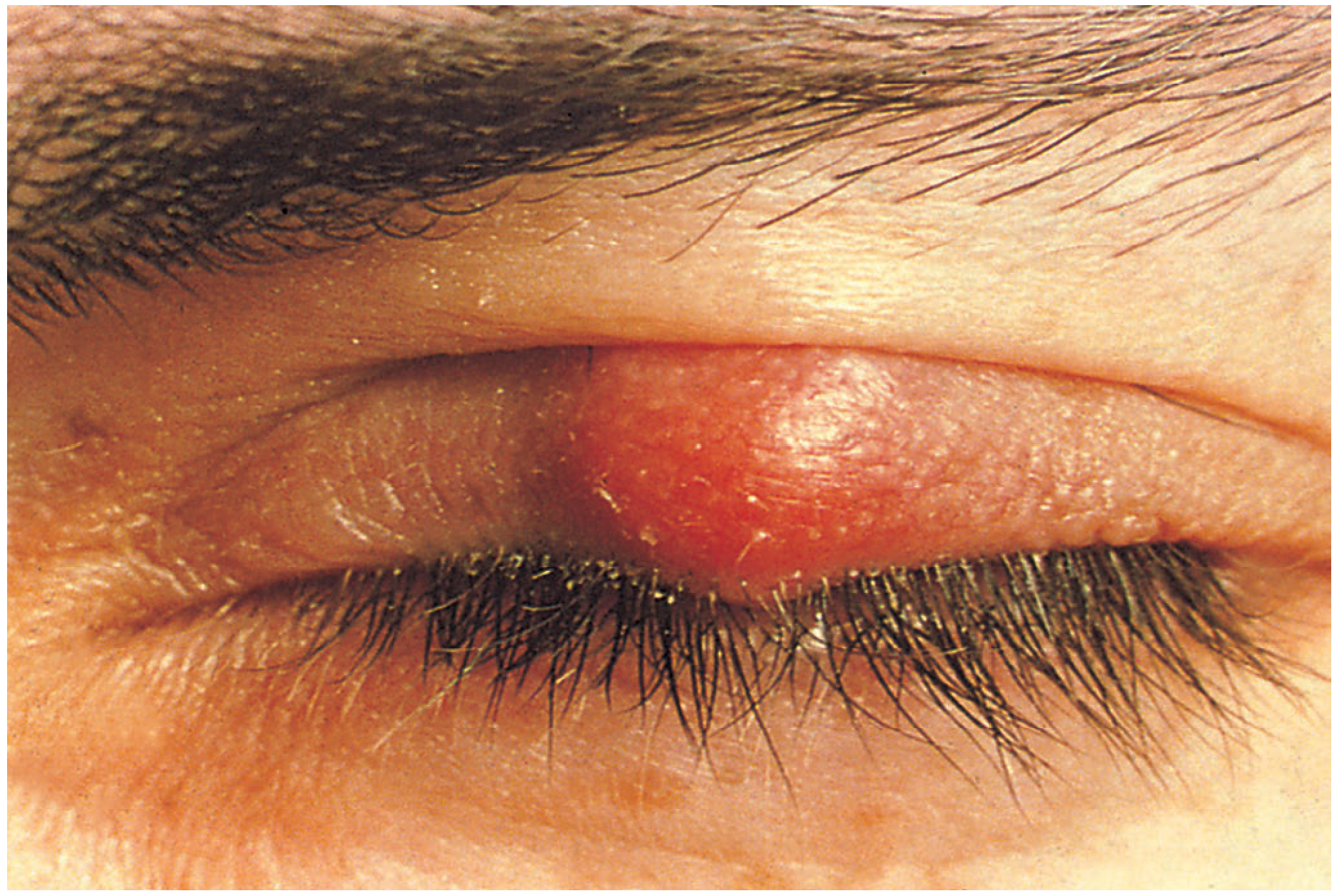
Signs of a stye:
- Tender, tense bump near the eyelash line
- White or yellow pus point visible (what you are seeing)
- Redness and swelling around it
- May feel like a pimple on the eyelid
- Usually caused by Staphylococcus bacteria
- Typically drains on its own within 5-7 days
2. Chalazion - Less Painful, More of a Lump
A chalazion is a blocked, inflamed meibomian gland - not an active infection. It tends to be:
- A firm, round lump, usually on the upper lid
- Less painful (or painless), though it can become tender if it enlarges
- Slower to develop (over days to weeks)
- Sometimes starts as a stye and transforms into a chalazion
According to Pfenninger & Fowler's Procedures for Primary Care: "A hordeolum is usually more tender and tense with obvious fluctuance... The natural history of a hordeolum is usually more acute."
Other Possible Causes (Less Common)
| Condition | Features |
|---|---|
| Milia | Tiny white keratin-filled cysts, painless, very small |
| Inclusion cyst | Smooth white bump, usually painless |
| Dacryocystitis | Swelling near inner corner of the eye (near the nose) - needs urgent referral |
| Sebaceous cyst | Firm, white lump within the lid skin |
Important: If the swelling is near the inner corner (nasal side) of your eye, this could be dacryocystitis, which can be serious and needs a doctor promptly.
What You Can Do at Home (First-Line Treatment)
For a stye or chalazion, the first-line treatment is the same:
- Warm compresses - Apply a warm (not hot) clean cloth to the closed eyelid for 10-15 minutes, 3-4 times a day. This softens the blockage and encourages drainage.
- Gentle lid massage - After the compress, gently massage the area toward the lid margin to help it drain.
- Eyelid hygiene - Clean the base of your eyelashes with diluted baby shampoo (50:50 with water) on a cotton swab at night.
- Do NOT squeeze or pop it - This can spread infection.
- Do NOT wear eye makeup or contact lenses until it heals.
When to See a Doctor
See a doctor if:
- Pain is severe or rapidly worsening
- The entire eyelid becomes very swollen, hot, or red (could be preseptal cellulitis)
- Your vision becomes blurry
- The bump does not improve after 1-2 weeks of warm compresses
- You develop fever or the bump comes back repeatedly
A doctor may prescribe:
- Antibiotic eye drops or ointment (e.g., erythromycin, chloramphenicol)
- Oral antibiotics if there is spreading infection
- Steroid injection into the chalazion if it persists
- Surgical incision and drainage for stubborn cases (a minor, quick procedure)
Bottom line: Your white, painful eyelid spot is very likely a stye. Start warm compresses today, 3-4 times daily. Most styes resolve on their own within a week. If it does not improve or gets worse, see an eye doctor.
Disclaimer: This information is for educational purposes only and is not a substitute for professional medical advice. Please see a doctor if you are concerned or your symptoms worsen.
analyse_media
Thank you for sharing the photo. I can see the issue clearly now.
What I Can See in Your Image
The image shows a small, pearly white to pale yellowish raised bump on the margin (edge) of your upper eyelid, near the inner to middle section, very close to the base of your eyelashes. It is approximately 1-2 mm in size, discrete, and well-defined.
Based on the location on the lid margin + the white/yellow color + the pain you described, this is very consistent with a Stye (Hordeolum) - an acute bacterial infection of one of the tiny oil glands in your eyelid.
What It Likely Is: Stye (Hordeolum)
A stye forms when a meibomian or Zeis gland at the eyelid margin gets blocked and infected (usually by Staphylococcus bacteria). The white spot you see is a small collection of pus pointing to the surface - similar to a pimple.
Key signs matching your case:
- White/yellow pus point on the lid margin
- Located near the eyelash base
- Painful to touch
What To Do Right Now
Home Treatment (Start Today)
-
Warm compress - Soak a clean cloth in warm (not hot) water. Close your eye and press it gently on the eyelid for 10-15 minutes, 3-4 times daily. This is the most effective first step - it softens the pus and helps the stye drain naturally.
-
Do NOT squeeze, pop, or pick it - This is very important. Squeezing can push the infection deeper or spread it into surrounding tissue (causing eyelid cellulitis).
-
Keep the area clean - Gently clean your eyelid margin with diluted baby shampoo (mixed 50:50 with water) on a cotton swab, once at night.
-
Avoid eye makeup and contact lenses until it is completely healed.
-
Wash your hands before and after touching your eye.
What to Expect
Most styes drain and heal on their own within 5-7 days with warm compress treatment.
See a Doctor If:
- Pain is severe or rapidly getting worse
- The whole eyelid becomes very swollen, red, and hot (sign of spreading infection)
- Your vision changes or becomes blurry
- It does not improve after 1 week of warm compresses
- You develop fever
- It keeps coming back repeatedly
A doctor can prescribe antibiotic eye ointment (like erythromycin or chloramphenicol) or, in resistant cases, drain it with a small incision under local anesthesia - a quick, painless procedure.
Disclaimer: This assessment is based on visual analysis and is for informational purposes only. It is not a substitute for examination by a qualified eye doctor (ophthalmologist). Please consult a doctor if your condition worsens or does not improve.
This is a shared conversation. Sign in to Orris to start your own chat.