
Images of ecgs explanations management of most common and important ICU cases
ECG ventricular fibrillation VF ICU
ECG STEMI ST elevation myocardial infarction 12 lead
ECG hyperkalemia peaked T waves widened QRS
ECG ventricular tachycardia VT wide complex
ECG complete heart block third degree AV block
ECG atrial fibrillation irregular rhythm absent P waves
ECG pulmonary embolism S1Q3T3 right heart strain
ECG Torsades de Pointes long QT twisting polymorphic VT
ECG pericarditis diffuse ST elevation saddle shape PR depression
1. Ventricular Fibrillation (VF)
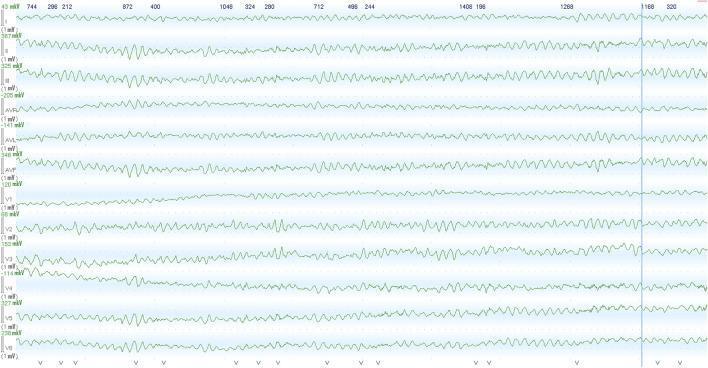
ECG Features
- Completely chaotic, irregular baseline — no identifiable P waves, QRS, or T waves
- Rapid, disorganized fibrillatory waves of varying amplitude and frequency across all leads
- Coarser fibrillatory waves in precordial leads (V2–V5); finer waves in limb leads
- Fine VF (low amplitude) = prolonged ischemia, worse prognosis for shock success
Management (ACLS)
| Step | Action |
|---|---|
| 1 | CPR immediately — high-quality, minimize interruptions |
| 2 | Unsynchronized defibrillation — 200J biphasic (360J monophasic); shock ASAP |
| 3 | Resume CPR × 2 min, then reassess rhythm |
| 4 | Epinephrine 1mg IV q3–5 min |
| 5 | If refractory: Amiodarone 300mg IV bolus (then 150mg × 1), or Lidocaine 1–1.5 mg/kg IV |
| 6 | Identify and treat reversible causes (4H4T) |
Reversible causes (4H4T): Hypovolemia, Hypoxia, Hydrogen ion (acidosis), Hypo/Hyperkalemia — Tension pneumothorax, Tamponade, Toxins, Thrombosis (PE/MI)
2. Ventricular Tachycardia (VT) — Monomorphic
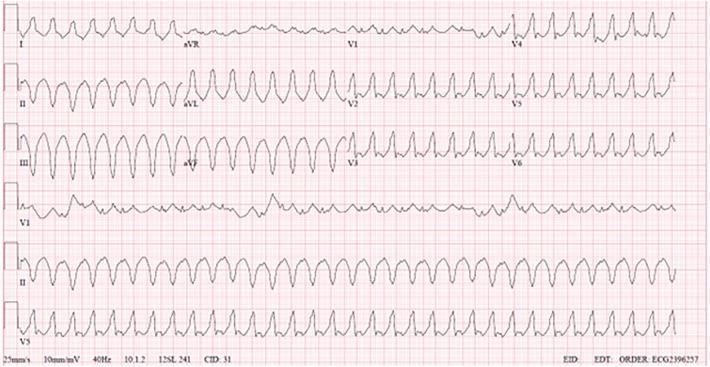
ECG Features
- Wide QRS tachycardia (>120 ms) at rate ≥100 bpm (often 150–200)
- No P waves before QRS (or AV dissociation — P waves "march through" independently)
- Positive or negative concordance across precordial leads
- Capture beats (narrow QRS amid wide complexes) and fusion beats = pathognomonic for VT
- Superior axis (negative in II, III, aVF) suggests VT rather than SVT
Management
- Hemodynamically unstable: Immediate synchronized cardioversion 100–200J biphasic
- Hemodynamically stable:
- Amiodarone 150 mg IV over 10 min (infusion 1 mg/min × 6 h, then 0.5 mg/min)
- Lidocaine 1–1.5 mg/kg IV bolus as alternative
- Correct electrolytes (K⁺ >4.0, Mg²⁺ >2.0 mEq/L)
- Treat underlying cause (ischemia, cardiomyopathy)
- Consider ICD for survivors or recurrent VT
3. Torsades de Pointes (TdP)
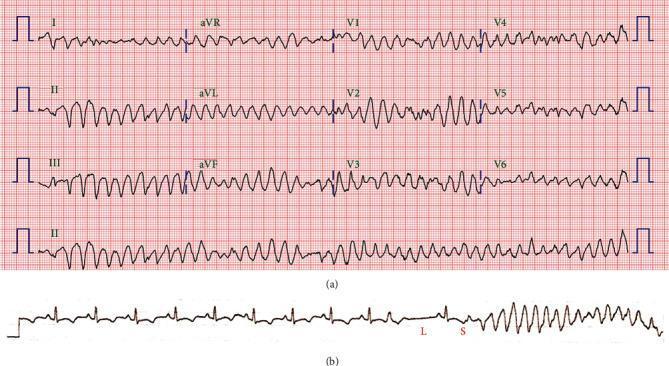
ECG Features
- Polymorphic VT — QRS complexes "twist" around the isoelectric baseline (spindle-shaped)
- QRS amplitude waxes and wanes in a sinusoidal pattern
- Precipitated by long QT (QTc >500 ms is high risk) and triggered by a "short-long-short" RR sequence (pause-dependent)
- No organized P waves; rate 150–300 bpm
Management
| Priority | Intervention |
|---|---|
| 1st | IV Magnesium sulfate 2g over 1–2 min (even if Mg²⁺ normal) |
| 2nd | Stop all QT-prolonging drugs (antiarrhythmics, antibiotics, antipsychotics) |
| 3rd | Correct hypokalemia (K⁺ target >4.5 mEq/L) |
| 4th | Overdrive pacing (70–90 bpm) or Isoproterenol infusion to shorten QT by increasing HR |
| 5th | Unsynchronized shock if degenerates to VF or sustained hemodynamic collapse |
Common ICU culprit drugs: Haloperidol, Methadone, Azithromycin, Fluconazole, Sotalol, Amiodarone (less so)
4. ST-Elevation MI (STEMI)
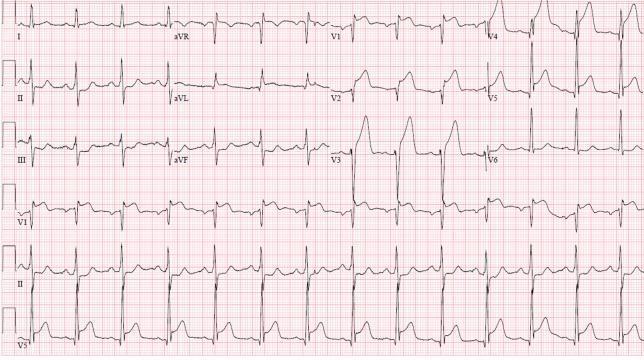
ECG Features
- ST elevation ≥1 mm in ≥2 contiguous leads (≥2 mm in V1–V3)
- Convex "tombstoning" ST morphology = extensive injury
- Hyperacute T-waves (tall, peaked) — earliest sign
- Reciprocal ST depression in opposing leads (e.g., inferior MI → depression in I, aVL)
- Q waves develop within hours → necrosis
| Territory | Leads with STE | Culprit artery |
|---|---|---|
| Anterior | V1–V4 | LAD |
| Anterolateral | V1–V6, I, aVL | Proximal LAD |
| Inferior | II, III, aVF | RCA (or LCx) |
| Posterior | Tall R in V1–V2, ST depression | RCA/LCx |
| RV | ST↑ in V3R–V4R | Proximal RCA |
Management
- Door-to-balloon time <90 min — primary PCI is standard of care
- If PCI not available within 120 min → fibrinolysis (tPA/tenecteplase) within 30 min of arrival
- Antiplatelet: Aspirin 325 mg + P2Y12 inhibitor (Ticagrelor 180 mg or Clopidogrel 600 mg)
- Anticoagulation: Heparin UFH or Enoxaparin
- Beta-blocker (if no contraindication), ACE inhibitor, Statin (high-intensity)
- Monitor for complications: Cardiogenic shock, free wall rupture, acute MR, VF/VT
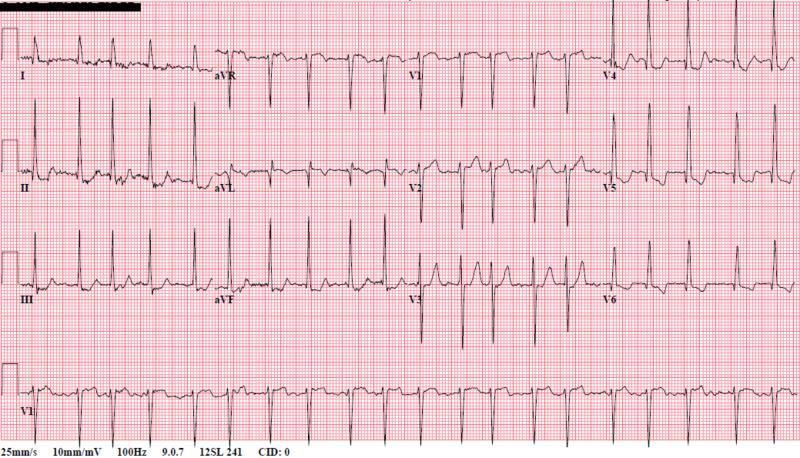
5. Atrial Fibrillation (AF) with Rapid Ventricular Response
ECG Features
- Irregularly irregular rhythm — no two R-R intervals the same
- Absent P waves — replaced by fine fibrillatory baseline (best seen in V1)
- Narrow QRS (unless aberrant conduction or WPW)
- Rapid ventricular response >100–110 bpm in the ICU setting
Management
| Hemodynamic Status | Strategy |
|---|---|
| Unstable (hypotension, ACS, pulmonary edema) | Synchronized cardioversion — start with 120–200J |
| Stable, new onset <48 h | Rate control or rhythm control (cardioversion after anticoagulation) |
| Stable, >48 h or unknown | Rate control first; anticoagulate for ≥3 weeks before elective cardioversion |
- Beta-blockers (Metoprolol 5 mg IV q5 min × 3) — first line if no bronchospasm
- Diltiazem 20 mg IV (0.25 mg/kg) — if beta-blocker contraindicated
- Amiodarone 150–300 mg IV — preferred in hemodynamic compromise/HF
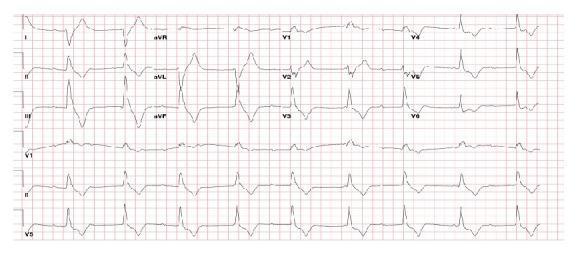
6. Complete (Third-Degree) AV Block
ECG Features
- Complete AV dissociation — P waves and QRS complexes march at completely independent rates
- Atrial rate faster than ventricular rate (P waves appear before, within, and after QRS)
- Escape rhythm:
- Junctional escape: narrow QRS (40–60 bpm) — block at/above His bundle
- Ventricular escape: wide QRS (20–40 bpm) — block below His bundle (worse prognosis)
- No fixed PR interval; P waves "march through" independent of QRS
Management
- Immediate transcutaneous pacing if hemodynamically unstable (bridge)
- IV Atropine 0.5–1 mg (only if junctional/nodal escape rhythm; ineffective for infra-Hisian block)
- Isoproterenol or Dopamine infusion to increase ventricular rate temporarily
- Transvenous temporary pacing — definitive bridge in ICU
- Permanent pacemaker — indications: acquired complete heart block (unless reversible cause)
- Identify/reverse causes: inferior STEMI (RCA), Lyme disease, AV nodal drugs (digoxin, beta-blockers, amiodarone), surgical/procedural trauma
7. Hyperkalemia
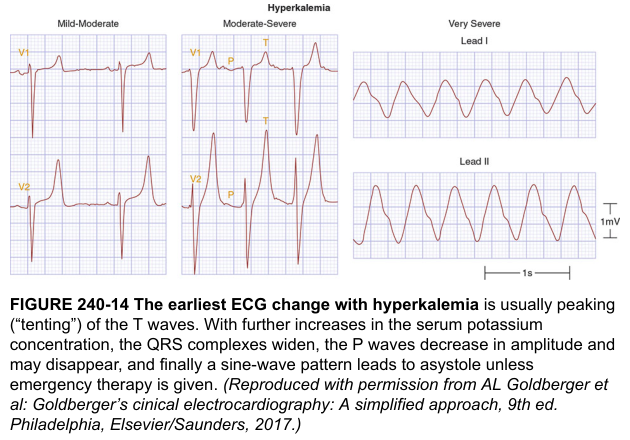
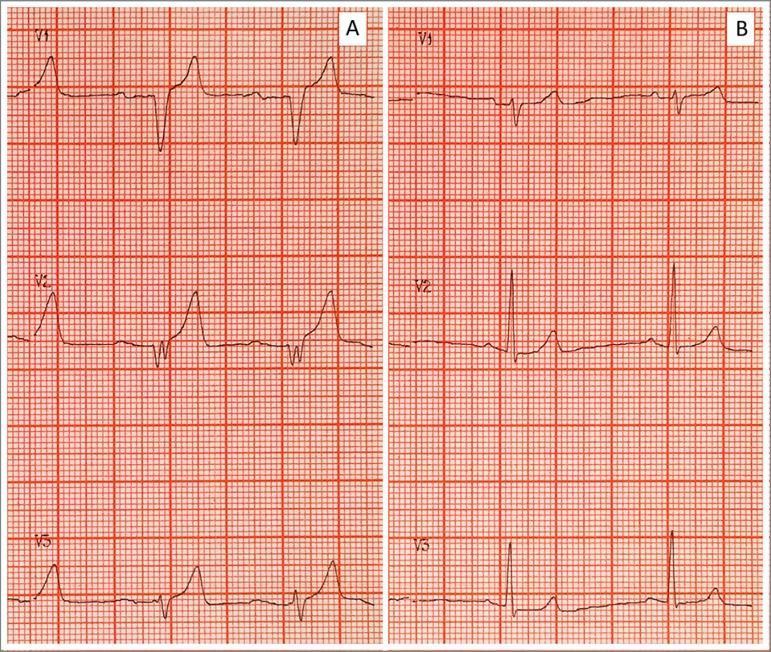
ECG Features (Progressive with Rising K⁺)
| K⁺ Level | ECG Change |
|---|---|
| 5.5–6.5 | Tall, peaked, narrow-based (tented) T waves — earliest sign |
| 6.5–7.5 | Prolonged PR, flattened/absent P waves, QRS widening begins |
| 7.5–9.0 | Wide QRS (LBBB-like), severe PR prolongation |
| >9.0 | Sine-wave pattern — broad QRS merges with T wave → VF/asystole |
Management
| Step | Drug | Dose | Purpose |
|---|---|---|---|
| 1 | Calcium gluconate 10% | 10–20 mL IV over 2–5 min | Membrane stabilization (effect in 1–3 min, lasts 30–60 min) |
| 2 | Insulin (regular) + Dextrose | 10 U + 50 mL 50% D/W IV | Intracellular K⁺ shift (onset 30 min) |
| 3 | Sodium bicarbonate | 50–100 mEq IV | Shift K⁺ into cells (metabolic acidosis) |
| 4 | Nebulized albuterol | 10–20 mg | Additional K⁺ shift |
| 5 | Furosemide / Kayexalate / Patiromer | — | Remove K⁺ from body |
| 6 | Hemodialysis | — | Definitive removal in renal failure |
8. Pulmonary Embolism (PE)
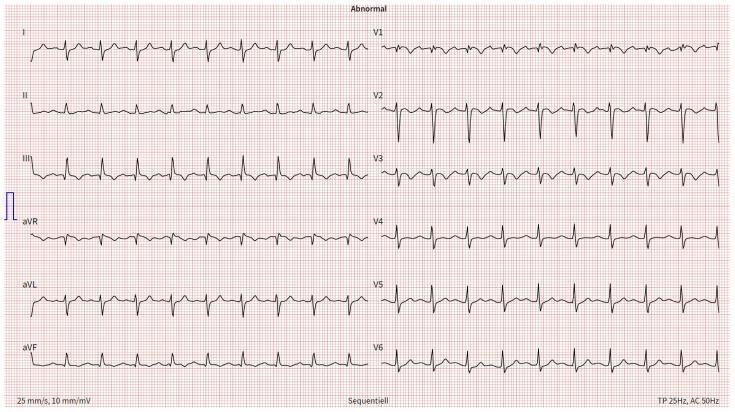
ECG Features
- Most common finding: Sinus tachycardia (not specific, but most frequent)
- Classic S1Q3T3: Prominent S wave in lead I, Q wave in lead III, T-wave inversion in lead III
- T-wave inversions in V1–V4 — right ventricular strain pattern (most specific)
- Incomplete or complete RBBB — acute cor pulmonale
- P pulmonale (tall P in II >2.5 mm) — right atrial strain
- Right axis deviation and new AF in massive PE
- ECG is non-specific and insensitive — normal ECG does not exclude PE
Management by Severity
| PE Class | Definition | Treatment |
|---|---|---|
| Massive (high-risk) | Hemodynamic instability (SBP <90, shock) | Systemic thrombolysis (tPA 100 mg over 2 h), or surgical/catheter embolectomy |
| Submassive (intermediate) | RV dysfunction on echo/CT + elevated troponin/BNP | Anticoagulation ± consider thrombolysis; monitor closely |
| Low-risk | Stable, no RV strain | Anticoagulation (LMWH, DOAC, UFH) |
- UFH (bolus 80 U/kg IV + infusion) — preferred for massive/unstable (titratable, reversible)
- Rivaroxaban or Apixaban — DOACs for stable patients after initial period
9. Acute Pericarditis / Cardiac Tamponade
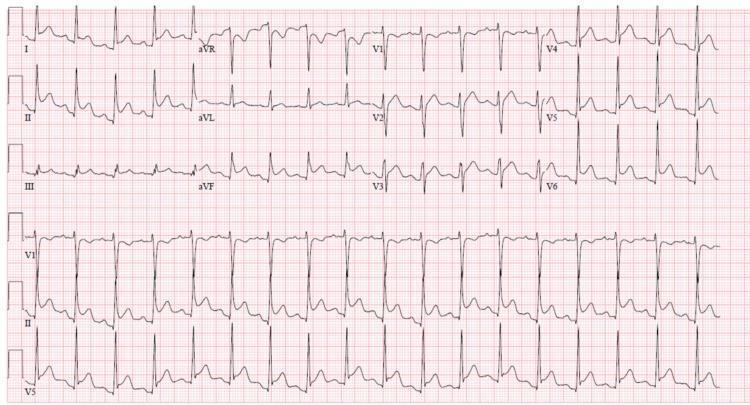
ECG Features — Pericarditis
- Diffuse concave ("saddle-shaped") ST elevation in almost all leads (except aVR, V1)
- PR depression in II, V4–V6 (PR elevation in aVR) — highly specific
- Spodick's sign — downsloping TP segment
- No reciprocal ST depression (unlike STEMI) — key differentiating feature
- Evolves through 4 stages: ST elevation → ST normalization → T inversion → T normalization
ECG Features — Cardiac Tamponade
- Sinus tachycardia — compensatory
- Low voltage (QRS <5 mm all limb leads, <10 mm precordial)
- Electrical alternans — alternating QRS axis/amplitude (pathognomonic for large pericardial effusion with tamponade)
Management
- NSAIDs (Ibuprofen 600–800 mg TID × 2 weeks) + Colchicine 0.5 mg BID × 3 months (reduces recurrence by 50%)
- Avoid anticoagulation if possible
- Restrict activity until symptom-free + CRP normalized
- Emergency pericardiocentesis — definitive treatment (echo-guided preferred)
- IV fluids as temporizing measure (maintain preload)
- Avoid diuretics, vasodilators, PEEP ventilation (all reduce preload → cardiovascular collapse)
Quick Reference Summary
| Condition | Key ECG Finding | Immediate Action |
|---|---|---|
| VF | Chaotic, no QRS | CPR + Unsynchronized shock 200J |
| VT (unstable) | Wide QRS tachycardia | Synchronized cardioversion 100J |
| Torsades | Twisting QRS, long QT | MgSO₄ 2g IV stat |
| STEMI | STE + reciprocal depression | PCI <90 min / thrombolysis |
| AF with RVR | Irregular, no P waves | Rate control or cardioversion |
| 3° AV block | AV dissociation, slow escape | Atropine + transcutaneous pacing |
| Hyperkalemia | Peaked T → sine wave | Calcium gluconate IV stat |
| Massive PE | S1Q3T3, RV strain, tachycardia | Systemic thrombolysis (tPA) |
| Pericarditis | Diffuse saddle STE + PR depression | NSAIDs + Colchicine |
| Tamponade | Electrical alternans + low voltage | Emergency pericardiocentesis |
- VF → unsynchronized shock; VT (unstable) → synchronized cardioversion; TdP → MgSO₄ first
- Hyperkalemia has a predictable ECG progression — calcium gluconate stabilizes the membrane before shifting K⁺
- Tamponade produces electrical alternans — the alternating QRS is almost pathognomonic
- STEMI vs. Pericarditis: reciprocal changes favor STEMI; PR depression + saddle morphology favor pericarditis
- VT vs. SVT with aberrancy: AV dissociation, capture/fusion beats, and concordance all point to VT
More
ECG inferior STEMI ST elevation leads II III aVF right ventricular infarction
ECG Wolff-Parkinson-White WPW delta wave pre-excitation
ECG hypokalemia U wave flattened T wave
ECG cardiac tamponade electrical alternans low voltage
ECG digoxin toxicity sagging ST depression reverse tick sign
ECG hypothermia Osborn J wave bradycardia
ECG SVT supraventricular tachycardia narrow complex AVNRT
ECG left bundle branch block LBBB new wide QRS
ECG Brugada syndrome type 1 coved ST elevation V1 V2 right precordial
ECG de Winter T waves LAD occlusion STEMI equivalent
More Critical ICU ECG Cases — Part 2
10. Inferior STEMI + Right Ventricular (RV) Infarction
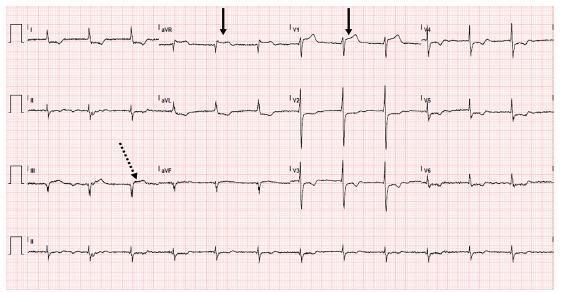
ECG Features
- ST elevation in II, III, aVF — inferior territory
- ST III > ST II = strongly suggests RCA (right coronary artery) occlusion over LCx
- Reciprocal ST depression in I and aVL — essential to recognize
- ST elevation in V1 and aVR — flags proximal RCA occlusion with RV involvement
- Confirm RV infarct: Apply right-sided leads → ST elevation ≥1 mm in V3R–V4R is diagnostic
- AV block is a frequent complication (AV node is supplied by RCA in 85% of people)
Why RV Infarction Changes Management Critically
| Feature | Implication |
|---|---|
| RV infarct = preload-dependent | NEVER give nitrates or diuretics — precipitates catastrophic hypotension |
| Hypotension after inferior MI | Give IV fluid bolus (500 mL NS) first |
| Bradycardia/AV block | Atropine; temporary pacemaker if needed |
| Reperfusion | Primary PCI urgently (same as anterior STEMI) |
Classic triad of RV infarction: Hypotension + Elevated JVP + Clear lung fields (no pulmonary edema)
11. Cardiac Tamponade — Electrical Alternans
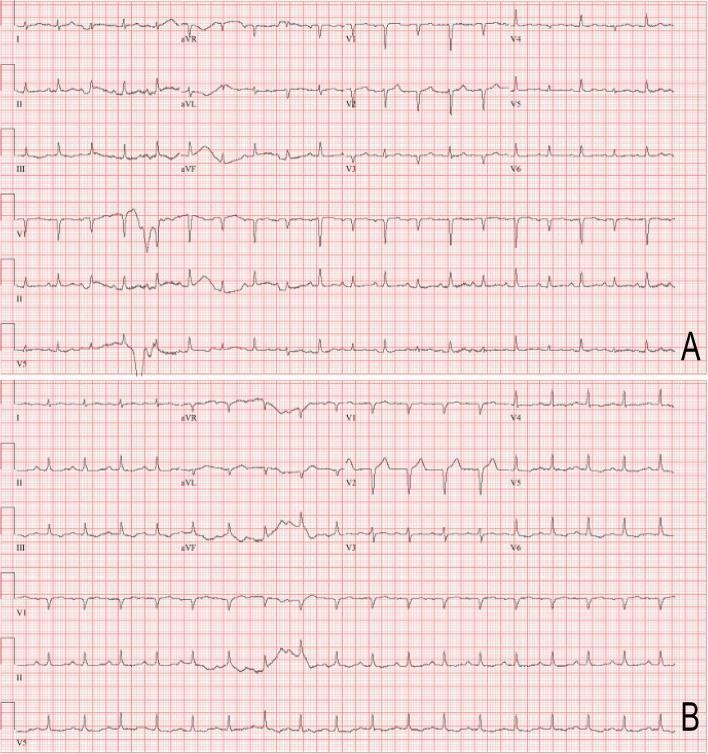
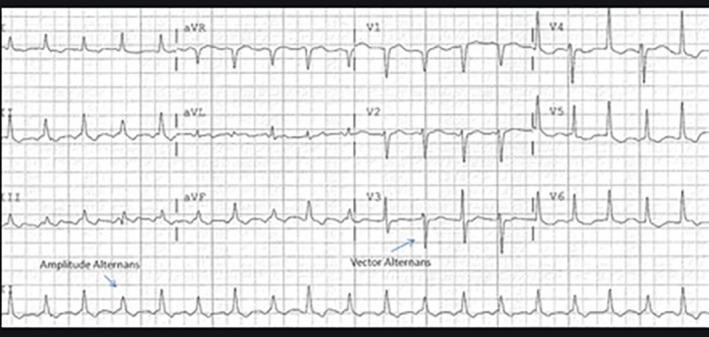
ECG Features
- Sinus tachycardia — compensatory
- Low voltage — QRS <5 mm in all limb leads AND <10 mm in all precordial leads
- Electrical alternans — beat-to-beat variation in QRS axis/amplitude (heart "swinging" in pericardial fluid)
- Total electrical alternans (P + QRS + T alternating) = pathognomonic for large effusion with tamponade
Beck's Triad (clinical diagnosis)
- Hypotension + Raised JVP + Muffled heart sounds
- Pulsus paradoxus >10 mmHg drop in SBP on inspiration
Management
| Step | Action |
|---|---|
| 1 | IV fluid bolus (500–1000 mL) — maintain preload while preparing |
| 2 | Avoid positive pressure ventilation / PEEP if possible |
| 3 | Emergency pericardiocentesis — echo-guided; subxiphoid approach |
| 4 | Send fluid for cytology, culture, protein, LDH (Light's criteria if exudate) |
| 5 | Pericardial window (surgical) for recurrent/malignant effusions |
In the ICU, tamponade is commonly caused by: post-cardiac surgery, aortic dissection, malignancy, uremia, or post-MI (Dressler syndrome)
12. SVT — Narrow Complex Tachycardia (AVNRT/AVRT)
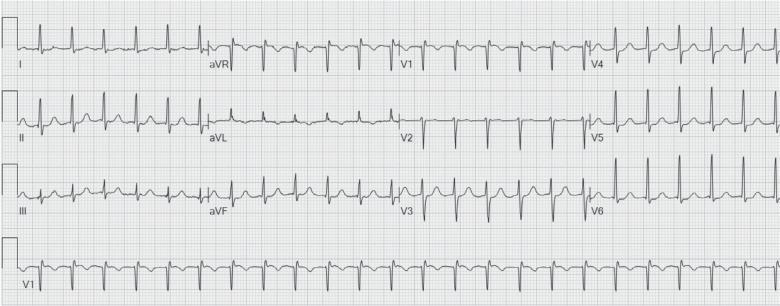
ECG Features
- Regular, narrow QRS tachycardia (QRS <120 ms) at rate 150–280 bpm
- P waves absent, buried in QRS (AVNRT — "short RP"), or just after QRS as pseudo-S or pseudo-R' in V1
- Perfectly regular R-R intervals (distinguish from AF which is irregular)
- Rate ~150 bpm → always check for atrial flutter with 2:1 block (look for flutter waves in V1, II)
- Rate >200 bpm + wide QRS → consider WPW (antidromic AVRT — treat differently!)
Management
| Step | Intervention |
|---|---|
| 1st | Vagal maneuvers — Valsalva (modified: legs up), carotid sinus massage |
| 2nd | Adenosine 6 mg rapid IV push + flush; if no response → 12 mg × 2 |
| Unstable | Synchronized cardioversion 50–100J |
| Recurrent | Metoprolol or Verapamil IV for rate control; RF ablation for definitive cure |
Adenosine terminates re-entry through AV node (AVNRT/AVRT). It does NOT work for atrial flutter/VT — but can unmask flutter waves or reveal VT (AV dissociation). Do NOT give adenosine in WPW with AF (risk of degeneration to VF).
13. Wolff-Parkinson-White (WPW) Syndrome
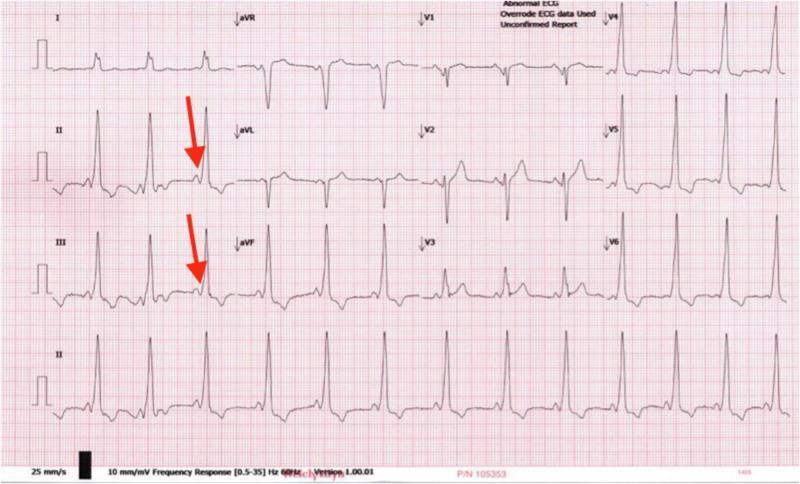
ECG Features (Sinus Rhythm)
- Short PR interval (<120 ms) — bypass of AV node delay
- Delta wave — slurred, upsloping initial QRS deflection
- Wide QRS (>120 ms) — combined normal + accessory pathway conduction
- Discordant ST-T changes — secondary to abnormal depolarization
The ICU Emergency: WPW + Atrial Fibrillation
- If AF occurs in WPW, impulses conduct via accessory pathway at full rate (no AV node protection)
- Results in extremely rapid, irregular, wide-complex tachycardia (can approach 300 bpm)
- Can degenerate to VF and sudden cardiac death
- ECG shows: irregular, wide, bizarre-looking QRS at very rapid rate
Management
| Situation | Treatment |
|---|---|
| WPW + AF (unstable) | Unsynchronized DC cardioversion immediately |
| WPW + AF (stable) | Procainamide 15–17 mg/kg IV over 30–60 min (blocks accessory pathway) |
| WPW + AF — AVOID | Adenosine, Digoxin, Beta-blockers, Verapamil, Diltiazem (all block AV node → force all conduction through accessory pathway → VF) |
| Definitive | Radiofrequency catheter ablation |
14. Hypokalemia
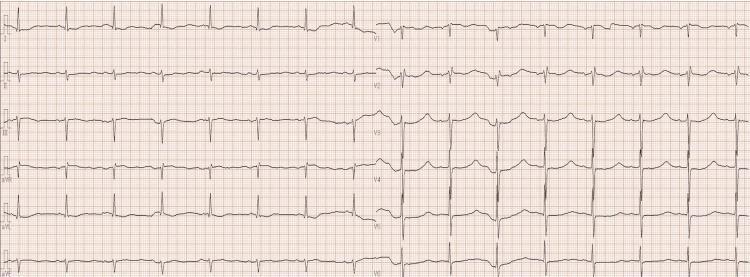
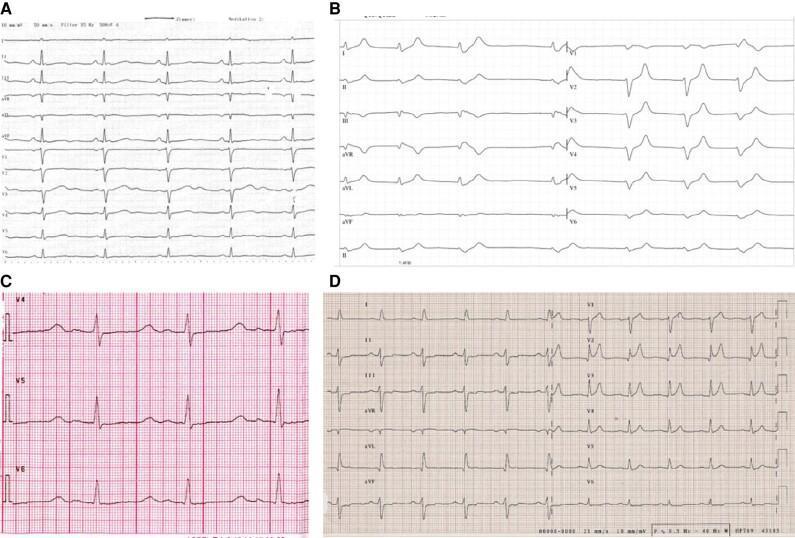
ECG Features (K⁺ <3.5 mEq/L)
| K⁺ Level | ECG Change |
|---|---|
| 3.0–3.5 | Flattened T waves, mild ST depression |
| 2.5–3.0 | Prominent U waves (best seen V2–V4), T–U fusion |
| <2.5 | ST depression, markedly tall U waves, apparent "QU prolongation" |
| Severe | Ventricular ectopy, TdP, VF risk |
U wave = deflection after T wave, same polarity as T, best seen in V2–V4. When U > T amplitude = significant hypokalemia.
Management
- Oral KCl if mild and patient can take PO
- IV KCl (central line preferred for concentrated solutions):
- Rate: max 20 mEq/h via central line (10 mEq/h via peripheral)
- Monitor ECG continuously during infusion
- Replenish Magnesium simultaneously (hypoMg drives renal K⁺ wasting — refractory hypokalemia until Mg corrected)
- MgSO₄ 1–2 g IV over 15–30 min
- Identify cause: diuretics, vomiting, NGT losses, mineralocorticoid excess, RTA
15. New Left Bundle Branch Block (LBBB) — STEMI Equivalent
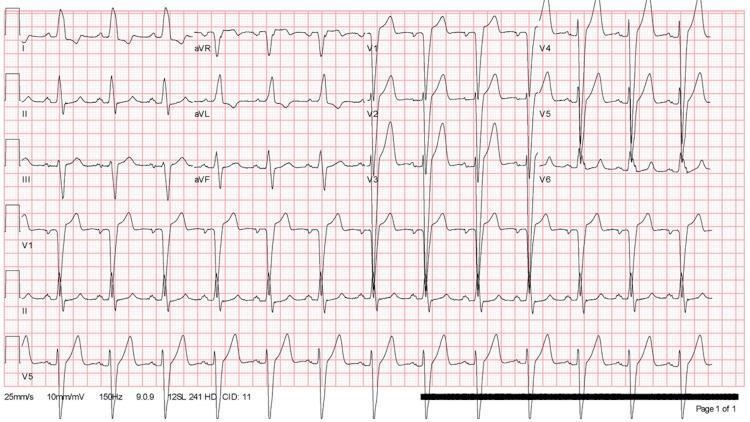
ECG Features
- Wide QRS >120 ms
- Broad, notched "M-shaped" R waves in lateral leads (I, aVL, V5, V6)
- Deep QS pattern in right precordial leads (V1–V3)
- Discordant ST-T changes — ST and T wave go opposite to the main QRS deflection (NORMAL in LBBB)
Sgarbossa Criteria — Diagnosing MI in LBBB
| Criterion | Points | Sensitivity |
|---|---|---|
| Concordant ST elevation ≥1 mm in any lead (same direction as QRS) | 5 | High specificity |
| Concordant ST depression ≥1 mm in V1–V3 | 3 | Moderate |
| Discordant ST elevation ≥5 mm (>25% of S wave depth) | 2 | Less specific |
Modified Sgarbossa (Smith criteria): ST/S ratio < −0.25 in any lead (excessive discordant STE) is more sensitive and has largely replaced the original ≥5 mm criterion.
Management
- New LBBB + ischemic symptoms = treat as STEMI (activate cath lab, primary PCI)
- Pre-existing LBBB: apply Sgarbossa/modified Sgarbossa criteria
16. Hypothermia — Osborn (J) Waves
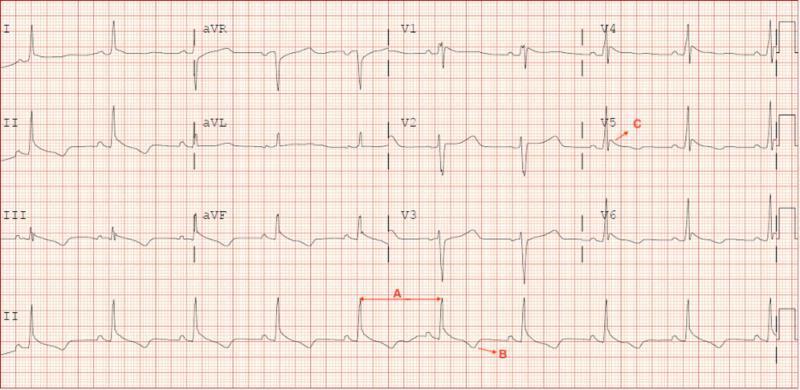
ECG Features (Progressive with Falling Temperature)
| Core Temp | ECG Finding |
|---|---|
| <35°C | Sinus bradycardia + prolonged PR/QT |
| <32°C | Osborn waves (J waves) — positive hump at J-point in inferior/lateral leads + QRS widening |
| <28°C | Atrial fibrillation (very common; often spontaneously reverts on rewarming) |
| <25°C | VF — most common cause of death in severe hypothermia |
Osborn wave amplitude correlates inversely with temperature — larger waves = colder patient
Management
| Severity | Core Temp | Rewarming Strategy |
|---|---|---|
| Mild | 32–35°C | Passive external (warm blankets, remove wet clothing) |
| Moderate | 28–32°C | Active external (forced warm air, heating pads to trunk) |
| Severe | <28°C | Active internal — warm IV fluids (42°C), warm humidified O₂, bladder/gastric lavage |
| Cardiac arrest | Any | ECMO (extracorporeal rewarming) — ideal for hypothermic arrest |
Golden rule: "Not dead until warm and dead" — CPR must continue until core temperature ≥32°C. VF in hypothermia is resistant to defibrillation until temperature >30°C.
17. Digoxin Toxicity
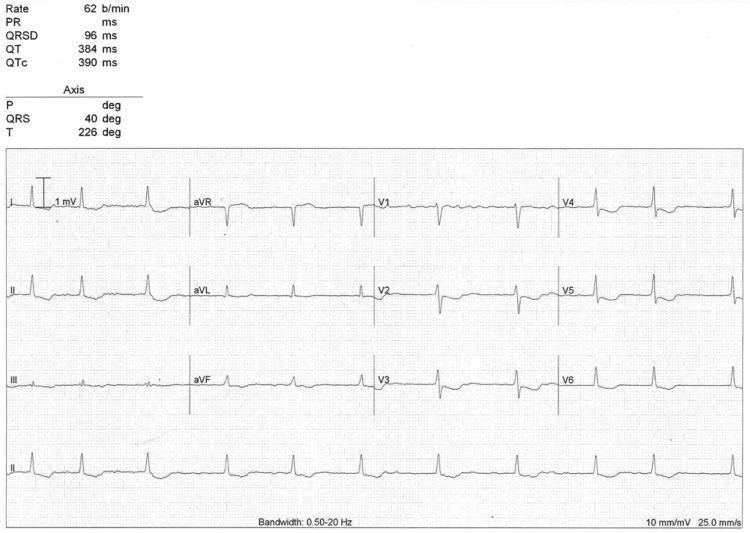
ECG Features
- Sagging/scooped "reverse tick" or "hockey stick" ST depression in V4–V6 and inferior leads
- Shortened QT interval
- T-wave flattening/inversion
- Prolonged PR interval (slows AV conduction)
- Bradyarrhythmias: Sinus bradycardia, all degrees of AV block, junctional escape rhythms
- Tachyarrhythmias: PAT (paroxysmal atrial tachycardia) with block is classic; accelerated junctional rhythm; bidirectional VT (pathognomonic — alternating QRS axis, seen with severe toxicity)
- "Regularization" of AF (junctional rhythm emerges) — sign of toxicity
Management
| Step | Action |
|---|---|
| 1 | Stop digoxin immediately |
| 2 | Correct electrolytes — hypokalemia and hypomagnesemia worsen toxicity |
| 3 | Bradycardia/heart block — Atropine 0.5–1 mg IV; temporary pacing if severe |
| 4 | Digoxin-specific Fab antibody fragments (Digibind/DigiFab) — definitive antidote |
| Dose: 10 vials empirically for life-threatening toxicity; or calculated by serum level | |
| 5 | Avoid calcium gluconate (may worsen cardiac toxicity — "stone heart") |
Digibind indication: VT/VF, complete heart block, K⁺ >5.5 mEq/L in acute toxicity, hemodynamic instability
18. Brugada Syndrome — Type 1 Pattern
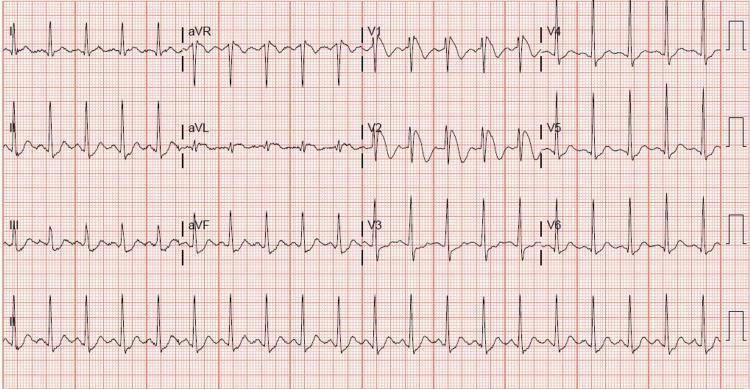
ECG Features
- "Coved" ST elevation ≥2 mm in V1–V2 (or V1–V3 when leads placed in 2nd–3rd intercostal space)
- Convex downsloping ST segment → inverted T wave
- No ischemic symptoms needed for diagnosis
- Type 2 = "saddleback" pattern (≥2 mm STE with saddle shape) — not diagnostic alone, may unmask Type 1 with fever/sodium channel blockers
| Feature | Brugada Type 1 | Anterior STEMI |
|---|---|---|
| Lead distribution | Only V1–V2 (right precordial) | V2–V5 or more |
| ST morphology | Coved (convex down) | Convex up ("tombstone") |
| Reciprocal changes | Absent | Present (inferior leads) |
| Symptoms | Often syncope/nocturnal arrest | Chest pain |
ICU Significance
- Often presents as resuscitated VF/VT or unexplained syncope
- Triggers in ICU: Fever (unmasks pattern), hyponatremia, vagotonia, TCA overdose, cocaine, class Ic drugs
Management
- Acute VF/VT: Unsynchronized defibrillation + Isoproterenol infusion (increases HR, suppresses early repolarization)
- Quinidine — only oral drug shown to suppress VF in Brugada (blocks Ito channel)
- ICD — definitive therapy for symptomatic patients (aborted SCA, syncope with documented VT/VF)
- Avoid: Sodium channel blockers (flecainide, procainamide), beta-blockers, excess alcohol, treat fever aggressively
19. De Winter T-Waves — STEMI Equivalent (Proximal LAD)
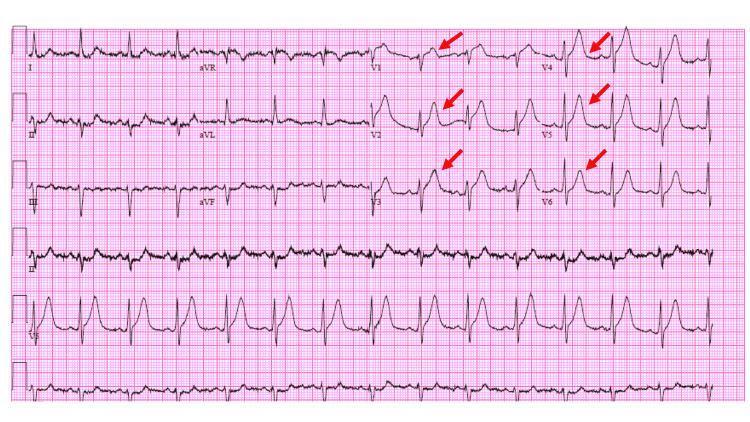
ECG Features
- J-point (ST) depression 1–3 mm at takeoff of QRS in V1–V6 (upsloping ST depression)
- Transitions into tall, symmetrical, hyperacute T waves in precordial leads
- Mild ST elevation in aVR (~0.5–1 mm)
- No classic ST elevation in anterior leads — does NOT meet STEMI criteria but IS a STEMI equivalent
- Represents ~2% of LAD occlusions — static pattern (doesn't evolve to STE)
Clinical Significance
- Indicates acute proximal LAD occlusion with extensive anterior wall ischemia
- Carry same urgency as anterior STEMI
- Commonly missed because no ST elevation — high-yield exam and clinical pearl
Management
- Activate cath lab immediately — treat as anterior STEMI
- Same antiplatelet, anticoagulation, and PCI protocol as STEMI
- Do NOT wait for troponin results
Expanded Quick Reference Table
| # | Condition | Pathognomonic ECG Sign | Do This First |
|---|---|---|---|
| 1 | VF | Chaotic no QRS | Shock 200J (unsynchronized) |
| 2 | Monomorphic VT | Wide QRS, AV dissociation | Cardioversion or Amiodarone |
| 3 | Torsades de Pointes | Twisting QRS, long QT | MgSO₄ 2g IV |
| 4 | Anterior STEMI | STE V1–V4, reciprocal depression | PCI <90 min |
| 5 | Inferior STEMI + RVI | STE II/III/aVF + V1/aVR | IV fluids, NO nitrates; urgent PCI |
| 6 | AF with RVR | Irregular, absent P waves | Rate control or cardioversion |
| 7 | 3° AV Block | AV dissociation, slow escape | Atropine + pacing |
| 8 | Hyperkalemia | Peaked T → sine wave | Calcium gluconate IV |
| 9 | Hypokalemia | U waves, flat T waves | KCl + Magnesium IV |
| 10 | Pulmonary Embolism | S1Q3T3, RV strain, tachycardia | UFH + consider tPA if massive |
| 11 | Cardiac Tamponade | Electrical alternans, low voltage | Pericardiocentesis |
| 12 | Pericarditis | Diffuse saddle STE + PR depression | NSAIDs + Colchicine |
| 13 | SVT (AVNRT) | Narrow regular tachycardia, no P | Adenosine 6 mg IV push |
| 14 | WPW + AF | Irregular very wide bizarre QRS | Cardioversion or Procainamide |
| 15 | New LBBB | Wide QRS, M-shaped R in lateral | Treat as STEMI (Sgarbossa) |
| 16 | Hypothermia | Osborn J waves + bradycardia | Active rewarming; ECMO if arrest |
| 17 | Digoxin Toxicity | Sagging ST + bradyarrhythmias | Digibind; correct K⁺/Mg²⁺ |
| 18 | Brugada | Coved STE V1–V2 | ICD; Isoproterenol for acute VF |
| 19 | De Winter T-waves | Upsloping ST dep + tall T V1–V6 | Treat as STEMI, activate cath lab |