
Quadrants of abdomen
Reading File
Now let me search the medical library for abdominal quadrants content, in parallel with a heading search and image search.
Finding Sources
Finding Sources
Gray's Anatomy for Students has a dedicated section. Let me read it and fetch the image.
Reading File
Excellent - found the key content and both diagram images. Let me fetch them both.
Loading Image
Loading Image
Here is a complete overview of the abdominal quadrants, sourced from Gray's Anatomy for Students.
Quadrants of the Abdomen
The abdomen is divided into four quadrants by two perpendicular planes:
- A vertical median (sagittal) plane - runs through the midline of the body
- A horizontal transumbilical plane - passes through the umbilicus
Together, these two planes create a cross that divides the abdomen into four regions.
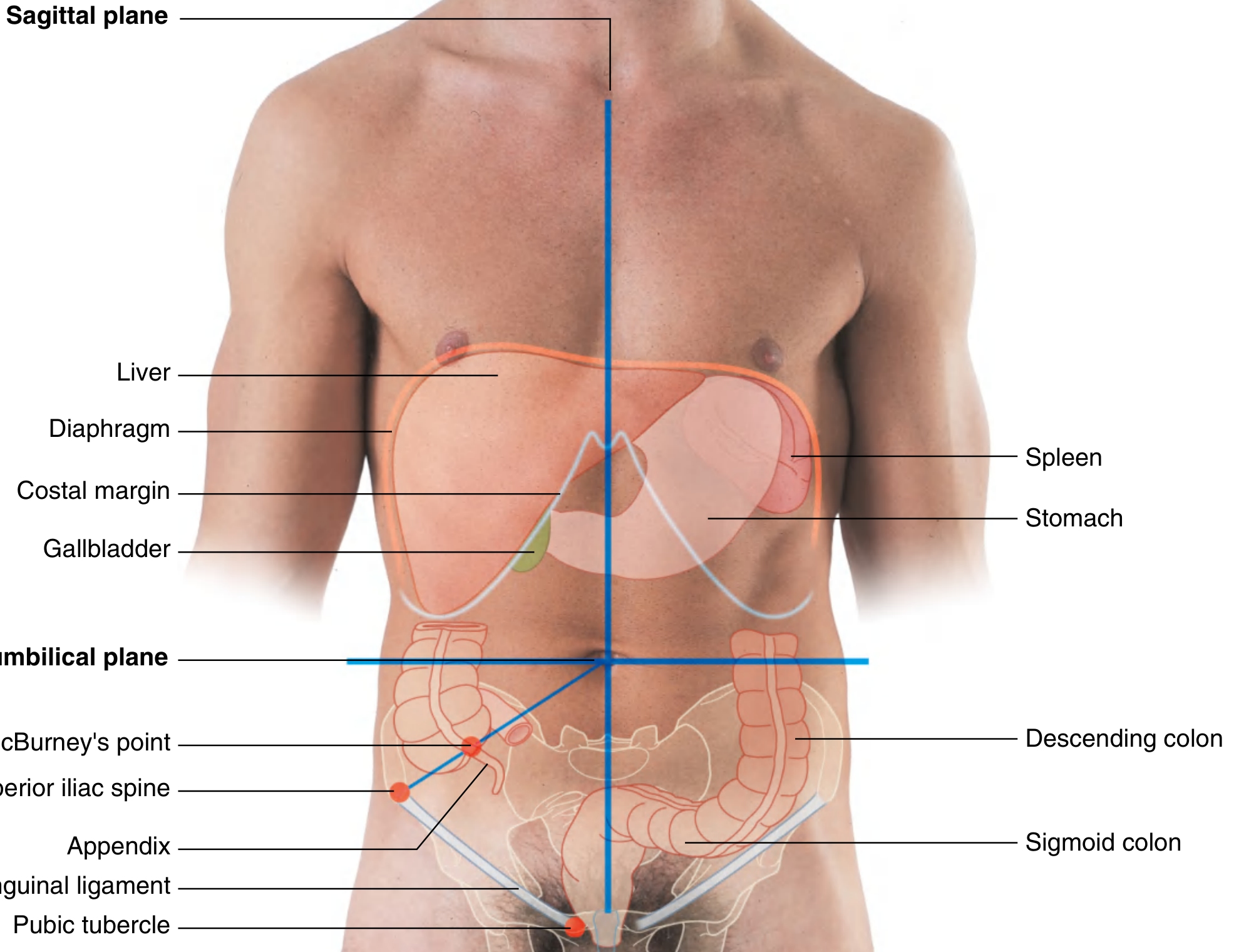
Fig. 4.185 - Abdominal Quadrants and the Positions of Major Viscera (Gray's Anatomy for Students)
The Four Quadrants and Their Contents
| Quadrant | Abbreviation | Major Organs/Structures |
|---|---|---|
| Right Upper Quadrant (RUQ) | RUQ | Liver (most of it), gallbladder, right kidney, right adrenal gland, head of pancreas, hepatic flexure of colon, part of ascending and transverse colon, part of duodenum |
| Left Upper Quadrant (LUQ) | LUQ | Stomach, spleen, left kidney, left adrenal gland, body and tail of pancreas, splenic flexure of colon, part of transverse and descending colon |
| Right Lower Quadrant (RLQ) | RLQ | Cecum, appendix, right ovary and fallopian tube (in females), right ureter, part of ascending colon |
| Left Lower Quadrant (LLQ) | LLQ | End of descending colon, sigmoid colon, left ovary and fallopian tube (in females), left ureter |
Note: The liver, although primarily in the RUQ, extends under the right dome of the diaphragm and is deep to the lower thoracic wall. Its inferior margin can be palpated descending below the right costal margin on deep inspiration - the edge "slips" under the palpating fingers.
Key Clinical Landmark: McBurney's Point
McBurney's point is the surface projection of the appendix. It lies one-third of the way up along a line from the right anterior superior iliac spine (ASIS) to the umbilicus. This point is used clinically to assess tenderness in suspected appendicitis (located in the RLQ).
Clinical Relevance: Pain Localization
Quadrants are used in clinical practice to:
- Describe the location of pain (e.g., RUQ pain in cholecystitis, RLQ pain in appendicitis)
- Guide physical examination (percussion, palpation, auscultation)
- Interpret imaging findings
| Quadrant | Common Conditions |
|---|---|
| RUQ | Cholecystitis, hepatitis, peptic ulcer disease, pancreatitis |
| LUQ | Splenic rupture, gastritis, pancreatitis, left lower lobe pneumonia |
| RLQ | Appendicitis, ovarian cyst/torsion (females), inguinal hernia, Crohn's disease |
| LLQ | Diverticulitis, sigmoid volvulus, ovarian pathology (females), constipation |
The Nine-Region System (Extended Division)
Beyond the four quadrants, the abdomen can also be divided into nine regions using two midclavicular planes (vertical) and two horizontal planes (subcostal and intertubercular):
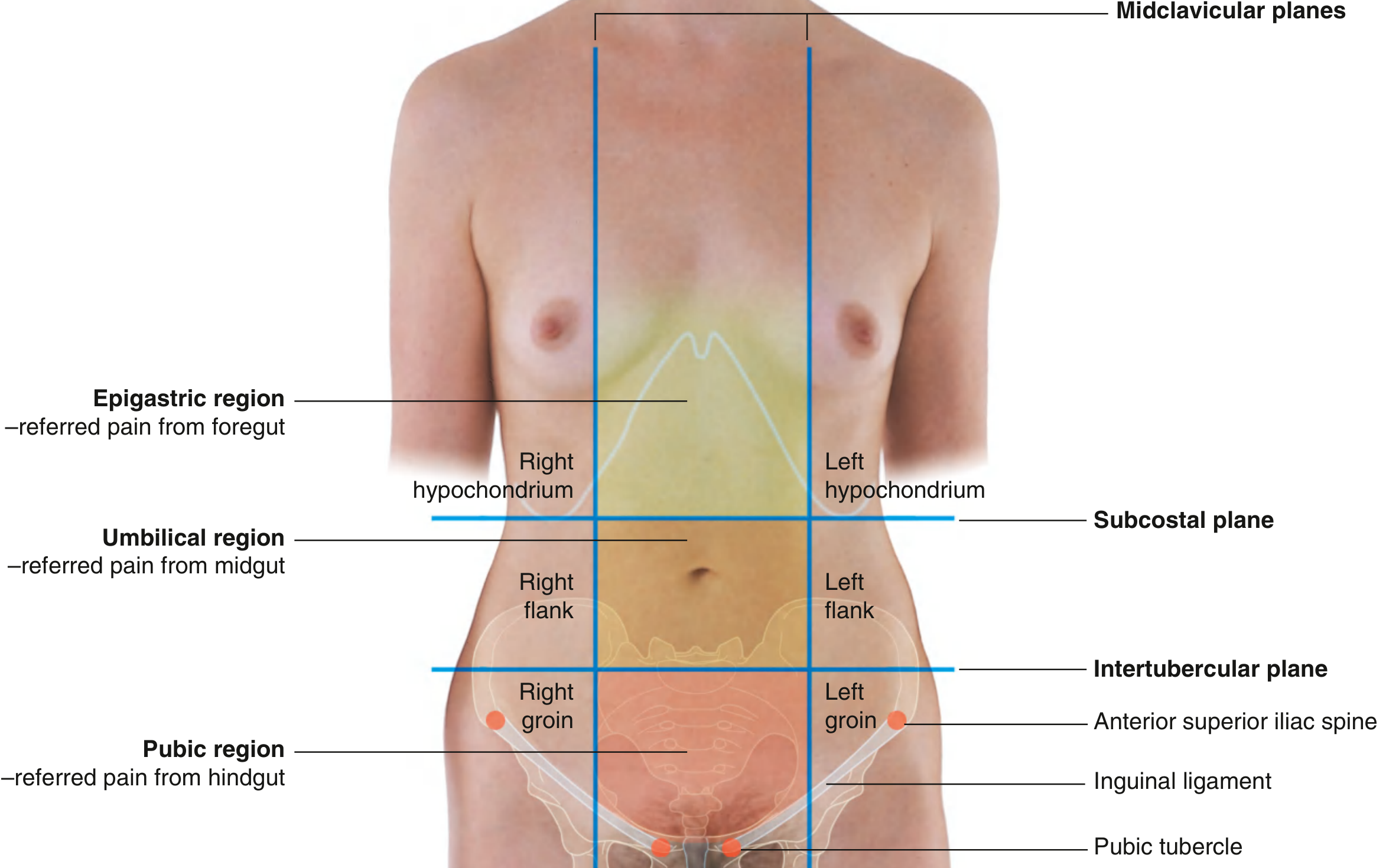
Fig. 4.186 - The Nine Regions of the Abdomen (Gray's Anatomy for Students)
Three central regions:
- Epigastric (above) - receives referred pain from the foregut
- Umbilical (middle) - receives referred pain from the midgut
- Pubic/Hypogastric (below) - receives referred pain from the hindgut
Three regions on each side (left and right):
- Hypochondrium (upper lateral)
- Flank/Lumbar (middle lateral)
- Groin/Inguinal (lower lateral)
The nine-region system is especially useful for localizing referred visceral pain from specific gut segments.
Source: Gray's Anatomy for Students, Fig. 4.185-4.186
This is a shared conversation. Sign in to Orris to start your own chat.