
Encephalopathy
Reading File
Checking Date & Time
The query is broad — "encephalopathy" covers many subtypes (hepatic, uremic, hypertensive, metabolic, septic, Wernicke's, etc.). Let me clarify before diving deep.
Asking for Preferences
Which aspect of encephalopathy are you interested in? · What level of detail do you need?
Finding Sources
Searching PubMed
encephalopathy classification pathophysiology management
Good — I have multiple strong textbook sources. Now I'll read the key sections in parallel: the neurology overview, the GI/liver hepatic section, and the nephrology uremic section.
Reading File
Reading File
Reading File
Good content from GI and neurology sources. Now I'll read the hepatic encephalopathy management section, the Plum & Posner hepatic and toxic sections, and the uremic encephalopathy section in parallel.
Reading File
Reading File
Reading File
Now let me get the HE treatment section and Wernicke's encephalopathy, plus the uremic encephalopathy main section, in parallel.
Reading File
Finding Sources
Finding Sources
Reading File
Reading File
Reading File
Now let me get the Wernicke encephalopathy section from the neurology textbook and the metabolic encephalopathy section from Localization in Clinical Neurology, and also the HE treatment section.
Reading File
Reading File
Reading File
Now let me get the Wernicke encephalopathy from the neurology section and the uremic encephalopathy main description, and HE treatment from Sleisenger.
Reading File
Finding Sources
Finding Sources
Reading File
Reading File
I now have comprehensive material. Let me also fetch the pathophysiology diagram for hepatic encephalopathy and mark todos complete before composing the answer.
Loading Image
Encephalopathy: Comprehensive Clinical Review
Definition
Encephalopathy is a broad term for any diffuse brain dysfunction characterised by an altered level of consciousness, cognitive impairment, and/or behavioural change — caused by a systemic, metabolic, toxic, or structural insult rather than primary intrinsic brain disease. Unlike focal lesions, metabolic encephalopathies preferentially impair phylogenetically newer brain structures first, sparing brainstem reflexes until late. — Localization in Clinical Neurology, 8e
General Features of Metabolic Encephalopathy
Common clinical signs include:
- Altered consciousness: ranging from inattention → confusion → stupor → coma
- Asterixis ("flapping tremor"): brief, sudden loss of postural tone; present with mild-moderate encephalopathy, wanes in deep coma. Elicited by dorsiflexing the wrist with fingers extended.
- Tremor: coarse, irregular, 8–10 cycles/second, maximal with outstretched hands
- Multifocal myoclonus: sudden, non-rhythmic muscle twitching (seen in uremic, hyperosmolar-hyperglycaemic, and CO₂ narcosis encephalopathy)
- Hyperventilation / respiratory alkalosis: a prominent feature of both hepatic and septic encephalopathy
- EEG changes: diffuse slowing; correlates with clinical severity
Key diagnostic principle: asymmetric motor findings speak against a purely metabolic cause. Focal deficits should prompt search for a structural lesion. — Localization in Clinical Neurology, 8e
I. Hepatic Encephalopathy (HE)
Epidemiology
HE develops in 50–70% of patients with cirrhosis. Its onset portends poor prognosis: projected 1-year and 3-year survival rates of 42% and 23%, respectively, without liver transplantation (LT). — Sleisenger & Fordtran's GI and Liver Disease
Classification
| Classification | Basis | Types |
|---|---|---|
| By underlying disease | ISHEN/EASL | Type A (acute liver failure), Type B (portosystemic bypass, no liver disease), Type C (cirrhosis + portal hypertension — most common) |
| By severity | West Haven / SONIC | Unimpaired → Covert (minimal/grade 1) → Overt (grade 2–4) |
| By time course | — | Episodic, recurrent (≥2 episodes/6 months), persistent |
West Haven Grading (Type C)
| Grade | Cognition | Neuromuscular | SONIC |
|---|---|---|---|
| 0 | Normal | Normal | Unimpaired |
| Minimal | Normal exam; subtle work/driving changes | Minor visuospatial/psychometric deficits | Covert HE |
| 1 | Shortened attention, mild confusion | Tremor, incoordination | Covert HE |
| 2 | Lethargy, disorientation to time | Asterixis, ataxia | Overt HE |
| 3 | Gross disorientation, somnolence | Asterixis, rigidity | Overt HE |
| 4 | Coma | Decerebrate posturing | Overt HE |
Pathophysiology
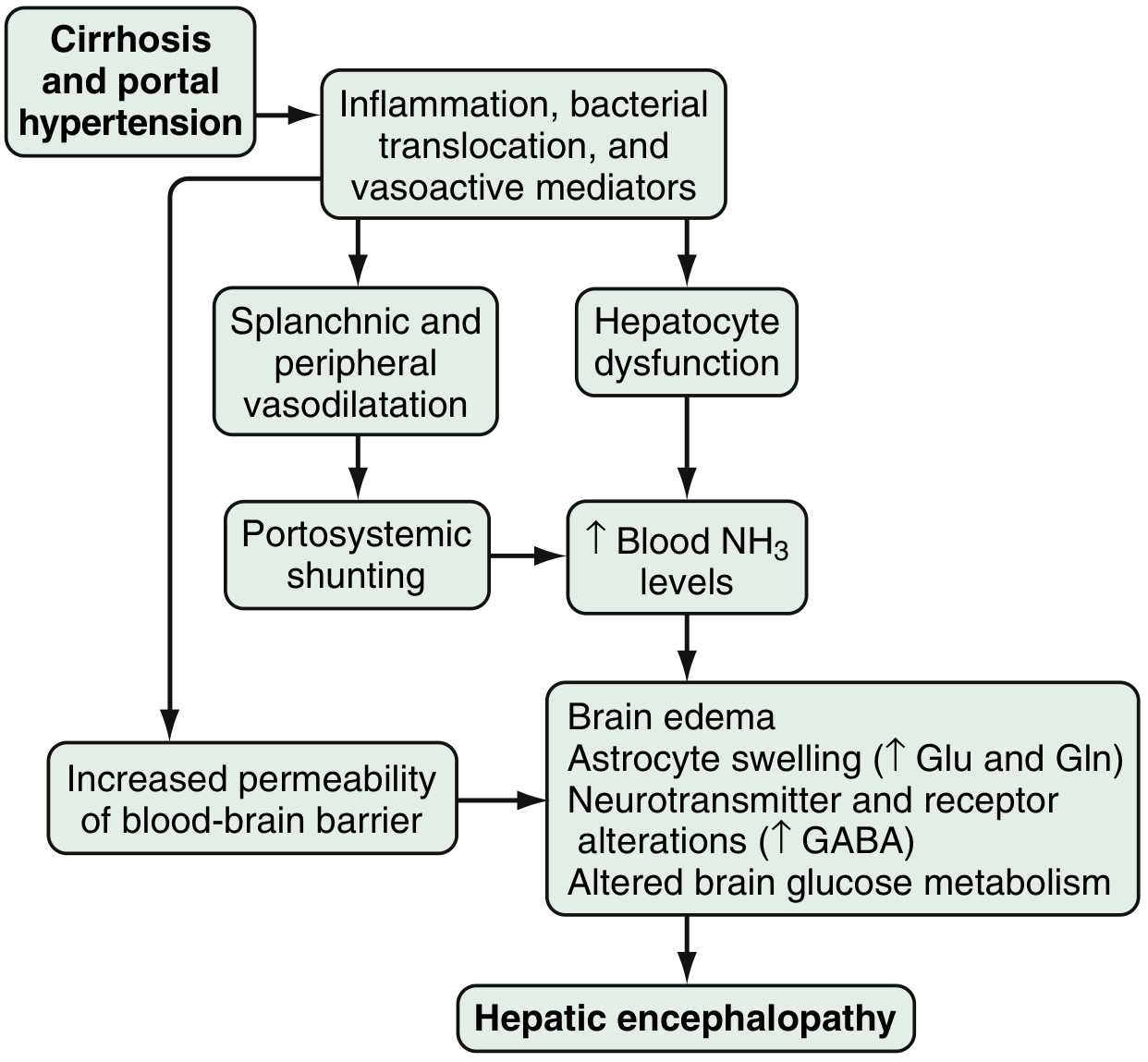
Multiple converging mechanisms:
-
Hyperammonemia — the central neurotoxin. Ammonia is produced primarily in the colon (bacterial protein metabolism) and by enterocytes from glutamine. Normally cleared by hepatocytes; in cirrhosis, portosystemic shunting and reduced hepatocyte mass allow systemic accumulation. Arterial hyperammonemia is found in up to 90% of HE patients. Ammonia crosses the blood-brain barrier (predominantly as uncharged NH₃ gas), where astrocytes convert it to glutamine via glutamine synthetase — causing astrocyte swelling and cytotoxic edema.
-
Astrocyte swelling — considered the key pathological event. Cell swelling is aggravated by inflammatory cytokines, hyponatraemia, and benzodiazepines (which explains why these frequently precipitate HE). In chronic disease, Alzheimer type-2 astrocytes accumulate.
-
GABA-benzodiazepine system enhancement — increased astrocyte (peripheral-type) benzodiazepine receptor sensitivity amplifies GABAergic inhibition via neurosteroid production (allopregnanolone, THDOC).
-
Neuroinflammation — inflammatory cytokines directly impair neuronal function and sensitise the brain to ammonia's effects. Intercurrent infection (e.g., SBP) substantially worsens HE.
-
Other neurotoxins — serotonin, nitric oxide, manganese (dopaminergic dysfunction), circulating opioids, reactive oxygen species.
-
Gut microbiome — colonic mucosal microbiota differ in cirrhotic patients with vs. without HE; gut-derived metabolites influence ammonia and neurotoxin production.
Common Precipitants
GI bleeding · electrolyte abnormalities (especially hypokalaemia) · infection (UTI, SBP, pneumonia) · dehydration · constipation · excessive dietary protein · sedative/opioid medications · portosystemic shunt placement
Clinical Features
- Onset often insidious; early features include forgetfulness, reversal of sleep-wake cycle, changes in handwriting, difficulty driving
- Progression: asterixis → agitation → disorihibited behaviour → seizures → coma
- Characteristic: quiet, apathetic delirium (10–20% present with boisterous/manic onset)
- Respiratory alkalosis with hyperventilation is nearly invariable in all grades — an absence argues against hepatic coma
- Pupillary and caloric responses remain normal until preterminal stages (unlike structural brainstem lesions) — Plum & Posner
Diagnosis
Primarily clinical in the appropriate context. Rule out hypoglycaemia, hyponatraemia, medication toxicity, and intracranial structural lesions (especially subdural haematoma given coagulopathy risk). Serum ammonia is neither sensitive nor specific but supports the diagnosis. Psychometric tests (Number Connection Test) and EEG are used for minimal/covert HE.
Management
| Strategy | Details |
|---|---|
| Identify & treat precipitants | First and most important step |
| Lactulose | 15–45 mL PO (or NG) BID–QID; titrate to 2–3 soft stools/day. First-line therapy; reduces colonic ammonia production by acidifying colonic pH and promoting NH₃ → NH₄⁺ trapping |
| Rifaximin | 400 mg PO q8h (or 550 mg BID for secondary prophylaxis); non-absorbable antibiotic reduces ammonia-producing gut flora; superior to lactulose alone in several trials |
| Branched-chain amino acids (BCAA) | IV infusion; benefit shown without increased mortality |
| Neomycin, metronidazole | Second-line antibiotics; used adjunctively |
| Protein restriction | Moderate; avoid excessive restriction as muscle is the main extra-hepatic ammonia detoxifier; malnutrition worsens HE |
| Liver transplantation | Definitive treatment; generally reverses HE |
In acute liver failure (Type A), intracranial hypertension develops in up to 80% of grades 3–4; ICP monitoring and osmotherapy (mannitol, hypertonic saline) may be required. — Sleisenger & Fordtran's
II. Uremic Encephalopathy
Definition & Epidemiology
A syndrome of delirium in untreated or inadequately treated ESKD. Slight neuropsychiatric symptoms are present in ~30% of patients on dialysis. Advanced grades (confusion/coma) occur mainly in those not yet on renal replacement therapy. — Bradley & Daroff's Neurology
Clinical Features
- Early: lethargy, cognitive slowing, attention/memory deficits
- Intermediate: confusion, hallucinations, psychosis, tremor, myoclonus, asterixis
- Severe: seizures (generalised tonic-clonic or myoclonic), stupor, coma
- Degree of azotaemia (BUN/creatinine) correlates poorly with severity — urea itself is not the neurotoxin — Plum & Posner
Pathophysiology
- Guanidine compounds (guanidinusuccinic acid, methylguanidine) — elevated 100-fold in uremic brain tissue; activate NMDA receptors and modulate calcium channels → seizures
- Cytokine-mediated neuroinflammation with increased BBB permeability
- Secondary hyperparathyroidism: elevated PTH increases brain calcium content, disrupting neurotransmitter release
- Anemia: erythropoietin therapy associated with improved cognitive performance
- Gut-microbial metabolites (phenylalanine, benzoate, glutamate pathways) linked to cognitive impairment in dialysis patients — Brenner & Rector's The Kidney
Related Dialysis Syndromes
| Syndrome | Mechanism | Features |
|---|---|---|
| Dialysis disequilibrium | Rapid urea clearance → intracellular osmotic gradient → cerebral edema | Headache, nausea, confusion, seizures (during or after HD) |
| Dialysis encephalopathy | Aluminium neurotoxicity (historical; aluminium-containing dialysate) | Dysarthria, aphasia, apraxia, myoclonus, seizures |
| PRES | Failed cerebral autoregulation + endothelial dysfunction; fluid overload | Headache, visual changes, altered consciousness, seizures; posterior white-matter edema on MRI |
| Thiamine deficiency encephalopathy | Water-soluble vitamin loss in dialysis; poor intake | Wernicke syndrome; 33% prevalence of thiamine deficiency in symptomatic dialysis patients (Hung et al., 2001) |
Management
- Institute renal replacement therapy (dialysis/transplantation) — definitive
- Correct anaemia (erythropoietin)
- Control hyperparathyroidism
- Caution with AEDs: phenytoin protein binding altered by uraemia; prefer agents with less renal pharmacokinetic complexity
- PRES: volume and BP management
III. Hypertensive Encephalopathy & PRES
Hypertensive Encephalopathy
Caused by failure of cerebral autoregulation with breakthrough hyperperfusion → vasospasm → ischemia → increased vascular permeability → vasogenic edema and punctate haemorrhages.
Clinical: severe headache, vomiting, altered mental status, seizures, coma; visual disturbance → blindness; papilloedema; hypertensive retinopathy. Focal deficits do not follow a single anatomic pattern (indicating diffuse dysfunction, not stroke).
Diagnosis: CT may be normal or show non-specific edema/haemorrhages. The combination of diffuse neurological dysfunction + markedly elevated BP ± papilloedema is sufficient to initiate treatment.
Management: promptly reduce BP by 30–40% (avoid overcorrection). IV agents (labetalol, nicardipine, sodium nitroprusside). Fully reversible with early treatment. In-hospital mortality <1%. — Rosen's Emergency Medicine
Posterior Reversible Encephalopathy Syndrome (PRES)
- Similar but more posterior and region-specific than hypertensive encephalopathy
- Characterised by: headache, altered consciousness, visual disturbances, seizures (up to 90%)
- MRI: vasogenic oedema predominantly in posterior parietal-temporal-occipital white matter
- Causes: hypertension (most common), eclampsia, vasculitis, thrombotic microangiopathy, calcineurin inhibitors, rituximab, sirolimus, ESKD
- Reversible with treatment of underlying cause — Rosen's Emergency Medicine, Brenner & Rector's
IV. Wernicke Encephalopathy
Pathophysiology
Thiamine (B₁) deficiency impairs thiamine-dependent enzymes (pyruvate dehydrogenase, α-ketoglutarate dehydrogenase) in high-metabolic-demand brain regions: blood-brain barrier, anterior/centromedian thalamus, mammillary bodies, periaqueductal grey, floor of the fourth ventricle. Deficiency of α-ketoglutarate dehydrogenase in astrocytes leads to microglial activation and glutamatergic toxicity. Pathological changes: neuronal swelling, microscopic haemorrhages, gliosis.
At-Risk Groups
Chronic alcohol abuse (most common) · prolonged vomiting · bariatric surgery · AIDS/cancer cachexia · dialysis patients (30% thiamine deficiency in symptomatic patients) · severe malnutrition
Classic Triad (present in only ~1/3 of cases)
- Mental status change — mild memory impairment → delirium → coma; often apathy/abulia
- Oculomotor abnormalities — nystagmus, dysconjugate gaze, gaze palsies
- Ataxia — predominantly gait and lower limb; less pronounced in non-alcoholic patients
⚠️ Only ~25% of cases are diagnosed antemortem. Always maintain a high index of suspicion.
Investigations
- MRI (T2/FLAIR): symmetrical increased signal in periventricular thalamus, periaqueductal grey, floor of fourth ventricle, mammillary bodies
- Thiamine level <50 μg/mL (may be normal in ~10% of cases)
- Elevated serum lactate and pyruvate (disrupted carbohydrate metabolism)
⚠️ Do NOT give IV glucose before thiamine — can precipitate or worsen Wernicke's
Management
- IV thiamine immediately — before any glucose administration
- High-dose IV thiamine (200–500 mg TID) until clinical improvement
- Followed by oral supplementation
- Untreated → Korsakoff syndrome (irreversible anterograde amnesia + confabulation)
V. Septic / Systemic Inflammatory Encephalopathy
The CNS is affected by systemic inflammatory illness through several converging mechanisms:
- BBB permeability changes with cytokine and LPS entry
- Altered cerebral microcirculation and mitochondrial dysfunction
- Neurotransmitter disturbances (glutamate, amino acid dysregulation)
- Sickness syndrome: PGE₂ from inflammatory cells crosses BBB → hypothalamic effects (fever, anorexia, somnolence, lowered pain threshold)
Key feature: hyperventilation with respiratory alkalosis + impaired consciousness + no other metabolic cause should prompt a search for an occult infection (e.g., UTI, leg ulcer). Treatment of the infectious source alone often reverses the encephalopathy. — Plum & Posner's Diagnosis and Treatment of Stupor and Coma
VI. Toxic & Radiation Encephalopathy
Toxic Encephalopathy
Both bacterial invaders and the host inflammatory response can cause neuronal injury/death via reactive oxygen species, proteases, cytokines, and excitatory amino acids (apoptosis and necrosis). — Plum & Posner
Radiation Encephalopathy
| Timing | Onset | Mechanism | Features |
|---|---|---|---|
| Acute | Days | Increased ICP, BBB breakdown | Headache, nausea, altered mental status; treat with high-dose corticosteroids |
| Early delayed | 2 weeks–4 months | Demyelination | Headache, drowsiness, enhancement of prior deficits; self-limiting |
| Late (delayed) | Months–years (esp. >35 Gy) | Demyelinating lesions, vascular changes, necrosis | Cognitive/affective disturbances, frontal dysfunction, progressive dementia; bevacizumab may help |
Bradley & Daroff's Neurology in Clinical Practice
Approach to the Patient with Encephalopathy
History & exam → Exclude structural lesion (CT/MRI) → Check: glucose, electrolytes, renal/liver function, ammonia, TFTs, ABG, toxicology screen, sepsis workup
              ↓
        Common reversible causes:
        • Hypoglycaemia → IV glucose
        • Wernicke's → IV thiamine first
        • Hepatic → treat precipitant + lactulose ± rifaximin
        • Uremic → dialysis
        • Hypertensive → controlled BP reduction
        • Septic → source control + antibiotics
        • Toxic → remove offending agent
Sources: Sleisenger & Fordtran's Gastrointestinal and Liver Disease · Plum & Posner's Diagnosis and Treatment of Stupor and Coma · Bradley & Daroff's Neurology in Clinical Practice · Brenner & Rector's The Kidney · Rosen's Emergency Medicine · Goldman-Cecil Medicine · Localization in Clinical Neurology, 8eHere is a structured overview covering all major types of encephalopathy at a detailed clinical level.
Encephalopathy: Comprehensive Clinical Review
Definition
Encephalopathy is diffuse brain dysfunction caused by a systemic, metabolic, toxic, or inflammatory insult rather than primary intrinsic brain disease. It manifests as a spectrum from mild inattention → confusion → stupor → coma. Phylogenetically newer brain structures (cortex, complex polysynaptic pathways) are affected first; brainstem reflexes are preserved until near-terminal stages. — Localization in Clinical Neurology, 8e
General Clinical Features of Metabolic Encephalopathy
| Sign | Details |
|---|---|
| Asterixis | Sudden, brief loss of postural tone ("flapping tremor"); elicited by dorsiflexing wrist with fingers extended; present in mild–moderate encephalopathy, disappears in deep coma |
| Tremor | Coarse, irregular, 8–10 Hz; maximal with outstretched hands |
| Multifocal myoclonus | Non-rhythmic muscle twitching; seen in uremic, hyperosmolar-hyperglycaemic, and CO₂ narcosis |
| Hyperventilation / respiratory alkalosis | Prominent in hepatic and septic encephalopathy |
| EEG slowing | Correlates with clinical severity |
Asymmetric motor signs argue against a purely metabolic cause — consider concurrent structural lesion.
I. Hepatic Encephalopathy (HE)
Epidemiology
Develops in 50–70% of cirrhotic patients; onset signals poor prognosis (1-year survival 42%, 3-year survival 23% without liver transplantation).
Classification
By underlying disease:
- Type A — acute liver failure (ALF)
- Type B — portosystemic bypass without liver disease
- Type C — cirrhosis + portal hypertension (most common)
By severity — West Haven Criteria & SONIC Classification:
| Grade | Cognition | Neuromuscular | SONIC Category |
|---|---|---|---|
| 0 | Normal | Normal | Unimpaired |
| Minimal | Subtle work/driving changes | Minor visuospatial abnormalities | Covert HE |
| 1 | Shortened attention, mild confusion | Tremor, incoordination | Covert HE |
| 2 | Lethargy, disorientation to time | Asterixis, ataxia | Overt HE |
| 3 | Gross disorientation, somnolence | Asterixis, rigidity | Overt HE |
| 4 | Coma | Decerebrate posturing | Overt HE |
Pathophysiology
- Hyperammonemia — ammonia from colonic bacteria/enterocyte glutamine metabolism bypasses the liver via portosystemic shunting → crosses BBB as NH₃ gas → astrocytes convert it to glutamine → astrocyte swelling, cytotoxic edema. Arterial hyperammonemia present in ~90% of HE cases, but serum levels are neither sensitive nor specific.
- Astrocyte swelling — the key pathological event; amplified by inflammatory cytokines, hyponatraemia, and benzodiazepines (explaining why these precipitate HE). Depletion of intracellular myoinositol (which normally counteracts swelling) increases vulnerability.
- GABA-benzodiazepine system — enhanced astrocyte peripheral benzodiazepine receptor sensitivity → ↑ neurosteroid production (allopregnanolone, THDOC) → amplified GABAergic inhibition.
- Neuroinflammation — intercurrent infection drastically worsens HE by direct cytokine-mediated brain dysfunction.
- Other: manganese (dopaminergic toxicity), nitric oxide, reactive oxygen species, gut microbiome dysbiosis.
Common Precipitants
GI bleeding · hypokalemia · infection (SBP, UTI, pneumonia) · dehydration · constipation · excess dietary protein · sedatives/opioids · TIPS placement
Clinical Features
- Early: forgetfulness, sleep-wake reversal, changes in handwriting, difficulty driving
- Progression: asterixis → agitation → disinhibited behaviour → seizures → coma
- Typical onset: quiet, apathetic delirium (10–20% present with agitated/manic delirium)
- Respiratory alkalosis with hyperventilation is nearly invariable — its absence argues against hepatic coma
- Pupillary and caloric responses remain normal until preterminal stages (distinguishes from structural brainstem lesions) — Plum & Posner
Management
| Intervention | Details |
|---|---|
| Identify and treat precipitants | First and most critical step |
| Lactulose | 15–45 mL PO/NG BID–QID; titrate to 2–3 soft stools/day; acidifies colon, traps NH₃ as NH₄⁺ |
| Rifaximin | 400 mg q8h or 550 mg BID; non-absorbable antibiotic; superior to lactulose alone in several RCTs; used for secondary prophylaxis |
| Branched-chain amino acids | IV infusion; proven benefit without increased mortality |
| Protein management | Moderate restriction; avoid excess — muscle is the main extra-hepatic ammonia detoxifier |
| Liver transplantation | Definitive; generally reverses HE |
In ALF (Type A), intracranial hypertension develops in up to 80% of grades 3–4 encephalopathy. ICP monitoring, mannitol, and hypertonic saline may be needed.
II. Uremic Encephalopathy
Clinical Features
- Early: lethargy, impaired attention/memory (~30% of dialysis patients have neuropsychiatric symptoms)
- Intermediate: confusion, hallucinations, psychosis, tremor, myoclonus, asterixis
- Severe: tonic-clonic or myoclonic seizures, stupor, coma
- Degree of azotaemia correlates poorly with severity — urea itself is not the neurotoxin
Pathophysiology
- Guanidine compounds (guanidinusuccinic acid, methylguanidine) — elevated 100-fold in uremic brain/CSF; activate NMDA receptors → seizures
- Cytokine-mediated neuroinflammation + ↑ BBB permeability
- Secondary hyperparathyroidism → elevated brain calcium → disrupted neurotransmitter release
- Gut-microbial metabolites (phenylalanine, benzoate, glutamate pathways) linked to cognitive impairment
- Anaemia — EPO therapy improves cognitive performance
Related Dialysis Syndromes
| Syndrome | Mechanism | Features |
|---|---|---|
| Dialysis disequilibrium | Rapid solute clearance → osmotic gradient → cerebral edema | Headache, confusion, seizures during/after HD; treat by reducing dialysis duration/frequency |
| Dialysis encephalopathy | Aluminium neurotoxicity (historical) | Dysarthria, aphasia, myoclonus, cognitive decline |
| PRES | Failed autoregulation + endothelial dysfunction + fluid overload | Headache, visual changes, seizures; posterior white-matter edema on MRI |
| Wernicke's (dialysis) | Thiamine loss via dialysis; 33% prevalence in symptomatic dialysis encephalopathy | Classic triad (see below) |
Management
- Renal replacement therapy (dialysis/transplantation) — definitive
- Correct anaemia and hyperparathyroidism
- PRES: volume control and BP management
- Caution with AEDs: uraemia + hypoalbuminaemia alter phenytoin protein binding; free levels should be measured directly
III. Hypertensive Encephalopathy & PRES
Hypertensive Encephalopathy
Mechanism: autoregulatory failure → breakthrough hyperperfusion → vasospasm → ischemia → ↑ vascular permeability → vasogenic oedema + punctate haemorrhages
Clinical: severe headache, vomiting, altered mental status, seizures/coma; visual disturbance → blindness; papilloedema; hypertensive retinopathy. Focal deficits do not follow a single anatomic distribution (diffuse dysfunction, not stroke).
Diagnosis: clinical (diffuse neurological dysfunction + markedly elevated BP ± papilloedema) + CT showing non-specific or absent changes. Do not delay treatment waiting for imaging.
Management: controlled BP reduction by 30–40% using IV agents (labetalol, nicardipine, nitroprusside). Fully reversible with early treatment; in-hospital mortality <1%. — Rosen's Emergency Medicine
PRES
- Similar pathophysiology, but more posterior and region-specific
- MRI hallmark: vasogenic oedema in posterior parietal-temporal-occipital white matter
- Seizures in up to 90% of PRES cases
- Causes beyond hypertension: eclampsia, vasculitis, TMA, calcineurin inhibitors (ciclosporin, tacrolimus), rituximab, ESKD, erythropoietin therapy
- Reversible with treatment of underlying cause
IV. Wernicke Encephalopathy
Pathophysiology
Thiamine (B₁) deficiency impairs oxidative metabolism in high-demand regions: mammillary bodies, anterior/centromedian thalamus, periaqueductal grey, floor of the fourth ventricle. Deficiency of α-ketoglutarate dehydrogenase in astrocytes → microglial activation → glutamatergic toxicity → neuronal swelling, microscopic haemorrhages, gliosis.
At-Risk Groups
Chronic alcohol abuse · prolonged vomiting (any cause) · bariatric surgery · AIDS/cancer cachexia · dialysis patients · malnutrition
Classic Triad (present in only ~1/3 of cases)
- Mental status change — inattention → delirium → coma; often apathy/abulia
- Oculomotor dysfunction — nystagmus, dysconjugate gaze, gaze palsies
- Ataxia — gait and lower limb predominance; non-alcoholic patients have more ocular involvement
⚠️ Only ~25% of cases are recognised before death. Clinically missed in most patients.
Investigations
- MRI T2/FLAIR: symmetrical hyperintensity at periventricular thalamus, periaqueductal grey, floor of fourth ventricle, mammillary bodies
- Thiamine level <50 μg/mL (normal in ~10%)
- Elevated lactate and pyruvate
⚠️ Give IV thiamine BEFORE any glucose — IV glucose alone can precipitate acute Wernicke's
Management
- IV thiamine (200–500 mg TID) immediately, before glucose
- Followed by oral thiamine supplementation
- Untreated → Korsakoff syndrome (irreversible anterograde amnesia + confabulation)
V. Septic/Systemic Inflammatory Encephalopathy
Mechanisms (converging):
- Cytokine/LPS-mediated BBB disruption
- Altered cerebral microcirculation and mitochondrial dysfunction
- Endotoxin-driven oxidative stress and neurotransmitter disturbances
- Sickness syndrome: PGE₂ crosses BBB → hypothalamic activation (fever, somnolence, anorexia, lowered pain threshold)
Key clinical clue: hyperventilation + respiratory alkalosis + impaired consciousness with no other metabolic cause → mount an urgent search for occult infection (UTI, wound infection). Treating the infection source often reverses the encephalopathy. — Plum & Posner
VI. Radiation Encephalopathy
| Type | Timing | Mechanism | Features | Treatment |
|---|---|---|---|---|
| Acute | Days post-RT | BBB breakdown, ↑ ICP | Headache, nausea, altered mental status | High-dose corticosteroids |
| Early delayed | 2 wks–4 months | Demyelination | Headache, drowsiness, previous deficits enhanced | Self-limiting; no specific treatment |
| Late (delayed) | Months–years (esp. >35 Gy total dose) | Vascular changes, necrosis, neuronal loss | Progressive dementia, frontal dysfunction, gait disorder | Bevacizumab; experimental: stem cell/anti-inflammatory |
Bradley & Daroff's Neurology in Clinical Practice
Diagnostic Approach
All encephalopathy patients:
1. Exclude hypoglycaemia → IV thiamine then glucose if malnourished
2. Structural imaging (CT/MRI) if focal signs, trauma, or anticoagulation
3. Basic labs: glucose, Na, K, Ca, Mg, BUN/Cr, LFTs, ammonia, ABG, TFTs
4. Toxicology screen; medication review
5. Sepsis workup (CBC, cultures, CXR, UA)
6. EEG if subclinical seizures suspected

→ Treat the identified cause:
   Glucose → hypoglycaemia
   Thiamine → Wernicke's
   Lactulose ± rifaximin → hepatic
   Dialysis → uremic
   BP control → hypertensive/PRES
   Antibiotics + source control → septic
   Remove offending agent → toxic
Sources: Sleisenger & Fordtran's GI and Liver Disease · Plum & Posner's Diagnosis and Treatment of Stupor and Coma · Bradley & Daroff's Neurology in Clinical Practice · Brenner & Rector's The Kidney · Rosen's Emergency Medicine · Goldman-Cecil Medicine · Localization in Clinical Neurology, 8e
Para neoplastic syndrome
Checking Date & Time
Finding Sources
Searching PubMed
paraneoplastic neurological syndrome autoantibodies
Excellent sources found. Now reading the key neurology sections in parallel.
Reading File
Reading File
Finding Sources
Excellent content. Now reading more: subacute cerebellar degeneration, opsoclonus-myoclonus, Lambert-Eaton, and the broader clinical framework.
Reading File
Reading File
Finding Sources
Finding Sources
Finding Sources
Reading File
Reading File
Reading File
Reading File
Reading File
Reading File
Reading File
I have rich content from multiple authoritative sources. Let me now fetch the key pathology diagram and synthesize the comprehensive review.
Loading Image
Paraneoplastic Neurological Syndromes (PNS): Comprehensive Clinical Review
Definition
Paraneoplastic neurological syndromes (PNS) are remote effects of cancer on the nervous system that are not caused by:
- Direct tumor invasion or metastasis
- Infection, ischemia, or metabolic/nutritional derangement
- Surgery, radiation, or chemotherapy
They are considered autoimmune disorders triggered by an immune response against antigens shared between tumor tissue and neurons (onconeural antigens). — Bradley & Daroff's Neurology in Clinical Practice
Key clinical feature: neurological symptoms commonly precede detection of the underlying cancer by 4–12 months, and the clinical course can be rapidly progressive, leaving patients severely disabled within weeks to months.
Pathophysiology: Two Immunological Subtypes
The fundamental distinction in PNS is based on the location of the target antigen — intracellular vs. cell surface:
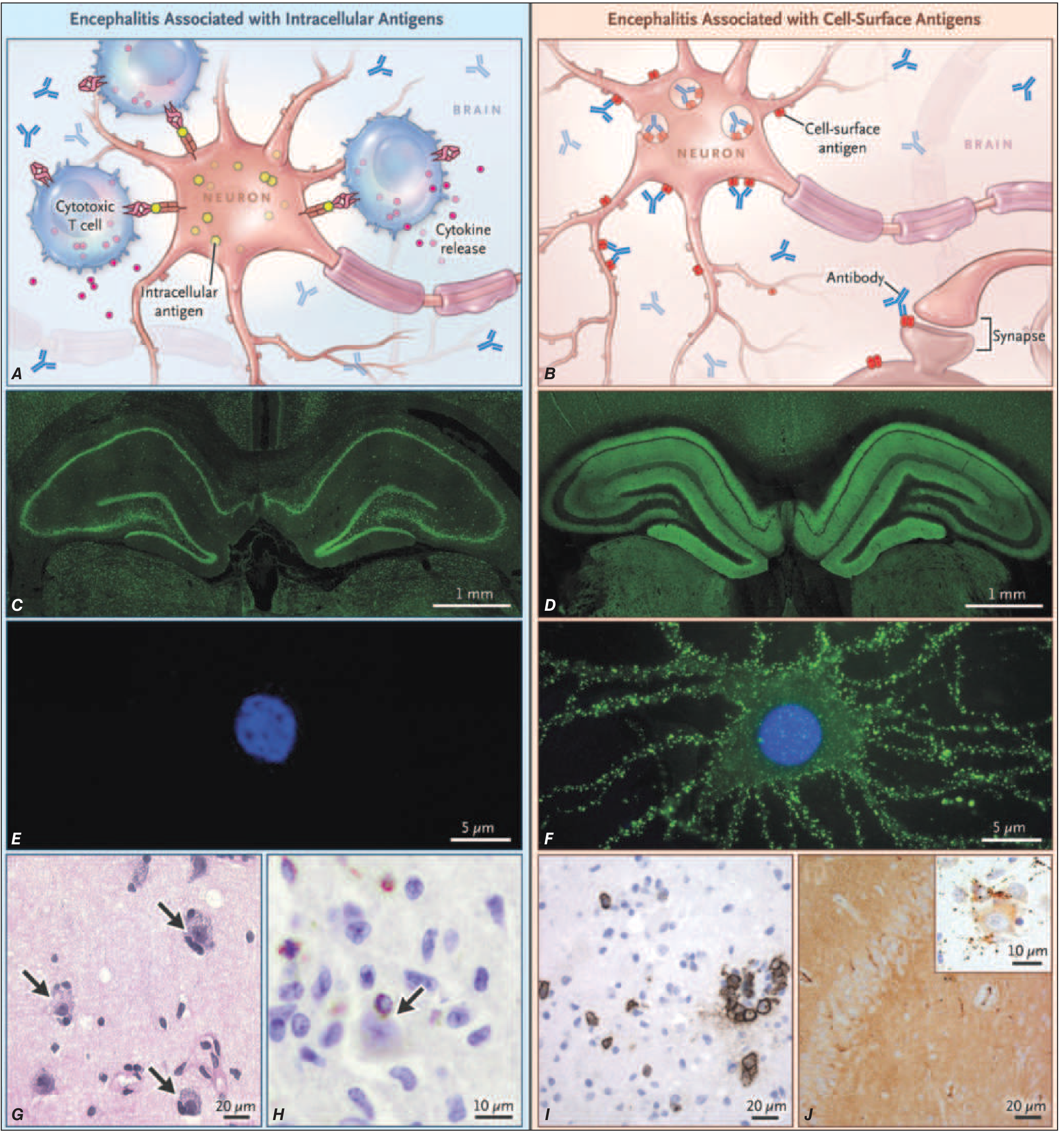
| Feature | Antibodies vs. Intracellular Antigens | Antibodies vs. Cell-Surface/Synaptic Antigens |
|---|---|---|
| Examples | Anti-Hu, Anti-Yo, Anti-Ri, Anti-Ma2, Anti-CV2/CRMP5 | Anti-NMDAR, Anti-LGI1, Anti-Caspr2, Anti-AMPAR, Anti-GABAR |
| Effector mechanism | Primarily cytotoxic T-cell mediated; antibodies are surrogate markers, not pathogenic | Antibodies are directly pathogenic — cross-link/internalise or alter receptor function |
| Neuronal damage | Irreversible neuronal loss with inflammatory infiltrates; T cells directly contact neurons via perforin/granzyme | Reversible synaptic dysfunction; moderate inflammation, IgG deposits, microglial proliferation |
| Cancer association | Highly predictive of malignancy; antibody = cancer marker | Less predictive; many autoimmune variants without cancer |
| Treatment response | Poor; stabilisation is the goal | Good; respond well to immunotherapy |
Antibody Classification and Tumour Associations
Antibodies Against Intracellular Antigens ("Classic Onconeural Antibodies")
| Antibody | Neurological Syndrome | Primary Tumour |
|---|---|---|
| ANNA-1 (Anti-Hu) | Sensory neuronopathy, PEM, autonomic neuropathy, GI dysmotility | SCLC (>90%) |
| ANNA-2 (Anti-Ri) | Opsoclonus-myoclonus, jaw dystonia, ataxia | Breast, SCLC |
| PCA-1 (Anti-Yo) | Subacute cerebellar degeneration | Ovarian, breast |
| PCA-2 | Limbic encephalitis, cerebellar ataxia, motor neuropathy | SCLC |
| Anti-Ma2 (Anti-Ta) | Limbic/hypothalamic/brainstem encephalitis | Testicular germ cell (men <45 y), lung |
| Anti-CV2 (CRMP5) | Cerebellar ataxia, dementia, chorea, uveitis, sensorimotor neuropathy | SCLC, thymoma |
| Anti-amphiphysin | Stiff-person syndrome, PEM, sensory neuronopathy | Breast, SCLC |
Antibodies Against Cell-Surface / Synaptic Antigens
| Antibody | Neurological Syndrome | Tumour Association |
|---|---|---|
| Anti-NMDAR | Anti-NMDA receptor encephalitis (see below) | Ovarian teratoma (young women); no tumour in children/males |
| Anti-LGI1 | Limbic encephalitis, faciobrachial dystonic seizures, hyponatraemia | Thymoma (<5%); mainly autoimmune |
| Anti-Caspr2 | Morvan syndrome, encephalitis, peripheral nerve hyperexcitability, neuropathic pain | Thymoma (~20%), higher in Morvan (~50%) |
| Anti-AMPAR | Limbic encephalitis, prominent psychiatric features | Breast, SCLC, thymoma |
| Anti-GABA-B receptor | Limbic encephalitis, seizures | SCLC, neuroendocrine tumours (~50%) |
| Anti-GABA-A receptor | Encephalitis with severe refractory seizures, status epilepticus | Thymoma |
| Anti-GlyR | PERM (progressive encephalomyelitis with rigidity and myoclonus) | Thymoma, lymphoma, breast (~20%) |
| Anti-VGCC | Lambert-Eaton myasthenic syndrome, cerebellar ataxia | SCLC |
| Anti-VGKC (complex) | Neuromyotonia (Isaacs), Morvan syndrome | Thymoma, SCLC |
SCLC = small-cell lung cancer; PEM = paraneoplastic encephalomyelitis; PERM = progressive encephalomyelitis with rigidity and myoclonus
Associated Tumours
| Tumour | Most Common PNS |
|---|---|
| Small-cell lung cancer (SCLC) | PEM, sensory neuronopathy, LEMS, cerebellar degeneration, autonomic neuropathy |
| Ovarian teratoma | Anti-NMDAR encephalitis |
| Breast cancer | Cerebellar degeneration (anti-Yo), opsoclonus-myoclonus (anti-Ri), stiff-person syndrome |
| Ovarian/gynaecological carcinoma | Cerebellar degeneration |
| Testicular germ cell tumour | Limbic/hypothalamic encephalitis (anti-Ma2) |
| Thymoma | LEMS, myasthenia gravis, neuromyotonia, limbic encephalitis |
| Hodgkin lymphoma | Cerebellar degeneration, mGluR5 encephalitis |
| Neuroblastoma (children) | Opsoclonus-myoclonus |
Classic Paraneoplastic Syndromes
1. Paraneoplastic Encephalomyelitis (PEM)
Multifocal involvement of the neuraxis (brain, brainstem, cerebellum, spinal cord, dorsal root ganglia, autonomic NS). Features depend on the predominant site:
- Limbic involvement: memory loss, confusion, seizures, psychiatric symptoms
- Brainstem: oscillopsia, diplopia, dysarthria, gaze palsies, hearing loss
- Cerebellar: gait ataxia
- Autonomic: postural hypotension, gastroparesis, intestinal dysmotility, neurogenic bladder, erectile dysfunction, cardiac dysrhythmia
- Lower motor neuron (myelitis): in ~20%
Most often associated with SCLC and anti-Hu antibodies. Cardiac dysrhythmia and respiratory failure are frequent causes of death. Generally poorly responsive to treatment. — Bradley & Daroff's
2. Limbic Encephalitis (LE)
Clinical: sub-acute memory loss (with relative preservation of other cognition) + confusion + complex partial seizures + psychiatric symptoms (depression, agitation, anxiety, hallucinations).
MRI: unilateral or bilateral mesial temporal lobe increased T2/FLAIR signal — one of the few PNSs where imaging can suggest the diagnosis.
Antibodies by clinical clue:
- Anti-Hu → part of PEM, usually SCLC
- Anti-Ma2 → young men, upper brainstem + vertical gaze palsy, testicular germ cell tumour; ~1/3 improve with tumour treatment + immunotherapy
- Anti-LGI1 → >50 years, male, faciobrachial dystonic seizures, hyponatraemia; responds well to immunotherapy
- Anti-AMPAR → prominent psychiatric features, breast/thymoma/SCLC
- Anti-GABA-B → seizures dominant, SCLC; better outcome without cancer
3. Anti-NMDA Receptor Encephalitis
The most common autoimmune encephalitis overall. A 5-stage clinical progression:
- Prodrome: fever, headache (viral-like)
- Psychotic phase: agitation, hallucinations, delusions (often misdiagnosed as primary psychiatric)
- Unresponsive phase: decreased consciousness, catatonia
- Hyperkinetic phase: orofacial dyskinesias, autonomic instability, central hypoventilation
- Recovery: months
Tumour: ovarian teratoma in ~50% of young women; search with pelvic US/MRI. Children and males often antibody-positive without tumour.
MRI: often normal or mild FLAIR changes — in contrast to LGI1/GABA-B encephalitis.
Treatment: responds well to immunotherapy + tumour removal (if present). — Harrison's, 22e
4. Paraneoplastic Cerebellar Degeneration (PCD)
Clinical: subacute, progressive pancerebellar syndrome — truncal and limb ataxia, nystagmus, dysarthria, diplopia, dysphagia. Develops over weeks to months. Accounts for ~12% of paraneoplastic neurological syndromes in lung cancer.
Pathology: severe loss of Purkinje cells with T-lymphocytic infiltrates (see histology above, Fig. 81.1).
Antibodies: Anti-Yo (ovarian/breast) · Anti-Hu (SCLC) · Anti-Ri · Anti-VGCC (often with LEMS) · anti-mGluR1 (Hodgkin lymphoma)
Prognosis: often leaves severe disability; improvement uncommon unless cell-surface antibody involved. — Bradley & Daroff's, Harrison's
5. Paraneoplastic Sensory Neuronopathy (PSN)
Clinical: progressive sensory loss (all modalities), painful dysesthesias; initially asymmetric → symmetric; sensory ataxia, pseudoathetosis; sensorineural hearing loss possible. Two-thirds develop neurological symptoms before cancer diagnosis.
EMG/NCS: small-amplitude or absent SNAPs; normal motor studies → consistent with dorsal root ganglion involvement.
Antibody: Anti-Hu in ~80% (associated with SCLC).
Management: prompt tumour control (SCLC) → neurological stabilisation; partial improvement with corticosteroids; IVIG/rituximab — uncertain efficacy. — Bradley & Daroff's
6. Paraneoplastic Opsoclonus-Myoclonus (POM)
Clinical: chaotic, arrhythmic, large-amplitude conjugate eye movements in all directions (opsoclonus) + myoclonus of head, trunk, extremities.
Children: usually neuroblastoma; prominent staggering/falling. Responds to ACTH, corticosteroids, IVIg. Relapses are common.
Adults: breast cancer (anti-Ri/ANNA-2), SCLC, testicular. More severe course; may include ataxia, encephalopathy.
Treatment (adults): tumour treatment + early aggressive immunotherapy (plasma exchange, immunoadsorption, steroids). — Bradley & Daroff's
7. Lambert-Eaton Myasthenic Syndrome (LEMS)
Mechanism: Antibodies against voltage-gated calcium channels (VGCC) at the presynaptic neuromuscular junction → impaired ACh vesicle release.
Clinical: proximal muscle weakness (legs > arms) + fatigue; autonomic features (dry mouth, constipation, erectile dysfunction); incremental response on repetitive nerve stimulation (distinguishes from myasthenia gravis, where decrement predominates).
Lambert's sign: brief exercise transiently improves strength (facilitates Ca²⁺ accumulation).
Tumour: SCLC in ~60%. If SCLC not found initially, screen every 6 months for ≥3 years.
Treatment: 3,4-diaminopyridine (increases ACh release) · pyridostigmine · IVIg · plasma exchange · tumour treatment. — Bradley & Daroff's, Harrison's
8. Stiff-Person Syndrome (Paraneoplastic)
Clinical: progressive rigidity of axial and proximal muscles, superimposed painful spasms triggered by stimuli; lumbar hyperlordosis.
Antibody: Anti-amphiphysin (paraneoplastic, associated with breast cancer, SCLC) · Anti-GAD65 (autoimmune, non-paraneoplastic).
Treatment: diazepam, baclofen, IVIg, plasma exchange; treat underlying tumour.
9. POEMS Syndrome
Polyneuropathy + Organomegaly + Endocrinopathy + M-protein + Skin changes
Associated with sclerotic myeloma or Castleman disease. The neuropathy is a subacute/chronic demyelinating symmetrical sensorimotor neuropathy (mimics CIDP but with more axonal loss features and greater CMAP/SNAP amplitude reduction). Monoclonal VEGF elevation is a key marker.
Treatment: high-dose chemotherapy + autologous stem cell transplantation; or low-dose alkylator + steroids. — Bradley & Daroff's
10. Paraneoplastic Visual Syndromes
- Cancer-associated retinopathy (CAR): photosensitivity, progressive vision/colour loss, central scotomas, night blindness; SCLC (anti-recoverin antibodies); ERG abnormal
- Melanoma-associated retinopathy (MAR): acute night blindness, photopsias; metastatic melanoma
- Paraneoplastic optic neuritis/uveitis: associated with PEM; CRMP5 antibodies
Treatment responses are limited; stabilisation with steroids, plasma exchange, IVIg, rituximab, or alemtuzumab.
Diagnostic Criteria for Definite PNS (Graus et al., 2004)
A patient has definite PNS if any one of the following is met:
- A classical syndrome (limbic encephalitis, PCD, sensory neuronopathy, PEM, opsoclonus-myoclonus, LEMS, dermatomyositis) + cancer diagnosed within 5 years — regardless of antibody status
- A non-classical syndrome that objectively improves/resolves with cancer treatment (and is not prone to spontaneous remission)
- A non-classical syndrome + onconeural antibodies + cancer diagnosed within 5 years
- A neurological syndrome (classical or not) with well-characterised onconeural antibodies (anti-Hu, anti-Yo, etc.)
— Bradley & Daroff's Neurology in Clinical Practice
Diagnostic Approach
Clinical suspicion: subacute neurological syndrome in adult
     ↓
1. MRI brain (and spine if indicated)
   - Limbic LE: bilateral mesial temporal FLAIR signal
   - PCD: normal early; later cerebellar atrophy
   - Anti-NMDAR: often normal or mild FLAIR

2. CSF
   - Mild-moderate pleocytosis (<200 cells, lymphocytes)
   - Elevated protein; oligoclonal bands variable
   - Rule out infection, leptomeningeal metastasis

3. Onconeural antibody panel (serum AND CSF)
   - Only 60–70% of CNS PNS have detectable antibodies
   - <20% of peripheral PNS are antibody-positive

4. Tumour search (mandatory even if antibody-negative)
   - CT chest/abdomen/pelvis
   - PET-CT (identifies tumours missed by CT)
   - Testicular/pelvic US (germ cell tumours)
   - Mammography / breast MRI
   - If negative: repeat in 3–6 months × 2 years

5. EEG (limbic encephalitis with seizures)
6. Neurophysiology (NCS/EMG for peripheral PNS; VGCC antibodies + LEMS)
Important: combined CT+PET often uncovers tumours not detected by other tests. For testicular/ovarian tumours, US and MRI/CT pelvis may be required as PET may miss them. — Harrison's 22e
Principles of Treatment
| Intervention | Rationale / Application |
|---|---|
| Tumour treatment | Most critical — eliminating tumour removes antigen source; improves outcome especially for LEMS, anti-Ma2 LE, opsoclonus-myoclonus |
| First-line immunotherapy | IV methylprednisolone · IVIg · Plasma exchange |
| Second-line immunotherapy | Rituximab · Cyclophosphamide · Mycophenolate mofetil · Azathioprine |
| Symptomatic | AEDs for seizures; 3,4-diaminopyridine + pyridostigmine for LEMS; diazepam/baclofen for stiff-person |
Response by Antibody Type
| Antibody Type | Treatment Response |
|---|---|
| Cell-surface antigens (NMDAR, LGI1, Caspr2, AMPAR, GABA-R) | Good — often substantial improvement; immunotherapy ± tumour removal |
| Intracellular antigens (Hu, Yo, Ri, Ma2) | Poor — neuronal loss is irreversible; goal is stabilisation |
⚠️ Concern that immunosuppression could promote tumour growth has not been reported clinically. — Fishman's Pulmonary Diseases and Disorders
Non-Neurological Paraneoplastic Syndromes (Brief Overview)
Paraneoplastic effects extend beyond the nervous system:
| System | Syndrome | Mechanism |
|---|---|---|
| Endocrine | SIADH (SCLC), Cushing's (ectopic ACTH), hypercalcaemia (PTHrP), carcinoid syndrome | Ectopic hormone production |
| Haematological | DVT/PE (Trousseau), DIC, AIHA, thrombocytopenia | Procoagulant tumour products |
| Musculoskeletal | Dermatomyositis/polymyositis, hypertrophic osteoarthropathy | Immune-mediated muscle inflammation |
| Dermatological | Acanthosis nigricans, paraneoplastic pemphigus, Sweet syndrome, Leser-Trélat sign | Cytokine/antibody-mediated |
| Renal | Membranous nephropathy (solid tumours), minimal change disease (Hodgkin's) | Immune complex deposition |
Recent Update (Lancet Neurology, 2024)
Immune checkpoint inhibitors (anti-PD-1, anti-CTLA-4) used in oncology can unmask or de novo trigger paraneoplastic neurological syndromes by augmenting immune responses against shared tumour-neuronal antigens. This represents a growing clinical challenge in modern oncology — distinguishing immune-related neurological adverse events from true PNS. [PMID: 38101905]
Sources: Harrison's Principles of Internal Medicine, 22e · Bradley & Daroff's Neurology in Clinical Practice · Robbins & Cotran Pathologic Basis of Disease · Fishman's Pulmonary Diseases · Plum & Posner's Stupor and Coma · Lancet Neurology 2024 (PMID: 38101905)Here is the comprehensive review:
Paraneoplastic Syndromes: Comprehensive Clinical Review
Definition
Paraneoplastic syndromes (PNS) are remote effects of cancer on the nervous system (or other organs) that are not caused by direct tumour invasion, metastasis, infection, ischemia, metabolic derangement, or treatment. They are autoimmune disorders where the tumour expresses antigens normally confined to neurons — triggering an immune response that cross-attacks the nervous system (onconeural antigens). — Bradley & Daroff's Neurology
Critical clinical point: neurological symptoms often precede tumour detection by 4–12 months and progress rapidly over weeks to months. Recognising the syndrome early is the key to identifying a potentially treatable cancer.
Pathophysiology: The Two-Subtype Paradigm
The most clinically important distinction is based on where the target antigen is located:
| Feature | Intracellular Antigens | Cell-Surface/Synaptic Antigens |
|---|---|---|
| Examples | Anti-Hu, Anti-Yo, Anti-Ri, Anti-Ma2, Anti-CV2 | Anti-NMDAR, Anti-LGI1, Anti-Caspr2, Anti-AMPAR |
| Effector mechanism | Cytotoxic T cells → irreversible neuronal loss | Antibodies directly alter receptor function → reversible synaptic dysfunction |
| Cancer prediction | Highly predictive (almost always malignancy) | Less predictive; many autoimmune variants without cancer |
| Treatment response | Poor — stabilisation is the goal | Good — often substantial recovery |
Antibody Table and Tumour Associations
Classic Onconeural Antibodies (Intracellular Targets)
| Antibody | Syndrome | Primary Tumour |
|---|---|---|
| Anti-Hu (ANNA-1) | Sensory neuronopathy, PEM, autonomic neuropathy, GI dysmotility | SCLC |
| Anti-Yo (PCA-1) | Subacute cerebellar degeneration | Ovarian, breast |
| Anti-Ri (ANNA-2) | Opsoclonus-myoclonus, jaw dystonia, ataxia | Breast, SCLC |
| Anti-Ma2 (Ta) | Limbic/hypothalamic/brainstem encephalitis | Testicular germ cell (men <45 y); lung |
| Anti-CV2/CRMP5 | Cerebellar ataxia, dementia, chorea, uveitis, sensorimotor neuropathy | SCLC, thymoma |
| Anti-amphiphysin | Stiff-person syndrome, PEM | Breast, SCLC |
Cell-Surface / Synaptic Antibodies
| Antibody | Syndrome | Tumour Association |
|---|---|---|
| Anti-NMDAR | Anti-NMDAR encephalitis (see below) | Ovarian teratoma (~50% in young women) |
| Anti-LGI1 | Limbic encephalitis, faciobrachial dystonic seizures, hyponatraemia | Thymoma <5%; mostly autoimmune |
| Anti-Caspr2 | Morvan syndrome, encephalitis, peripheral nerve hyperexcitability | Thymoma ~20% (Morvan ~50%) |
| Anti-AMPAR | Limbic encephalitis, psychiatric features | Breast, SCLC, thymoma |
| Anti-GABA-B | Limbic encephalitis, refractory seizures | SCLC/neuroendocrine (~50%) |
| Anti-GABA-A | Severe refractory status epilepticus | Thymoma |
| Anti-GlyR | PERM (rigidity + myoclonus) | Thymoma, lymphoma, breast (~20%) |
| Anti-VGCC | LEMS, cerebellar ataxia | SCLC |
Classic Syndromes
1. Paraneoplastic Encephalomyelitis (PEM)
Multifocal neuraxis involvement. Features vary by predominant site:
- Limbic: memory loss, confusion, seizures, psychiatric features
- Brainstem: oscillopsia, diplopia, dysarthria, gaze palsies
- Cerebellar: gait ataxia; Purkinje cell loss with T-cell infiltrates
- Autonomic: postural hypotension, gastroparesis, neurogenic bladder; cardiac arrhythmia/respiratory failure = common causes of death
- Spinal cord (myelitis): lower motor neuron features ~20%
Antibody: Anti-Hu with SCLC (most common). Poorly responsive to treatment.
2. Limbic Encephalitis (LE)
- Clinical: subacute short-term memory loss + complex partial seizures + psychiatric symptoms (confusion, agitation, hallucinations)
- MRI: unilateral or bilateral mesial temporal lobe T2/FLAIR signal increase — one of the few PNS with characteristic imaging
- Antibody clues:
- Anti-LGI1 → faciobrachial dystonic seizures + hyponatraemia + male >50 years → responds well to immunotherapy
- Anti-Ma2 → young male + vertical gaze palsy + testicular tumour → ~1/3 improve with treatment
- Anti-Hu → part of PEM, SCLC → poor prognosis
3. Anti-NMDA Receptor Encephalitis
The most common autoimmune encephalitis. Five-stage progression:
- Prodrome (flu-like)
- Psychiatric phase — hallucinations, delusions, agitation (frequently misdiagnosed as first-episode psychosis)
- Unresponsive/catatonic phase
- Hyperkinetic phase — orofacial dyskinesias, autonomic instability, central hypoventilation
- Recovery (months)
MRI: often normal. Tumour: ovarian teratoma in ~50% of young women; screen with pelvic US/MRI/CT. Children and males often have no tumour. Responds well to immunotherapy + tumour removal.
4. Paraneoplastic Cerebellar Degeneration (PCD)
- Subacute pancerebellar syndrome: truncal + limb ataxia, nystagmus, dysarthria, diplopia
- Accounts for ~12% of paraneoplastic syndromes in lung cancer
- Pathology: massive Purkinje cell loss with CD3 T-cell infiltrates
- Antibodies: Anti-Yo (ovary/breast), Anti-Hu (SCLC), Anti-VGCC (often with LEMS), Anti-Ri
- Prognosis: severe, largely irreversible unless cell-surface antibody involved
5. Paraneoplastic Sensory Neuronopathy (PSN)
- Progressive sensory loss all modalities + painful dysesthesias; initially asymmetric
- Sensory ataxia, pseudoathetotic movements; hearing loss possible
- 2/3 develop symptoms before cancer diagnosis
- NCS: absent/small SNAPs; normal motor studies (dorsal root ganglion pathology)
- Antibody: Anti-Hu (~80%; SCLC)
- Management: tumour control → stabilisation; corticosteroids may partially help
6. Paraneoplastic Opsoclonus-Myoclonus (POM)
- Chaotic, arrhythmic conjugate saccades in all directions + multifocal myoclonus
- Children: neuroblastoma; prominent gait disturbance; treat with ACTH, IVIg
- Adults: breast (anti-Ri), SCLC, testicular; worse course
7. Lambert-Eaton Myasthenic Syndrome (LEMS)
- Mechanism: Anti-VGCC antibodies → impaired presynaptic ACh vesicle release
- Clinical: proximal leg > arm weakness, fatigue, dry mouth; brief exercise temporarily improves strength (Lambert's sign)
- EMG: incremental response on repetitive stimulation (vs. decrement in MG)
- Tumour: SCLC ~60%; if negative, screen 6-monthly for ≥3 years
- Treatment: 3,4-diaminopyridine, pyridostigmine, IVIg, plasma exchange + tumour treatment
8. Stiff-Person Syndrome (Paraneoplastic)
- Progressive axial rigidity + painful spasms on stimulation + lumbar hyperlordosis
- Paraneoplastic: Anti-amphiphysin → breast/SCLC
- Autoimmune variant: Anti-GAD65 (not paraneoplastic)
- Treatment: diazepam, baclofen, IVIg, plasma exchange
9. POEMS Syndrome
Polyneuropathy · Organomegaly · Endocrinopathy · M-protein · Skin changes
Associated with sclerotic myeloma or Castleman disease. Neuropathy mimics CIDP but with more axonal loss; elevated serum VEGF is key. Treatment: high-dose alkylator chemotherapy + autologous stem cell transplantation.
Diagnostic Criteria (Graus et al., 2004) — Any ONE of:
- Classical syndrome + cancer within 5 years (antibody-independent)
- Non-classical syndrome that objectively improves with cancer treatment
- Non-classical syndrome + paraneoplastic antibodies + cancer within 5 years
- Neurological syndrome (any) + well-characterised onconeural antibody
Diagnostic Workup
1. MRI brain ± spine
   → LE: bilateral medial temporal FLAIR ↑
   → PCD: normal early → late cerebellar atrophy
   → Anti-NMDAR: often normal

2. CSF: lymphocytic pleocytosis, ↑protein, oligoclonal bands
   → Rule out CNS infection, leptomeningeal disease

3. Onconeural antibody panel — BOTH serum AND CSF
   → Only 60–70% of CNS PNS are antibody-positive
   → Positive antibody = mandatory tumour search

4. Tumour search
   → CT chest/abdomen/pelvis
   → PET-CT (best sensitivity for occult tumours)
   → Pelvic US/MRI (ovarian teratoma)
   → Testicular US (anti-Ma2 in young men)
   → Mammography/breast MRI
   → Repeat every 3–6 months × 2 years if initially negative

5. EEG — for subclinical seizures in LE / anti-NMDAR
6. EMG/NCS — LEMS (incremental response); PSN (absent SNAPs)
Treatment
| Step | Intervention |
|---|---|
| 1. Treat the tumour | Most critical; eliminates antigenic trigger; most beneficial for LEMS, anti-Ma2, opsoclonus-myoclonus, cell-surface antibody encephalitides |
| 2. First-line immunotherapy | IV methylprednisolone · IVIg · Plasma exchange |
| 3. Second-line immunotherapy | Rituximab · Cyclophosphamide · Mycophenolate · Azathioprine |
| 4. Symptomatic | AEDs (seizures) · 3,4-DAP + pyridostigmine (LEMS) · Diazepam/baclofen (stiff-person) |
Response rule: cell-surface antibody syndromes respond well and are often reversible; intracellular antibody syndromes respond poorly and neuronal loss is irreversible — stabilisation is the realistic goal.
Non-Neurological Paraneoplastic Syndromes
| System | Syndrome | Example Tumour |
|---|---|---|
| Endocrine | SIADH, ectopic ACTH (Cushing's), hypercalcaemia (PTHrP), carcinoid | SCLC, lung, renal |
| Haematological | Trousseau syndrome (DVT/PE), DIC, AIHA | Adenocarcinomas, pancreas |
| Musculoskeletal | Dermatomyositis/polymyositis, hypertrophic osteoarthropathy | Various solid tumours |
| Dermatological | Acanthosis nigricans, paraneoplastic pemphigus, Leser-Trélat sign | GI, lymphoma |
| Renal | Membranous nephropathy, minimal change disease | Solid tumours; Hodgkin |
Recent Development
Immune checkpoint inhibitors (anti-PD-1, anti-CTLA-4) can unmask or de novo trigger paraneoplastic neurological syndromes by amplifying immune responses against shared tumour-neuronal antigens — an increasingly recognised complication in modern oncology. Distinguishing immune-related neurological adverse events from true PNS is an active clinical challenge. — [Farina et al., Lancet Neurol 2024, PMID: 38101905]
Sources: Harrison's Principles of Internal Medicine, 22e · Bradley & Daroff's Neurology in Clinical Practice · Robbins & Cotran Pathologic Basis of Disease · Fishman's Pulmonary Diseases & Disorders · Plum & Posner's Diagnosis and Treatment of Stupor and Coma
This is a shared conversation. Sign in to Orris to start your own chat.