
Ild xray findinging
Reading File
ILD (Interstitial Lung Disease) on chest X-ray shows bilateral reticular, nodular, or ground-glass opacities, often with reduced lung volumes. Common patterns include honeycombing and basal predominance.
Searching sources...
Finding Sources
Finding Sources
Reading File
Finding Sources
Reading File
Reading File
Reading File
Loading Image
Loading Image
Finding Sources
Here is a comprehensive overview of ILD (Interstitial Lung Disease) chest X-ray findings, drawn from Murray & Nadel's Respiratory Medicine and Fishman's Pulmonary Diseases.
ILD: Chest X-Ray Findings
Key Point: CXR vs. HRCT
Chest radiography is the starting point but has limited sensitivity. Up to 5-10% of symptomatic ILD patients have a normal CXR at presentation. HRCT is more sensitive and is mandatory for detailed characterization.
Parenchymal Patterns on CXR
| Pattern | Description | Common Causes |
|---|---|---|
| Reticular / Linear | Net-like or line opacities; most common in ILD | IPF/UIP, CTD-ILD, asbestosis |
| Nodular | Small nodules throughout both lungs | Sarcoidosis, silicosis, miliary TB, LCH |
| Reticulonodular | Mix of linear + nodular opacities | Sarcoidosis, hypersensitivity pneumonitis |
| Ground-glass | Hazy increased opacity, vessels still visible | Acute ILD, DIP, NSIP |
| Consolidation | Confluent opacities, air bronchograms | COP, acute eosinophilic pneumonia |
| Cystic / Honeycombing | Multiple thin-walled cysts; suggests advanced fibrosis | IPF, LAM, LCH |
Distribution - a Key Diagnostic Clue
Basilar (Lower Zone) Predominance
- IPF (UIP pattern) - peripheral basal reticulation is the hallmark
- Connective tissue disease-associated ILD (RA, scleroderma)
- Asbestosis
Upper Zone Predominance
- Sarcoidosis
- Silicosis and coal worker's pneumoconiosis
- Pulmonary Langerhans cell histiocytosis (PLCH)
- Carmustine-induced fibrosis
Peripheral (Subpleural) Predominance
- Organizing pneumonia (COP)
- Chronic eosinophilic pneumonia
Associated (Ancillary) Findings
| Finding | Significance |
|---|---|
| Reduced lung volumes | Restrictive pattern; classic in IPF |
| Kerley B lines | Peripheral, horizontal 1 cm lines at bases; edema, lymphangitis |
| Kerley A lines | Radiating from hilum; septal thickening |
| Pleural effusion | CTD-ILD, drug-induced, CHF |
| Calcified pleural plaques | Asbestos-related lung disease |
| Mediastinal lymphadenopathy | Sarcoidosis, lymphangitic carcinomatosis |
| Pneumothorax | PLCH, LAM |
Classic CXR Appearance of IPF (UIP Pattern)
Peripheral, basal-predominant reticulation + reduced lung volumes - the most classic ILD pattern on CXR.
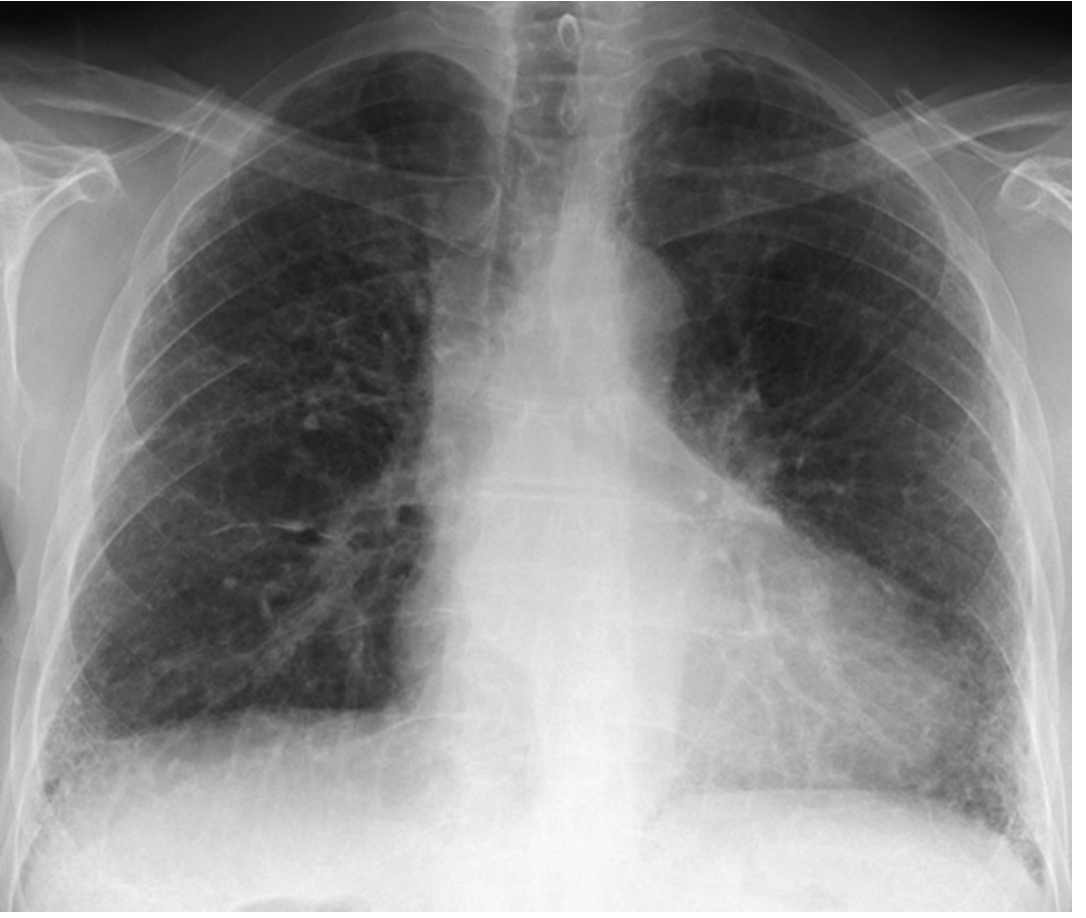
Frontal CXR in IPF: peripheral basal-predominant reticulation, consistent with fibrotic lung disease. Note diminished lung volumes. (Murray & Nadel)
UIP Pattern - PA CXR with Microcystic Changes
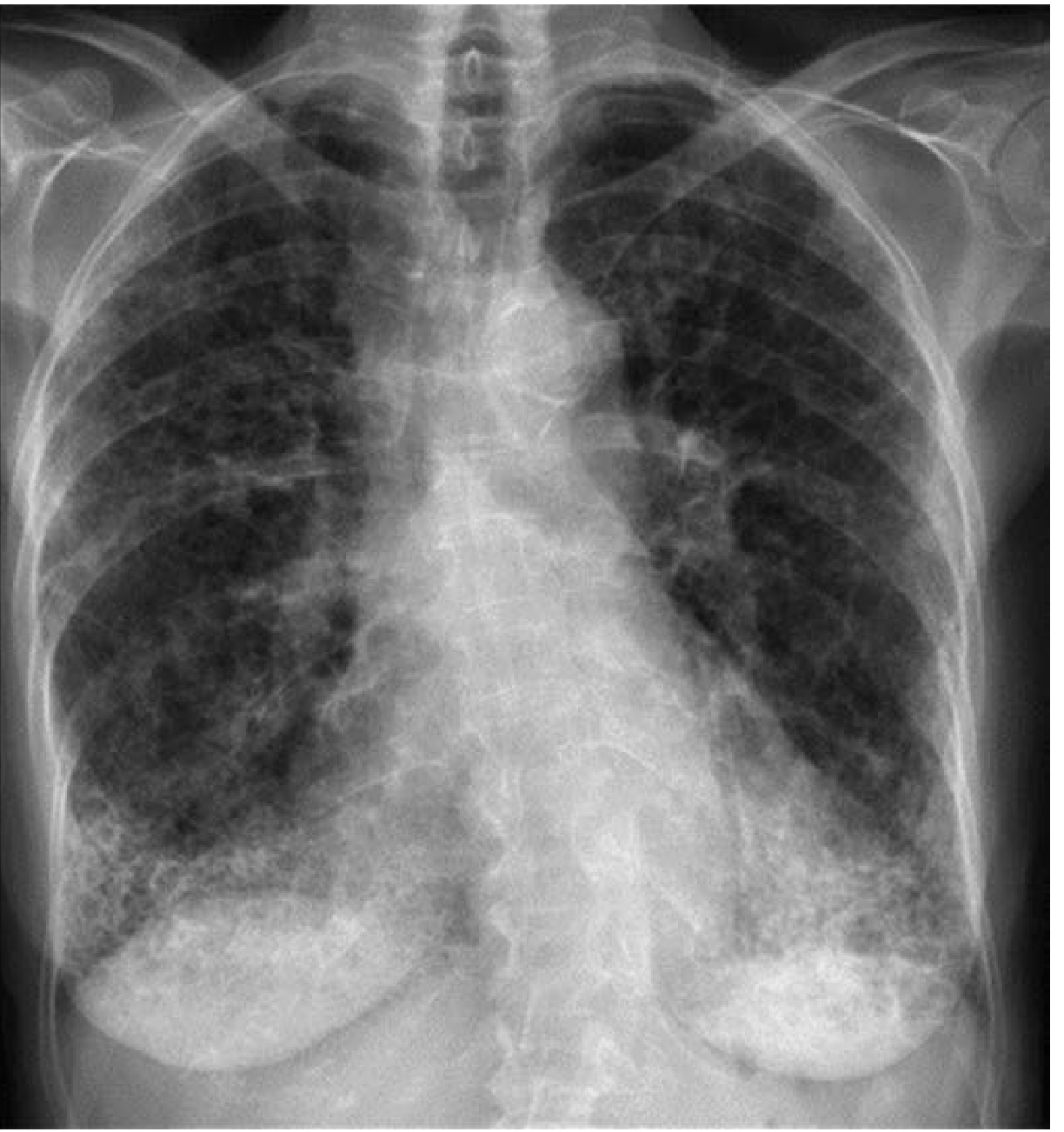
PA CXR demonstrating UIP pattern: increased basilar-predominant reticulations and microcystic (honeycombing) changes in a female patient with IPF. (Fishman's Pulmonary Diseases)
Acute vs. Chronic Pattern
- Acute interstitial pattern (developing over hours to days): Think pulmonary edema (Kerley lines, cardiomegaly, effusions), atypical pneumonia (PCP, CMV, Mycoplasma)
- Chronic progressive pattern: Think IPF, CTD-ILD, sarcoidosis, pneumoconiosis, lymphangitic carcinomatosis
Limitations of CXR in ILD
- Cannot distinguish reticular from linear/nodular patterns reliably
- Cannot detect early honeycombing, traction bronchiectasis, or ground-glass opacities well
- HRCT is the gold standard - it enables pattern characterization (UIP, NSIP, DIP, etc.) and can guide whether biopsy is needed
Sources: Murray & Nadel's Textbook of Respiratory Medicine (Chapter 89); Fishman's Pulmonary Diseases and Disorders (Chapter 28)
Ild mortality and morbidity
ILD carries significant mortality, especially IPF which has a median survival of 2-5 years from diagnosis. Morbidity includes progressive dyspnea, respiratory failure, pulmonary hypertension, and acute exacerbations.
Searching sources...
Finding Sources
Finding Sources
Searching PubMed
"interstitial lung disease" AND mortality
Reading File
Finding Sources
Reading File
Finding Sources
Finding Sources
Finding Sources
Finding Sources
Reading Article
PMID: 37534937
Finding Sources
Finding Sources
Finding Sources
Here is a structured, evidence-based overview of ILD mortality and morbidity, drawn from Murray & Nadel's Respiratory Medicine and supplemented with recent PubMed evidence.
ILD: Mortality and Morbidity
1. Overall Burden
ILD is a heterogeneous group - prognosis varies enormously by subtype. Some forms (e.g. DIP, COP) respond to treatment and carry good prognosis; others (particularly IPF/UIP) are relentlessly progressive and carry very high mortality.
A 2023 systematic review and meta-analysis (PMID 37534937) found that even early interstitial lung abnormalities (ILAs, possibly pre-ILD) carry a 3.56-fold increased mortality risk (95% CI 2.19-5.81) compared to those without ILAs.
2. Mortality by ILD Subtype
| ILD Subtype | Median Survival | 5-Year Survival | Notes |
|---|---|---|---|
| IPF (UIP pattern) | 3-4 years from diagnosis | ~20-30% | Worst prognosis among ILDs |
| Fibrotic NSIP | 5-10 years | ~60-70% | Better than IPF |
| CTD-associated ILD (RA, SSc) | Variable (years to decades) | Better than IPF | Depends on underlying CTD |
| Hypersensitivity Pneumonitis (chronic/fibrotic) | Variable | Poor if fibrotic | Approaches IPF prognosis with fibrosis |
| COP (Cryptogenic Organizing Pneumonia) | Very good | >80% | Most respond to steroids |
| Sarcoidosis | Generally good | >90% | 5% develop severe pulmonary fibrosis |
| DIP / RB-ILD | Good | ~70-80% | Respond to smoking cessation |
| Acute ILD (AIP/Hamman-Rich) | Very high acute mortality | ~60% in-hospital mortality | Rapidly fatal if no recovery |
3. IPF - The Highest-Mortality ILD
IPF has an unpredictable but overall poor course, characterized by:
- Median survival: 3-4 years after diagnosis (Murray & Nadel)
- Long periods of stability punctuated by acute exacerbations - each exacerbation carries 50-80% in-hospital mortality
- New antifibrotic therapies (nintedanib, pirfenidone) delay progression but have not yet clearly improved overall survival in pooled data
Factors Associated with Increased Mortality in IPF:
- Male sex and older age
- Lower FVC (forced vital capacity)
- Lower DLCO (diffusing capacity)
- FVC decline >10% over 6-12 months - strongest predictor of death
- Initiation of long-term oxygen therapy
- Occurrence of an acute exacerbation
- Presence of pulmonary hypertension
Prognostic Scoring Tools:
- GAP Index (Gender, Age, Physiology - FVC + DLCO) - validated across multiple fibrotic ILDs
- Composite Physiologic Index (CPI)
- Du Bois Prognostic Index
Note: These indices perform better at population level than for individual prediction. Studies show they may not outperform DLCO alone.
4. Major Causes of Morbidity
Respiratory
| Complication | Details |
|---|---|
| Progressive dyspnea | The defining symptom; restricts daily activity significantly |
| Hypoxia at rest/exertion | Leads to need for supplemental oxygen |
| Respiratory failure | End-stage disease; often the terminal event |
| Acute exacerbation of ILD | Rapid deterioration over days-weeks; very high mortality; triggers include infection, aspiration, surgery |
| Traction bronchiectasis | Caused by fibrosis; predisposes to infection |
Cardiovascular
| Complication | Details |
|---|---|
| Pulmonary hypertension (PH) | Complicates up to 30-40% of advanced IPF; worsens prognosis significantly; associated with right heart failure |
| Cor pulmonale | Right ventricular failure secondary to PH |
Oncologic
- Lung cancer risk is significantly elevated in IPF (5-10x the general population), likely due to shared fibrotic/inflammatory milieu and smoking history
Systemic / Other
| Complication | Details |
|---|---|
| Exercise intolerance | Gas exchange impairment, reduced DLCO |
| Depression and anxiety | Very common; major quality-of-life impact |
| Gastroesophageal reflux (GER) | Both a cause and consequence; worsens ILD progression |
| Surgical risk | ILD significantly elevates risk of postoperative pulmonary complications (Washington Manual) |
| Malnutrition and weight loss | Seen in advanced disease |
5. Causes of Death in ILD
- Respiratory failure (most common - progressive or acute-on-chronic)
- Acute exacerbation of underlying ILD
- Pulmonary hypertension / right heart failure
- Lung cancer (especially in IPF)
- Cardiovascular disease (comorbid)
- Infections / sepsis (increased susceptibility, especially in immunosuppressed CTD-ILD patients)
6. CTD-Associated ILD Mortality
- Rheumatoid arthritis ILD (RA-ILD): A 2024 meta-analysis (PMID 39534599) identified biomarkers predictive of RA-ILD severity; RA-ILD contributes significantly to excess mortality in RA patients
- SSc-ILD: Treated with tocilizumab; 2024 meta-analysis (PMID 37773003) confirmed benefit in lung function stabilization
- Anti-MDA5 dermatomyositis-ILD: Rapid progressive form with >50% mortality if untreated; tofacitinib shows promise per 2024 meta-analysis (PMID 39480695)
7. Acute Exacerbation - A Key Mortality Event
A 2025 systematic review (PMID 39721758) examined corticosteroid therapy for acute exacerbations of ILD - reflecting the high clinical significance of this complication and ongoing uncertainty about optimal management.
Summary Table
| Factor | Impact |
|---|---|
| IPF median survival | 3-4 years |
| Acute exacerbation in-hospital mortality | 50-80% |
| PH prevalence in advanced IPF | 30-40% |
| ILA-associated mortality increase | 3.56x vs. no ILA |
| Most common cause of death | Respiratory failure |
Sources: Murray & Nadel's Textbook of Respiratory Medicine (Chapters 89, 91, 33); PubMed PMIDs 37534937, 39534599, 37773003, 39480695, 39721758
What are the main antifibrotic therapies (nintedanib, pirfenidone) and their evidence?
Nintedanib and pirfenidone are the two approved antifibrotic agents for IPF. Both slow FVC decline by ~50%, reducing disease progression, but neither reverses established fibrosis.
Searching sources...
Finding Sources
Searching PubMed
nintedanib pirfenidone IPF antifibrotic therapy
Finding Sources
Finding Sources
Reading Article
PMID: 34217681
Reading File
Reading Article
PMID: 38963453
Reading Article
PMID: 39089077
Reading File
Reading Article
PMID: 40754799
Excellent sources gathered. Here is a comprehensive, evidence-based answer.
Antifibrotic Therapies in ILD: Nintedanib and Pirfenidone
Overview
Both nintedanib and pirfenidone are approved first-line antifibrotic agents for IPF and are increasingly used in other progressive fibrotic ILDs (PF-ILD). Neither reverses established fibrosis - they slow progression. Both reduce the annual rate of FVC decline by approximately 50% compared to placebo.
1. Pirfenidone
Mechanism
Pirfenidone (5-methyl-1-phenyl-2-[1H]-pyridone) is a small-molecule antifibrotic that:
- Inhibits TGF-β-stimulated collagen synthesis
- Reduces fibroblast proliferation
- Suppresses production of profibrotic cytokines (TGF-β1, TNF-α, PDGF)
- Has anti-inflammatory properties in animal models of fibrosis
Key Pivotal Trials
| Trial | Design | Key Finding |
|---|---|---|
| SP2 (Japan) | RCT, high vs. low dose vs. placebo | High-dose group: better progression-free survival than placebo |
| CAPACITY 004 | Phase III RCT, 435 patients | Met primary endpoint: reduced % FVC decline |
| CAPACITY 006 | Phase III RCT, 344 patients | Did not meet primary endpoint of % FVC change |
| ASCEND (2014) | Phase III RCT, 555 patients | Reduced disease progression (FVC, exercise tolerance, progression-free survival) - landmark approval trial |
Dosing
- Start: 267 mg three times daily (orally)
- Escalate weekly to: 801 mg three times daily by week 3
- Take with food to reduce GI side effects
Side Effects
| Adverse Effect | Frequency |
|---|---|
| Nausea / GI upset | Most common; dose-limiting |
| Photosensitivity rash | Requires sunscreen; can be dose-limiting |
| Hepatotoxicity | LFT monitoring required |
| Fatigue, anorexia | Common |
2. Nintedanib
Mechanism
Nintedanib (BIBF-1120) is a multi-target tyrosine kinase inhibitor (TKI) that blocks:
- PDGFR (platelet-derived growth factor receptor) - α and β
- VEGFR (vascular endothelial growth factor receptor) 1, 2, 3
- FGFR (fibroblast growth factor receptor) 1, 2, 3
These receptors mediate key fibroblast activation and proliferation pathways. Blocking them disrupts the pro-fibrotic signalling cascade downstream of TGF-β.
Key Pivotal Trials
| Trial | Design | Key Finding |
|---|---|---|
| TOMORROW | Phase II RCT, 432 patients, 4 dose groups | 150 mg twice daily: trend to reduced FVC decline, fewer AEs, preserved QoL |
| INPULSIS-1 | Phase III RCT | Significantly reduced annual FVC decline vs. placebo |
| INPULSIS-2 | Phase III RCT (replicate) | Confirmed reduced FVC decline; also showed reduced acute exacerbation risk |
| INSTAGE | Phase II, nintedanib + sildenafil in IPF + severe hypoxemia | No added benefit on QoL; nintedanib lung function benefit preserved |
Dosing
- 150 mg orally twice daily (with food)
- Dose reduction to 100 mg twice daily if not tolerated
Side Effects
| Adverse Effect | Frequency |
|---|---|
| Diarrhea | Most common (>60%); often manageable with loperamide |
| Nausea / vomiting | Common |
| Hepatotoxicity | LFT monitoring required |
| Bleeding risk | Due to anti-VEGFR activity; caution with anticoagulants |
| Arterial thromboembolic events | Rare but recognized |
3. Head-to-Head Comparison
| Feature | Pirfenidone | Nintedanib |
|---|---|---|
| Drug class | Novel antifibrotic | Tyrosine kinase inhibitor |
| Primary target | TGF-β pathway | PDGFR, VEGFR, FGFR |
| FVC decline reduction | ~50% vs. placebo | ~50% vs. placebo |
| Main side effect | Photosensitivity, nausea | Diarrhea |
| AE-IPF reduction | Some evidence | Consistent evidence |
| Dosing | TID (3x/day) | BID (2x/day) - simpler |
| Real-world 12-month %FVC change | -0.75% | -1.43% |
| Real-world 12-month %DLCO change | -2.32% | -3.95% |
| Discontinuation due to AE | ~16.6% | ~16.2% |
Real-world data: Kou et al., 2024, PMID 38963453 - meta-analysis of 74 studies, 23,119 patients
4. Impact on Mortality and Acute Exacerbations
A landmark 2021 meta-analysis in Chest (PMID 34217681) - 26 studies, 12,956 patients - found:
- All-cause mortality reduced: pooled RR 0.55 (95% CI 0.45-0.66) with antifibrotic therapy
- Acute exacerbation risk reduced: pooled RR 0.63 (95% CI 0.53-0.76)
- Effect on AE was more consistent for nintedanib than pirfenidone in subgroup analyses
- Effect on mortality was consistent regardless of antifibrotic subtype
A 2025 network meta-analysis (PMID 40754799) - 65 RCTs, 13,521 patients - confirmed both drugs reduce mortality across IPF and CTD-ILD. Nintedanib had higher SAE rates than pirfenidone.
5. Use in Non-IPF Progressive Fibrosing ILD (PF-ILD)
A 2024 meta-analysis (PMID 39089077) - 7 RCTs, 1,816 non-IPF PF-ILD patients - found:
- Anti-fibrotics significantly reduced FVC decline in non-IPF PF-ILD (MD -66.8 mL; p<0.01)
- Pirfenidone showed benefit in 6-minute walk distance
- No significant mortality benefit in this population vs. placebo
- Adverse events (GI, neurological) were significantly more frequent in the antifibrotic group
Nintedanib is also approved for:
- Systemic sclerosis-associated ILD (SSc-ILD) - SENSCIS trial
- Progressive fibrosing ILDs (PF-ILD) of any cause - INBUILD trial
6. What These Drugs Do NOT Do
- Do not reverse fibrosis - they slow, not stop, progression
- Do not improve FVC - they reduce the rate of decline
- Do not cure IPF - lung transplant remains the only potentially curative option
- Combination therapy (both drugs together) is being explored but not yet standard
7. Practical Monitoring
| Drug | Monitoring |
|---|---|
| Both | LFTs at baseline, 1, 3, 6 months, then periodically |
| Both | Spirometry (FVC) every 3-6 months |
| Nintedanib | Watch for bleeding, arterial events; avoid in pregnancy |
| Pirfenidone | Sun protection; watch for rash; drug interactions via CYP1A2 |
Sources: Murray & Nadel's Textbook of Respiratory Medicine (Chapter 20, pp. 3300-3312); PubMed PMIDs 34217681, 38963453, 39089077, 40754799
How long should should it be taken
Both nintedanib and pirfenidone are intended as indefinite, lifelong therapy in IPF - they are continued as long as the patient tolerates them and there is no disease progression that would prompt a change in management (like transplant listing).
Searching sources...
Finding Sources
Searching PubMed
antifibrotic therapy duration IPF long-term treatment discontinuation
Finding Sources
Finding Sources
Finding Sources
Searching PubMed
idiopathic pulmonary fibrosis treatment guidelines antifibrotic
Reading File
Reading Article
PMID: 36630775
Here is the direct, practical answer on duration of antifibrotic therapy:
How Long Should Antifibrotic Therapy (Nintedanib / Pirfenidone) Be Taken?
The Short Answer
Indefinitely - these drugs are lifelong therapy. There is no defined stopping point based on time alone. They are continued as long as the patient tolerates them and remains alive without a lung transplant.
Why Lifelong?
IPF (and other progressive fibrotic ILDs) is a chronic, irreversible disease. The moment antifibrotic therapy is stopped, fibrotic progression resumes at its underlying rate. Unlike infections where you complete a course, or inflammatory conditions that may remit, fibrotic ILD does not spontaneously stabilize if the drug is withdrawn.
Key principle from Murray & Nadel's Respiratory Medicine:
"Both pirfenidone and nintedanib reduce the rate of FVC decline by approximately 50% over 1 year of treatment... Studies to date suggest the adverse effects are manageable for the majority of patients with a reasonable long-term tolerability profile."
This language of "long-term tolerability" reflects the expectation of indefinite use.
When to Continue
Antifibrotic therapy should be maintained when:
- The patient tolerates the drug (or tolerates a dose-reduced version)
- Disease is progressing (this is the indication - IPF always progresses, so treatment should continue)
- The patient has not proceeded to lung transplant
- The patient is not at end of life / comfort-focused care
When to Consider Stopping or Switching
| Situation | Action |
|---|---|
| Intolerable side effects (severe GI, hepatotoxicity, rash) | Dose reduce first; if not tolerable, switch to the other agent |
| Significant liver enzyme elevation (>3-5x ULN) | Hold, monitor, restart at lower dose or switch |
| Disease rapid progression despite therapy | Consider switching agents, adding supportive care, or transplant referral |
| Lung transplant | Continue until surgery; perioperative management varies by centre |
| End-stage disease / palliative/hospice care | Discontinuation is appropriate and humane |
| Patient choice | Discontinuation respected; counsel on likely accelerated decline |
What Happens If Stopped?
There is real-world evidence and biological plausibility that stopping antifibrotic therapy leads to accelerated FVC decline - a "rebound" effect where the protected trajectory is lost. This has been observed in observational data and informs the recommendation to continue therapy even during temporary interruptions (e.g. brief hold for surgery), with prompt restart.
Dose Interruptions vs. Permanent Stops
Both drugs can be temporarily interrupted (e.g. for surgery, acute illness, or side effect management) and then restarted:
- Nintedanib: can be held perioperatively and restarted once wound healing is adequate (due to anti-VEGF bleeding risk)
- Pirfenidone: can be temporarily held for LFT abnormalities or rash and restarted at lower dose with uptitration
A 2025 meta-analysis on perioperative antifibrotic use in IPF patients undergoing lung cancer surgery (PMID 40789229) found that continuing vs. interrupting therapy perioperatively is an active area of investigation - currently no universal consensus on optimal perioperative management.
Summary
| Question | Answer |
|---|---|
| How long should it be taken? | Lifelong / indefinitely |
| Is there a "treatment course"? | No - not time-limited |
| Should it be stopped if disease progresses? | No - switch or add supportive therapy instead |
| When is stopping acceptable? | Intolerable toxicity, lung transplant, end-of-life care |
| Can it be interrupted temporarily? | Yes - brief holds for surgery or side effects are acceptable with prompt restart |
Sources: Murray & Nadel's Textbook of Respiratory Medicine (Chapter 20); French IPF Guidelines 2021 [PMID 36630775]; PMID 40789229
This is a shared conversation. Sign in to Orris to start your own chat.