
extrinsive and intrinsive parthway
The extrinsic (tissue factor) and intrinsic (contact activation) pathways are the two arms of the coagulation cascade that converge at Factor X activation.
Searching sources...
Reading File
Finding Sources
Finding Sources
Reading File
Reading File
Reading File
Reading File
Loading Image
Loading Image
Here is a complete, textbook-sourced breakdown of the Extrinsic and Intrinsic Pathways of coagulation (also called the Tissue Factor pathway and Contact Activation pathway):
The Coagulation Cascade
Classic Diagram (Lippincott Illustrated Biochemistry)
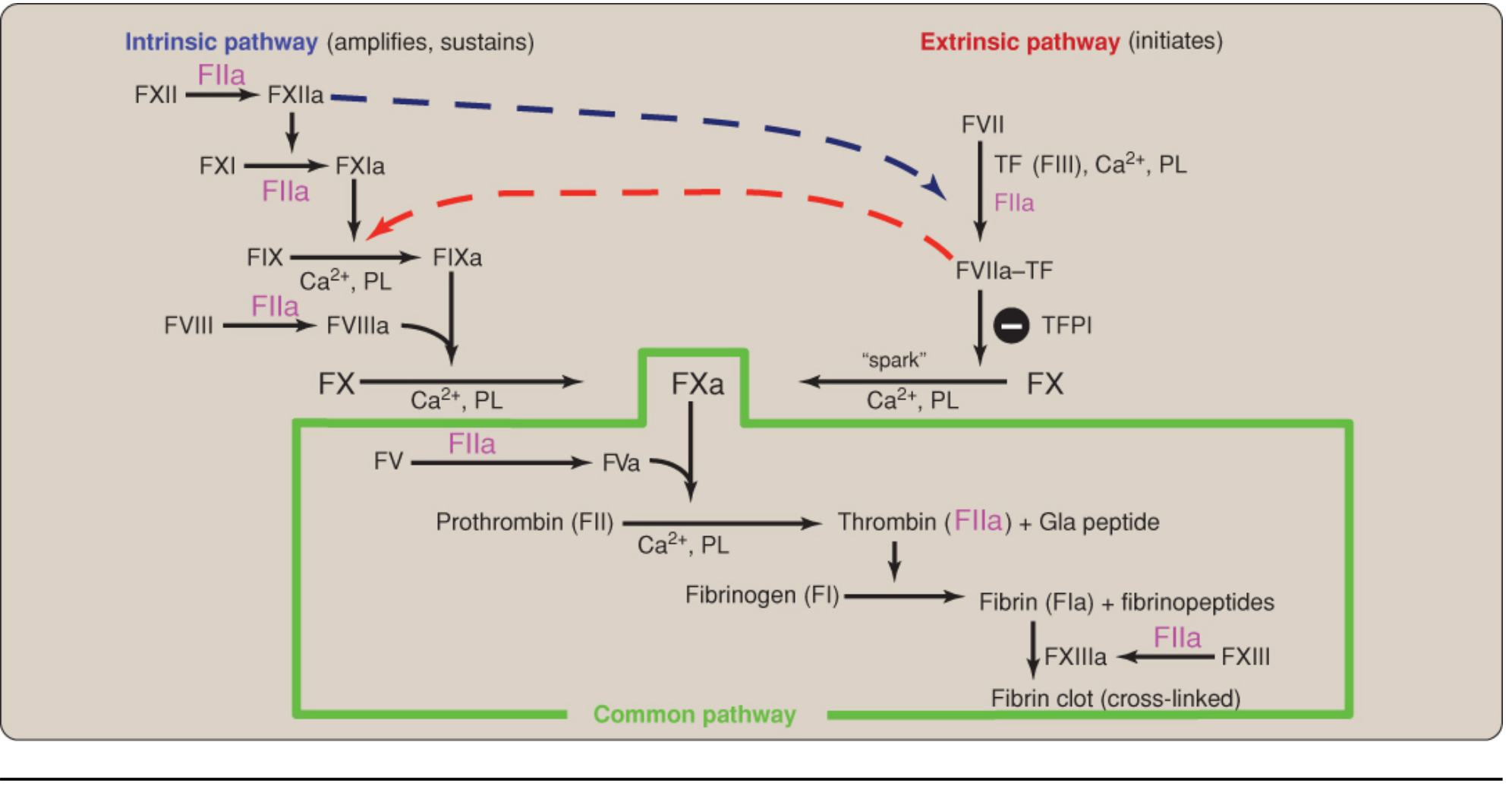
Extrinsic Pathway (Tissue Factor Pathway)
Trigger: Vascular injury exposing Tissue Factor (TF / Factor III) - a subendothelial transmembrane glycoprotein expressed on fibroblasts and vascular smooth muscle cells.
Steps:
- TF is exposed to circulating blood after endothelial damage
- TF binds Factor VII (a serine protease), activating it to FVIIa
- The TF:FVIIa complex (extrinsic tenase complex) forms on cell membranes, in the presence of Ca2+ and phospholipid (PL)
- TF:FVIIa directly activates:
- Factor X → Xa (primary)
- Factor IX → IXa (cross-activation into intrinsic pathway)
- FVIIa activity is rapidly shut off by TFPI (Tissue Factor Pathway Inhibitor)
Lab test: Prothrombin Time (PT) / INR - measures the extrinsic + common pathway
Intrinsic Pathway (Contact Activation Pathway)
Trigger: Blood contact with a negatively charged surface (subendothelial collagen, kallikrein, in vitro: glass). All factors are intrinsic to blood - nothing external is needed.
Steps (classic view):
- Factor XII (Hageman factor) is activated to FXIIa upon contact with collagen/HMWK (High-Molecular-Weight Kininogen)
- FXIIa also converts prekallikrein → kallikrein (positive feedback)
- FXIIa activates Factor XI → FXIa
- FXIa activates Factor IX → FIXa (requires Ca2+)
- FIXa + FVIIIa (cofactor) + Ca2+ + PL form the intrinsic tenase complex
- Intrinsic tenase activates Factor X → Xa
Modern understanding: FXII is not essential in vivo. FXI is actually activated primarily by thrombin (positive feedback), making the intrinsic pathway an amplification system for sustaining coagulation after the extrinsic pathway initiates it.
Lab test: aPTT (activated Partial Thromboplastin Time) - measures intrinsic + common pathway
Classic Cascade Diagram (Mulholland Surgery)
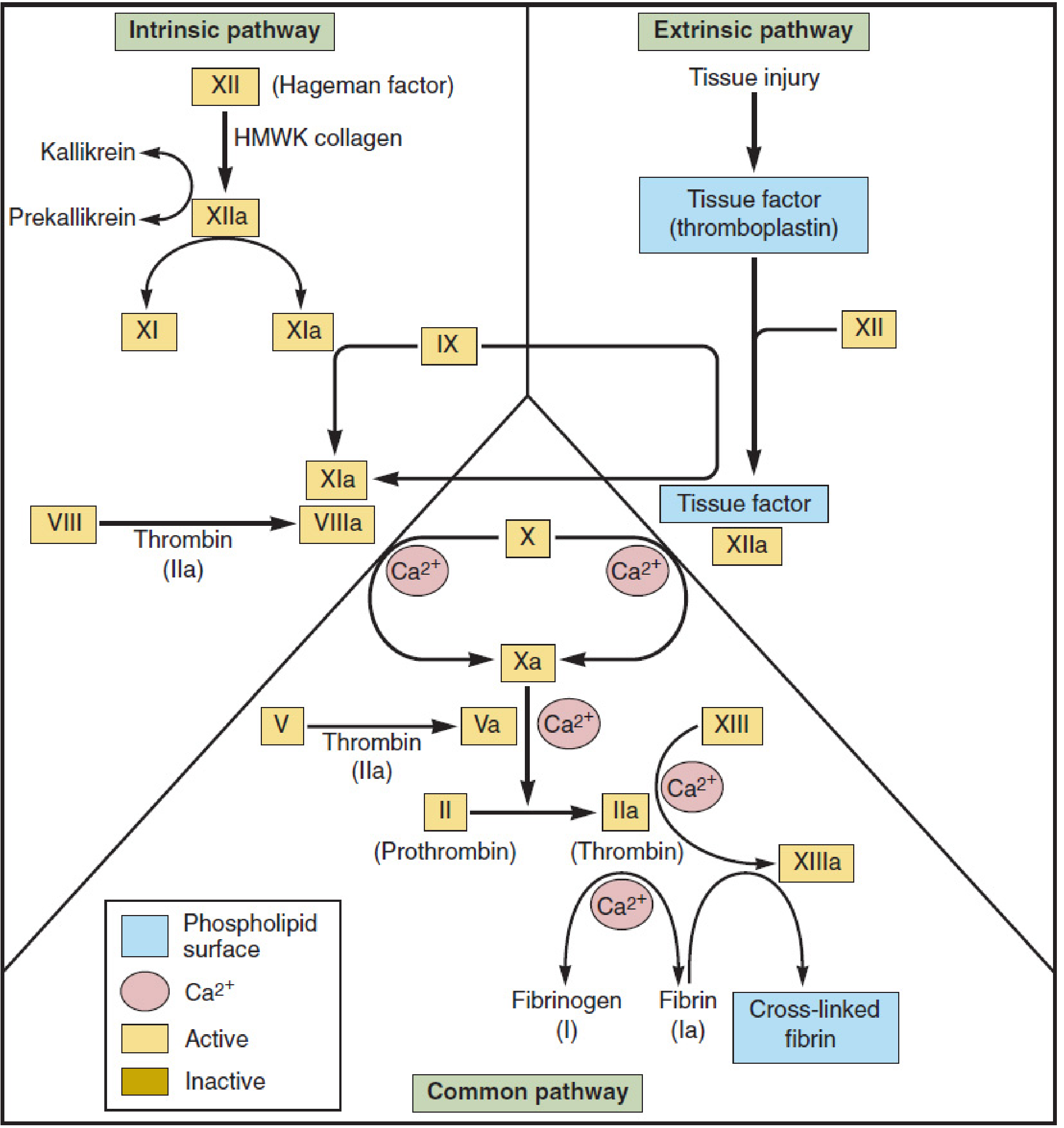
Common Pathway
Both pathways converge at Factor X activation (→ Fxa), and proceed:
| Step | Reaction |
|---|---|
| 1 | FXa + FVa + Ca2+ + PL → Prothrombinase complex |
| 2 | Prothrombinase converts Prothrombin (FII) → Thrombin (FIIa) |
| 3 | Thrombin converts Fibrinogen (FI) → Fibrin (FIa) |
| 4 | Thrombin activates FXIII → FXIIIa |
| 5 | FXIIIa cross-links fibrin monomers → Stable, cross-linked fibrin clot |
Key Differences at a Glance
| Feature | Extrinsic Pathway | Intrinsic Pathway |
|---|---|---|
| Also called | Tissue factor pathway | Contact activation pathway |
| Trigger | TF (external to blood) | Negatively charged surface / thrombin |
| Key factors | VII, TF | XII, XI, IX, VIII, prekallikrein, HMWK |
| Speed | Faster | Slower but amplified |
| Lab test | PT / INR | aPTT |
| Role in vivo | Initiates coagulation | Amplifies and sustains coagulation |
| Inhibitor | TFPI | C1 inhibitor (for FXII/FXI) |
Modern (Cell-Based) Model
The strict two-pathway concept is now considered partly outdated. In vivo, coagulation works in three overlapping phases:
- Initiation - TF:FVIIa generates trace thrombin ("spark") on TF-bearing cells
- Amplification - Trace thrombin activates platelets, FV, FVIII, FXI (positive feedback loops)
- Propagation - FIXa/FVIIIa (intrinsic tenase) on activated platelet surfaces generates a thrombin burst
The extrinsic pathway starts the process; the intrinsic pathway explodes it - as stated by Harrison's Principles of Internal Medicine: "coagulation is normally initiated through TF exposure but with critically important amplification through elements of the classic intrinsic pathway."
Sources: Sabiston Textbook of Surgery, Medical Physiology (Boron & Boulpaep), Harrison's Principles 22e, Lippincott Illustrated Biochemistry 8e, Mulholland & Greenfield's Surgery 7e
in banglay
কোয়াগুলেশন ক্যাসকেড - এক্সট্রিনসিক ও ইন্ট্রিনসিক পাথওয়ে
ক্লাসিক ডায়াগ্রাম
🔴 এক্সট্রিনসিক পাথওয়ে (Extrinsic Pathway)
অন্য নাম: টিস্যু ফ্যাক্টর পাথওয়ে
ট্রিগার: রক্তনালীতে আঘাতের পর টিস্যু ফ্যাক্টর (TF / Factor III) বাইরে বের হয়ে আসে। এটি ফাইব্রোব্লাস্ট ও ভাস্কুলার স্মুথ মাসল সেলে থাকে।
ধাপসমূহ:
- এন্ডোথেলিয়াল ক্ষতির ফলে TF রক্তের সংস্পর্শে আসে
- TF + Factor VII → FVIIa তৈরি হয়
- TF:FVIIa কমপ্লেক্স (Extrinsic Tenase) গঠিত হয় - Ca²⁺ ও ফসফোলিপিড দরকার
- এই কমপ্লেক্স সক্রিয় করে:
- Factor X → Xa (সরাসরি)
- Factor IX → IXa (ইন্ট্রিনসিক পাথওয়েতেও সাহায্য করে)
- TFPI (Tissue Factor Pathway Inhibitor) দ্রুত এই পাথওয়ে বন্ধ করে দেয়
ল্যাব টেস্ট: PT / INR - এই পাথওয়ে পরিমাপ করে
গতি: দ্রুত
🔵 ইন্ট্রিনসিক পাথওয়ে (Intrinsic Pathway)
অন্য নাম: কনট্যাক্ট অ্যাক্টিভেশন পাথওয়ে
ট্রিগার: রক্ত কোনো নেগেটিভ চার্জযুক্ত পৃষ্ঠের সংস্পর্শে আসলে (যেমন কোলাজেন, কাঁচের টেস্ট টিউব)। সব ফ্যাক্টর রক্তের মধ্যেই থাকে - বাইরে থেকে কিছু লাগে না।
ধাপসমূহ:
- Factor XII (হ্যাগেম্যান ফ্যাক্টর) + HMWK + কোলাজেন → FXIIa
- FXIIa, প্রিকালিক্রেইন → কালিক্রেইন (পজিটিভ ফিডব্যাক)
- FXIIa → Factor XI → FXIa
- FXIa + Ca²⁺ → Factor IX → FIXa
- FIXa + FVIIIa + Ca²⁺ + ফসফোলিপিড → ইন্ট্রিনসিক টেনেজ কমপ্লেক্স
- এই কমপ্লেক্স → Factor X → Xa
ল্যাব টেস্ট: aPTT - এই পাথওয়ে পরিমাপ করে
গতি: ধীর, কিন্তু শক্তিশালী
ক্লাসিক ডায়াগ্রাম (Mulholland Surgery)
🟢 কমন পাথওয়ে (Common Pathway)
দুটি পাথওয়ে Factor X তে মিলিত হয়, তারপর:
| ধাপ | বিক্রিয়া |
|---|---|
| ১ | FXa + FVa + Ca²⁺ + PL → প্রোথ্রম্বিনেজ কমপ্লেক্স |
| ২ | প্রোথ্রম্বিন (FII) → থ্রম্বিন (FIIa) |
| ৩ | ফিব্রিনোজেন (FI) → ফিব্রিন (FIa) |
| ৪ | থ্রম্বিন → FXIII → FXIIIa |
| ৫ | FXIIIa ফিব্রিন মনোমারগুলো ক্রস-লিংক করে → স্থায়ী ফিব্রিন ক্লট তৈরি |
তুলনামূলক ছক
| বৈশিষ্ট্য | এক্সট্রিনসিক | ইন্ট্রিনসিক |
|---|---|---|
| অন্য নাম | টিস্যু ফ্যাক্টর পাথওয়ে | কনট্যাক্ট অ্যাক্টিভেশন পাথওয়ে |
| ট্রিগার | TF (রক্তের বাইরে থেকে) | নেগেটিভ চার্জযুক্ত পৃষ্ঠ / থ্রম্বিন |
| মূল ফ্যাক্টর | VII, TF | XII, XI, IX, VIII, প্রিকালিক্রেইন, HMWK |
| গতি | দ্রুত | ধীর কিন্তু দীর্ঘস্থায়ী |
| ল্যাব টেস্ট | PT / INR | aPTT |
| ভূমিকা | কোয়াগুলেশন শুরু করে | কোয়াগুলেশন বাড়িয়ে ও ধরে রাখে |
| ইনহিবিটর | TFPI | C1 ইনহিবিটর |
আধুনিক সেল-বেসড মডেল
বর্তমান ধারণায় কোয়াগুলেশন তিনটি ধাপে হয়:
- ইনিশিয়েশন (Initiation): TF:FVIIa সামান্য থ্রম্বিন তৈরি করে ("স্পার্ক")
- অ্যামপ্লিফিকেশন (Amplification): সেই সামান্য থ্রম্বিন প্লেটলেট, FV, FVIII, FXI সক্রিয় করে (পজিটিভ ফিডব্যাক)
- প্রোপাগেশন (Propagation): সক্রিয় প্লেটলেটের পৃষ্ঠে FIXa/FVIIIa একসাথে কাজ করে বিশাল পরিমাণ থ্রম্বিন তৈরি করে ("থ্রম্বিন বার্স্ট")
সহজ কথায়: এক্সট্রিনসিক পাথওয়ে আগুন জ্বালায়, ইন্ট্রিনসিক পাথওয়ে সেই আগুন বিস্ফোরণে পরিণত করে।
সূত্র: Sabiston Textbook of Surgery, Medical Physiology (Boron & Boulpaep), Harrison's Principles 22e, Lippincott Illustrated Biochemistry 8e

WhatsApp Image 2026-07-17 at 12.28.52 PM.jpeg
eita wise bolo
তোমার নোটটা দেখলাম - খুব সুন্দর লিখেছ! এখন এটা বাংলায় বুঝিয়ে দিচ্ছি।
analyse_media
তোমার নোট একদম ঠিকঠাক আছে! এখন প্রতিটা ধাপ বাংলায় সহজ ভাষায় বুঝিয়ে দিচ্ছি।
① এক্সট্রিনসিক পাথওয়ে (Extrinsic Pathway)
সহজ কথায়: বাইরে থেকে আঘাত লাগলে যা হয়
ধাপ ১ - Tissue Trauma (টিস্যুতে আঘাত)
শরীরের বাইরে কোনো কাটা বা আঘাত লাগলে রক্তনালীর দেয়াল ফেটে যায়।
ধাপ ২ - Tissue Factor বের হয়
রক্তনালীর নিচে লুকানো থাকা Tissue Factor (TF) রক্তের সংস্পর্শে আসে। এটা সাধারণত রক্তে থাকে না, শুধু আঘাতের সময় বের হয়।
ধাপ ৩ - Factor VII → VIIa
TF এসে রক্তে ভাসমান Factor VII কে ধরে সক্রিয় করে ফেলে → VIIa হয়। এই TF + VIIa মিলে একটা কমপ্লেক্স তৈরি করে।
ধাপ ৪ - Factor X → activated Factor X (Xa)
TF:VIIa কমপ্লেক্স সরাসরি Factor X কে আক্রমণ করে সক্রিয় করে → Xa হয়।
ধাপ ৫ - Prothrombin Activator তৈরি
Xa + Factor V + Ca²⁺ + Phospholipid মিলে তৈরি হয় → Prothrombin Activator (প্রোথ্রম্বিনেজ কমপ্লেক্স)। (মনে রাখো: "XaVa Ca PL" - চারটা উপাদান)
ধাপ ৬ - Prothrombin → Thrombin
Prothrombin Activator, Ca²⁺ ও Platelet Phospholipid এর সাহায্যে Prothrombin কে কেটে Thrombin বানায়।
② ইন্ট্রিনসিক পাথওয়ে (Intrinsic Pathway)
সহজ কথায়: ভেতরে রক্তনালী ক্ষতিগ্রস্ত হলে যা হয়
ধাপ ১ - Blood Trauma / Contact with Collagen
রক্তনালীর ভেতরে আঘাতে ভেতরের কোলাজেন উন্মুক্ত হয়। রক্ত সেই কোলাজেনের সংস্পর্শে আসে।
ধাপ ২ - Factor XII → activated XII (XIIa)
কোলাজেনের সাথে লাগলেই Factor XII (হ্যাগেম্যান ফ্যাক্টর) সক্রিয় হয়ে XIIa হয়। সাথে HMWK (High Molecular Weight Kininogen) ও Prekallikrein সাহায্য করে।
ধাপ ৩ - Factor XI → activated XI (XIa)
XIIa এসে Factor XI কে সক্রিয় করে → XIa হয়।
ধাপ ৪ - Factor IX → activated IX (IXa)
XIa + Ca²⁺ মিলে Factor IX কে সক্রিয় করে → IXa হয়।
ধাপ ৫ - Factor VIII → VIIIa (গুরুত্বপূর্ণ!)
একটু পরে তৈরি হওয়া Thrombin ফিরে এসে Factor VIII কে সক্রিয় করে → VIIIa। (এটা পজিটিভ ফিডব্যাক - নিজেই নিজেকে বাড়ায়!)
ধাপ ৬ - Factor X → activated X (Xa)
IXa + VIIIa + Ca²⁺ + Platelet Phospholipid মিলে Factor X কে সক্রিয় করে → Xa। (এই চারটা মিলে "Intrinsic Tenase Complex")
ধাপ ৭ - Prothrombin Activator → Thrombin
এখন এক্সট্রিনসিকের মতোই: Xa + Factor V (Thrombin দ্বারা সক্রিয়) + Ca²⁺ + Platelet Phospholipid → Prothrombin Activator → Thrombin
③ দুটো পাথওয়ে মিলে যায় - Common Pathway
দুই পাথওয়ে
     ↓
  Factor Xa
     ↓
Prothrombin Activator (Xa + Va + Ca²⁺ + PL)
     ↓
Prothrombin → Thrombin
     ↓
Fibrinogen → Fibrin
     ↓
Factor XIII → XIIIa (by Thrombin)
     ↓
Cross-linked Fibrin Clot ✅ (রক্ত জমাট বাঁধল)
তোমার নোটের যা সঠিক আছে ✅
- Tissue Trauma → Tissue Factor → VIIa → Xa ✅
- Factor XII → XI → IX → VIII → X ✅
- HMWK, Prekallikrein এর ভূমিকা ✅
- Ca²⁺ ও Platelet Phospholipid এর ভূমিকা ✅
- Prothrombin → Thrombin ✅
একটু মনে রাখার টিপস 🧠
| মনে রাখার কৌশল | মানে |
|---|---|
| "TF VII X" | Extrinsic: TF → VII → X |
| "12, 11, 9, 8, 10" | Intrinsic এর ফ্যাক্টর ক্রম |
| "Xa + Va = Thrombin বানানোর কারখানা" | Common pathway |
| PT = Extrinsic, aPTT = Intrinsic | ল্যাব টেস্ট |
তোমার নোট দেখে মনে হচ্ছে ক্লাসিক Guyton physiology ফলো করে লিখেছ - এটাই পরীক্ষার জন্য পারফেক্ট! 👍
This is a shared conversation. Sign in to Orris to start your own chat.