
Treatment of Sickle cell anemia
Reading File
Finding Sources
Finding Sources
Searching PubMed
"sickle cell disease" AND treatment
Reading File
Reading File
Searching the Web
sickle cell disease treatment 2024 2025 voxelotor crizanlizumab gene therapy Casgevy Lyfgenia
Treatment of Sickle Cell Anemia
Management spans four areas: preventive/supportive care, disease-modifying drug therapy, acute complication management, and curative options (transplant/gene therapy).
1. Preventive and Supportive Care
- Folic acid supplementation to support the chronic hemolysis-driven erythropoiesis.
- Penicillin prophylaxis in infants and young children (functional asplenia raises risk of encapsulated organism sepsis) plus vaccination against pneumococcus, meningococcus, and Haemophilus influenzae - reduces early mortality from invasive bacterial disease (Goldman-Cecil Medicine).
- Pain management plans (individualized opioid/non-opioid regimens) and hydration for vaso-occlusive crises.
- Transcranial Doppler screening in children ages 2-16: an elevated mean maximal velocity flags stroke risk; chronic transfusion to keep HbS <30% can cut stroke risk by about 90% (Goldman-Cecil Medicine).
2. Disease-Modifying Pharmacotherapy
| Drug | Mechanism | Notes |
|---|---|---|
| Hydroxyurea | Ribonucleotide reductase inhibitor; increases fetal hemoglobin (HbF), which interferes with HbS polymerization | First-line; reduces frequency of painful crises, acute chest syndrome, and hospitalizations. Should be offered to all infants, children, and adolescents with sickle cell anemia regardless of severity, and to most adults. Main toxicity: myelosuppression, cutaneous ulcers (Lippincott Pharmacology; Goldman-Cecil Medicine, p. 856-858) |
| L-glutamine | Reduces oxidative stress in sickled red cells | Approved 2017 for reducing acute complications |
| Crizanlizumab | Anti-P-selectin monoclonal antibody; reduces vaso-occlusive adhesion | Approved 2019; reduces frequency of vaso-occlusive crises |
| Voxelotor | HbS polymerization inhibitor (increases oxygen affinity) | Approved 2019; improves hemoglobin levels/hemolysis markers |
3. Management of Acute Complications
- Vaso-occlusive (pain) crisis: hydration, analgesia, oxygen if hypoxic.
- Acute chest syndrome: supportive care with analgesia, antibiotics, and oxygen; more severe cases need simple or exchange transfusion and respiratory support. Patients with severe/recurrent episodes should be started on hydroxyurea (Goldman-Cecil Medicine, p. 822).
- Acute stroke: urgent MRI/MRA (CT to exclude hemorrhage first); after hydration/oxygenation, urgent exchange transfusion is preferred over simple transfusion for ischemic stroke to reduce recurrence risk. For hemorrhagic stroke, manage on a neurosurgical unit, considering exchange transfusion before intervention. Long-term transfusion to maintain HbS <30% is used for secondary stroke prevention (Goldman-Cecil Medicine, p. 807-817; Tintinalli's Emergency Medicine).
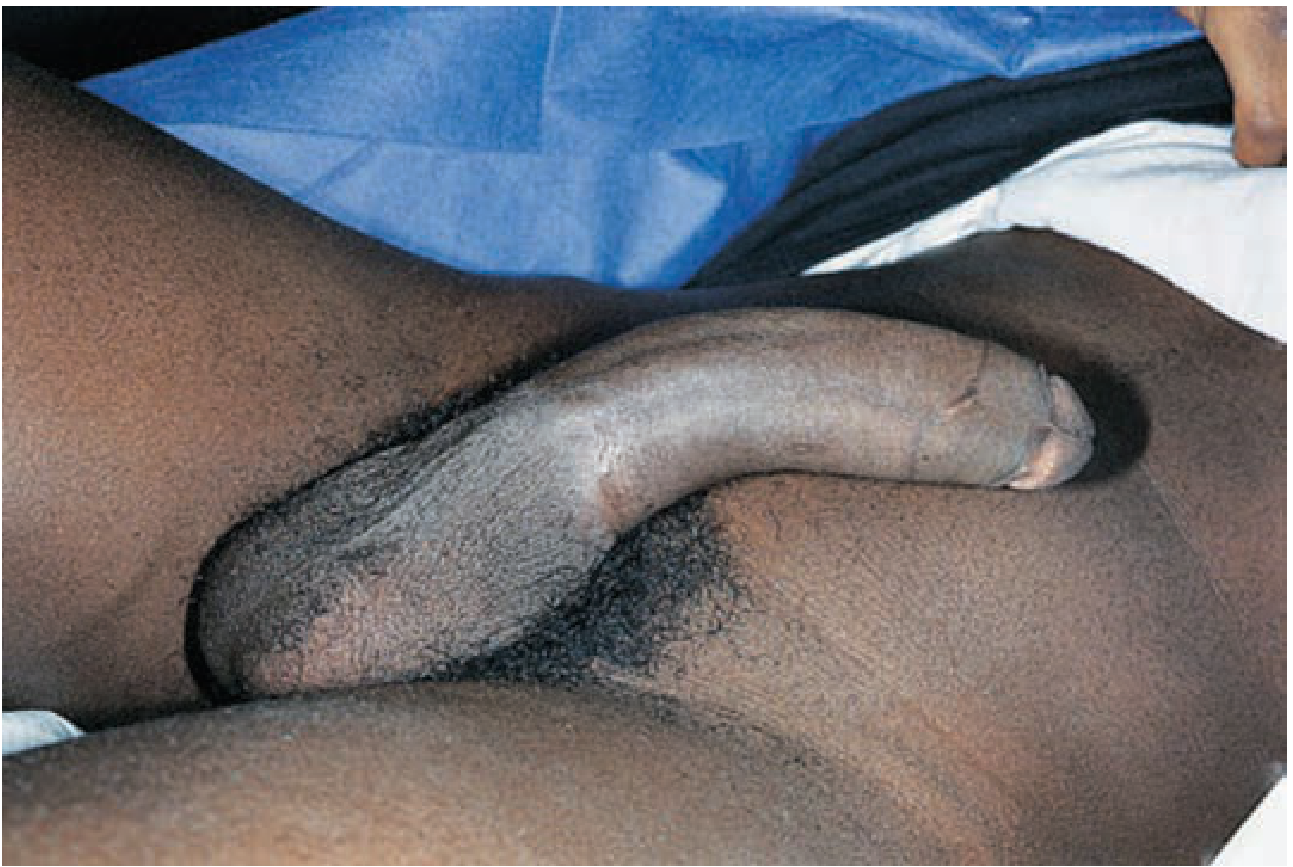
- Priapism: hydration, analgesia; refractory cases may need aspiration/irrigation or surgical intervention (Tintinalli's Emergency Medicine, p. 950).
- Severe/symptomatic anemia (e.g., splenic sequestration, aplastic crisis): simple or exchange transfusion as indicated.
- Renal disease: screening for proteinuria; ACE inhibitors/ARBs for significant proteinuria to slow chronic kidney disease progression.
4. Curative Options
- Allogeneic hematopoietic stem cell transplant (HSCT) - the only long-established cure, generally reserved for patients with a matched donor and severe disease given transplant-related risks.
- Gene therapies (FDA-approved December 2023):
- Casgevy (exagamglogene autotemcel) - CRISPR/Cas9 edits the patient's own hematopoietic stem cells to reactivate fetal hemoglobin production. First FDA-approved CRISPR-based therapy; label later expanded to children as young as 2. In the pivotal CLIMB-SCD-121 trial, 29/30 evaluable patients (97%) were free of severe vaso-occlusive crises for at least 12 months.
- Lyfgenia (lovotibeglogene autotemcel) - lentiviral vector gene addition therapy producing HbAT87Q, a modified hemoglobin that functions like normal adult hemoglobin.
- Both are approved for patients ≥12 years with recurrent vaso-occlusive events; long-term safety and cost-effectiveness are still being studied.
Recent Evidence Check
A 2025 systematic review (PMID: 40307078, Blood Reviews) on novel pharmacologic therapies (including glutamine, voxelotor, crizanlizumab) found real-world evidence still has gaps relative to clinical-trial data - efficacy signals are promising but heterogeneous outcome reporting limits direct comparison. A 2023 Cochrane review (PMID: 37539955) on interventions for sickle-cell related chronic kidney disease found insufficient high-quality evidence to strongly recommend ACE inhibitors/ARBs over supportive care alone, despite their common use - worth flagging as this nuances the renal management point above. A 2023 systematic review comparing HSCT versus gene therapy (PMID: 36728286) found both are viable but data on long-term comparative outcomes remain limited.
None of this recent evidence overturns the core textbook-based treatment framework, but it does support treating some of the newer disease-modifying agents and renal interventions as areas of active evolution rather than settled standard of care.
This is a shared conversation. Sign in to Orris to start your own chat.