
List all cutaneous lesion caused or aggravated by sun exposure along with it's picture from derma net and also give treatment from standard book
Reading File
Finding Sources
Finding Sources
Searching the Web
DermNet NZ photodermatoses sun induced skin lesions list
Finding Sources
Finding Sources
Reading Web Page
treatment sun induced cutaneous lesions
Reading File
Finding Sources
Finding Sources
Reading Web Page
treatment pictures clinical features
Reading File
Reading Web Page
treatment clinical features pictures sun induced skin
Finding Sources
Reading File
Finding Sources
Loading Image
Loading Image
Loading Image
Loading Image
Loading Image
Reading File
Loading Image
Loading Image
Loading Image
Reading File
Loading Image
Loading Image
I now have comprehensive information to compose a thorough answer. Let me compile everything.
Cutaneous Lesions Caused or Aggravated by Sun Exposure
Sources: Fitzpatrick's Dermatology (9th ed.), Andrews' Diseases of the Skin, DermNet NZ
Classification Overview
Photodermatoses are grouped into four categories:
| Category | Examples |
|---|---|
| Primary/Idiopathic | PMLE, Actinic prurigo, Solar urticaria, Chronic actinic dermatitis, Hydroa vacciniforme, Juvenile spring eruption |
| Exogenous (Photocontact) | Phototoxic contact dermatitis, Photoallergic contact dermatitis, Phytophotodermatitis |
| Metabolic | Porphyria cutanea tarda, Erythropoietic protoporphyria, Pellagra |
| Photoexacerbated | Lupus erythematosus, Dermatomyositis, Rosacea, Psoriasis, Darier disease, Pemphigus, Atopic dermatitis |
| Sun-induced lesions (chronic) | Actinic keratosis, Solar lentigo (age spots), Ephelides (freckles), Photoageing |
| Drug-induced | Phototoxic/photoallergic drug reactions |
1. Polymorphic Light Eruption (PMLE)
The most common photodermatosis - affects ~18% of Europeans. Predominantly young women.
Lesions: Pruritic, erythematous papules, plaques, vesicles, or plaques on sun-exposed skin (chest, upper arms, dorsal hands, sides of face). Appear within hours to 2 days of UV exposure.
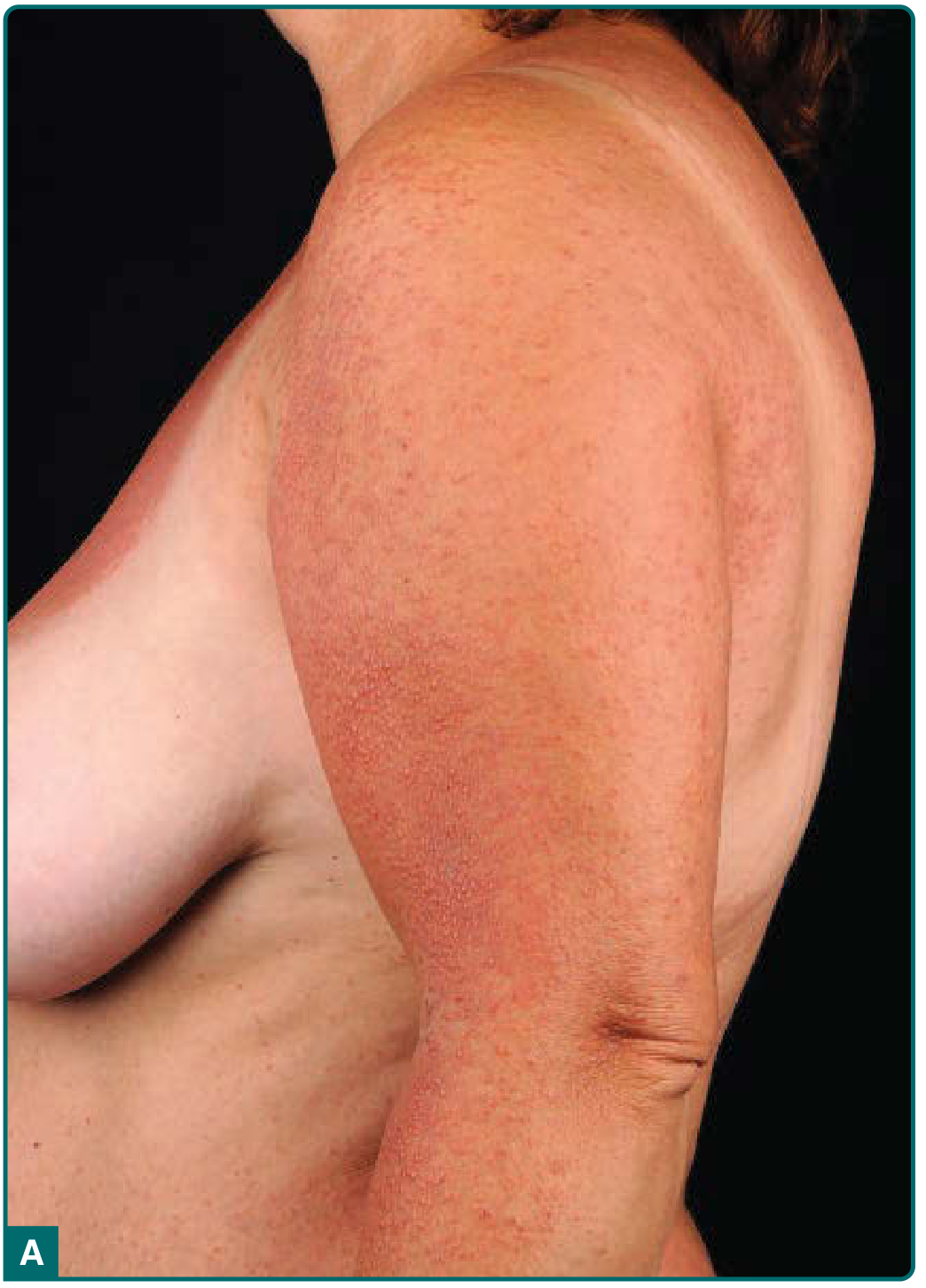
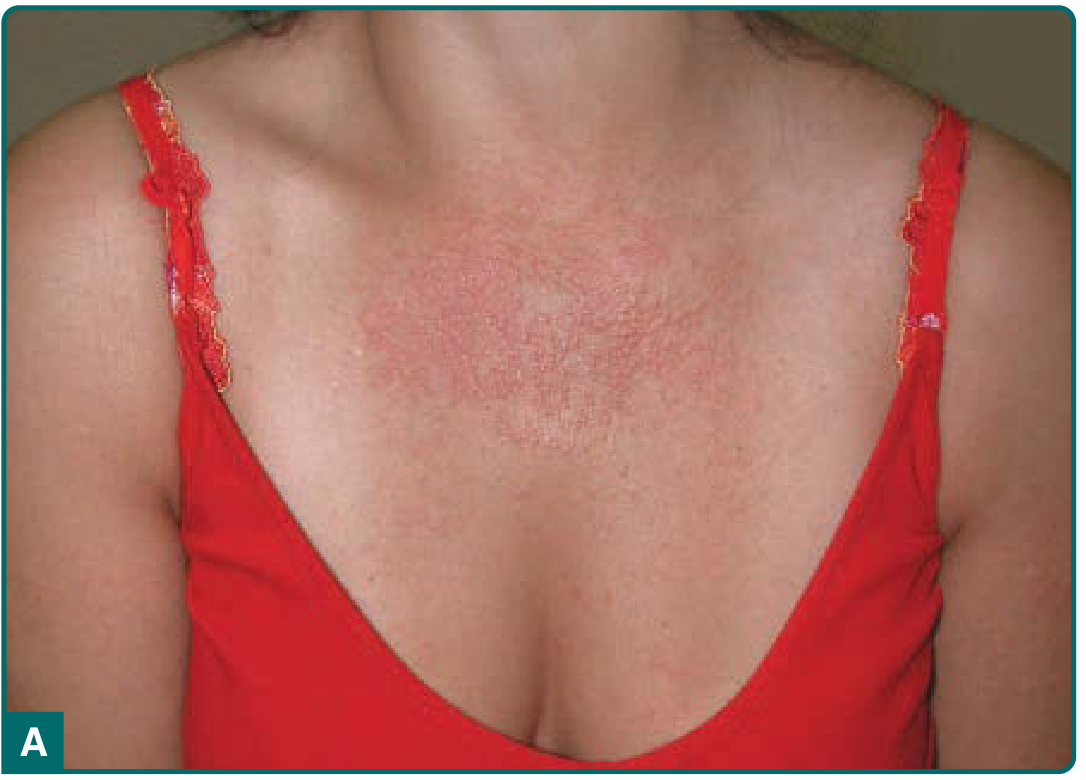
Treatment (Fitzpatrick's):
- Prophylactic: Broad-spectrum sunscreen (UVA+UVB), protective clothing
- Hardening phototherapy: Low-dose UVB (narrowband) or PUVA in early spring to induce tolerance - very effective
- Acute: Topical/oral corticosteroids (short course) for established eruption
- Severe/recurrent: Hydroxychloroquine 200-400 mg/day, azathioprine, thalidomide (reserved cases)
- Sun avoidance during peak hours; resolution typically occurs with natural "skin hardening" as summer progresses
2. Actinic Keratosis (Solar Keratosis)
Precancerous in situ dysplasia from chronic sun exposure. Most common precancerous skin lesion. Can progress to squamous cell carcinoma.
Lesions: Rough, sandpaper-like scaly patches on face, ears, balding scalp, dorsal hands, forearms. Usually 3 mm-1 cm. Types: hypertrophic, atrophic, bowenoid, pigmented, acantholytic, lichenoid.
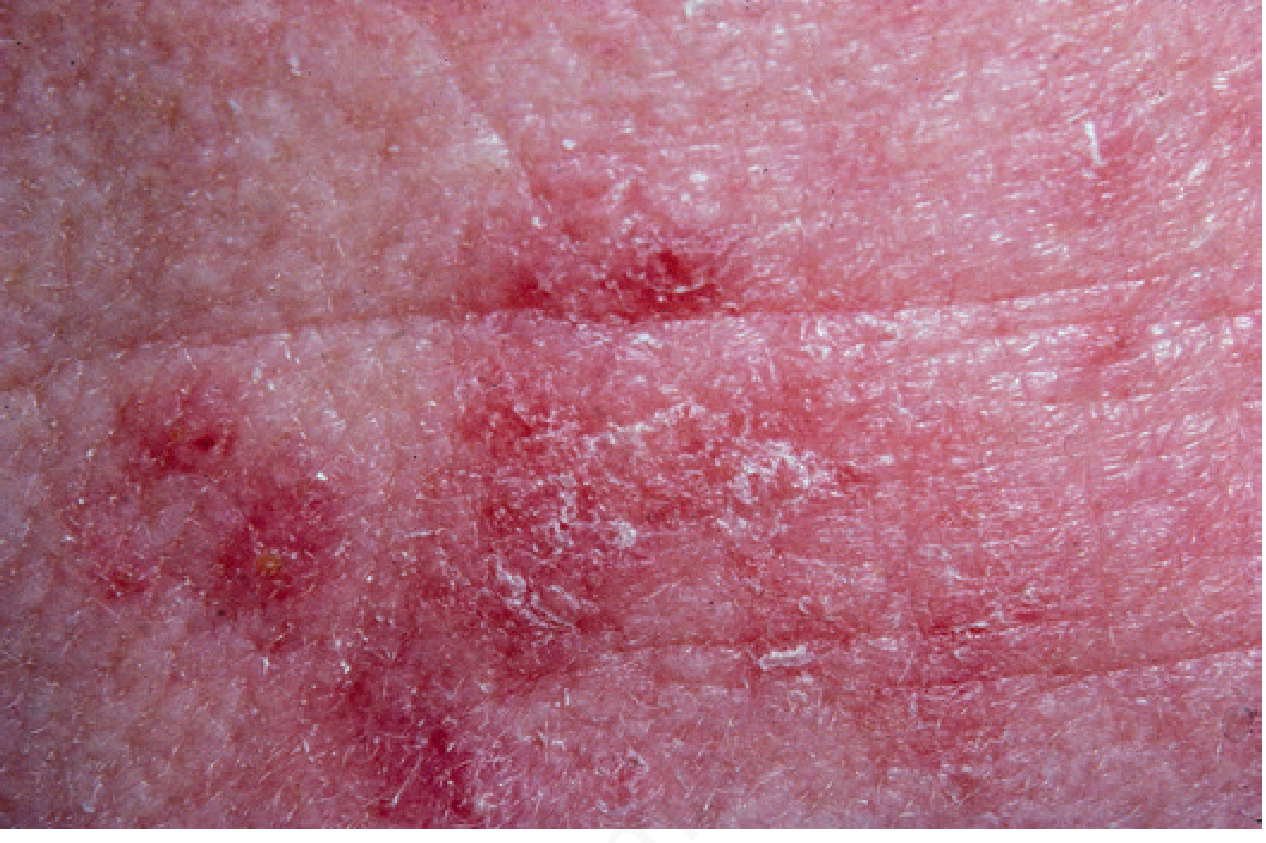
Treatment (Andrews' + DermNet):
Physical (individual lesions):
- Cryotherapy with liquid nitrogen spray - first-line for limited lesions; spray in circular motion, controlled freeze duration. Face heals in ~1 week, arms/legs 3-4 weeks
- Curettage + electrocautery - for hypertrophic/cutaneous horn lesions; specimen sent for histology
- Excision - for suspicious or non-resolving lesions
Field treatments (numerous/extensive lesions):
- 5-Fluorouracil (5-FU) cream 0.5-5% - applied once daily; 2-3 weeks for 5%, 3-6 weeks for 0.5%. Produces inflammatory reaction (redness, crusting) proportional to efficacy
- Imiquimod 5% cream - immune modifier; applied 3x/week for 12-16 weeks; effective for face
- 3% Diclofenac in 2.5% hyaluronic acid gel - for 60 days; milder reaction, good for sensitive patients
- Photodynamic therapy (PDT) - topical aminolevulinic acid (ALA) or methyl-ALA + red light; highly effective for face and scalp
- Topical tretinoin/adapalene - pretreatment for hyperkeratotic lesions; maintenance option
- Ingenol mebutate gel - newer option; 2-3 day short course
- Prevention: regular sunscreen use; low-fat diet shown to reduce occurrence; beta-carotene has no proven benefit
3. Solar Lentigo (Age Spots / Liver Spots)
Benign hyperpigmented macules from chronic UV exposure. Very common after age 40.
Lesions: Well-defined flat brown macules on dorsal hands, face, forearms, shoulders. Caused by focal proliferation of melanocytes.
Treatment (DermNet NZ - 2025):
- Lesions are benign and do not require treatment unless cosmetic concern
- Rigorous sun protection - may modestly lighten existing lesions and prevents new ones
- Physical: Cryotherapy, pigment-specific laser (Nd:YAG, Q-switched), intense pulsed light (IPL), chemical peels, dermabrasion
- Topical: Retinoids, hydroquinone bleaching cream, cysteamine cream, mequinol
- Combination therapy (two or more modalities) yields highest resolution rates, followed by laser, retinoids, cryotherapy, and peels. Destructive modalities carry risk of hypo/hyperpigmentation
4. Polymorphic Light Eruption - Juvenile Spring Eruption (Variant)
A variant of PMLE occurring in young boys on the helices of the ears after first spring sun exposure.
Treatment: Similar to PMLE - sun protection, short course topical steroids; usually self-resolving.
5. Actinic Prurigo
Intensely pruritic chronic photodermatosis. More common in Latin American and American Indian populations, often children.
Lesions: Small scratched red papules, thickened plaques, nodules on sun-exposed face (cheeks, forehead, nose, chin), V of neck, upper arms. Lips involved in 60-70%; conjunctiva in 45%. Persists year-round but worse in summer.
Treatment:
- Thalidomide 50-200 mg/day - most effective treatment; significantly reduces pruritus (use with caution due to teratogenicity)
- Broad-spectrum sunscreen + protective clothing
- Topical corticosteroids for acute flares
- Cyclosporine for refractory cases
- Pentoxifylline has some evidence
6. Solar Urticaria
Rare chronic inducible urticaria triggered by sunlight.
Lesions: Wheals (hives) and erythema within minutes (<30 min) of sun exposure on areas normally covered by clothing (back, trunk). Chronically exposed areas (face, hands) may be paradoxically spared due to hardening. Resolves within hours of sun avoidance.
Treatment:
- Non-sedating antihistamines (H1 blockers) - first-line; cetirizine, fexofenadine, loratadine at regular/high doses
- Desensitization/hardening phototherapy - repeated small doses of UV to raise the urticarial threshold
- Omalizumab (anti-IgE) - effective for refractory cases
- Plasmapheresis - for severe refractory cases
- Strict sun avoidance; sun-protective clothing; high-SPF UVA/UVB sunscreen
7. Chronic Actinic Dermatitis (CAD) / Photosensitivity Dermatitis
A severe persistent eczematous reaction in sun-exposed sites, predominantly older men.
Lesions: Intensely pruritic, eczematous, lichenified plaques on face, upper chest, neck, dorsal hands and arms. "Actinic reticuloid" is the severe variant with thickened nodules.
Treatment:
- Strict photoprotection - broad-spectrum sunscreen, UV-protective clothing, window films
- Topical corticosteroids and topical calcineurin inhibitors (tacrolimus, pimecrolimus)
- Systemic immunosuppression for severe disease: azathioprine (0.5-2.5 mg/kg/day), ciclosporin, mycophenolate mofetil
- Hydroxychloroquine in some cases
- Vitamin D supplementation (due to sun avoidance)
8. Photocontact Dermatitis
8a. Phototoxic Contact Dermatitis (PTCD)
Exaggerated sunburn-like reaction from phototoxic chemicals (furocoumarins, psoralens, tar, NSAIDs, tetracyclines, certain sunscreen chemicals).
Lesions: Painful erythema, blisters confined strictly to sun-exposed sites. Followed by post-inflammatory hyperpigmentation.
Treatment:
- Remove/avoid the offending agent
- Cool compresses, emollients
- Topical corticosteroids for inflammation
- Treat blisters like burns
- Sunscreen and sun avoidance until resolved
8b. Phytophotodermatitis
Phototoxic reaction from plant psoralens (lime juice, celery, parsley, figs, giant hogweed) + UVA.
Lesions: Painful linear streaks and blisters in areas of plant contact + sun exposure. Heals with prominent post-inflammatory hyperpigmentation lasting months.
8c. Photoallergic Contact Dermatitis (PACD)
Delayed type IV hypersensitivity to photoallergens (sunscreen chemicals - oxybenzone, fragrance ingredients). Eczematous, itchy rash primarily on sun-exposed areas; may spread to non-exposed sites.
Treatment: Patch testing to identify allergen, strict avoidance, topical corticosteroids, sometimes oral steroids for severe reactions.
9. Drug-Induced Photosensitivity
Common photosensitizing drugs: Thiazide diuretics, tetracyclines (doxycycline most commonly), NSAIDs, phenothiazines, voriconazole, quinine, amiodarone, vemurafenib, sulfonamides, fluoroquinolones.
Lesions:
- Phototoxic: Exaggerated sunburn on exposed areas, blisters, onycholysis; occurs on first exposure
- Photoallergic: Eczematous/lichen planus-like eruption, occurs 24-72 hours after re-exposure; may spread beyond sun-exposed areas
Treatment:
- Identify and stop/substitute the offending drug
- Broad-spectrum sunscreen and sun avoidance
- Topical corticosteroids for inflammation
- Short course oral steroids for severe photoallergic reactions
- Phototoxic reactions usually resolve once drug is stopped
10. Porphyria Cutanea Tarda (PCT)
A metabolic photodermatosis from deficiency of uroporphyrinogen decarboxylase. Porphyrins accumulate and absorb UVA, generating reactive oxygen species.
Lesions: Skin fragility on dorsal hands and forearms, tense blisters, milia, scarring, hyper/hypopigmentation, hypertrichosis on sun-exposed sites. Urine is dark reddish/tea-colored.
Treatment:
- Address underlying causes: stop alcohol, stop estrogens, treat hepatitis C (antivirals)
- Phlebotomy (venesection) 450 mL every 2 weeks until ferritin normalizes - first-line
- Low-dose hydroxychloroquine 100 mg twice weekly - as effective as phlebotomy; used when phlebotomy not tolerated
- Strict sun avoidance and UVA-protective sunscreen
- Avoid iron supplements and hepatotoxic agents
11. Lupus Erythematosus (Photoexacerbated)
Both systemic and cutaneous LE are dramatically aggravated by UV exposure.
Lesions: Classic "butterfly" malar rash, discoid plaques, subacute cutaneous LE (annular/psoriasiform on V-neck, arms). UV triggers flares in 70-80% of SLE patients.
Treatment:
- Strict photoprotection - paramount in management
- Topical corticosteroids and calcineurin inhibitors for skin lesions
- Hydroxychloroquine 200-400 mg/day - standard of care for cutaneous LE; also protective against UV-triggered flares
- Systemic disease: methotrexate, mycophenolate, belimumab per disease activity
12. Ephelides (Freckles)
Small brown macules on sun-exposed fair skin, especially in red/fair-haired individuals. They darken with sun exposure and fade in winter. Driven by MC1R gene variants.
Treatment: Usually no treatment needed. Sunscreen prevents darkening. Laser therapy or bleaching creams if cosmetically desired.
13. Sunburn (Erythema Solare)
Acute UV-induced inflammatory response. UVB causes direct DNA damage; UVA causes indirect oxidative damage.
Lesions: Painful erythema (appears 2-6 hours after exposure, peaks at 12-24 hours), edema, blistering in severe cases, followed by desquamation and tanning.
Treatment:
- Cool compresses, emollients/moisturizers
- Topical NSAIDs (diclofenac gel)
- Oral NSAIDs/aspirin - most effective if taken early
- Short course topical corticosteroids for significant inflammation (limited evidence)
- Aloe vera gel for comfort
- Keep blisters intact; systemic steroids for extensive severe sunburn
- Prevention: SPF 30+ broad-spectrum sunscreen, protective clothing
14. Hydroa Vacciniforme
A rare chronic photodermatosis associated with Epstein-Barr virus (EBV) infection, predominantly in children.
Lesions: Papulovesicles and hemorrhagic crusts on sun-exposed areas (nose, cheeks, ears, dorsal hands) that heal with pock-like varioliform scars. Triggered by sunlight.
Treatment:
- Strict sun avoidance + high-SPF sunscreen + UV-protective clothing
- Antimalarial drugs (hydroxychloroquine, chloroquine) may reduce frequency
- Prophylactic low-dose UVB hardening phototherapy in some cases
- Most cases remit in adolescence/early adulthood
15. Photoageing (Dermatoheliosis)
Chronic cumulative UV damage causing premature skin ageing - distinct from chronological ageing.
Lesions: Fine and coarse wrinkles, mottled hyperpigmentation, telangiectasia, leathery texture, loss of elasticity, solar elastosis, comedones (Favre-Racouchot syndrome on cheeks).
Treatment:
- Sun protection is the single most effective prevention and slows progression
- Topical tretinoin (retinoic acid) 0.025-0.1% - best evidence for reversal; improves fine lines, pigmentation, texture
- Chemical peels (TCA, glycolic acid)
- Laser resurfacing (ablative CO2/Er:YAG; non-ablative fractional)
- IPL for pigmentation and telangiectasia
- Antioxidants (topical vitamin C, vitamin E) - adjunctive benefit
Summary Table
| Condition | Key Lesion | DermNet Link | Primary Treatment |
|---|---|---|---|
| PMLE | Itchy papules/plaques post-sun | DermNet | Sunscreen, UVB hardening, steroids, hydroxychloroquine |
| Actinic keratosis | Rough scaly precancerous patch | DermNet | Cryotherapy, 5-FU, imiquimod, PDT |
| Solar lentigo | Flat brown macule | DermNet | Laser, cryotherapy, retinoids, hydroquinone |
| Actinic prurigo | Chronic itchy papules/nodules | DermNet | Thalidomide, sunscreen, steroids |
| Solar urticaria | Wheals within minutes | DermNet | Antihistamines, hardening, omalizumab |
| Chronic actinic dermatitis | Lichenified eczema | DermNet | Photoprotection, azathioprine, cyclosporin |
| Phototoxic dermatitis | Exaggerated sunburn | DermNet | Remove agent, topical steroids |
| Drug photosensitivity | Sunburn/eczema on exposed skin | DermNet | Stop drug, sunscreen, steroids |
| Porphyria cutanea tarda | Blisters, fragile skin, milia | DermNet | Phlebotomy, hydroxychloroquine, treat cause |
| Lupus erythematosus | Malar rash, discoid plaques | DermNet | Hydroxychloroquine, sunscreen, steroids |
| Sunburn | Painful erythema/blistering | DermNet | NSAIDs, cool compresses, emollients |
| Photoageing | Wrinkles, pigmentation, elastosis | DermNet | Tretinoin, laser, peels, sunscreen |
| Hydroa vacciniforme | Vesicles -> varioliform scars | DermNet | Sun avoidance, hydroxychloroquine |
| Ephelides | Small tan macules | DermNet | Sunscreen; laser/bleaching if desired |
General photoprotection principles (all conditions):
- Broad-spectrum SPF 30-50+ sunscreen applied 20-30 min before sun and reapplied every 2 hours
- Protective clothing: UPF 40+ fabrics, wide-brimmed hat, UV-blocking sunglasses
- Avoid peak UV hours (10 AM - 4 PM)
- UV-absorbing window films for indoor/car protection in highly sensitive patients
- Vitamin D supplementation for patients with severe sun avoidance
This is a shared conversation. Sign in to Orris to start your own chat.