
Explain the complete histology of digestive tract
Reading File
The digestive tract histology is a broad visual topic - I'll search the library comprehensively now.
Searching sources...
Finding Sources
Finding Sources
Finding Sources
Finding Sources
Good - I found the Histology textbook. Let me search it specifically and also look for GI tract sections.
Finding Sources
Finding Sources
Finding Sources
Finding Sources
Finding Sources
Finding Sources
I've found both histology textbooks. Now let me read the comprehensive GI histology content from both sources in parallel.
Reading File
Reading File
I have rich content from both histology textbooks. Let me now fetch the key images and read the remaining sections.
Reading File
Loading Image
Excellent content! Now let me fetch more key histology images and read additional sections.
Reading File
Reading File
I now have comprehensive content from both histology textbooks. Let me fetch a few more key images and read the large intestine section.
Reading File
Loading Image
Loading Image
I now have very comprehensive information. Let me fetch 2 more important images (small intestine villi and large intestine crypts) and then compose the full answer.
Loading Image
Loading Image
I now have all the material needed for a comprehensive answer. Let me compose the complete histology of the digestive tract.
Complete Histology of the Digestive Tract
Sources: Histology: A Text and Atlas with Correlated Cell and Molecular Biology (9781975181512) and Junqueira's Basic Histology, 17e (9781264930395)
Overview: General Wall Structure
The alimentary canal, from the proximal esophagus to the distal anal canal, is a hollow tube of varying diameter that shares a common four-layer organization throughout its entire length. From lumen outward, these layers are:
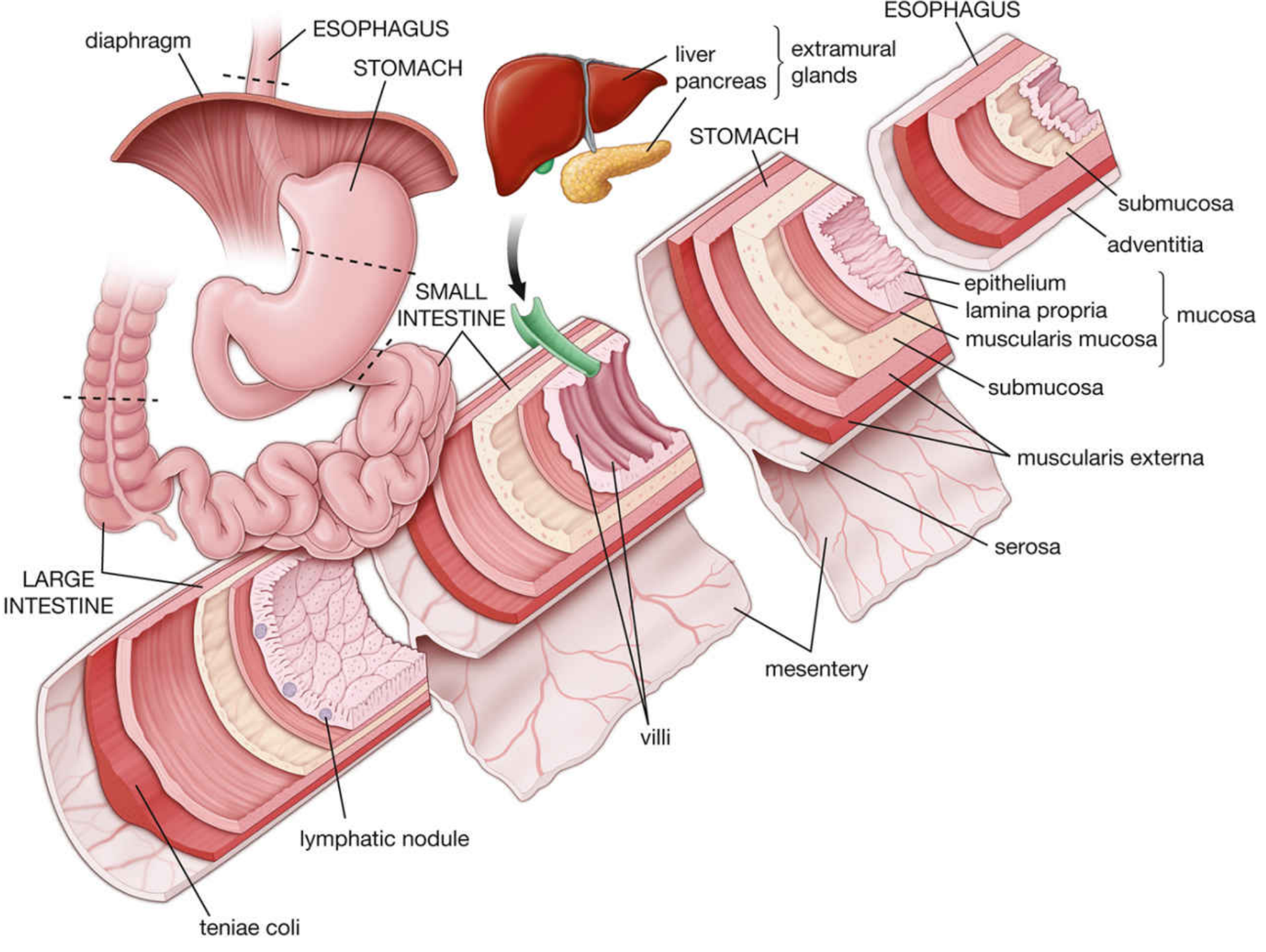
1. Mucosa
The innermost layer, itself composed of three sub-layers:
- Epithelium - varies by segment (stratified squamous, simple columnar, etc.)
- Lamina propria - loose connective tissue with blood vessels, lymphatics, glands, and diffuse/nodular GALT
- Muscularis mucosae - a thin layer of smooth muscle that produces local mucosal movements
2. Submucosa
Dense irregular connective tissue containing larger blood and lymphatic vessels, nerves, and in some segments, glands. Houses the Meissner's (submucosal) plexus - a neural plexus governing secretory activity.
3. Muscularis Externa
Typically two layers of smooth muscle: an inner circular layer and an outer longitudinal layer. Between them lies the Auerbach's (myenteric) plexus, which controls gut motility. Exception: the stomach has a third inner oblique layer.
4. Serosa / Adventitia
- Serosa: a layer of simple squamous mesothelium (peritoneum) over loose connective tissue; present where the organ is covered by peritoneum
- Adventitia: loose connective tissue without mesothelium; present where the organ is attached to adjacent structures (e.g., esophagus in thorax)
1. Oral Cavity
The oral cavity is lined by stratified squamous epithelium, which may be keratinized (hard palate, gingiva, dorsum of tongue) or non-keratinized (soft palate, cheeks, floor of mouth, ventral tongue). There is no muscularis mucosae or organized submucosa distinct from deeper structures as seen in the tube organs.
Tongue:
- Dorsal surface bears four types of lingual papillae:
- Filiform papillae - most numerous; keratinized projections, no taste buds; mechanical function
- Fungiform papillae - mushroom-shaped; contain taste buds on their superior surface
- Circumvallate (vallate) papillae - 7-12 large papillae at the junction of the oral and pharyngeal parts of the tongue; surrounded by a trench; contain the most taste buds; associated with serous glands of von Ebner whose secretion washes the trench
- Foliate papillae - rudimentary ridges on the lateral tongue margins; contain taste buds in childhood, regress in adults
- Taste buds are ovoid pale structures within the epithelium containing receptor (gustatory), sustentacular, and basal cells
Teeth consist of dentin (the bulk of the tooth, made by odontoblasts, resembles bone but harder), enamel (the hardest body substance, formed by ameloblasts before eruption and not replaced afterward), cementum (thin calcified layer over dentin in the root), and the dental pulp (loose CT with blood vessels, nerves, and odontoblasts lining the pulp cavity).
2. Esophagus
The esophagus is a ~25 cm muscular tube delivering food from pharynx to stomach. In cross-section, its lumen appears star-shaped due to longitudinal mucosal folds.
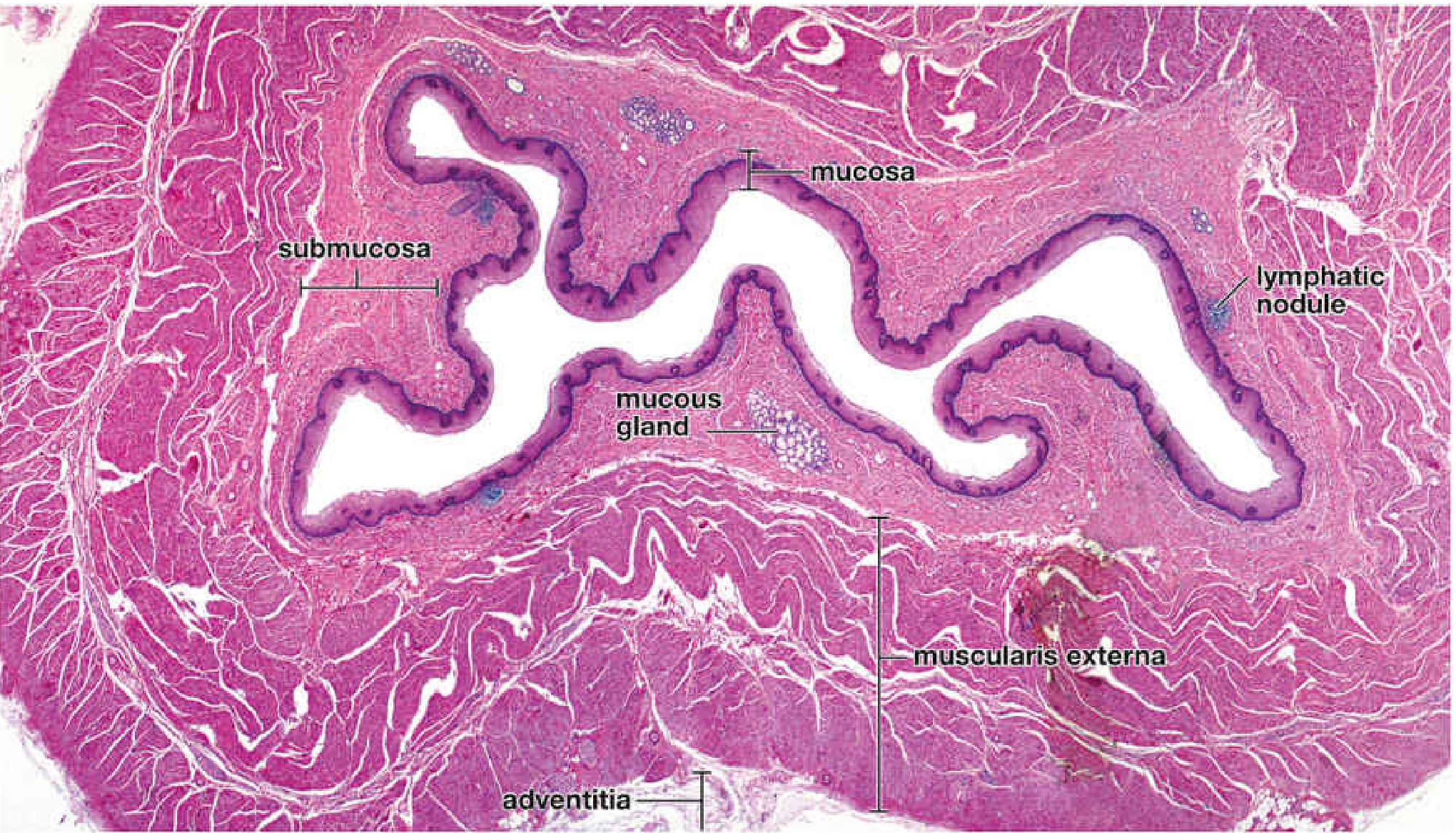
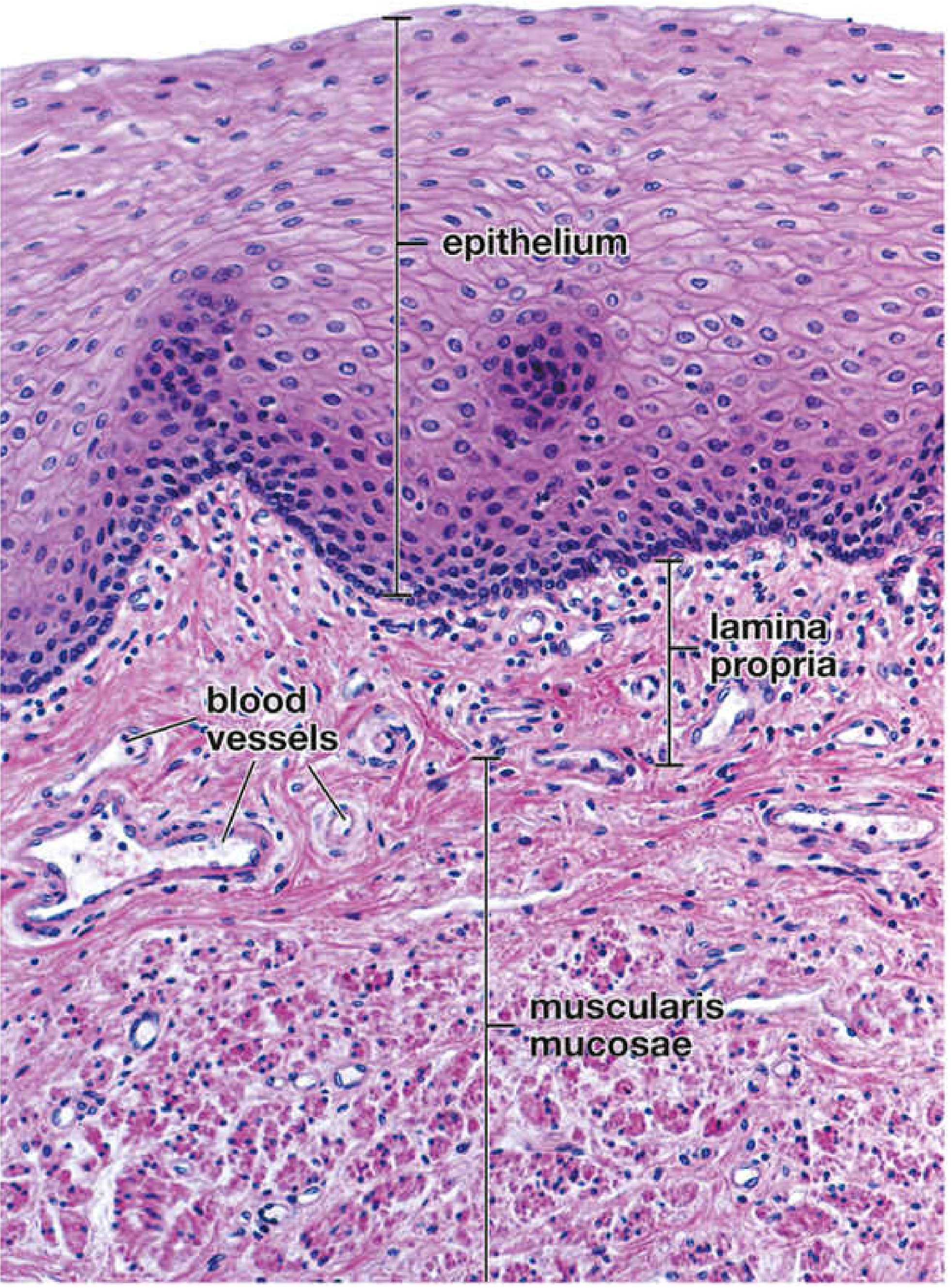
Mucosa
- Epithelium: Non-keratinized stratified squamous epithelium - thick, protective; surface cells may show keratohyalin granules but true keratinization does not occur in humans
- Lamina propria: Loose CT; contains diffuse lymphatic tissue, occasional lymphatic nodules (especially near gland ducts), and esophageal cardiac glands (mucus-secreting) near the upper and lower ends
- Muscularis mucosae: Longitudinally arranged smooth muscle (unique - most of the GI tract has a circular arrangement); begins near the cricoid and becomes thicker in the proximal esophagus; aids swallowing
Submucosa
- Dense irregular CT containing esophageal glands proper (mixed mucous-serous glands that secrete mucus for lubrication and protection); their ducts pierce the mucosa to empty into the lumen
Muscularis Externa
- Upper third: skeletal muscle only (voluntary swallowing)
- Middle third: mixed skeletal and smooth muscle
- Lower third: smooth muscle only
- Inner circular + outer longitudinal arrangement
Serosa / Adventitia
- Adventitia for most of its length (attached to mediastinum)
- A short serosa segment exists just below the diaphragm where it is briefly free in the abdominal cavity
Esophagogastric Junction
At this junction, the stratified squamous epithelium of the esophagus abruptly transitions to the simple columnar epithelium of the stomach - one of the sharpest epithelial transitions in the body. Clinically, chronic acid exposure can cause this transition zone to shift upward (Barrett's esophagus).
3. Stomach
The stomach is an expanded part of the digestive tube that mixes food with gastric secretions to produce chyme.
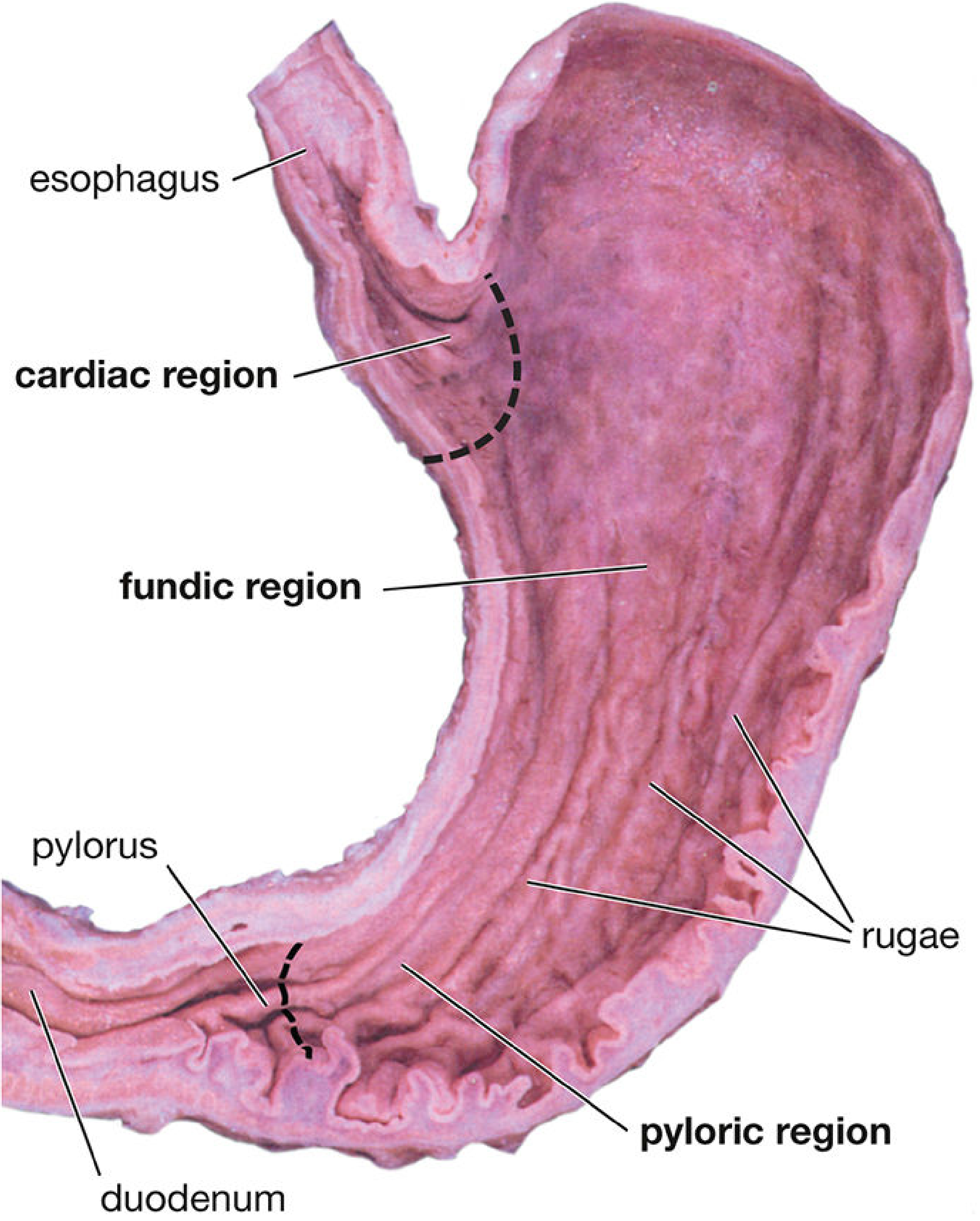
Histologically, the stomach is divided into three regions based on gland type:
Gastric Mucosa
The mucosal surface is lined by simple columnar epithelium (surface mucous cells) whose mucus forms a protective coat against acid. The surface is deeply indented by gastric pits (foveolae), into which the gastric glands open.
Surface mucous cells secrete an insoluble mucus rich in bicarbonate that creates a pH gradient protecting the epithelium from its own acid.
A. Cardiac Region
- Small zone around the esophagogastric junction
- Contains cardiac glands: simple branched tubular mucous glands with shallow pits; primarily secrete mucus
- Enteroendocrine cells are present
B. Fundic/Body Region (largest)
Contains fundic (gastric) glands - the most structurally complex and functionally important glands of the stomach. They are simple branched tubular glands that extend from the base of the gastric pit to the muscularis mucosae.
Five cell types in fundic glands:
| Cell Type | Location | Product | Function |
|---|---|---|---|
| Mucous neck cells | Upper (neck) | Soluble acid mucus | Protection; stem cell niche |
| Chief (zymogenic) cells | Base | Pepsinogen, gastric lipase | Protein and fat digestion |
| Parietal (oxyntic) cells | Mid-gland (body) | HCl + intrinsic factor | Protein denaturation; B12 absorption |
| Enteroendocrine cells | Scattered | Gastrin, histamine, serotonin, somatostatin | Hormone regulation of digestion |
| Stem cells | Isthmus | - | Mucosal renewal |
Parietal cells are distinctive: large, eosinophilic, polygonal cells with a central nucleus and abundant mitochondria. They contain an intracellular canalicular system (invaginations of apical membrane lined with microvilli) that greatly expands when the cell is stimulated to secrete HCl via H+/K+-ATPase pumps. Intrinsic factor secreted by parietal cells is required for ileal absorption of vitamin B12.
Chief cells are basophilic (due to abundant RER) with apical zymogen granules. They secrete pepsinogen which is converted to pepsin by HCl in the lumen.
C. Pyloric Region
- Deeper gastric pits (occupy more than half the mucosal thickness)
- Contains pyloric glands: branched mucous glands; very similar to cardiac glands
- G cells (enteroendocrine) secrete gastrin, which stimulates HCl secretion
- The pyloric sphincter is a dramatic thickening of the inner circular smooth muscle layer
Lamina Propria and Muscularis Mucosae
- Lamina propria is sparse (occupied mostly by glands)
- Muscularis mucosae: inner circular + outer longitudinal smooth muscle
Gastric Submucosa
- Dense CT; no glands
- Contains blood vessels, lymphatics, Meissner's plexus
Gastric Muscularis Externa
- Three layers (unique to stomach):
- Inner oblique (innermost; incompletely covers the stomach)
- Middle circular (complete; thickens at pylorus to form pyloric sphincter)
- Outer longitudinal (complete)
- This arrangement allows the churning and mixing movements characteristic of stomach motility
Gastric Serosa
- Covers the entire stomach surface (free intraperitoneal organ)
4. Small Intestine
The small intestine (~6 m total) is the principal site for digestion and absorption. It is divided into:
- Duodenum (~25 cm): receives chyme, pancreatic enzymes, and bile
- Jejunum (~2.5 m): primary absorption
- Ileum (~3.5 m): absorbs bile salts and vitamin B12; most Peyer's patches
Surface Amplification Structures
Three levels of structural specialization amplify the absorptive surface area ~600-fold:
- Plicae circulares (valves of Kerckring): permanent circular folds of mucosa + submucosa, best developed in the jejunum; absent in proximal duodenum and terminal ileum
- Villi: finger-like projections of mucosa only; covered by a simple columnar epithelium; each contains a central lacteal (lymphatic capillary) and a vascular core within the lamina propria
- Microvilli (brush border): apical projections of individual enterocytes; each cell has ~3,000 microvilli; covered by a glycocalyx (carbohydrate-rich coat containing digestive enzymes)
Mucosa - Epithelial Cell Types
The intestinal surface + glands (crypts of Lieberkühn) contain five cell types:
1. Enterocytes (absorptive cells)
- Tall simple columnar; prominent brush border with glycocalyx
- Transport products of digestion across the epithelium
- Contain tight junctions (zonulae occludentes) that seal the paracellular space
- The glycocalyx harbors digestive enzymes: disaccharidases, dipeptidases, enteropeptidase (which converts trypsinogen → trypsin in the duodenum)
2. Goblet cells
- Unicellular mucous glands; increase in number from duodenum to ileum
- Produce mucin that forms a protective layer over the epithelium
3. Paneth cells
- Located exclusively at the base of crypts
- Large eosinophilic apical granules containing lysozyme, defensins (cryptdins), phospholipase A2
- Part of the innate immune defense; regulate the microbial ecology of the small intestine
- Long-lived (~20 days); do NOT migrate up the villus
4. Enteroendocrine cells (DNES cells)
- Scattered throughout the epithelium; widest basal contact with lamina propria
- Produce peptide and amine hormones: secretin (S cells), CCK (I cells), GIP (K cells), motilin, serotonin (EC cells), somatostatin (D cells)
- Form the gut endocrine system
5. M cells (microfold cells)
- Overlying Peyer's patches and isolated lymphoid follicles
- Specialized for transcytosis of antigens from the lumen to underlying lymphoid tissue
- Lack a developed brush border; have a characteristic basal pocket containing lymphocytes and macrophages
Crypts of Lieberkühn
Simple tubular glands that extend from the base of the villi down to the muscularis mucosae. They are the proliferative compartment - stem cells in the crypt base generate all five cell types. Daughter cells migrate up the villus over ~3-5 days (except Paneth cells which migrate downward). The entire villus epithelium is replaced every 3-5 days.
Duodenum-Specific Feature: Brunner's Glands
- Submucosal branched tubuloacinar glands unique to the duodenum
- Secrete alkaline mucus + bicarbonate to neutralize acidic chyme entering from the stomach
- Protect the duodenal mucosa from HCl
Lymphatic Tissue (GALT)
- Lamina propria contains scattered plasma cells (IgA-secreting), lymphocytes, macrophages, and eosinophils throughout the small intestine
- Peyer's patches: large aggregated lymphoid nodules in the ileum's submucosa; appear as pale areas visible to the naked eye on the anti-mesenteric side of the ileum; critical for gut-associated immunity
Submucosa
- Dense CT with Meissner's plexus
- Contains Brunner's glands in the duodenum only
Muscularis Externa
- Inner circular + outer longitudinal smooth muscle
- Auerbach's plexus between them
- Responsible for peristalsis and segmentation movements
Serosa
- Complete peritoneal covering (jejunum and ileum are intraperitoneal)
- Duodenum: mostly retroperitoneal - covered by adventitia
Regional Differences - Summary Table
| Feature | Duodenum | Jejunum | Ileum |
|---|---|---|---|
| Plicae circulares | Few (proximal absent) | Most developed | Fewer, absent distally |
| Villi | Short, broad, leaf-like | Tall, finger-like | Shorter |
| Goblet cells | Least | Intermediate | Most |
| Brunner's glands | Present (submucosa) | Absent | Absent |
| Peyer's patches | Rare | Rare | Numerous |
| Crypts | Present | Present | Present |
5. Large Intestine
The large intestine comprises the cecum (with vermiform appendix), colon (ascending, transverse, descending, sigmoid), rectum, and anal canal.
Gross Distinguishing Features (Colon)
- Teniae coli: three thickened bands of outer longitudinal muscle (condensation of the muscularis externa); create sacculations
- Haustra coli: external sacculations between the teniae
- Omental appendices: small fatty peritoneal projections on the outer colonic surface
Mucosa
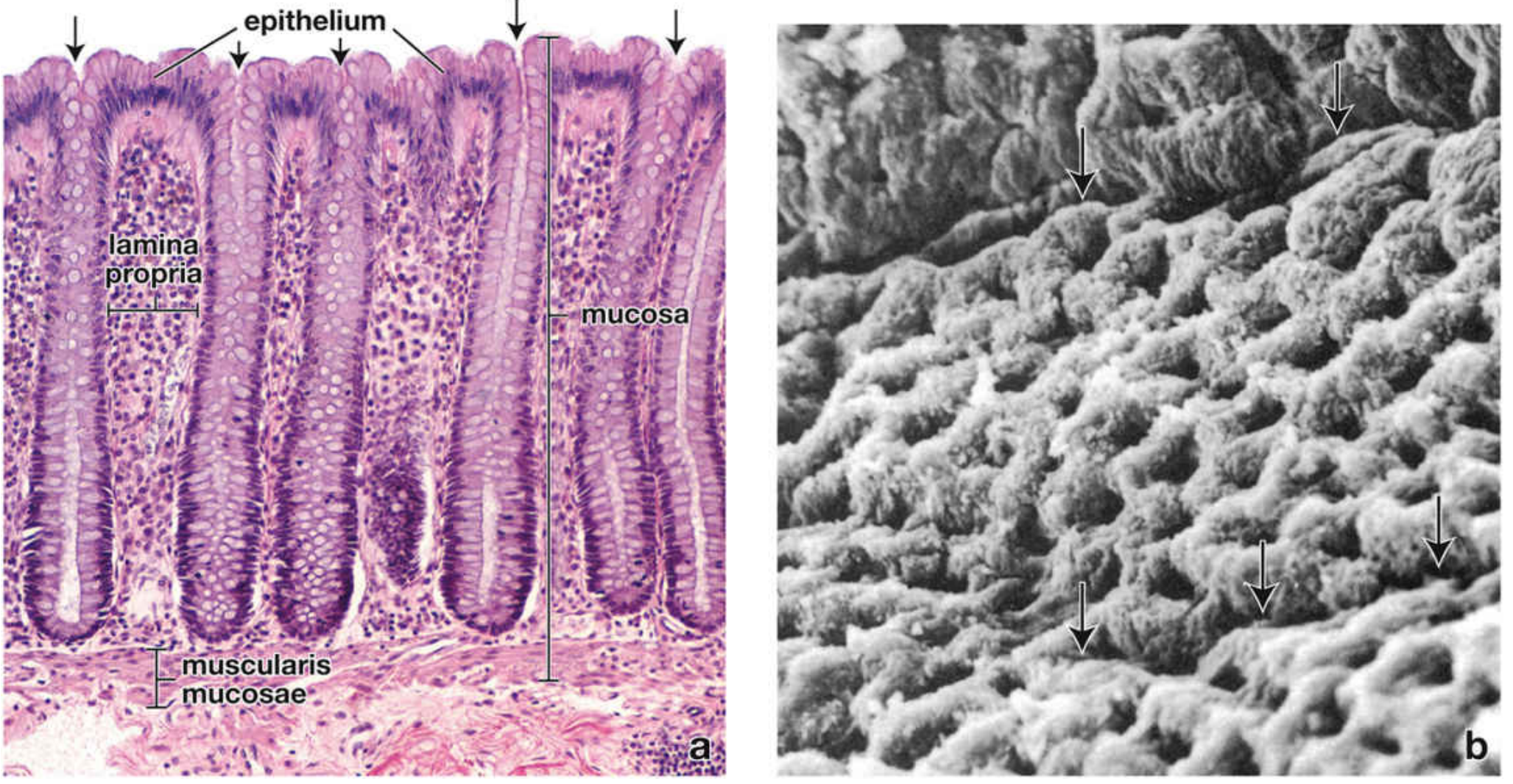
The large intestine has a smooth mucosal surface - no plicae circulares, no villi. Instead, it contains numerous straight, unbranched tubular crypts (glands of Lieberkühn) extending the full thickness of the mucosa.
Key differences from small intestine crypts:
- No Paneth cells (except in cecum/ascending colon where a few may be present)
- Very abundant goblet cells (function: lubricate fecal material)
- Absorptive (colonocytes): fewer microvilli than enterocytes; specialize in water/electrolyte absorption (Na+/Cl- absorption, K+ secretion)
- Enteroendocrine cells present
Lamina Propria
- Dense lymphocytic infiltration (diffuse GALT)
- Lymphoid nodules may extend into the submucosa
Muscularis Mucosae
Inner circular + outer longitudinal (standard)
Submucosa
- Dense CT, no glands
- Contains Meissner's plexus, blood and lymphatic vessels
Muscularis Externa
- Inner circular: complete layer; generates haustra
- Outer longitudinal: condensed into three teniae coli (does not form a complete layer in the colon)
- Auerbach's plexus between layers
Serosa / Adventitia
- Transverse and sigmoid colon: serosa
- Ascending and descending colon: partially retroperitoneal, covered by adventitia on the posterior aspect
Appendix
- Similar to large intestine but much narrower lumen
- Very prominent lymphoid tissue (may nearly obliterate the lumen in young individuals) - extensive Peyer's patches and solitary lymphoid nodules in mucosa and submucosa
- Relatively few crypts
- Teniae coli fuse to form a complete outer longitudinal muscle layer
Rectum
- Similar to colon but wider; no teniae coli (muscularis externa is a complete layer again)
- Deeper and wider crypts with abundant goblet cells
- No omental appendices
- Transverse rectal folds (Houston's valves) are permanent folds involving all layers
Anal Canal
- Upper portion: simple columnar epithelium (continuation of rectal mucosa)
- Pectinate (dentate) line: junction marking the transition
- Below pectinate line: non-keratinized stratified squamous epithelium → keratinized stratified squamous at the external anus
- Internal anal sphincter: smooth muscle (thickening of inner circular layer of muscularis externa; involuntary)
- External anal sphincter: skeletal muscle (voluntary)
- The anal columns (columns of Morgagni) are longitudinal mucosal folds in the upper anal canal, connected at their bases by anal valves that form small pockets called anal sinuses
Enteric Nervous System - The "Second Brain"
The gut wall contains two neural plexuses collectively forming the enteric nervous system (ENS):
| Plexus | Location | Function |
|---|---|---|
| Meissner's (submucosal) | Within submucosa | Controls secretion and mucosal blood flow |
| Auerbach's (myenteric) | Between inner circular and outer longitudinal muscularis | Controls gut motility (peristalsis, segmentation) |
Both plexuses contain ganglion cells (nerve cell bodies) and unmyelinated nerve fibers. They can function autonomously but receive modulation from the autonomic nervous system.
Summary Comparison Table
| Feature | Esophagus | Stomach | Small Intestine | Large Intestine |
|---|---|---|---|---|
| Epithelium | Non-keratinized stratified squamous | Simple columnar (mucous) | Simple columnar + brush border | Simple columnar |
| Villi | Absent | Absent | Present | Absent |
| Plicae circulares | Absent | Absent (rugae instead) | Present | Absent |
| Glands in mucosa | Mucous (at ends) | Gastric (fundic, cardiac, pyloric) | Crypts of Lieberkühn | Crypts of Lieberkühn |
| Glands in submucosa | Esophageal glands proper | None | Brunner's (duodenum only) | None |
| Goblet cells | Absent | Absent | Present, increasing distally | Very abundant |
| Paneth cells | Absent | Absent | Present (crypt base) | Rare (cecum only) |
| Muscularis mucosae | Longitudinal only | Circular + longitudinal | Circular + longitudinal | Circular + longitudinal |
| Muscularis externa | Skeletal→mixed→smooth | 3 layers (oblique+circular+longitudinal) | 2 layers (circular+longitudinal) | 2 layers; outer condensed into teniae |
| Outer coat | Adventitia (mostly) | Serosa | Serosa (jejunum/ileum) | Serosa or adventitia |
- Histology: A Text and Atlas with Correlated Cell and Molecular Biology (Ross & Pawlina), Chapter 17
- Junqueira's Basic Histology, 17th edition, Chapter 15: Digestive Tract
This is a shared conversation. Sign in to Orris to start your own chat.