
Trochanteric fracture etiology mechanism of injury associated injury classification signs and symptoms and investigations and evaluation treatment explain in detail with appropriate illustrative diagrams and images
Reading File
Searching the medical library now...
Finding Sources
Finding Sources
Excellent! Found the primary sources. Now reading the core sections:
Reading File
Reading File
Reading File
Reading File
Reading File
Reading File
Reading File
Reading File
I now have rich content. Let me fetch the key images and read the remaining treatment details:
Loading Image
Loading Image
Loading Image
Loading Image
Reading File
Loading Image
Loading Image
Loading Image
Loading Image
I have all the images and content needed. Let me now compile the comprehensive answer:# Trochanteric Hip Fracture - A Comprehensive Review
1. Definition and Anatomy
Trochanteric hip fractures are a subset of extracapsular proximal femur fractures extending from the hip joint capsular attachments to a level 5 cm distal to the lower border of the lesser trochanter. They account for nearly half of all proximal femur fractures.
The trochanteric region comprises:
- Greater trochanter - attachment of the gluteus medius and minimus (hip abductors)
- Lesser trochanter - attachment of the iliopsoas (hip flexor)
- The region between them is heavily trabecular and metabolically active bone
2. Etiology
Primary Risk Factors
| Factor | Detail |
|---|---|
| Osteoporosis | Most dominant cause; trabecular thinning reduces bone density |
| Advanced age | Mean patient age ~80 years in developed nations; progressively rising |
| Female sex | Male-to-female ratio 1:3; post-menopausal oestrogen loss accelerates bone loss |
| Falls | Direct cause in the vast majority; usually a low-energy fall from standing height |
Risk Factor Profile (from Rockwood & Green's, 10th ed.)
Identified risk factors for trochanteric fractures include:
- Previous hip fracture (second fracture in up to 1 in 3 patients, average within 1.5 years)
- Impaired balance and gait (Parkinson's disease, stroke, neuropathy)
- Vision impairment
- Cognitive impairment and dementia
- Malnutrition
- Low BMI
- Multiple medications (e.g., sedatives, anticoagulants)
- Cardiovascular disease
High-Energy Mechanisms (Younger Patients)
In younger patients, trochanteric fractures typically result from:
- Motor vehicle accidents
- Falls from height
- Sports injuries
Epidemiology
- ~1.3 million trochanteric fractures worldwide annually (1990); projected to rise to 4.5 million/year by 2050
- A 12% increase in the US expected between 2010-2030
- Mortality rate: 20-25% at 1 year
- Functional independence loss: 30-50% of patients
3. Mechanism of Injury
Low-Energy (Elderly):
The typical mechanism is a direct impact to the greater trochanter during a sideways fall. The trochanteric region, weakened by osteoporosis and thin cortices, fractures under compressive and bending loads. The muscle forces pulling in opposite directions (gluteals on greater trochanter pulling superiorly, iliopsoas on lesser trochanter pulling medially and inferiorly) propagate and displace the fracture.
Deforming muscle forces after fracture:
- Proximal fragment (femoral head + neck + greater trochanter) - pulled into abduction and external rotation by short external rotators and gluteals
- Distal fragment (femoral shaft) - pulled upward and into varus by adductors and quadriceps; internally rotated relative to the head
- Net result: the limb appears shortened and externally rotated
4. Classification
OTA/AO Classification (Most Widely Used - Incorporated in National Hip Fracture Guidelines)
This is the internationally accepted system and defines three broad groups:
31.A1 - Simple Two-Part Fracture (Stable)
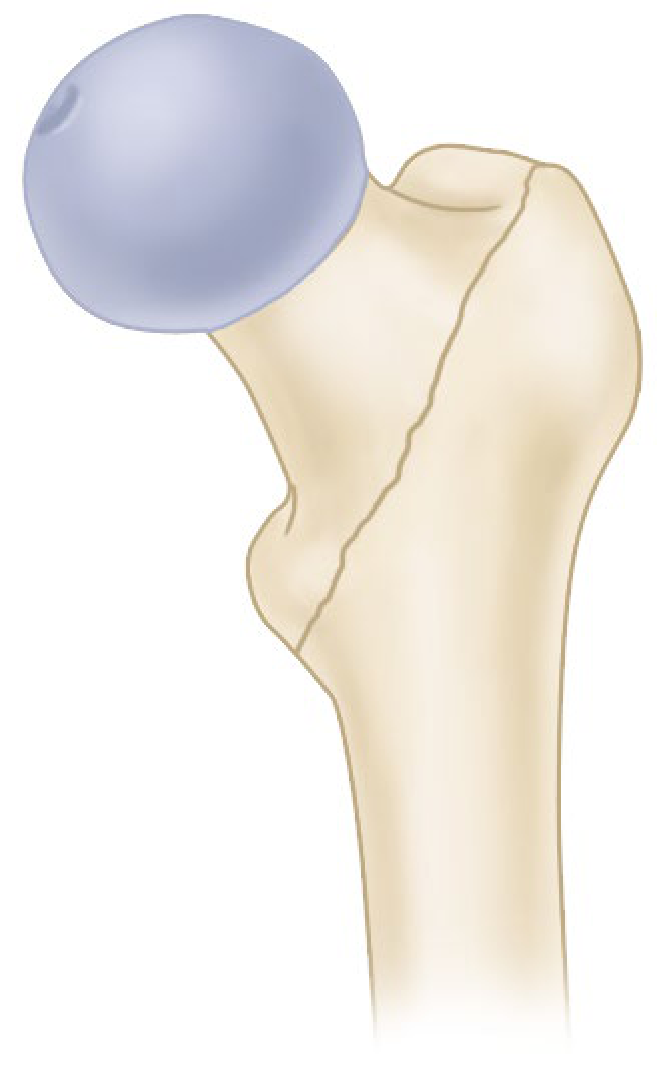
- Single fracture line running through the trochanters (intertrochanteric)
- Lateral wall intact
- Only two fragments; medial cortex interrupted in one place
- May be displaced or undisplaced
- Relatively stable - simpler to treat
31.A2 - Comminuted Fracture (Potentially Unstable)
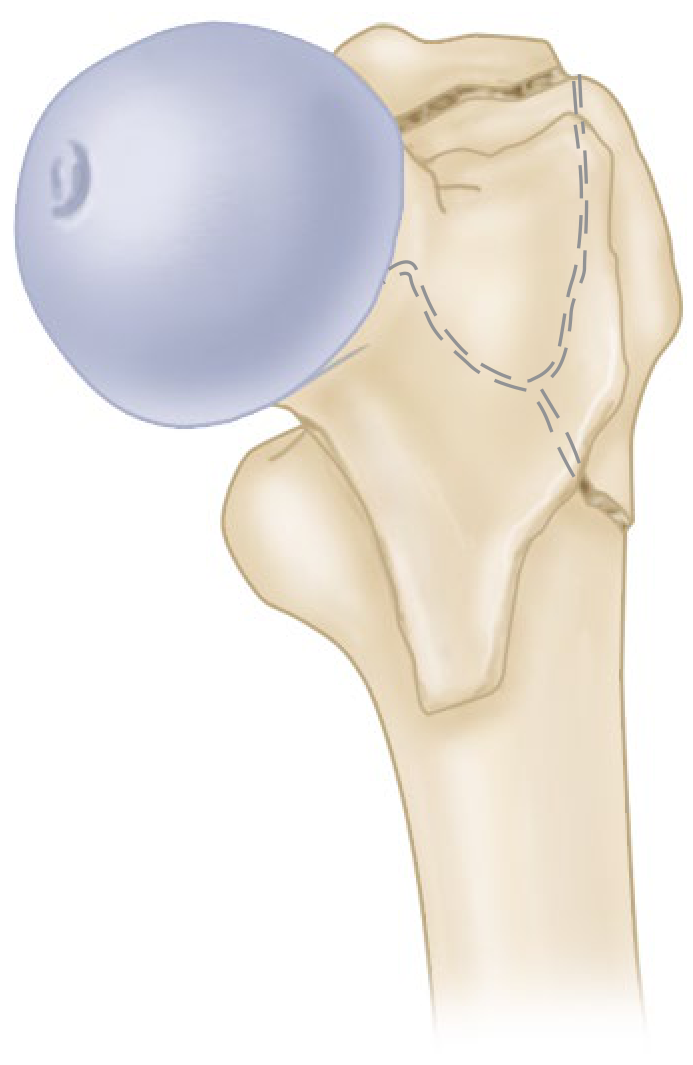
- Main fracture line through trochanters
- Lateral wall essentially intact but coronal fragments at greater trochanter level (posterior and/or anterior)
- Lesser trochanter is detached from the shaft and femoral head fragment
- Minimum 3-4 main parts
- Termed "unstable trochanteric fracture"
31.A3 - Reverse Oblique or Transverse (Highly Unstable)
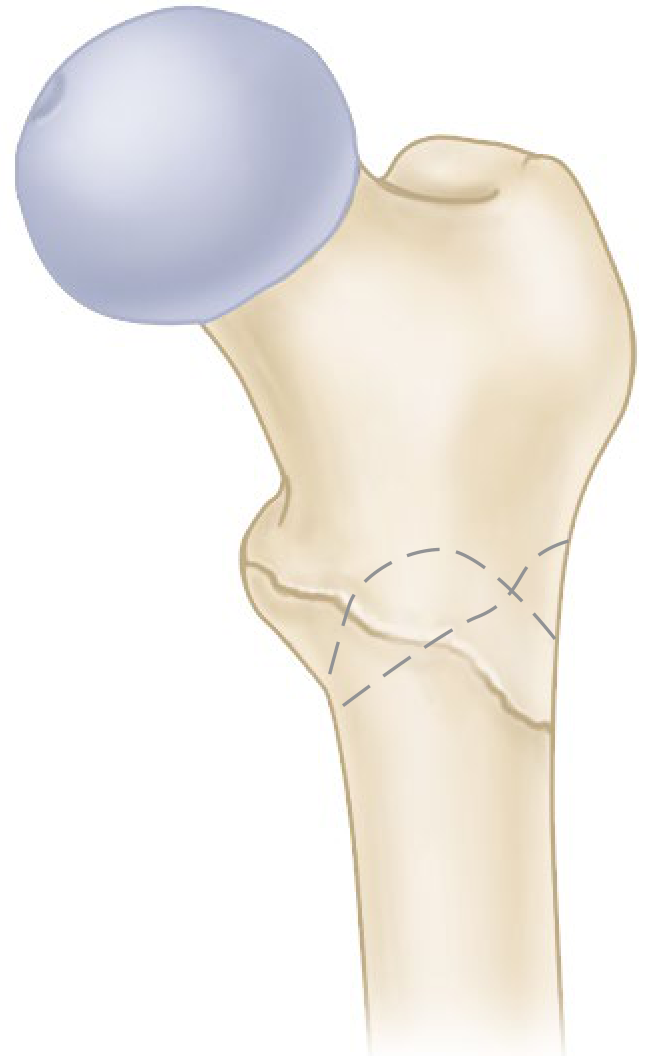
- Fracture line runs from lesser trochanter to the lateral cortex (reverse oblique) OR transverse
- Lateral wall is unstable
- May extend into the subtrochanteric region
- Most challenging to treat; highest failure rates with extramedullary implants
Boyd and Griffin Classification (Historical, still referenced)
| Type | Description |
|---|---|
| Type 1 | Simple two-part intertrochanteric fracture line only |
| Type 2 | Comminuted fracture with secondary fracture lines (may include coronal fracture seen on lateral view) |
| Type 3 | Fractures extending to or distal to the lesser trochanter |
| Type 4 | Fractures of the trochanteric region and proximal shaft with fractures in at least two planes |
Concept of Lateral Wall Integrity
The lateral wall is the lateral cortex of the femur where the cortical bone column narrows and passes into the greater trochanter. Its integrity is critical for surgical planning:
- An intact lateral wall (A1, A2) allows use of a sliding hip screw
- A compromised lateral wall (A3, some A2) mandates a cephalomedullary nail
5. Associated Injuries
In approximately 4% of patients, an associated fracture will be present:
| Associated Fracture | Frequency |
|---|---|
| Ipsilateral distal radius fracture | ~2% |
| Ipsilateral proximal humerus fracture | ~1% |
| Head trauma | 21% have severity justifying CT head |
| Pubic rami / pelvic ring injuries | Uncommon |
| Contralateral hip fracture | Up to 1 in 3 patients within 1.5 years |
Note: Head trauma must be actively excluded in all hip fracture patients. CT of the head is warranted in 21% of low-energy fracture patients.
6. Signs and Symptoms
Symptoms:
- Acute pain around the hip and thigh
- Inability to stand or walk (inability to bear weight)
- Pain may radiate to the ipsilateral knee
- History of a fall (usually from standing height in the elderly)
Clinical Signs on Examination:
| Sign | Significance |
|---|---|
| Shortened limb | Displacement with proximal migration of the distal fragment |
| Externally rotated limb | Muscle deforming forces; very characteristic in displaced fractures |
| Bruising/hematoma around hip | Extracapsular location allows blood tracking subcutaneously |
| Tenderness over the greater trochanter | Direct palpation |
| Inability to straight leg raise | Pain inhibition |
| Painful or impossible passive range of motion | X-ray should be taken BEFORE manipulation |
| Axial compression pain | May be the only sign in non-displaced fractures |
Key point: In a non-displaced fracture, the classic shortening and external rotation may be absent. Axial compression pain along the limb axis is then the key diagnostic clue.
7. Investigations and Evaluation
Step 1 - Plain Radiographs (First-Line)
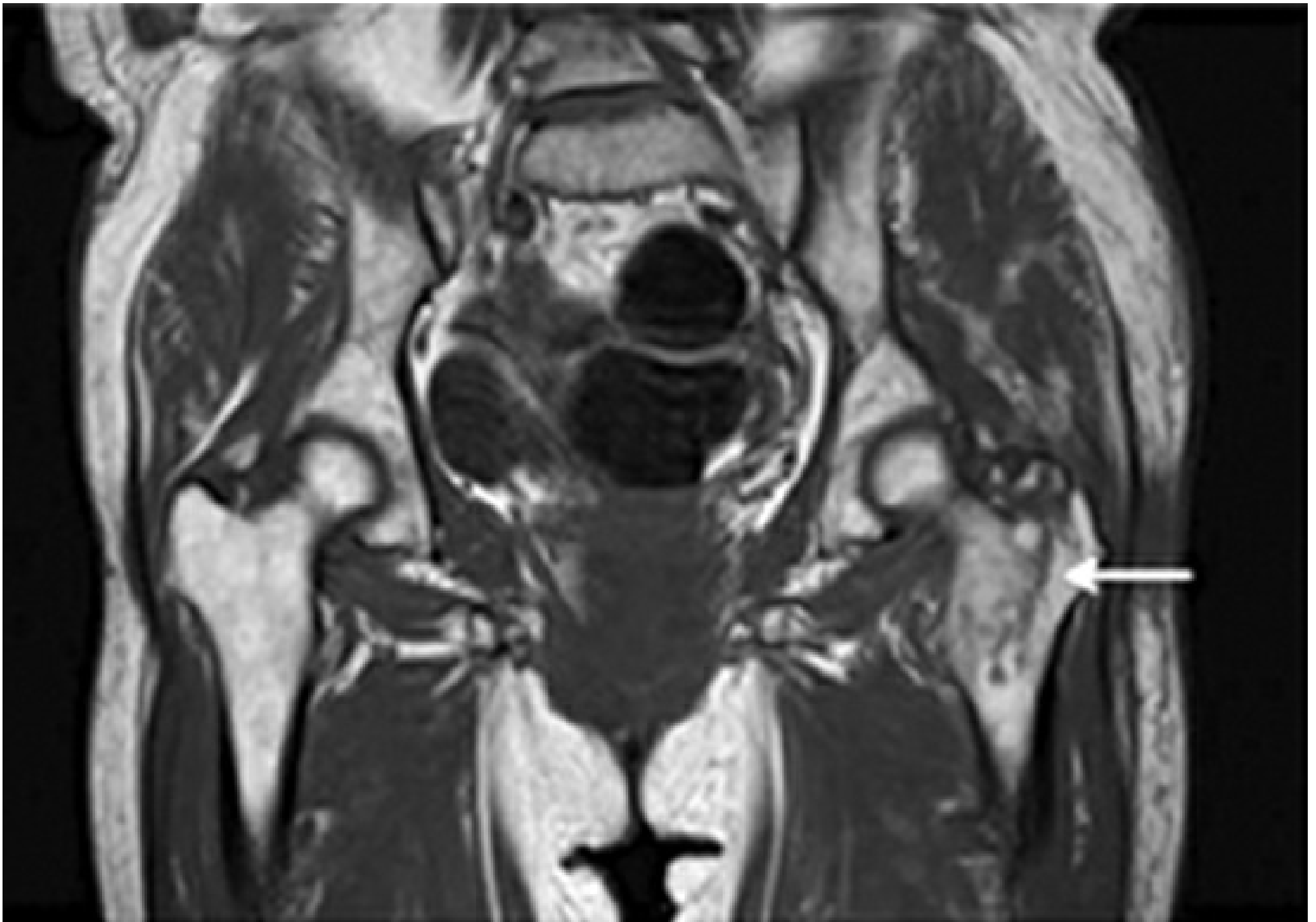
Standard views:
- AP pelvis (must include both hips): confirms diagnosis; the non-injured hip helps plan reduction, assess varus and leg length
- Lateral hip X-ray: reveals excessive displacement, angulation, and coronal fracture lines - critical for operative planning
- 10-degree internal rotation AP: can unmask subtle fractures not seen on routine AP
Additional views:
- Traction view: evaluates pathologic lesion, lateral wall status, and fracture comminution
Step 2 - Advanced Imaging (If Diagnosis Uncertain)
| Modality | Role |
|---|---|
| MRI (Gold Standard) | Best for occult fractures; shows incomplete fractures, bone bruising, soft tissue injury |
| CT scan | Practical alternative when MRI unavailable; no IV contrast needed; also shows incomplete fractures and local tissue damage |
| CT-specific advantage | Better defines comminution, coronal fracture lines, and lateral wall integrity for surgical planning |
Occult fractures: If plain X-rays are non-diagnostic but clinical suspicion remains, MRI is the investigation of choice. If MRI is unavailable, CT without contrast is the practical alternative.
Step 3 - Laboratory Investigations
- FBC (hemoglobin baseline, pre-operative)
- U&E, creatinine (renal function, fluid status)
- Clotting screen (anticoagulant medications)
- Bone profile (calcium, phosphate, ALP - screen for metabolic bone disease)
- Vitamin D and PTH levels
- Group and save / crossmatch
- ECG and Chest X-ray (pre-operative assessment)
- DEXA scan (post-fracture osteoporosis workup)
Step 4 - Medical History Priorities
- Pre-injury walking status and use of walking aids
- Living situation (independent vs. assisted living)
- Nutritional status
- Cognitive function
- History of prior fractures or hip surgery
- Presence of malignancy (isolated lesser trochanter fracture in a younger patient is a red flag for metastatic disease)
8. Treatment
A. Nonoperative Treatment (Rare Indications)
Nonoperative care is the exception, used only in rare circumstances:
Indications for conservative treatment:
- Undisplaced or incomplete fissure/crack fractures (detected on CT or MRI) in physically active persons
- Non-ambulatory patients where adequate pain control can be achieved without surgery
- Isolated, non-displaced greater trochanter fractures (displaced >1 cm may need tension band wiring)
- Isolated lesser trochanter fractures without tumor (if pathologic - urgent operative fixation with IM nail)
- Patient refusal or inability to tolerate surgery
Nonoperative methods:
- Skin traction (tapes to the affected leg)
- Skeletal traction (pin through proximal tibia or distal femur) - maintained for 4-8 weeks
- Analgesia
Complications of conservative management:
- Varus or valgus malunion
- Limb shortening
- Loss of muscle mass
- Prolonged hospital stay
- Thrombosis, pneumonia, pressure sores
- Nonunion
B. Operative Treatment (Standard of Care for A1, A2, A3)
Goal: Early stable fixation to allow immediate mobilization.
Timing: Surgery should be performed within 24-48 hours of admission (after medical optimization).
Preoperative planning includes:
- Analgesia (acetaminophen, opioids as needed; nerve blocks e.g., fascia iliaca block)
- Anesthesia and geriatric/medical consultation
- Thrombosis prophylaxis (LMWH or alternatives)
- Assessment of nutritional status, cognitive function, pre-injury mobility
Implant Selection Based on Fracture Type
1. Sliding Hip Screw (SHS) / Dynamic Hip Screw (DHS)
Indications: Stable fractures (A1), and selected A2 fractures with intact lateral wall
Mechanism: A lag screw slides within a barrel on a side plate, allowing controlled collapse at the fracture site as the patient bears weight - promotes biological healing.
Technique:
- Lateral approach to the femur
- Guidewire placed into femoral head in central-low position on AP, central on lateral
- Reaming of the femoral neck and head
- Insertion of the lag screw with barrel over it
- Side plate fixed to the femoral shaft (2, 4, or more holes)
Avoid in A3 fractures - reverse oblique pattern means controlled collapse causes medialization of the shaft away from the head, leading to fixation failure.
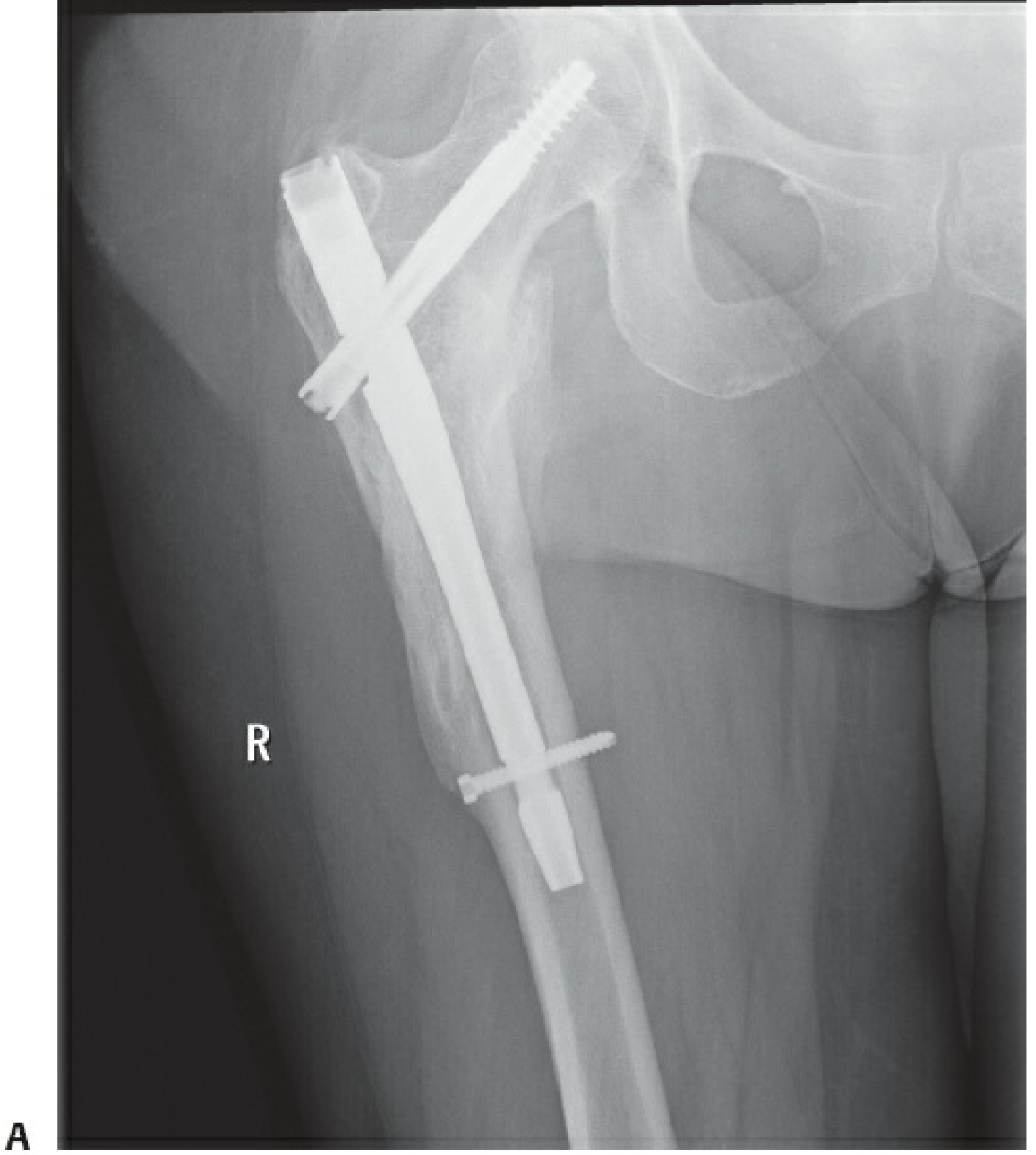
2. Cephalomedullary Nail (CMN) / Intramedullary Nail
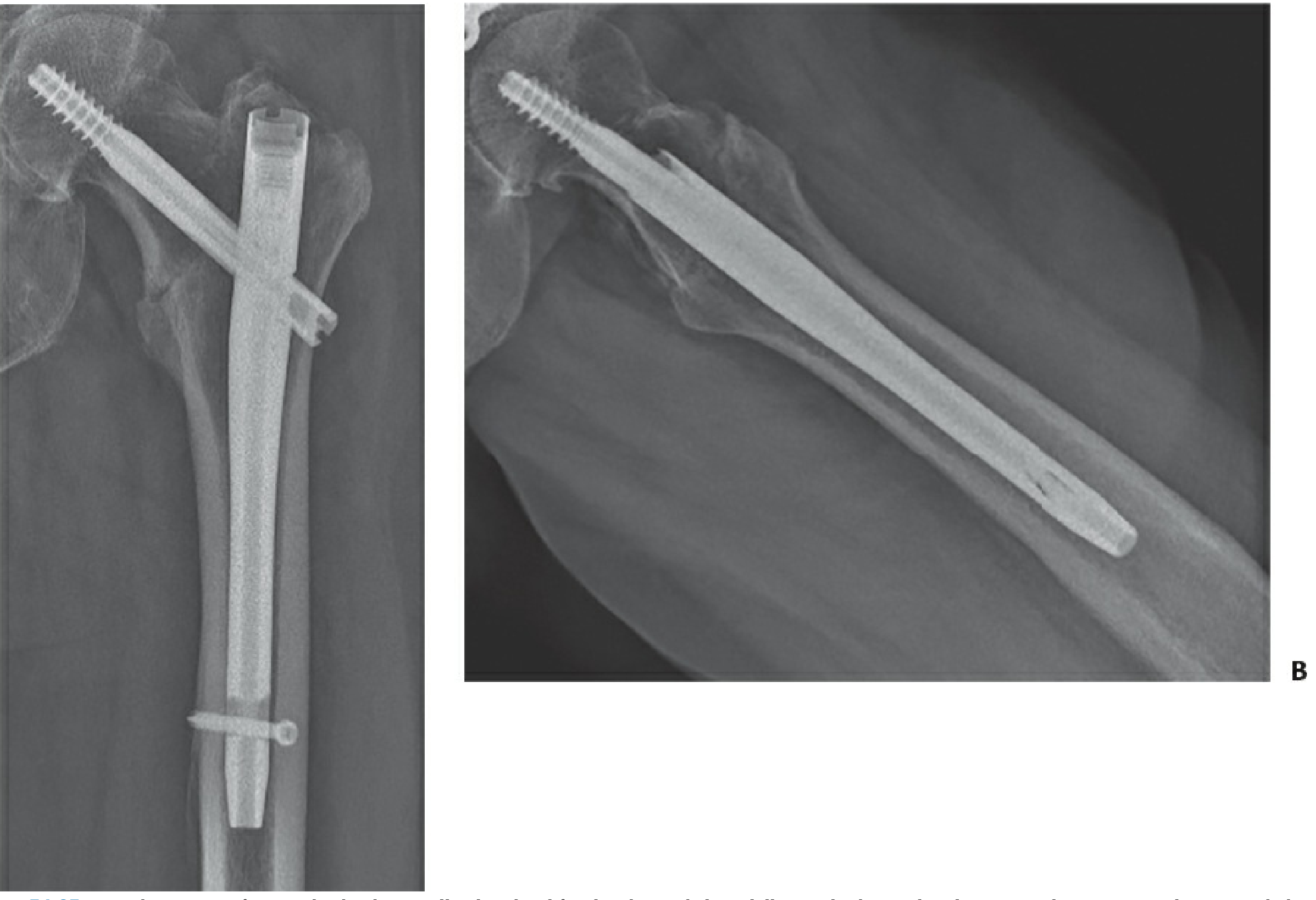
Indications:
- Unstable fractures A2 and A3 (modern implant of choice)
- A3 reverse oblique/transverse fractures
- Any fracture with lateral wall compromise
- Subtrochanteric extension
Advantages over SHS in unstable fractures:
- Reduced fracture collapse and shaft medialization
- Lower reoperation rates in A2 and A3 fractures
- Slightly lower mortality in some registry studies
- Better mobility outcomes with minimally invasive designs
Components: Intramedullary nail inserted through the piriform fossa or tip of the greater trochanter + lag screw(s) or blade into the femoral head
Nail length:
- Short nail (~200 mm): adequate for fractures with extension no further than 3 cm below the trochanteric region
- Long nail: required if fracture extends below the lesser trochanter
Locking:
- Static distal locking: provides length-stable rigid construct
- Dynamic distal locking: allows longitudinal compression; preferred for transverse fractures
- All short nails must be locked distally
3. Proximal Femoral Locking Plate
- Rarely indicated for primary trochanteric fractures
- Static fixation - no opportunity for collapse
- High failure rates reported
- Possible role in periprosthetic fractures or young patients with complex fractures and good bone stock
4. Hemiarthroplasty / Total Hip Arthroplasty
- Uncommon for primary trochanteric fractures
- May be considered in failed internal fixation or pathologic fractures through the trochanteric region
- More commonly used for femoral neck (intracapsular) fractures
Surgical Decision Algorithm
Trochanteric Fracture Confirmed
         |
    ┌────┴────┐
Displaced?   Non-displaced
    |              |
  Stable?      Conservative
   (A1)         (watch)
    |
 Lateral wall
  intact?
    |         |
   YES        NO
    |          |
   SHS/DHS   CMN
    |
  A2 fracture?
    |
 Lateral wall
  still intact?
    |         |
  SHS OK    CMN preferred
    |
  A3 fracture?
    ↓
  ALWAYS CMN
Postoperative Management
- Immediate full weight-bearing as tolerated (goal in all patients)
- Physiotherapy and early mobilization from day 1 post-op
- Thromboprophylaxis (LMWH) for minimum 4 weeks
- Pressure area care, nutrition support, delirium prevention
- Osteoporosis treatment - bisphosphonates, denosumab, or teriparatide initiated at discharge
- Vitamin D and calcium supplementation
- Falls prevention assessment and intervention
- DEXA scan within 3 months
9. Complications
Intraoperative / Early:
- Excessive blood loss
- Iatrogenic fracture (nail insertion)
Late / Implant-Related:
| Complication | Description |
|---|---|
| Cut-out | Lag screw cuts through the femoral head - most common failure mode; related to poor tip-apex distance (TAD >25 mm) |
| Cut-in phenomenon | Medial migration of the screw through the femoral head into the joint |
| Varus collapse | Loss of reduction with progressive varus deformity |
| Refracture around implant | Periprosthetic or peri-implant fracture |
| Implant breakage | Rare; usually from non-union with cyclical loading |
| Nonunion | ~2-5%; more common in A3 patterns |
| Malunion | Varus/valgus with leg shortening |
| AVN of femoral head | Rare (extracapsular location mostly preserves blood supply) |
| Wound sepsis | Risk reduced with antibiotic prophylaxis |
10. Summary
| Aspect | Key Points |
|---|---|
| Incidence | ~50% of proximal femur fractures; 4.5 million/year by 2050 |
| Typical patient | Female, age ~80, osteoporotic, fall from standing |
| Mechanism | Direct blow to greater trochanter in low-energy fall; deforming forces cause shortening + external rotation |
| Classification | AO/OTA: A1 (stable), A2 (unstable, comminuted), A3 (reverse oblique, highly unstable) |
| Associated injuries | 4% have another fracture; 21% may have head trauma |
| Key symptom | Acute hip pain, inability to weight-bear; shortened + externally rotated leg |
| Investigation | AP pelvis + lateral hip X-ray first; MRI for occult fractures |
| Treatment | Operative fixation is standard; SHS for stable A1, CMN for unstable A2/A3 |
| Goal | Same-day or next-day surgery; immediate weight-bearing; early rehabilitation |
| Prognosis | 20-25% mortality at 1 year; 30-50% lose functional independence |
Sources: Rockwood and Green's Fractures in Adults, 10th Ed. 2025 (Heetveld & Flikweert); Campbell's Operative Orthopaedics, 15th Ed. 2026This comprehensive review covers all aspects of trochanteric fractures based on Rockwood and Green's Fractures in Adults (10th Ed. 2025) and Campbell's Operative Orthopaedics (15th Ed. 2026). Here is a quick summary of what was covered:
Key Takeaways:
-
Etiology - Primarily osteoporosis + fall from standing height in elderly women (mean age ~80); high-energy mechanisms in young patients
-
Mechanism - Direct impact to the greater trochanter causes the fracture; deforming muscle forces (gluteals + iliopsoas) produce the classic shortened, externally rotated limb
-
Classification (AO/OTA):
- 31.A1 - Simple 2-part, stable, intact lateral wall
- 31.A2 - Comminuted, unstable, detached lesser trochanter
- 31.A3 - Reverse oblique/transverse, highly unstable, lateral wall disrupted
-
Associated injuries - ~4% have another fracture (wrist 2%, humerus 1%); always screen for head trauma (21% warrant CT head)
-
Signs - Hip pain + inability to weight bear; shortened, externally rotated limb (absent in non-displaced fractures - look for axial compression pain)
-
Investigations - AP pelvis + lateral hip X-ray; MRI for occult fractures; CT as alternative; full pre-op labs
-
Treatment:
- A1: Sliding Hip Screw (DHS)
- A2/A3: Cephalomedullary nail (modern standard)
- Goal is same-day or next-day surgery with immediate post-op weight-bearing
This is a shared conversation. Sign in to Orris to start your own chat.