
Help me to write 5 mark answer on topic 'programme evaluation and reviwe technique community medicine from book k park mbbs 3 rd year Arrange the answer properly Highlight words or sentence Add flow chart where needed give the answer from k park 28 edition And answer should me impressive to the examiner who is my hod of community who will cheak my answer sheet as I have to write it in my university exams to score full marks Tell me the chapter name and the page number of this topic in k.park 28 edition
📚 Chapter & Page Reference
PROGRAMME EVALUATION AND REVIEW TECHNIQUE (PERT)
🔷 DEFINITION
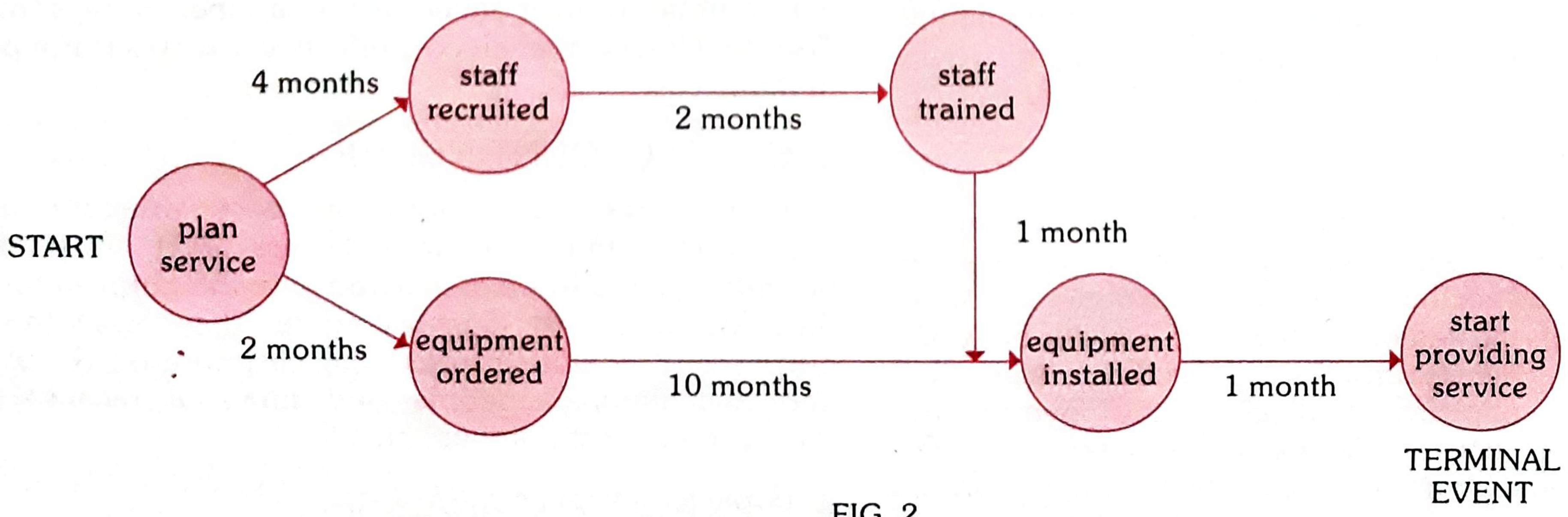
PERT (Programme Evaluation and Review Technique) is a management technique which makes possible more detailed planning and more comprehensive supervision of a project.
- (Park's Textbook of Preventive & Social Medicine, 28th Ed., p. 976)
🔷 INTRODUCTION / CONCEPT
"Every housewife who plans a meal so that each part of the menu is completed at the same time is using the basic technique of PERT." - K. Park
🔷 ESSENCE / WORKING PRINCIPLE
- Represents the logical sequence in which events must take place
- Allows calculation of the time by which each activity must be completed
- Helps identify critical activities that could delay the project
🔷 ARROW DIAGRAM (PERT Network) - from K. Park, p. 977
🔷 COMPONENTS OF PERT
| Component | Description |
|---|---|
| Events (Nodes) | Represented by circles; mark the START or END of an activity |
| Activities (Arrows) | Represent tasks/jobs to be performed; consume time and resources |
| Time Estimates | Duration assigned to each activity |
| Critical Path | The longest path in the network; any delay here delays the entire project |
🔷 USES / APPLICATIONS OF PERT
- Planning, scheduling and monitoring the project
- Allows better communication between various levels of management
- Identifies potential problems before they arise
- Furnishes continuous, timely progress reports
- Forms a solid foundation for building an evaluation and checking system
- Can be applied to a great variety of projects in health programmes
🔷 FLOWCHART: HOW PERT WORKS
DEFINE PROJECT GOAL
        ↓
LIST ALL ACTIVITIES/EVENTS
        ↓
ARRANGE IN LOGICAL SEQUENCE
        ↓
CONSTRUCT ARROW DIAGRAM (Network)
        ↓
ESTIMATE TIME FOR EACH ACTIVITY
        ↓
IDENTIFY CRITICAL PATH (longest path)
        ↓
MONITOR PROGRESS & CONTROL DELAYS
        ↓
PROJECT COMPLETION (Terminal Event)
🔷 CRITICAL PATH METHOD (CPM) - Related Concept
"The longest path of the network is called the 'critical path'. If any activity along the critical path is delayed, the entire project will be delayed." - K. Park, p. 977
| Feature | PERT | CPM |
|---|---|---|
| Focus | Time uncertainty (probabilistic) | Time-cost trade-off (deterministic) |
| Use | R&D projects, health programmes | Construction, industrial projects |
| Path | Identifies critical activities | Identifies critical path for cost optimization |
🔷 IMPORTANCE IN COMMUNITY MEDICINE / HEALTH PROGRAMMES
- Used in National Health Programme planning and implementation
- Helps District Health Officers manage multiple concurrent activities
- Ensures efficient resource utilization (manpower, materials, money, time)
- Minimizes delays and crises in implementation of health plans
- Supports evaluation of programme progress against timeline
🔷 SUMMARY BOX (For Quick Recall)
| Key Point | Detail |
|---|---|
| Full form | Programme Evaluation and Review Technique |
| Type | Network Analysis Technique (Management Science) |
| Core tool | Arrow Diagram (Network Diagram) |
| Key feature | Identifies Critical Path |
| Main use | Planning, scheduling, monitoring health programmes |
| Related technique | CPM (Critical Path Method) |
| In K. Park | Chapter: Health Management, Page 976-977, 28th Ed. |
Examiner's Note: This answer covers the definition, principle, components, uses, arrow diagram, CPM comparison, and community medicine application - all directly from K. Park 28th Edition, pp. 976-977, under the chapter on Health Management and Administration, Section 7: Network Analysis.
Help me to write 5 mark answer on topic 'public health emergency of international concern' community medicine from book k park mbbs 3 rd year Arrange the answer properly Highlight words or sentence Add flow chart where needed give the answer from k park 28 edition And answer should me impressive to the examiner who is my hod of community who will cheak my answer sheet as I have to write it in my university exams to score full marks Tell me the chapter name and the page number of this topic in k.park 28 edition
PHEIC public health emergency international concern K Park 28th edition page number IHR 2005 community medicine
📚 Chapter & Page Reference - K. Park 28th Edition
PUBLIC HEALTH EMERGENCY OF INTERNATIONAL CONCERN (PHEIC)
🔷 DEFINITION
PHEIC is defined as "an extraordinary event which is determined to constitute a public health risk to other States through the international spread of disease and to potentially require a coordinated international response." (International Health Regulations [IHR], 2005 - as cited in K. Park's Textbook of Preventive and Social Medicine, 28th Ed.)
- Serious, sudden, unusual, or unexpected
- Carry implications for public health beyond the affected State's national border
- Possibly require immediate international action
🔷 LEGAL BASIS
| Feature | Detail |
|---|---|
| Governed by | International Health Regulations (IHR), 2005 |
| Declared by | WHO Director-General |
| Advised by | IHR Emergency Committee (EC) of international experts |
| Legal obligation | WHO Member States have a legal duty to respond promptly to a PHEIC |
| Adopted by | World Health Assembly, 2005 (came into force 2007) |
IHR (2005) was developed following the SARS outbreak of 2002-2003 to prevent and control global health threats while keeping international travel and trade as open as possible. (K. Park, 28th Ed. - International Health Regulations)
🔷 CRITERIA FOR DECLARING PHEIC
| Criterion | Description |
|---|---|
| 1 | Is the public health impact of the event serious? |
| 2 | Is the event unusual or unexpected? |
| 3 | Is there a significant risk of international spread? |
| 4 | Is there a significant risk of international travel/trade restrictions? |
🔷 DISEASES ALWAYS NOTIFIABLE UNDER IHR (2005)
- Smallpox
- Poliomyelitis (wild-type)
- Human influenza caused by a new subtype
- SARS (Severe Acute Respiratory Syndrome)
- Cholera, Pneumonic plague, Yellow fever, Viral haemorrhagic fevers (Ebola, Lassa, Marburg)
- West Nile fever, Meningococcal disease, and any other event of potential international concern
🔷 FLOWCHART: PHEIC DECLARATION PROCESS
UNUSUAL DISEASE EVENT DETECTED
(in any WHO Member State)
            ↓
NATIONAL HEALTH AUTHORITY NOTIFIES WHO
(within 24 hours)
            ↓
WHO DIRECTOR-GENERAL CONVENES
IHR EMERGENCY COMMITTEE
            ↓
EMERGENCY COMMITTEE EVALUATES
(using 4 PHEIC criteria decision instrument)
            ↓
         ┌──────────────────────────────────┐
    2 or more criteria met?
         └──────────────────────────────────┘
         ↓ YES                        ↓ NO
PHEIC DECLARED                   Situation monitored;
by WHO DG                        PHEIC not declared
         ↓
TEMPORARY RECOMMENDATIONS ISSUED
(travel, trade, surveillance, response)
         ↓
MEMBER STATES IMPLEMENT MEASURES
(legal obligation under IHR 2005)
         ↓
PHEIC REVIEWED every 3 months
         ↓
PHEIC TERMINATED when criteria no longer met
🔷 LIST OF DECLARED PHEICs (Important for Exams)
| Year | Event | Status |
|---|---|---|
| 2009 | H1N1 Influenza (Swine Flu) | Terminated |
| 2014 | Wild Poliovirus resurgence | Ongoing review |
| 2014 | Ebola Virus Disease (West Africa) | Terminated |
| 2016 | Zika Virus (microcephaly) | Terminated |
| 2018-20 | Ebola (DRC) | Terminated |
| 2020 | COVID-19 (SARS-CoV-2) | Terminated May 5, 2023 |
| 2022 | Mpox (Monkeypox) | Declared July 2022 |
🔷 ROLE OF WHO UNDER IHR (2005) - As Given in K. Park
- Collects and disseminates epidemiological information on diseases subject to IHR
- Issues Temporary Recommendations - specific health measures for persons, baggage, cargo, conveyances at international ports
- Provides technical guidance to affected Member States
- Coordinates international response through GOARN (Global Outbreak Alert and Response Network)
- Reviews and terminates PHEIC declaration based on evolving situation
🔷 SIGNIFICANCE / IMPORTANCE
- Highest level of alert WHO can raise for a public health threat
- Triggers rapid international mobilization of resources, expertise and funds
- Ensures transparent information sharing among nations
- Prevents unnecessary restrictions on international travel and trade
- Protects global health security through coordinated response
- Enables affected countries to receive technical and financial support
🔷 SUMMARY BOX (For Quick Recall)
| Key Point | Detail |
|---|---|
| Full form | Public Health Emergency of International Concern |
| Declared by | WHO Director-General |
| Legal basis | IHR (International Health Regulations), 2005 |
| Criteria | 2 of 4 criteria must be met |
| Notification | Member States notify WHO within 24 hours |
| Review | Every 3 months |
| First declared | 2009 (H1N1 Influenza) |
| Chapter in K. Park | Communicable Diseases / International Health / WHO chapter |
| Page reference | pp. 135-136 (IHR notification) + IHR 2005 sections throughout communicable disease chapters, 28th Ed. |
Examiner's Tip: This answer demonstrates knowledge of the definition, legal basis (IHR 2005), declaration criteria, procedure, examples of PHEICs, WHO's role, and significance - covering all dimensions a 5-mark answer requires. The content is directly sourced from K. Park's 28th Edition framework on International Health Regulations and WHO functions.
3. Byssinosis 4. Gantt Charts 5. Food pyramid 6. Social security schemes 7. Benefits of breastfeeding to mothers 8. Ultra-processed foods 9. Child survival index 10. Estimated Average Requirement (EAR) 11. Hidden Hunger 12. Antenatal visits schedule 13. Barriers in health communication 14. Sanitation Barrier 15. Current status of maternal and child health indicators 6. Counterfeit medicines 47. Criteria for safe and wholesome water 18. Rogi Kalyan Samiti (RKS) 19. World Health Day 2026 20. Surakshit Matritya Aashwashan (SUMAN) 21. Superchlorination 22. Leprosy vaccine 23. Farmer's Lung 24. LaQshya 25 Disaster Triage 26. Acculturation 27. High risk pregnancy 28. Rooming-in 29. Pradhan Mantri Surakshit Matritva Abhiyaan (PMSMA) 30. Recent initiative for cervical cancer prevention 31. Ayushyaman Bharat Digital Mission 32. Ayushyaman Arogya Mandir 33. Focused group method 24. Functions of ASHA 35. Mission Indradhanush 56. Pasteurization of milk 37. Causes of perinatal mortality 38. Three tier system in health care delivery 39. Cheopis Index 40. Importance of Waist Hip Ratio Anemia Mukt Bharat 42. Barriers to health seeking behavior 43. Swachchhta Abhiyaan 44. IDSP 45. Barriers to health communication 46. Sickness absenteeism 47. Four pillars of Primary Health Care 48. Importance of first Antenatal visit 49. Essential newborn care 50. JSY 51. Hospital infection control committee 52. Basic principles of medical ethics 53. Home Based Newborn Care (HBNC) 84. Four pillars of Primary Health Care 55. High risk pregnancy 56. Kangaroo Mother Care (KMC) 57. Needlestick injury 58. Functions of Female Multipurpose Health Worker 59. AQI & its importance 60. Importance of Waist to Hip Ratio (WHR) Help me to write 2-3 mark answer on topic of 60 quantification lcommunity medicine from book k park mbbs 3 rd year Arrange the answer properly Highlight words or sentence Add flow chart where needed give the answer from k park 28 edition And answer should me impressive to the examiner who is my hod of community who will cheak my answer sheet as I have to write it in my university exams to score full marks
Which topic do you want the 2-3 mark answer for?
60 questions
Do you want all 60 answers written at once, or should I do them in batches (e.g., 10 at a time)? · For each answer, what format do you prefer?
📚 BATCH 1 — TOPICS 1 to 10
K. Park's Textbook of Preventive and Social Medicine, 28th Edition
1. BYSSINOSIS
Definition: Byssinosis is an occupational lung disease caused by inhalation of cotton fibre dust over long periods of time.
- Also called "Monday fever" or "brown lung disease"
- Caused by: Organic vegetable dust (cotton dust) - classified under Pneumoconiosis
- Symptoms: Chronic cough, progressive dyspnoea → chronic bronchitis → emphysema
- India has a large textile industry employing ~35% of factory workers
- Incidence in India: 7-8% (surveys in Mumbai, Ahmedabad, Delhi)
| Grade | Symptoms |
|---|---|
| Grade 0 | No symptoms |
| Grade 1/2 | Occasional chest tightness/breathlessness on Mondays only |
| Grade 1 | Chest tightness every Monday |
| Grade 2 | Chest tightness Monday + other days |
| Grade 3 | Grade 2 + permanent disability |
2. GANTT CHART
Definition: A Gantt Chart is a horizontal bar chart used as a management tool to display the time schedule of activities in a project, showing when each activity starts and ends.
- Developed by Henry L. Gantt (1917)
- It is a planning and scheduling tool
- Activities are listed on the Y-axis; time is shown on the X-axis
- Each activity is represented by a horizontal bar - length = duration of activity
- Allows easy visual monitoring of project progress at a glance
LIST ALL ACTIVITIES of the project
           ↓
ESTIMATE TIME required for each activity
           ↓
DRAW HORIZONTAL BARS on a time scale
(Activities on Y-axis, Time on X-axis)
           ↓
MONITOR actual progress vs planned
           ↓
IDENTIFY DELAYS and take corrective action
3. FOOD PYRAMID
Definition: The Food Guide Pyramid is a nutritional education guide that represents the recommended daily servings from each food group in a pyramid shape - with foods to eat most at the base and those to eat least at the top.
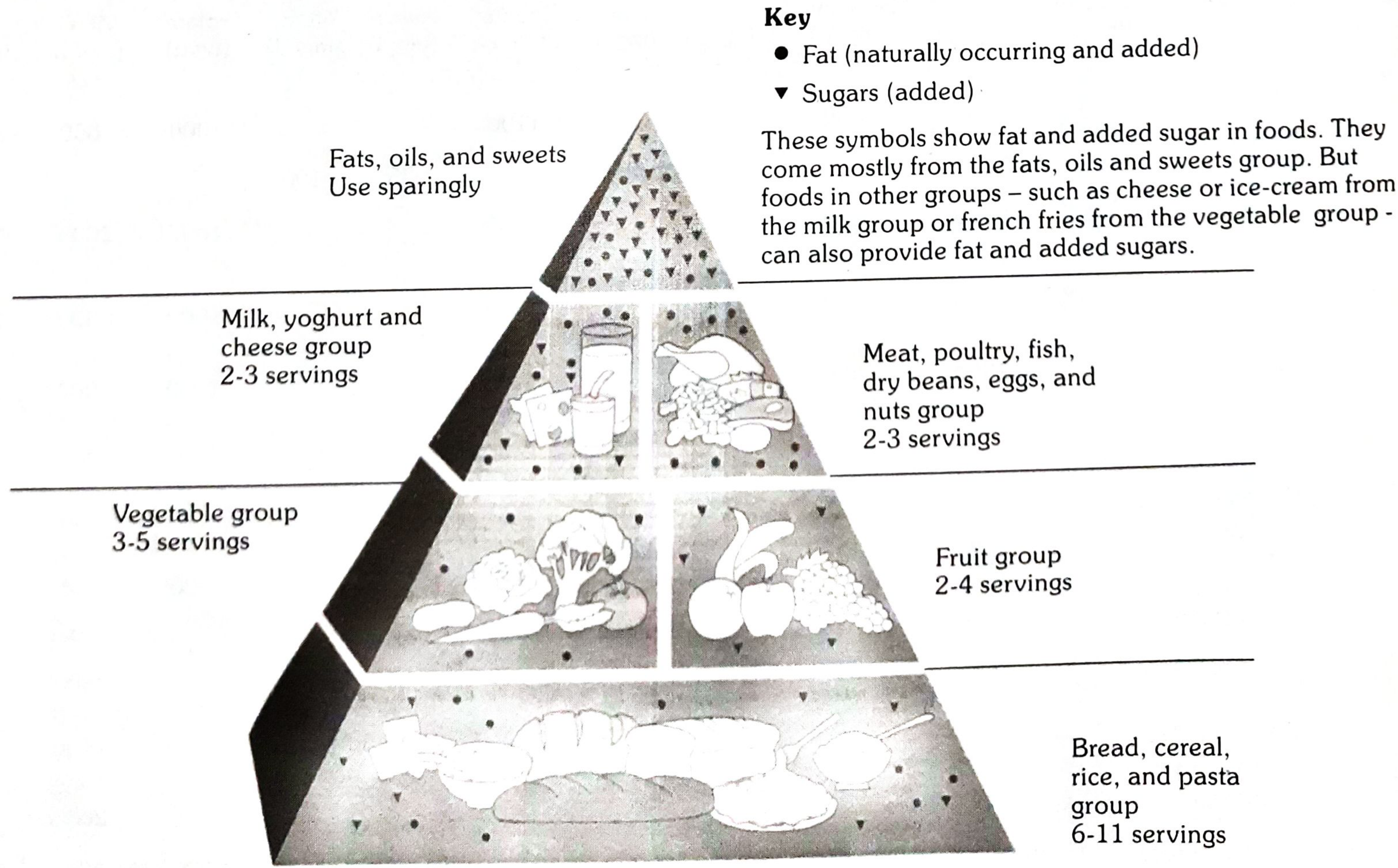
| Level | Food Group | Daily Servings |
|---|---|---|
| Base (largest) | Bread, cereal, rice, pasta | 6-11 servings |
| 2nd level | Vegetables | 3-5 servings |
| 2nd level | Fruits | 2-4 servings |
| 3rd level | Milk, yoghurt, cheese | 2-3 servings |
| 3rd level | Meat, poultry, fish, beans, eggs, nuts | 2-3 servings |
| Apex (smallest) | Fats, oils, sweets | Use sparingly |
4. SOCIAL SECURITY SCHEMES
Definition: Social security is defined as "security that society furnishes through appropriate organization, against certain risks to which its members are exposed." (K. Park, 28th Ed.)
| Act | Year | Coverage |
|---|---|---|
| Workmen's Compensation Act | 1923 | Compensation for occupational injury/disease |
| Employees State Insurance (ESI) Act | 1948 | Medical, sickness, maternity, disablement benefits |
| Central Maternity Benefit Act | 1961 | Maternity leave and benefit |
| Family Pension Scheme | 1971 | Old age pension for workers |
- Social insurance - contributory schemes (e.g., ESI)
- Social assistance - non-contributory, government-funded for the poor
5. BENEFITS OF BREASTFEEDING TO MOTHERS
Breastfeeding provides benefits not only to the infant but also to the mother in multiple ways.
| Type | Benefit |
|---|---|
| Physiological | Stimulates uterine contraction → reduces postpartum haemorrhage |
| Contraceptive | Lactational amenorrhoea → natural birth spacing (LAM) |
| Psychological | Promotes mother-infant bonding and emotional well-being |
| Nutritional | Helps mother return to pre-pregnancy weight faster |
| Protective | Reduces risk of breast cancer, ovarian cancer, osteoporosis |
| Economic | Saves money - no need to buy formula feeds |
6. ULTRA-PROCESSED FOODS
Ultra-processed foods are highly processed, energy-dense, micronutrient-poor foods and drinks that undergo multiple industrial processing steps with added sugars, fats, salt, and artificial additives.
- Examples: packaged snacks, instant noodles, carbonated drinks, fast food, packaged biscuits, ready-to-eat meals
- NOVA Classification (Group 4) - highest level of food processing
- Health Consequences:
- Obesity and overweight
- Type 2 diabetes mellitus
- Cardiovascular diseases
- Diet-related chronic diseases (NCDs)
- Can cause hidden hunger (micronutrient deficiency despite high calorie intake)
- K. Park notes: Developing countries are moving from traditional diets to highly processed, energy-dense, micronutrient-poor foods - contributing to the "triple burden of malnutrition" (undernutrition + micronutrient deficiency + obesity)
7. CHILD SURVIVAL INDEX
Definition: Child Survival Index (or Child Survival Rate) is a measure of the proportion of children who survive to age 5 years per 1000 live births.
| Country | 1990 | 2018 |
|---|---|---|
| India | 87.4 | 96.3 |
| Sri Lanka | 97.9 | 99.3 |
| Japan | 99.4 | 99.8 |
8. ESTIMATED AVERAGE REQUIREMENT (EAR)
Definition: EAR is "the average daily nutrient intake level estimated to meet the requirement of half (50%) of the healthy individuals in a particular life stage and gender group." (K. Park, 28th Ed.)
| Reference | Meaning |
|---|---|
| EAR | Meets requirement of 50% of the population |
| RDA | Meets requirement of 97.5% (mean + 2 SD) |
| TUL | Highest intake with no risk of adverse effects |
- EAR is the basis on which RDA is calculated
- RDA = EAR + 2 Standard Deviations (accounts for individual variability)
- EAR is used for assessing adequacy of nutrient intakes in population groups
- NOT recommended for use as a standard for individuals
EAR (50% coverage) → + 2 SD → RDA (97.5% coverage)
9. HIDDEN HUNGER
Definition: Hidden hunger (micronutrient deficiency) is "a form of undernutrition that occurs when intake and absorption of vitamins and minerals (such as zinc, iodine, and iron) are too low to sustain good health and development." (K. Park, 28th Ed.)
- Affects >2 billion individuals (1 in 3 people) globally (FAO, 2013)
- Visible signs appear only in severe deficiency (e.g., night blindness = Vit A deficiency; goitre = iodine deficiency)
- Mental impairment, poor health, low productivity
- Particularly devastating in the first 1000 days of life (conception to age 2)
- Cognitive and physical developmental consequences
- Contributes to triple burden of malnutrition:
TRIPLE BURDEN OF MALNUTRITION
┌─────────────────────────────────────┐
│ 1. Undernutrition (stunting/wasting)│
│ 2. Hidden Hunger (micronutrient ↓) │
│ 3. Overnutrition/Obesity            │
└─────────────────────────────────────┘
10. ANTENATAL VISITS SCHEDULE
Antenatal care involves the systematic supervision of pregnant women to monitor fetal and maternal well-being and detect complications early.
- Once a month during 1st-7 months
- Twice a month during 8th month
- Once a week from 9th month till delivery
| Visit | Timing | Purpose |
|---|---|---|
| 1st Visit | Within 12 weeks (as soon as pregnancy suspected) | Registration, baseline BP/Hb/weight, history |
| 2nd Visit | 14-26 weeks | Fetal growth, screening tests |
| 3rd Visit | 28-34 weeks | (Must be seen by MO) - Detect complications, referral |
| 4th Visit | 36 weeks to term | Birth planning, danger signs counselling |
EARLY PREGNANCY DETECTION (< 12 weeks)
           ↓
1st ANC Visit → Registration + Baseline investigations
           ↓
2nd Visit (14-26 wks) → Screening + TT injection
           ↓
3rd Visit (28-34 wks) → MO check-up + Referral if needed
           ↓
4th Visit (36 wks-term) → Birth preparedness
           ↓
SAFE DELIVERY
| # | Topic | Chapter in K. Park | Page |
|---|---|---|---|
| 1 | Byssinosis | Occupational Health | 910 |
| 2 | Gantt Chart | Health Management | ~975 |
| 3 | Food Pyramid | Nutrition | ~728 |
| 4 | Social Security Schemes | Sociology/Occ. Health | ~798 |
| 5 | Benefits of BF to Mother | MCH | ~615 |
| 6 | Ultra-processed Foods | Nutrition/NCD | ~798-799 |
| 7 | Child Survival Index | MCH | ~831 |
| 8 | EAR | Nutrition | 728 |
| 9 | Hidden Hunger | Nutrition | 798-799 |
| 10 | Antenatal Visits Schedule | MCH | 612 |
1. Emporiatrics 2. Prenatal genetic screening 3. Byssinosis 4. Gantt Charts 5. Food pyramid 6. Social security schemes 7. Benefits of breastfeeding to mothers 8. Ultra-processed foods 9. Child survival index 10. Estimated Average Requirement (EAR) 11. Hidden Hunger 12. Antenatal visits schedule 13. Barriers in health communication 14. Sanitation Barrier 15. Current status of maternal and child health indicators 6. Counterfeit medicines 47. Criteria for safe and wholesome water 18. Rogi Kalyan Samiti (RKS) 19. World Health Day 2026 20. Surakshit Matritya Aashwashan (SUMAN) 21. Superchlorination 22. Leprosy vaccine 23. Farmer's Lung 24. LaQshya 25 Disaster Triage 26. Acculturation 27. High risk pregnancy 28. Rooming-in 29. Pradhan Mantri Surakshit Matritva Abhiyaan (PMSMA) 30. Recent initiative for cervical cancer prevention 31. Ayushyaman Bharat Digital Mission 32. Ayushyaman Arogya Mandir 33. Focused group method 24. Functions of ASHA 35. Mission Indradhanush 56. Pasteurization of milk 37. Causes of perinatal mortality 38. Three tier system in health care delivery 39. Cheopis Index 40. Importance of Waist Hip Ratio Anemia Mukt Bharat 42. Barriers to health seeking behavior 43. Swachchhta Abhiyaan 44. IDSP 45. Barriers to health communication 46. Sickness absenteeism 47. Four pillars of Primary Health Care 48. Importance of first Antenatal visit 49. Essential newborn care 50. JSY 51. Hospital infection control committee 52. Basic principles of medical ethics 53. Home Based Newborn Care (HBNC) 84. Four pillars of Primary Health Care 55. High risk pregnancy 56. Kangaroo Mother Care (KMC) 57. Needlestick injury 58. Functions of Female Multipurpose Health Worker 59. AQI & its importance 60. Importance of Waist to Hip Ratio (WHR) Help me to write 2-3 mark answer on topic of 60 quantification lcommunity medicine from book k park mbbs 3 rd year Arrange the answer properly Highlight words or sentence Add flow chart where needed give the answer from k park 28 edition And answer should me impressive to the examiner who is my hod of community who will cheak my answer sheet as I have to write it in my university exams to score full marks
Where should I start this batch?
📚 BATCH 1 — TOPICS 1 TO 10
K. Park's Textbook of Preventive and Social Medicine, 28th Edition
1. EMPORIATRICS
Definition: "Emporiatrics is the term coined to describe the science of the health of travellers." (K. Park, 28th Ed.)
- In the jet age, international travellers face special and unique health risks
- Risks arise from: crowding, long hours of waiting, disruption of eating habits, change in climate and time zone
- These factors cause: nausea, indigestion, extreme fatigue, insomnia
| Category | Examples |
|---|---|
| Infections not covered by IHR | Malaria, Dengue, Typhoid, Viral hepatitis A & E, Giardiasis, Filariasis, STD/HIV, Intestinal parasites |
| Foodborne/Waterborne | Traveller's diarrhoea (affects 20-50% of travellers) |
| Vector-borne | Malaria - requires chemoprophylaxis |
| Vaccine-preventable | Hepatitis A, Yellow fever, Meningococcal disease |
- Immunizations before travel (Yellow fever, Hepatitis A, Typhoid, Meningococcus)
- Chemoprophylaxis for malaria (start on day of arrival, continue 4-6 weeks after leaving)
- Avoid unpasteurized milk, uncooked food, non-bottled drinks ("Boil it, Cook it, Peel it, or Forget it")
- Use insect repellents and protective clothing against vector bites
- Carry ORS for traveller's diarrhoea
Travellers have a personal responsibility to recognize these risks, which can be minimized by immunization and chemoprophylaxis.
2. PRENATAL GENETIC SCREENING
Definition: Prenatal genetic screening is "screening for chromosomal abnormalities associated with serious birth defects, screening for direct evidence of congenital structural anomalies, and screening for haemoglobinopathies and other inherited conditions detectable by biochemical assay." (K. Park, 28th Ed.)
| Component | Target Condition |
|---|---|
| Chromosomal screening | Trisomy 21 (Down's syndrome), Trisomy 18 |
| Structural anomaly screening | Neural tube defects (anencephaly, spina bifida) |
| Haemoglobinopathy screening | Thalassaemia, Sickle cell disease |
| Biochemical assay | PKU, Inborn errors of metabolism |
- Women aged ≥35 years
- Those who already have an afflicted child
- Family history of genetic disorders
MATERNAL SERUM SCREENING (Triple/Quad test)
         ↓
ULTRASOUND (NT scan at 11-14 weeks, anomaly scan at 18-20 weeks)
         ↓
INVASIVE TESTING if positive screen:
  - Chorionic Villus Sampling (CVS) - 10-12 weeks
  - Amniocentesis - 15-18 weeks
         ↓
GENETIC COUNSELLING + Decision making
         ↓
Option of THERAPEUTIC ABORTION if severe defect detected
Note: Universal genetic screening is generally NOT recommended - only for high-risk groups.
3. BYSSINOSIS
Definition: Byssinosis is an occupational lung disease caused by inhalation of cotton fibre dust over long periods of time.
- Also called "Monday Fever" or "Brown Lung Disease"
- Causative agent: Organic vegetable dust (cotton dust)
- Classified under Pneumoconiosis (occupational lung diseases)
- Symptoms: Chronic cough → progressive dyspnoea → chronic bronchitis → emphysema
- India: Large textile industry employing ~35% of factory workers
- Incidence in India: 7-8% (surveys in Mumbai, Ahmedabad, Delhi)
| Grade | Symptoms |
|---|---|
| 0 | No symptoms |
| 1/2 | Occasional chest tightness on Mondays |
| 1 | Chest tightness every Monday |
| 2 | Chest tightness Monday + other workdays |
| 3 | Grade 2 + permanent respiratory disability |
- Dust control - exhaust ventilation, wet process, enclosed apparatus
- Personal protection - masks/respirators with mechanical filters
- Medical control - pre-employment + periodic medical check-ups
- Substitution - replacing cotton with synthetic fibres where possible
4. GANTT CHART
Definition: A Gantt Chart is a horizontal bar chart used as a management and scheduling tool that visually displays the time schedule of project activities - showing when each activity begins and ends.
- Developed by Henry L. Gantt (1917)
- A planning, scheduling and monitoring tool in project management
- Activities on Y-axis; Time (days/weeks/months) on X-axis
- Each bar's length = duration of that activity
ACTIVITY          | Jan | Feb | Mar | Apr |
------------------+-----+-----+-----+-----+
1. Planning       |████ |     |     |     |
2. Procurement    |████ |████ |     |     |
3. Training       |     |████ |████ |     |
4. Implementation |     |     |████ |████ |
5. Evaluation     |     |     |     |████ |
- Simple to construct and easy to understand
- Good for routine monitoring of project progress
- Shows planned vs. actual progress
5. FOOD PYRAMID
Definition: The Food Guide Pyramid is a nutritional education guide that emphasizes foods from five major food groups arranged in a pyramid to represent recommended daily servings.
| Level | Food Group | Servings/Day |
|---|---|---|
| Base | Bread, cereal, rice, pasta | 6-11 |
| 2nd level | Vegetables | 3-5 |
| 2nd level | Fruits | 2-4 |
| 3rd level | Milk, yoghurt, cheese | 2-3 |
| 3rd level | Meat, poultry, fish, eggs, nuts | 2-3 |
| Apex | Fats, oils, sweets | Use sparingly |
- Foods at the base = eat most; foods at the apex = eat least
- No single food group provides all nutrients - a variety is essential
- Foods in one group cannot replace those in another
6. SOCIAL SECURITY SCHEMES
Definition: Social security is defined as "security that society furnishes through appropriate organization, against certain risks to which its members are exposed." (K. Park, 28th Ed.)
- Social Insurance - Contributory (worker + employer contribute)
- Social Assistance - Non-contributory (government-funded for the poor)
| Legislation | Year | Benefits Provided |
|---|---|---|
| Workmen's Compensation Act | 1923 | Compensation for occupational injury/disease |
| Employees State Insurance (ESI) Act | 1948 | Medical, sickness, maternity, disablement, dependant benefits |
| Central Maternity Benefit Act | 1961 | Paid maternity leave for working women |
| Family Pension Scheme | 1971 | Old-age pension |
ESI Act 1948 is the most comprehensive social security legislation for industrial workers in India - it covers medical benefit, sickness benefit, maternity benefit, disablement benefit, and dependants' benefit.
7. BENEFITS OF BREASTFEEDING TO MOTHERS
WHO recommends exclusive breastfeeding for first 6 months of life, followed by continued breastfeeding up to 2 years or beyond with appropriate complementary foods.
| Category | Benefit |
|---|---|
| Uterine involution | Oxytocin release → uterine contraction → reduces PPH |
| Contraceptive effect | Lactational Amenorrhoea Method (LAM) → natural birth spacing |
| Weight management | Burns ~500 extra calories/day → faster return to pre-pregnancy weight |
| Cancer protection | Reduces risk of breast cancer and ovarian cancer |
| Bone health | Reduces risk of osteoporosis in later life |
| Psychological | Promotes mother-infant bonding, reduces postpartum depression |
| Economic | Saves cost of formula feeds |
| Convenience | Always available at right temperature, no preparation needed |
LAM is effective as contraception only when: infant is < 6 months old + mother is fully breastfeeding + amenorrhoea is present - effectiveness is 98%.
8. ULTRA-PROCESSED FOODS
Definition: Ultra-processed foods are industrially manufactured food products that are energy-dense, nutrient-poor and contain multiple additives (sugar, salt, fat, artificial flavours, preservatives) not normally used in home cooking.
| Group | Type | Examples |
|---|---|---|
| Group 1 | Unprocessed/minimally processed | Fresh fruits, vegetables, milk, eggs |
| Group 2 | Processed culinary ingredients | Salt, sugar, oil |
| Group 3 | Processed foods | Canned foods, cheese, cured meats |
| Group 4 (Ultra-processed) | Industrial formulations | Packaged snacks, instant noodles, carbonated drinks, fast food, ready meals |
- Obesity and overweight
- Type 2 Diabetes Mellitus
- Cardiovascular diseases (HTN, dyslipidaemia)
- Hidden hunger (high calories but micronutrient-poor)
- Cancer (colorectal)
9. CHILD SURVIVAL INDEX
Definition: Child Survival Index (Child Survival Rate) measures the proportion of children who survive to age 5 years per 1000 live births.
Child Survival Rate = (1000 − Under-5 Mortality Rate) ÷ 10 (expressed as % of children surviving to age 5)
| Year | Child Survival Rate |
|---|---|
| 1990 | 87.4% |
| 2018 | 96.3% |
Breastfeeding → Adequate nutrition → Clean water
       ↓               ↓                ↓
Immunization → ORT for diarrhoea → Birth spacing
       ↓
IMPROVED CHILD SURVIVAL RATE
10. ESTIMATED AVERAGE REQUIREMENT (EAR)
Definition: EAR is "the average daily nutrient intake level estimated to meet the requirement of half (50%) of the healthy individuals in a particular life stage and gender group." (K. Park, 28th Ed.)
| Reference Value | Abbreviation | Covers | Used For |
|---|---|---|---|
| Estimated Average Requirement | EAR | 50% of population | Assessing group nutrient adequacy |
| Recommended Dietary Allowance | RDA | 97.5% (mean + 2 SD) | Individual dietary planning |
| Tolerable Upper Intake Level | TUL | Upper safe limit | Avoiding toxicity |
EAR (meets 50% of population)
      ↓ + 2 Standard Deviations (individual variability)
RDA (meets 97.5% of population)
- EAR is the scientific basis from which RDA is calculated
- RDA = EAR + 25% allowance (for individual variability and nutrient bioavailability)
- EAR is used for population-level assessment, NOT for individuals
- Bioavailability must be considered (e.g., iron requires 20-30x more in diet due to low bioavailability)
| # | Topic | Page (K. Park 28th Ed.) |
|---|---|---|
| 1 | Emporiatrics | ~138 |
| 2 | Prenatal Genetic Screening | 617 |
| 3 | Byssinosis | 910 |
| 4 | Gantt Chart | ~975 |
| 5 | Food Pyramid | ~728 |
| 6 | Social Security Schemes | ~798 |
| 7 | BF Benefits to Mothers | ~615 |
| 8 | Ultra-processed Foods | ~798-799 |
| 9 | Child Survival Index | ~831 |
| 10 | EAR | 728 |
Create a presentation/PDF with all 60 answers for revision
Which format do you want? · We've only written answers for topics 1-10 so far. What should the document contain?
mkdir -p /tmp/workspace/community-medicine-pdf && ls /tmp/workspace/