
Sacral fracture etiology mechanism of injury associated injury signs and symptoms and investigations and evaluation treatment explain in detail with appropriate illustrative diagrams and images
Reading File
Now let me run parallel searches across the medical library:
Finding Sources
Finding Sources
Finding Sources
Excellent finds. Now let me read the key sections in parallel:
Reading File
Reading File
Reading File
Now let me read more sections - the sacral fracture stabilization section, associated injuries, and treatment in detail:
Reading File
Reading File
Finding Sources
Reading File
Reading File
Finding Sources
Finding Sources
Finding Sources
Finding Sources
Reading File
Reading File
Reading File
Reading File
Finding Sources
Finding Sources
Reading File
Reading File
Now let me fetch the key images and read a few more sections in parallel:
Loading Image
Loading Image
Loading Image
Loading Image
Excellent images! Let me fetch a few more key images and get more clinical content:
Loading Image
Loading Image
Reading File
Loading Image
Loading Image
Finding Sources
Reading File
Loading Image
Loading Image
I now have comprehensive information. Let me update the todos and compile the final answer:---
Sacral Fractures: A Comprehensive Clinical Review
1. Anatomy Review
The sacrum is a wedge-shaped bone formed by the fusion of five sacral vertebrae, articulating with the ilium on each side through the sacroiliac (SI) joints and with L5 above and the coccyx below. It transmits axial load from the spine to the pelvis. Passing through the sacral foramina are the anterior primary rami of S1-S4, which contribute to the lumbosacral plexus and innervate the lower limbs, bladder, bowel, and sexual organs. This proximity of neural elements to bone makes neurologic injury a defining feature of sacral fractures.
2. Etiology
Sacral fractures occur through two broad mechanisms:
A. High-Energy (Traumatic) Fractures
The dominant etiology in young adults. Causes include:
- Motor vehicle and motorcycle collisions - the most common cause of high-energy pelvic ring injuries
- Falls from height - particularly vertical shear injuries with axial loading through the femur
- Pedestrian-vs-vehicle impacts
- Industrial crushing injuries
- Equestrian trauma
High-energy fractures involve large degrees of displacement, often involve the pelvic ring, and carry risk of associated visceral, vascular, and neurologic injuries. - Rockwood and Green's Fractures in Adults, 10th ed.
B. Low-Energy / Insufficiency Fractures
Occur predominantly in elderly osteopenic patients, often without a clear history of trauma. The mechanism is cyclic loading on bone with inadequate strength:
- Osteoporosis - the principal predisposing condition
- Post-radiation pelvic insufficiency (radiation-induced bone devascularization)
- Corticosteroid use, rheumatoid arthritis, pregnancy-associated osteopenia
- Present with low back pain or groin pain and an H-shaped or "Honda sign" pattern on bone scan
"Occurs in older patients with osteopenia. Often without a history of trauma. Complaints include low back and groin pain." - Miller's Review of Orthopaedics, 9th ed.
3. Mechanism of Injury
Three major force vectors act on the pelvis and sacrum:
Lateral Compression (LC) - Most Common
A direct blow to the greater trochanter or iliac crest drives internal rotation of the hemipelvis. This generates an impaction/compression fracture of the sacral ala anteriorly with horizontal pubic rami fractures. Because internal rotation reduces pelvic volume, blood loss is relatively limited compared to other patterns.
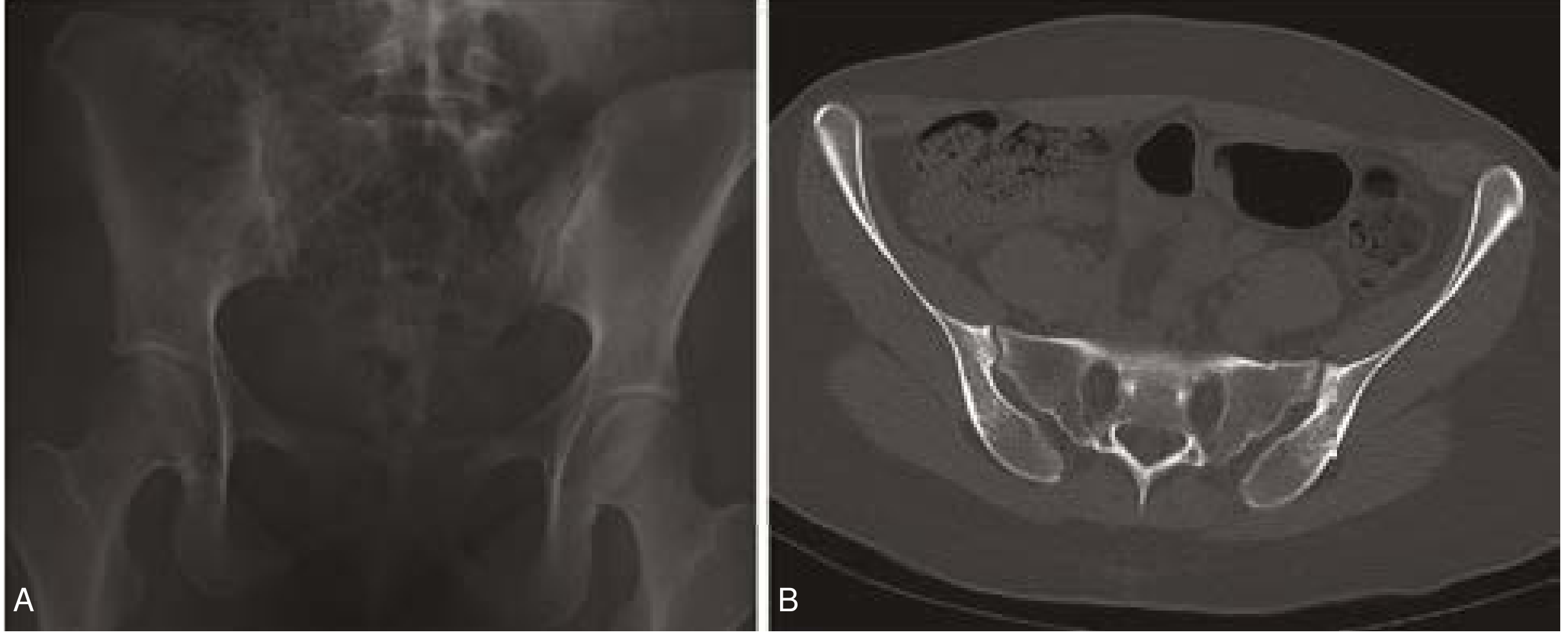
- LC-I: Sacral impaction fracture on the side of impact (Zone I Denis fracture)
- LC-II: Crescent iliac wing fracture on side of impact
- LC-III (Windswept pelvis): Ipsilateral internal rotation + contralateral open-book injury
Anteroposterior Compression (APC)
A force applied to the pubis or greater trochanter drives external rotation of the hemipelvis, opening the pelvic ring like a book. Progressive ligamentous disruption extends posteriorly:
- APC-I: Minor symphysis widening
- APC-II: Anterior SI joint opening, posterior SI ligaments intact
- APC-III: Complete SI joint disruption (can include sacral fracture B1.2 subtype)
Because the pelvic volume increases significantly, APC-III is the pattern most associated with life-threatening hemorrhage.
Vertical Shear (VS) - Most Unstable
Violent axial loading (fall from height, "submarining" under a dashboard) creates fractures in vertical planes. The hemipelvis displaces posteriorly and cephalad. Posteriorly, this occurs through the sacrum, SI joint, or ilium. Avulsion of the L5 transverse process (iliolumbar ligament attachment) is pathognomonic for vertical shear through the sacrum.
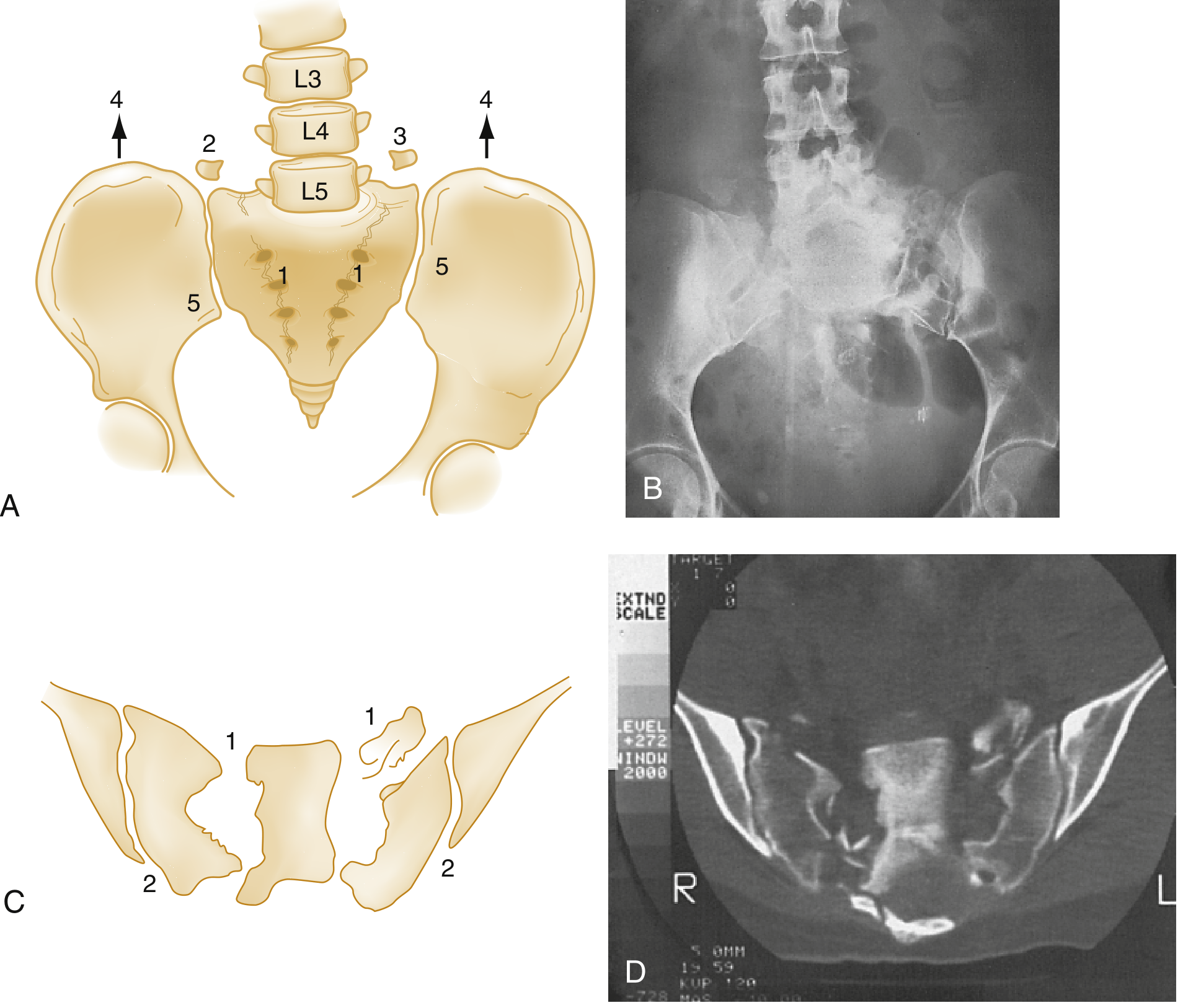
"Vertical shear injuries are the most unstable injuries affecting the pelvic ring and are associated with violent axial loading of the hemipelvis" - Rosen's Emergency Medicine
4. Classification Systems
A. Denis Classification (Most Widely Used)
Based on fracture location relative to the sacral foramina. The zone most medially involved is used to classify the injury.
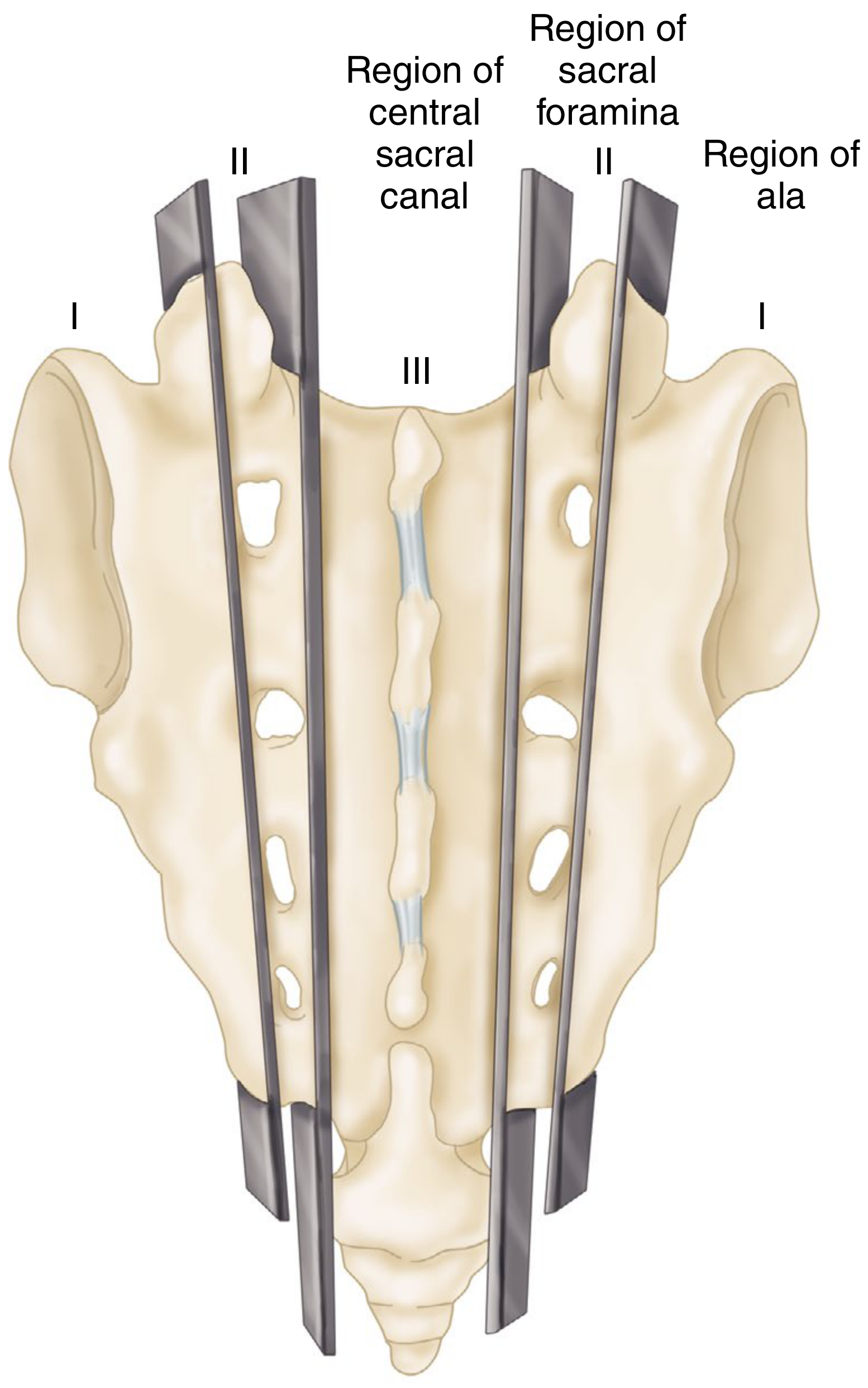
A color-coded view of the three zones:
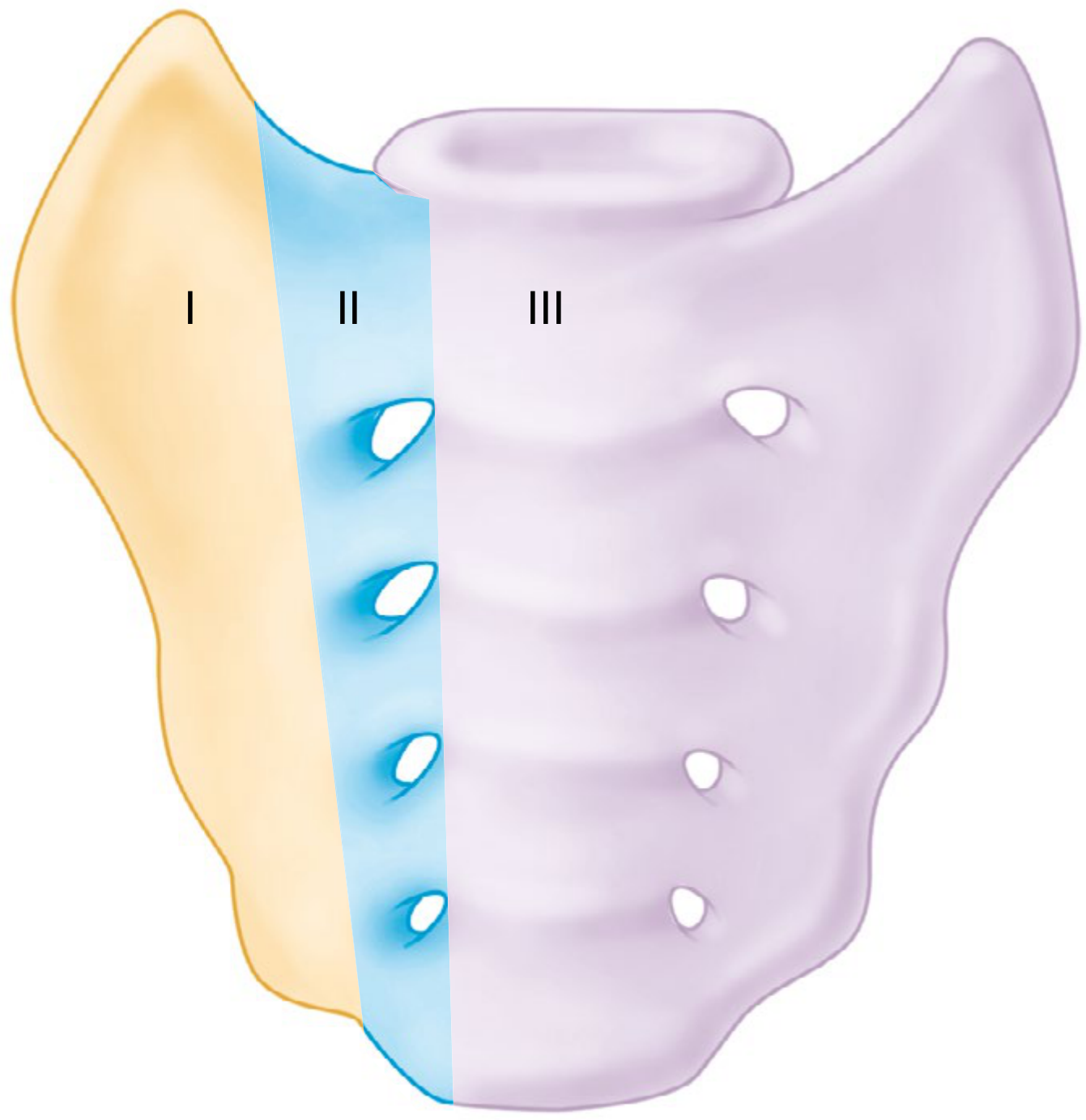
| Zone | Location | Incidence | Neurologic Risk |
|---|---|---|---|
| Zone I | Lateral to sacral foramina (sacral ala) | 50% | 6% (L5 nerve root) |
| Zone II | Through the sacral foramina | 34% | 28% (unilateral L5, S1, or S2) |
| Zone III | Medial to foramina, involves spinal canal | 16% | 57-60% (bowel, bladder, sexual dysfunction, L5-S2 roots) |
"These injuries carry a high risk of neurologic complications: 6% when lateral to the foramina, 28% when through the foramina, and 58% when medial to the foramina." - Rosen's Emergency Medicine
B. Roy-Camille Classification (Transverse Sacral Fractures - Zone III Subtype)
Transverse fractures cross the midline (3% of pelvic ring disruptions) and deserve special attention due to biomechanical and neurologic implications:
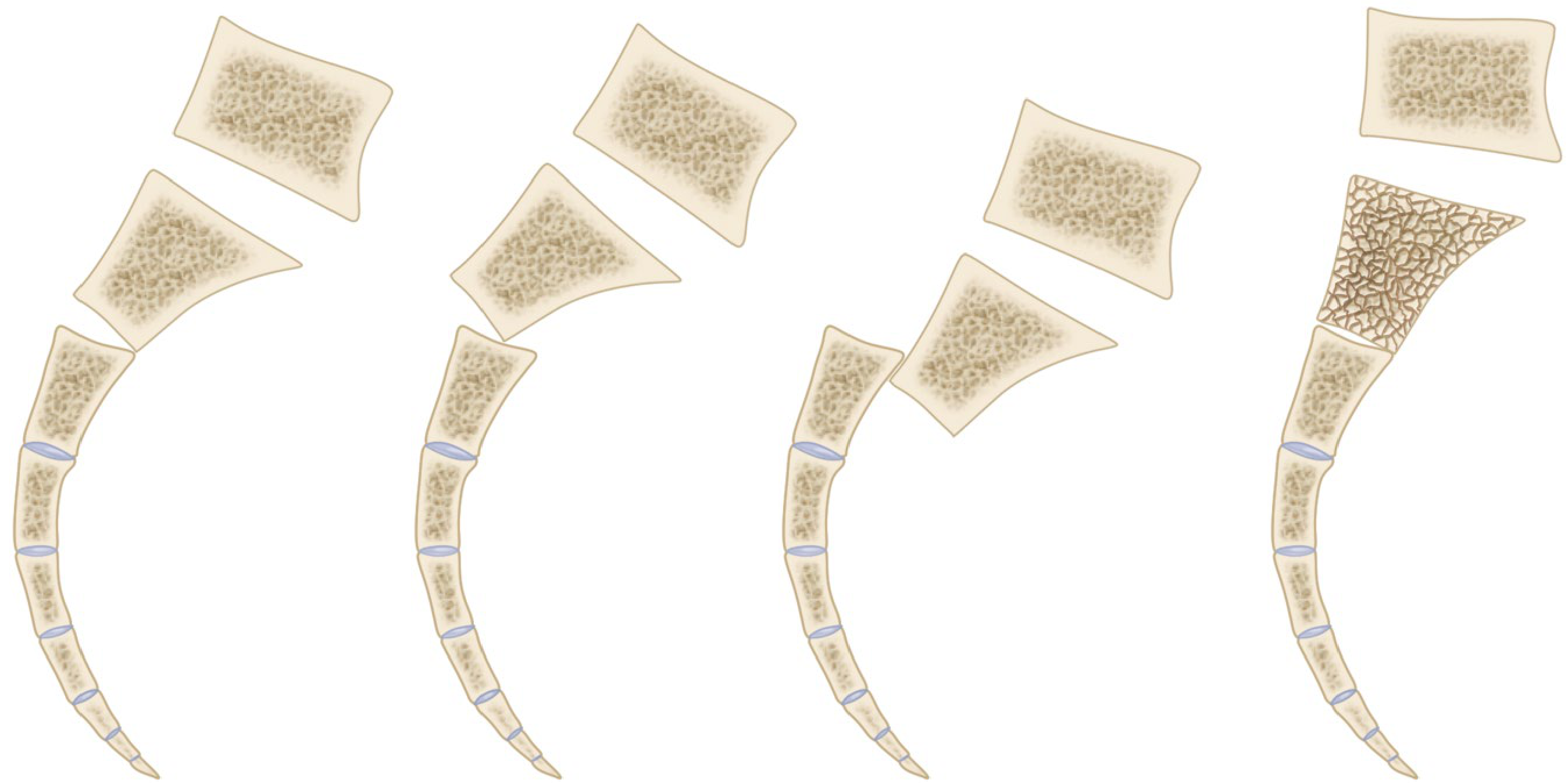
C. Isler Classification (Lumbosacral Junction)
Describes sacral fractures in relation to the L5-S1 facet joint. Type I: lateral to L5-S1 facet (affects pelvic ring stability); Type II: through L5-S1 facet (displacement + neurologic symptoms); Type III: involving spinal canal (unstable).
D. AO Spine Sacral Fracture Classification (Current Standard)
A validated system using three criteria: morphology, neurologic status, and case-specific modifiers:
- Type A: Lower sacrococcygeal injuries - stable, no posterior pelvic/spinopelvic instability
- A1: Coccygeal or compression/avulsion fractures
- Type B: Vertically oriented injuries involving Denis zones I-III - posterior pelvic instability possible; generally managed with iliosacral screws
- Type C: Spino-pelvic injuries with a transverse component (U- or H-type fractures) - spinopelvic instability; if displaced, requires lumbopelvic fixation
Neurologic scoring (N0-N4 + NX) is added to morphology score. An injury score ≥ 5 is considered an operative indication.
The Isler Type I-III variants are incorporated as C1-C3 subtypes within the AO system.
5. Associated Injuries
Sacral fractures, particularly high-energy patterns, are associated with a broad spectrum of injuries:
Vascular
- Retroperitoneal hematoma - the major cause of early mortality; APC-III and VS patterns have the highest blood loss
- Superior gluteal artery injury (can occur with posterior column fractures)
- Internal iliac artery injury
Neurologic
- Lumbosacral plexus injury (L4, L5, S1-S4 nerve roots)
- Cauda equina syndrome in Zone III fractures
- Bowel, bladder, and sexual dysfunction
Urogenital
- Urethral rupture - classic posterior urethral injury in males (blood at meatus, high-riding prostate on rectal exam)
- Bladder rupture - extraperitoneal (more common with pelvic fractures) or intraperitoneal
- Vaginal laceration in females
Gastrointestinal
- Rectal injury - open pelvic fractures communicating with rectum carry >50% mortality if not recognized; immediate diverting colostomy indicated
- Perineal degloving
Soft Tissue
- Morel-Lavallée lesion - internal degloving injury; separation of skin from underlying fascia, typically over the greater trochanter/thigh; can cause significant unsuspected blood loss and complicate surgery
Other Orthopedic
- Acetabular fractures
- Femoral head/neck fractures
- Lumbar spine fractures (L5 transverse process avulsion is pathognomonic for VS)
- Open pelvic fractures - mortality up to 50% due to hemorrhage and sepsis
6. Signs and Symptoms
History
- High-energy mechanism (MVA, fall from height) in young patients
- Low-energy mechanism / no trauma history in elderly osteopenic patients (insufficiency fractures)
- Immediate inability to bear weight
Local Signs
- Perineal / gluteal bruising - ecchymosis over sacrum, perineum, scrotum/labia, greater trochanters ("Destot sign")
- Posterior pelvic tenderness - direct percussion over sacrum
- Pelvic deformity - limb length discrepancy, external rotation of affected limb in VS injuries
- Open wounds - perineal, gluteal, or rectal; suggests open fracture
- Gross pelvic instability - detected on manual compression/distraction (only done ONCE in trauma setting to avoid re-bleeding)
Radiographic Clues to Posterior Arch Injury
- Asymmetry or lack of definition of the superior sacral foraminal cortical lines on AP view
- Avulsion of L5 transverse process (pathognomonic for VS)
- Avulsion of ischial spine or lower lateral sacral lip
- Displaced pubic ramus fracture (implies second break in pelvic ring)
Neurologic Signs (in ~25-50% of sacral fractures overall)
- Zone I: Occasional L5 motor/sensory deficit (foot drop, weak dorsiflexion)
- Zone II: Unilateral L5/S1/S2 root injury - sciatic pain, weak ankle plantarflexion (S1), reduced Achilles reflex
- Zone III: Bilateral involvement including cauda equina syndrome:
- Saddle area (perianal) sensory loss
- Urinary retention or incontinence
- Fecal incontinence
- Sexual dysfunction (impotence in males)
- Bilateral leg weakness
Signs of Associated Injuries
- Blood at urethral meatus - urethral injury
- Inability to void, suprapubic fullness - bladder injury
- Rectal blood on PR examination - rectal laceration
- Hemodynamic instability with tachycardia/hypotension - major vascular injury
7. Investigations and Evaluation
A. Trauma Resuscitation (ATLS Protocol)
All polytrauma patients follow primary survey (ABCs). Hemodynamic instability with pelvic fracture should prompt immediate pelvic binding.
FAST (Focused Assessment with Sonography for Trauma) - screens for free intraperitoneal fluid
B. Plain Radiographs
Three views are standard:
- AP Pelvis - Initial screening view; look for pubic symphysis widening, rami fractures, iliac wing fractures, asymmetry of sacral foramina, L5 transverse process avulsion
- Pelvic Inlet view (beam angled 45° caudad) - shows anterior-to-posterior dimension; identifies AP displacement, anterior sacral breaches
- Pelvic Outlet view (beam angled 45° cephalad) - best view of sacral foramina (S1-S4); identifies superior/inferior displacement, reveals subtle sacral fractures as asymmetry of foraminal lines
- Lateral sacral view - identifies iliac cortical density (ICD); used for iliosacral screw planning
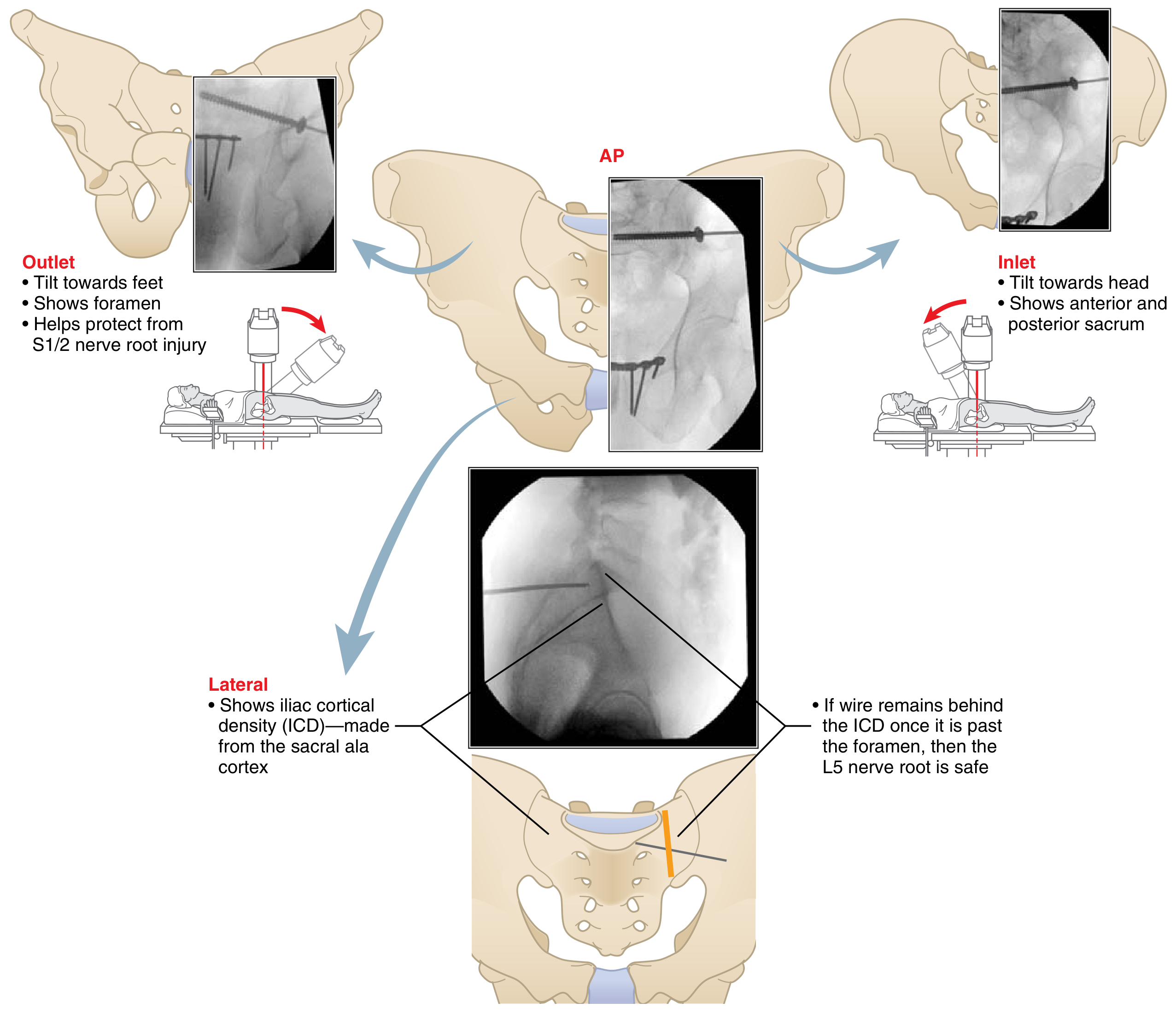
"CT is usually required" - Miller's Review of Orthopaedics, 9th ed.
C. CT Scan (Gold Standard)
Mandatory for full characterization of sacral fractures - plain films frequently miss or underestimate posterior pelvic injuries.
- Axial, coronal, and sagittal reconstructions
- Identifies zone classification, comminution, displacement, canal involvement
- Essential for H/U-type fracture recognition - sagittal reformats used to assess kyphosis
- Guides surgical planning (screw trajectory, dysmorphism assessment)
- 20-44% of patients have sacral dysmorphism (sacralization of L5 or lumbarization of S1), which significantly increases risk of anterior screw penetration and neurovascular injury
D. MRI
- Best for soft tissue injury characterization, nerve root compression, cauda equina
- Particularly useful for sacral insufficiency fractures - classic appearance is bilateral vertical fractures with a horizontal component producing an H-shaped ("Honda sign") pattern on T1 and STIR sequences
- More sensitive than CT for early fracture detection in osteoporotic bone
"Bilateral sacral insufficiency fractures (arrows) and a left supra-acetabular fracture - T1-weighted sequences of the pelvis" - Grainger & Allison's Diagnostic Radiology
E. Bone Scintigraphy (Technetium-99m)
- Classic H-shaped uptake ("Honda sign") is diagnostic of sacral insufficiency fractures
- Useful when plain films and CT are non-diagnostic
"This fracture is diagnosed with a technetium-99m bone scan (H-shaped uptake pattern is diagnostic) or with CT." - Miller's Review of Orthopaedics
F. Additional Studies
- Urethrogram before urinary catheterization if blood at urethral meatus
- Cystogram/CT cystogram for suspected bladder rupture
- Rigid sigmoidoscopy if rectal blood on examination
- Angiography/CT angiography for suspected active arterial hemorrhage (followed by transcatheter embolization)
8. Treatment
A. Acute/Initial Management
Pelvic Binder: Applied over the greater trochanters (not the iliac crests) to reduce pelvic volume, stabilize fractures, and encourage tamponade for hemorrhagic LC/APC injuries. It is a reduction tool, not a fixation device - should be removed within 24-36 hours to prevent pressure sores.
Hemorrhage Control Sequence:
- Pelvic binder / sheet
- Resuscitation (massive transfusion protocol if needed)
- Angioembolization for arterial bleeding
- Pelvic packing (preperitoneal or retroperitoneal) for venous plexus hemorrhage unresponsive to binder
Neurologic Decompression: Urgent surgery (within 24 hours) is recommended for sacral fractures with neurologic dysfunction, particularly Zone III injuries, to decompress nerve roots and provide bony fixation.
B. Nonoperative Treatment
Indications:
- Mechanically stable sacral fractures without neurologic injury
- Minimally displaced fractures (anterior sacral impaction from LC mechanism)
- Sacral insufficiency fractures
Management:
- Weight-bearing as tolerated for incomplete fractures where the ilium remains contiguous with the intact sacrum (e.g., LC-I anterior impaction fractures, isolated alar fractures)
- Touch-toe weight-bearing for complete fractures
- NSAIDs, analgesics, ambulatory aids for insufficiency fractures
- Osteoporosis workup and treatment for insufficiency fractures
C. Operative Treatment
Indications:
- Displaced fractures (> 1 cm)
- Fractures associated with pelvic or spinal instability
- Neurologic deficit (urgent decompression + stabilization)
- AO injury score ≥ 5
1. Percutaneous Iliosacral (IS) Screw Fixation
The workhorse technique for Zone I, II, and selected Zone III fractures:
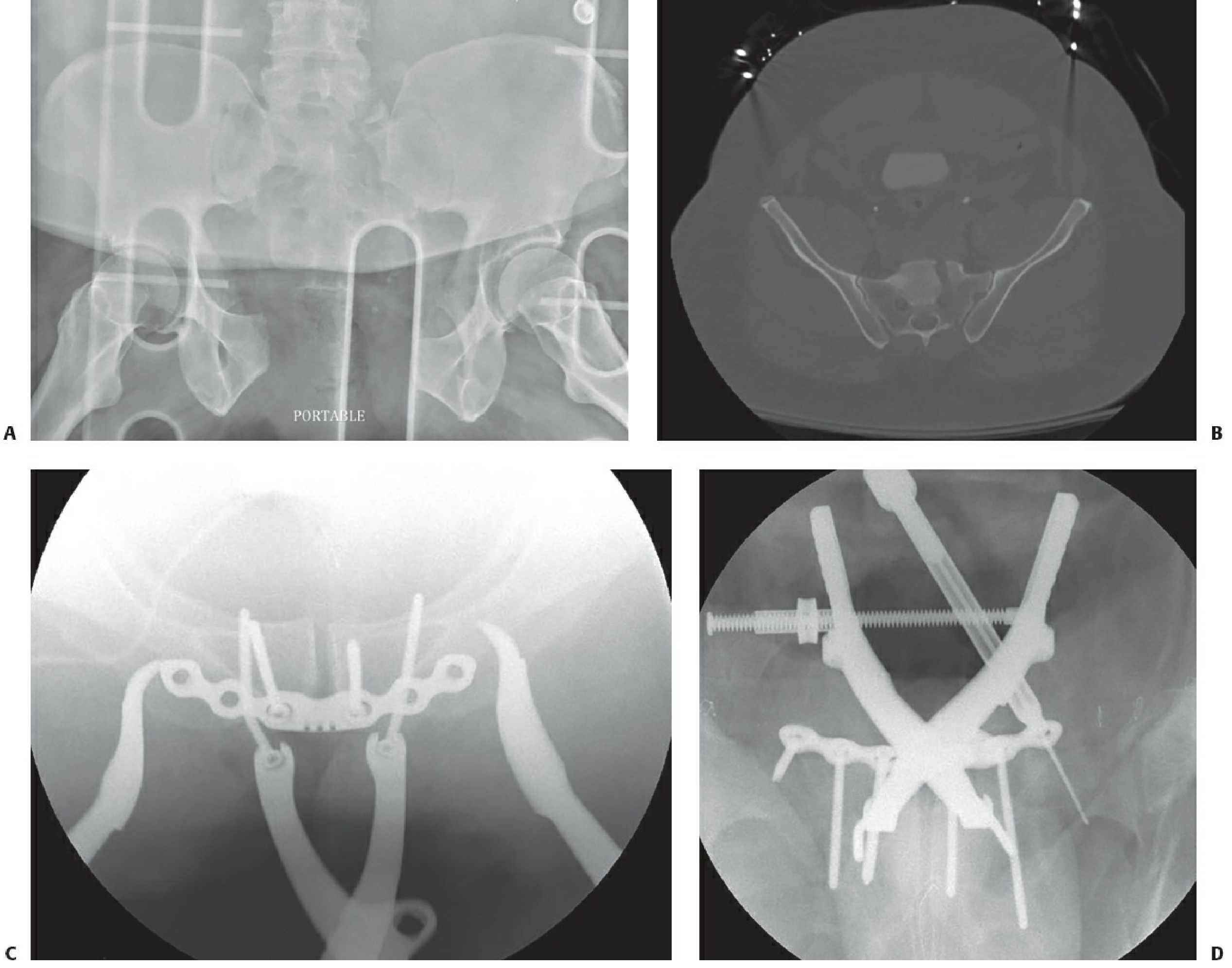
- Patient supine on radiolucent table
- Preoperative imaging: AP, inlet, outlet, and lateral sacral views to define screw corridor
- Guidewire placed across reduced fracture into sacral body or contralateral ilium
- Partially threaded screws (7.0-8.0 mm) for non-comminuted Zone I/III and non-comminuted Zone II
- Fully threaded screws for comminuted Zone II (to prevent over-compression and iatrogenic nerve injury)
- Transsacral (trans-iliac) screws for bilateral sacral fractures, osteoporotic bone, or enhanced stability
- In osteoporotic bone: cement augmentation with resorbable calcium phosphate
Fluoroscopic landmarks for safe screw placement:
- Outlet view: avoid S1/S2 neural foramina
- Inlet view: minimize anterior sacral breach
- Lateral view: screw must stay posterior to the iliac cortical density (ICD) to protect the L5 nerve root
2. Open Reduction Internal Fixation (ORIF)
- For fractures with satisfactory "read" on the sacrum requiring accurate open reduction
- Posterior approach to sacrum using clamps
- Iliosacral plate fixation
- Combined with nerve root decompression (laminectomy/foraminotomy) when needed
3. Lumbopelvic (Spinopelvic) Fixation
For Type C injuries (U-type and H-type spinopelvic dissociation), bilateral sacral fractures, or when IS screws alone cannot provide adequate stability:
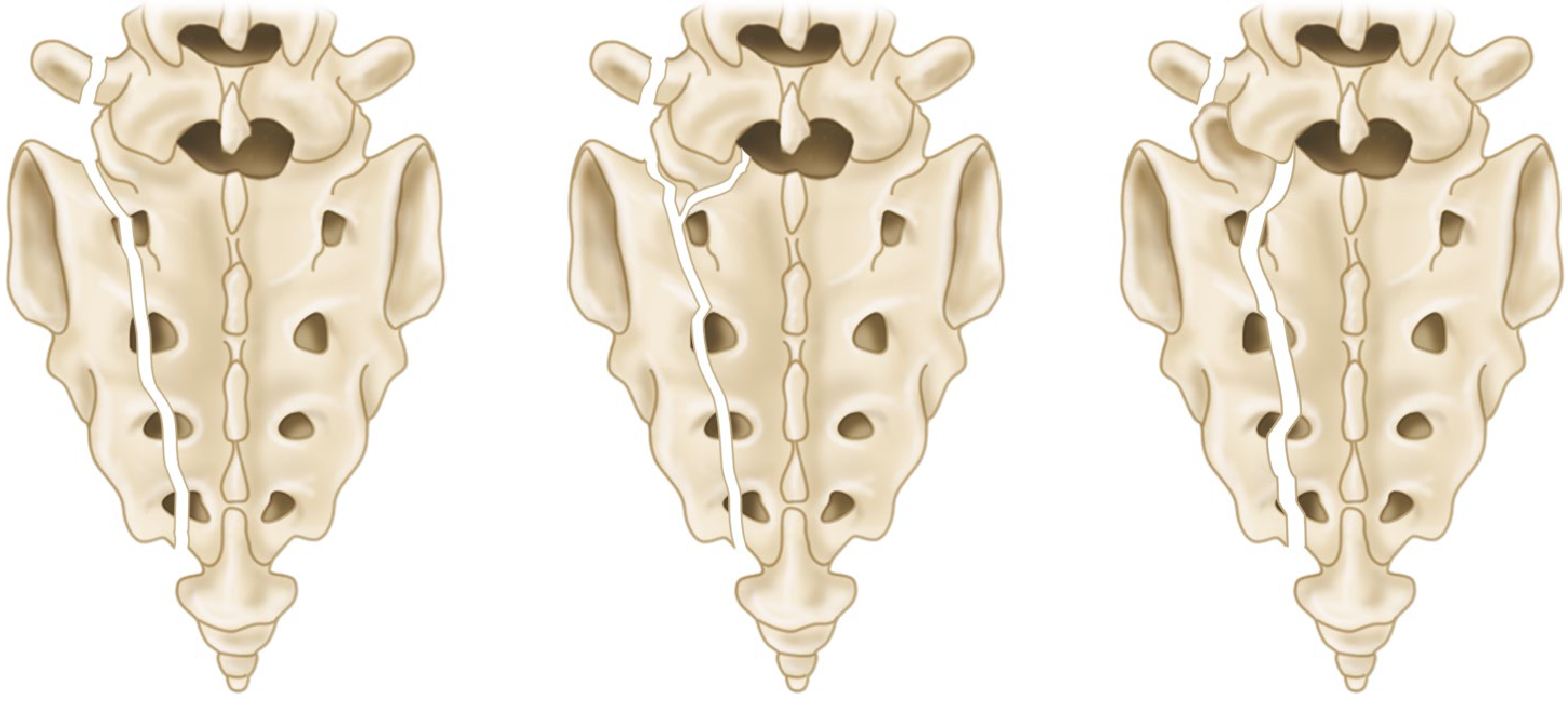
Technique:
- Pedicle screws placed in L4/L5
- Iliac screws or S2-alar-iliac (S2AI) screws
- Connected via rods to provide a rigid construct spanning the entire spinopelvic junction
- Indicated when the lumbopelvic junction is unstable (Isler Type II/III, AO Type C injuries)
4. Sacroplasty
- Minimally invasive cement injection for osteoporotic insufficiency fractures with refractory pain
- Reserved for patients failing conservative management
5. Decompression
- Posterior sacral laminectomy and nerve root decompression for Zone III injuries with cauda equina syndrome
- Fracture fragments in the sacral canal removed
- Usually combined with posterior fixation
9. Summary Table
| Parameter | High-Energy Traumatic Fracture | Insufficiency Fracture |
|---|---|---|
| Age | Young adult | Elderly |
| Mechanism | MVA, fall from height, crush | Osteoporosis, cyclic loading |
| Pattern | Vertical (Denis I-III), pelvic ring disruption | Bilateral vertical + horizontal (H-shape) |
| Associated injuries | Major vascular, urologic, neurologic | Minimal |
| Neurologic deficit | Zone I: 6%, Zone II: 28%, Zone III: 57% | Rare |
| Key investigation | CT scan with reconstructions | Bone scan (H-sign), MRI |
| Initial treatment | Pelvic binder, resuscitation | Rest, analgesia, ambulation aids |
| Definitive treatment | IS screws / lumbopelvic fixation | Conservative; sacroplasty if refractory |
10. Key Teaching Points
- Sacral fractures are frequently missed on plain AP pelvis - CT is mandatory in suspected cases
- The Denis zone determines neurologic risk: Zone I (6%) < Zone II (28%) < Zone III (57%)
- Avulsion of the L5 transverse process on AP pelvis is pathognomonic for vertical shear injury
- Asymmetric or indistinct sacral foraminal lines on AP pelvis should prompt CT evaluation
- H-/U-type fractures (spinopelvic dissociation) are a distinct high-risk subset requiring lumbopelvic fixation
- Sacral dysmorphism (20-44% prevalence) must be recognized before iliosacral screw placement - increases risk of neurovascular injury
- Zone III fractures with neurologic deficit require urgent decompression within 24 hours
- Insufficiency fractures are underdiagnosed - bone scan "Honda sign" or MRI if plain films negative in elderly with back/groin pain
Sources:
- Rockwood and Green's Fractures in Adults, 10th ed. 2025, Chapter 50 (Pelvic Ring and Sacral Fracture Stabilization)
- Campbell's Operative Orthopaedics, 15th ed. 2026, Chapters 48 and 61
- Miller's Review of Orthopaedics, 9th ed., Chapter 11 (Sacral Fractures)
- Rosen's Emergency Medicine, Chapter 46 (Pelvic Trauma)
- Current Surgical Therapy, 14th ed. (Mechanism of Injury in Pelvic Fractures)
- Grainger & Allison's Diagnostic Radiology (Pelvic Insufficiency Fractures)This is a comprehensive, evidence-based review of sacral fractures drawn directly from leading orthopedic and emergency medicine textbooks. Here is a brief orientation to the content above:
What's covered:
-
Etiology - High-energy traumatic fractures (MVA, falls, crush) in young adults vs. low-energy insufficiency fractures in the elderly with osteoporosis
-
Mechanism of Injury - Three force vectors: lateral compression (most common, sacral alar impaction), anteroposterior compression (open-book, highest hemorrhage risk), and vertical shear (most unstable, axial loading, L5 TP avulsion pathognomonic)
-
Classification - Four major systems fully detailed:
- Denis (3 zones by foraminal location) - the workhorse clinical system
- Roy-Camille (Types 1-4 transverse fractures)
- Isler (lumbosacral junction involvement)
- AO Spine (current validated standard: Types A/B/C + neurologic scoring)
-
Associated Injuries - Retroperitoneal hemorrhage, urethral/bladder rupture, rectal laceration, Morel-Lavallée lesion, lumbosacral plexus injury, acetabular fractures
-
Signs and Symptoms - Perineal bruising, pelvic instability, zone-specific neurologic deficits (6% Zone I → 57% Zone III), cauda equina syndrome
-
Investigations - AP/inlet/outlet/lateral plain films, mandatory CT with reconstructions, MRI for insufficiency fractures and neural compression, bone scintigraphy (Honda sign), urethrogram/cystogram as indicated
-
Treatment - Pelvic binder (acute), conservative care for stable fractures, percutaneous iliosacral screw fixation, lumbopelvic fixation for spinopelvic dissociation (U/H-type fractures), urgent decompression for Zone III neurologic deficit
This is a shared conversation. Sign in to Orris to start your own chat.