
Oxygen cascade 5 mark answer
I'll read the medical library skill first, then research the oxygen cascade thoroughly.
Reading File
Now let me search the library for oxygen cascade content in parallel with a web search.
Finding Sources
Finding Sources
Searching Images
oxygen cascade partial pressure diagram
Good, found relevant sections. Let me read both in parallel.
Reading File
Reading File
Finding Sources
Let me read the key oxygen cascade section from Murray & Nadel's and also the anesthesia textbook section.
Reading File
Finding Sources
I have the textbook diagram URL. Let me fetch it and also read a bit more of the Medical Physiology content.
Loading Image
Reading File
Reading File
I now have all the content needed for a comprehensive 5-mark answer on the oxygen cascade. Here is the full answer:
Oxygen Cascade
Definition
The oxygen cascade describes the stepwise fall in partial pressure of oxygen (PO₂) as it travels from the atmosphere to the mitochondria - the final site of utilization. At each step, PO₂ drops due to dilution, diffusion barriers, and metabolic consumption. The process is entirely driven by passive diffusion down pressure gradients; no active transport is involved.
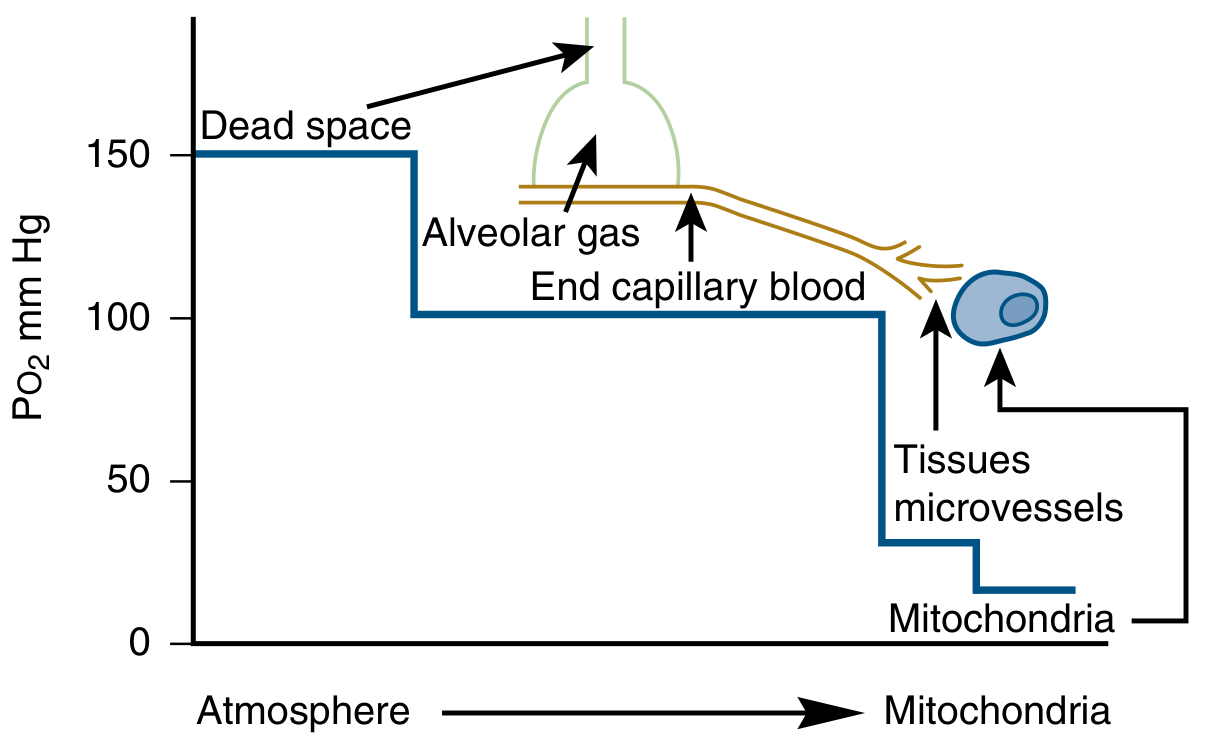
Fig. 10.14 - Murray & Nadel's Textbook of Respiratory Medicine
Steps of the Oxygen Cascade
Step 1: Atmosphere → Humidified Inspired Air (PO₂: 159 → ~149 mmHg)
- Dry atmospheric air at sea level: PO₂ = FiO₂ × Pbar = 0.209 × 760 = 159 mmHg
- On entering the upper airway, air is warmed to 37°C and fully humidified. Water vapour pressure (PH₂O) = 47 mmHg
- Effective dry gas pressure falls to 760 - 47 = 713 mmHg
- PO₂ of humidified inspired air = 0.209 × 713 = ~149 mmHg
Step 2: Inspired Air → Alveolar Gas (PO₂: 149 → ~100 mmHg)
-
This is the largest step drop in the cascade
-
Alveolar PO₂ is governed by a balance between:
- Oxygen added by alveolar ventilation
- Oxygen removed by pulmonary capillary blood flow
-
CO₂ diffuses in from pulmonary blood (PAco₂ ~40 mmHg), diluting alveolar oxygen
-
Described by the Alveolar Gas Equation:PAO₂ = PiO₂ - (PaCO₂ / R)where R = respiratory quotient (~0.8)PAO₂ = 149 - (40/0.8) = 149 - 50 ≈ 100 mmHg
Step 3: Alveolar Gas → Pulmonary End-Capillary Blood (PO₂: 100 → ~100 mmHg in ideal lung)
- Oxygen crosses the blood-gas barrier by diffusion (barrier thickness only ~0.3 µm; area 50-100 m²)
- In an ideal lung with perfect V/Q matching, end-capillary PO₂ = alveolar PO₂ (~100 mmHg)
- In reality, small V/Q inequality and physiological shunt (~2%) cause a tiny drop
- Systemic arterial PO₂ = ~95-100 mmHg (A-a gradient ~5-15 mmHg in normal young adults)
Step 4: Arterial Blood → Tissues/Microvessels (PO₂: 95 → ~40 mmHg)
- Oxygen is unloaded from haemoglobin in systemic capillaries down a diffusion gradient
- Mixed venous PO₂ (PvO₂) ~40 mmHg under resting conditions
- This step is governed by: cardiac output, haemoglobin concentration, oxygen-haemoglobin affinity (influenced by pH, temperature, 2,3-DPG - the Bohr effect), and metabolic demand
Step 5: Tissue Microvessels → Mitochondria (PO₂: ~40 → <5 mmHg)
- Final step: oxygen diffuses from capillary blood into cells and then to mitochondria
- Mitochondrial PO₂ is estimated at 1-3 mmHg under normal resting conditions
- This is the minimum threshold needed for oxidative phosphorylation (cytochrome c oxidase has a very high affinity for O₂)
- Mitochondrial PO₂ varies considerably between tissues depending on metabolic rate
Summary Table
| Step | Location | PO₂ (mmHg) | Reason for Drop |
|---|---|---|---|
| 1 | Dry atmosphere | 159 | Baseline |
| 2 | Humidified inspired air | ~149 | Dilution by water vapour |
| 3 | Alveolar gas | ~100 | V/Q balance; CO₂ addition |
| 4 | Arterial blood | ~95 | V/Q mismatch + shunt |
| 5 | Mixed venous blood | ~40 | Tissue O₂ extraction |
| 6 | Mitochondria | 1-3 | Cellular O₂ consumption |
Clinical Relevance
- High altitude: Reduced barometric pressure reduces PiO₂, shifting the entire cascade downward and threatening mitochondrial O₂ supply
- Anaemia: Does not affect PO₂ but reduces oxygen content (CaO₂ = SaO₂ × Hb × 1.34), affecting tissue delivery without directly altering the cascade pressures
- V/Q mismatch, shunt, diffusion limitation, hypoventilation: All widen the alveolar-arterial (A-a) O₂ gradient, reducing arterial PO₂ and downstream tissue PO₂
- Supplemental oxygen: Raises PiO₂, boosting each step - especially effective for hypoventilation and diffusion limitation, but less effective for true shunt
Sources: Murray & Nadel's Textbook of Respiratory Medicine (Fig. 10.14, GAS EXCHANGE chapter); Harrison's Principles of Internal Medicine 22E (Altitude Illness - Physiology section); Medical Physiology (Boron & Boulpaep)
This is a shared conversation. Sign in to Orris to start your own chat.