
Deliriant poison
Reading File
Now let me search the medical library for deliriant poisons.
Finding Sources
Finding Sources
Finding Sources
Finding Sources
Excellent - found dedicated sections. Let me read them all in parallel.
Reading File
Reading File
Reading File
Good data. Now let me read more of the detailed Parikh section on deliriant poisons (Dhatura, Belladonna, Hyoscyamus, Cannabis) and the PC Dikshit section for cannabis and belladonna.
Reading File
Reading File
Excellent content. Let me now fetch the key images and read more details on belladonna, hyoscyamus, and cannabis from both books.
Reading File
Reading File
I now have comprehensive content. Let me also read the Atropa belladonna section and the Parikh section on Cannabis.
Reading File
Reading File
I now have rich content from both textbooks. Let me compile the comprehensive answer.
Loading Image
Loading Image
I now have all the material needed to write a thorough answer. Here is the comprehensive coverage of deliriant poisons:
Deliriant Poisons
Deliriant poisons are a subgroup of cerebral (neurotoxic) poisons that act on the cerebrum to produce a characteristic and well-marked deliriant stage - defined by delirium, hallucinations, and delusions, before coma supervenes. They are classified under cerebral poisons alongside somniferous (opium) and inebriant (alcohol, ether) types.
The classical deliriant poisons are:
- Dhatura (Datura fastuosa / stramonium) - most important
- Atropa belladonna (Deadly nightshade)
- Hyoscyamus niger (Henbane)
- Cannabis indica (Indian hemp)
- Cocaine is also described as a deliriant/convulsant when ingested
(P C Dikshit Textbook of Forensic Medicine and Toxicology; Parikh's Textbook of Medical Jurisprudence, Forensic Medicine and Toxicology)
1. Dhatura (Datura fastuosa)
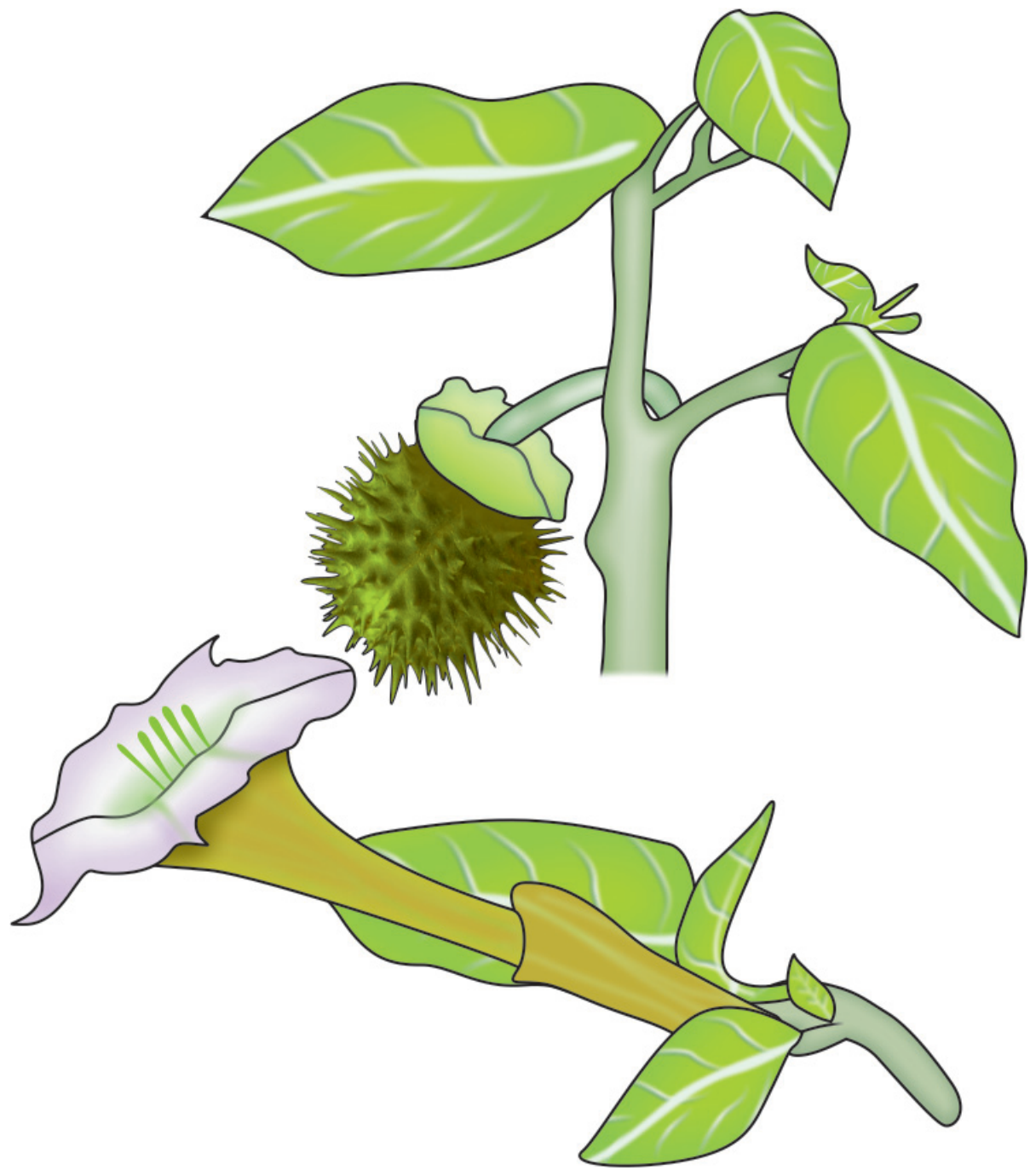
Fig: Dhatura plant with its characteristic bell-shaped flower and spiny fruit
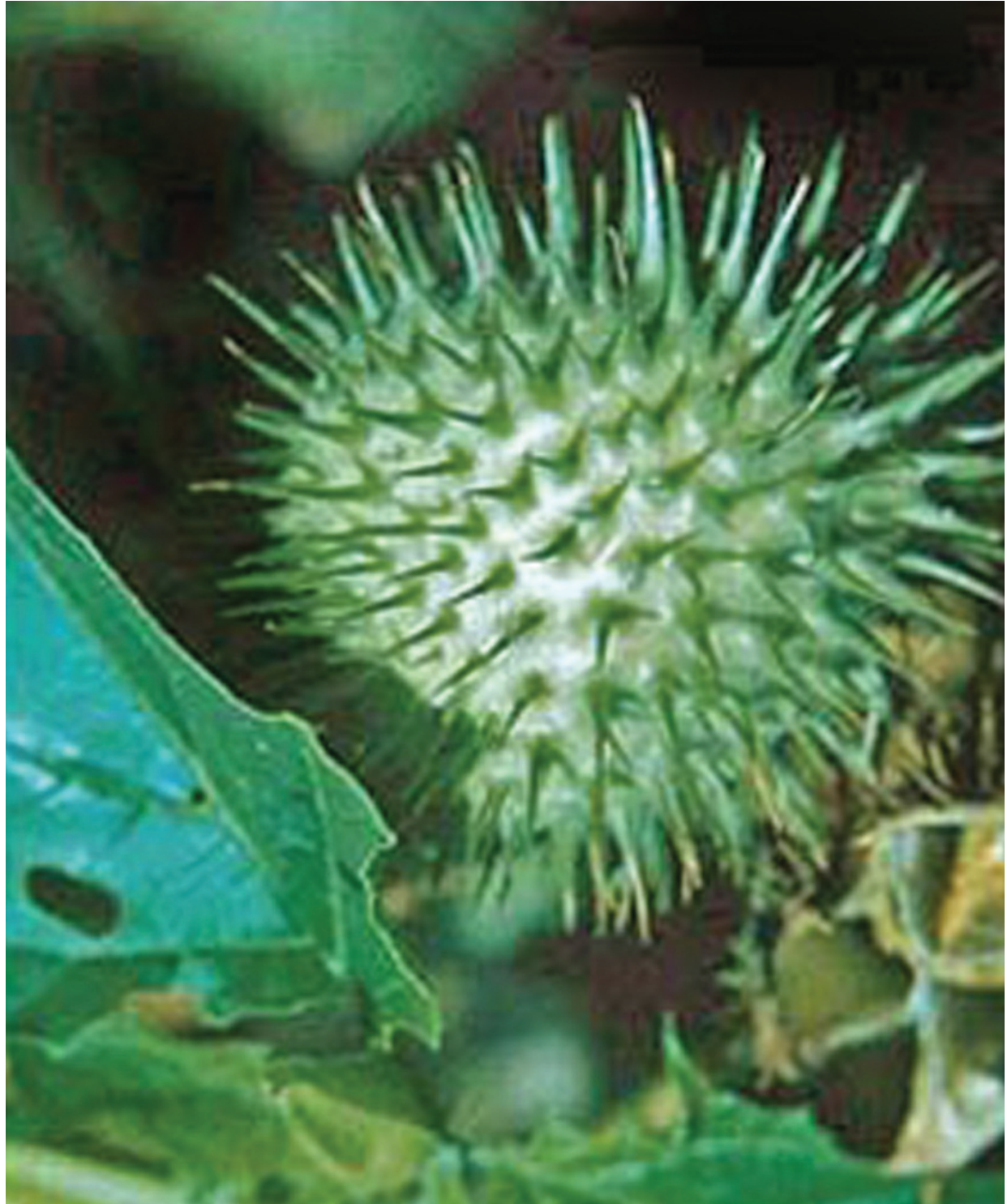
Fig: Dhatura fruit - the "thorn apple" with sharp spines
The most medico-legally important deliriant poison in India.
Botanical Details
- Two varieties: Datura alba (safed dhatura, white flowers) and Datura niger (kala dhatura, black/purple flowers)
- Grows in waste places all over India
- Fruit is spherical with sharp spines = "thorn apple"
- Contains 450-500 yellowish-brown seeds per fruit; seeds resemble chilli/capsicum seeds
- All parts poisonous, but seeds and fruit are most so
Active Principles
- Laevohyoscyamine (primary)
- Hyoscine (scopolamine)
- Traces of atropine (actually a racemic form of hyoscyamine formed during extraction)
All are anticholinergic (parasympatholytic) alkaloids - they block muscarinic receptors.
Signs and Symptoms
The classic mnemonic: "10 D's"
| D | Feature |
|---|---|
| Dysphagia | Difficulty in swallowing |
| Delusions | Fixed false beliefs |
| Dermatitis | Contact with leaves/flowers |
| Delirium | Noisy, restless, purposeless |
| Drowsiness | Progresses to coma |
| Dry skin/mucous membrane | Anhidrosis, intense thirst |
| Dilated pupils (Mydriasis) | Photophobia, loss of accommodation |
| Dreadful hallucinations | Visual and auditory |
| Dysuria | Urinary retention |
| Dysarthria | Difficulty speaking |
Also remembered as the "5 Hots":
- Hot as a hare - raised temperature (107-108°F)
- Blind as a bat - disturbed vision, photophobia
- Dry as a bone - intense thirst, dry skin
- Mad as a hen - delirium, hallucinations, delusions
- Red as a beet - flushing of face
Characteristic delirium: The patient mutters indistinct words, tries to run away, picks at bedclothes, and exhibits "pin-rolling movements" (tries to pull imaginary threads from fingertips / threads imaginary needles).
Course: Excitement phase passes in 1-2 hours → deep coma or sleep → may end in death from respiratory paralysis. Improvement begins in 24 hours; patients remember nothing about the episode.
Fatal Dose & Period
- Fatal dose: 4 fruits, 100 seeds, or 0.5-1 g of the active principle
- Fatal period: 24 hours
Treatment
- Gastric lavage (stomach wash) - emetics can also be used
- Specific antidote: Physostigmine (eserine) - a cholinesterase inhibitor; given 1-3 mg subcutaneously, repeated as needed
- Pilocarpine subcutaneously (stimulates parasympathetic system)
- Catheterize for urinary retention
- Supportive: IV fluids, cool the patient (cold sponging for hyperthermia)
- Diazepam for convulsions
- Avoid morphine (both depress respiration)
Medico-legal Significance
- Homicidal: Most common use in India - given in food or drink to incapacitate victims for robbery, dacoity, or abduction. Victims comply with instructions of the poisoner ("Thagi poisons"). Women have been abducted, robbed, and raped under dhatura influence.
- Accidental: Children eating raw fruits; adults mistaking seeds for capsicum seeds; added to country liquor for a stronger kick.
- Suicidal: Rare
- Dhatura is used as an aphrodisiac in folk medicine
2. Atropa Belladonna (Deadly Nightshade)
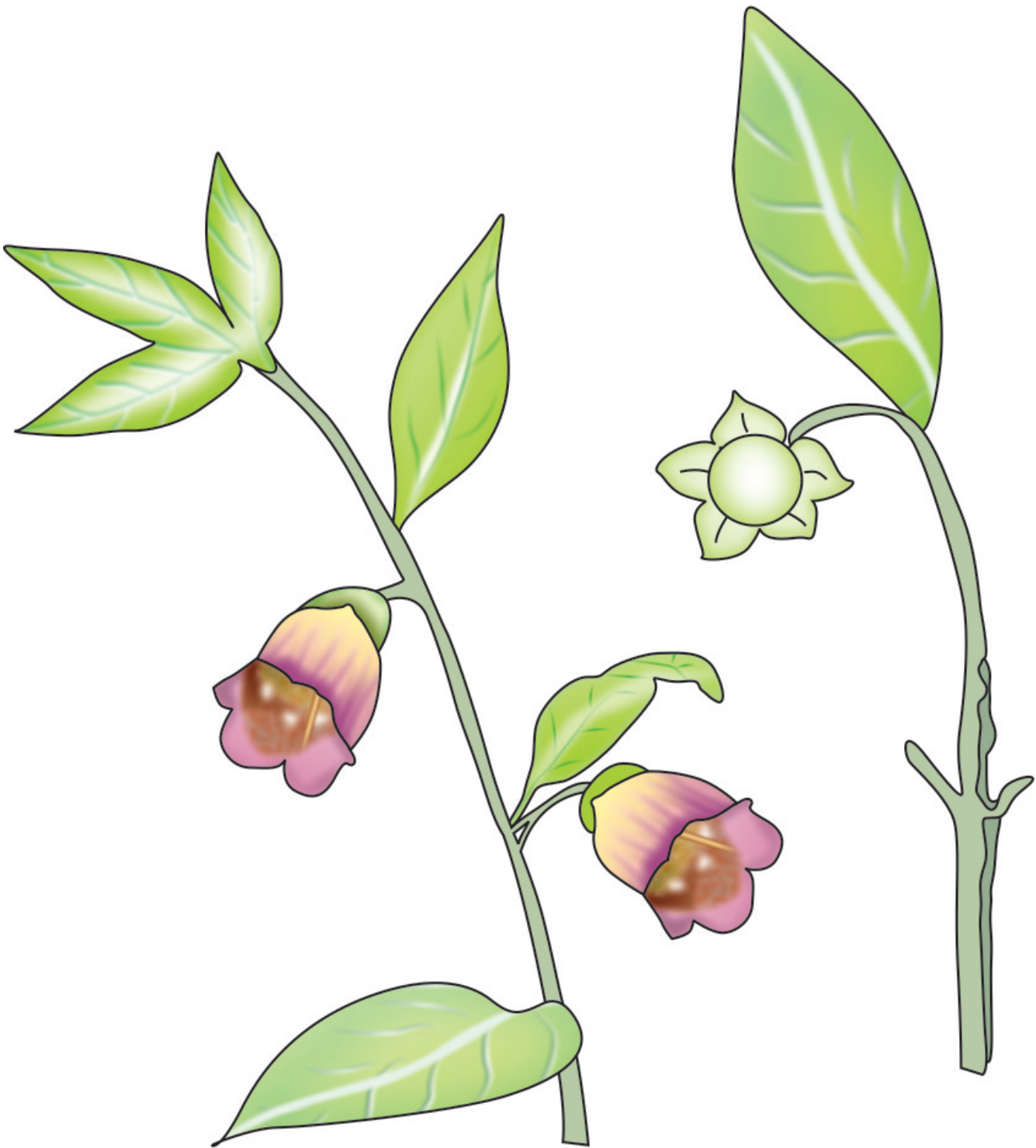
Fig: Atropa belladonna plant
- A plant of the Solanaceae family; grows in Europe and temperate regions
- Active principles: Atropine, hyoscyamine, hyoscine - same family as dhatura
- All parts are poisonous, especially the berries (look like cherries)
Signs & Symptoms
Similar to dhatura - the hallmark is the same anticholinergic toxidrome:
- Dry mouth, thirst, dysphagia
- Flushed, hot, dry skin
- Dilated pupils (mydriasis), photophobia
- Tachycardia (pulse full and bounding initially)
- Restlessness, delirium, hallucinations
- Urinary retention
- Eventually coma and respiratory failure
Fatal Dose
- Berries: 3-4 berries may be fatal in a child; ~10-20 berries in an adult
- Atropine: 100 mg in adults; 10 mg in children
Treatment
Same as dhatura: physostigmine is the specific antidote; gastric lavage; supportive care.
Medico-legal Points
- Accidental (most common) - children eating attractive berries
- Used medicinally for its mydriatic effect (eye drops), antispasmodic, and premedication in anaesthesia
- Historically used in cosmetics by women to dilate pupils (hence "belladonna" = beautiful woman)
3. Hyoscyamus Niger (Henbane)
Also known locally as Khorasani ajwayan; also called scopolamine or henbane.
- Grows in the Himalayan ranges at high altitudes
- All parts of the plant are poisonous
- Active principles: Atropine, hyoscine (scopolamine), hyoscyamine - identical to dhatura/belladonna family
Signs & Symptoms
Closely resemble dhatura poisoning. The symptoms are anticholinergic in nature.
Fatal Dose
- Hyoscyamine: 125 mg
- Hyoscine hydrobromide: 15-30 mg
- Fatal period: 24 hours
Treatment & Postmortem
- Same as dhatura; physostigmine is the antidote
- Hyoscyamine seeds may be found in the stomach at autopsy
- Hyoscine resists putrefaction - important for forensic analysis in advanced decomposition
Therapeutic uses (small doses)
- Controls tremors in Parkinson's disease
- Used in delirium and psychotic states
- Controls spasms of asthma and whooping cough
- Combined with morphine for twilight sleep (painless childbirth) historically
- Used in shell-shock during war
- Used as a truth serum / lie detector: under its influence, a criminal is in a half-awake, half-asleep state and is unable to fabricate lies or withhold truth (forensically significant)
Medico-legal Significance
- Generally accidental (overdose) or rare homicidal
- Famous case: Crippen case - hyoscine used as the murder weapon
- Can be used as a forensic truth serum
4. Cannabis Indica (Indian Hemp / Marijuana)
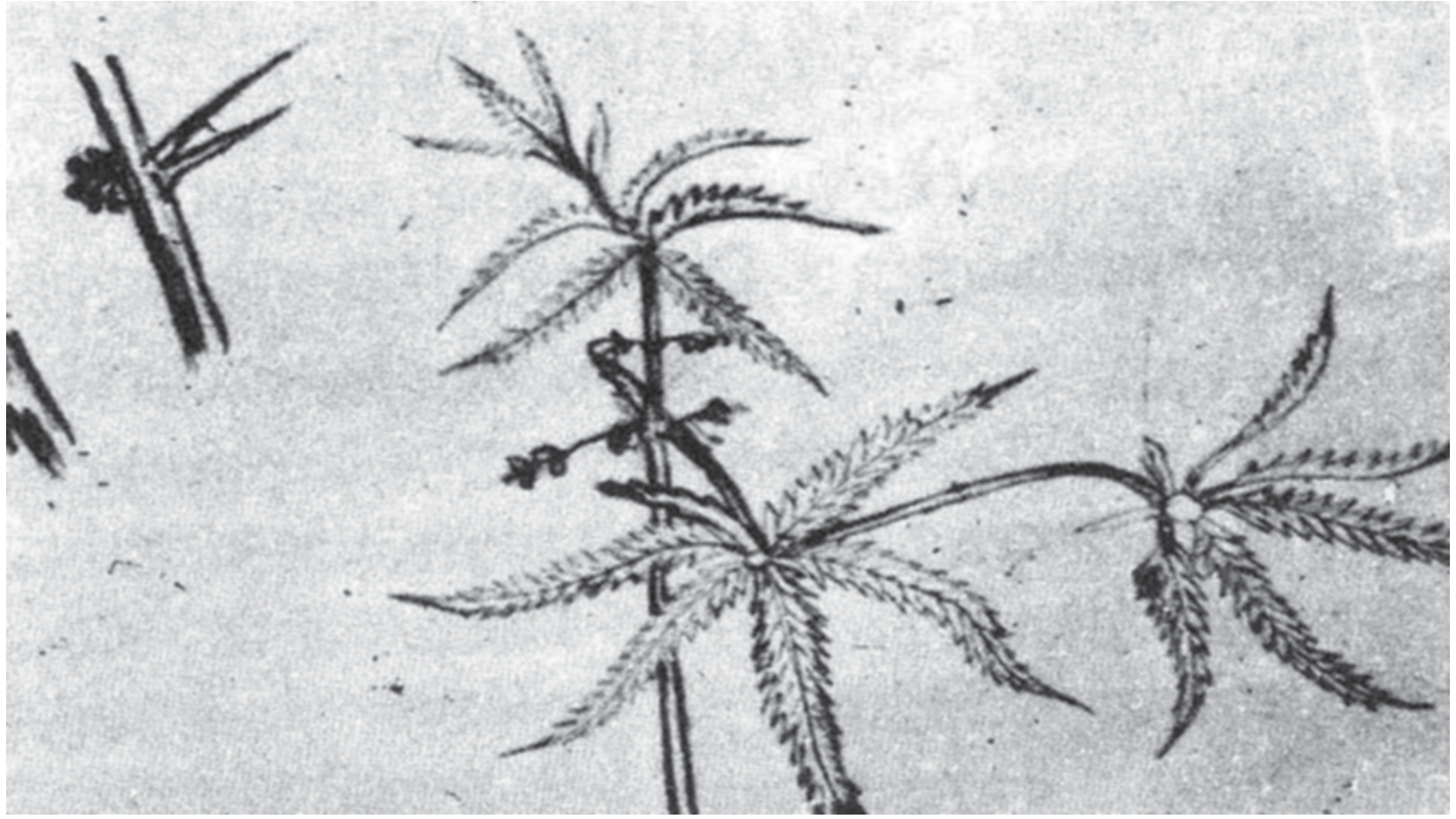
Fig: Cannabis sativa / Indian hemp plant
Also called:
- Cannabis sativa (India), Marijuana (USA), Dagga (South/Central Africa), Hashish (Egypt)
- Grows all over India; cultivation is restricted by law
Active Principle
- Tetrahydrocannabinol (THC) - an oleoresin (fat-soluble), NOT an alkaloid
- Cannabinol, cannabidiol, cannabinolic acid also present
- THC is absorbed from digestive tract (when ingested) and from lungs (when smoked)
- THC compounds are labile and may change on exposure to UV light or acid
Preparations (in order of potency)
| Preparation | Source | Active Principle (%) | Notes |
|---|---|---|---|
| Bhang (siddhi, patti, sabji) | Dried leaves + fruit shoots | ~15% | Mildest; drunk as beverage; intoxication lasts 3 days |
| Majun | Bhang + sugar + milk + butter (sweetmeat) | ~15-20% | Produces grandiose delusions; sometimes dhatura is mixed in |
| Ganja | Flowering tops of female plant | 15-25% | Rusty green, characteristic odour; smoked in pipe (chillum) with tobacco |
| Charas (hashish) | Resinous exudate from leaves and stems | 25-40% | Dark green/brown; most potent; smoked in pipe or hookah |
Signs and Symptoms of Acute Cannabis Poisoning
- Initial stage: Euphoria, uncontrollable laughter, excitement, garrulousness
- CNS effects: Delirium, grandiose delusions, visual hallucinations, paranoia
- Eyes: Conjunctival injection (suffusion), lacrimation
- CVS: Tachycardia (very characteristic), palpitations
- Appetite: Increased (the "munchies")
- Sexuality: Perceived increase in sexual desire
- Later: Drowsiness, deep sleep
- Pupils: Normal or slightly dilated (unlike dhatura - markedly dilated)
Fatal Dose
- No definite fatal dose established for cannabis
- Deaths are rare from cannabis alone; usually from accidents or cardiac events
Medico-legal Significance
- Most important narcotic in India from a forensic standpoint
- Covered under the NDPS Act (Narcotic Drugs and Psychotropic Substances Act, 1985) in India
- Long-term use leads to cannabis psychosis ("ganja psychosis") - a chronic mental disorder
- Amotivational syndrome: Chronic users show apathy, lack of initiative, social withdrawal
- May be used to stupefy victims (sometimes mixed with majun for criminal purposes)
- Detected in urine for up to 30 days after chronic use (lipophilic)
Summary Comparison Table
| Feature | Dhatura | Belladonna | Hyoscyamus | Cannabis |
|---|---|---|---|---|
| Active principle | Hyoscyamine, hyoscine, atropine | Atropine, hyoscyamine, hyoscine | Atropine, hyoscine, hyoscyamine | THC (oleoresin) |
| Pupil | Dilated (mydriasis) | Dilated | Dilated | Normal/slightly dilated |
| Skin | Hot, dry, red | Hot, dry, red | Hot, dry, red | Normal |
| Delirium type | Purposeless, noisy, hallucinations | Similar to dhatura | Similar to dhatura | Euphoric, grandiose |
| Pulse | Full, bounding then weak | Tachycardia | Tachycardia | Tachycardia |
| Fatal dose | 4 fruits / 100 seeds | ~10-20 berries (adult) | 125 mg hyoscyamine | No definite fatal dose |
| Antidote | Physostigmine | Physostigmine | Physostigmine | None specific |
| Main use in crime | Robbery, dacoity, abduction | Rarely homicidal | Rarely homicidal (Crippen) | Stupefaction |
Classification of Cerebral Poisons (Context)
Cerebral poisons act on the brain and are sub-classified as:
- Somniferous (narcotic): Opium, barbiturates - produce deep sleep/coma
- Inebriants: Alcohol, ether, chloroform - produce excitement then depression
- Deliriants: Dhatura, belladonna, hyoscyamus, cannabis, cocaine - produce delirium + hallucinations
(PC Dikshit Textbook of Forensic Medicine and Toxicology; Parikh's Textbook; The Essentials of Forensic Medicine and Toxicology, 36th edition 2026)
This is a shared conversation. Sign in to Orris to start your own chat.