
Flow chart of tertiary prevention
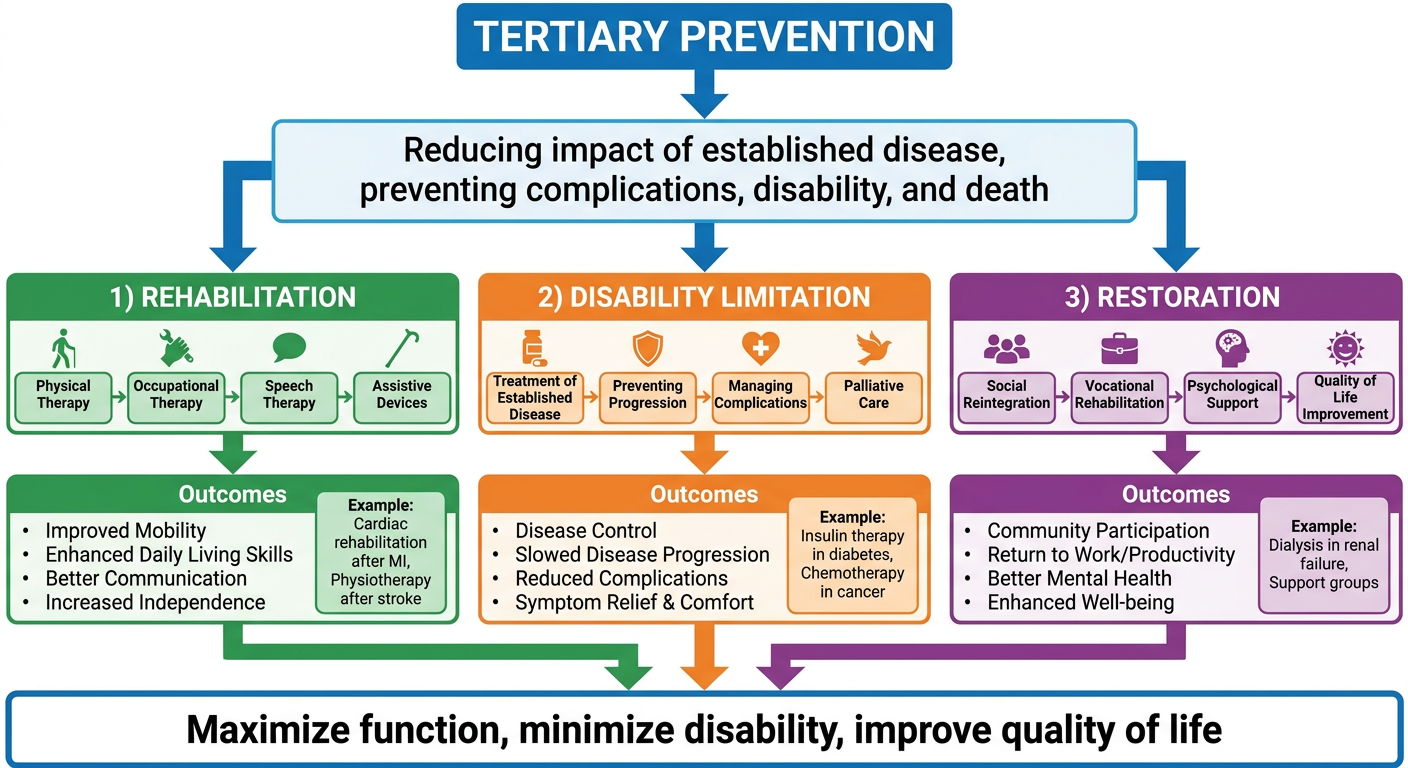
A detailed medical flowchart of tertiary prevention. The flowchart starts at the top with "TERTIARY PREVENTION" as the main title. It flows down into the definition: "Reducing impact of established disease, preventing complications, disability, and death". Below that, branch into three main categories: 1) Rehabilitation (physical therapy, occupational therapy, speech therapy, assistive devices), 2) Disability Limitation (treatment of established disease, preventing progression, managing complications, palliative care), and 3) Restoration (social reintegration, vocational rehabilitation, psychological support, quality of life improvement). Each branch shows sub-steps and outcomes. At the bottom, converge into the goal: "Maximize function, minimize disability, improve quality of life". Include examples such as cardiac rehabilitation after MI, physiotherapy after stroke, insulin therapy in diabetes, chemotherapy in cancer, dialysis in renal failure. Clean professional medical education style with boxes, arrows, and color coding.
Tertiary Prevention - Summary
Three Pillars of Tertiary Prevention
| Component | Focus | Examples |
|---|---|---|
| Disability Limitation | Stop disease from progressing; treat complications | Insulin in diabetes, antihypertensives in HTN, chemotherapy in cancer, dialysis in CRF |
| Rehabilitation | Restore lost function through therapy | Physiotherapy post-stroke, cardiac rehab post-MI, speech therapy, occupational therapy |
| Restoration / Reintegration | Return to normal social/vocational life | Vocational rehab, psychological support, assistive devices, prosthetics |
Key Goals
- Minimize disability and handicap
- Prevent further complications
- Improve quality of life
- Reintegrate the individual into society
Leavell & Clark's Levels of Prevention (Context)
- Primary - Before disease (health promotion + specific protection)
- Secondary - Early disease (early diagnosis + prompt treatment)
- Tertiary - Established disease (disability limitation + rehabilitation)