
10 heart disease ECG pls mention image
Reading File
Now let me search the medical library for ECG patterns across heart diseases, and simultaneously search for images:
Finding Sources
Searching Images
ECG electrocardiogram patterns heart disease
Searching Images
myocardial infarction STEMI ECG ST elevation
Searching Images
atrial fibrillation ECG irregular rhythm
Searching Images
complete heart block third degree AV block ECG
Searching Images
ventricular tachycardia ECG wide QRS
Searching Images
Wolff-Parkinson-White syndrome ECG delta wave
Searching Images
left bundle branch block LBBB ECG broad QRS
Searching Images
pulmonary embolism ECG S1Q3T3 right heart strain
Searching Images
hypertrophic cardiomyopathy ECG deep Q waves LVH
Searching Images
long QT syndrome ECG prolonged QT interval torsades
I now have excellent images for all 10 conditions. Here is a comprehensive guide to 10 Heart Disease ECG Patterns with real clinical images:
10 Heart Disease ECG Patterns
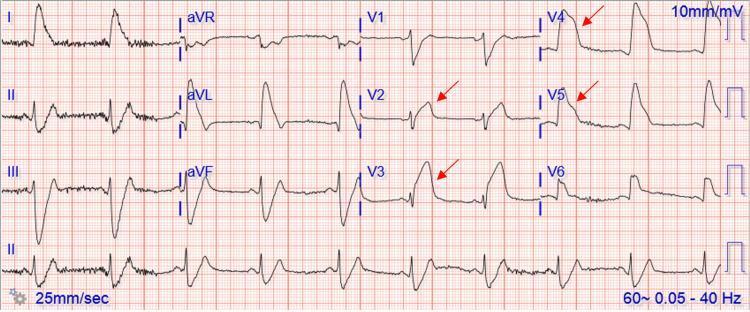
1. 🫀 STEMI (ST-Elevation Myocardial Infarction)
Key ECG Features:
- Convex ("tombstone") ST elevation ≥ 1 mm in ≥ 2 contiguous leads
- Hyperacute (peaked) T waves in early phase
- Reciprocal ST depression in opposing leads
- Q waves develop as infarction evolves
Localisation: V1–V4 = anterior (LAD); II, III, aVF = inferior (RCA); I, aVL, V5–V6 = lateral (LCx)
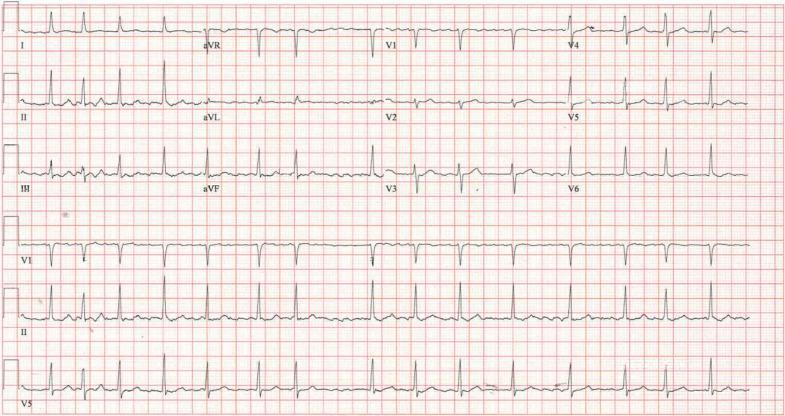
2. 💓 Atrial Fibrillation (AF)
Key ECG Features:
- Irregularly irregular RR intervals — the hallmark
- Absent P waves; replaced by chaotic fibrillatory (f) waves, best seen in V1 and II
- Narrow QRS complexes (unless aberrant conduction)
- Ventricular rate varies (controlled < 100 bpm; uncontrolled ≥ 100 bpm)
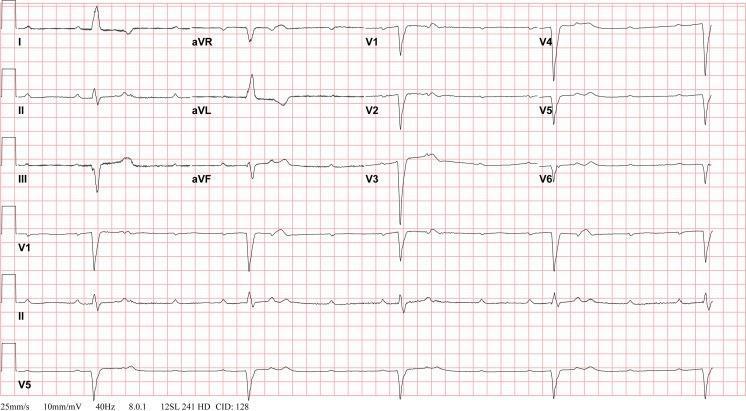
3. 🚫 Complete (3rd Degree) AV Block
Key ECG Features:
- Complete AV dissociation — P waves and QRS complexes march independently
- Atrial rate faster than ventricular escape rate
- Escape QRS can be narrow (junctional, ~40–60 bpm) or wide (ventricular, ~20–40 bpm)
- Regular PP intervals and regular RR intervals, but NO fixed PR relationship
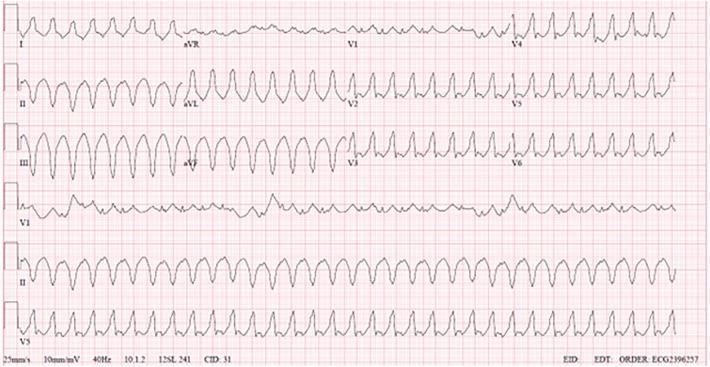
4. ⚡ Ventricular Tachycardia (VT)
Key ECG Features:
- Wide QRS tachycardia (QRS > 120 ms) at rate > 100 bpm
- Regular, monomorphic (uniform) QRS morphology
- No visible P waves (or AV dissociation present)
- Fusion beats and capture beats are pathognomonic when seen
- Positive or negative concordance across precordial leads
5. 🔵 Wolff-Parkinson-White (WPW) Syndrome
Key ECG Features:
- Short PR interval (< 120 ms)
- Delta wave — slurred upstroke at start of QRS
- Wide QRS (> 120 ms) due to pre-excitation
- Secondary ST/T changes (discordant to delta wave direction)
- Pathway location can be inferred from delta wave polarity
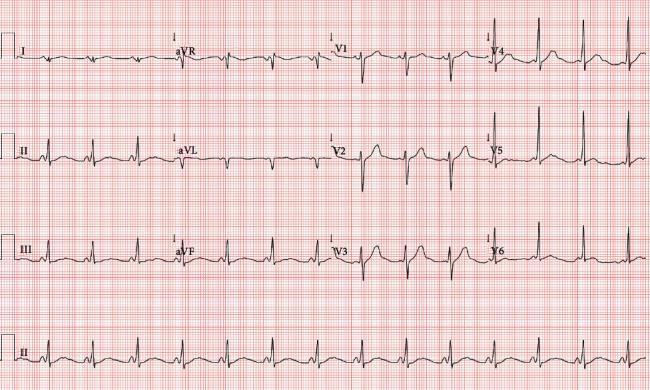
6. 🟣 Left Bundle Branch Block (LBBB)
Key ECG Features:
- QRS > 120 ms
- Broad monophasic R wave in I, aVL, V5, V6 (often notched/"M-shaped")
- Deep QS or rS in V1–V3
- No septal Q waves in lateral leads
- Secondary (discordant) ST/T changes — ST elevation in V1–V3, ST depression/T inversion in V5–V6
New LBBB in acute chest pain = treat as STEMI equivalent!
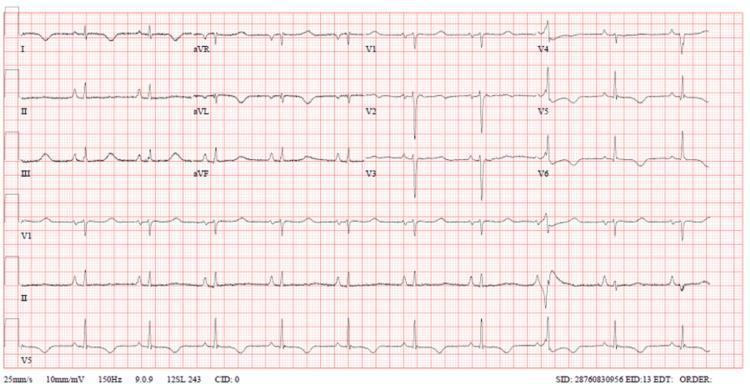
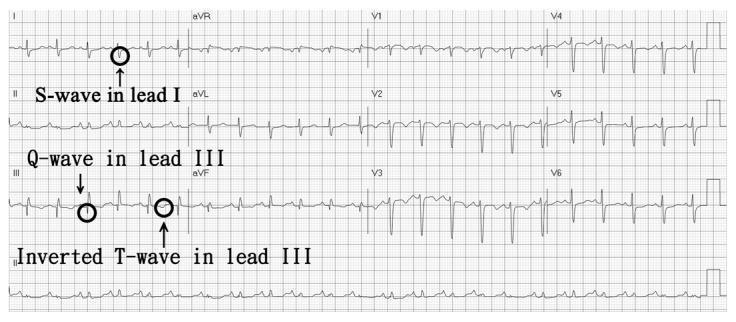
7. 🫁 Pulmonary Embolism (PE) — Right Heart Strain
Key ECG Features:
- S1Q3T3 pattern: prominent S in lead I, Q wave in III, T inversion in III
- Sinus tachycardia (most common finding)
- T-wave inversions in V1–V4 (right ventricular strain)
- Incomplete or complete RBBB
- Right axis deviation
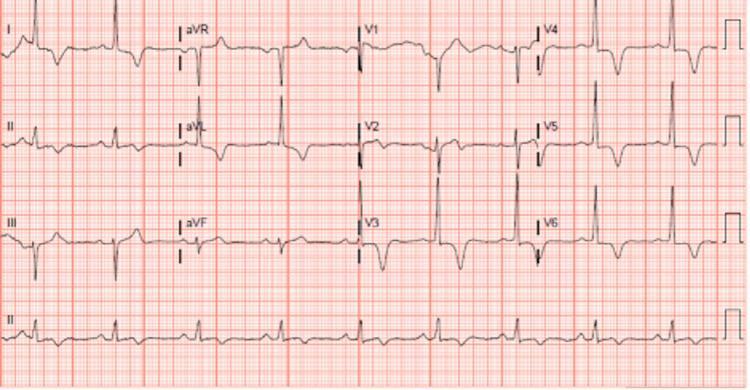
8. 🧱 Hypertrophic Cardiomyopathy (HCM)
Key ECG Features:
- High QRS voltage (LVH by Sokolow-Lyon: SV1 + RV5 > 35 mm)
- Giant symmetric T-wave inversions in precordial leads (especially apical HCM, Yamaguchi syndrome — V3–V5)
- Deep narrow Q waves in lateral/inferior leads (septal hypertrophy)
- Left axis deviation
- Often AF or other arrhythmias
9. ⏱️ Long QT Syndrome (LQTS)
Key ECG Features:
- Prolonged QTc (> 440 ms men, > 460 ms women; > 500 ms = high risk)
- T-wave alternans (beat-to-beat variation in T-wave amplitude) — marker of instability
- Different T-wave morphologies by subtype: LQT1 = broad-based T; LQT2 = notched T; LQT3 = late-onset T with long flat ST
- Can degenerate into Torsades de Pointes (TdP) → polymorphic VT
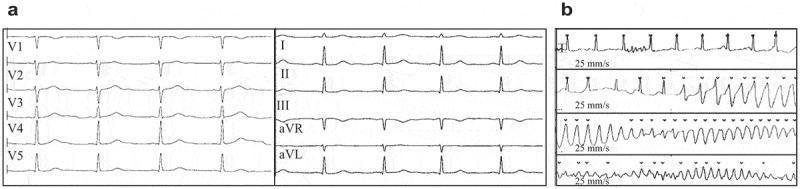
10. 🌊 Wellens' Syndrome (Critical LAD Stenosis)
Key ECG Features:
- Type A: Biphasic T waves (positive-negative) in V2–V3
- Type B: Deep symmetric T-wave inversions in V2–V3 (more common, ~75%)
- Minimal or no ST elevation
- Normal or minimally elevated troponin at presentation
- Represents critical proximal LAD stenosis — imminent anterior STEMI if untreated
- Do NOT perform stress test — risk of precipitating massive MI!
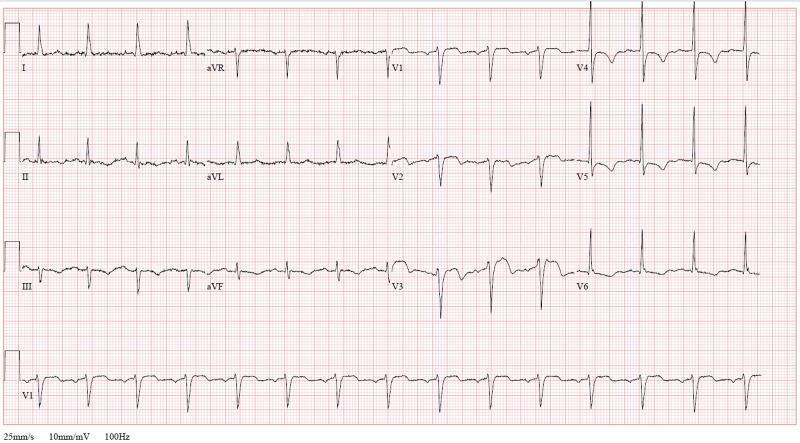
Quick Reference Summary
| # | Condition | Key ECG Finding |
|---|---|---|
| 1 | STEMI | Convex ST elevation + reciprocal changes |
| 2 | Atrial Fibrillation | Irregularly irregular, no P waves |
| 3 | 3rd Degree AV Block | Complete AV dissociation, slow escape |
| 4 | Ventricular Tachycardia | Wide QRS tachycardia, no P waves |
| 5 | WPW Syndrome | Short PR + delta wave + wide QRS |
| 6 | LBBB | Wide QRS, broad R in V5–V6, QS in V1 |
| 7 | Pulmonary Embolism | S1Q3T3, RV strain, sinus tachycardia |
| 8 | HCM | LVH voltage + giant T-wave inversions |
| 9 | Long QT Syndrome | Prolonged QTc → Torsades de Pointes |
| 10 | Wellens' Syndrome | Biphasic/deep T inversions V2–V3 (LAD warning) |
This is a shared conversation. Sign in to Orris to start your own chat.