

Answer for 5 th question according to k Park psm
kwashiorkor marasmus protein energy malnutrition clinical features
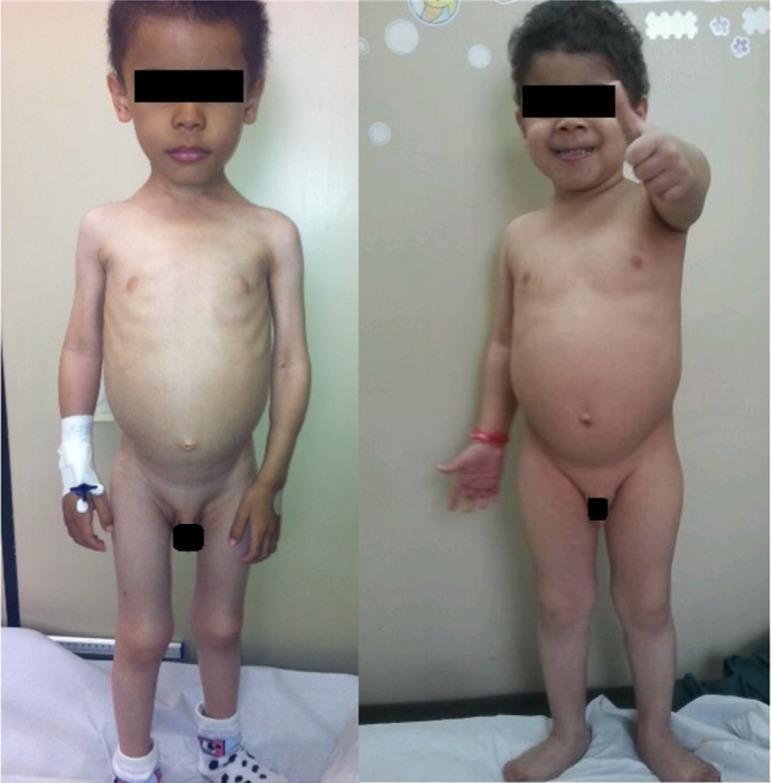
A clinical comparison photograph demonstrating the progression of nutritional recovery in a pediatric patient with severe protein-calorie malnutrition. The left image (initial consultation) shows a male child exhibiting signs of marasmus/kwashiorkor-like features: severe wasting of the limbs, prominent ribcage (skeletal prominence), and a distended, protuberant abdomen. The patient appears apathetic with an intravenous catheter in the right hand. The right image (two months post-intervention) shows the same patient after a high-calorie, high-protein dietary regimen. Visible clinical improvements include significant weight gain, replenishment of subcutaneous fat and muscle mass (limbs appear fuller, ribs no longer visible), and improved postural muscle tone. The patient's facial expression and a 'thumbs-up' gesture indicate improved mood and neurological status. This comparison illustrates the physical manifestations of successful nutritional rehabilitation in cases of severe malnutrition or neglect, serving as an educational example of catch-up growth and clinical recovery in pediatrics.
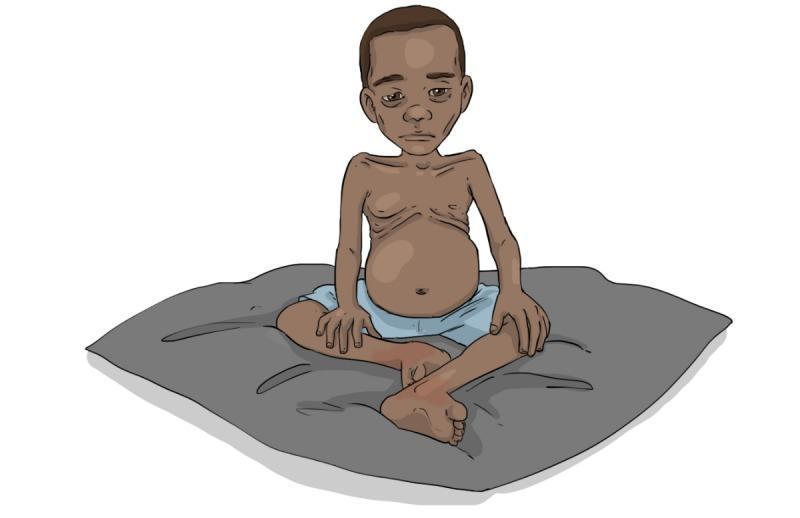
This medical illustration depicts a pediatric patient presenting with severe protein-energy malnutrition (PEM), specifically demonstrating clinical features associated with kwashiorkor or marasmic-kwashiorkor. The child is shown in a seated, cross-legged position. Key visual diagnostic signs include a protuberant, distended abdomen (ascites/hepatomegaly), marked muscle wasting in the upper and lower extremities, and a relative lack of subcutaneous fat, making the rib cage and clavicles visibly prominent. The facial features exhibit a gaunt appearance with sunken eyes and a flat, subdued affect, characteristic of the 'apathetic' demeanor often seen in severely malnourished children. The image serves as an educational tool for identifying the physical manifestations of chronic nutritional deficiency in global health settings, particularly emphasizing the paradox of a bloated abdomen despite generalized emaciation. This illustration is designed for healthcare worker training in malnutrition assessment and triage.
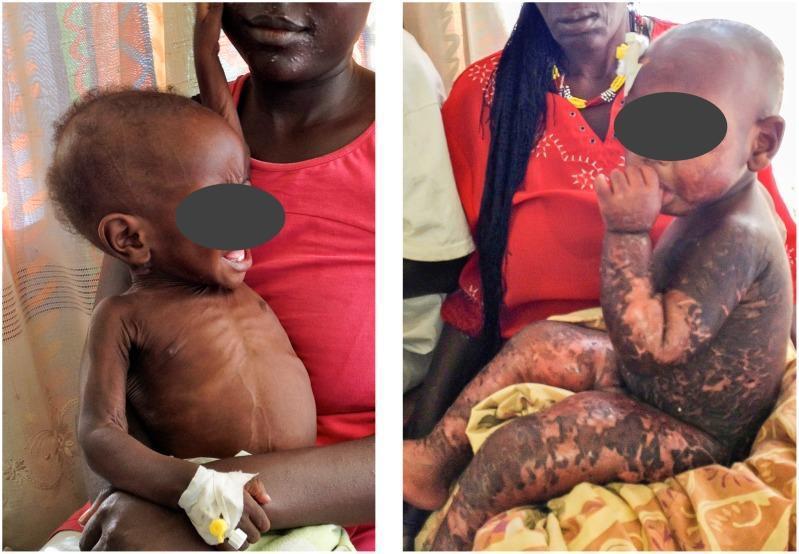
A side-by-side clinical photograph comparing two distinct presentations of severe acute malnutrition (SAM) in pediatric patients. The child on the left demonstrates non-oedematous malnutrition, also known as marasmus. Visual features include marked muscular wasting, loss of subcutaneous fat, and prominent skeletal structures, particularly the ribs. A peripheral venous cannula is secured to the child's left wrist. The child on the right demonstrates oedematous malnutrition, often referred to as kwashiorkor. Key clinical signs include generalized bilateral pitting oedema and extensive dermatological changes. These skin lesions present as a 'flaky paint' dermatosis, characterized by hyperpigmented patches with areas of desquamation, peeling, and underlying hypopigmentation distributed across the limbs and torso. The image serves as a teaching tool for distinguishing between marasmic wasting and the oedematous/skin-involved manifestations of kwashiorkor in global health and pediatric nutrition contexts.
Protein-Energy Malnutrition (PEM)
Definition
- Low birth weight (if mother is malnourished)
- Poor growth in children
- High mortality in children aged 12-24 months
- Estimated as an underlying cause in 30% of deaths among children under age 5
Ecology / Epidemiology
Magnitude of the Problem
- In India (NFHS-4): 35.7% children under 5 are underweight, 38.4% are stunted, 21% are wasted
- Globally: 21.9% of children under 5 are stunted and 7.3% have wasting
- About 33% of adult men and 36% of women in India have BMI <18.5 (chronic energy deficiency)
- <1% children under 5 have frank kwashiorkor/marasmus, but subclinical PEM is far more common
Concept: "Food Gap" not "Protein Gap"
- Inadequate intake of food (both quantity and quality)
- Infections - especially diarrhoea, respiratory infections, measles, and intestinal worms
Contributing Factors (Web of Causation)
- Poor environmental conditions
- Large family size
- Poor maternal health
- Failure of lactation / premature termination of breastfeeding
- Adverse cultural practices (over-diluted cow's milk, discarding cooking water from cereals)
- Delayed supplementary/weaning foods
- Short maternal stature, very young maternal age, high parity, smoking, close birth intervals
Classification of PEM
| Type | Index Used | Definition |
|---|---|---|
| Underweight | Weight-for-age | WAZ < -2 SD below median |
| Stunting | Height-for-age | HAZ < -2 SD below median |
| Wasting | Weight-for-height | WHZ < -2 SD below median |
- Moderate malnutrition: Z-score between -2 SD and -3 SD
- Severe malnutrition (SAM): Z-score below -3 SD
- WHZ < -3 SD, OR
- Presence of bilateral pitting oedema, OR
- MUAC < 11.5 cm (in children 6-59 months)
Etiology
Primary Causes
- Inadequate dietary intake - insufficient calories and protein
- Infections - diarrhoea, measles, respiratory infections, intestinal parasites (increase requirements + decrease absorption)
Secondary/Contributing Causes
- Socioeconomic poverty
- Ignorance and lack of nutrition education
- Food taboos and superstitions
- Failure of breastfeeding and inappropriate weaning practices
- Large family size
- High birth order / closely-spaced pregnancies
- Unhygienic environments
- Malabsorption states
Clinical Forms: Kwashiorkor vs. Marasmus
Kwashiorkor
- Caused by low protein/energy ratio in diet
- Develops when protein is deficient relative to energy intake
- Signs and symptoms:
- Oedema (hallmark feature - bilateral pitting oedema, starts in feet)
- Wasting and growth failure
- Liver enlargement (hepatomegaly) with fatty infiltration
- Hypoalbuminaemia (serum albumin low)
- Steatosis (fatty liver)
- Depigmentation of skin ("flaky paint" dermatosis - hyperpigmented patches with peeling/desquamation)
- Depigmentation of hair ("flag sign" - alternating bands of depigmented and normal hair)
- Distended (pot-belly) abdomen
- Apathy, misery, irritability
- Moon face
Marasmus
- Caused by inadequate intake of BOTH protein and energy
- A form of severe cachexia with weight loss in infancy and childhood
- Signs and symptoms:
- Severe wasting of muscle and subcutaneous fat (main feature)
- Little or no oedema
- Minimal subcutaneous fat ("skin and bones" appearance)
- Severe muscle wasting - "old man face" or "monkey facies"
- Prominent ribs and skeletal structures
- Non-normal serum albumin levels
- Growth retardation
- Ravenous hunger (unlike kwashiorkor where appetite is poor)
Early Detection
- Weight-for-age (growth chart): First indicator of PEM; practical for field health workers to maintain growth charts
- Arm circumference (MUAC):
-
13.5 cm = satisfactory nutritional status
- 12.5-13.5 cm = mild to moderate malnutrition
- <12.5 cm = severe malnutrition
- (Cannot be used before age 1; valid between 1-5 years as it hardly varies)
-
Prevention and Control
(a) Health Promotion
- Measures directed to pregnant and lactating women (education, supplementary feeding)
- Promotion of breastfeeding - exclusive breastfeeding for first 6 months
- Development of low-cost weaning foods - child should eat more frequently
- Measures to improve family diet
- Nutrition education - promotion of correct feeding practices
- Home economics
- Family planning and spacing of births
- Improvement of family environment
(b) Specific Protection
- Child's diet must contain protein and energy-rich foods (milk, eggs, fresh fruits)
- Immunization - prevent infections (measles, diarrhoea) that worsen PEM
- Food fortification
(c) Early Diagnosis and Treatment
- Growth monitoring (growth charts)
- Regular weighing at under-5 clinics (ICDS)
- Nutrition Rehabilitation Centres (NRCs) for SAM management
(d) Rehabilitation
- Nutritional rehabilitation
- Follow-up care
- Social and economic support
(e) Intersectoral Approach (GOBIFFF Strategy by UNICEF)
- Growth monitoring
- Oral rehydration therapy
- Breastfeeding
- Immunization
- Food supplementation
- Female education
- Family planning
- ICDS (Integrated Child Development Services) - supplementary nutrition, immunization, health check-up
- Mid-day Meal Programme
- Poshan Abhiyaan (National Nutrition Mission)
- National Food Security Act