
Explain Scurvy in detail
Reading File
Now let me search the medical library and PubMed in parallel for comprehensive coverage.
Finding Sources
Finding Sources
Searching PubMed
scurvy vitamin C deficiency
Excellent results. Now let me read the key textbook sections in parallel.
Reading File
Reading File
Reading File
Good. Now let me fetch the Robbins pathology content on the scurvy figure and read the physiology section, plus the Harrison's section.
Reading File
Reading File
Reading File
Now let me fetch the key scurvy images and get the Harriet Lane treatment data.
Loading Image
Loading Image
Reading File
Searching Images
scurvy perifollicular hemorrhage corkscrew hair skin findings
I now have comprehensive information from multiple authoritative textbooks along with clinical images. Let me compile the complete answer.
Scurvy — Vitamin C (Ascorbic Acid) Deficiency
1. Definition & Historical Background
Scurvy is the clinical syndrome caused by severe deficiency of vitamin C (ascorbic acid), a water-soluble vitamin that humans cannot synthesize endogenously and are entirely dependent on diet to obtain. It is characterized principally by defective collagen synthesis, hemorrhages, bone disease (especially in children), and impaired wound healing.
Historically, scurvy devastated sailors on long sea voyages. Sailors of the British Royal Navy were nicknamed "limeys" because at the end of the 18th century the Navy began providing lime and lemon juice to prevent scurvy during prolonged voyages. Ascorbic acid itself was not isolated and synthesized until 1932.
(Robbins, Cotran & Kumar Pathologic Basis of Disease)
2. Biochemistry & Pathophysiology
Vitamin C Functions
Vitamin C has several critical biochemical roles whose disruption underlies all clinical manifestations:
| Function | Mechanism | Consequence of Deficiency |
|---|---|---|
| Collagen synthesis | Activates prolyl and lysyl hydroxylases → hydroxylation of procollagen | Unstable collagen helix, poor secretion, weak/soluble collagen → hemorrhages, wound failure |
| Neurotransmitter synthesis | Hydroxylation of dopamine → norepinephrine | Neuropsychiatric symptoms, hypochondriasis |
| Iron absorption | Reduces Fe³⁺ → Fe²⁺ in gut; enhances non-heme iron uptake | Contributes to anemia |
| Antioxidant / immune modulation | Scavenges reactive oxygen species | (Clinical trials have generally been disappointing for these effects) |
Why Collagen Fails
Without adequate vitamin C, hydroxylation of proline and lysine residues in procollagen is impaired. The resulting collagen:
- Cannot acquire a stable triple-helical configuration
- Is inefficiently secreted from fibroblasts
- Lacks tensile strength and cross-linking
- Is more soluble and vulnerable to enzymatic degradation
Collagen — which normally contains the highest content of hydroxyproline of any polypeptide — is most affected in blood vessels, directly explaining the hemorrhagic tendency.
(Robbins, Cotran & Kumar)
3. Epidemiology & Risk Groups
Although scurvy has ceased to be a global problem due to the abundance of vitamin C in many foods, it is still encountered, especially as a secondary deficiency, in:
- Elderly men living alone with poor dietary habits
- Alcohol use disorder — erratic, inadequate eating patterns
- Autism spectrum disorder / behavioral health conditions — restrictive diets
- Patients on peritoneal dialysis or hemodialysis
- Food faddists and those on severely restricted diets
- Infants on evaporated milk formula without vitamin C supplementation
- Patients on chemotherapy, after multiple transfusions (iron overload risk), or those who smoke (smoking accelerates vitamin C catabolism)
- One case has been reported related to nilotinib (a tyrosine kinase inhibitor)
(Andrews' Diseases of the Skin; Robbins)
A 2026 systematic review of 280 published cases in the 21st century highlights that scurvy remains an enduring diagnostic mimic in adults. [PMID: 41759242]
4. Clinical Features — The "Four H's"
The classic mnemonic captures the cardinal features:
| "H" | Description |
|---|---|
| Hemorrhagic signs | Perifollicular petechiae, ecchymoses, subperiosteal/intramuscular hemorrhage, gingivitis |
| Hyperkeratosis | Follicular hyperkeratosis with "corkscrew hairs" |
| Hypochondriasis | Depression, fatigue, mood disturbance (from impaired catecholamine synthesis) |
| Hematologic abnormalities | Anemia (from bleeding + associated folate deficiency) |
4a. Cutaneous Manifestations (Early and Prominent)
Dermatologists often make the diagnosis first, as skin findings appear early:
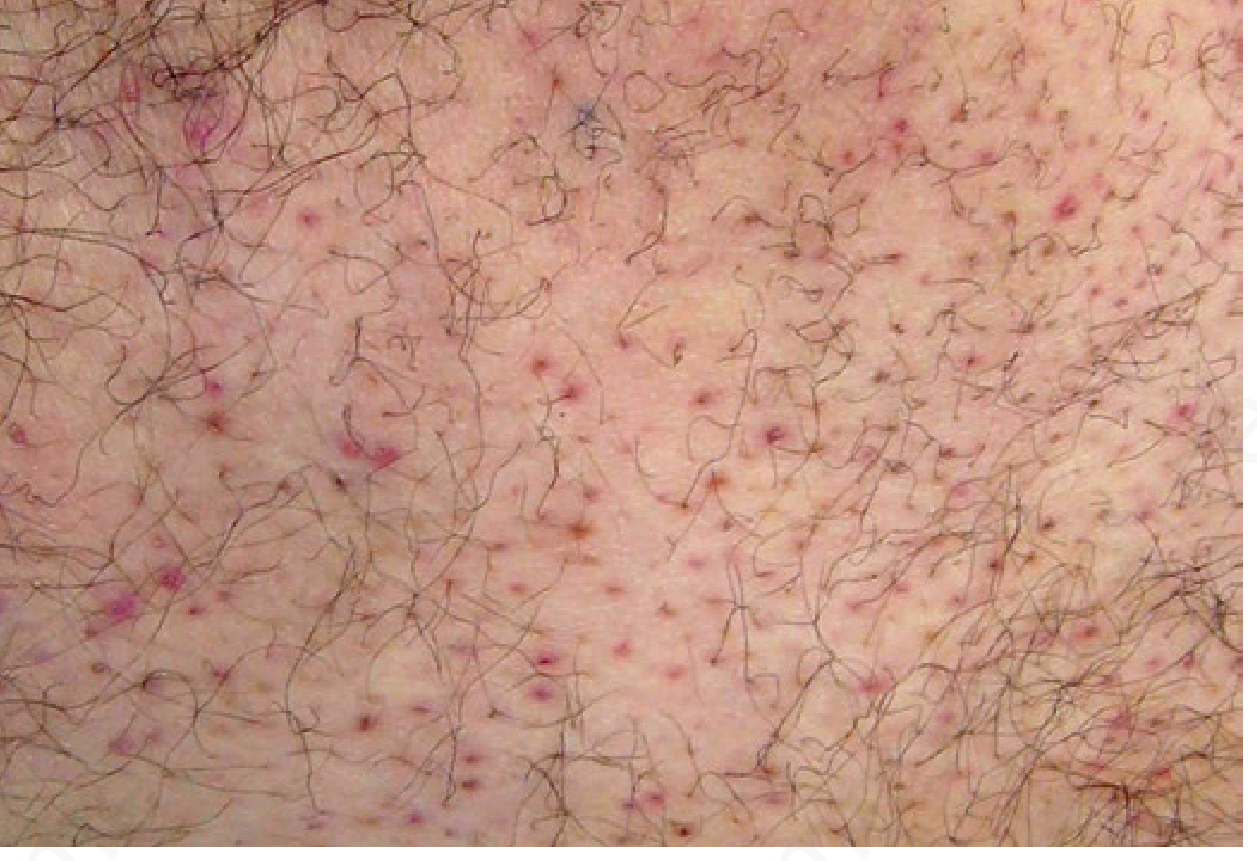
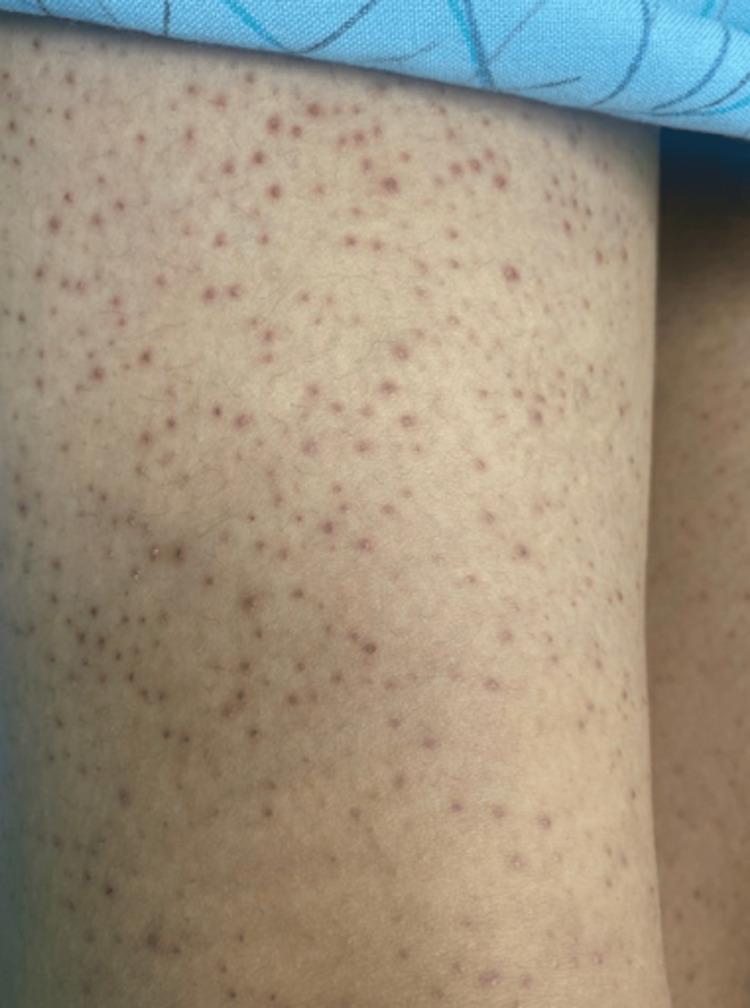
Perifollicular petechiae — the pathognomonic cutaneous finding. Small hemorrhagic lesions surrounding hair follicles, especially on the lower extremities.
"Corkscrew hairs" — a distinctive/pathognomonic sign: hair shafts become coiled inside keratotic plugs, particularly on the anterior forearms, abdomen, and posterior thighs.
Other skin findings:
- Ecchymoses of various sizes, especially lower limbs
- Woody edema of the legs (can simulate cellulitis)
- Subungual, subconjunctival, intramuscular, periosteal, and intraarticular hemorrhage
- Delayed wound healing
4b. Oral / Gingival Manifestations
Hemorrhagic gingivitis is characteristic: swollen, bleeding gums adjacent to teeth with possible loosening of teeth and foul breath.
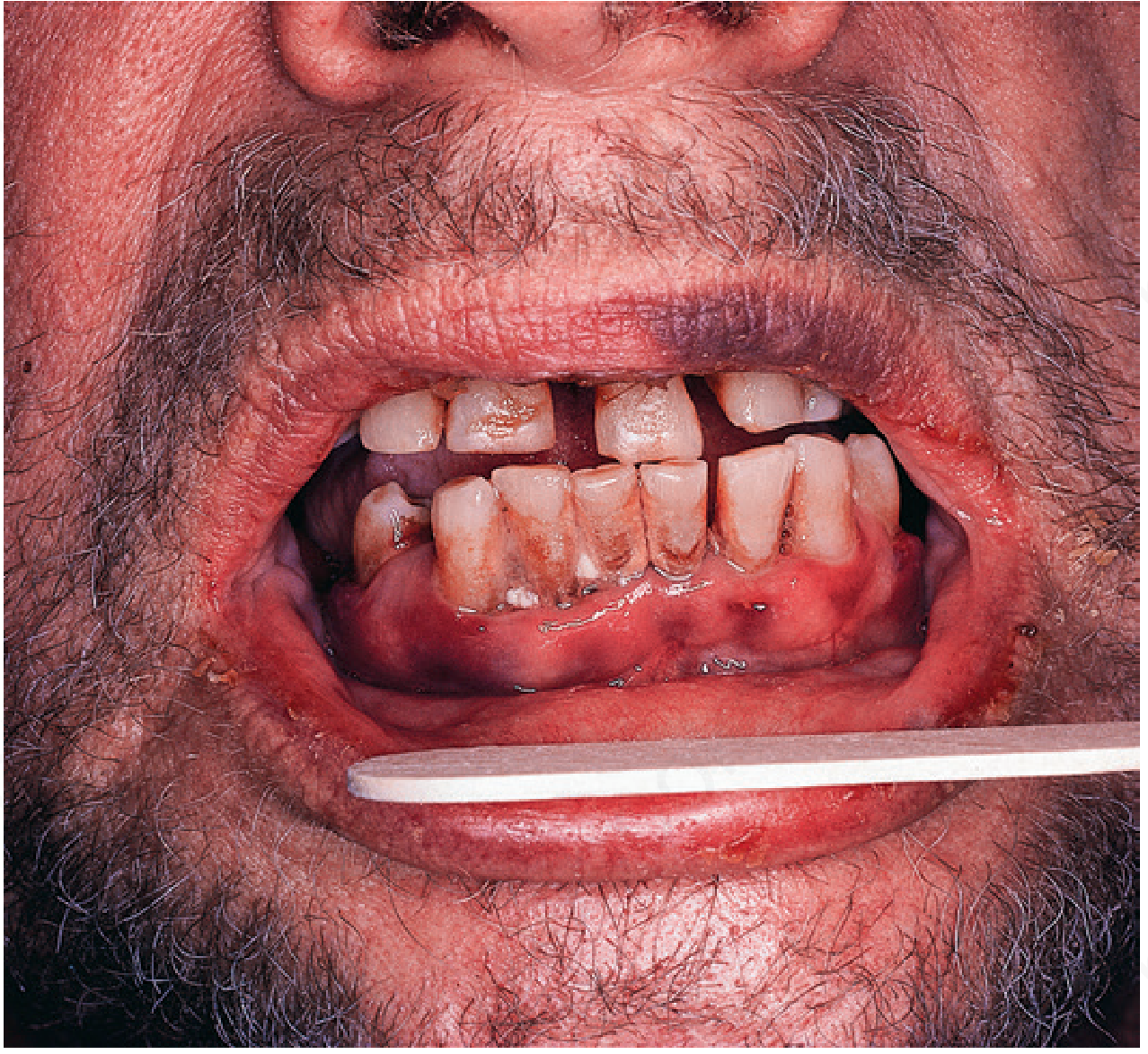
Important: Gingival changes are absent in edentulous areas and less prominent in those with good oral hygiene.
4c. Musculoskeletal Manifestations
- Bone pain from subperiosteal hemorrhage
- Pseudoparalysis in children (from pain, not actual neurological deficit)
- Joint effusions (hemarthrosis)
- In children: impaired endochondral ossification and bone fragility due to defective collagen matrix
4d. Systemic Manifestations
| System | Finding |
|---|---|
| Hematologic | Anemia (from hemorrhage, associated folate deficiency) |
| Neuropsychiatric | Depression, fatigue, hypochondriasis |
| Cardiovascular | Epistaxis, pericardial hemorrhage (severe) |
| Renal | Hematuria (in advanced cases) |
| Respiratory | Epistaxis |
Vitamin C deficiency can be associated with severe anemia as well as the classic clinical findings of scurvy. (Harrison's Principles of Internal Medicine, 22nd Ed.)
5. Scurvy in Infants
Neonates are normally born with sufficient vitamin C stores and receive adequate amounts in breast milk. If breast milk or formula is vitamin C–deficient, infants may develop scurvy. Key features in infants:
- Lesions on skin and mucous membranes
- Vitamin C is necessary for synthesis of hydroxyproline in collagen and chondroitin sulfate in cartilage, bone, and connective tissues
- Prevented by supplementing the mother or infant
(Medical Physiology, Boron & Boulpaep)
6. Diagnosis
| Approach | Details |
|---|---|
| Clinical diagnosis | Characteristic history + four H's pattern |
| Serum ascorbic acid level | Low (< 11 µmol/L); must be drawn BEFORE any dietary change — levels normalize very quickly |
| Therapeutic trial | Positive response to vitamin C supplementation confirms diagnosis |
| Skin biopsy | Shows follicular hyperkeratosis, coiled hairs, perifollicular hemorrhage without inflammation (helps exclude vasculitis) |
| Radiology | Periosteal elevation (subperiosteal hemorrhage) in children, "Trümmerfeld zone" (zone of destruction at metaphysis) |
Differential diagnosis pitfalls: Often misdiagnosed as vasculitis (due to perifollicular hemorrhage + bone pain), Henoch-Schönlein purpura, or cellulitis (woody edema).
7. Treatment
Therapeutic Dose (Harriet Lane Handbook, 23rd Ed.)
| Patient | Dose | Duration |
|---|---|---|
| Child | 100–300 mg/24 hr once daily–BID | At least 2 weeks |
| Adult | 100–250 mg once daily–BID | At least 2 weeks |
| Maintenance | 100 mg/day | Ongoing dietary correction |
- Route: Oral preferred (with or without food); IM is the preferred parenteral route; IV/SC also possible
- High-dose (1,000 mg/day for 1 week) is also used initially in adults per dermatology guidelines
Response to Treatment
Clinical improvement is typically rapid and dramatic:
- Hemorrhage stops within days
- Gingival swelling resolves within 2–3 weeks
- Musculoskeletal pain improves within 1–2 weeks
Drug Interactions & Precautions
- Use high doses with caution in G6PD deficiency (risk of hemolytic anemia)
- Increases enteral absorption of aluminum hydroxide and iron
- May cause false urine glucose results (false-negative with glucose oxidase; false-positive with cupric sulfate tests)
- Pregnancy Category C if dose exceeds RDA
8. Vitamin C Excess
Megadose vitamin C does not prevent the common cold (controlled trials are negative), and randomized trials have failed to show protection against cancer, cardiovascular disease, or macular degeneration. Physiologic availability is limited by intestinal absorption and rapid urinary excretion. Rare toxicities of high doses include:
- Iron overload (increased intestinal absorption)
- Hemolytic anemia in G6PD deficiency
- Calcium oxalate kidney stones
(Robbins; Harper's Illustrated Biochemistry, 32nd Ed.)
9. Recent Evidence
A 2026 systematic review of 280 adult cases in the 21st century (PMID: 41759242) confirms that scurvy remains a diagnostic challenge in modern medicine, frequently mimicking vasculitis, inflammatory arthritis, or hematological disorders. A 2024 systematic review (PMID: 39296506) documents an important co-occurrence of scurvy with anorexia nervosa.
Summary
Scurvy is entirely preventable but persists in vulnerable populations. The core pathology is impaired collagen hydroxylation due to vitamin C deficiency, causing vascular fragility and hemorrhage throughout the body. Diagnosis is clinical, and treatment with oral ascorbic acid produces rapid, dramatic recovery.
Sources: Andrews' Diseases of the Skin, 13th Ed. · Robbins, Cotran & Kumar Pathologic Basis of Disease · Harper's Illustrated Biochemistry, 32nd Ed. · Medical Physiology (Boron & Boulpaep) · Harrison's Principles of Internal Medicine, 22nd Ed. · Harriet Lane Handbook, 23rd Ed.
This is a shared conversation. Sign in to Orris to start your own chat.